Article

Double-Ligand [Fe/PNP/PP3] and Their Hybrids [Fe/SiO2@PNP/PP3] as Catalysts for H2-Production from HCOOH


by
Marinos Theodorakopoulos
1,
Maria Solakidou
1,
Yiannis Deligiannakis
2 and
Maria Louloudi
1,*
1
Laboratory of Biomimetic Catalysis & Hybrid Materials, Department of Chemistry, University of Ioannina, 45110 Ioannina, Greece
2
Laboratory of Physical Chemistry of Materials & Environment, Department of Physics, University of Ioannina, 45110 Ioannina, Greece
*
Author to whom correspondence should be addressed.
Energies 2024, 17(16), 3934; https://doi.org/10.3390/en17163934
Submission received: 2 July 2024 / Revised: 25 July 2024 / Accepted: 6 August 2024 / Published: 8 August 2024
(This article belongs to the Section A5: Hydrogen Energy)

Abstract

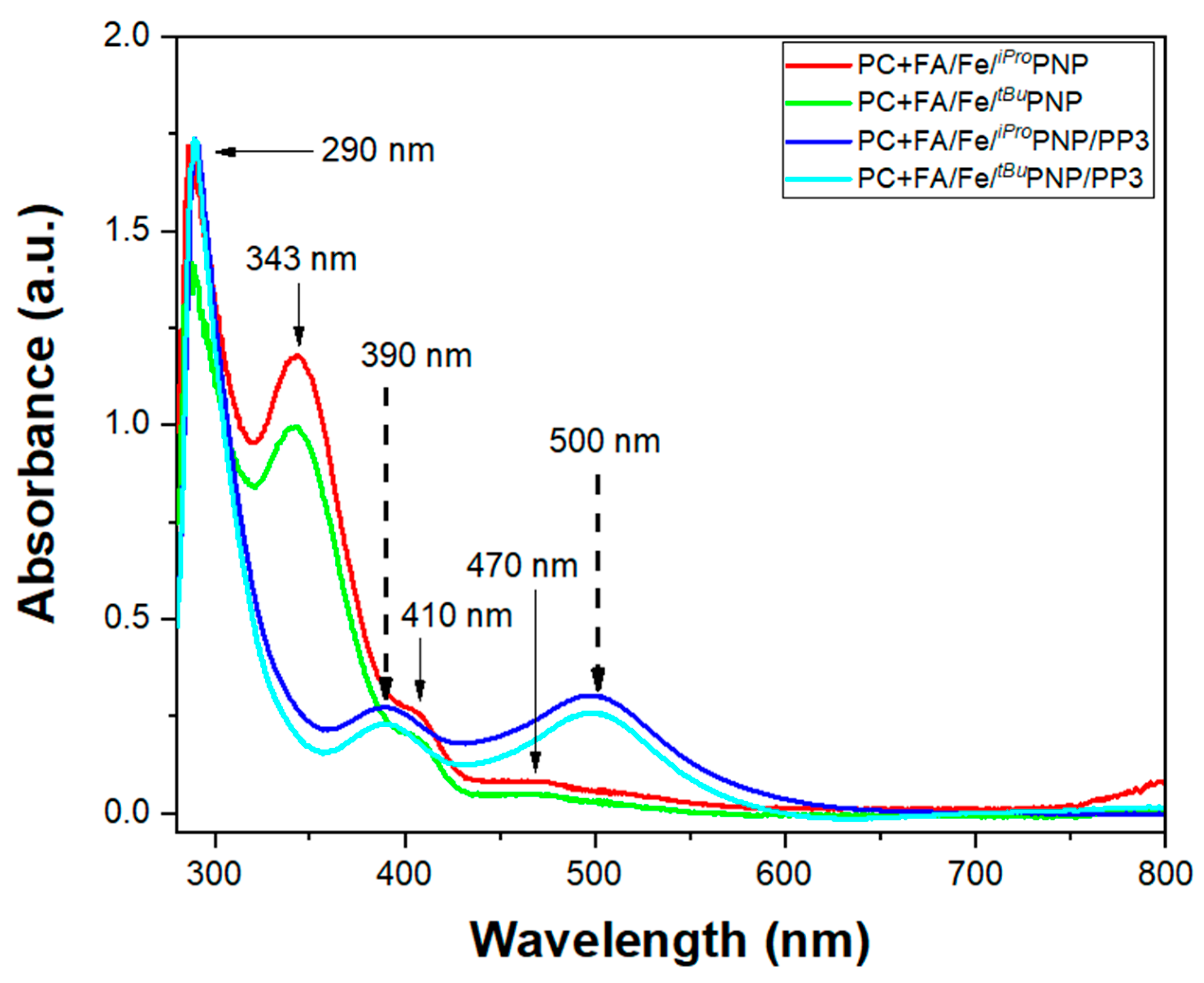
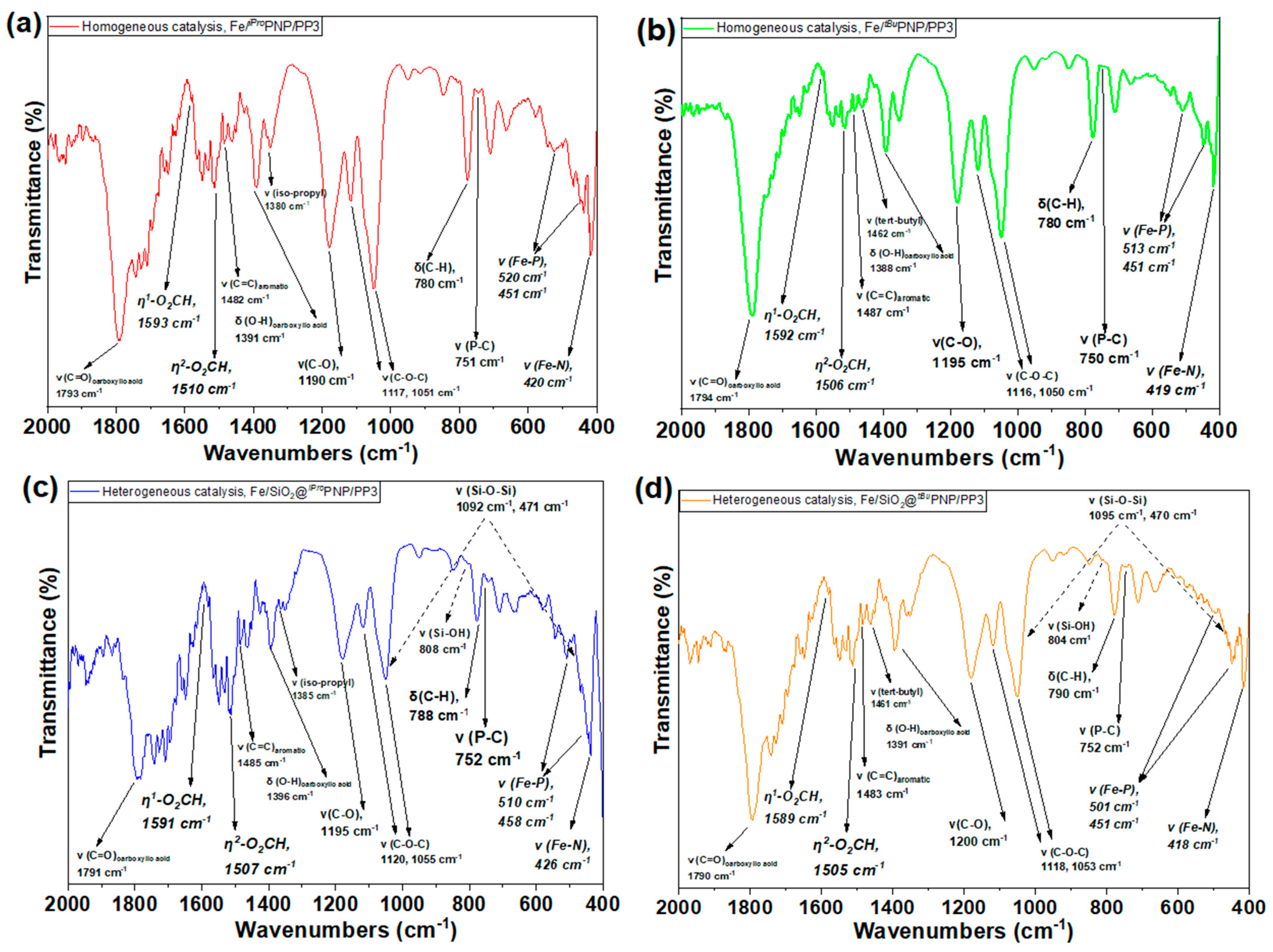
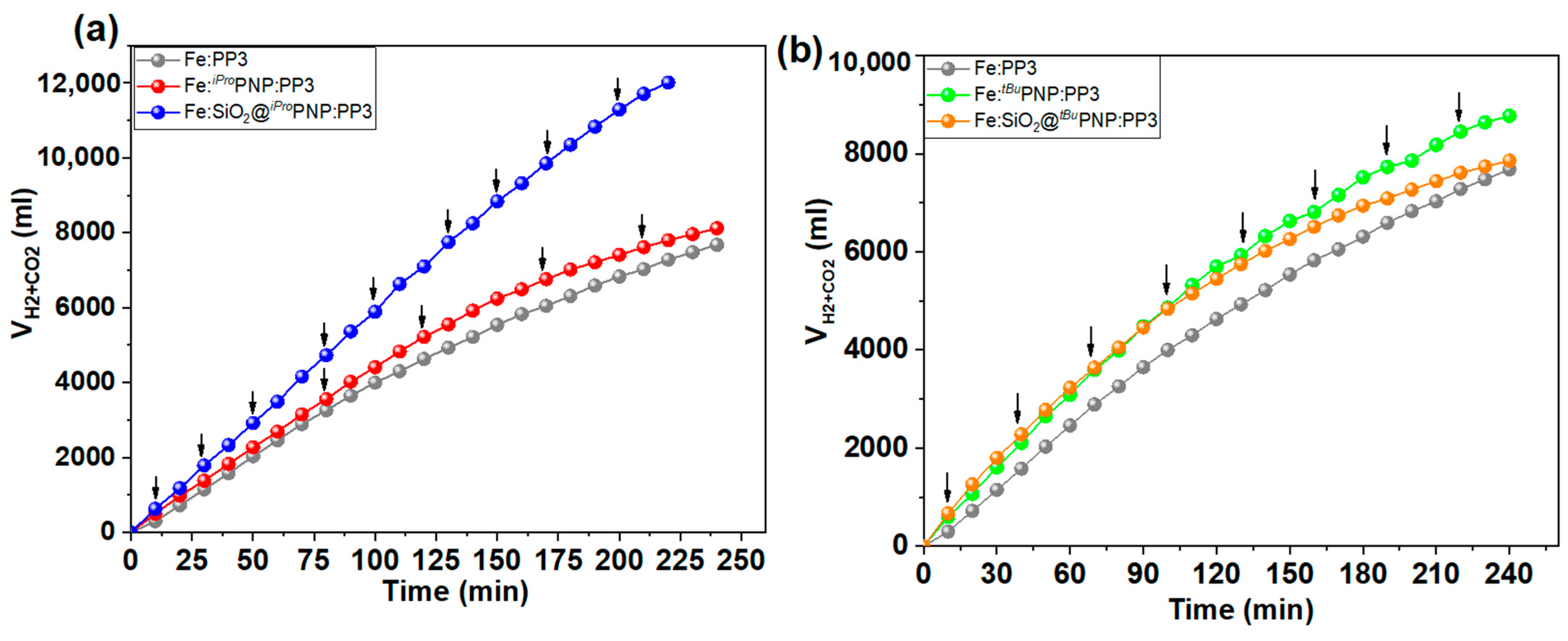
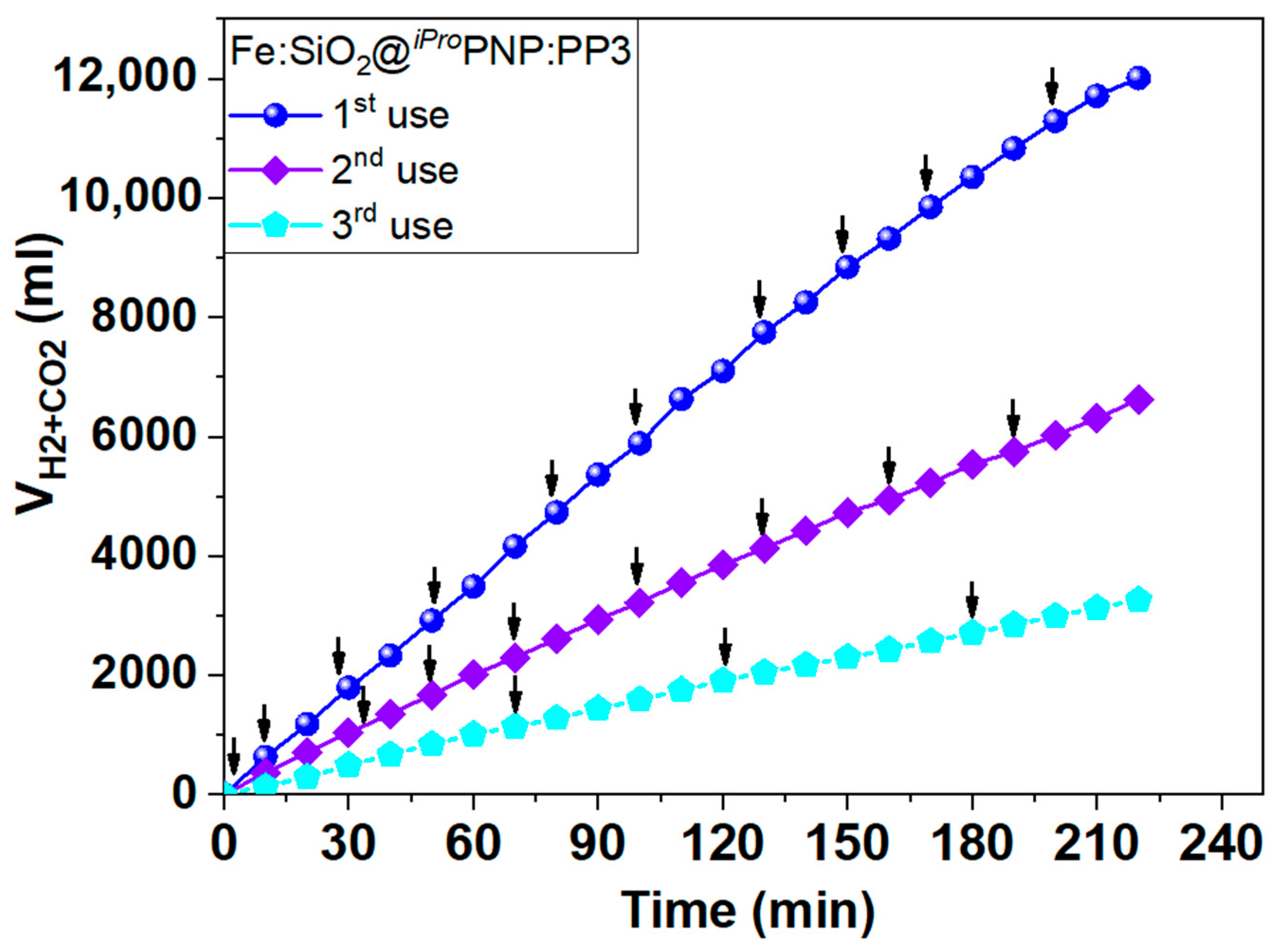
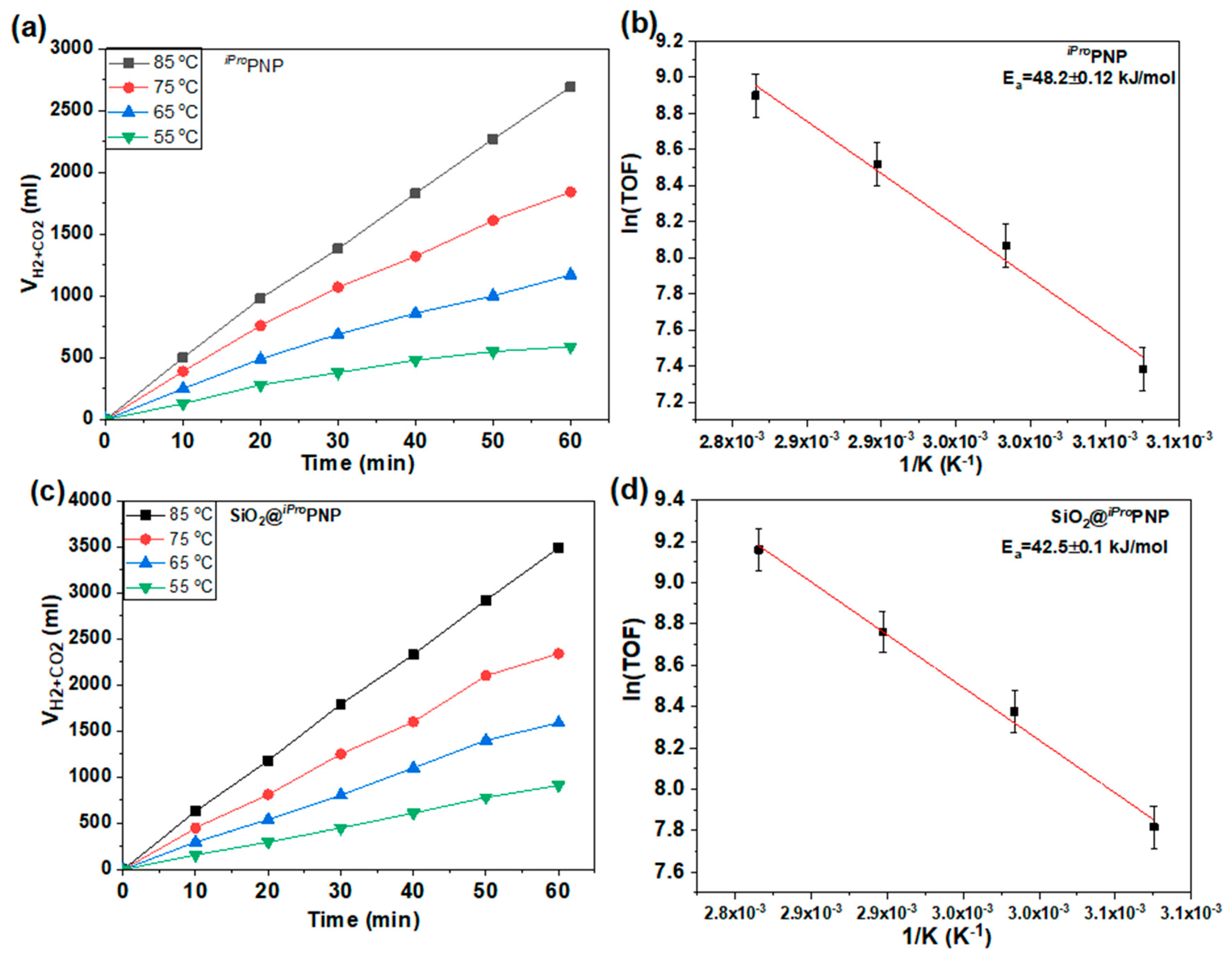
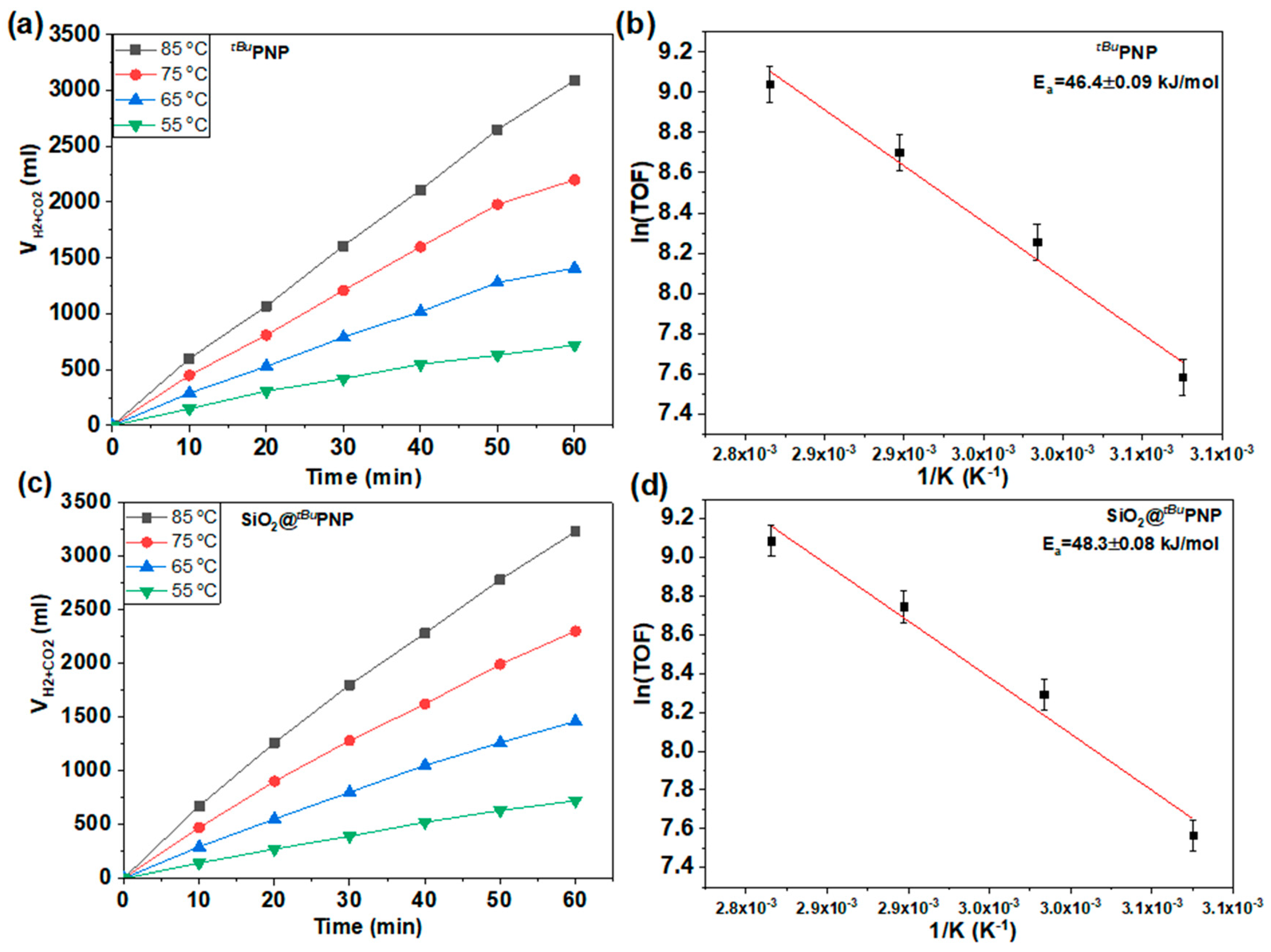
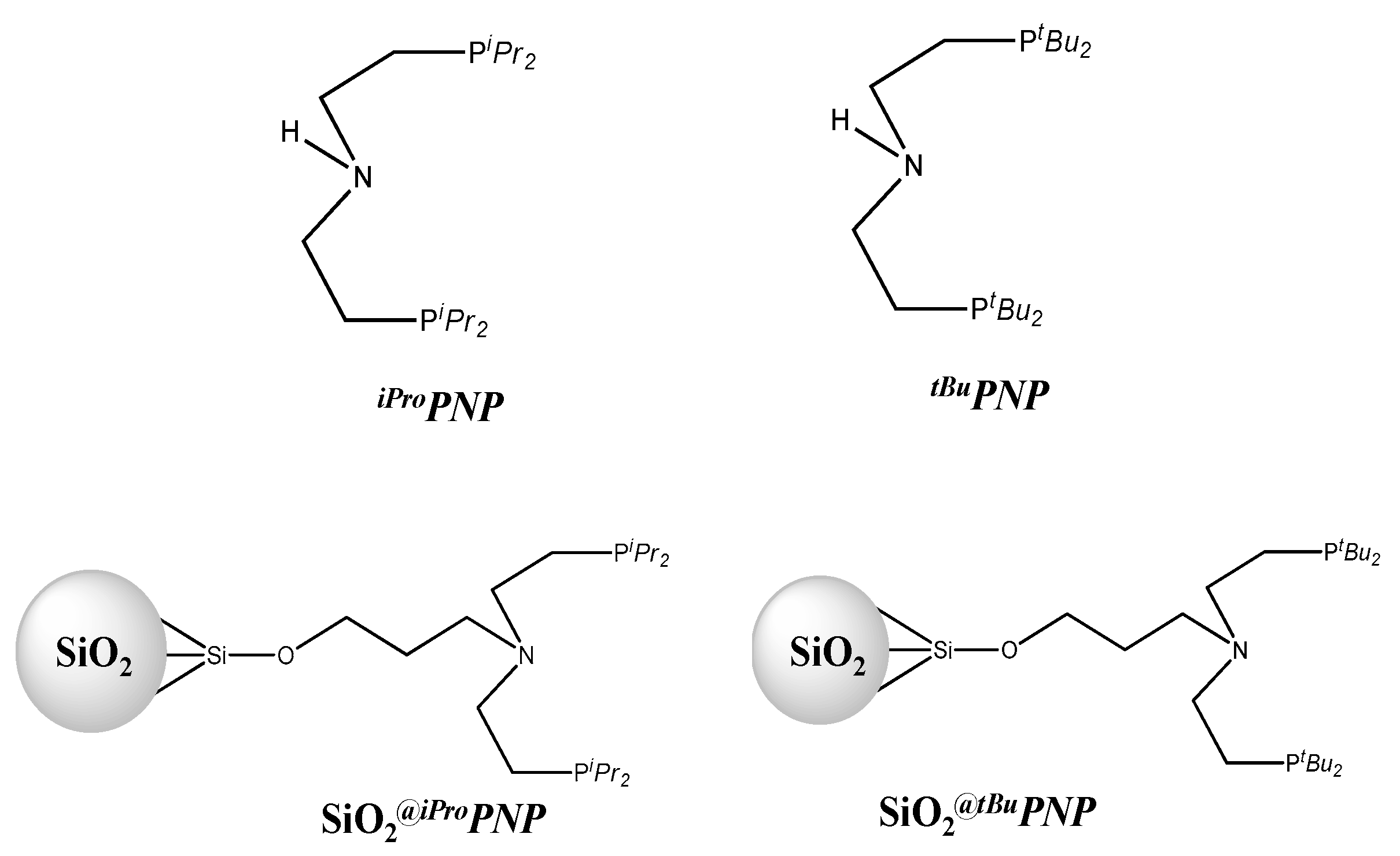
Two types of iron-based catalysts, [Fe/SiO2@iProPNP/PP3] and [Fe/SiO2@tBuPNP/PP3], for the dehydrogenation of formic acid (FADH), were synthesized. These catalysts were developed using a double-ligand approach combining a PNP ligand and a PP3 ligand, demonstrating functionality without the need for additional cocatalysts or additives. Furthermore, hybrid catalysts [Fe/SiO2@iProPNP/PP3] and [Fe/SiO2@tBuPNP/PP3] were created by covalently grafting PNP ligands onto SiO2 particles. The hybrid [Fe/SiO2@iProPNP/PP3] exhibited enhanced recyclability, with turnover numbers (TONs) exceeding 74,000. In situ ATR-FTIR and UV-Vis spectroscopies were used to monitor the structure and dynamics of the catalysts under catalytic conditions, revealing the formation of active catalysts through the involvement of all components: [Fe (metal)/PNP (first ligand)/PP3 (second ligand)/FA (substrate)], which are crucial to FADH catalysis. An Arrhenius study revealed that the hybrid [Fe/SiO2@iProPNP/PP3] had a lower activation energy (Ea = 42.5 kJ/mol) compared to its homogeneous counterpart (Ea = 48.2 kJ/mol), indicating superior catalytic performance. Conversely, [Fe/SiO2@tBuPNP/PP3] showed an increased activation energy (Ea = 48.3 kJ/mol) compared to its homogeneous form (Ea = 46.4 kJ/mol). This study discusses the differing roles of tBuPNP and iProPNP in catalyst configuration, highlighting the potential of double-ligand catalysts to enhance the performance and recyclability of PNP ligands in FADH, offering significant implications for the development of efficient and reusable catalytic systems.
Keywords: formic acid dehydrogenation; H2 production; double ligand; Iron catalysts; PNP ligands formic acid dehydrogenation; H2 production; double ligand; Iron catalysts; PNP ligands