Article

Considering the Tiered Low-Carbon Optimal Dispatching of Multi-Integrated Energy Microgrid with P2G-CCS

1
Water Conservancy Project and Civil Engineering College, Tibet Agriculture and Animal Husbandry University, Linzhi 860000, China
2
Research Center of Civil, Hydraulic and Power Engineering of Tibet, Tibet Agriculture and Animal Husbandry University, Linzhi 860000, China
3
Beijing Shougang Automation Information Technology Co., Ltd., Beijing 100043, China
4
State Grid Heilongjiang Power Company Limited State Grid Daqing Power Supply Company, Daqing 163000, China
5
Electric Engineering College, Tibet Agriculture and Animal Husbandry University, Linzhi 860000, China
*
Author to whom correspondence should be addressed.
Energies 2024, 17(14), 3414; https://doi.org/10.3390/en17143414
Submission received: 7 June 2024 / Revised: 3 July 2024 / Accepted: 9 July 2024 / Published: 11 July 2024

Abstract

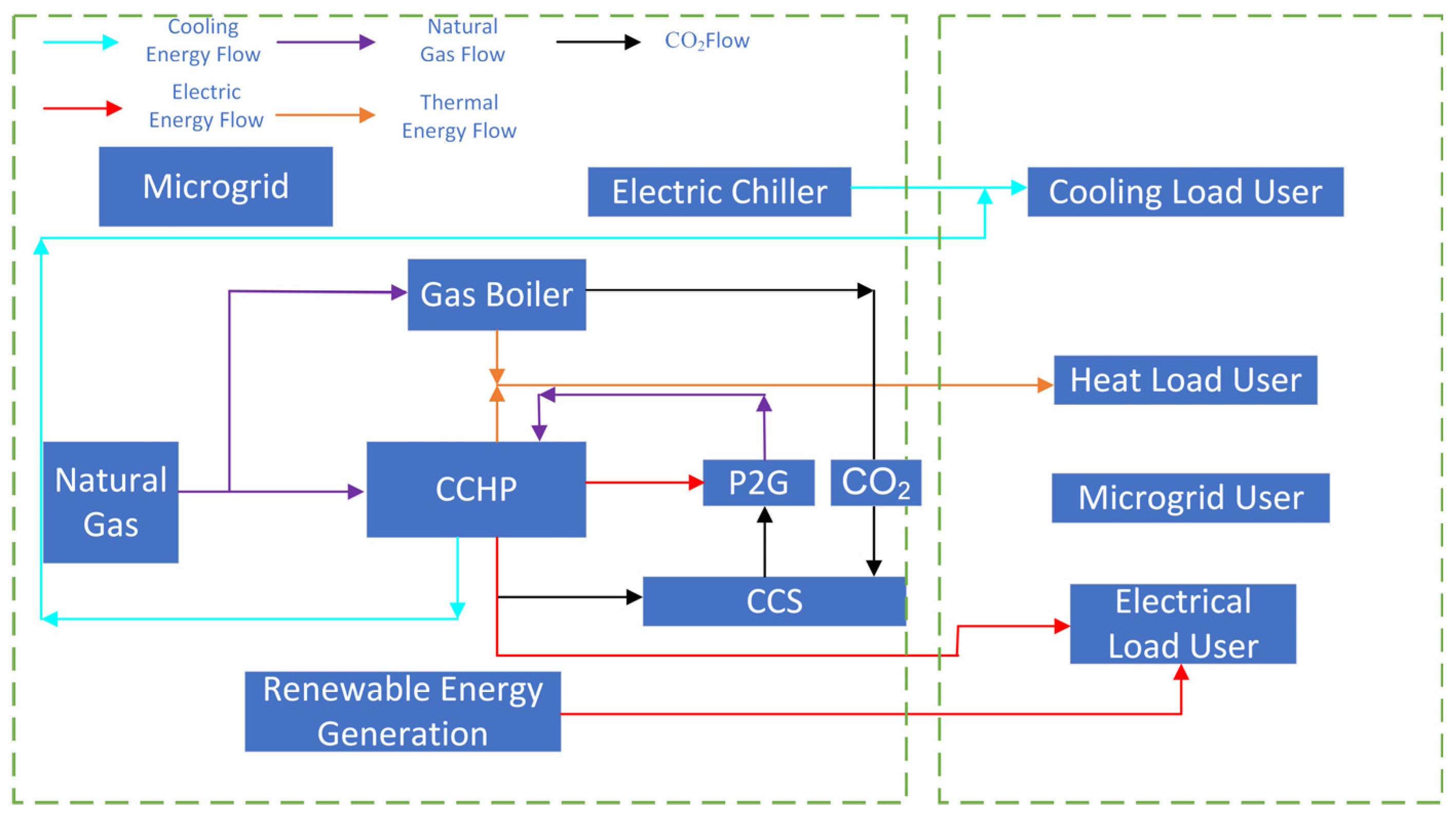
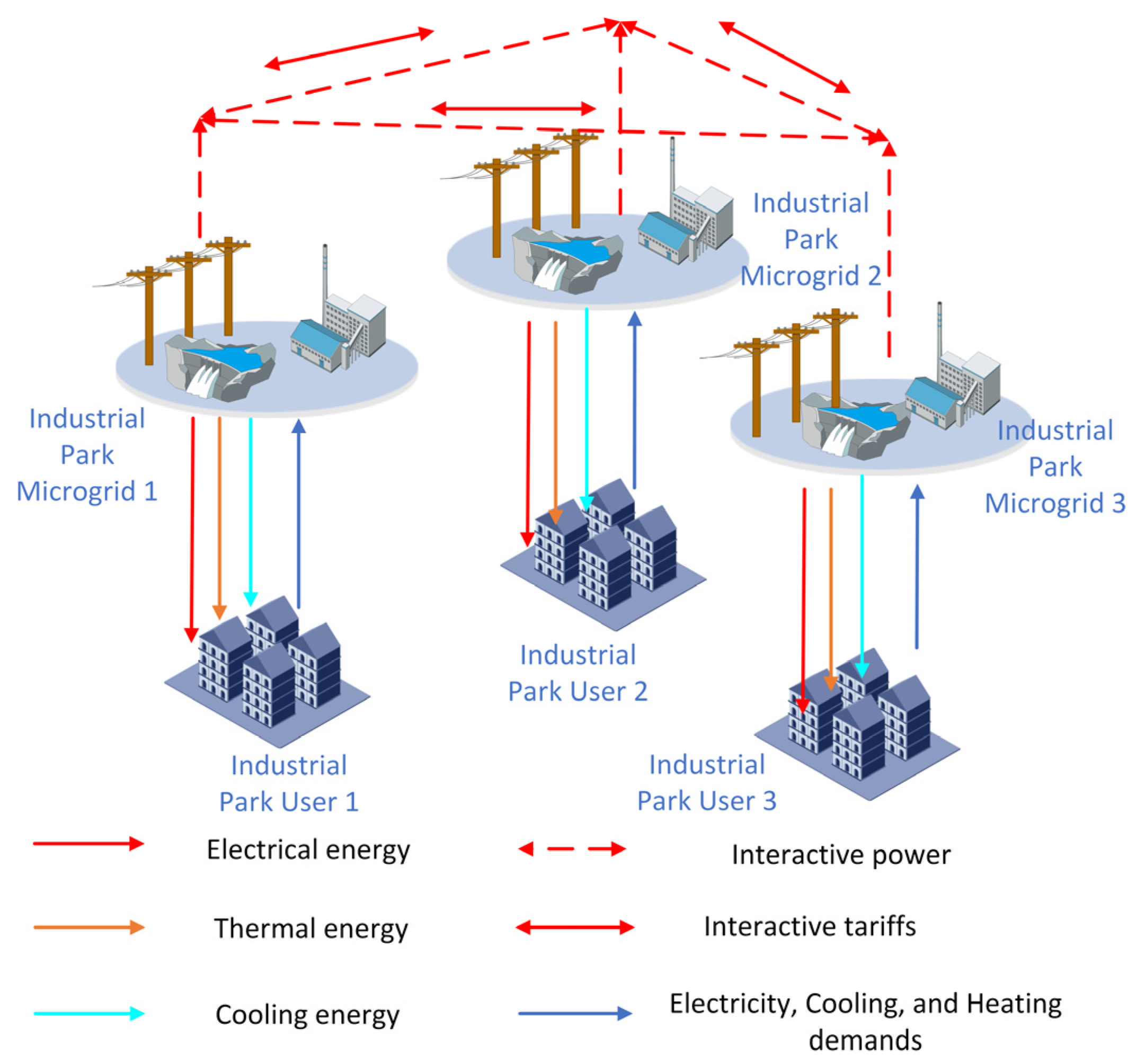
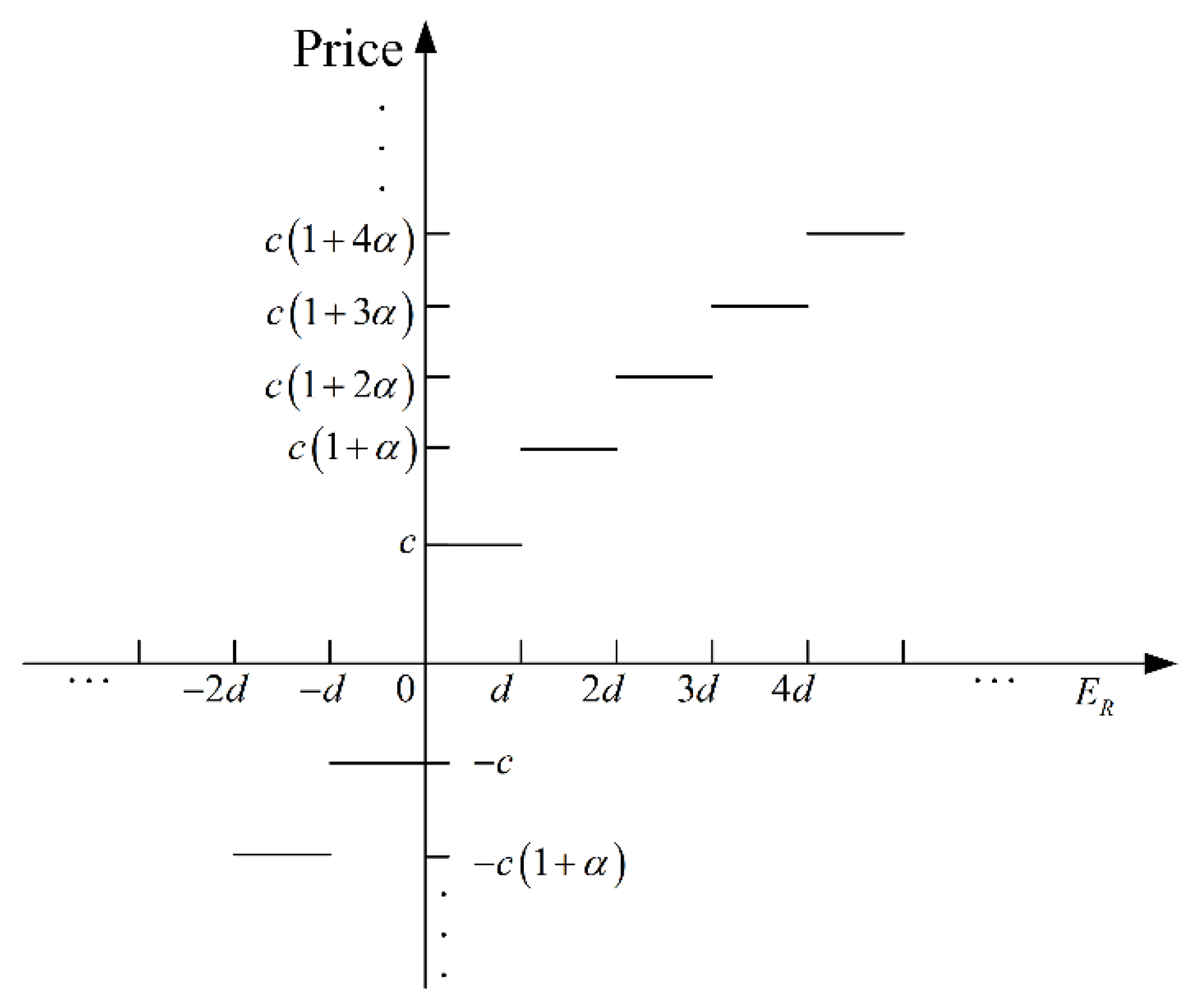
The paper addresses the overlooked interaction between power-to-gas (P2G) devices and carbon capture and storage (CCS) equipment, along with the stepwise carbon trading mechanism in the context of current multi-park integrated energy microgrids (IEMGs). Additionally, it covers the economic and coordinated low-carbon operation issues in multi-park IEMGs under the carbon trading system. It proposes a multi-park IEMG low-carbon operation strategy based on the synchronous Alternating Direction Method of Multipliers (ADMM) algorithm. The algorithm first enables the distribution of cost relationships among multi-park IEMGs. Then, using a method that combines a CCS device with a P2G unit in line with the tiered carbon trading scheme, it expands on the model of single IEMGs managing thermal, electrical, and refrigeration energy. Finally, the comparison of simulation cases proves that the proposed strategy significantly reduces the external energy dependence while keeping the total cost of the users unchanged, and the cost of interaction with the external grid is reduced by 56.64%, the gas cost is reduced by 27.78%, and the carbon emission cost is reduced by 29.54% by joining the stepped carbon trading mechanism.
Keywords: synchronous ADMM; tiered carbon trading mechanism; carbon capture and storage and power-to-gas devices; multi-park integrated energy microgrids synchronous ADMM; tiered carbon trading mechanism; carbon capture and storage and power-to-gas devices; multi-park integrated energy microgrids