Article

Optimal Neutral Grounding in Bipolar DC Networks with Asymmetric Loading: A Recursive Mixed-Integer Quadratic Formulation


by
Walter Gil-González
1,
Oscar Danilo Montoya
2,* and
Jesús C. Hernández
3,*
1
Department of Electrical Engineering, Universidad Tecnológica de Pereira, Pereira 660003, Colombia
2
Grupo de Compatibilidad e Interferencia Electromagnética (GCEM), Facultad de Ingeniería, Universidad Distrital Francisco José de Caldas, Bogotá 110231, Colombia
3
Department of Electrical Engineering, University of Jaén, Campus Lagunillas s/n, Edificio A3, 23071 Jaén, Spain
*
Authors to whom correspondence should be addressed.
Energies 2023, 16(9), 3755; https://doi.org/10.3390/en16093755
Submission received: 29 March 2023 / Revised: 20 April 2023 / Accepted: 26 April 2023 / Published: 27 April 2023
(This article belongs to the Special Issue Planning, Operation and Control of Microgrids)

Abstract

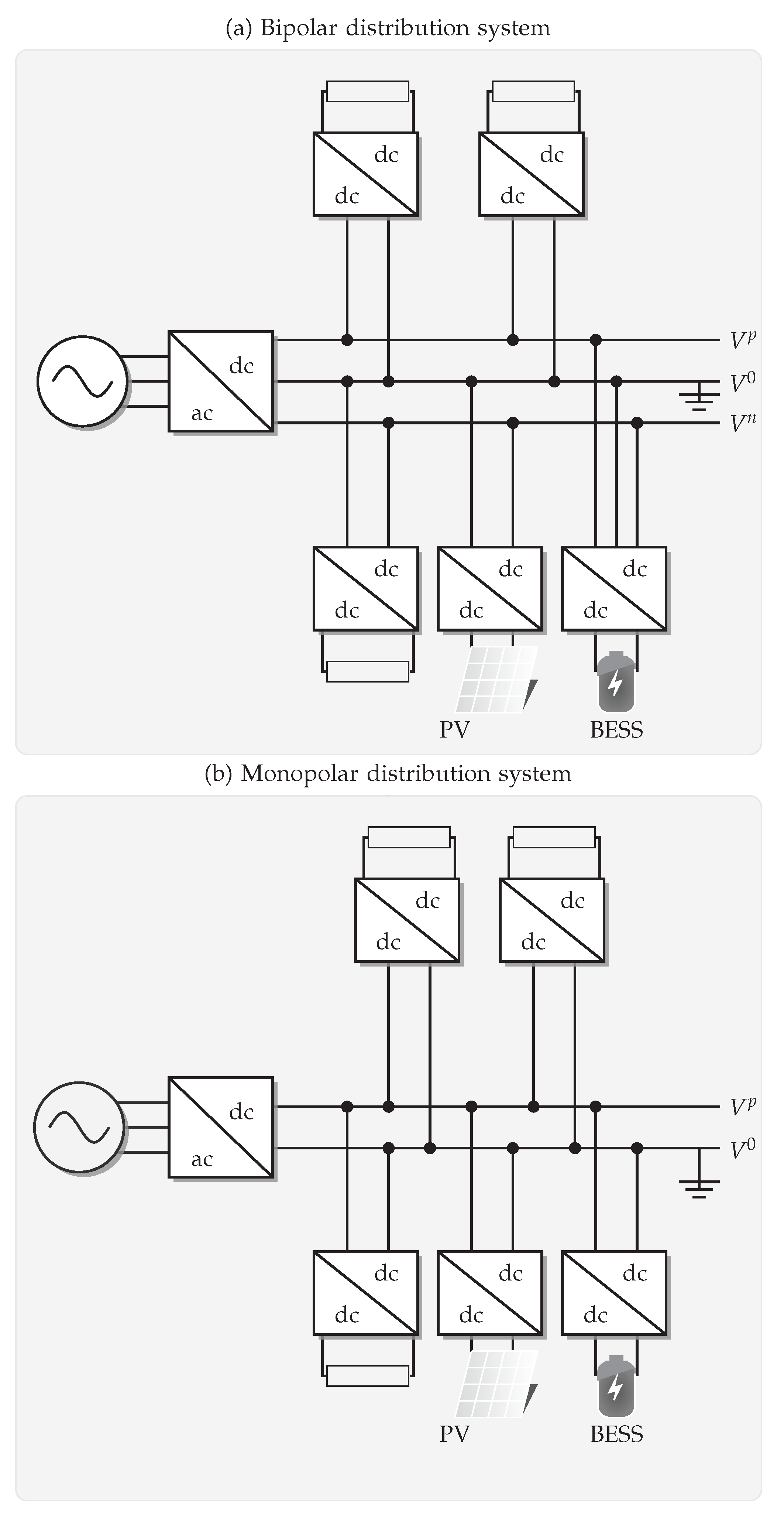
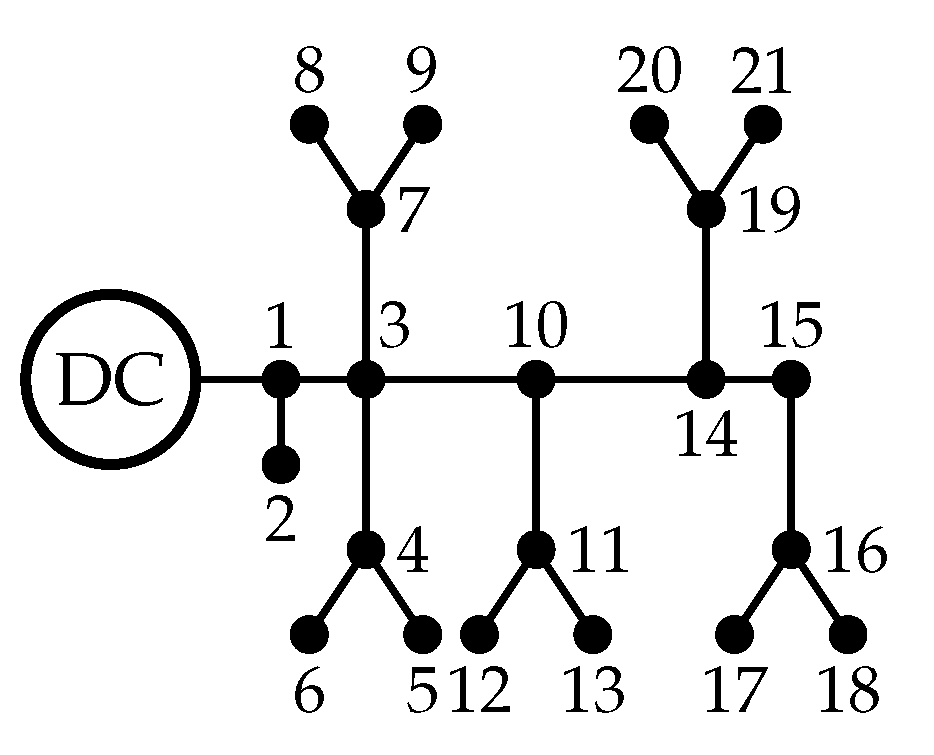
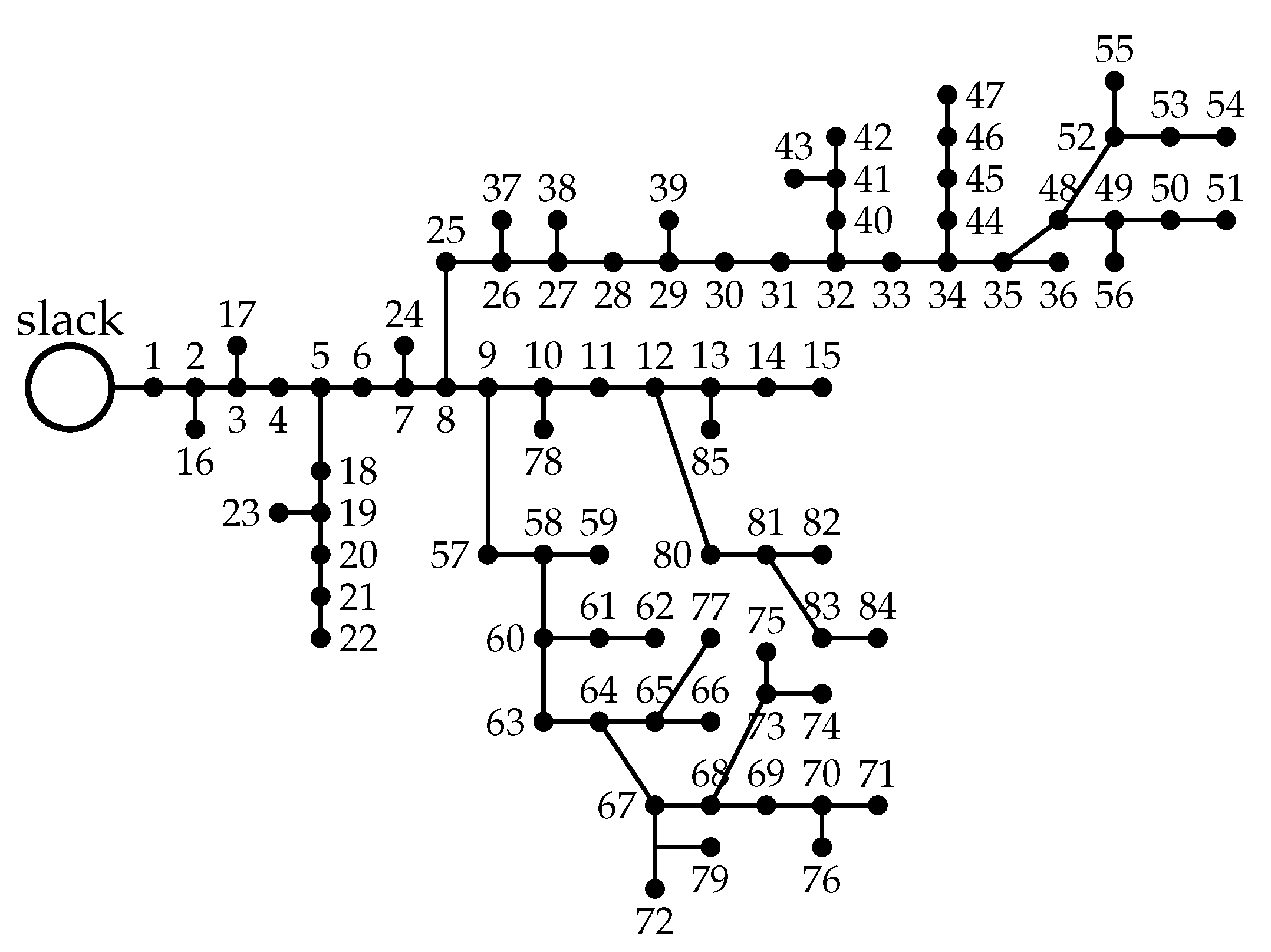
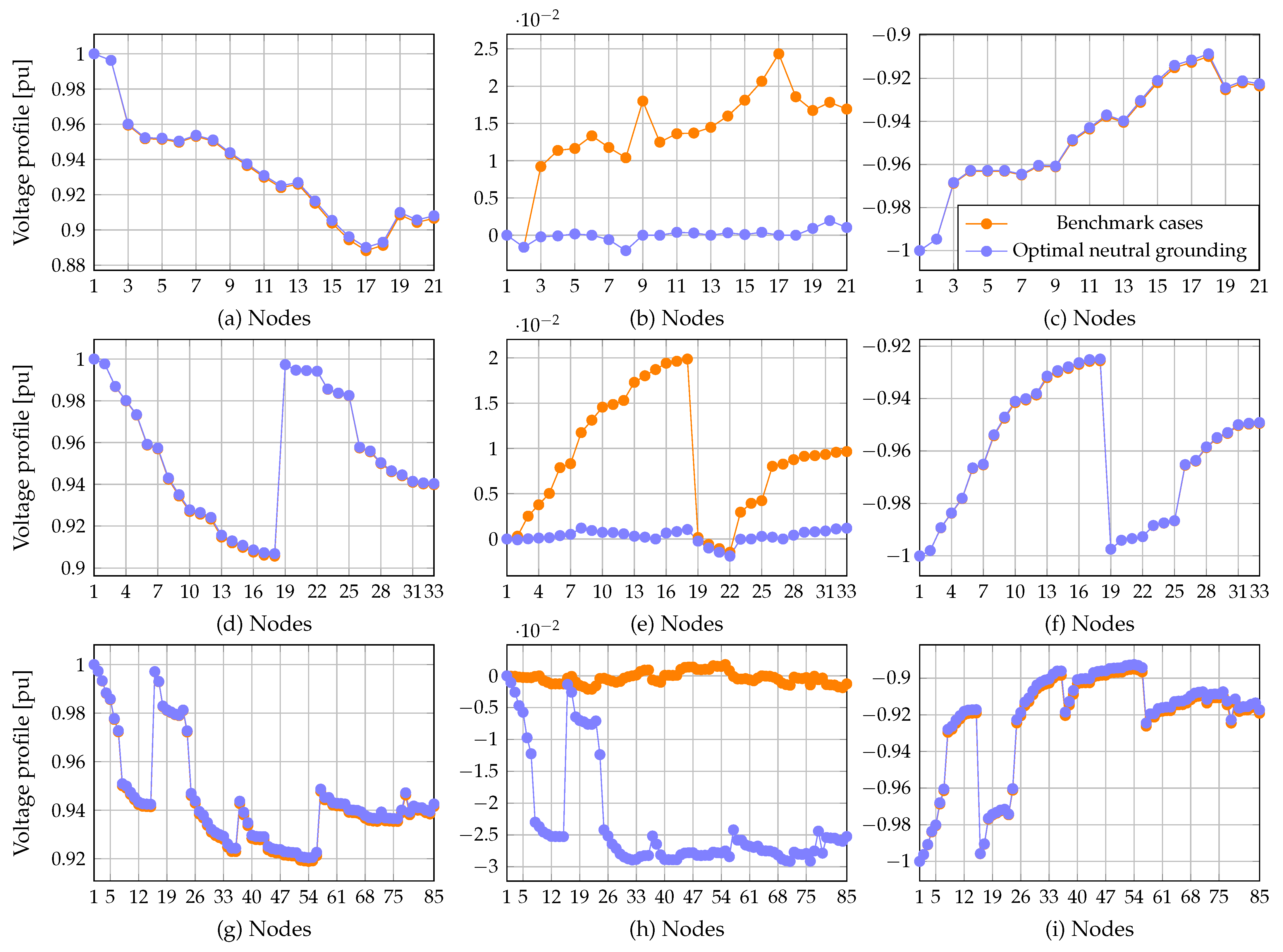
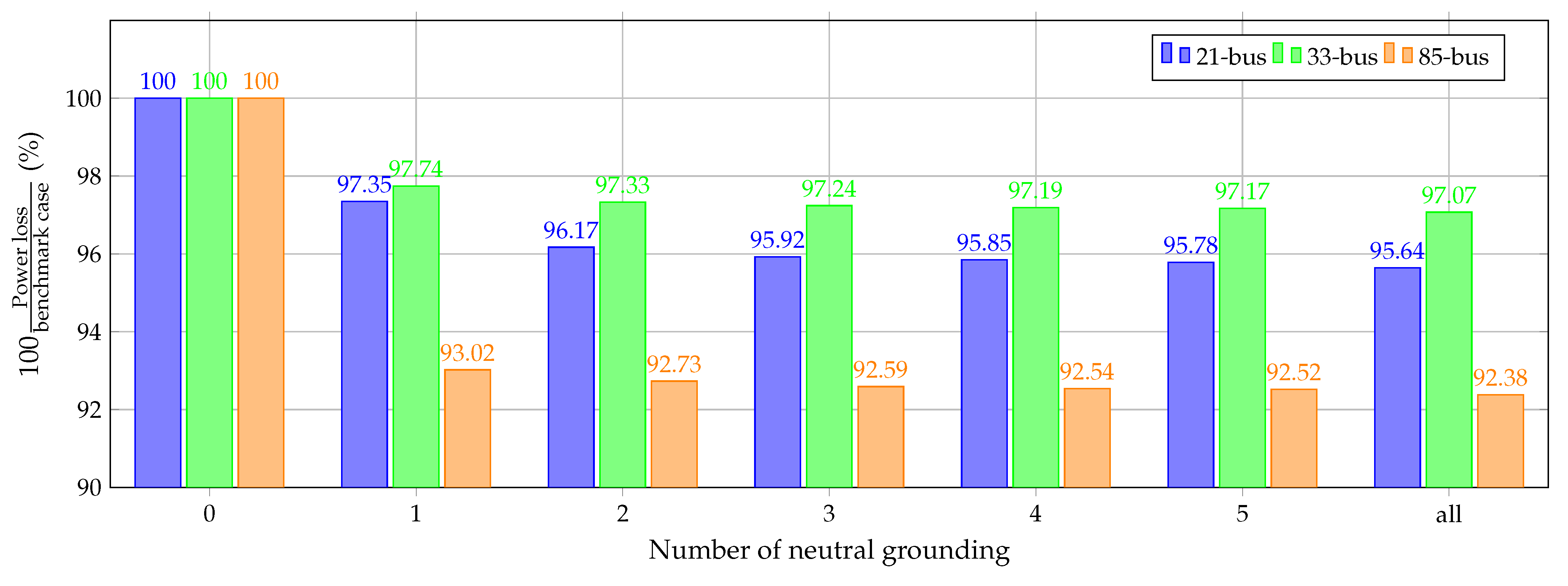
This paper presents a novel approach to tackle the problem of optimal neutral wire grounding in bipolar DC networks including asymmetric loading, which naturally involves mixed-integer nonlinear programming (MINLP) and is challenging to solve. This MINLP model is transformed into a recursive mixed-integer quadratic (MIQ) model by linearizing the hyperbolic relation between voltage and powers in constant power terminals. A recursive algorithm is implemented to eliminate the possible errors generated by linearization. The proposed recursive MIQ model is assessed in two bipolar DC systems and compared against three solvers of the GAMS software. The results obtained validate the performance of the proposed MIQ model, which finds the global optimum of the model while reducing power losses for bipolar DC systems with 21, 33, and 85 buses by 4.08%, 2.75%, and 7.40%, respectively, when three nodes connected to the ground are considered. Furthermore, the model exhibits a superior performance when compared to the GAMS solvers. The impact of grounding the neutral wire in bipolar DC networks is also studied by varying the number of available nodes to be grounded. The results show that the reduction in power losses is imperceptible after grounding the third node for the three bipolar DC systems under study.
Keywords: optimal neutral grounding; recursive mixed-integer quadratic model; bipolar DC systems optimal neutral grounding; recursive mixed-integer quadratic model; bipolar DC systems