Article

A WGAN-GP-Based Scenarios Generation Method for Wind and Solar Power Complementary Study

1
State Key Laboratory of Alternate Electrical Power System with Renewable Energy Sources (NCEPU), North China Electric Power University, Beijing 102206, China
2
School of Physics and Electronic Information Engineering, Qinghai Normal University, Xining 810016, China
3
Department of Electrical Engineering, Tsinghua University, Beijing 100084, China
*
Author to whom correspondence should be addressed.
Energies 2023, 16(7), 3114; https://doi.org/10.3390/en16073114
Submission received: 27 February 2023 / Revised: 27 March 2023 / Accepted: 28 March 2023 / Published: 29 March 2023
(This article belongs to the Section A3: Wind, Wave and Tidal Energy)

Abstract

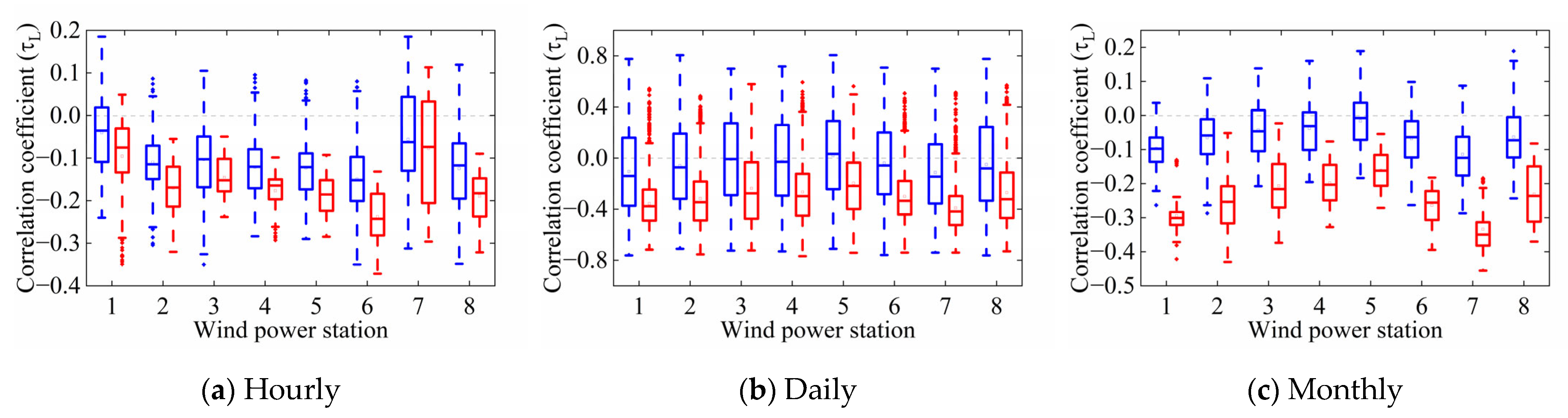
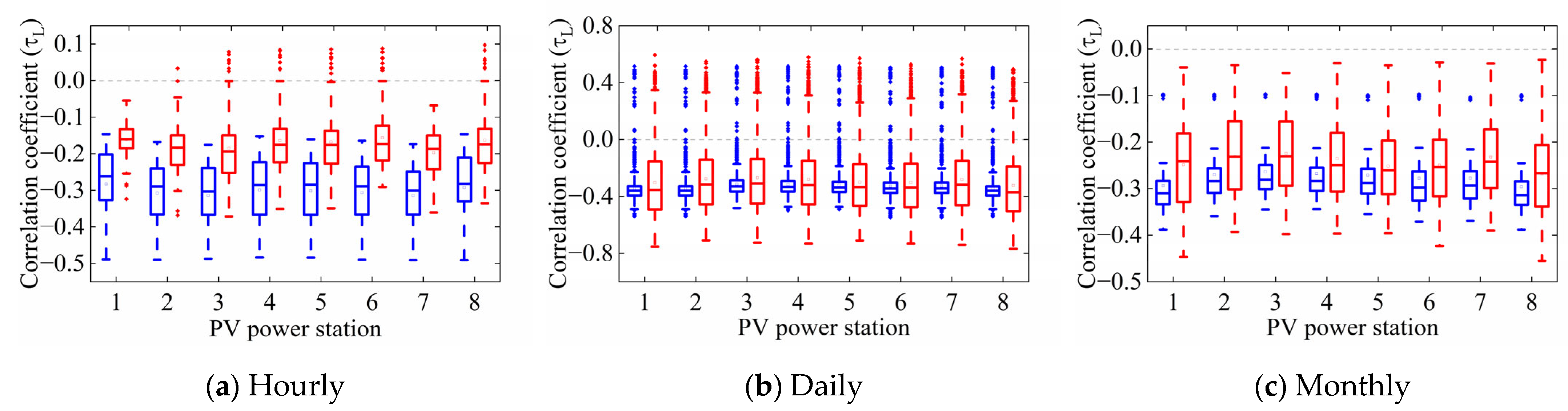
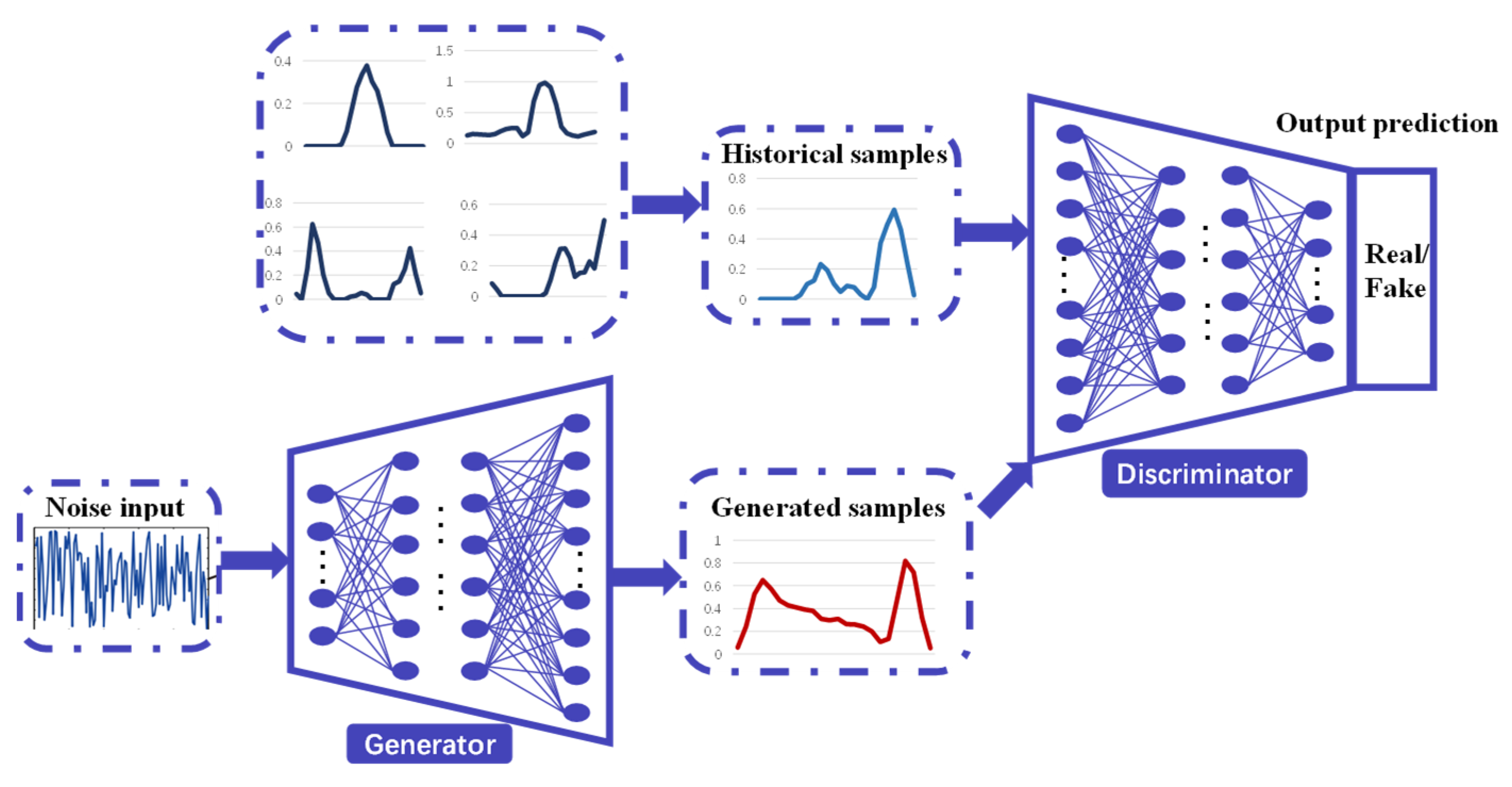
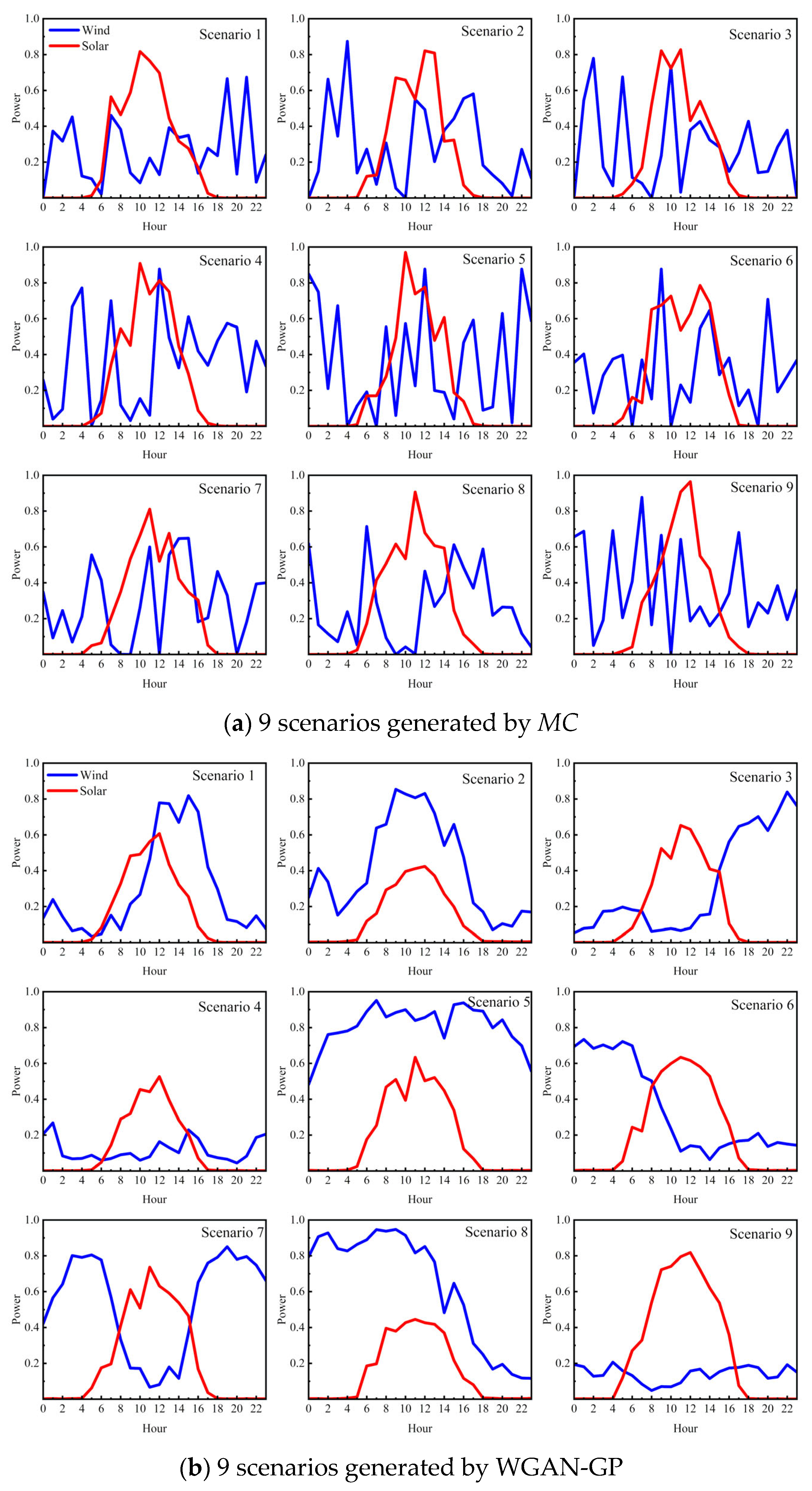
The issue of renewable energy curtailment poses a crucial challenge to its effective utilization. To address this challenge, mitigating the impact of the intermittency and volatility of wind and solar energy is essential. In this context, this paper employs scenario analysis to examine the complementary features of wind and solar hybrid systems. Firstly, the study defines two types of complementary indicators that distinguish between output smoothing and source-load matching. Secondly, a novel method for generating wind and solar output scenarios based on improved Generative Adversarial Networks is presented and compared against the conventional Monte Carlo and Copula function methods. Lastly, the generated wind and solar scenarios are employed to furnish complementary features. The testing results across eight regions indicate the proposed scenario generation method proficiently depicts the historical relevance as well as future uncertainties. This study found that compared to the Copula function method, the root mean square error of the generated data was reduced by 4% and 3.4% for independent and hybrid systems, respectively. Moreover, combining these two resources in most regions showed that the total output smoothness and source-load matching level cannot be enhanced simultaneously. This research will serve as a valuable point of reference for planning and optimizing hybrid systems in China.
Keywords: wind-solar hybrid system; complementary characteristic; scenario generation; renewable energy curtailment wind-solar hybrid system; complementary characteristic; scenario generation; renewable energy curtailment