Article

Dark Fermentation of Arundo donax: Characterization of the Anaerobic Microbial Consortium

1
Dipartimento di Ingegneria Chimica, dei Materiali e della Produzione Industriale (DICMaPI), Università degli Studi di Napoli Federico II, 80125 Napoli, Italy
2
Nereus SAS, 34230 Le Pouget, France
3
Dipartimento di Scienze per gli Alimenti, la Nutrizione e l’Ambiente (DeFENS), Università degli Studi di Milano, 20133 Milano, Italy
*
Author to whom correspondence should be addressed.
Energies 2023, 16(4), 1813; https://doi.org/10.3390/en16041813
Submission received: 26 November 2022 / Revised: 4 February 2023 / Accepted: 6 February 2023 / Published: 11 February 2023
(This article belongs to the Special Issue Biopower Technologies)

Abstract

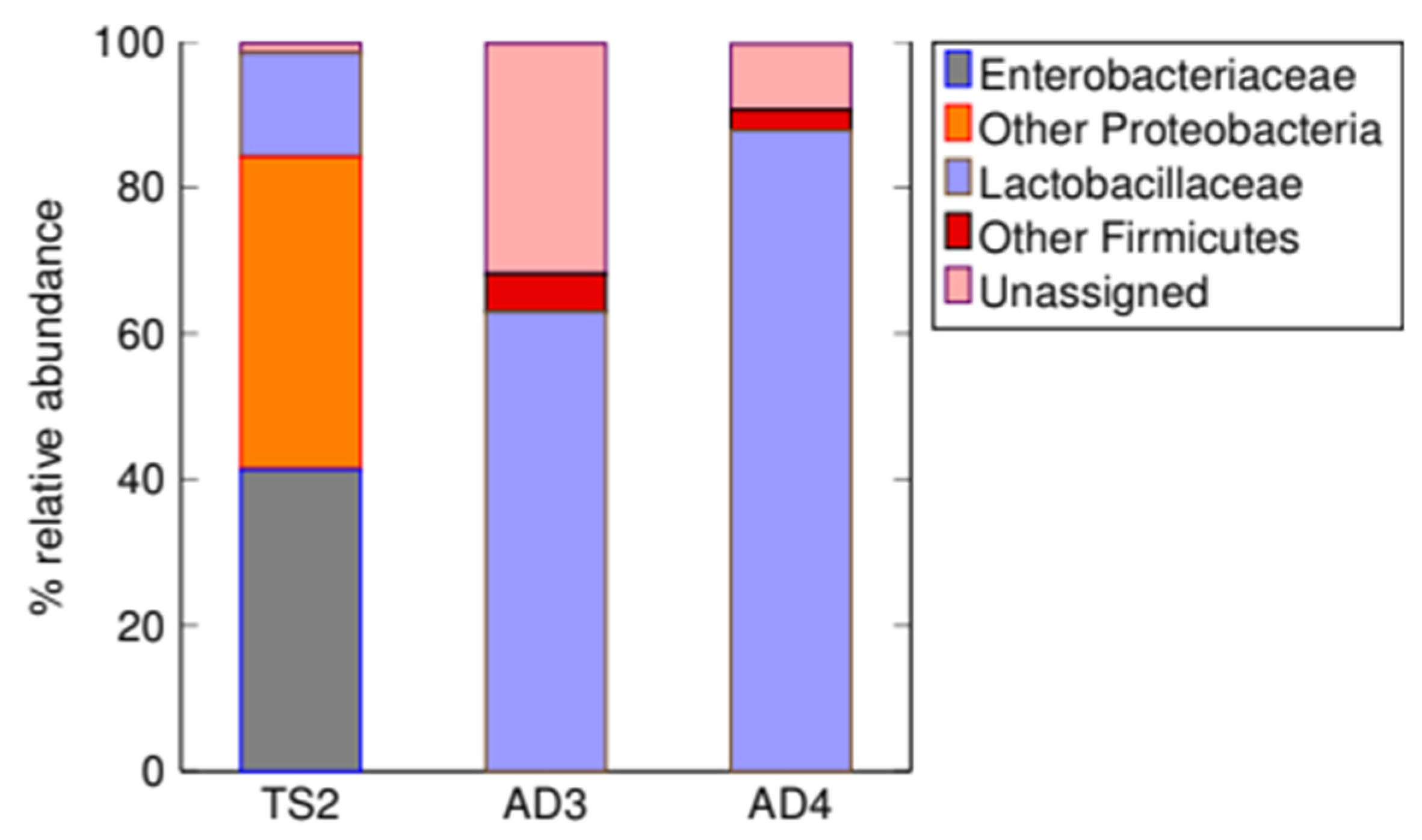
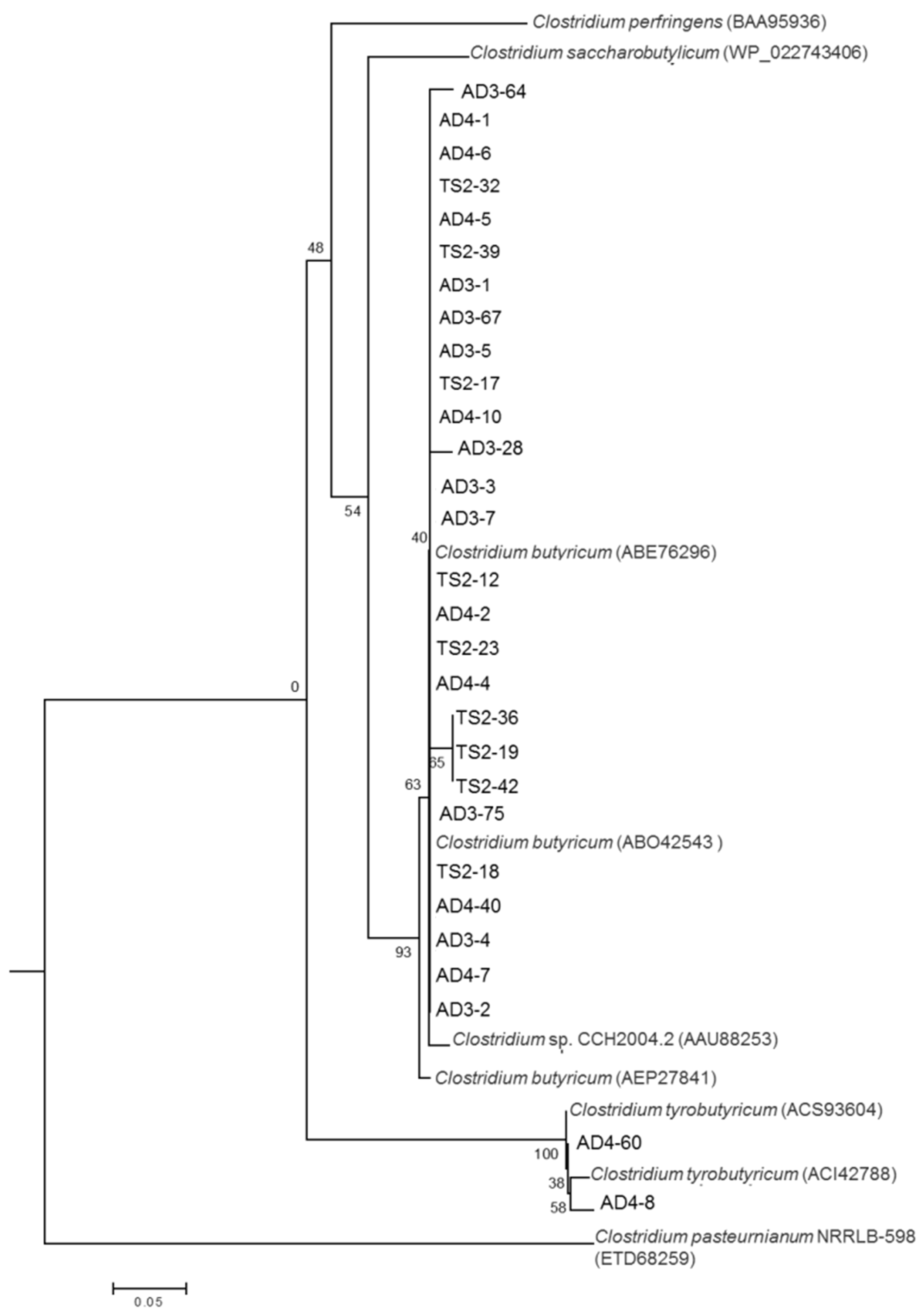
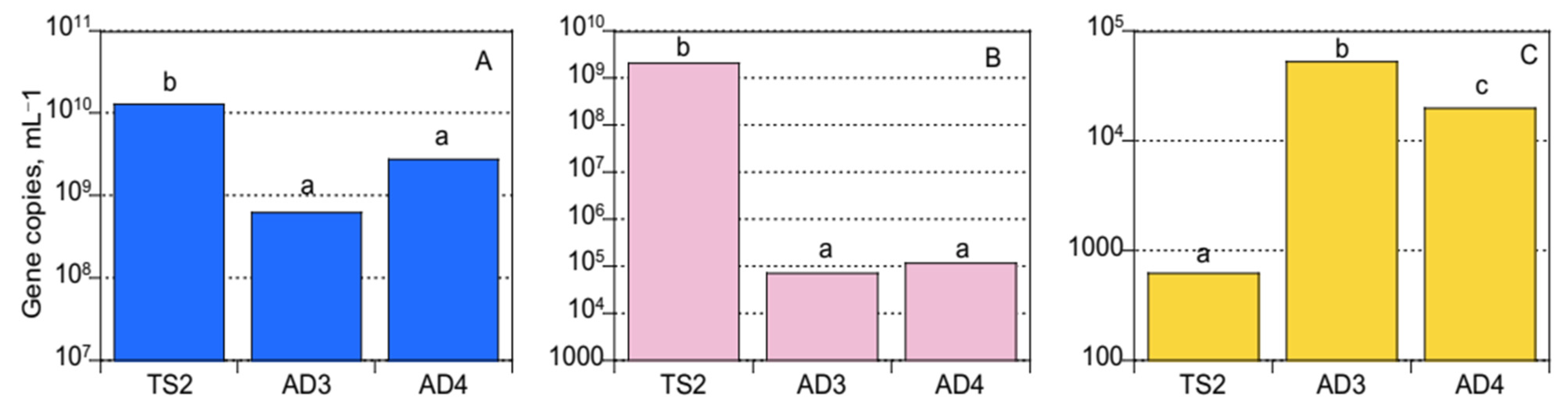
The dark fermentation of lignocellulose hydrolysates is a promising process for the production of hydrogen from renewable sources. Nevertheless, hydrogen yields are often lower than those obtained from other carbohydrate sources due to the presence of microbial growth inhibitors in lignocellulose hydrolysates. In this study, a microbial consortium for the production of hydrogen by dark fermentation has been obtained from a wild methanogenic sludge by means of thermal treatments. The consortium has been initially acclimated to a glucose-based medium and then used as inoculum for the fermentation of Arundo donax hydrolysates. Hydrogen yields obtained from fermentation of A. donax hydrolysates were lower than those obtained from glucose fermentation using the same inoculum (0.30 ± 0.05 versus 1.11 ± 0.06 mol of H2 per mol of glucose equivalents). The hydrogen-producing bacteria belonged mainly to the Enterobacteriaceae family in cultures growing on glucose and to Clostridium in those growing on A. donax hydrolysate. In the latter cultures, Lactobacillus outcompeted Enterobacteriaceae, although Clostridium also increased. Lactobacillus outgrowth could account for the lower yields observed in cultures growing on A. donax hydrolysate.
Keywords: biohydrogen; dark fermentation; Arundo donax; lignocellulosic biomass; anaerobic consortia; Clostridium; Klebsiella; Enterobacter; lactic acid bacteria biohydrogen; dark fermentation; Arundo donax; lignocellulosic biomass; anaerobic consortia; Clostridium; Klebsiella; Enterobacter; lactic acid bacteria