Article

Design and Evaluation of a Water-Based, Semitransparent Photovoltaic Thermal Trombe Wall

1
Department of Mechanical Engineering, Delhi Technological University, Delhi 110042, India
2
Department of Mechanical Engineering, Jadavpur University, Kolkata 700032, India
3
Department of Mechanical Engineering, IIT Madras, Chennai 600036, India
4
Department of Mechanical Engineering, Lassonde School of Engineering, York University, Toronto, ON M3J 2S5, Canada
*
Author to whom correspondence should be addressed.
These two authors contributed equally to this paper.
Energies 2023, 16(4), 1618; https://doi.org/10.3390/en16041618
Submission received: 8 January 2023 / Revised: 29 January 2023 / Accepted: 2 February 2023 / Published: 6 February 2023

Abstract

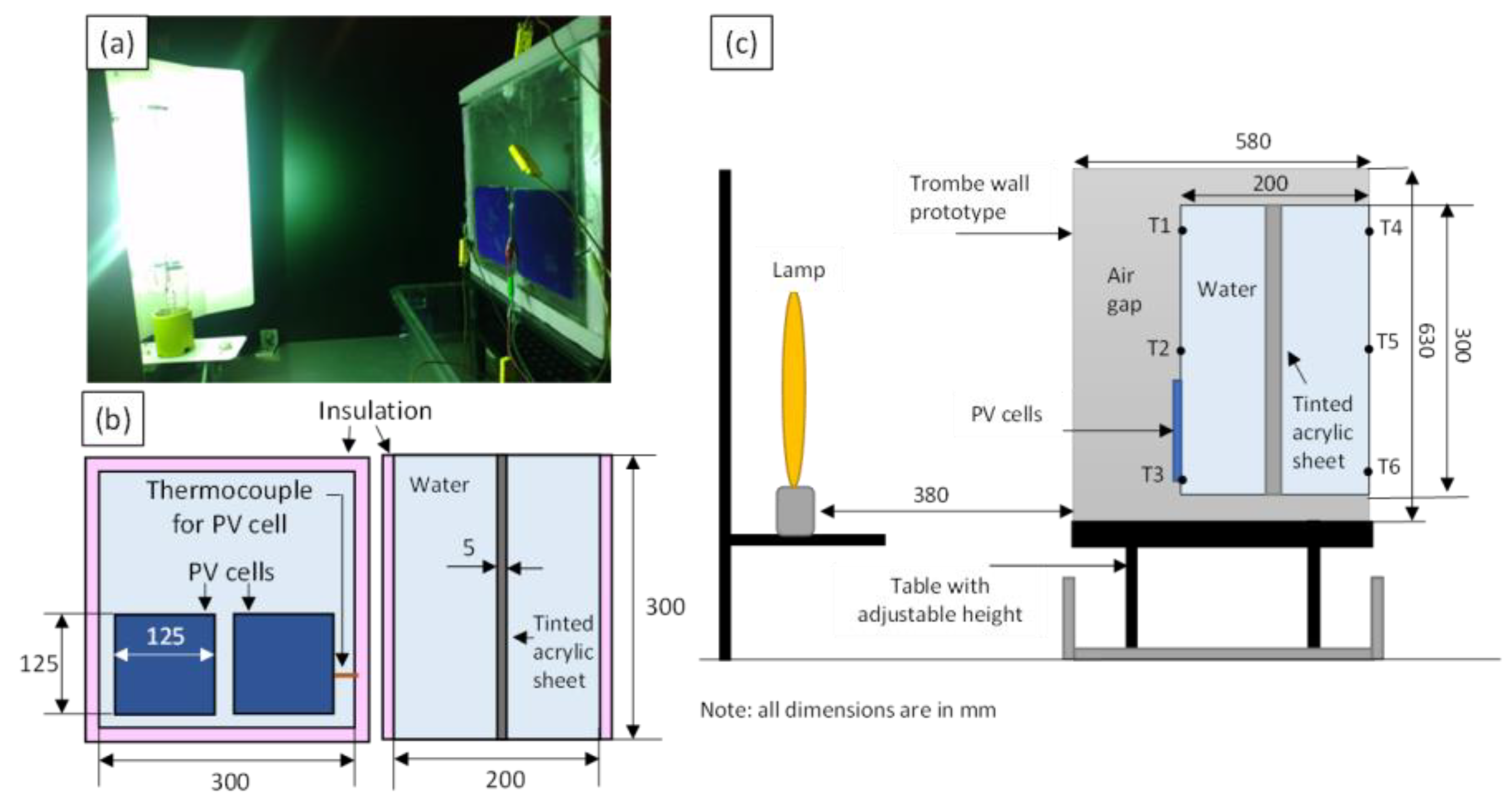
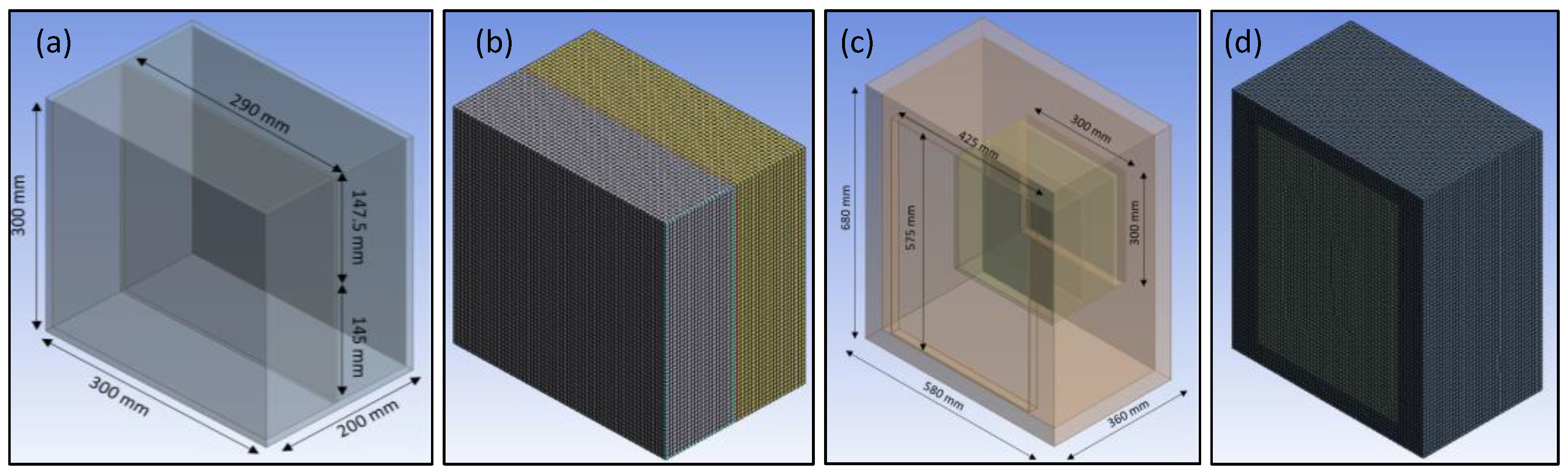
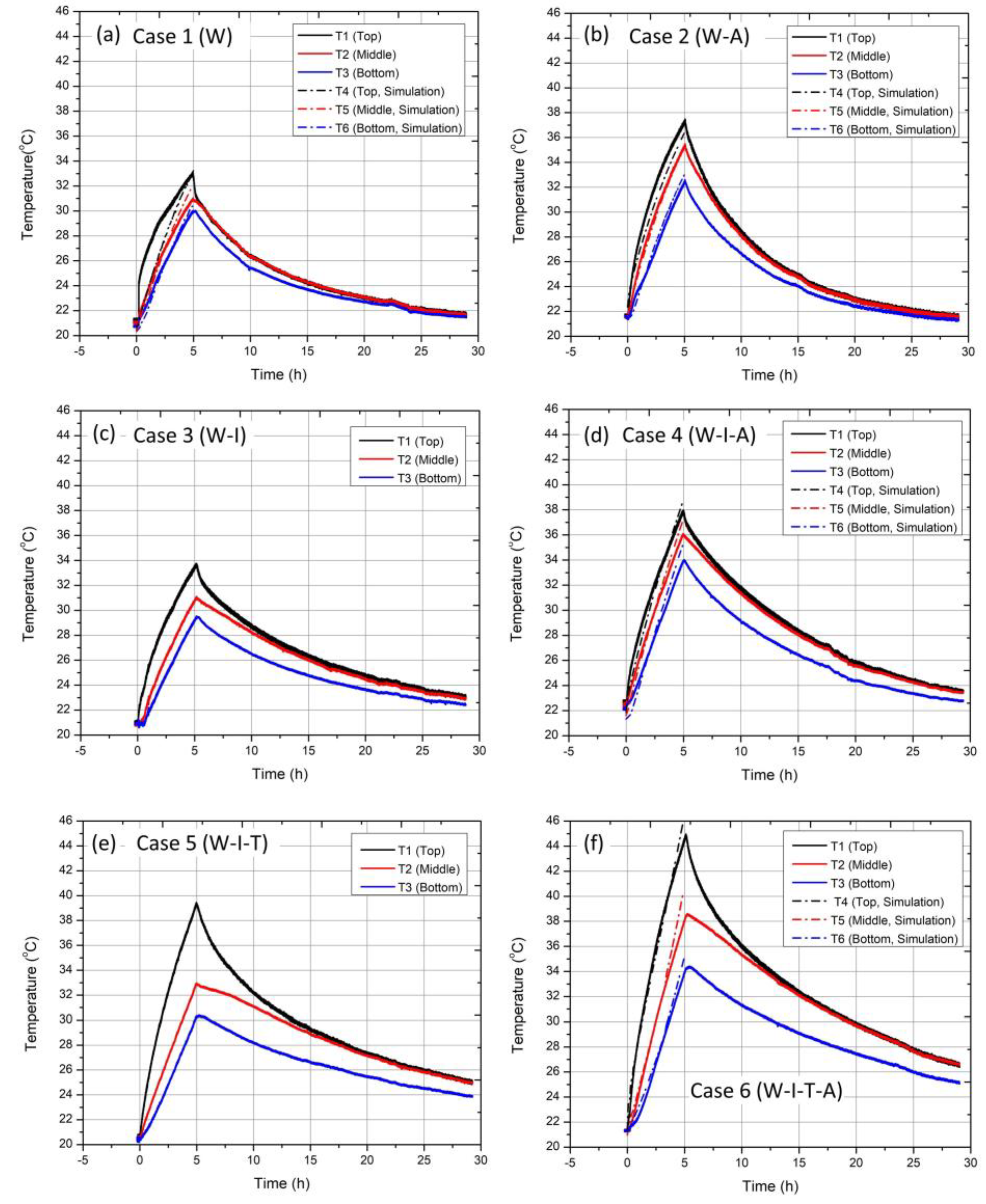
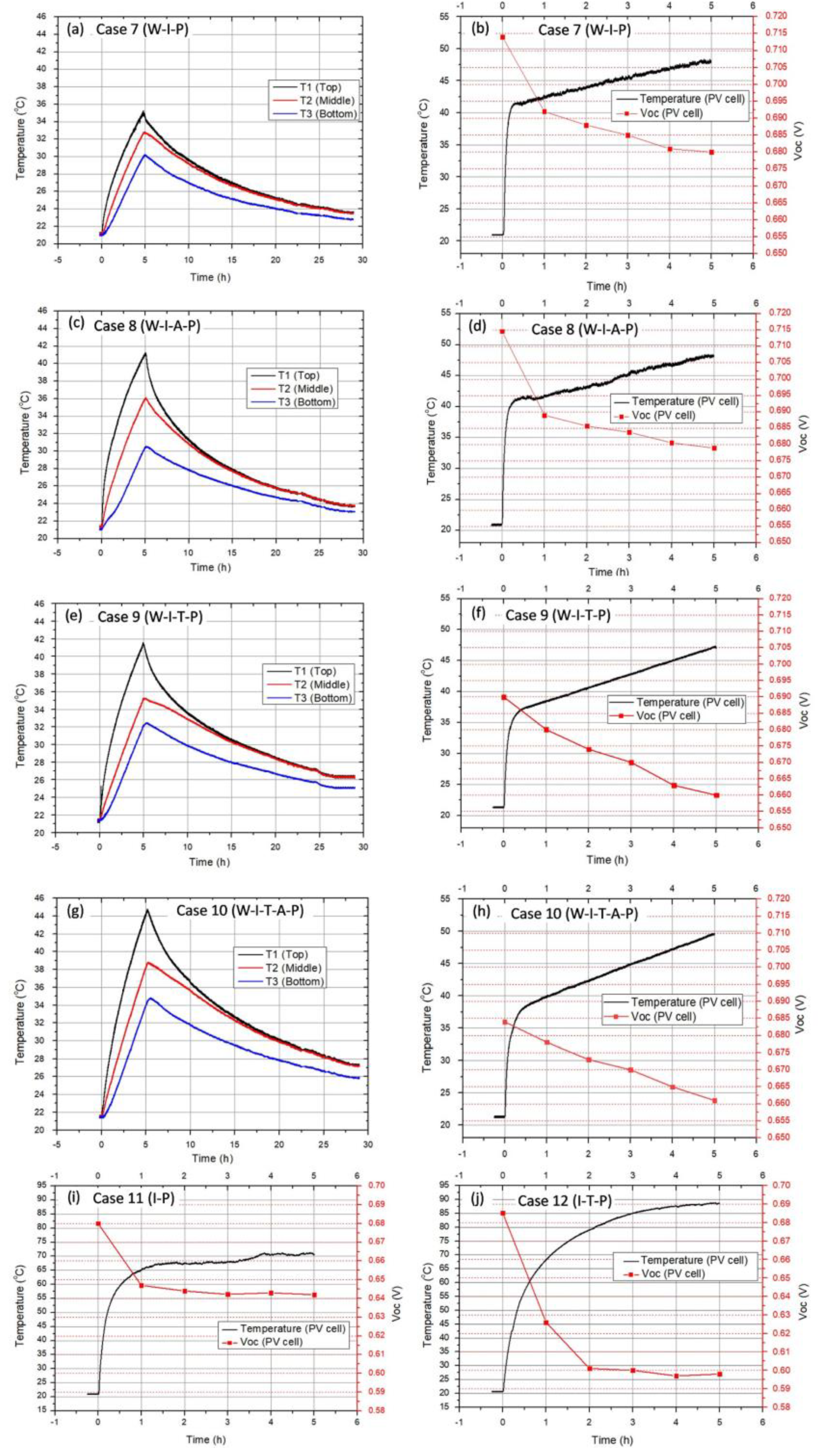
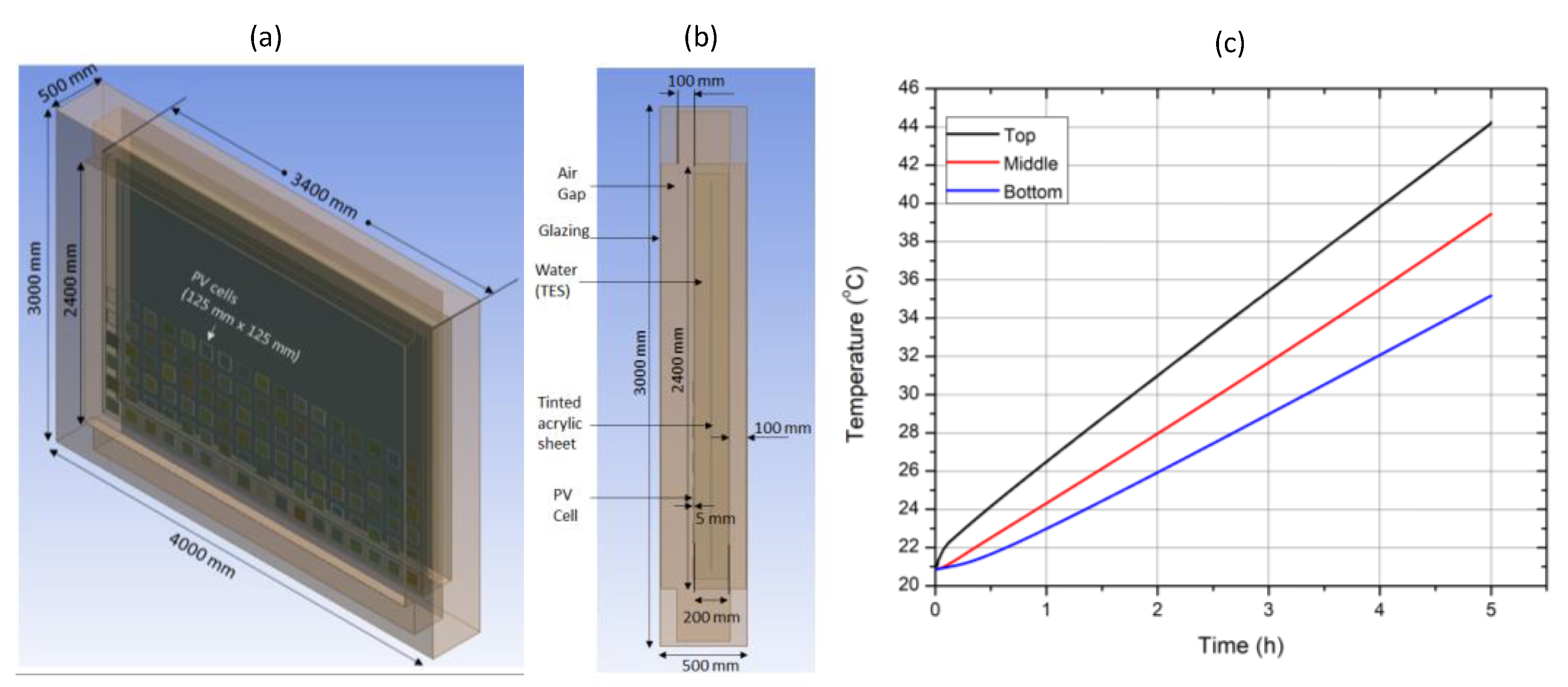
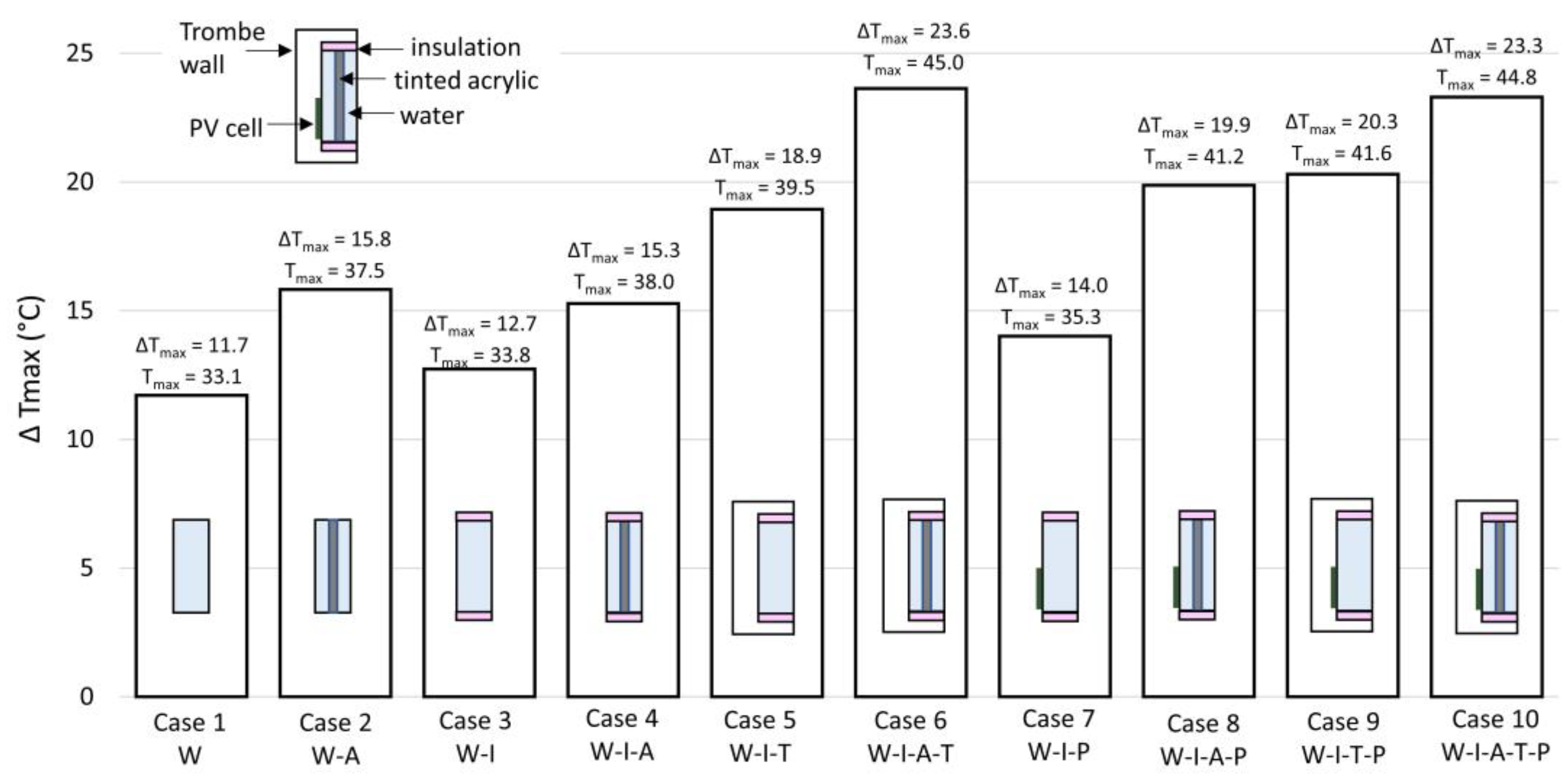
Trombe walls are a passive solar technology that can contribute to the reduction of building heating loads. However, during warmer weather conditions, Trombe walls may cause overheating. In this work, we investigate the feasibility of using Trombe walls to perform multiple functions during warm weather conditions including (1) heating and storing water for building applications, (2) providing occupants with visibility to the outdoors, and (3) generating electric power. Experiments are performed on a small-scale prototype comprising a clear water storage container with a transparent window and a tinted acrylic sheet that is immersed in the water. Photovoltaic cells are placed on the bottom half of the front face of the water storage container. Results show that water at the top of the clear container can be heated to temperatures as high as 45 °C when subjected to solar-simulated radiation for five hours. Numerical simulations predict that similar temperatures can be reached if the Trombe wall is scaled to full size. Furthermore, the cooler water at the bottom of the water storage container acts as a heatsink that reduces the extent to which the temperature of the PV cells is elevated. Results show the temperature and open circuit voltage of the PV cells are about 50 °C and 0.66 V, respectively, when water is present. However, when the water is absent from the container, the temperature of the PV cells increases up to 90 °C and their open circuit voltage drops to 0.60 V. The results show that water-based, semitransparent photovoltaic thermal Trombe walls have the potential to operate as multifunctional building envelopes that simultaneously provide for daylighting, heated water and electric power, and further research in this area is warranted.
Keywords: building energy; Trombe wall; thermal energy storage; building envelopes; building integrated photovoltaics building energy; Trombe wall; thermal energy storage; building envelopes; building integrated photovoltaics