Article

Research on Transformation of Connate Water to Movable Water in Water-Bearing Tight Gas Reservoirs
1
Petroleum Engineering Technology Research Institute, SINOPEC North China Oil & Gas Company, Zhengzhou 450000, China
2
National Key Laboratory of Deep Oil and Gas, China University of Petroleum (East China), Qingdao 266580, China
3
Research Center of Multiphase Flow in Porous Media, School of Petroleum Engineering, China University of Petroleum (East China), Qingdao 266580, China
*
Author to whom correspondence should be addressed.
Energies 2023, 16(19), 6961; https://doi.org/10.3390/en16196961
Submission received: 1 September 2023 / Revised: 24 September 2023 / Accepted: 4 October 2023 / Published: 5 October 2023
(This article belongs to the Special Issue Advances in the Development of Unconventional Oil and Gas Resources)

Abstract

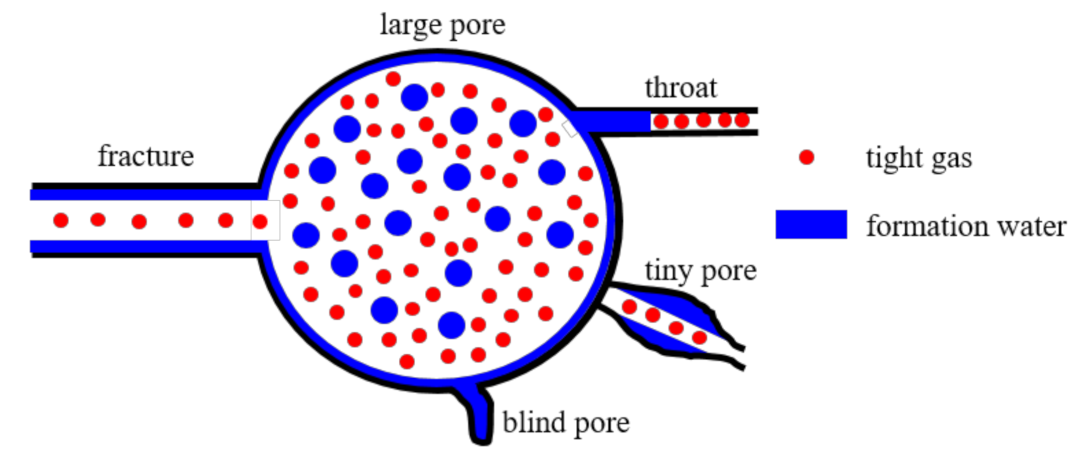
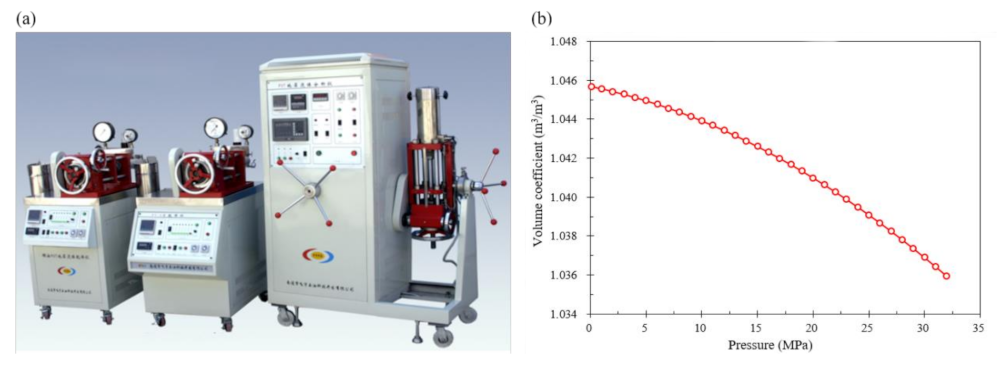
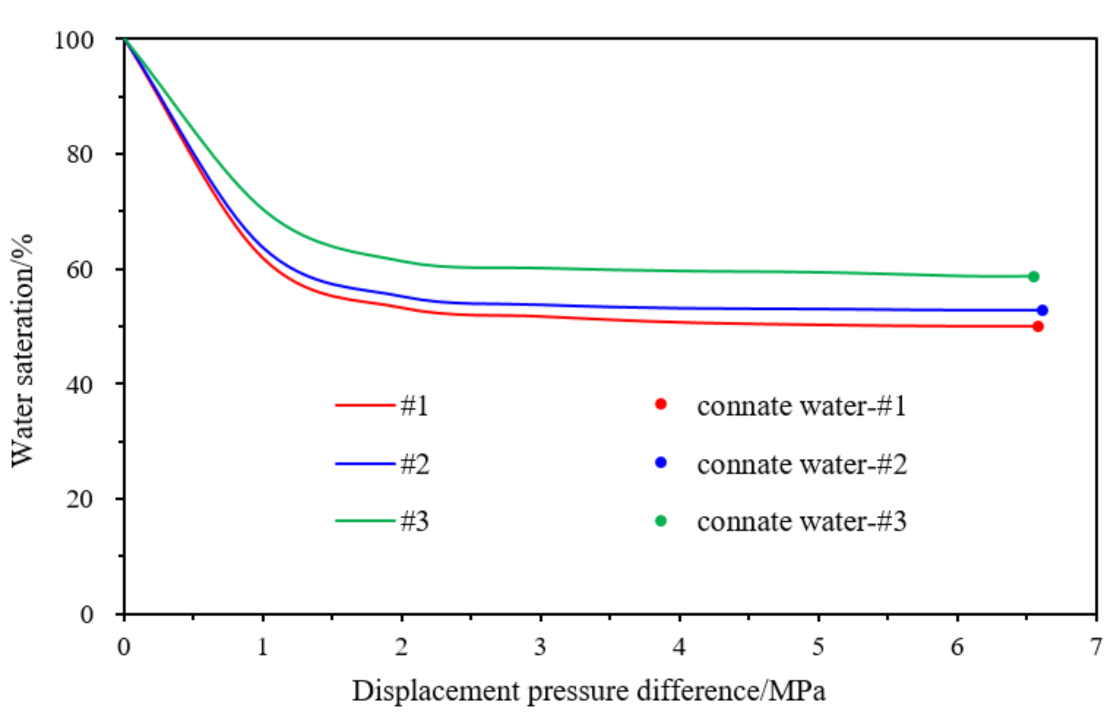
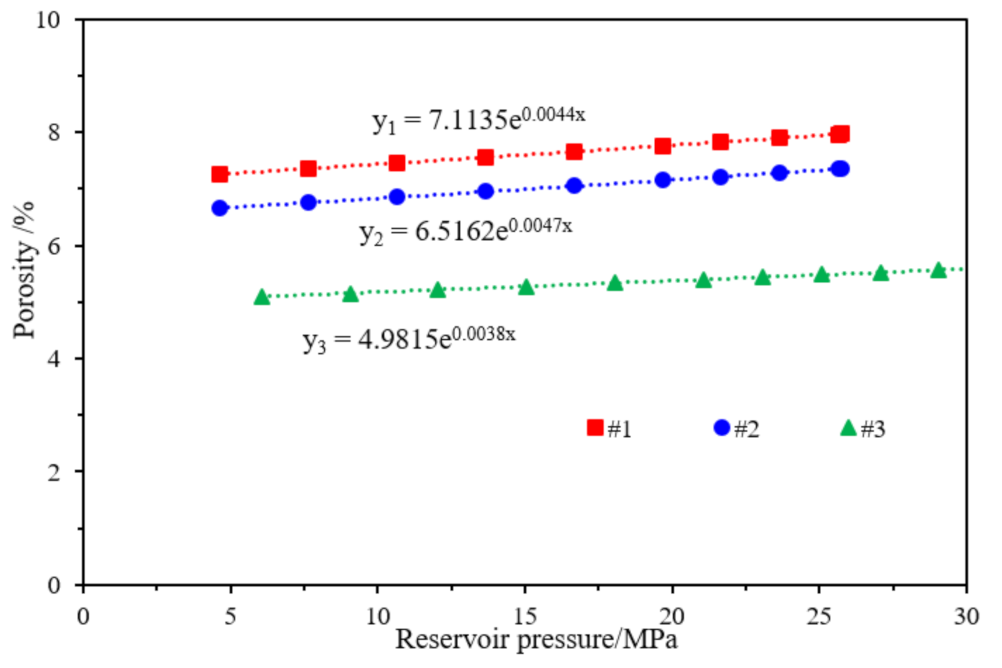
The Dongsheng gas field is a water-bearing tight gas reservoir characterized by high connate water saturation. During gas production, the transformation of connate water into movable water introduces a unique water production mode, significantly impacting gas reservoir recovery. Current experimental and theoretical methods for assessing formation water mobility are static and do not address the transformation mechanism from connate into movable water. In this study, we considered dynamic changes in formation stress and proposed the mechanism for the transformation of connate water into movable water during depressurization, involving the expansion of connate water films and the reduction of pore volume. We developed a novel methodology to calculate the dynamic changes in movable and connate water saturation in tight reservoirs due to reservoir pressure reduction. Furthermore, we quantitatively evaluated the transformation of connate water into movable water in the Dongsheng gas field through laboratory experiments (including formation water expansion tests, connate water tests, and porosity stress sensitivity tests) and theoretical calculations. Results show that under original stress, the initial connate water saturation in the Dongsheng gas field ranges from 50.09% to 58.5%. As reservoir pressure decreases, the maximum increase in movable water saturation ranges from 6.1% to 8.4% due to the transformation of connate water into movable water. This explains why formation water is produced in large quantities during gas production. Therefore, considering the transition of connate water to movable water is crucial when evaluating water production risk. These findings offer valuable guidance for selecting optimal well locations and development layers to reduce reservoir water production risks.
Keywords: tight gas reservoir; connate water; movable water; formation water expansion; stress sensitivity tight gas reservoir; connate water; movable water; formation water expansion; stress sensitivity