Article

Use of CO2 in Pressurized, Fluidized Bed Gasification of Waste Biomasses
Institute for Chemical Processing of Coal (IChPW), 41-803 Zabrze, Poland
*
Author to whom correspondence should be addressed.
Energies 2022, 15(4), 1395; https://doi.org/10.3390/en15041395
Submission received: 3 January 2022 / Revised: 7 February 2022 / Accepted: 11 February 2022 / Published: 14 February 2022
(This article belongs to the Special Issue Residual Biomass Conversion to Bioenergy)

Abstract

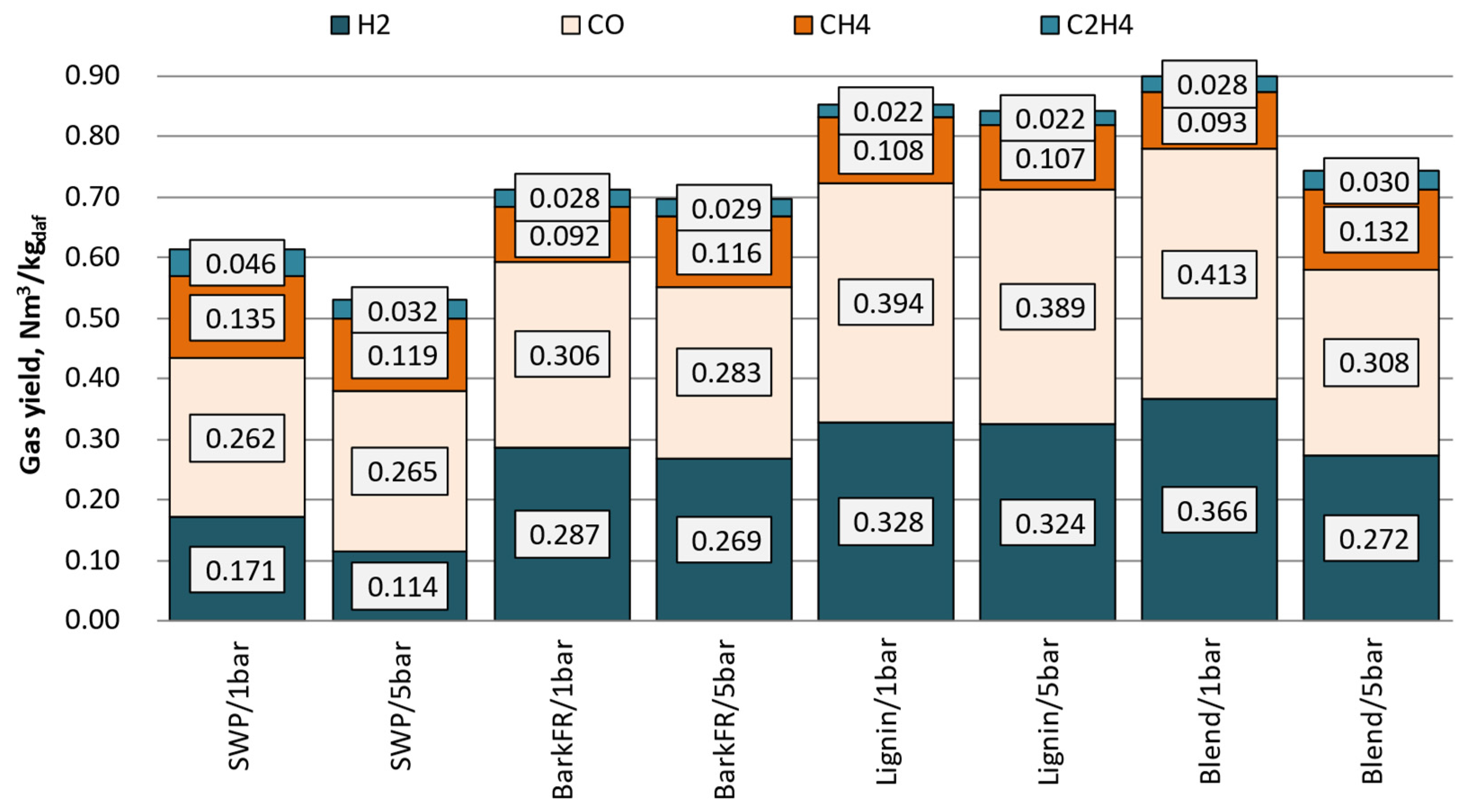
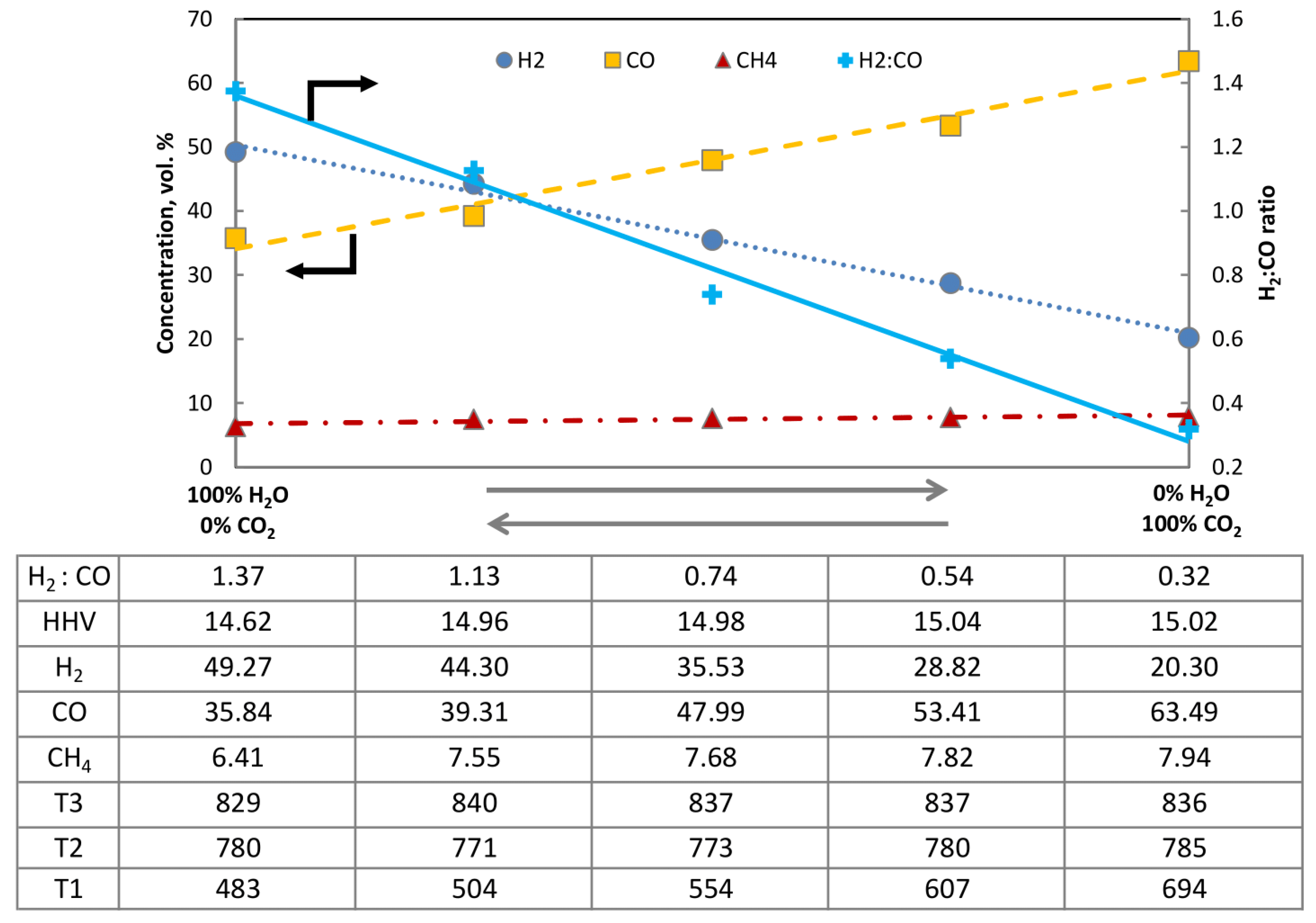
This research discusses the results of experiments performed on a large-scale gasification installation to determine the influence of total system pressure and partial pressure of CO2 on the efficiency of conversion and the quality of the produced gas. The three tested feedstocks were bark, lignin and a blend of bark and wheat straw, while softwood pellet (SWP) was used as a reference fuel. A mixture of O2/CO2/H2O was used as a gasification agent. The tests were devised to validate the previously proposed process parameters, verify whether similar ash agglomeration problems would occur and compare the thermal behaviour of the feedstocks converted in close-to-industrial process conditions. An understanding of the effect of using CO2 for gasification was further deepened, especially regarding its influence on the yield of H2 and temperature profiles of the fluidized bed. The influence of gasification pressure was predominantly visible in higher yields of all hydrocarbons (including CH4) and lower overall production of producer gas. At the process development unit (PDU), all tested feedstocks were converted at similar process conditions and no signs of potential bed agglomeration could be noticed. This opposes the findings observed in smaller-scale bubbling fluidized bed (BFB) tests. The discussion behind these discrepancies is also presented.
Keywords: gasification; CFB; CO2; BtX; pressure gasification; biogenic residues gasification; CFB; CO2; BtX; pressure gasification; biogenic residues