You are currently viewing a new version of our website. To view the old version click .
Energies
  • Article
  • Open Access

2 July 2022

Influence of the Working Parameters of the Chassis Dynamometer on the Assessment of Tuning of Dual-Fuel Systems

and
Faculty of Mechanical Engineering, Military University of Technology in Warsaw, 00-908 Warsaw, Poland
*
Author to whom correspondence should be addressed.
This article belongs to the Special Issue Advances in Internal Combustion Engines and Motor Vehicles

Abstract

The article presents the justification for the necessity to use chassis dynamometers in the tuning process of dual-fuel trucks. The research system used and the research methodology are presented. The research results present the approach to solving problems related to setting the technical (physical) data of the tested vehicle on the dynamometer, selection of the vehicle engine operation range, the impact of the value of the forced load on the vehicle drive axle, selection of the dyno operation mode for the expected tasks and the impact of the correctness of the selection of the scope of the analysis of data on losses in the drive system. The article shows the above-mentioned influence on the test results on the dynamometer and on the tuning results. The article closes with a conclusion detailing prospects for developing the presented results.

1. Introduction

Modern digitally controlled gas fueling systems require appropriate adjustment called calibration, i.e., proper selection of gaseous fuel injection times, depending on the rotational speed and engine load [1]. Most of the commercially offered gas installation controllers are equipped with the auto-calibration function, which allows the appropriate settings to be selected automatically [2]. It is most often performed at engine idling, which does not take into account the variable load, the operation of additional engine-driven systems and the related need to increase or decrease the dose of gaseous fuel, and a number of other factors that have a significant impact on the engine performance [3]. In most popular vehicles, the auto-calibration procedure is sufficient for the proper operation of the gas supply system; however, there are cars in which this is insufficient, and it is required to perform a more accurate calibration of the engine running on gas fuel under load [4]. In such cases, the auto-calibration serves only to prepare the engine for operation and start it in the “gas” mode [2,3,5,6]. Subsequently, a road test and continuing tuning under road conditions is suggested.
Semi-tractor engines using dual-fuel installations (pilot diesel dose starting the combustion process of a compressed gas dose in the engine cylinder) do not always have the possibility of auto-calibration, because they result from the inability (or incomplete ability) to work in the dual-fuel mode at engine idle speed (with no injection a suitably small pilot dose, e.g., in engines using unit injectors) [6]. Turbocharged diesel engines used in trucks are not able to generate the full boost pressure, and thus the maximum torque values, without an appropriate load [7]. In addition, semi-trucks, due to the specificity of their work, generate very high torque values on the wheels, which is necessary to enable the movement of heavy loads while maintaining appropriate dynamics and in changing road conditions (e.g., changing the elevation of the ground or wind direction). It is impossible or very difficult to force the engine to work in extreme conditions during road tests without a load. A reasonable solution is therefore to use a chassis dynamometer, which allows you to enforce appropriate operating conditions of the drive system and maintain them for a specific time [5,8].
A chassis dynamometer is a device that is most often used to measure the power and torque of a vehicle engine [1]. The measurement is performed indirectly by registering the torque on the rollers of the chassis dynamometer [1]. Relating the value of this parameter to the rotational speed of the rollers, and then via the drive system to the drive speed of the engine crankshaft, allows the power of the vehicle to be calculated [1]. However, these are not the only possibilities of a chassis dynamometer [9]. It also allows you to simulate the actual load conditions that occur on the wheels of the vehicle while driving [1,6]. This allows, for example, fuel consumption to be measured, exhaust emissions to be checked while driving, or the behavior of various engine systems to be tested under load [5,8]. It is also possible to measure the flexibility of the car’s engine within a certain speed range, to determine the correctness of the speedometer and tachograph indications, and to check the hill-climbing ability. The ability to simulate various load conditions and maintain certain conditions over a longer period of time allows for accurate observation of the gas supply system settings or their changes, and allows for accurate calibration of the gas supply system and detection of faults occurring under strictly defined conditions, e.g., at very high loads or boost pressure [7]. The installer can comfortably observe the indications of measuring instruments using different variants of the dynamometer operation (maintaining a constant load or engine speed), depending on the needs [3,6,10].
Constant engine speed dynamometer mode is very useful in calibrating gas supply systems. Thanks to this, you can adjust the gas injection time and the angle of its injection by moving the controller map so that it reflects the work on the original fuel supply system as much as possible. Under the conditions of the road test, it is impossible to maintain a constant engine speed with increasing load, even when using a hill or a large load for this purpose. That is why the chassis dynamometer is a device ideally suited for the calibration of gas installations for trucks [3,11]

2. Materials and Methods

2.1. Research Setup—Materials

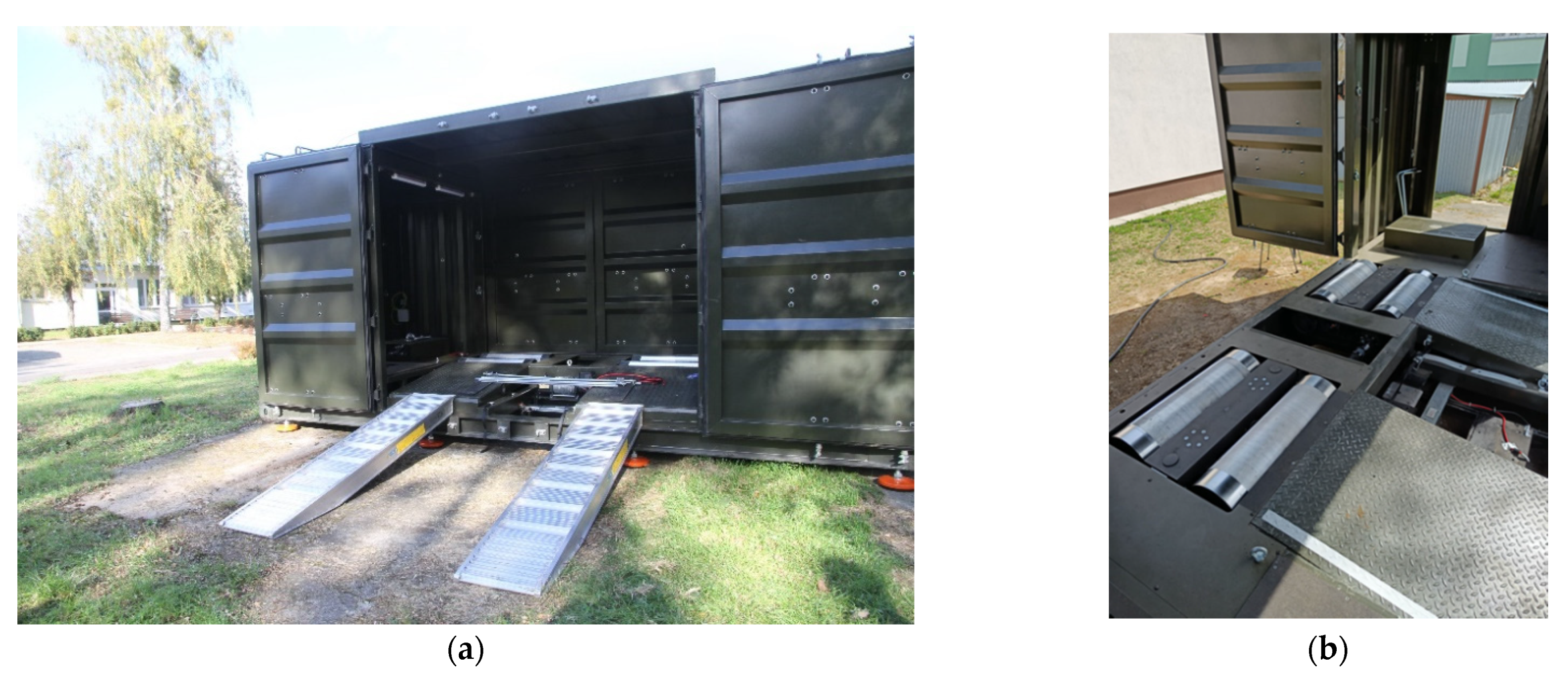
This work deals with the aspects and correctness of the use of a chassis dynamometer in the process of tuning dual-fuel CNG/diesel installations in a 2014 Volvo FH 13 semi-truck and the impact on the tuning results and their correctness. The vehicle’s engine was converted to dual-fuel operation by adding a prototype sequential indirect gas injection system. The tests were carried out on a mobile dynamometer device built on the structure of a 6 ft container which is shown in Figure 1 below.
Figure 1. A mobile dynamometer device: (a) front view, (b) view of the interior of the dynamometer (authors’ source).
Table 1 presents the technical data of the mobile dynamometer device declared by the manufacturer. Table 2 presents the technical data of the tested tractor unit.
Table 1. Selected declared parameters of the mobile dynamometer device according to the design assumptions and the manufacturer (manufacturer data).
Table 2. Selected factory technical data of the tested vehicle [12].
Due to the nature of the research, the measured parameters should be divided into the following groups of parameters characterizing:
  • The operation of the dual fuel (CNG/diesel) system controller;
  • The work of the chassis dynamometer;
  • The operation of the semi-tractor engine control system.
The parameters for each group that should be measured, and the necessary measuring equipment are presented below.
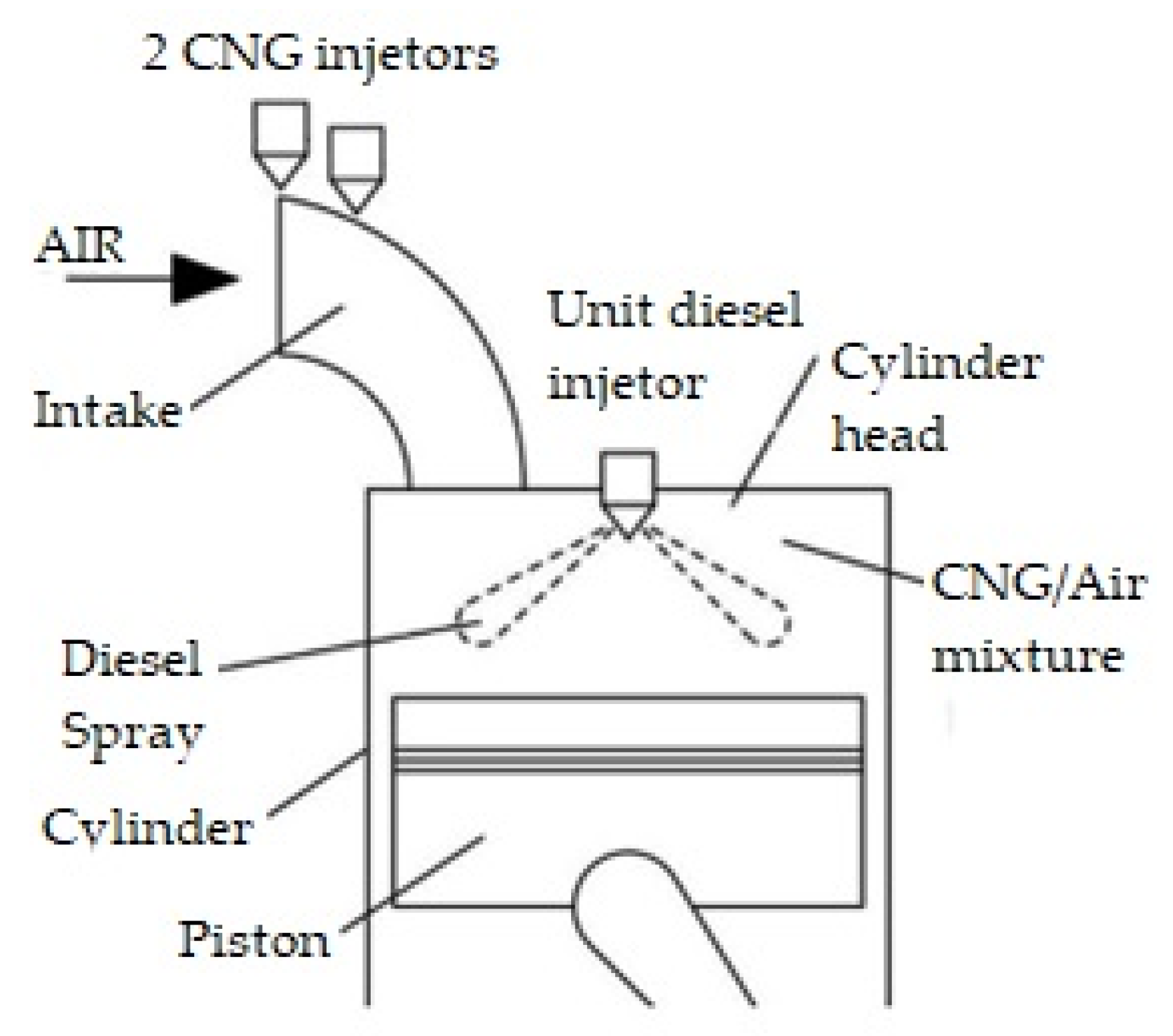
In the tested case, the engine was converted to dual-fuel operation by adding a prototype sequential indirect gas injection system. In this system, pilot diesel fuel acts as the ignition source, the system has an ability to “cut” and “exchange” the diesel oil dose to a gas fuel up to 95%, and it uses 2 gas injectors per cylinder [5,13]. Diagram of operation is presented in Figure 2 below.
Figure 2. Diagram of operation of a dual-fuel supply system (authors’ source based on [14]).
Parameters characterizing the operation of the dual-fuel supply system, recorded with the use of the gas fuel supply system controller are shown in Table 3 below.
Table 3. Selected parameters characterizing the operation of the gas fuel supply system (manufacturer’s data).
Parameters characterizing the work of the chassis dynamometer measured with the use of the dynamometer controller—software are shown in Table 4 below.
Table 4. Selected parameters characterizing the chassis dynamometer measured with the use of the dynamometer controller (manufacturer’s data).
Parameters characterizing the operation of the tractor engine control system. Measurement using a TEXA TXT diagnoscope with IDC5—Truck software:
  • Engine rotational speed [RPM];
  • Vehicle travel speed [km/h];
  • Boost pressure [bar];
  • Torque [Nm];
  • Hourly basic fuel consumption—diesel fuel [kg/h];
  • Engine load [%];
  • Engine management system errors.
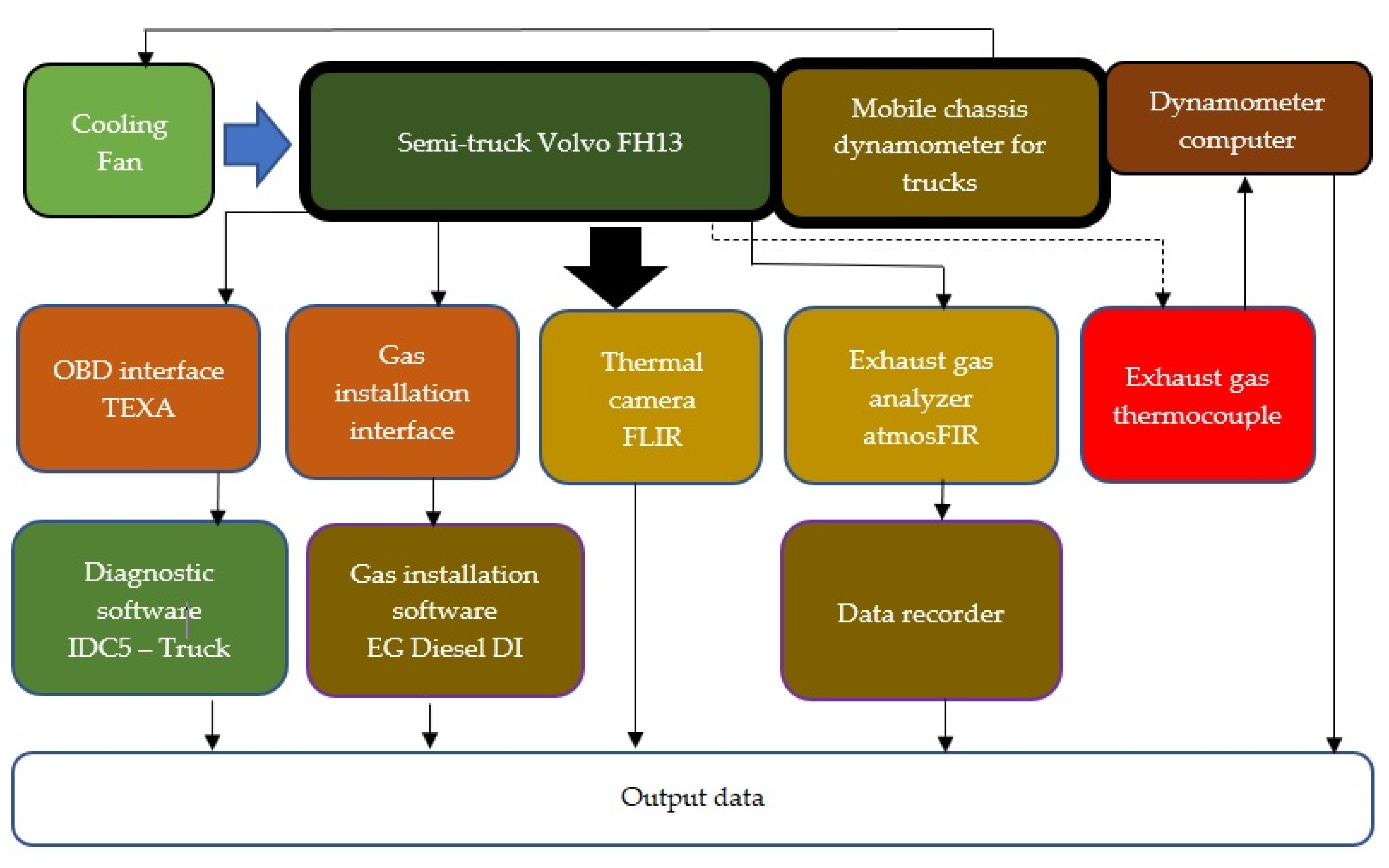
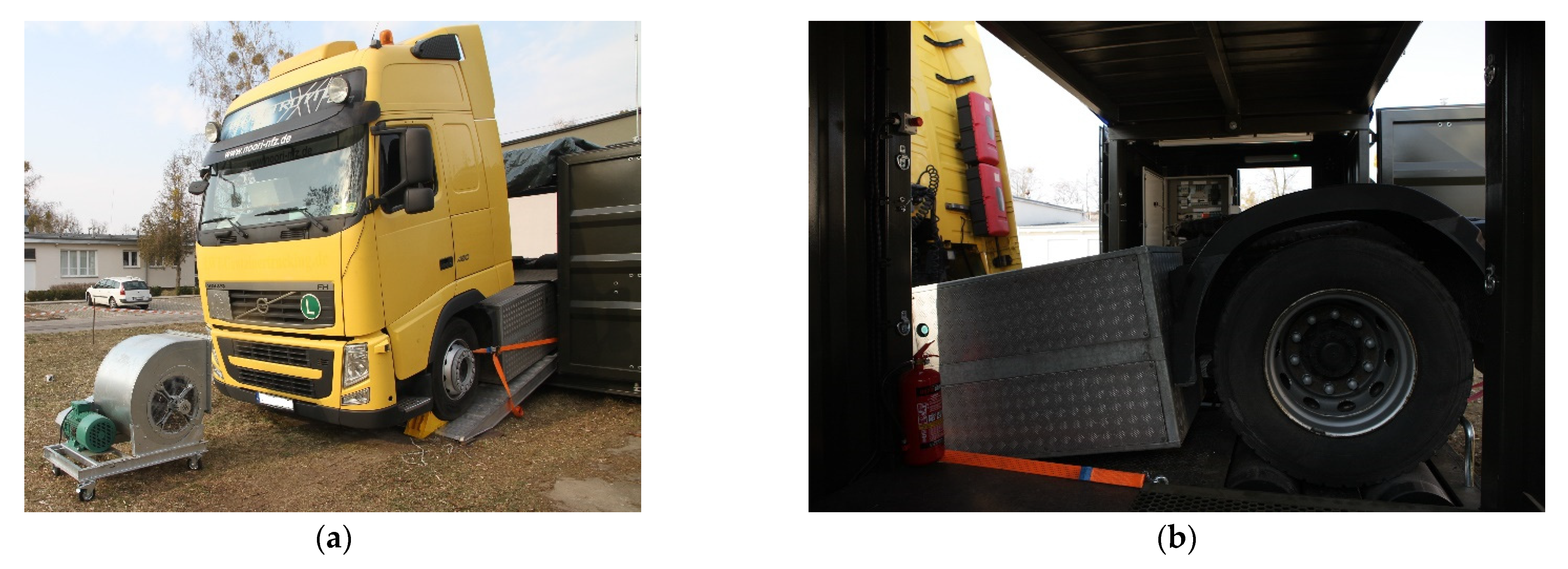
The elements listed above have been compiled in a research arrangement. Figure 3 below shows a block diagram of the test stand. Figure 4 shows the vehicle undergoing tests.
Figure 3. Block diagram of the test stand (authors’ source).
Figure 4. Volvo FH13 on mobile dynamometer: (a) front view, (b) view of the vehicle drive axle on dyno rollers (authors’ source).

2.2. Methodology

The main goals of the research were to tune the Volvo FH13 semi-truck equipped with D13C engine to work on dual-fuel CNG-diesel mode and also to test the mobile semi-truck dynamometer device. The titular research on the influence of the aspects of the dynamometer operation on the tuning of dual-fuel installations is a derivative of the main research. The research methodology dealing with the above subject matter has been developed empirically and includes an approach to solving problems related to:
  • Preliminary data settings for the technical (physical) data of the test vehicle on the dynamometer;
  • Selection of the operating range of the vehicle’s engine (gear selection);
  • The influence of the value of the forced load of the vehicle driving axle;
  • Selection of the dyno working mode appropriate to the expected tasks;
  • The impact of the correctness of the selection of the scope of the analysis of data on losses in the drive system.
Before the tests, the vehicle was always secured in accordance with the manufacturer’s instructions and safety guidelines. The car’s operating fluids were heated to normal operating temperature, and the tires at the beginning of each test had a temperature of 50 °C. In order to ensure repeatability of the tests, a number of parameters such as temperature, pressure and speed in the vehicle were monitored in real time.

3. Results

3.1. Settings for the Technical (Physical) Data of the Test Vehicle on the Dynamometer

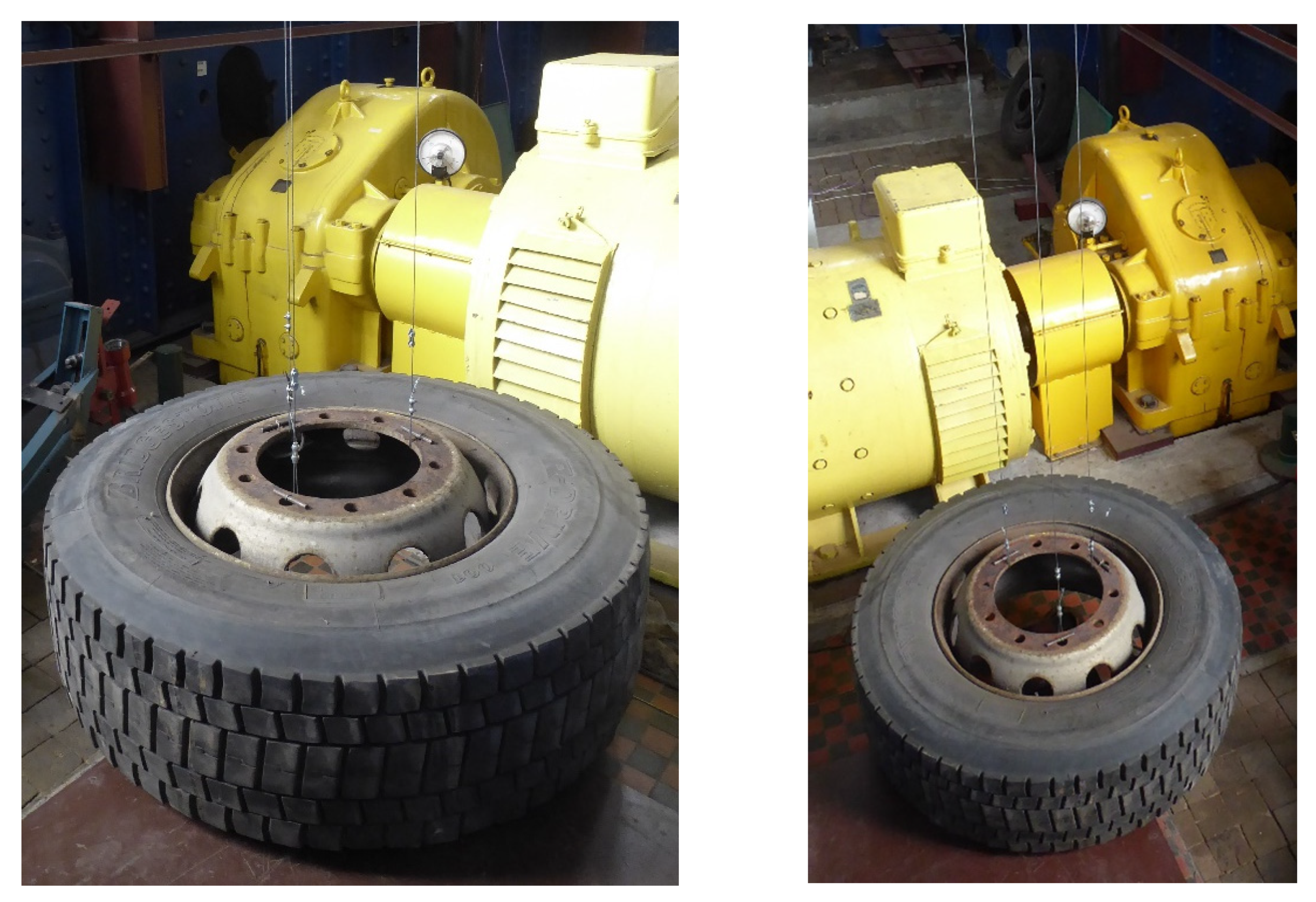
The main task before starting the test and tuning on the dynamometer is the need to configure the vehicle in the dynamometer software in a way that best suits the actual technical conditions of the vehicle. In the software of the dynamometer on which the tests were carried out, in order to validate the tests, when starting a “new project”, the vehicle data such as losses in the drive system, engine and drivetrain system inertia should be correctly configured. At this point, it should be noted that the tool for estimating the inertia of the drive system built into the dynamometer software, calculating this value from the geometric, physical data used on the drive wheels on the vehicle (shown in Table 5), differed from the actual value calculated empirically. When determining the mass moment of inertia of its wheel in relation to its axis of rotation, the method presented in [15] was used. The tested wheel is suspended (Figure 5) on 3 vertical steel ropes l = 6.664 m long, evenly spaced along the circumference with a radius of r = 0.1405 m (the radius value results from the diameter of the hole in the wheel rim).
Table 5. Data table for calculating the inertia of the vehicle propulsion system tested on the dynamometer (authors’ source).
Figure 5. Wheel mounted on the stand for determining the mass moment of inertia.
The vibrating system constructed in this way is set in motion by the rotation of the wheel in the vertical plane by a certain angle alpha (its value cannot exceed 15°). Then, the vibration period T is measured, which is determined by measuring the execution time of 10 complete deflection cycles. The following relationship is used to calculate the mass moment of inertia IY:
I Y = T 2 · r 2 · m · g 4 π 2 · l ,   kg · m 2
After substituting the value of the measured period T = 15.6 s, the mass moment of inertia is:
IY = 19,315 kg∙m2
This deviates by 15.5%, which may ultimately bend the measurement. The engine inertia is configured on a similar principle, although during research it was unable to verify the correctness of the engine inertia estimation. The range of losses in the drivetrain, entered manually and suggested by the dynamometer software (4–8%), also differs from the value calculated on the basis formulas for the overall efficiency of the drivetrain, according to which the losses are approximately 8–10% depending on the gear ratio used. While during tuning, the final result is not the value of the comparator of performance on diesel only supply and in dual-fuel mode, but the value that approaches the measurement as close to reality as possible, it is worth bearing in mind that the basic settings suggested by the software can really affect the measurement results.

3.2. Selection of the Operating Range of the Vehicle’s Engine (Gear Selection)

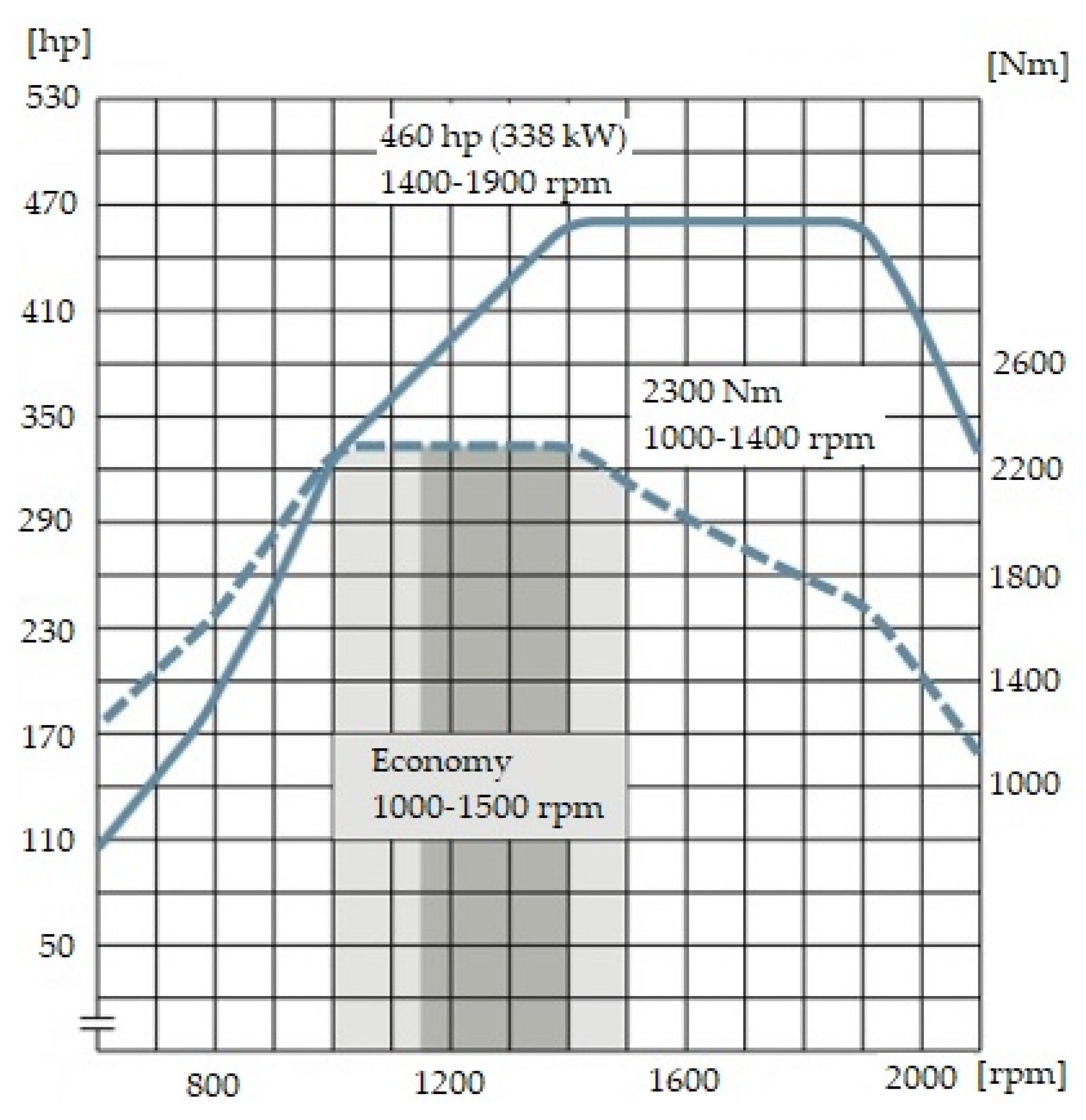
When tuning the installation, determine the gear ratio that covers the widest range of operating/usable speeds of the engine while maintaining the highest possible speed of the vehicle’s drive wheels should be determined (the aim is to reduce the torque on the wheels, the high values torque quickly degrade the tires and increase the measurement error, more on this subject in Section 3.3 of this work [1]). Alternatively, the engine rotational speeds that are of greatest interest to us in the context of the vehicle’s operational properties resulting from the specificity of the vehicle’s operation or the installation used in it should be determined. For this purpose, it is worth analyzing the factory diagrams of torque and power waveforms, as well as the range of optimized (economic) shaft revolutions. A graph of this type is presented in Figure 6.
Figure 6. External characteristics of the tested engine [12].
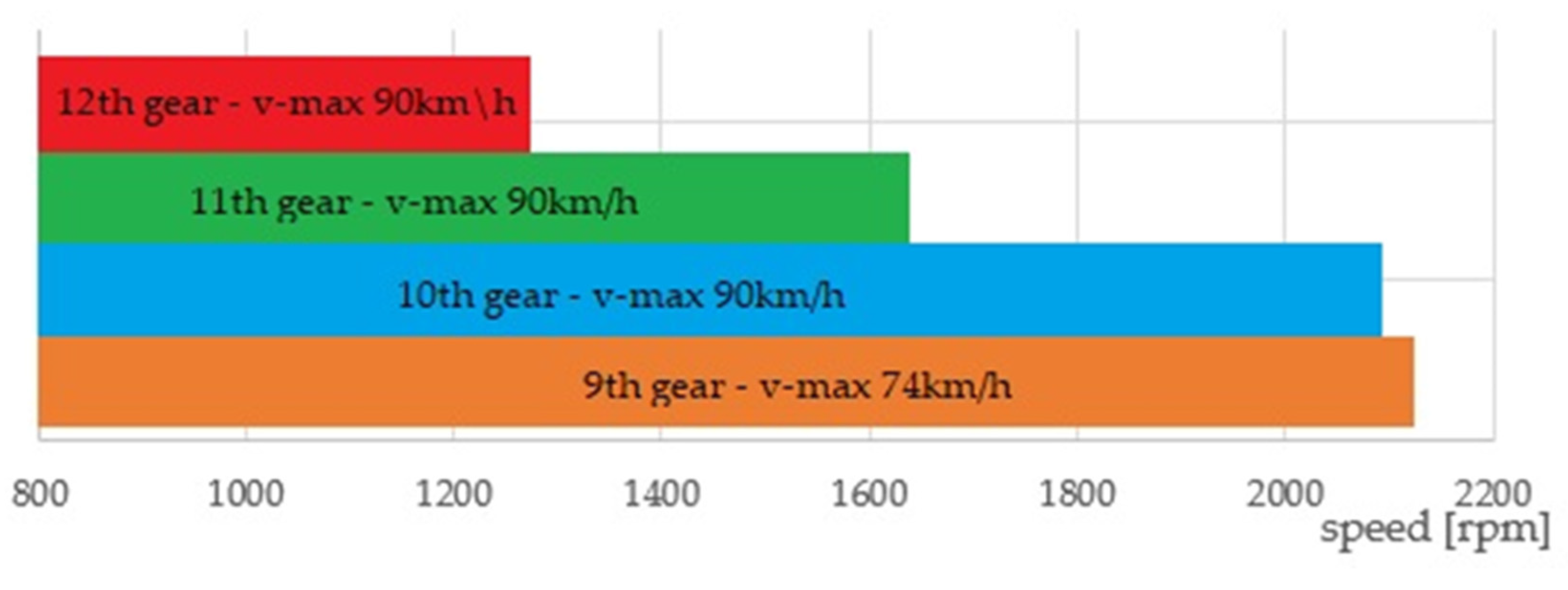
Bearing in mind the manufacturer’s chart, it was compared with the results obtained from covering the RPM range for the gears in the test vehicle, which was presented in Figure 7.
Figure 7. Graph of the coverage of the RPM engine operating range for selected gears (authors’ source).
The above data show that the 10th gear is the most appropriate gear for the study of external characteristics and this gear was used to carry out further research presented in this article. In the case of tuning the installation at the engine speed declared by the manufacturer as the most optimal and economical, it should be the 11th gear. The speed range from idle to 800 rpm is irrelevant in the context of these tests, because the gas installation is not able to switch to the dual-fuel mode for technical reasons—the unit injector is not able to generate a correspondingly low pilot dose in this range [11,16].

3.3. The Influence of the Slip of Tires on Rollers

During the research, the influence of slipping of the driving wheels on the rollers of the dynamometer was noticed. This creates a multidimensional problem that can be broken down into several components:
  • Dependence of the slip of the driving wheels on the roller due to the load of the driving axle on the rollers;
  • Measurement error resulting from the above and from the influence of the engine/roller ratio settings in the dynamometer settings;
  • Impact of the tires (heating up due to work on rollers, change in their dynamic radius).

Table 6 summarizes the data from the research on the sliping of the wheels on the rollers for different values of the engine load and different values of the thrust of the driving axle of the tested vehicle.
Table 6. Table of the results of tests of slip of tires on rollers.
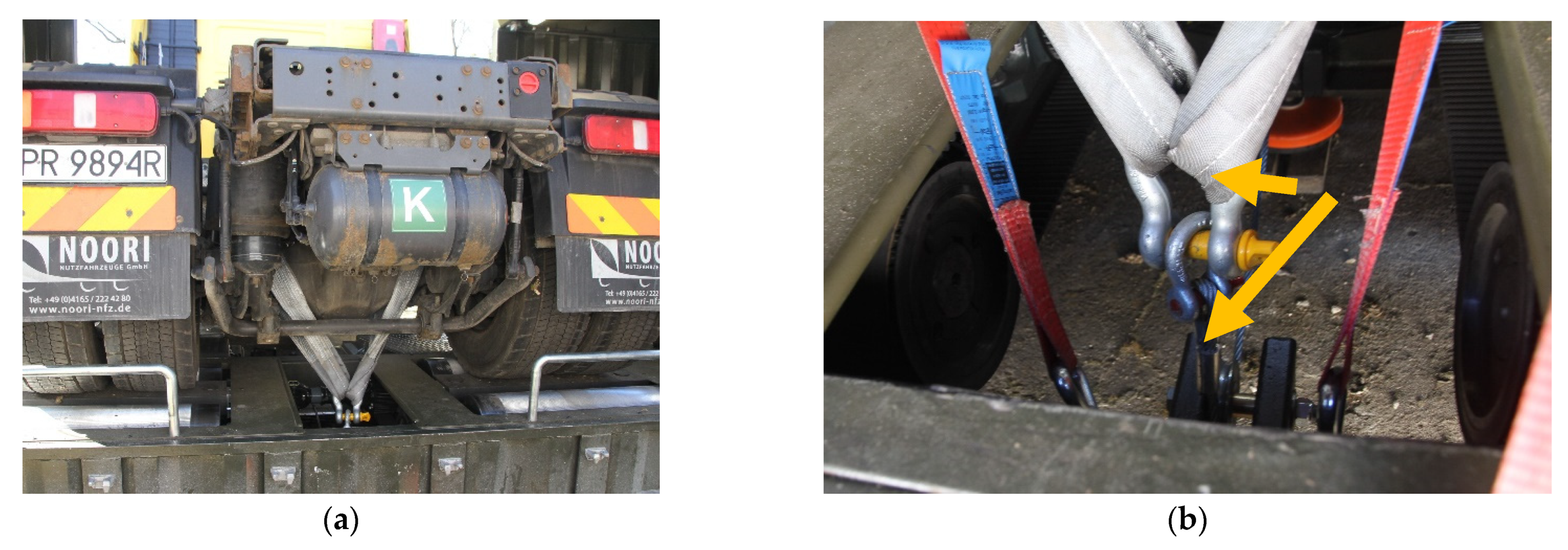
Figure 8. Vehicle axle load mechanism: (a) general view, drive axle slings, (b) view of rope linked with an electric winch (authors’ source).
Table 6. Table of the results of tests of slip of tires on rollers.
Const. Revs. *1000 RPM
(~Max Torque)
1300 RPM
(~Eco Revs)
1500 RPM
(~Max Power)
1700 RPM
(~High Revs)
Axle Load ****
Engine load [%] **255075100255075100255075100255075100
RPM—TEXA **100110221039106612991323134913801489151915451574167917101737176820,000 N
Dyno (Nm) ***19258593513101805408861275122473799111078400700970
RPM—TEXA **99210091028104512881309133113531483150315241549167316971717174130,000 N
Dyno (Nm) ***19256091712931905498701250140467790111763370688972
RPM—TEXA **99310051019104112891306132413451481150015201542167016921714173340,000 N
Dyno (Nm) ***19556592012802085458801250163480790112574389700965
RPM—TEXA **99610151036106112921320134413751490151415411570167617071733176020,000 N (warm tires) *****
Dyno (Nm) ***19258391813152145599081279160480810113080405710970
* The test was carried out using the constant revs mode of the dyno. ** Reading made using OBD TEXA TXT diagnoscope with IDC5—Truck software. The correctness of measurements using TEXA was validated on an engine dynamometer. *** Braking force value on a single brake, reading made using dyno software. **** The load on the driving axle of the vehicle was generated by the load adding system with the use of an electric winch, connected with a strain sensor, and the system of mounting to the driving axle of the tested truck—the axle pressure system is shown in Figure 8. The axle load was read using the dyno software. ***** Test started at 70 °C.
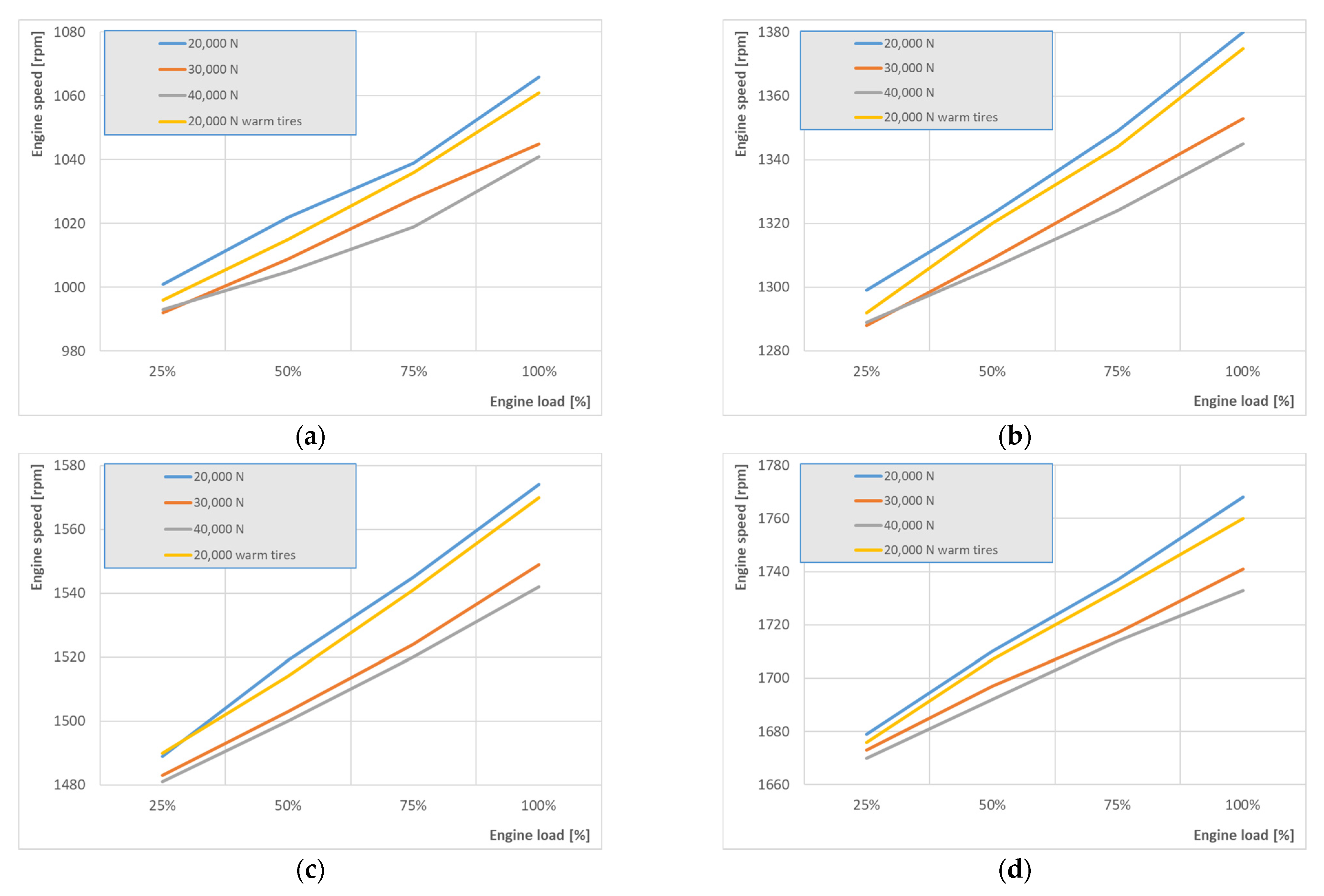
Figure 9 summarizes the above data from Table 6 in the values of sliping wheels on rollers for different engine speeds in the context of the engine load and driving axle load (pressure).
Figure 9. Graphs of differences in engine speed for rollers where n is constant, resulting from wheel slip on rollers for different engine speeds in the context of engine load and drive axle load: (a) 1000 rpm, (b) 1300 rpm, (c) 1500 rpm, (d) 1700 rpm (authors’ source).
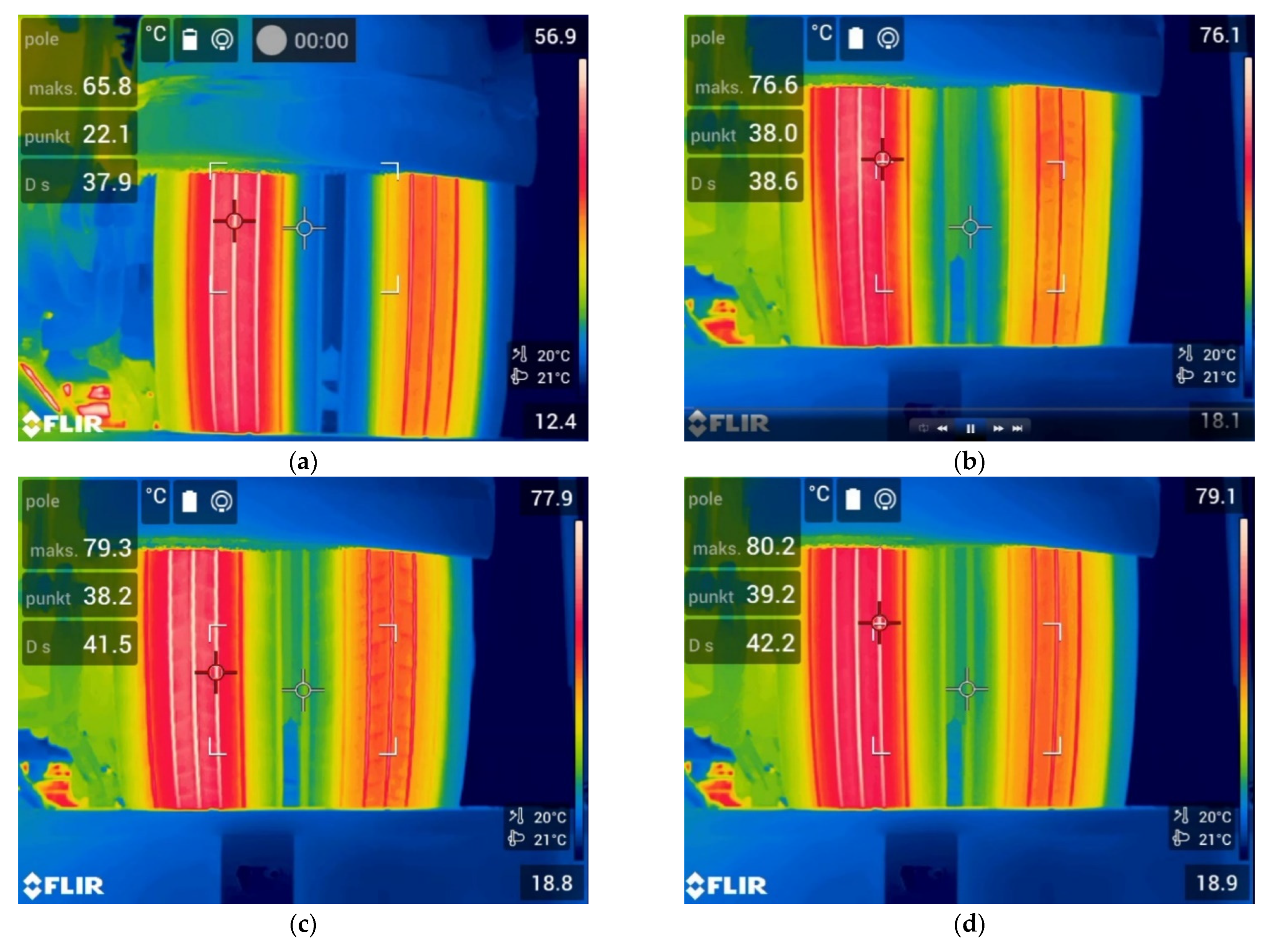
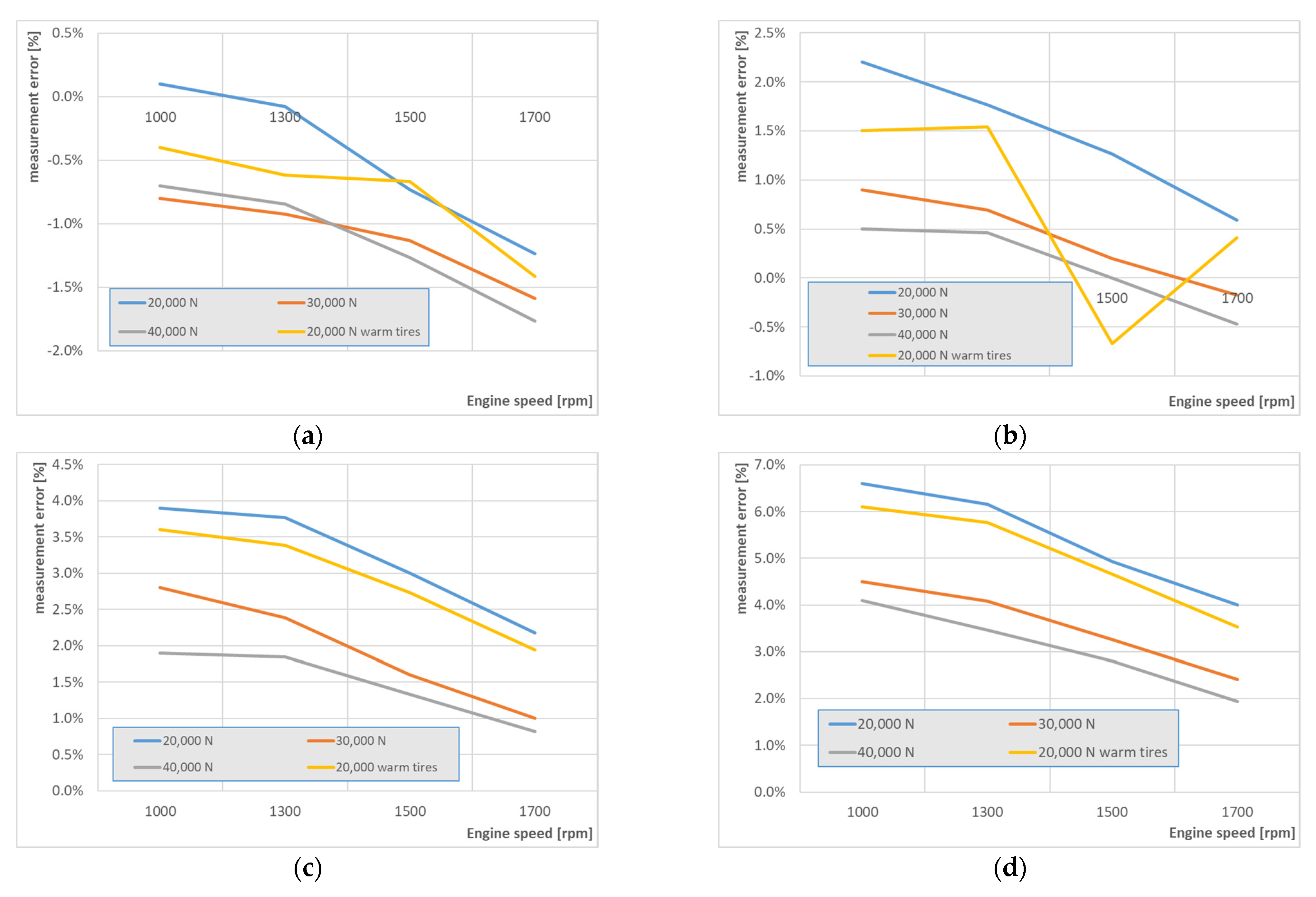
The above charts show that the increase in slip correlates with the increase in engine load (which results from increasing the torque on the wheels of the vehicle [10]). As the engine load increases, the measurement error resulting from the slipping of the wheels on the roller increases, which is also shown in Figure 10. Due to the fact that there is a dynamic difference in the geometric value of the tire diameter [17], all the parameters that affect the tire slip also have an impact on it (axle load, wheel speed, tire temperature and so on). The change in the tire diameter also leads to a negative error at low engine loads [15]. According to [17], measurements on the tire imply that for a high load and low inflation pressure, the deformation in the shoulder area will contribute more to rolling resistance. In an opposite manner, for a low load and high inflation pressure, the deformation in the crown area will contribute more. Meanwhile, the deformation in the shoulder area always contributes more to the rolling resistance for the worn tire. This will in turn accelerate the wear process on the shoulder area. It should also be noted that the change in the dynamic diameter of the tire resulting from the centrifugal force acting on the turning wheel in the context of the thrust of the drive axle generated on the dynamometer is marginal and oscillates around the value of 0.5–1 mm at 90 km/h [18]. The influence of temperature can be observed by analyzing the blue and yellow lines for a load of 20,000 N. The influence of the axle load is more important than the temperature. Considering the necessity of maintaining low tire temperatures (optimally less than 80 °C and no more than 120 °C [19]) while tuning the gas system, in order to prevent their increased wear, it seems reasonable to increase the axle load to 30,000 N while monitoring the temperature. Tire temperature values at the end of each test from all measurement setups are summarized in Figure 10. The graph can be shifted in the vertical axis by modifying the engine/roller ratio in the dynamometer settings. In the context of the data presented above, it can be concluded that it seems reasonable to modify the engine/roller ratio depending on the range of engine loads and thus work in different ranges for the fuel exchange maps in the gas ECU [3]. Setting a constant gear ratio will generate measurement errors and may lead to discrepancies in the readings of rpm values in the dyno and the gas controller.
Figure 10. Graphs of errors resulting from the tire slipping on the roll for different rpm depend on engine load: (a) 25%, (b) 50%, (c) 75%, (d) 100% (authors’ source).
In Figure 11, in the upper right corner of each photo on parameter described as “maks”, the highest temperature recorded by the thermal camera during test is shown. It can be noticed that it was always the temperature of the inner wheel near the inside of the tire tread. Figure 11 above shows that it is worth keeping low tire temperature with higher axle pressure during tuning in order to extend the service life of the vehicle tires. Axle load 30,000 N in the case of the tested vehicle seems to be the most appropriate. A possible solution to this problem is adding a ventilator for extra tire cooling.
Figure 11. Tire temperature at the end of each test for axle load: (a) 20,000 N (b) 30,000 N (c) 40,000 N (d) 20,000 (warm tires) (authors’ source).

3.4. Selection of the Optimal Operating Mode of the Chassis Dynamometer

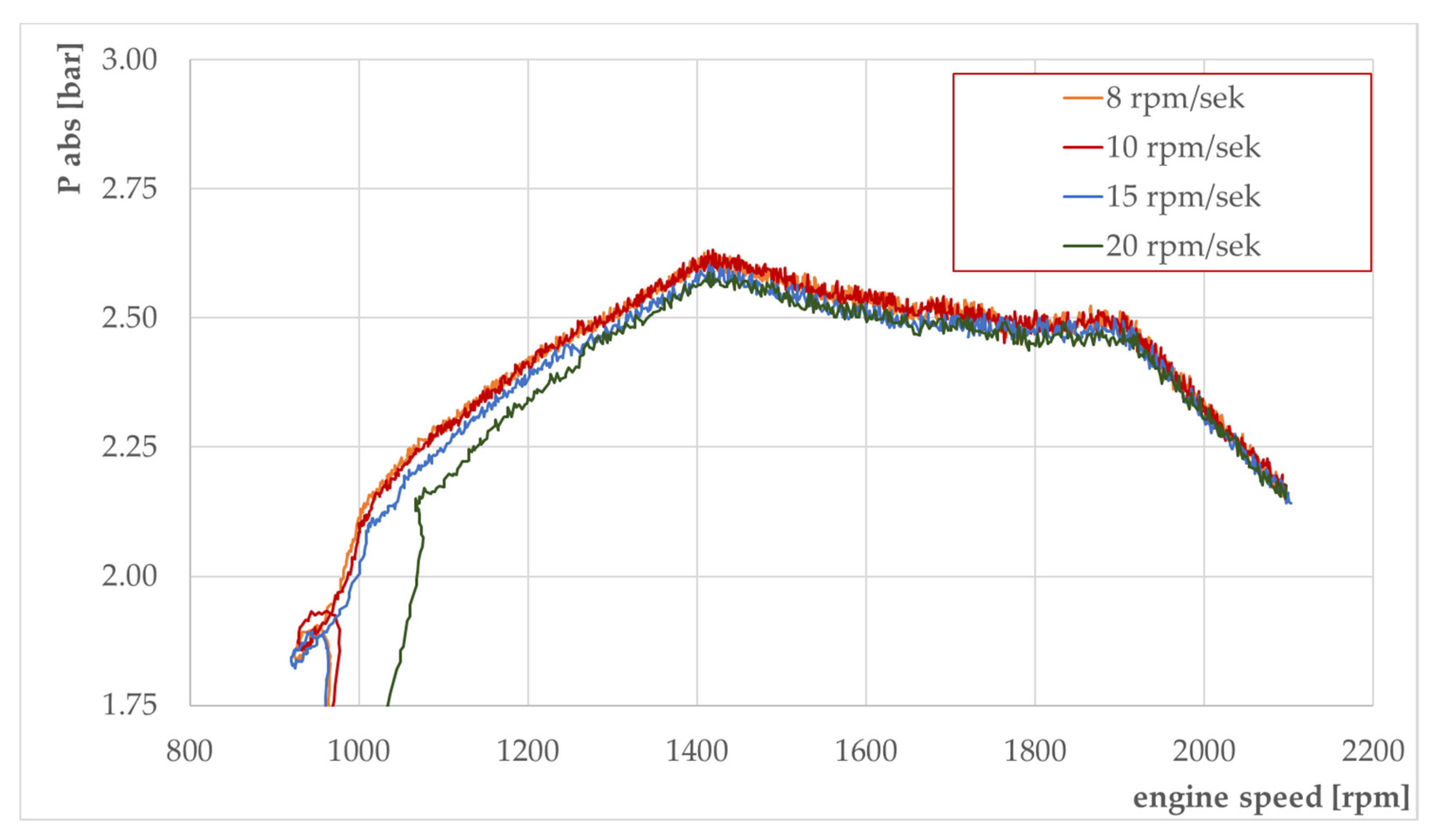
The tuning of dual-fuel installation with the use of a chassis dynamometer in places with partial engine load can be performed in fuel exchange map spots, using the function of maintaining constant revolutions of the dynamometer [20,21]. However, in the case of tuning the external characteristics of the engine (maximum dynamic torque values), it is necessary to use the dyno ramp mode, which allows the vehicle to be braked in the entire range of rotational speeds with an appropriately defined acceleration. The selection of the appropriate acceleration of the vehicle engine on the dynamometer device is of decisive importance in the creation of the boost pressure, and thus the possibility of achieving the maximum value of the torque [7]. In the case of semi- truck, it seems important to generate a sufficiently high braking load on the rollers on the dynamometer, because the semi-truck has a diesel engine with a turbocharger that has a high inertia, which requires a high load to achieve full spool [7,21].
During this test, the highest value of d n / d t as rpm / sec at which it was possible to correctly determine the external characteristics of the engine (creating highest boost pressure) was experimentally determined. Results are shown in Figure 12 below.
Figure 12. Influence of the coasting-down speed for the test of the external characteristics (maximum torque values) on the boost pressure (authors’ source).
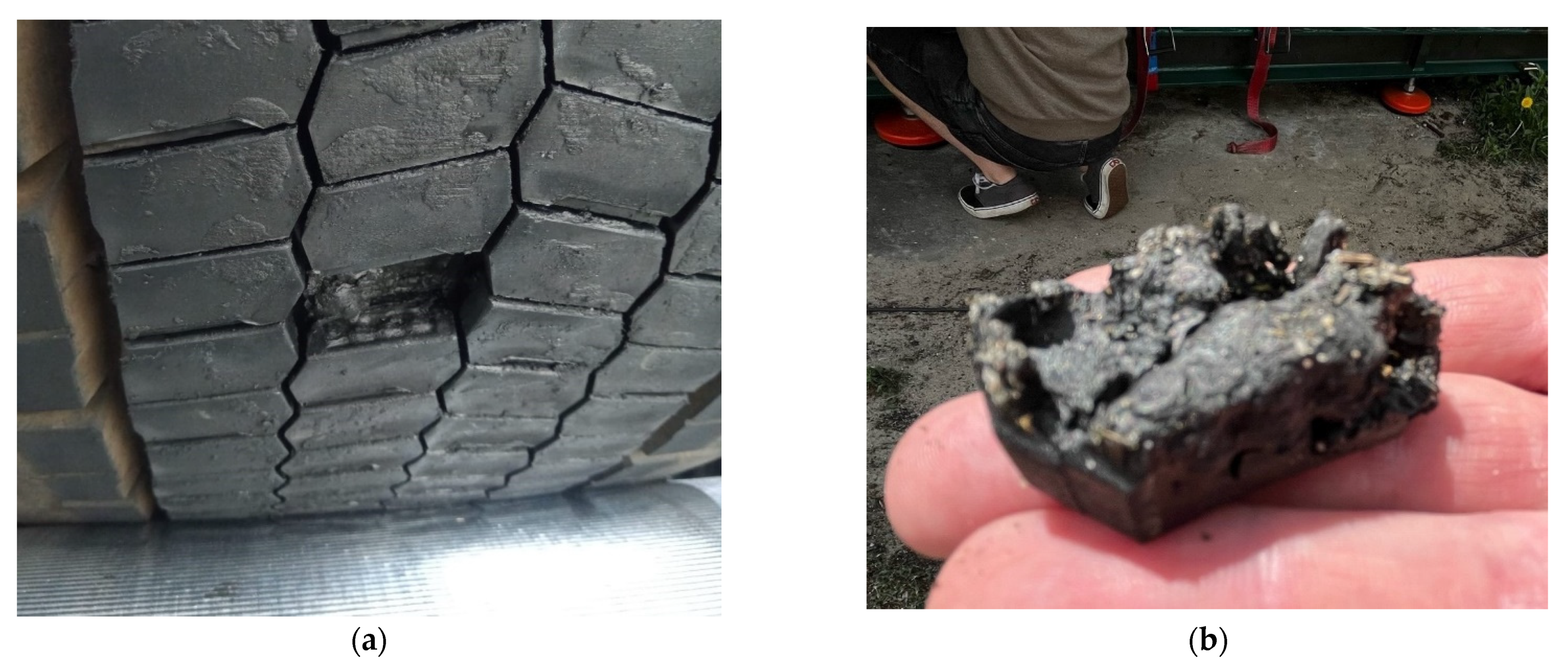
The chart above shows that 10 rpm/s meets our boost pressure requirement. Braking at lower acceleration values unnecessarily lengthens the test, which in turn stresses the tires thermally and may lead to more intensive wear. The effects of overheated tires in the form of tearing off parts of the tire tread are shown in Figure 13.
Figure 13. Damaged tire due to overheating: (a) view of the tire, (b) view of the broken part of the tread (authors’ source).

3.5. The Impact of the Correctness of the Selection of the Scope of the Analysis of Data on Losses in the Drive System and Repeatability of Tests

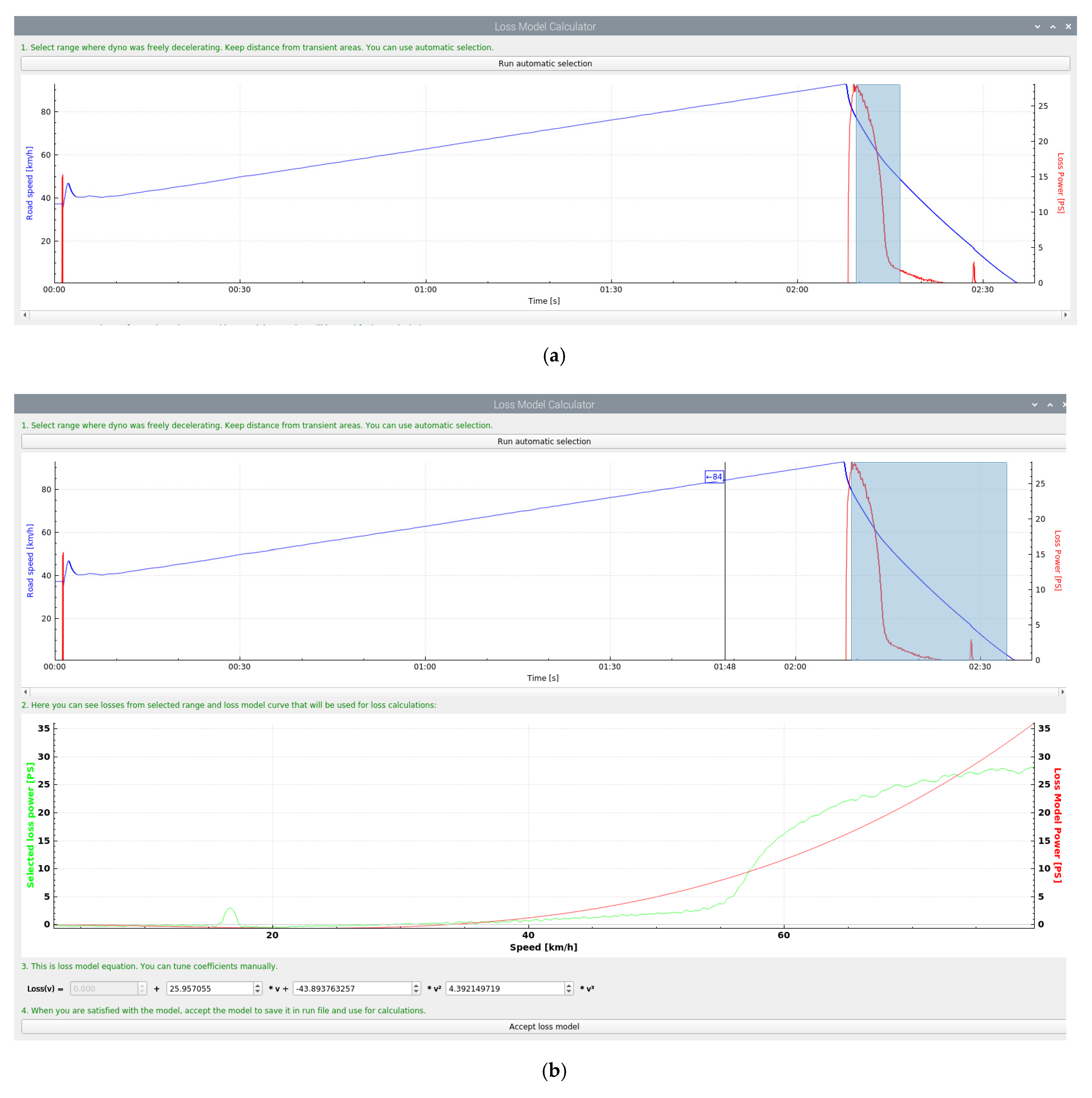
As in the case of the tested vehicle, in which an automated gearbox was used, also in other semi-truck, there may be a lack of repeatability in the calculation of the model of losses in the drive system of the vehicle implemented through the free coast of the vehicle drive on the rollers of the dynamometer [1,14]. During the tuning process, in the case of the chart of the maximum performance or the one set for the optimal revolutions, the incorrectly calculated loss model may generate errors in reading the power and torque in dual fuel operation [11]. After the measurement is completed, the automatic gearbox may generate fluctuations in the recorded resistances of the vehicle drive. A similar situation does not take place when the brake is pressed in a car with a manual gearbox. At this point, it is worth considering the repeatability of the selection of the measuring range for the calculation of losses. Whether the operation of the gearbox is repeatable should be noted, as well as whether the scope of the analysis of data for the loss model is appropriately wide and whether it does not include places evidently bending the measurement results. Figure 14 shows a screen from the dyno software, and calculation of the loss model in the drive system.
Figure 14. Screen from the dyno software, calculation of the loss model in the drive system: (a) nominal settings, (b) manually selected range of the loss model, and comparison of the repeatability of the automatic vehicle gearbox operation (authors’ source).
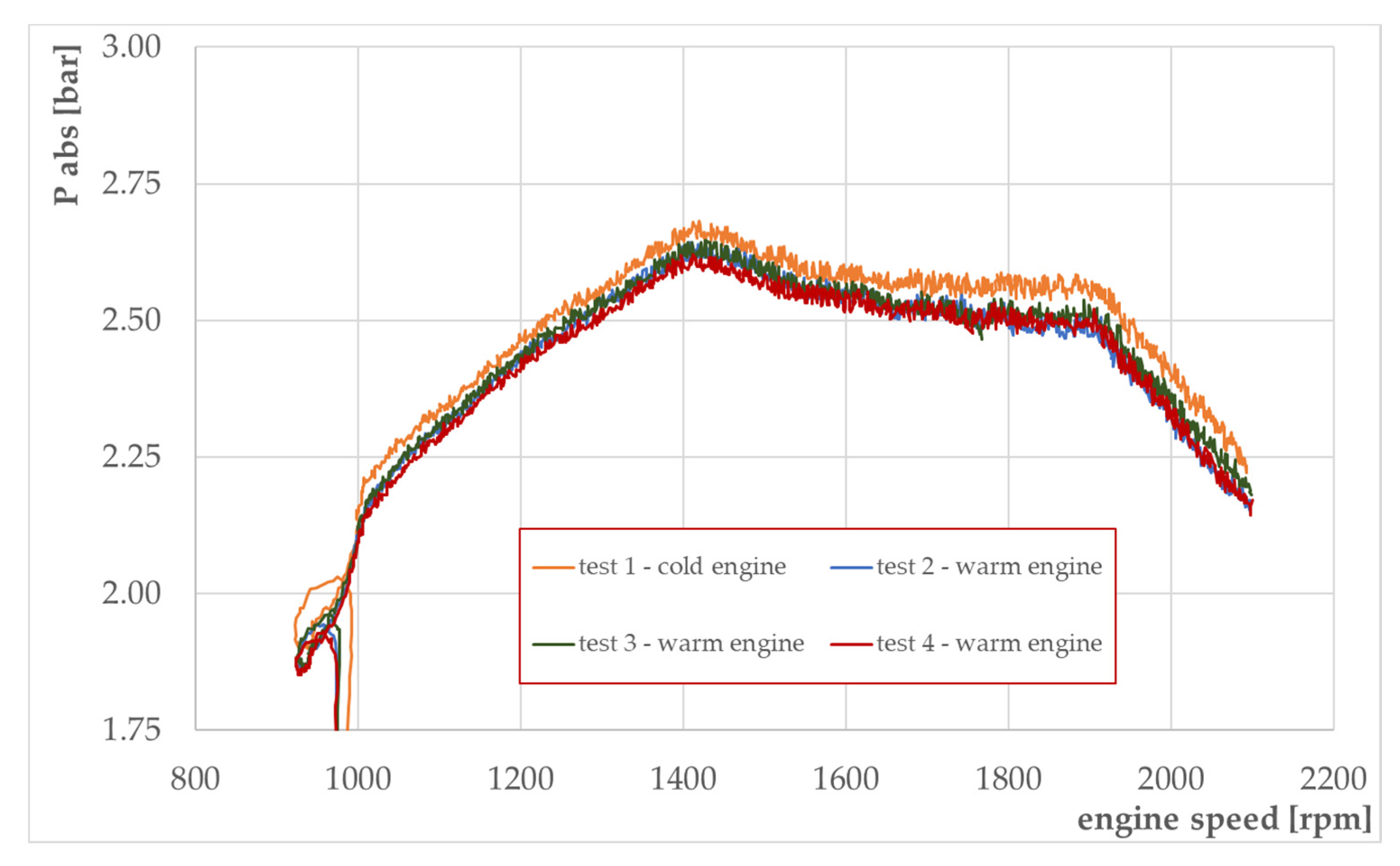
It is worth remembering about the repeatability of the tests in the case of compiling data before and after conversion to dual fuel power. The key in this aspect is the possible reproduction of the test conditions before and after this conversion. Figure 15 shows the result of the repeatability of the tests for the graph of the boost pressure related to the operating conditions of the fully warmed up and not fully warmed up engine. These types of errors affect a number of elements of the installation (e.g., the temperature of the gas pressure reducer, the possibility of creating the boost pressure).
Figure 15. Graph of the repeatability of the boost pressure build-up due to the measurement conditions (engine warm-up) (authors’ source).

4. Discussion

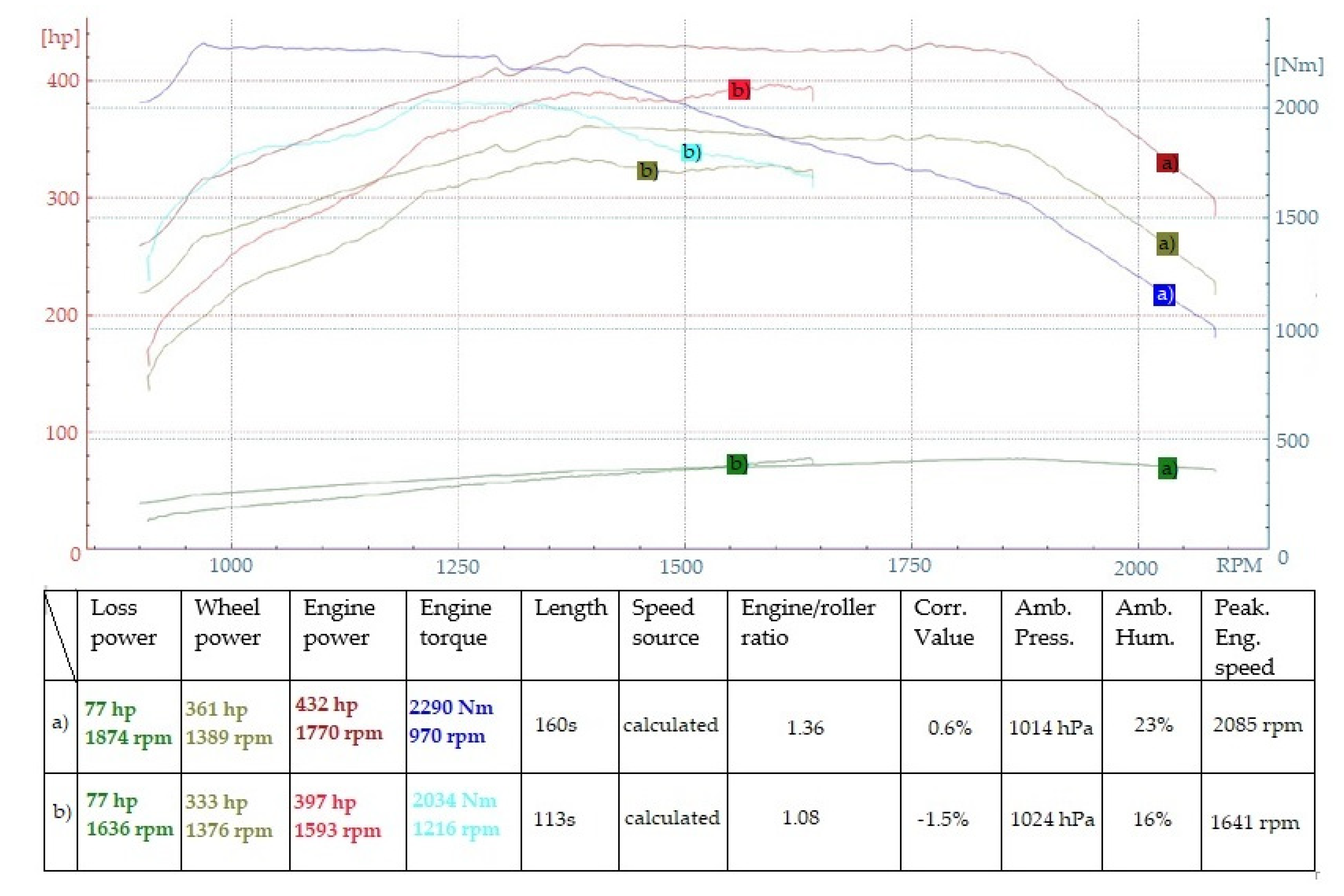
All the operating parameters of the chassis dynamometer mentioned in this document affect the assessment and tuning effects of dual-fuel systems in semi-trucks. As part of this study, the aim was to present in general terms the key parameters of the chassis dynamometer that affect the final effect of measurements and tuning for a dual-fuel vehicle. As a result of negligence resulting from the lack of awareness of the above-mentioned critical elements of work with the chassis dynamometer during the tuning of the installation and comparing the effects of this tuning with the single-fuel engine supply, it is possible to present the results of power measurements of the operating parameters for the external characteristics of the engine in combination with a correctly measured and adjusted installation. There is such a statement in Figure 16.
Figure 16. A graph showing the results of external characteristics for the research where: (a) attempts were made to reduce the impact of errors, and (b) the errors mentioned in this work are combined (authors’ source).
The above chart shows the wrongly selected measurement course and the influence of other factors mentioned in this paper, which resulted in the torque and power values lower by 8.2% and 11.2%.
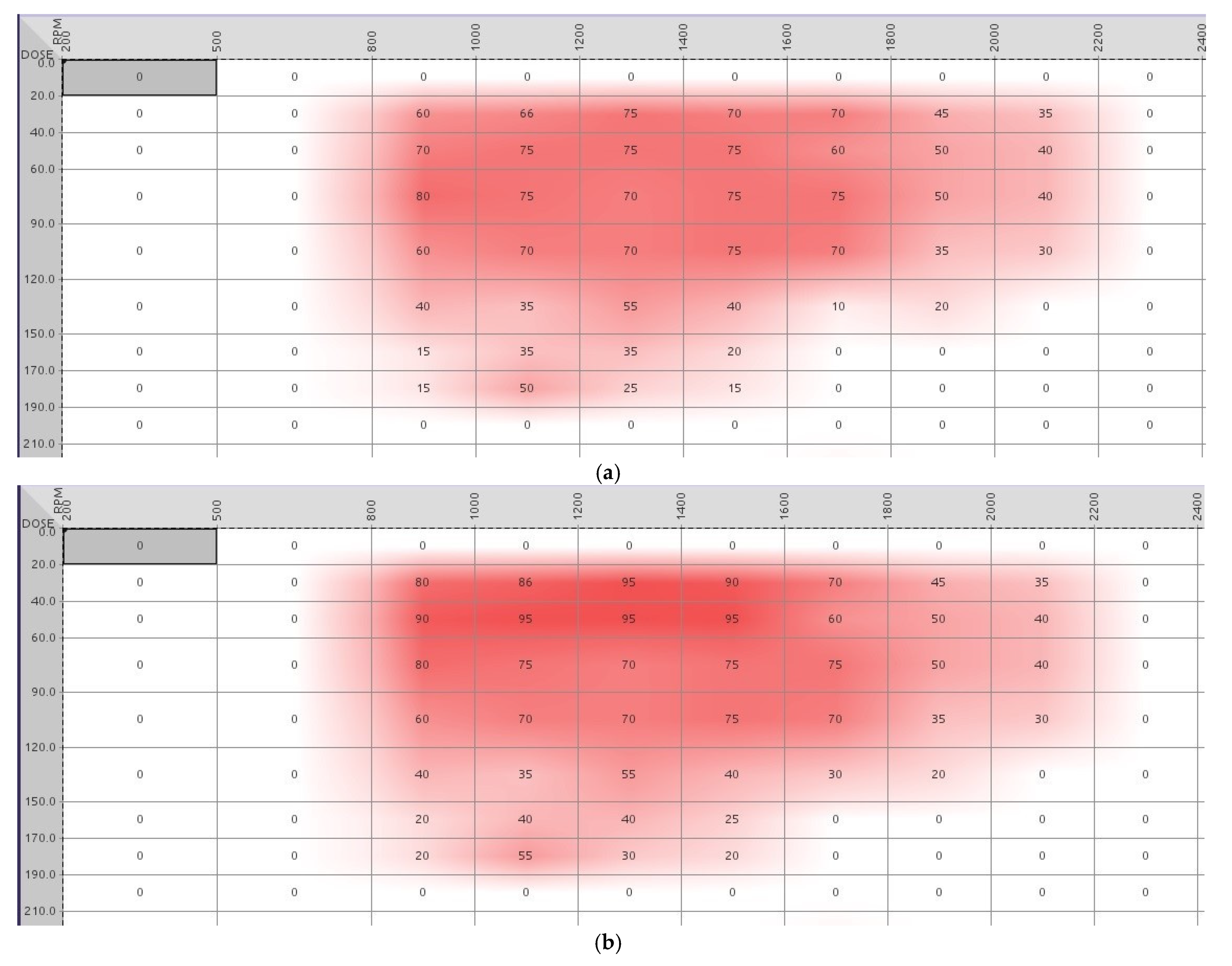
The scale of problems resulting in inaccurate tuning of the dual-fuel system is presented in the map of diesel fuel replacement with gaseous fuel. The higher its value in a given field and the higher the total value of the exchange (while maintaining torque and power waveforms similar to single-fuel operation), the better. Figure 17 below shows the comparison of the results of tuning the map of conversion of diesel fuel to gas fuel. In the example below you can clearly see much worse fuel exchange values, and the overall exchange value decreased by 9.2%.
Figure 17. Comparison of the results of tuning the map of conversion of diesel fuel to gas fuel in terms of: (a) attempts were made to reduce the impact of errors, and (b) where the errors listed in the paper are combined (authors’ source).

5. Conclusions

This document presents the influence of the operating parameters of the chassis dynamometer on the evaluation of the tuning of dual-fuel systems. The resulting map of the exchange and the tuning itself are of course influenced by many other elements, such as the condition of the car (e.g., state of filters [22]) or the correct calibration of the dynamometer itself. It is also worth mentioning that the dynamometer presented in the test cannot be used for standardized tests and the effect of the work related to it should always be a comparative effect in which we have an input and final test, then compare both. However, it should be remembered that some of the errors can be effectively eliminated, and this article was also supposed to present this. It is also worth mentioning that the dynamometer presented in the test cannot be used for standardized tests. The effect of work on it should always be a comparative effect in which the received first input and final output are compared with each other. In the context of tuning, this can already give correspondingly good results. Nevertheless, in order to be closer to reality, it seems important to eliminate or minimize the errors described in this work. In the opinion of the authors, further tests in the research system presented in this paper should focus on a more in-depth analysis of the problems presented in this paper. It also seems justified to test in the context of exhaust emissions on the test system presented in this paper, compared to work under standardized engine dynamometer conditions [23,24,25]. The authors of this work are considering taking up such a topic in the future.

Author Contributions

Conceptualization, M.K. and J.C.; methodology, M.K. and J.C.; validation, M.K. and J.C.; formal analysis, M.K. and J.C.; investigation, M.K. and J.C.; data curation M.K., writing—original draft preparation, J.C.; writing—review and editing, M.K. and J.C.; visualization, M.K.; supervision, M.K.; project administration, M.K.; funding acquisition, M.K. All authors have read and agreed to the published version of the manuscript.

Funding

The publication was created as a result of work under: Name of the competition: Ścieżka dla Mazowsza, Agreement No. MAZOWSZE/0123/19-00, Subject: “Innovative ecological CNG installation for diesel engines limiting the emission of harmful exhaust components together with a mobile diagnostic platform.”

Institutional Review Board Statement

Not applicable.

Data Availability Statement

Data are contained within the article.

Conflicts of Interest

The authors declare no conflict of interest.

References

  1. Hancock, B. Dyno Testing and Tuning (Performance How-To); S-A Design: Santa Fe, NM, USA, 31 July 2020. [Google Scholar]
  2. Yogeeswaran, R.; Subramaniom, S.; Senthil Krishnan, S. Establishment of Chassis Dynamometers for Commercial Vehicles; SAE International: Warrendale, PA, USA, 2019. [Google Scholar]
  3. Gazeo.pl. Available online: https://gazeo.pl/biznes/warsztat/Kalibracja-instalacji-LPG-z-wykorzystaniem-hamowni,artykul,6292.html (accessed on 26 May 2022).
  4. Dziubak, T.; Bąkała, L.; Karczewski, M.; Tomaszewski, M. Numerical research on vortex tube separator for special vehicle engine inlet air filter. Sep. Purif. Technol. 2020, 237, 116463. [Google Scholar] [CrossRef]
  5. 4GCS Tuning. Available online: http://gcstuning.pl/strojenie-lpg/ (accessed on 29 May 2022).
  6. 544 tuning. Available online: https://44tuning.pl/tuning-lpg-wieksza-moc-na-gazie-niz-benzynie-wysoko-oktanowej (accessed on 28 May 2022).
  7. Heywood, J.B. Internal Combustion Engine Fundamentals, 2nd ed.; McGraw-Hill Education: New York, NY, USA, 2018. [Google Scholar]
  8. Dąbrowski, T.; Kurczyński, D.; Łagowsk, P.; Warianek, M. The scientific analysis of the influence of petrol and LPG gas powered engines dynamic indicators on active road safety. In Proceedings of the 2018 XI International Science-Technical Conference Automotive Safety, Casta, Slovakia, 18–20 April 2018. [Google Scholar]
  9. Öberg, P.; Nyberg, P.; Nielsen, L. A New Chassis Dynamometer Laboratory for Vehicle Research. SAE Int. J. Passeng. Cars–Electron. Electr. Syst. 2013, 6, 152–161. [Google Scholar] [CrossRef]
  10. Galindo, E.; Blanco, D.; Brace, C.; Chappell, E.; Burke, R. Chassis Dynamometer Testing: Addressing the Challenges of New GlobalLegislation (WLTP and RDE); SAE International: Warrendale, PA, USA, 2017; ISBN 978-0-7680-8278-4. [Google Scholar]
  11. Karim, G.A. Dual-Fuel Diesel Engines; CRC Press: New York, NY, USA, 2015. [Google Scholar]
  12. Volvo Trucks Website. Available online: https://stpi.it.volvo.com/STPIFiles/Volvo/FactSheet/D13C460,%20EU5SCR-M_Eng_02_1144722.pdf (accessed on 30 May 2022).
  13. Chojnowski, J.; Karczewski, M.; Szamrej, G. The phenomenon of knocking combustion and the impact on the fuel exchange and the output parameters of the diesel engine operating in the dual-fuel mode (Diesel-CNG). In NAŠE MORE 2021; University of Dubrovnik: Dubrovnik, Croatia, 2021; pp. 55–62. [Google Scholar]
  14. SAE J2951 Drive Quality Evaluation for Chassis Dynamometer Testing J2951_201401 2014. Available online: https://www.sae.org/standards/content/j2951_201401/ (accessed on 16 March 2022).
  15. Zając, M. Układy Przeniesienia Napędu Samochodów Ciężarowych; Wydawnictwa Komunikacji i Łączności: Warsaw, Poland, 2014; pp. 277–279. [Google Scholar]
  16. Li, W.; Liu, Z.; Wang, Z. Experimental and theoretical analysis of the combustion process at low loads of a diesel natural gas dual-fuel engine. Energy 2016, 94, 728–741. [Google Scholar] [CrossRef]
  17. Xiong, X.; Tuononen, A. Rolling deformation of truck tires: Measurement and analysis using a tire sensing approach. J. Terramechanics. 2015, 61, 33–42, ISSN 0022-4898. [Google Scholar] [CrossRef]
  18. Anghelache, G.; Moisescu, R. The measurement of dynamic radii for passengercar tyre. IOP Conf. Ser. Mater. Sci. Eng. 2017, 252, 012014. [Google Scholar] [CrossRef]
  19. Technical Data—Pirelli Truck Tyres. Available online: https://www.pirelli.com/asset/index.php?idelement=20899 (accessed on 29 May 2022).
  20. Kuiken, K. Gas and dual-fuel engines for ship propulsion, power plants and cogeneration. In Book I: Engine Systems and Environment; PJ Onnen.: Antwerp, The Netherlands, 2016. [Google Scholar]
  21. Luft, S. Dwupaliwowy Silnik o Zapłonie Samoczynnym Zasilany Mieszaniną Gazów Propan-Butan (LPG) I Olejem Napędo-Wym; Monografie; Politechnika Radmska, Wydawnictwo: Radom, Poland, 2002; pp. 22–24. [Google Scholar]
  22. Dziubak, T. The effects of dust extraction on multi-cyclone and non-woven fabric panel filter performance in the air filters used in special vehicles. Eksploat. I Niezawodn. Maint. Reliab. 2016, 18, 348–357. [Google Scholar] [CrossRef]
  23. Pielecha, J. Badania Emisji Zanieczyszczeń Silników Spalinowych; WPP: Poznań, Poland, 2017; pp. 155–162. [Google Scholar]
  24. Bielaczyc, P.; Klimkiewicz, D.; Woodburn, J.; Szczotka, A. Exhaust Emission Testing Methods–Bosmal’s Legislative and Develop-ment Emission Testing Laboratories. Combust. Engines 2019, 178, 88–98. [Google Scholar] [CrossRef]
  25. Karczewski, M.; Wieczorek, M. Assessment of the Impact of Applying a Non-Factory Dual-Fuel (Diesel/Natural Gas) Installation on the Traction Properties and Emissions of Selected Exhaust Components of a Road Semi-Trailer Truck Unit. Energies 2021, 14, 8001. [Google Scholar] [CrossRef]
Publisher’s Note: MDPI stays neutral with regard to jurisdictional claims in published maps and institutional affiliations.

Article Metrics

Citations

Article Access Statistics

Multiple requests from the same IP address are counted as one view.