Article

Low Frequency Damping Control for Power Electronics-Based AC Grid Using Inverters with Built-In PSS
1
School of Electrical Engineering, Southeast University, Nanjing 210096, China
2
NARI Group Corporation (State Grid Electric Power Research Institute), Nanjing 211106, China
*
Author to whom correspondence should be addressed.
Energies 2021, 14(9), 2435; https://doi.org/10.3390/en14092435
Submission received: 22 March 2021 / Revised: 15 April 2021 / Accepted: 22 April 2021 / Published: 24 April 2021
(This article belongs to the Special Issue Power System Dynamics and Renewable Energy Integration)

Abstract

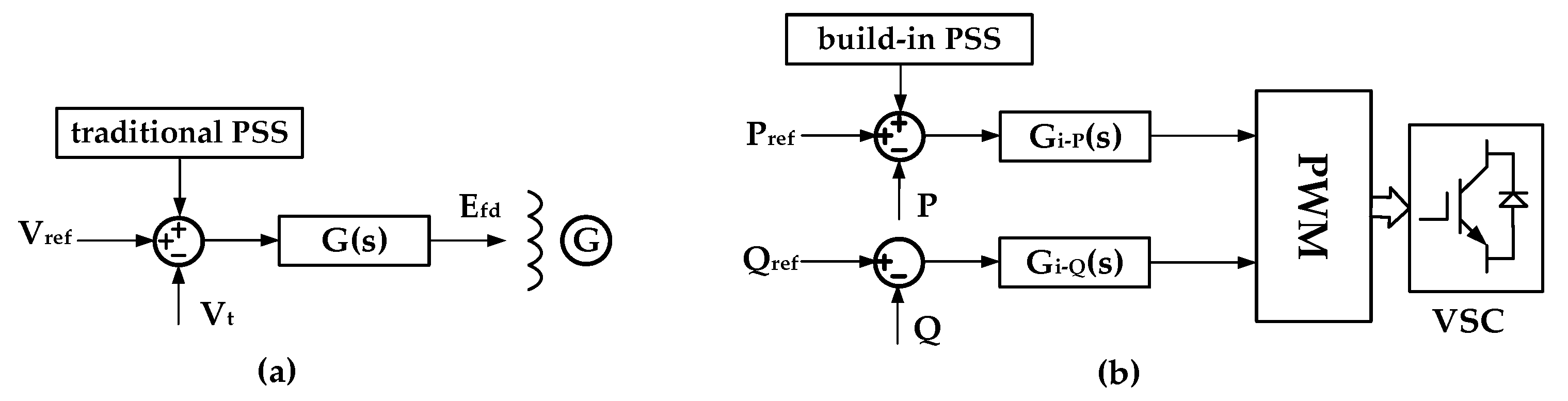
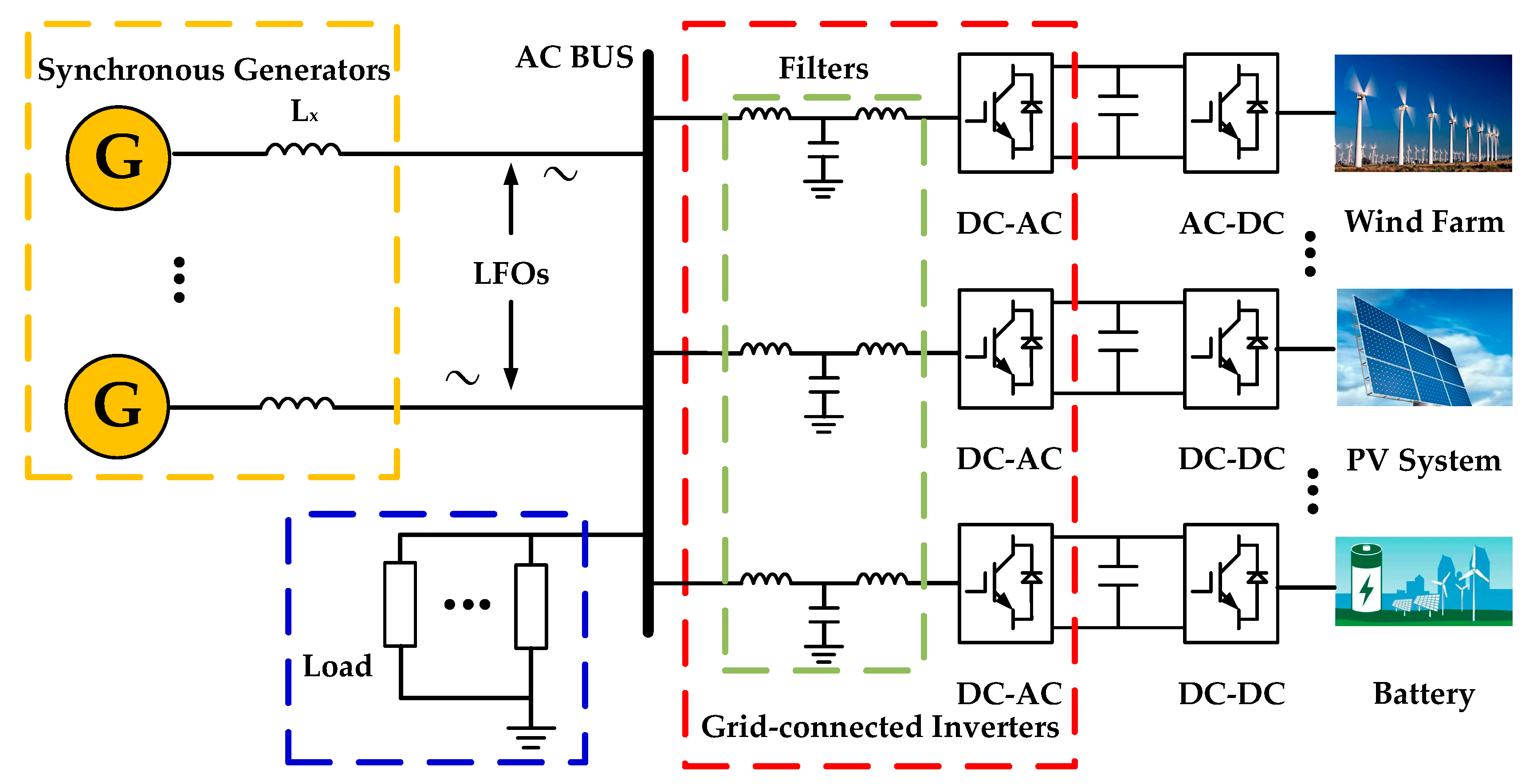
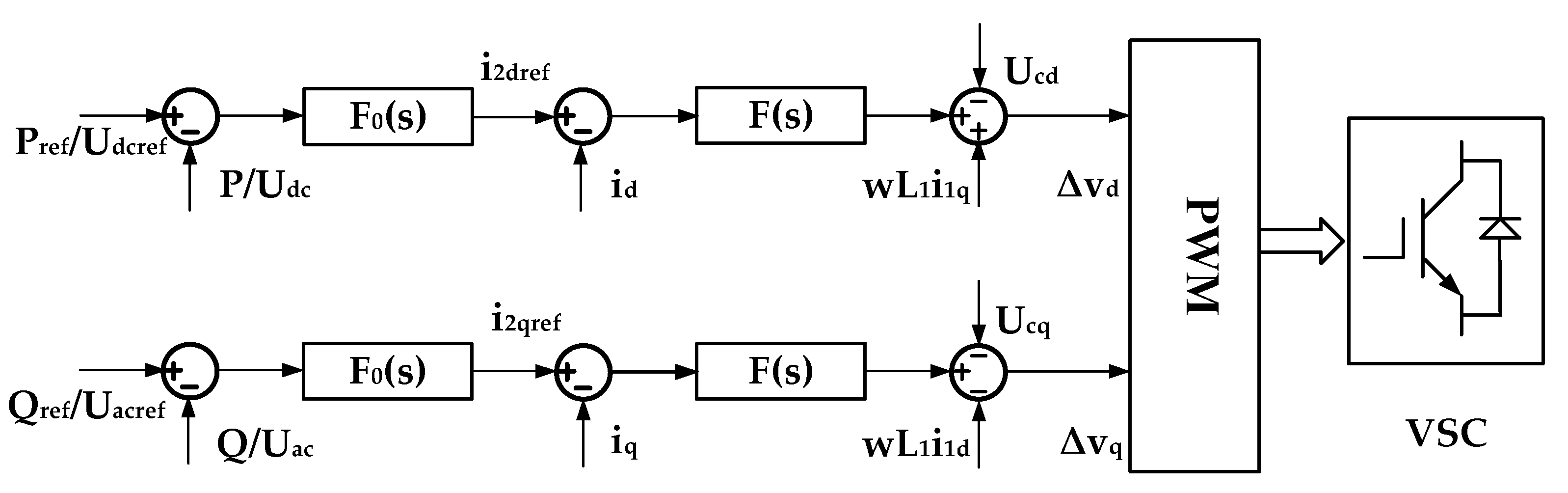
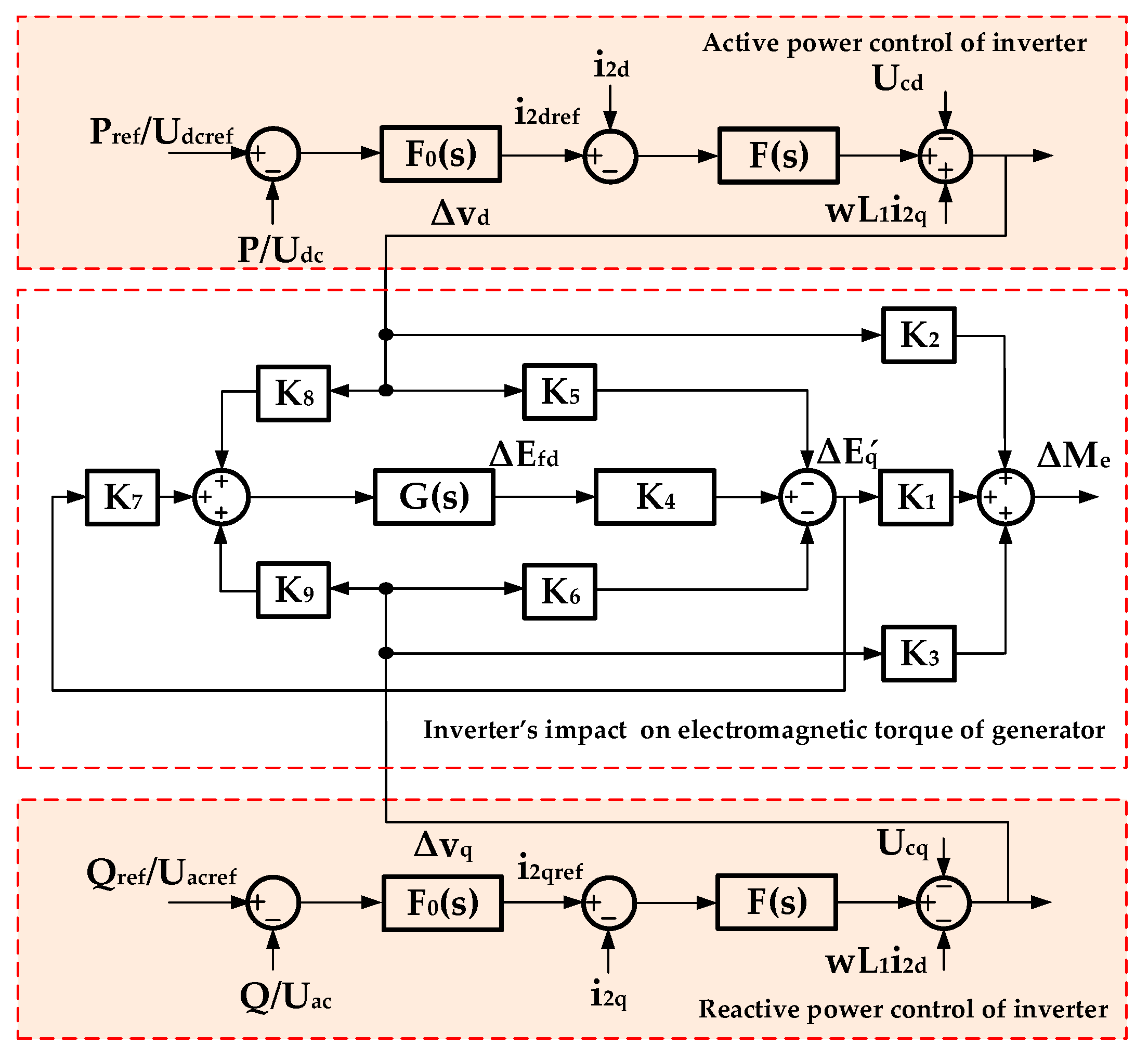
Low frequency oscillations are the most easily occurring dynamic stability problem in the power system. With the increasing capacity of power electronic equipment, the coupling coordination of a synchronous generator and inverter in a low frequency range is worth to be studied further. This paper analyzes the mechanism of the interaction between a normal active/reactive power control grid-connected inverters and power regulation of a synchronous generator. Based on the mechanism, the power system stabilizer built in the inverter is used to increase damping in low frequency range. The small-signal model for electromagnetic torque interaction between the grid-connected inverters and the generator is analyzed first. The small-signal model is the basis for the inverters to provide damping with specific amplitude and phase. The additional damping torque control of the inverters is realized through a built-in power system stabilizer. The fundamentals and the structure of a built-in power system stabilizer are illustrated. The built-in power system stabilizer can be realized through the active or reactive power control loop. The parameter design method is also proposed. With the proposed model and suppression method, the inverters can provide a certain damping torque to improve system stability. Finally, detailed system damping simulation results of the universal step test verify that the analysis is valid and effective.
Keywords: low frequency damping; grid-connected inverter; power system stabilizer; power electronics-based AC power system low frequency damping; grid-connected inverter; power system stabilizer; power electronics-based AC power system