Article

Hybrid Islanding Detection Method of Photovoltaic-Based Microgrid Using Reference Current Disturbance


by
Reza Bakhshi-Jafarabadi
1,* and
Marjan Popov
2,*
1
Department of Electrical Engineering, Engineering Faculty, Ferdowsi University of Mashhad, Mashhad 91775-1111, Iran
2
Faculty of EEMCS, Delft University of Technology, 2628CD Delft, The Netherlands
*
Authors to whom correspondence should be addressed.
Energies 2021, 14(5), 1390; https://doi.org/10.3390/en14051390
Submission received: 26 January 2021 / Revised: 23 February 2021 / Accepted: 25 February 2021 / Published: 3 March 2021
(This article belongs to the Special Issue Power Converter Control Applications in Low-Inertia Power Systems)

Abstract

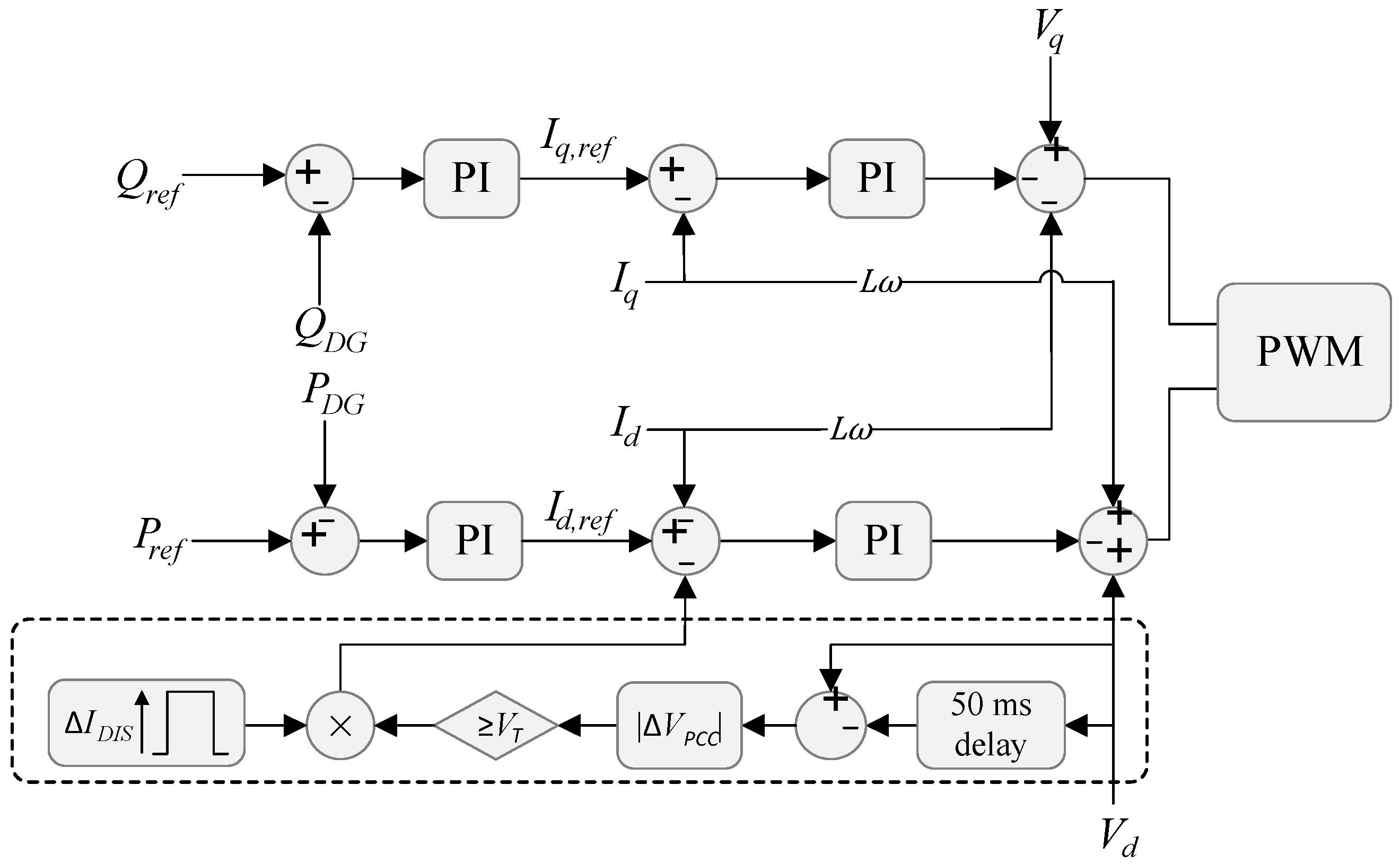
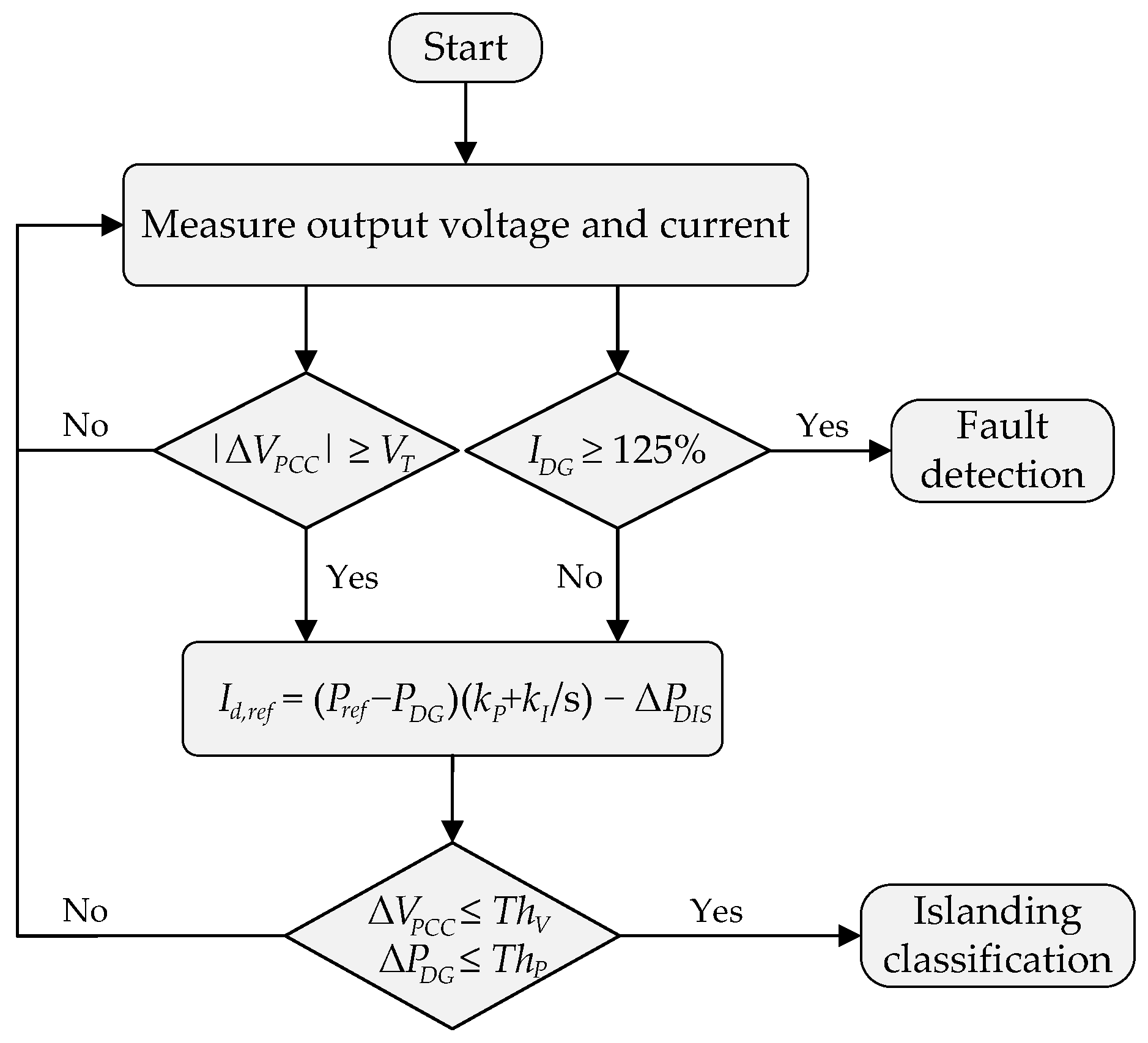
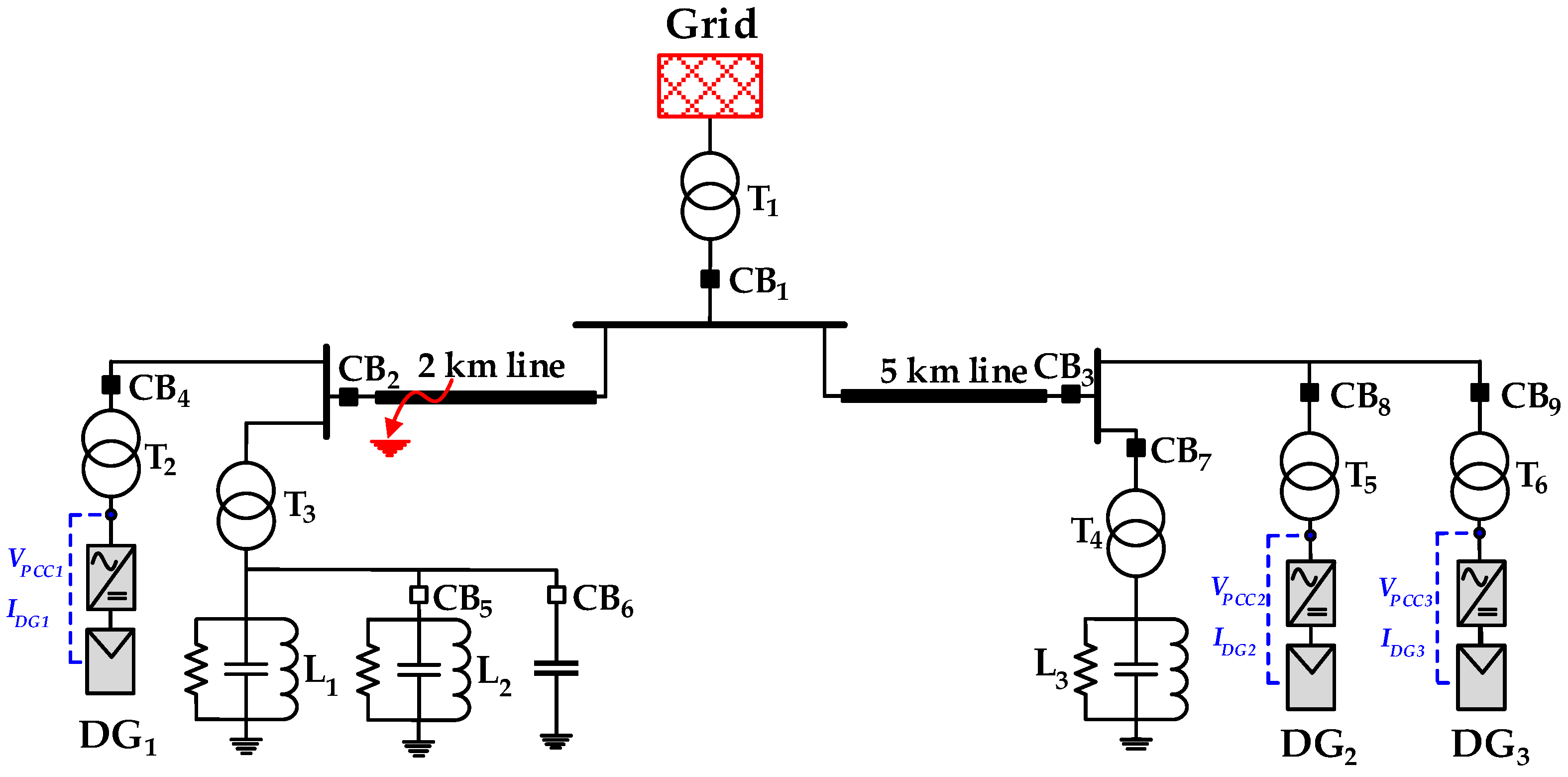
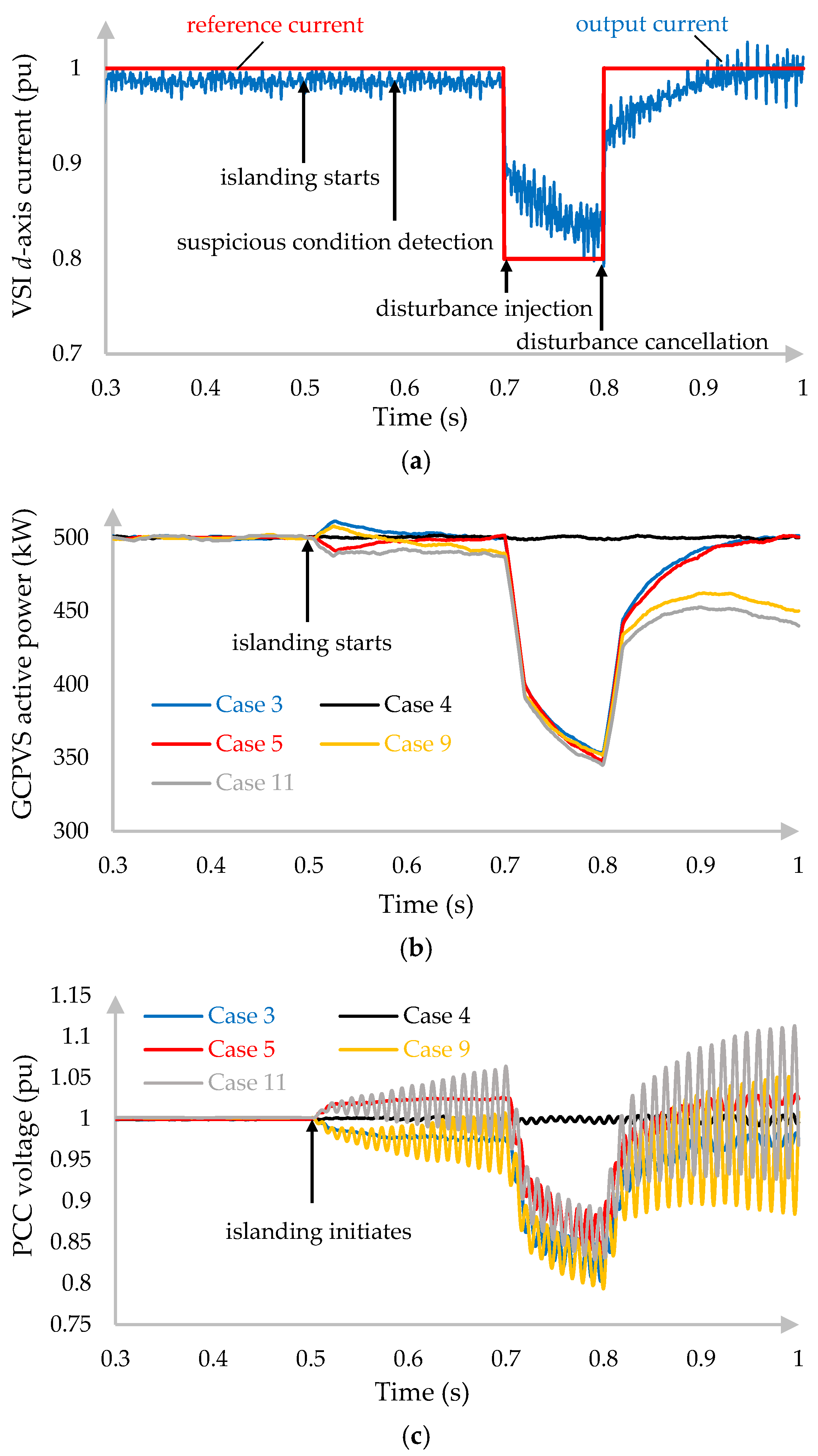
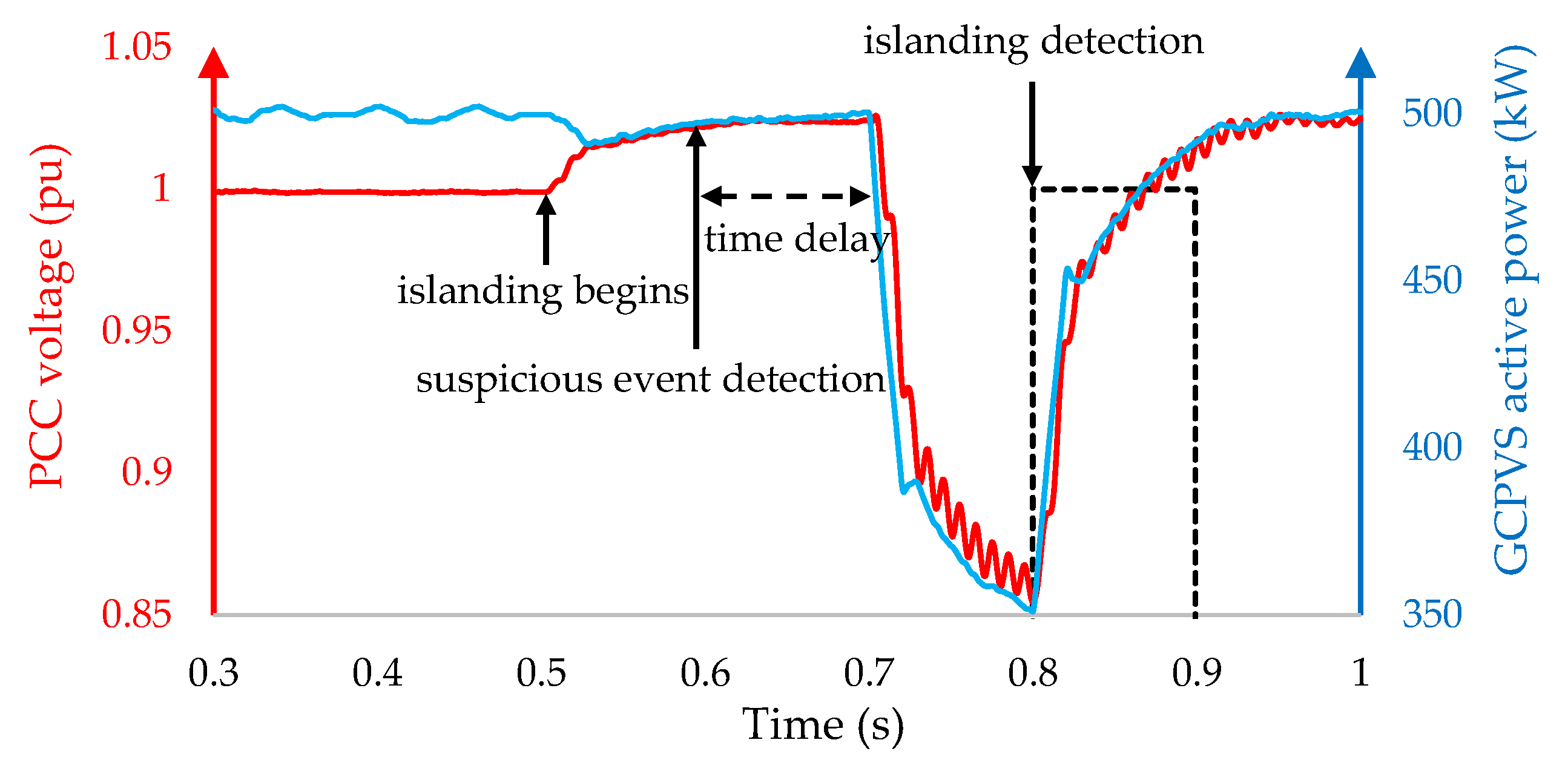
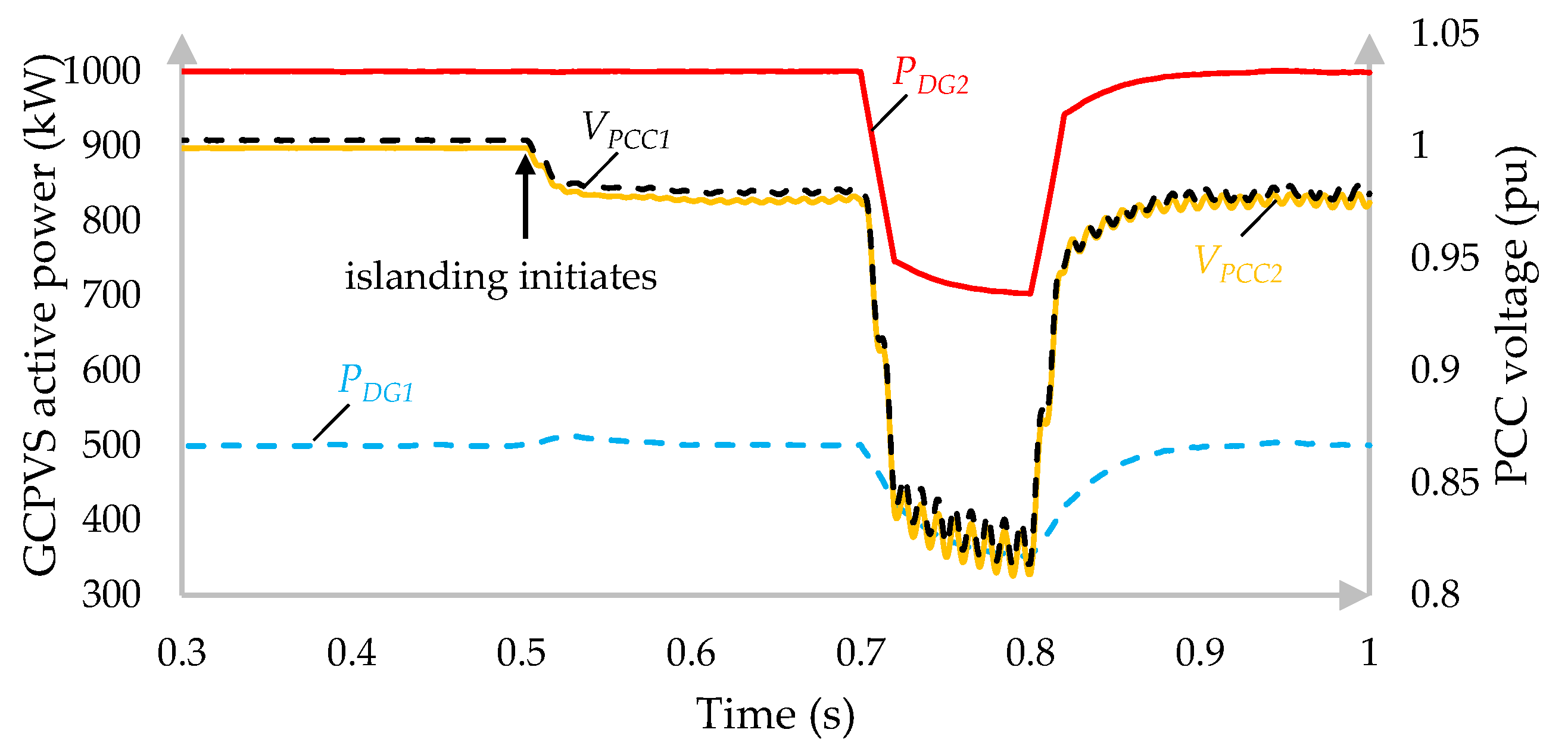
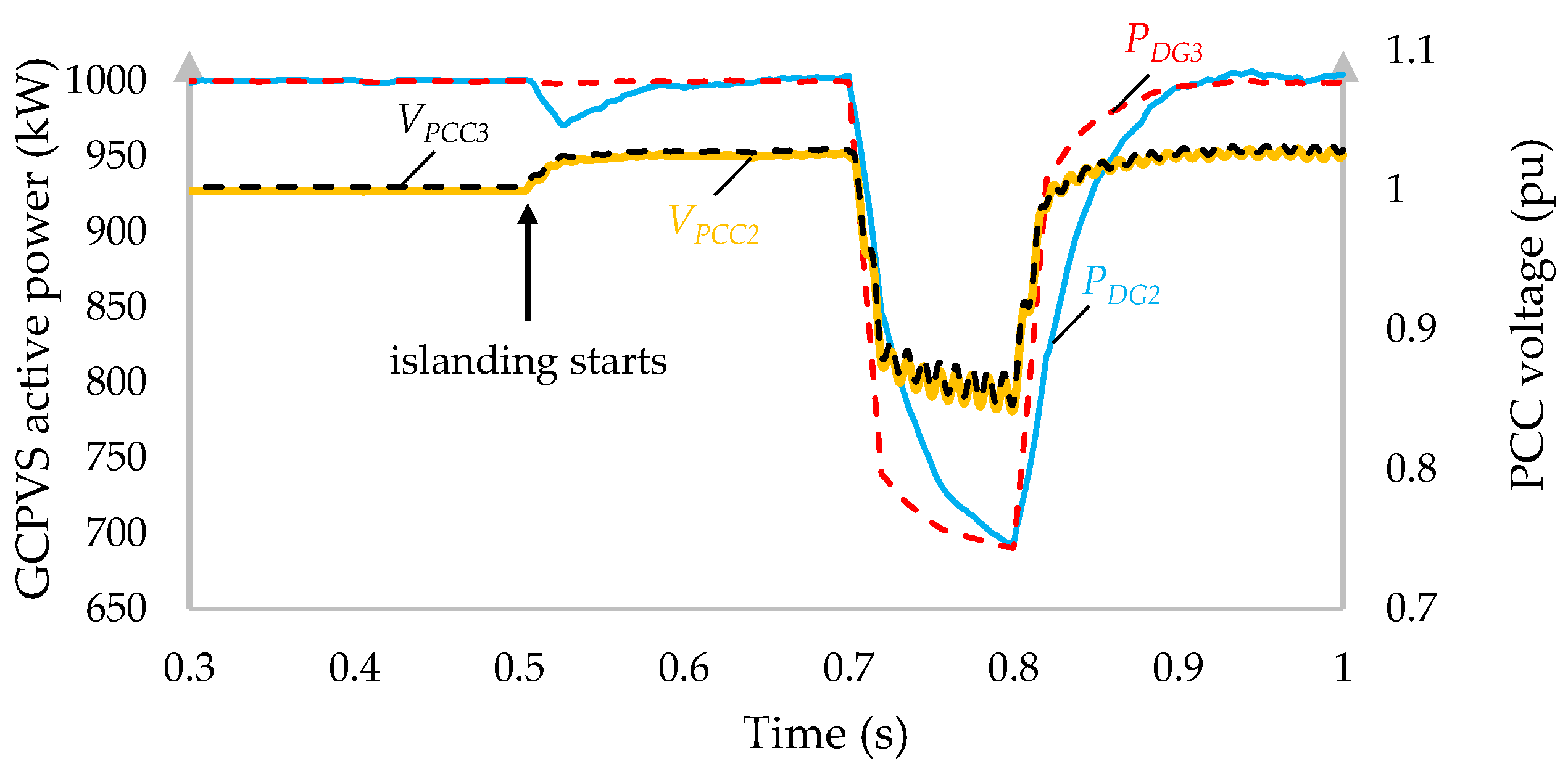
This paper proposes a new hybrid islanding detection method for grid-connected photovoltaic system (GCPVS)-based microgrid. In the presented technique, the suspicious islanding event is initially recognized whilst the absolute deviation of the point of common coupling (PCC) voltage surpasses a threshold. After an intentional delay, a transient disturbance is injected into the voltage source inverter’s d-axis reference current to decline the active power output. As a result, the PCC voltage reduces in islanding operating mode whilst its variation is negligible in the grid presence. Therefore, the simultaneous drop of PCC voltage and active power output is used as an islanding detection criterion. The effectiveness of the proposed algorithm is investigated for various islanding and non-islanding scenarios for a practical distribution network with three GCPVSs. The simulation results in MATLAB/Simulink show successful islanding detection with a small non-detection zone within 300 ms without false tripping during non-islanding incidents. In addition to the precise and fast islanding classification, the presented scheme is realized inexpensively; its thresholds are determined self-standing, and its output power quality degradation is eminently small. Moreover, the active power output is restored to the nominal set after islanding recognition, enhancing the chance of GCPVS generation at its highest possible level in the autonomous microgrid.
Keywords: grid-connected photovoltaic system (GCPVS); hybrid islanding detection method (IDM); microgrid; non-detection zone (NDZ) grid-connected photovoltaic system (GCPVS); hybrid islanding detection method (IDM); microgrid; non-detection zone (NDZ)