Article

Optimally Clocking the Low Carbon Energy Mile to Achieve the Sustainable Development Goals: Evidence from Dundee’s Electric Vehicle Strategy †

by
Ayodele Asekomeh
1,*,
Obindah Gershon
2 and
Smith I. Azubuike
3
1
Department of Accounting and Finance, Aberdeen Business School, Robert Gordon University, Aberdeen AB10 7QE, UK
2
Centre for Economic Policy & Development Research (CEPDeR), Department of Economics and Development Studies, Covenant University, Ota 112101, Nigeria
3
Centre for Energy, Petroleum and Mineral Law & Policy, School of Social Sciences, University of Dundee, Dundee DD1 4HN, UK
*
Author to whom correspondence should be addressed.
The present work is an extension of the paper “Can green infrastructure development in cities be equitable? An eclectic review of Dundee City’s electric vehicles strategy” presented to the Second International Conference on Aligning Local Interventions with the UN Sustainable Development Goals (SDGs), 2 July 2020, Institute of Energy and Sustainable Development, De Montfort University, Leicester, UK.
Energies 2021, 14(4), 842; https://doi.org/10.3390/en14040842
Submission received: 20 August 2020 / Revised: 10 November 2020 / Accepted: 16 November 2020 / Published: 5 February 2021

Abstract

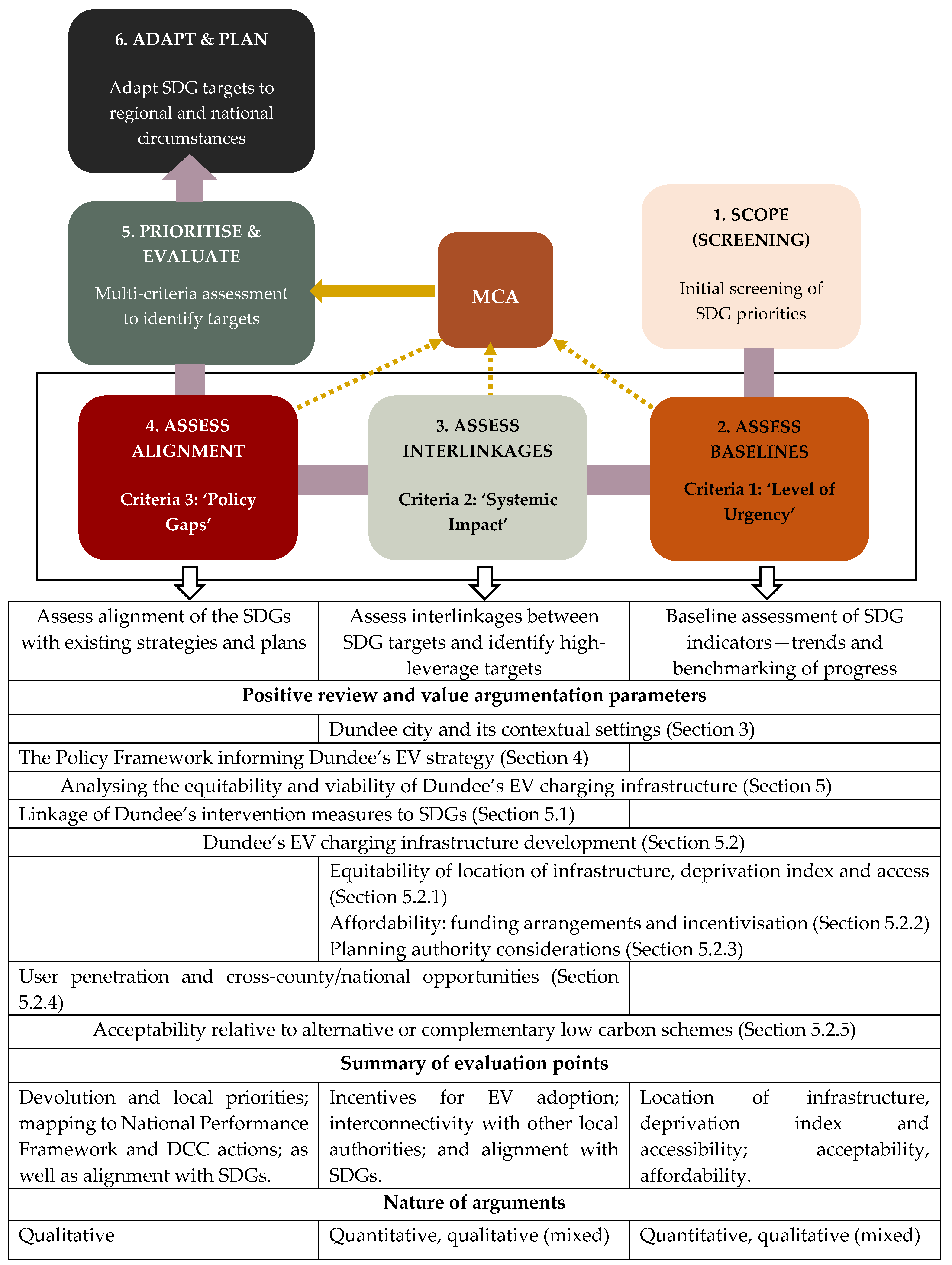
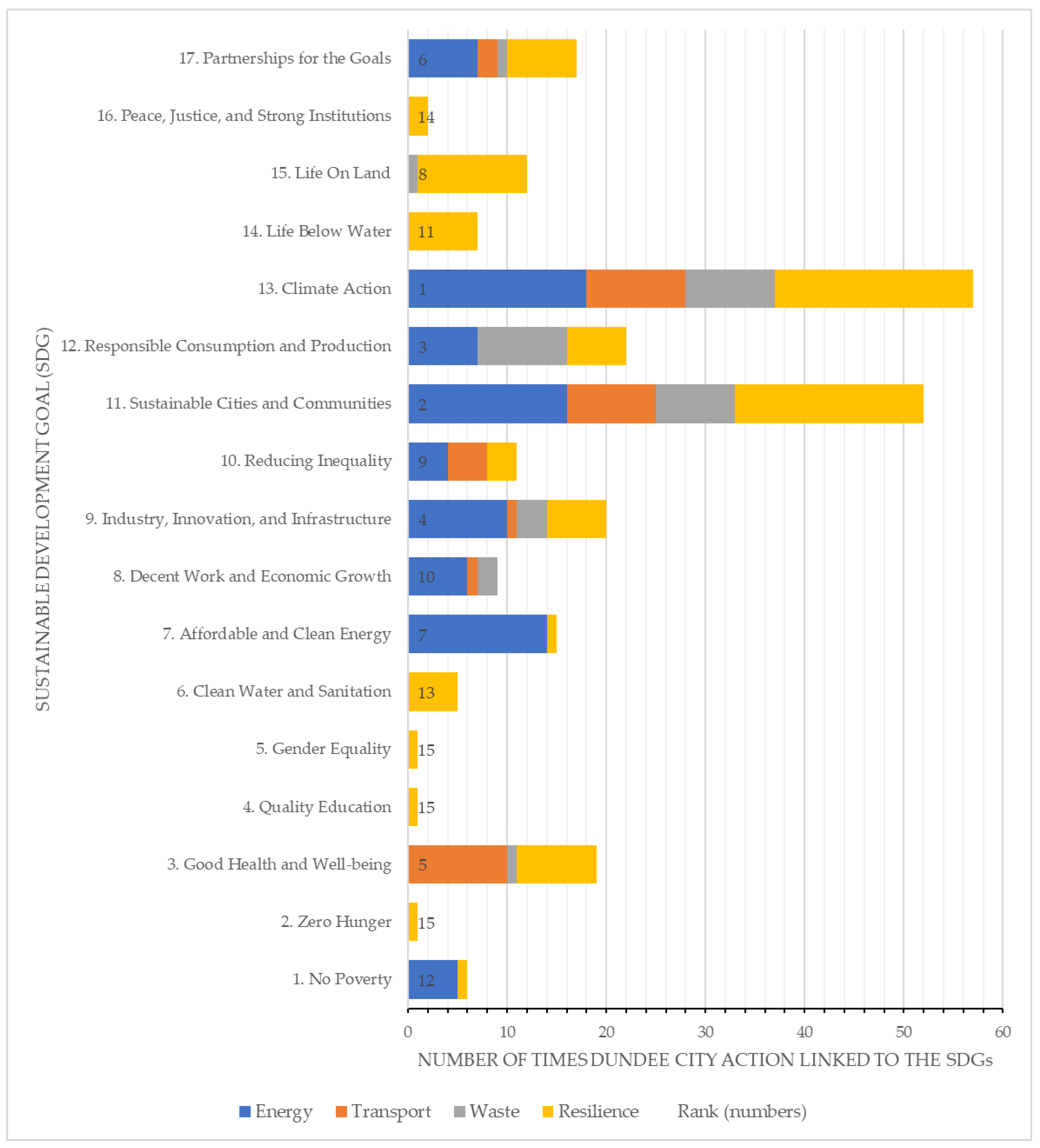
Dundee City has been successful in installing green infrastructure for charging electric vehicles (EVs). This intervention matches the Sustainable Development Goals (SDGs) of affordable clean energy (SDG 7), sustainable cities and communities (SDG 11) and climate action (SDG 13) of the United Nations General Assembly Agenda 2030 (Transforming our World: the 2030 Agenda for Sustainable Development). Local authorities can align interventions with SDGs according to needs. The purpose of this paper is to consider whether Dundee’s EV strategy represents the most viable and equitable intervention that could be adopted given the city’s context. We adopt a positive review and value argumentation approach to determine the extent to which the strategy satisfies the criteria of “level of urgency”, “systemic impact” and “policy gaps”, which have been employed in the extant literature as the basis for a multi-criteria analysis (MCA). We eclectically review elements of the strategy against the city’s peculiar physical and socio-economic environment, as well as argue their fit against these criteria. We interpret these criteria based on the complementarity and benefits of the strategy from the lenses of SDG 7, SDG 11 and SDG 13. Additionally, we consider the alignment of the EV strategy with the other SDGs. The criteria also allow us to evaluate the strategy based on the localisation principles of equity, acceptability and affordability of the intervention. Our review shows that the EV strategy represents a sustainable and community life-enhancing intervention that aligns with some key SDGs. However, the outcome raises concerns about the equitability of the strategy. Smaller, similar or bigger cities could utilise this approach. However, we recommend the evaluation of local priorities to improve alignment with the SDGs and the provision of clear justifications for selecting an intervention from a range of responses.
Keywords: green infrastructure; electric vehicle; low carbon energy; localisation; equitability; viability; sustainable development goals; value argumentation; eclectic review green infrastructure; electric vehicle; low carbon energy; localisation; equitability; viability; sustainable development goals; value argumentation; eclectic review