Article

A Simplified Model of a Surge Arrester and Its Application in Residual Voltage Tests
by
Peerawut Yutthagowith
1,*,
Sutee Leejongpermpoon
1 and
Nawakun Triruttanapiruk
2
1
School of Engineering, King Mongkut’s Institute of Technology Ladkrabang, Bangkok 10520, Thailand
2
Department of Electrical Engineering, Chubu University, 1200 Matsumoto-cho, Kasugai 487-8501, Japan
*
Author to whom correspondence should be addressed.
Energies 2021, 14(11), 3132; https://doi.org/10.3390/en14113132
Submission received: 10 March 2021 / Revised: 26 April 2021 / Accepted: 11 May 2021 / Published: 27 May 2021
(This article belongs to the Special Issue Power System Transients and Protection)

Abstract

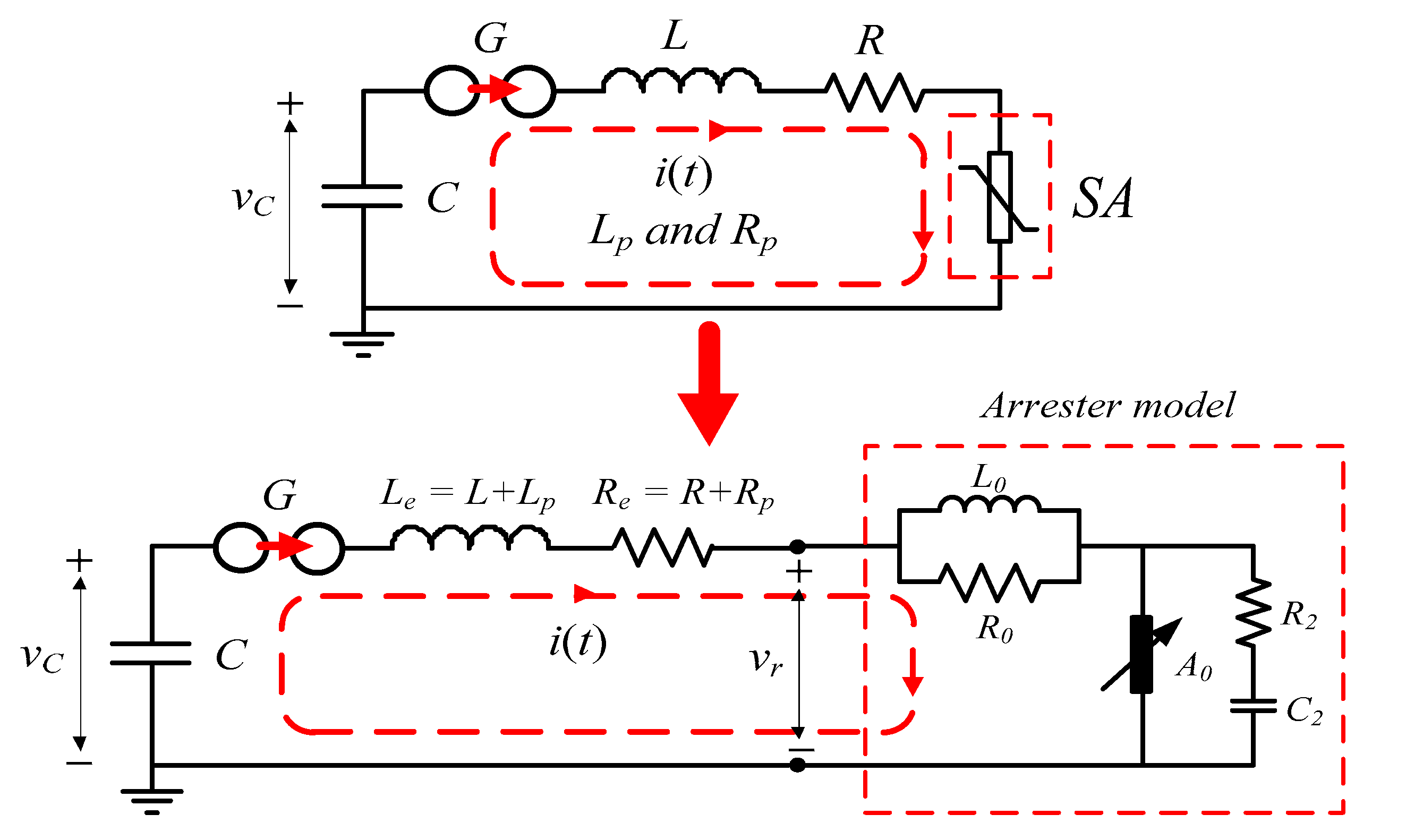
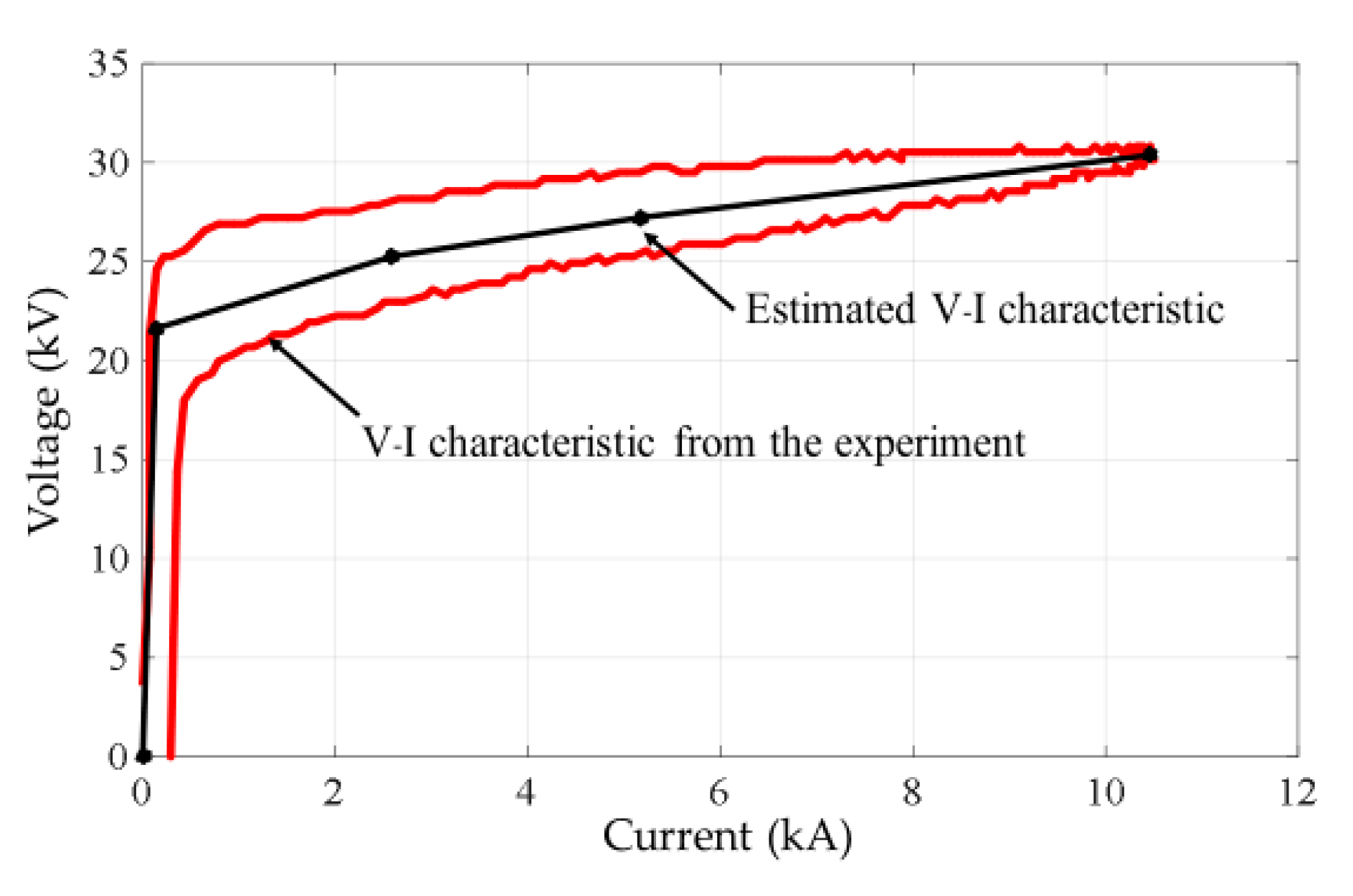
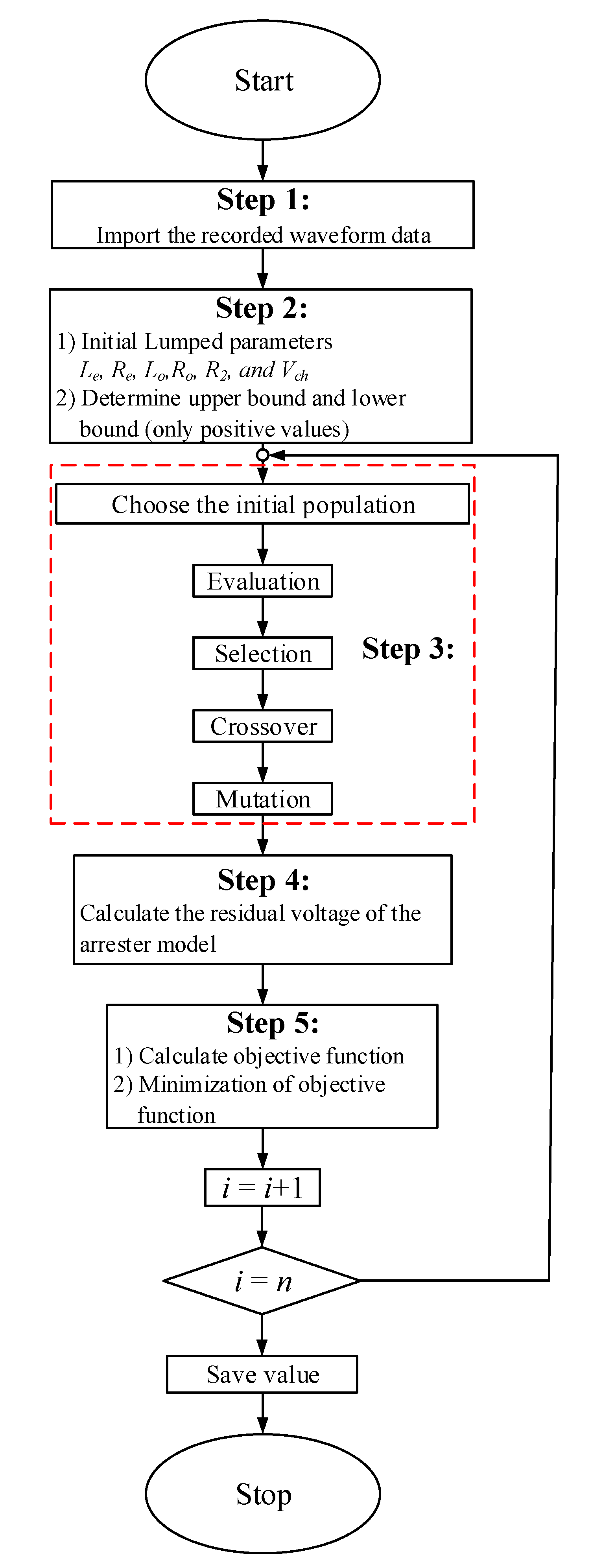
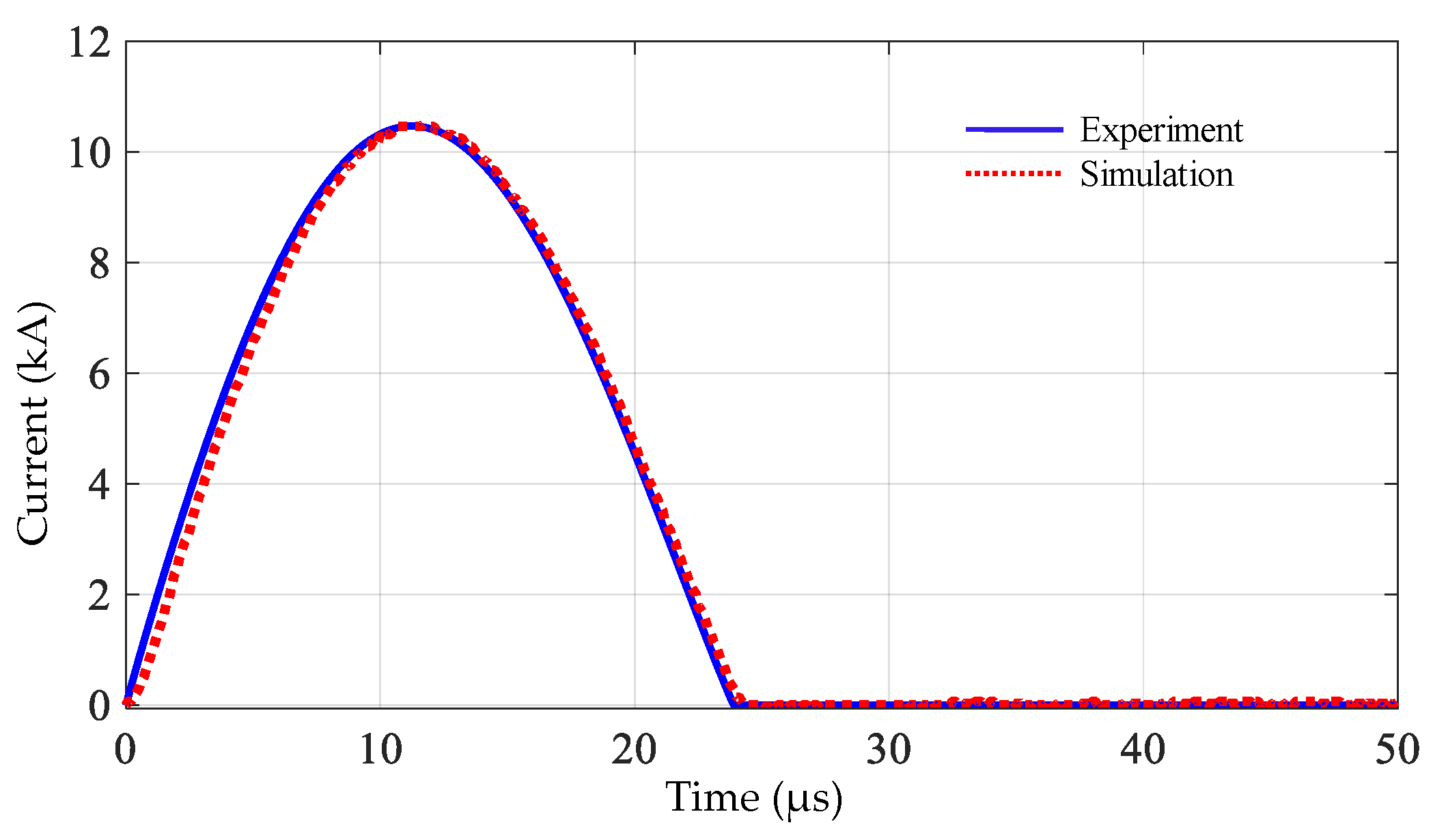
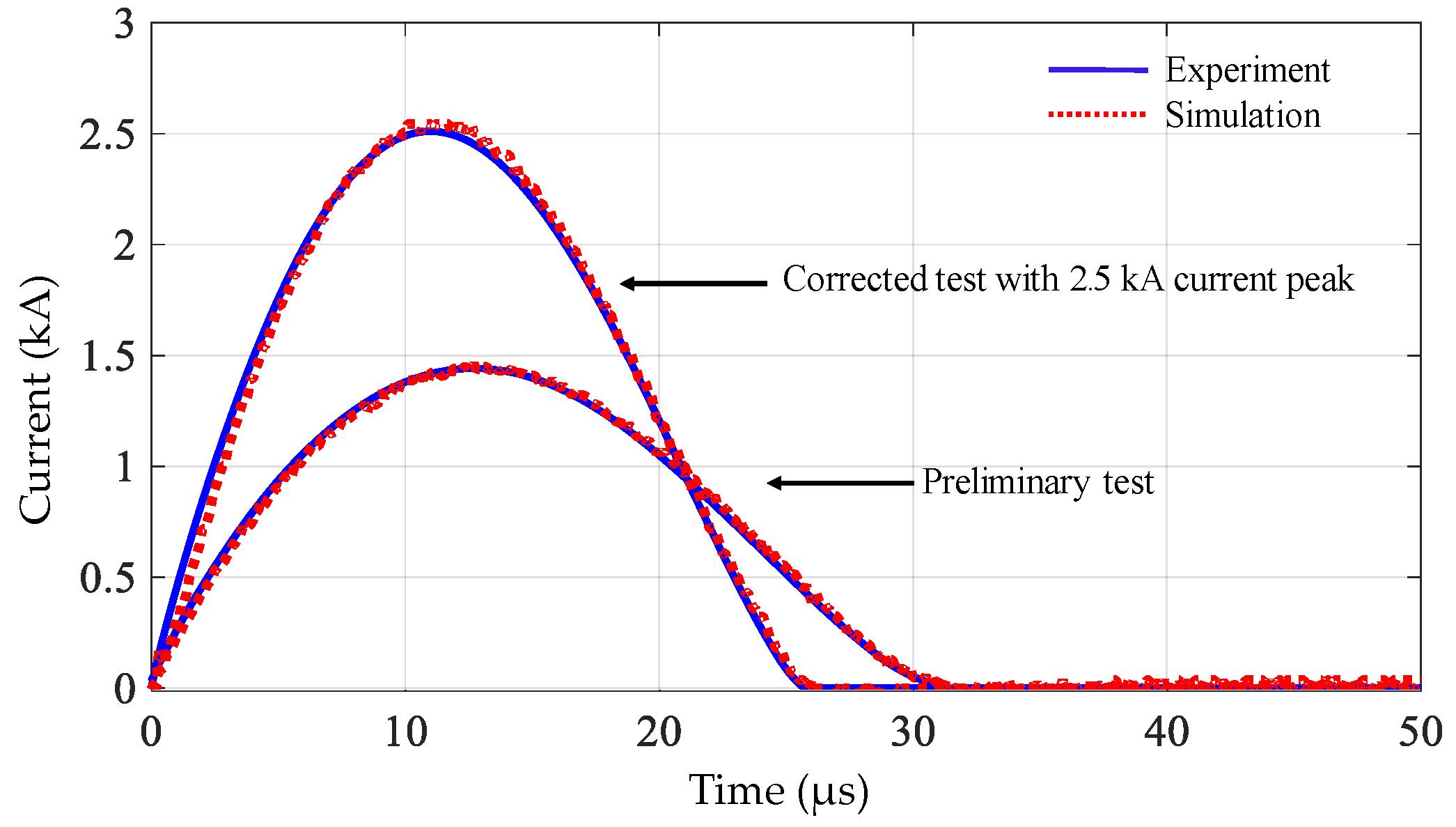
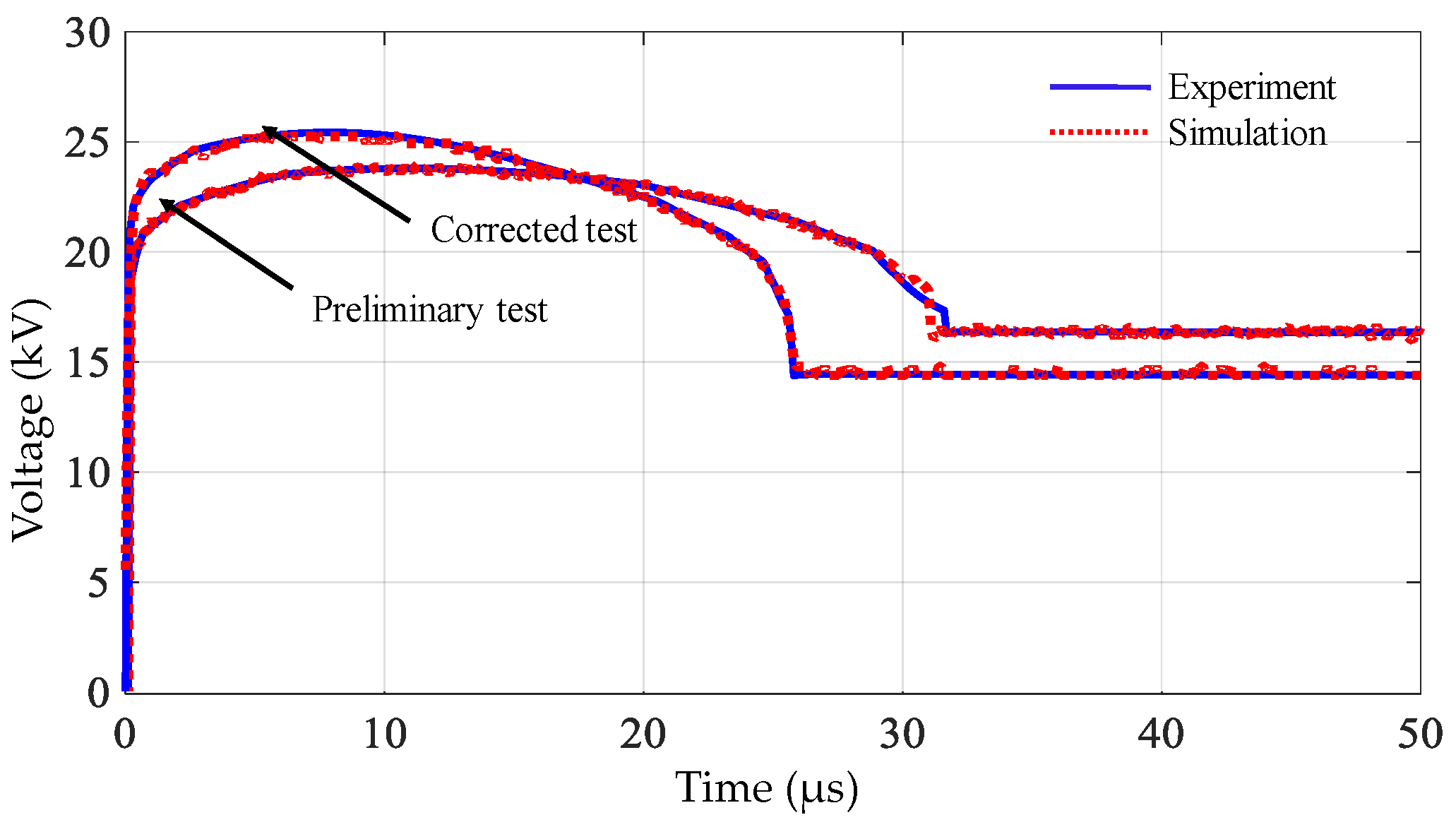
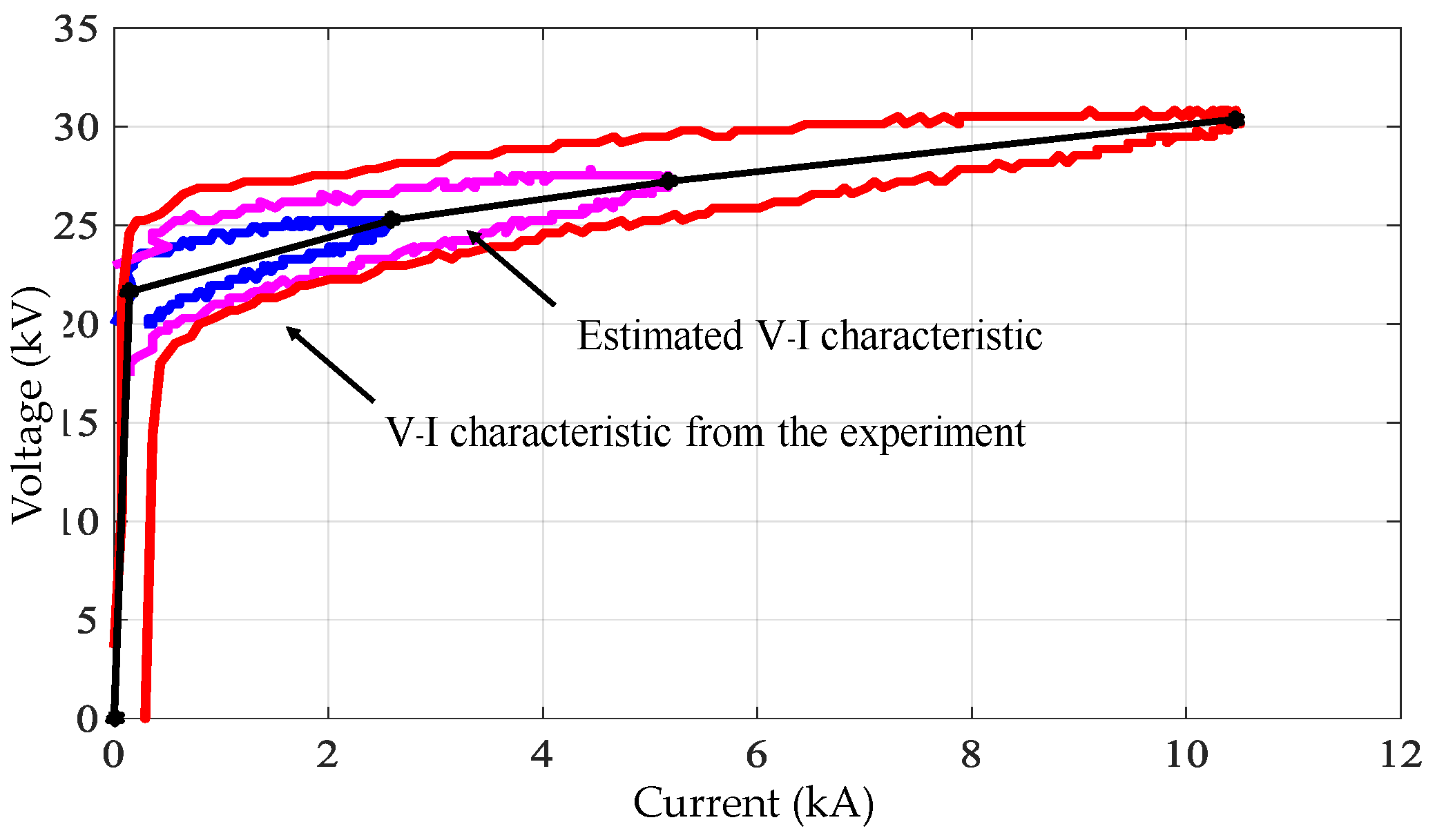
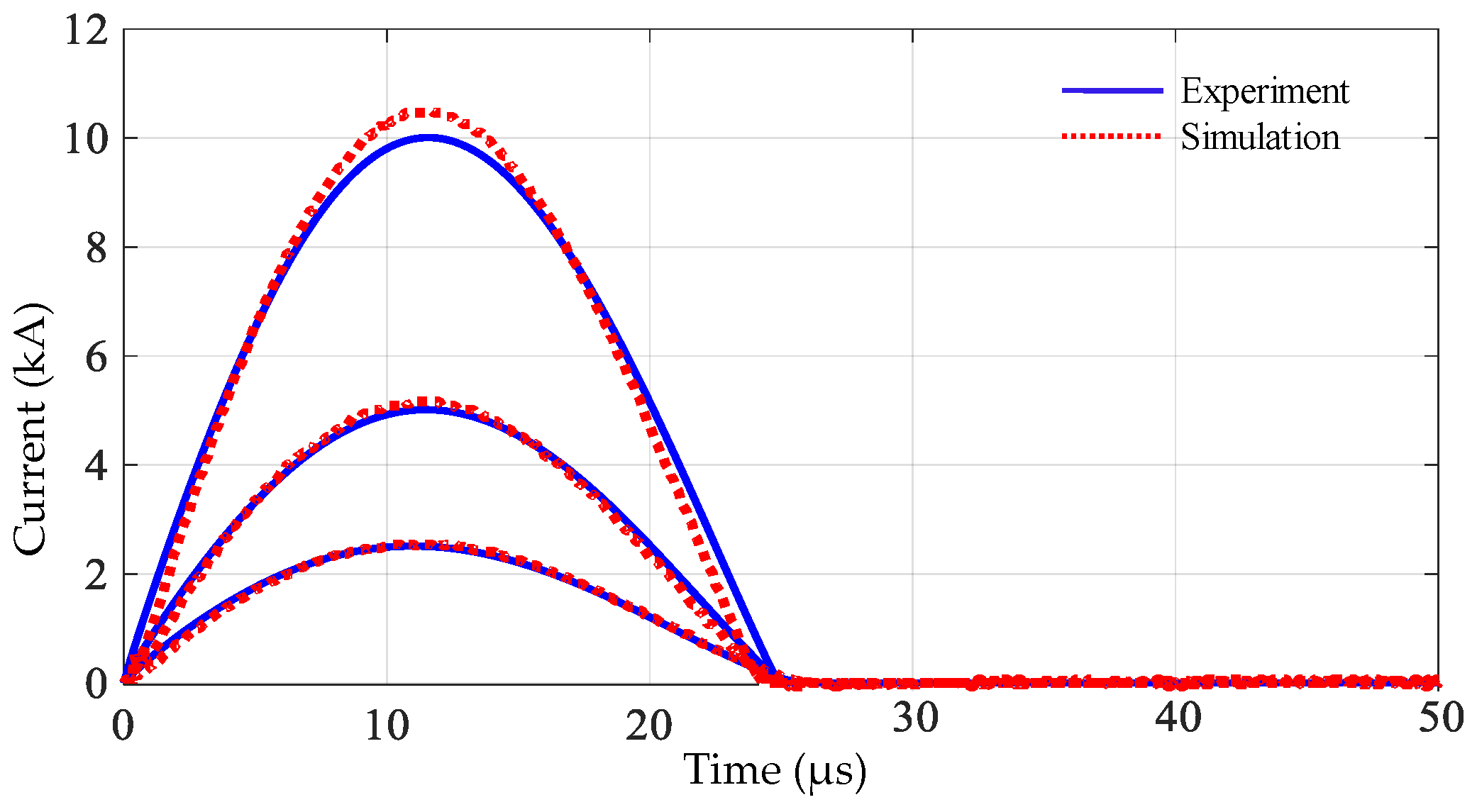
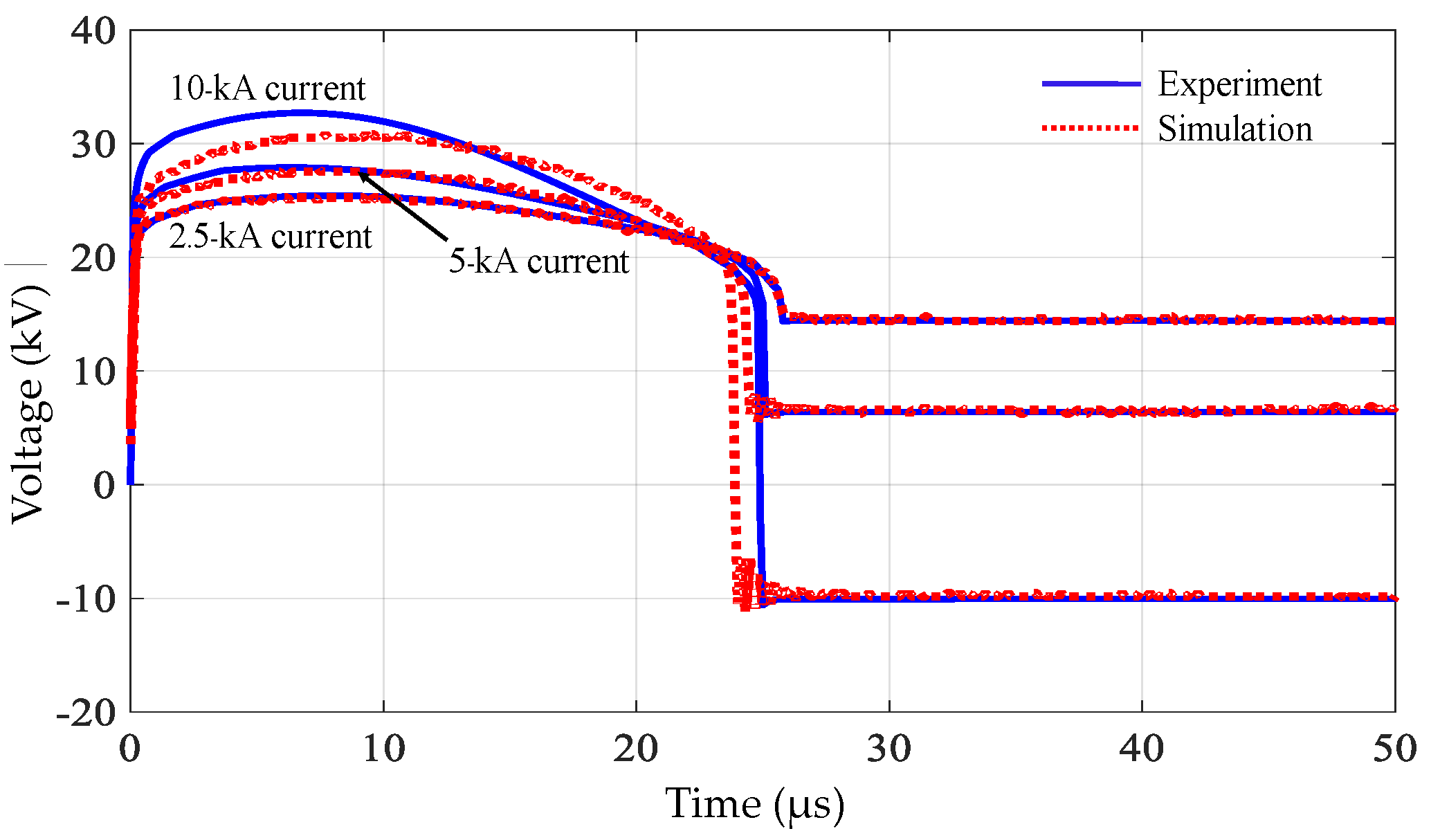
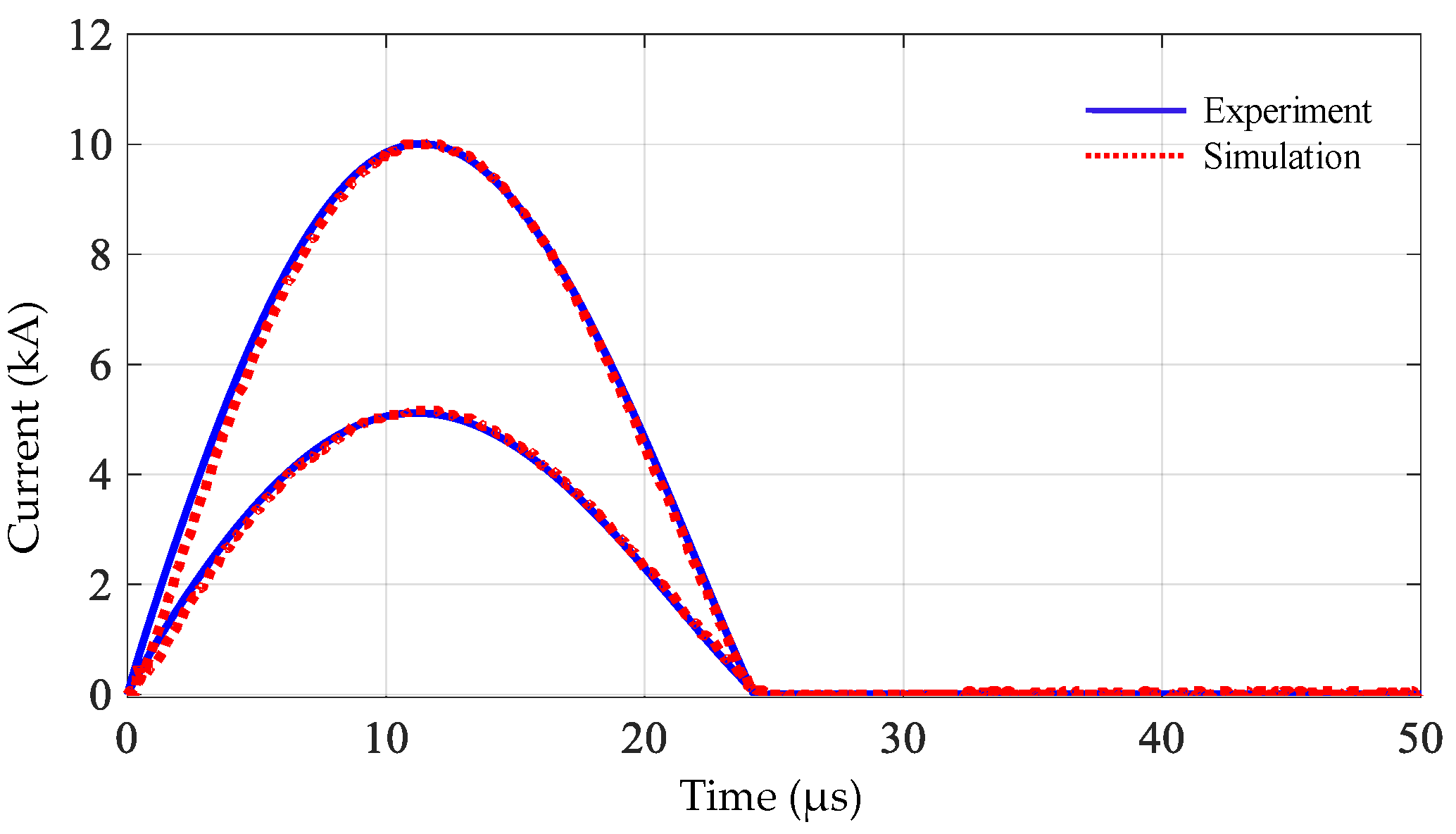
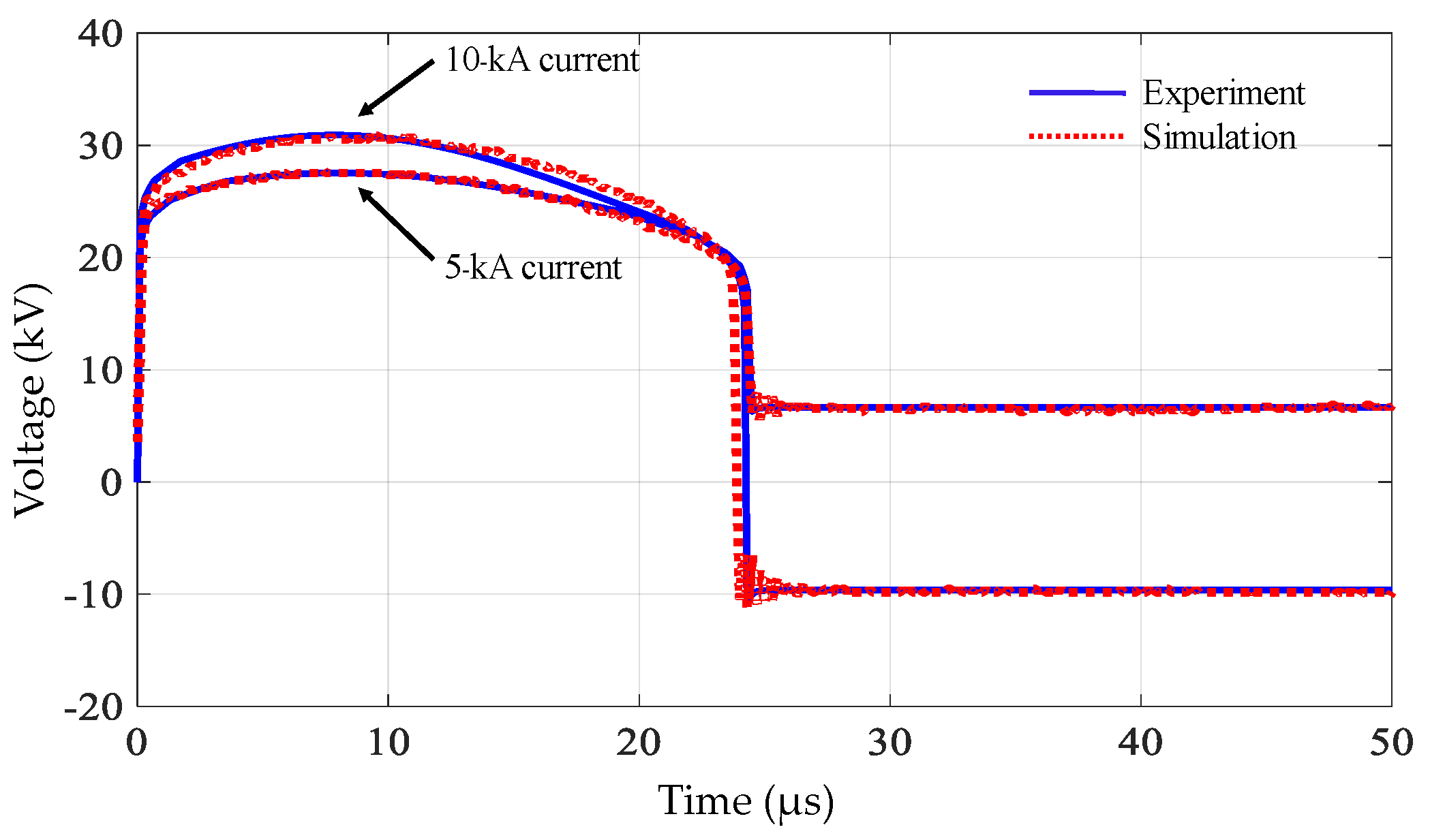
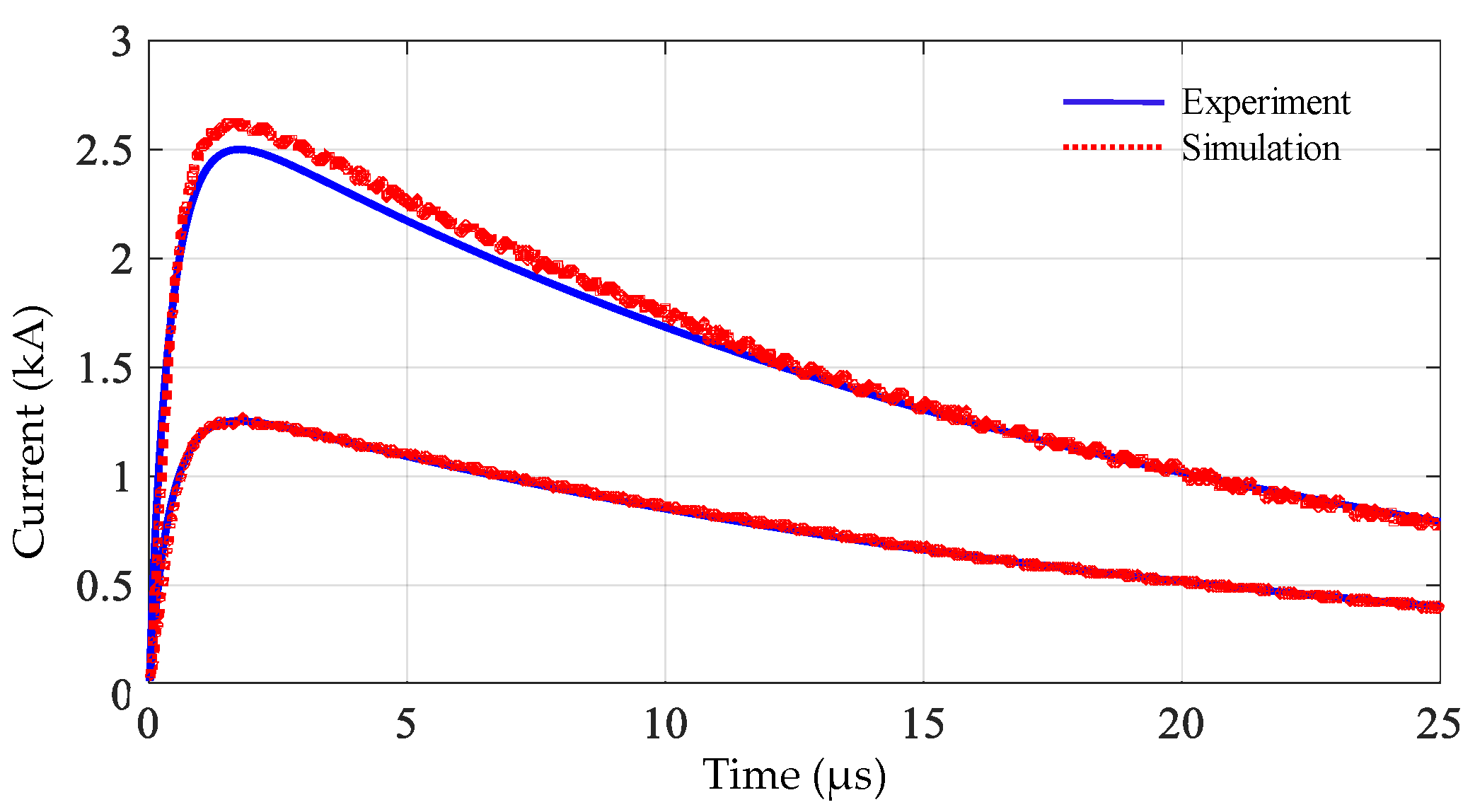
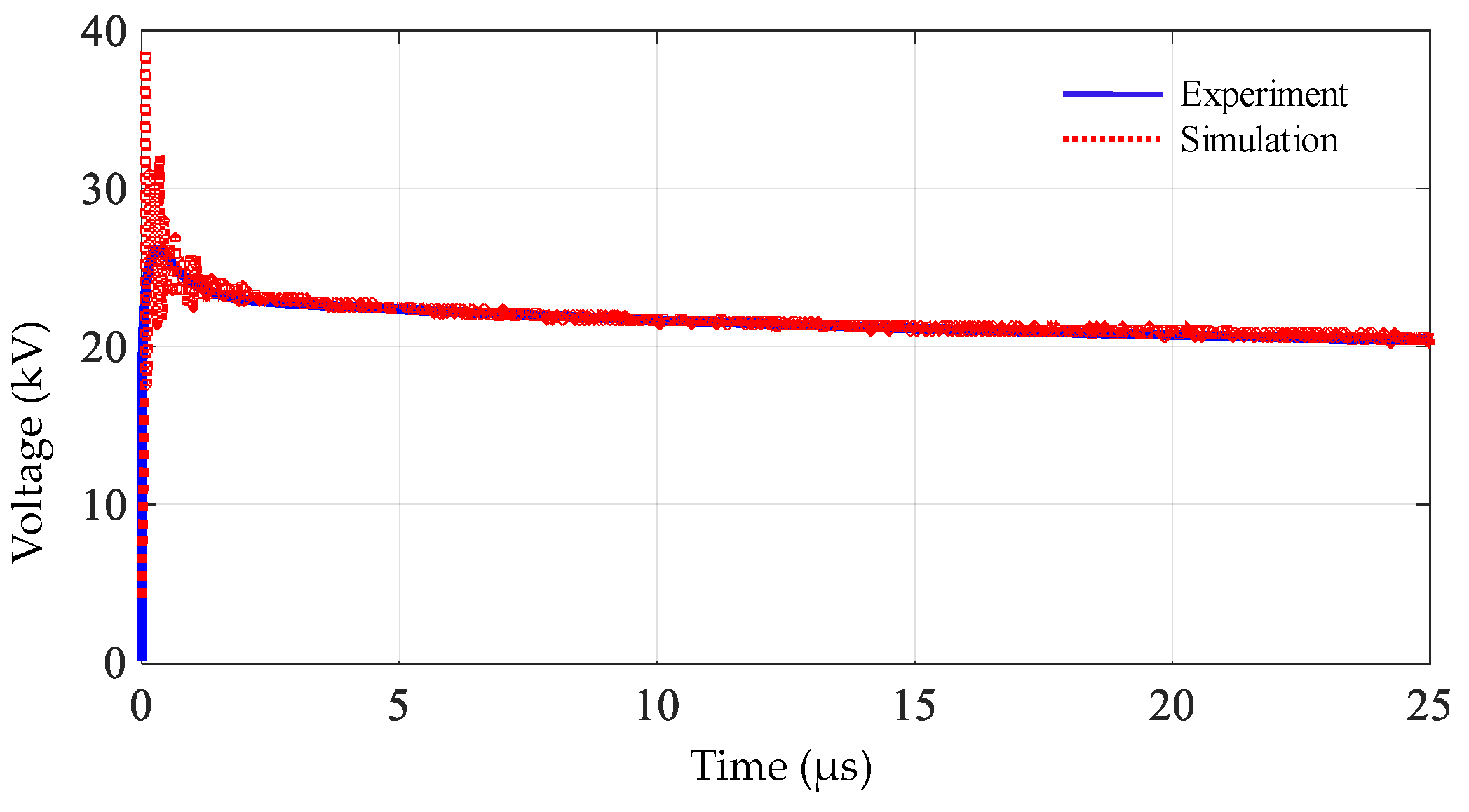
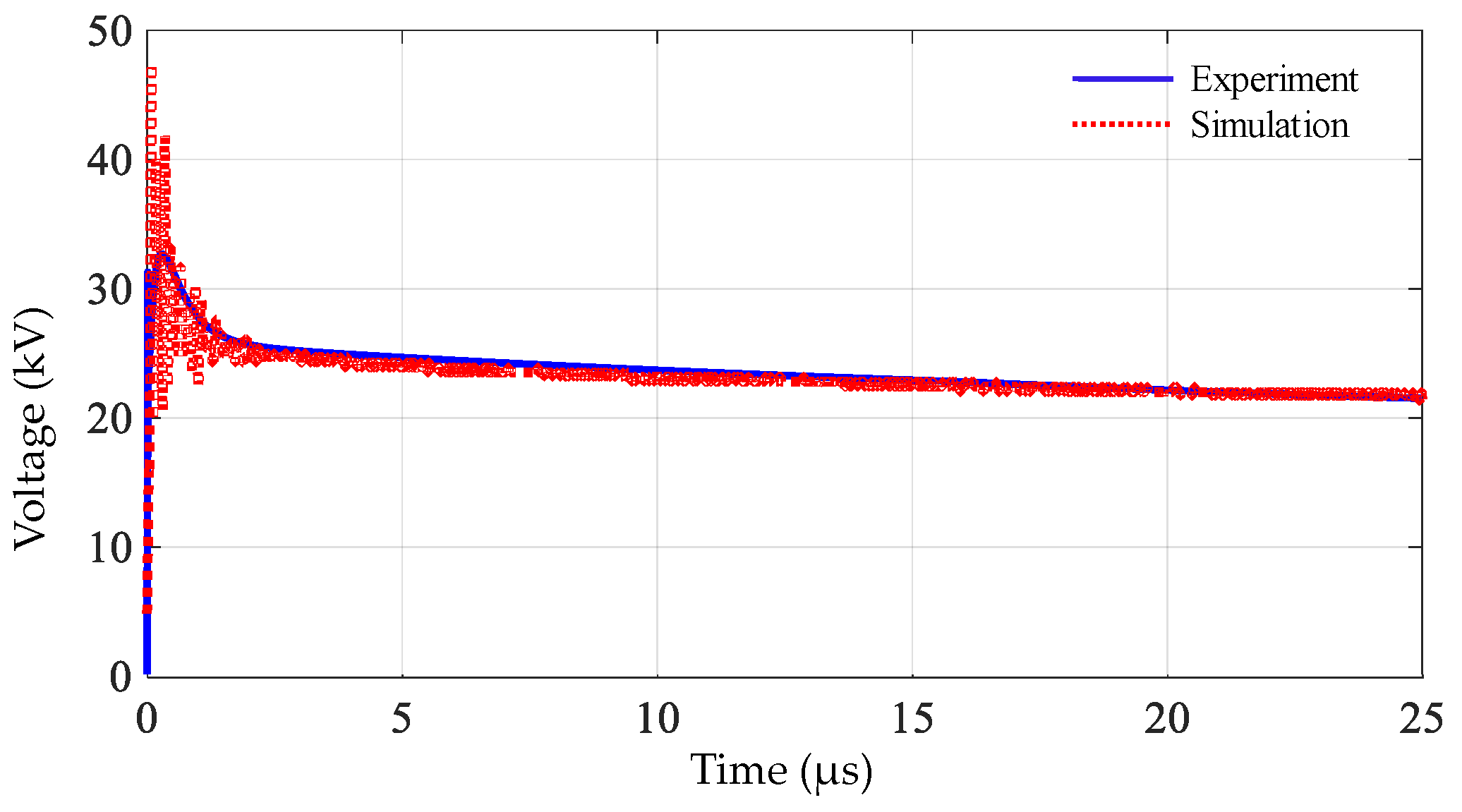
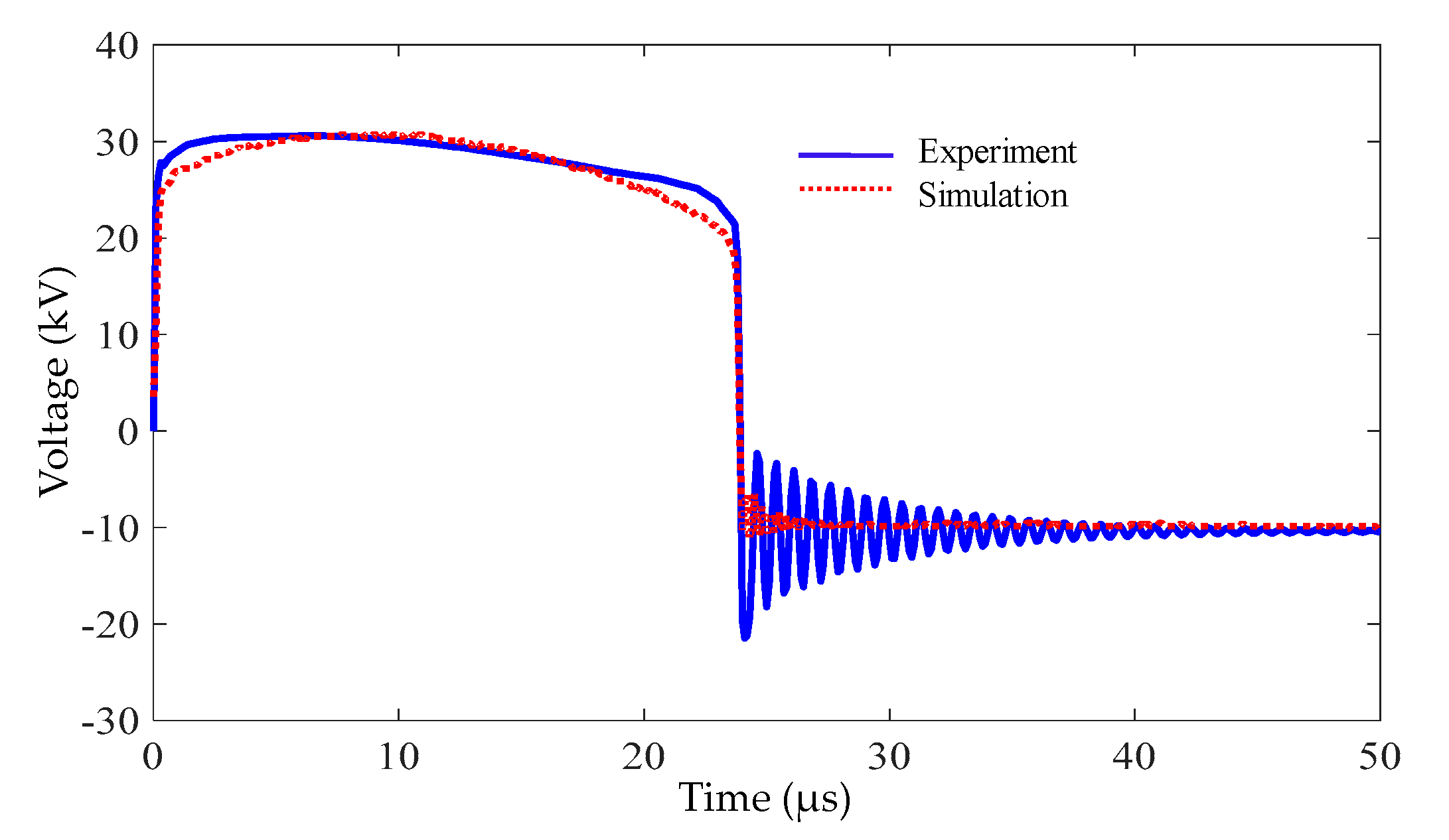
A simplified and accurate model of a surge arrester used in the residual voltage test is proposed in this paper. With the help of a genetic algorithm, the measured impulse current and residual voltage waveforms are utilized to determine circuit parameters of the proposed model and the generation circuit precisely. The technique starts from the circuit parameter determination using the preliminary experimental data with a lower current peak than that specified by the standard. From the determined model and with the help of the genetic algorithm, the circuit parameters and the charging voltage to obtain the specified current peak and the residual voltage can be estimated accurately. The validity of the proposed technique has been verified by experiments for the estimation of the appropriate current circuit parameters, the charging voltage, and the residual voltage. In addition, the application of the proposed model in the residual voltage tests is presented. From comparison of simulated and experimental results with the determined parameters, the impulse current and residual voltage waveforms are determined precisely. It is confirmed that the proposed model and technique are attractive in the appropriate circuit parameter determination and the residual voltage estimation in the residual voltage tests of surge arresters. The proposed method also provides a good advantage for reduction of the number of trial and error experiments for obtaining the current waveform according to the standard requirement. Moreover, the unintentional damages of the arrester during the process of the waveform adjustment will be reduced significantly.
Keywords: circuit parameter determination; impulse currents; surge arresters; residual voltage test; simplified arrester model circuit parameter determination; impulse currents; surge arresters; residual voltage test; simplified arrester model