Article

Economic and Exergo-Advance Analysis of a Waste Heat Recovery System Based on Regenerative Organic Rankine Cycle under Organic Fluids with Low Global Warming Potential


by
Guillermo Valencia Ochoa
1,*,
Cesar Isaza-Roldan
2 and
Jorge Duarte Forero
1
1
Programa de Ingeniería Mecánica, Universidad del Atlántico, Carrera 30 Número 8-49, Puerto Colombia, Barranquilla 080007, Colombia
2
Programa de Ingeniería Mecánica, Universidad Pontificia Bolivariana, Medellín 050004, Colombia
*
Author to whom correspondence should be addressed.
Energies 2020, 13(6), 1317; https://doi.org/10.3390/en13061317
Submission received: 3 February 2020 / Revised: 27 February 2020 / Accepted: 3 March 2020 / Published: 12 March 2020

Abstract

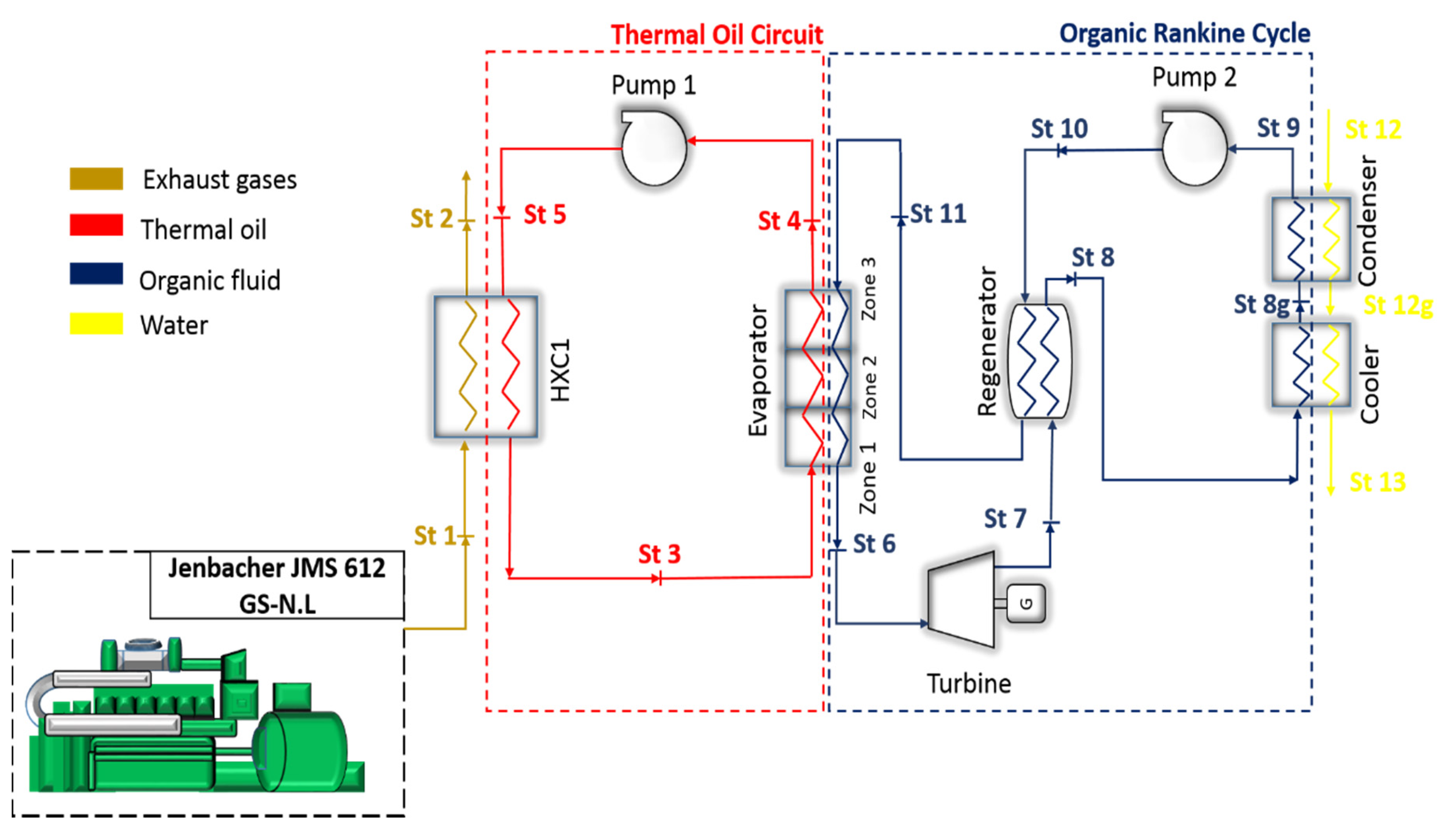
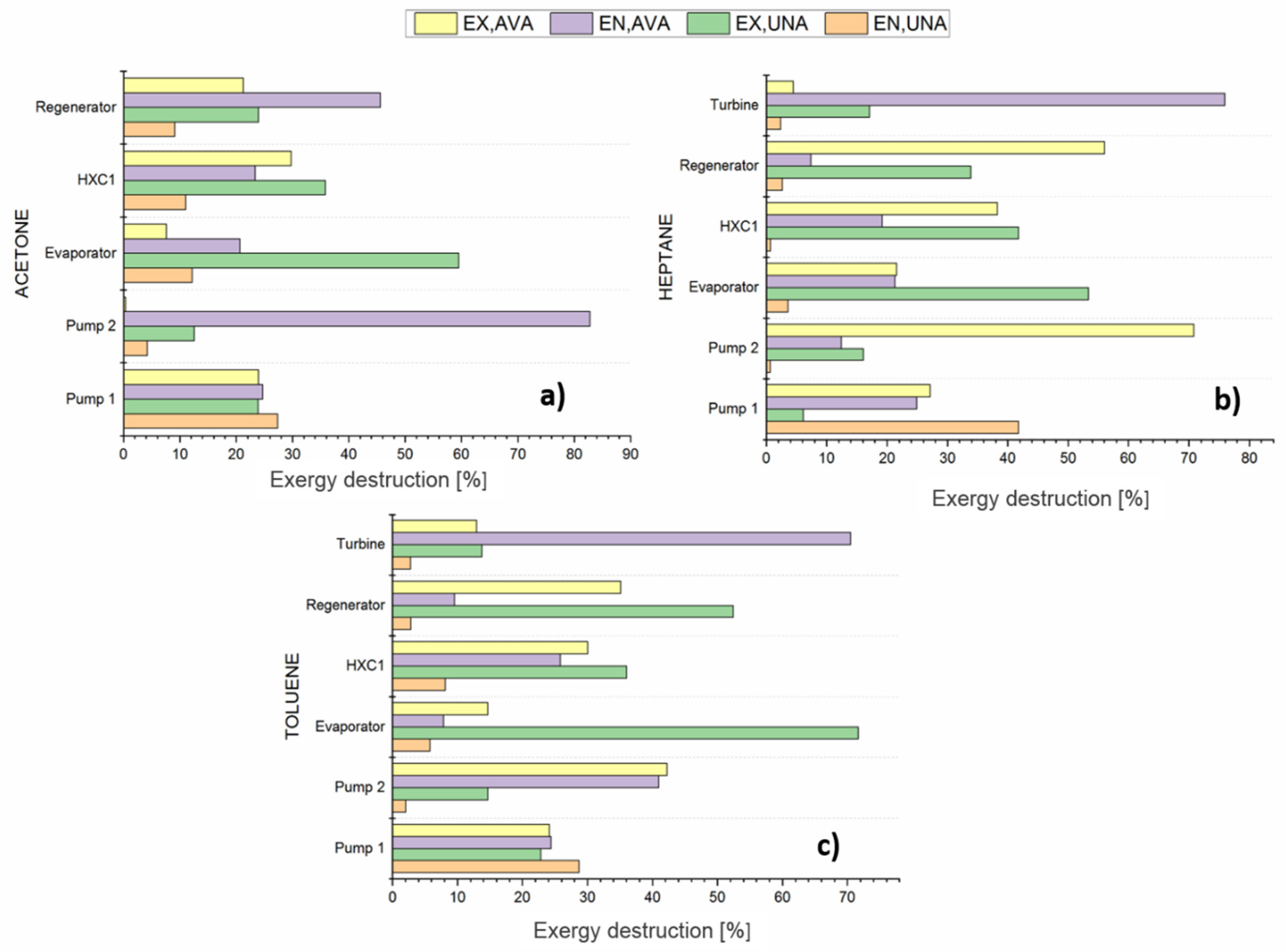
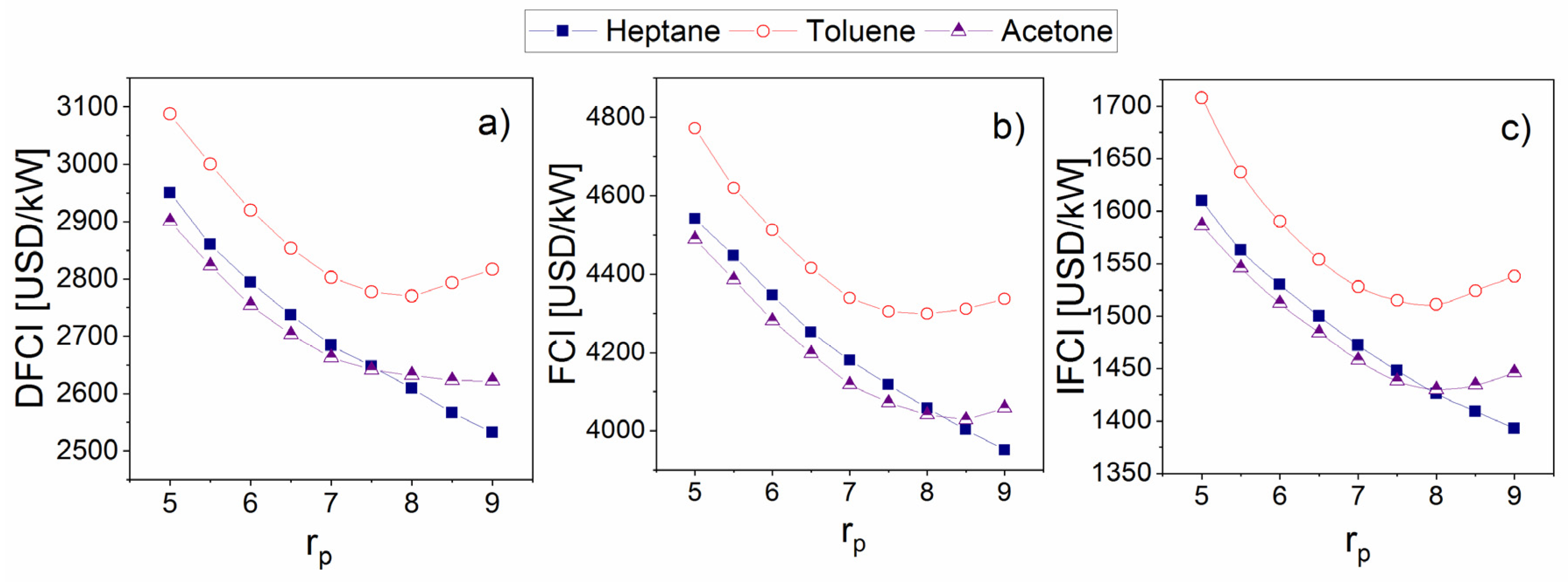
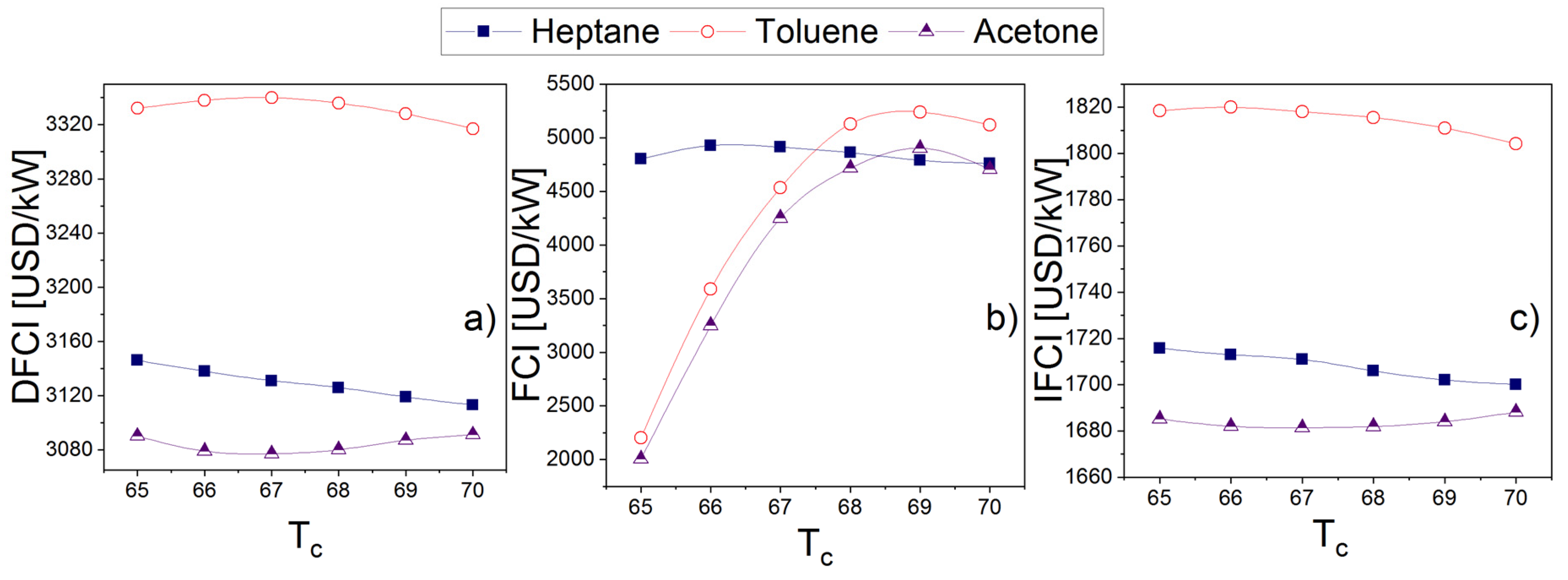
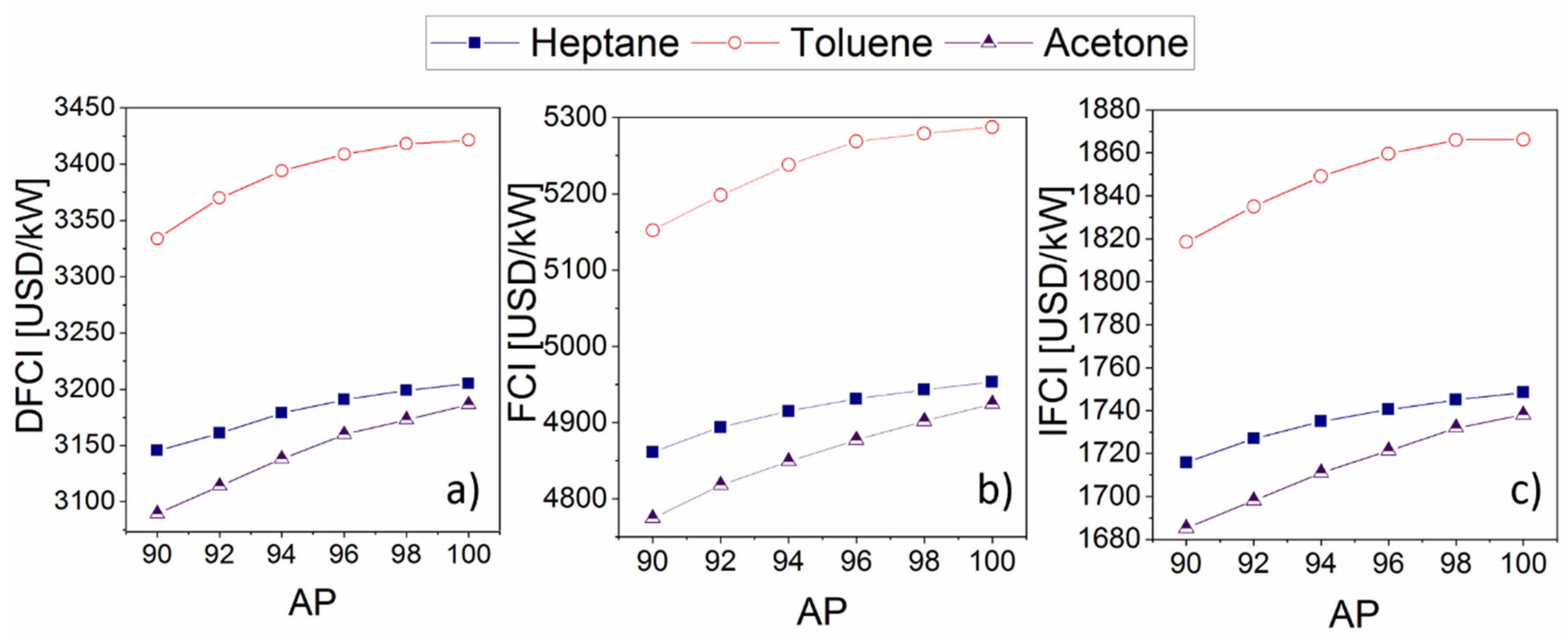
The waste heat recovery system (WHRS) is a good alternative to provide a solution to the waste energy emanated in the exhaust gases of the internal combustion engine (ICE). Therefore, it is useful to carry out research to improve the thermal efficiency of the ICE through a WHRS based on the organic Rankine cycle (ORC), since this type of system takes advantage of the heat of the exhaust gases to generate electrical energy. The organic working fluid selection was developed according to environmental criteria, operational parameters, thermodynamic conditions of the gas engine, and investment costs. An economic analysis is presented for the systems operating with three selected working fluids: toluene, acetone, and heptane, considering the main costs involved in the design and operation of the thermal system. Furthermore, an exergo-advanced study is presented on the WHRS based on ORC integrated to the ICE, which is a Jenbacher JMS 612 GS-N of 2 MW power fueled with natural gas. This advanced exergetic analysis allowed us to know the opportunities for improvement of the equipment and the increase in the thermodynamic performance of the ICE. The results show that when using acetone as the organic working fluid, there is a greater tendency of improvement of endogenous character in Pump 2 of around 80%. When using heptane it was manifested that for the turbine there are near to 77% opportunities for improvement, and the use of toluene in the turbine gave a rate of improvement of 70%. Finally, some case studies are presented to study the effect of condensation temperature, the pinch point temperature in the evaporator, and the pressure ratio on the direct, indirect, and fixed investment costs, where the higher investment costs were presented with the acetone, and lower costs when using the toluene as working fluid.
Keywords: economic analysis; exergo-advanced study; internal combustion engine; organic Rankine cycle; waste heat recovery economic analysis; exergo-advanced study; internal combustion engine; organic Rankine cycle; waste heat recovery