Article

Evolutionary Game on Government Regulation and Green Supply Chain Decision-Making


1
School of Management, Zhejiang University of Technology, Hangzhou 310023, China
2
Center for Global & Regional Environmental Research, The University of Iowa, Iowa City, LA 52242, USA
3
School of Information Management and Engineering, Zhejiang University of Finance and Economics, Hangzhou 310018, China
*
Author to whom correspondence should be addressed.
Energies 2020, 13(3), 620; https://doi.org/10.3390/en13030620
Submission received: 6 January 2020 / Revised: 20 January 2020 / Accepted: 22 January 2020 / Published: 1 February 2020
(This article belongs to the Section C: Energy Economics and Policy)

Abstract

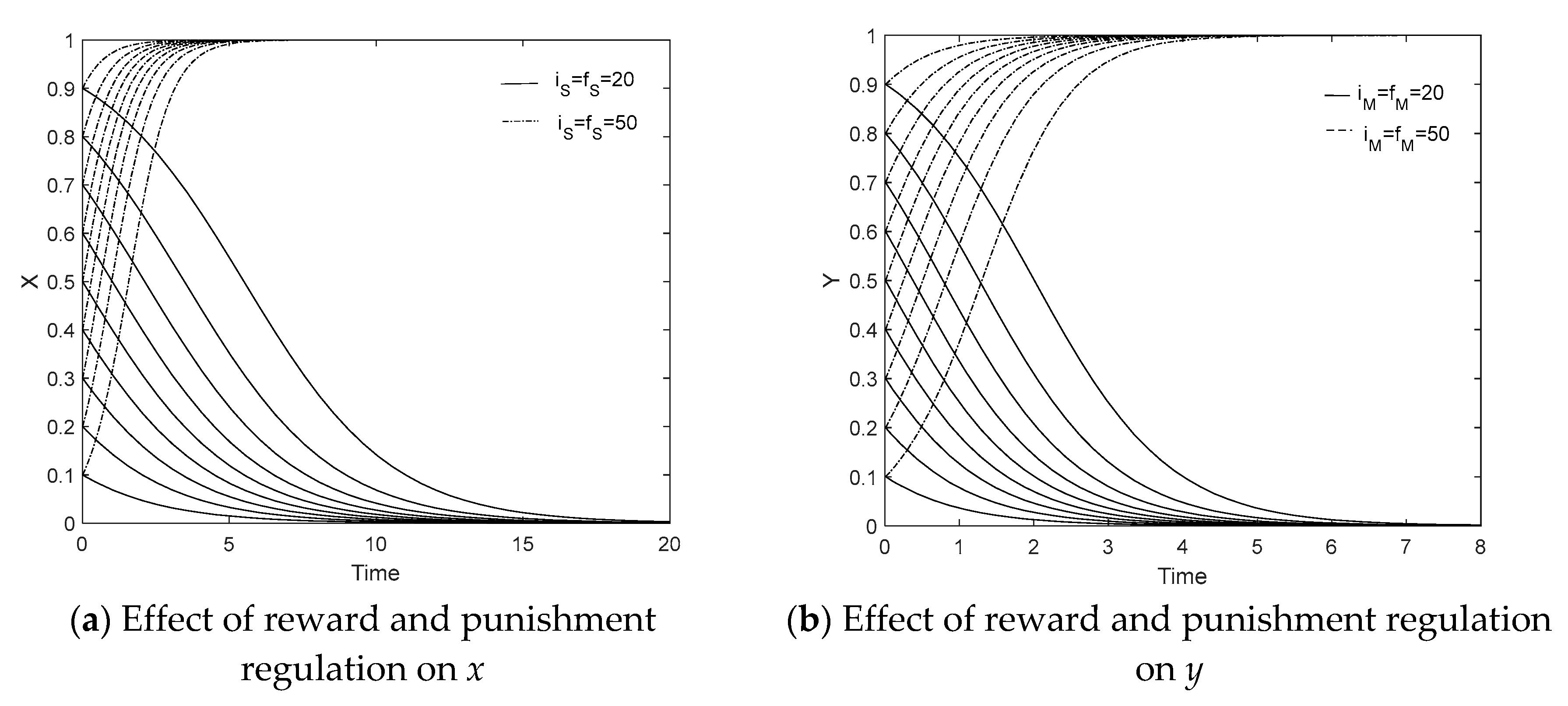
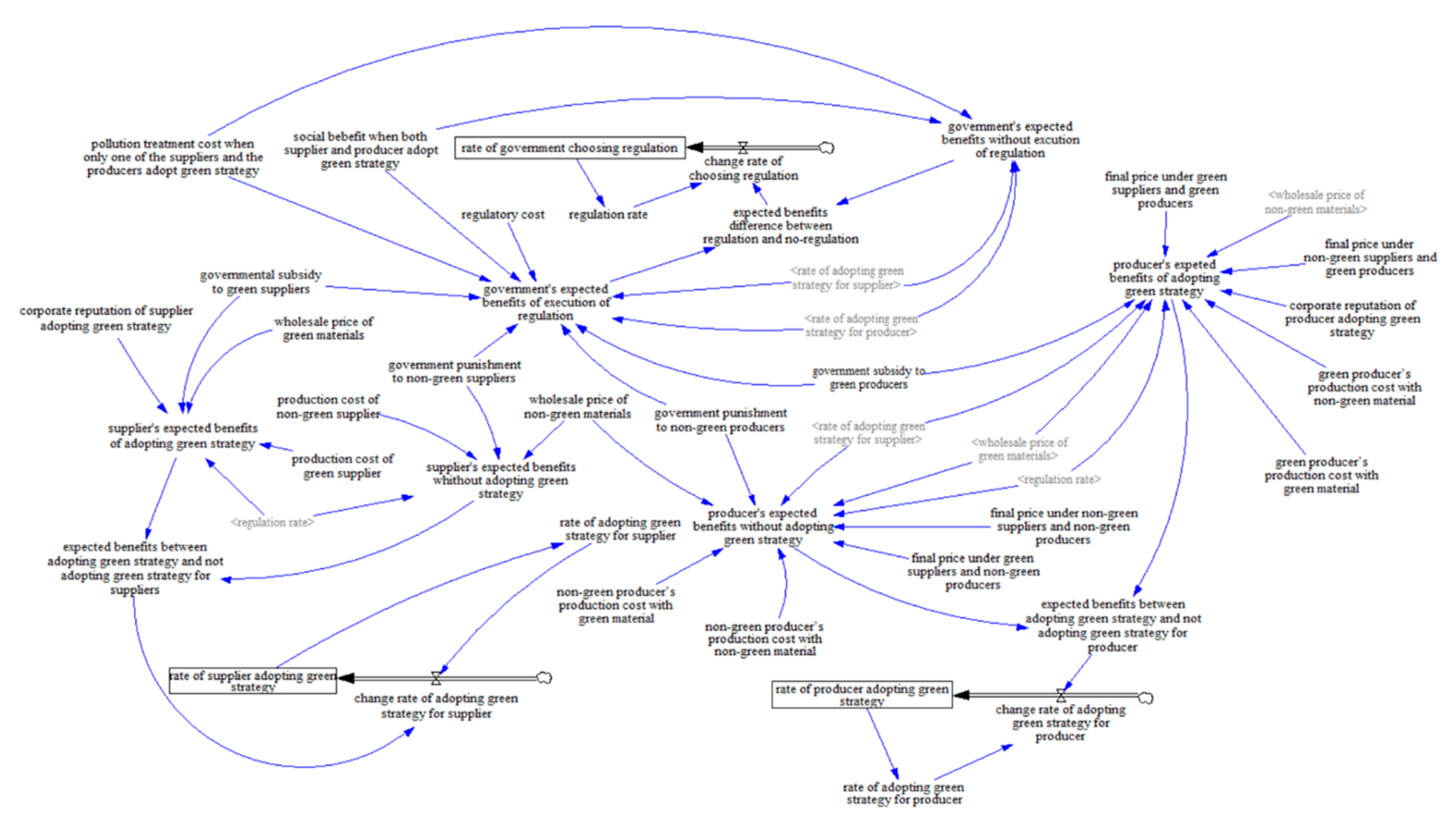
Sustainability issues have gained growing awareness in recent years. Governments play an important role in environment and resources problems since they can affect enterprises’ production activities by enacting policies and regulations. To promote green production in the long term associated with the consideration of financial intervention of governments, we establish a three-population model of suppliers, manufacturers and governments based on evolutionary game theory, and analyze the evolutionary stable strategies (ESS) of their unilateral and joint behaviors. Further, system dynamics (SD) is applied to empirical analysis for exploring the dynamic interaction of the populations’ strategy, and the key factors affecting ESS are also discussed in detail. The results show that: (1) the proportion of green suppliers and manufacturers in their groups determines whether the government implements regulation; (2) any party of the supplier and manufacturer that adopts green strategy could promote green behavior of the other; (3) the government is advised to supervise and implement reward and punishment mechanism under the low proportion of green supply chain; (4) government regulation could promote the corporations to adopt green behavior and should preferentially implements the mechanism on manufacturers. The results provide insights into the policy-making of governments and enterprises management on sustainable development.
Keywords: green strategy; government regulation; reward and punishment; evolutionary game green strategy; government regulation; reward and punishment; evolutionary game