Article

Numerical Analysis of Thermochemical Nonequilibrium Flows in a Model Scramjet Engine


1
Interdisciplinary Program in Space System, Seoul National University, Seoul 08826, Korea
2
Department of Mechanical and Aerospace Engineering, Seoul National University, Seoul 08826, Korea
3
Institute of Advanced Aerospace Technology, Seoul National University, Seoul 08826, Korea
*
Author to whom correspondence should be addressed.
Energies 2020, 13(3), 606; https://doi.org/10.3390/en13030606
Submission received: 21 November 2019 / Revised: 21 January 2020 / Accepted: 23 January 2020 / Published: 31 January 2020
(This article belongs to the Special Issue Scramjet and Ramjet Combustion)

Abstract

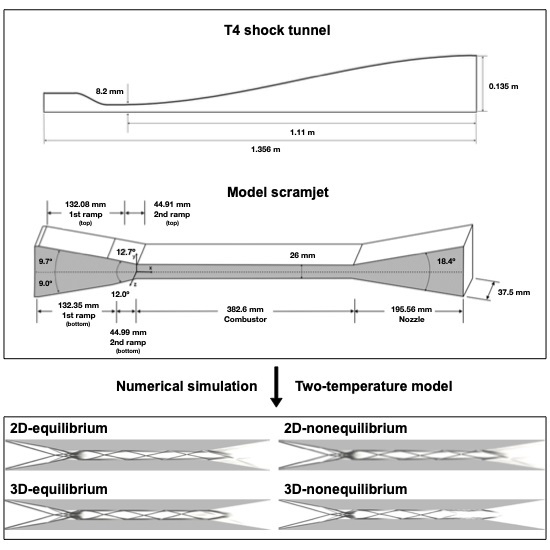
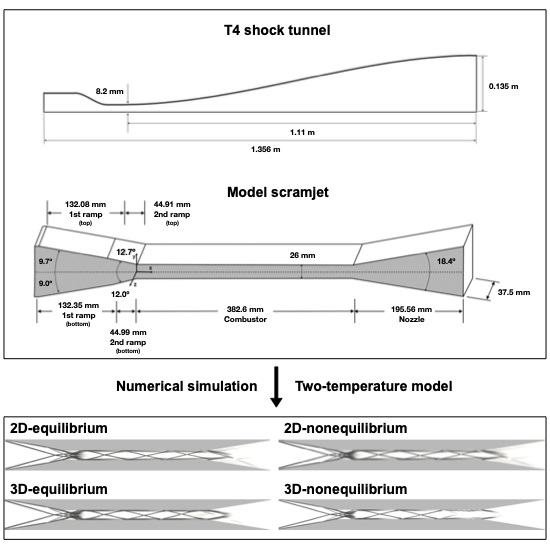
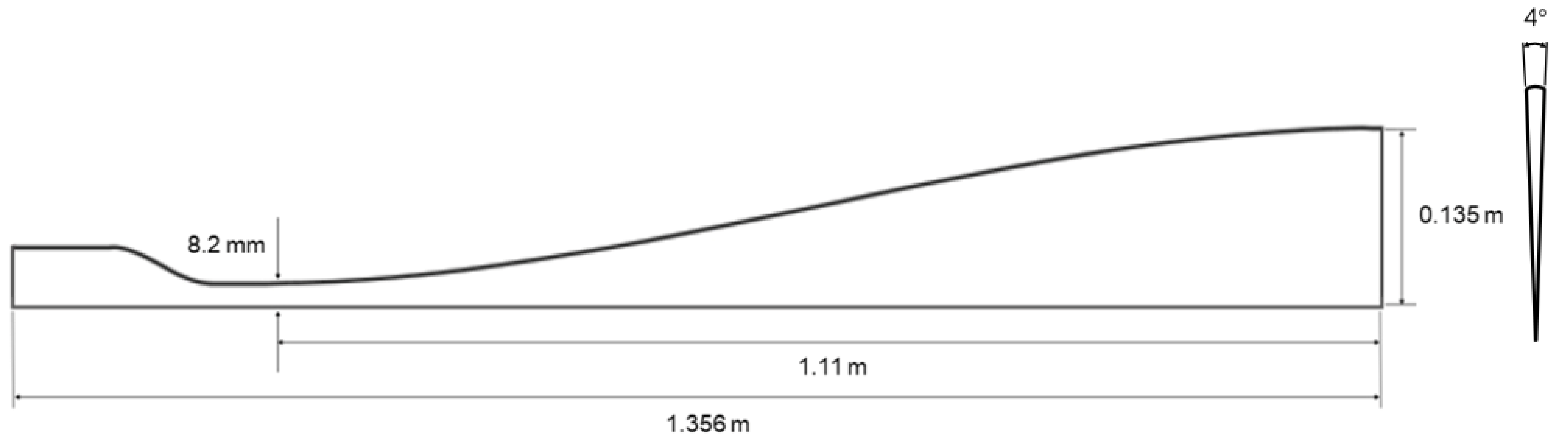
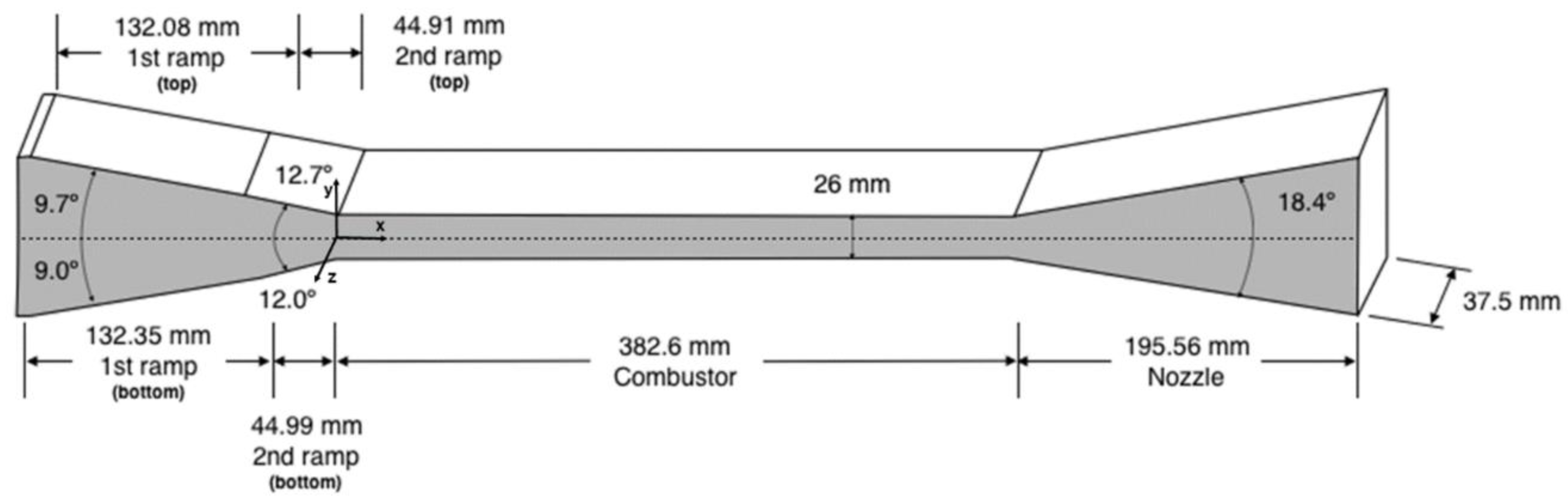
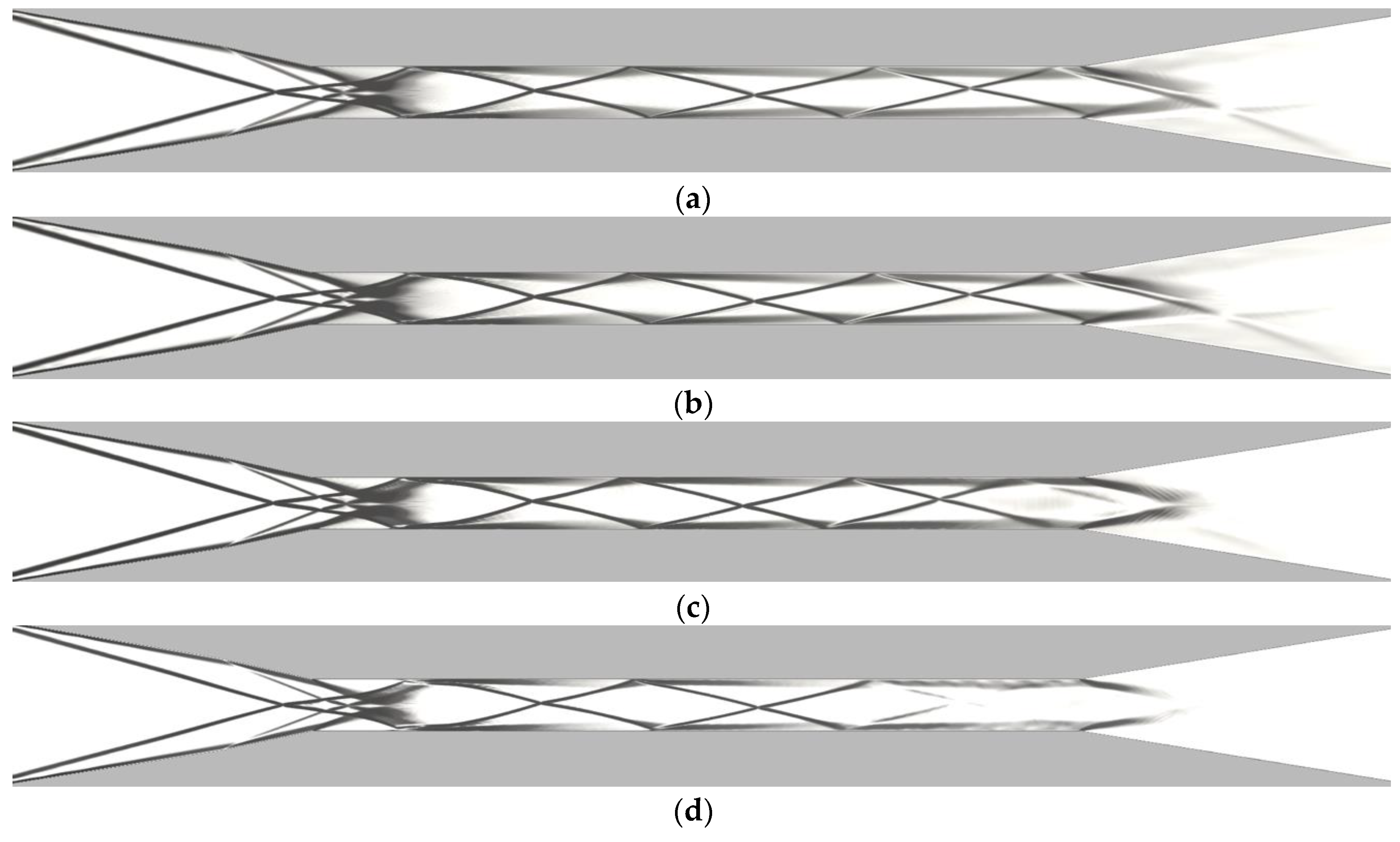
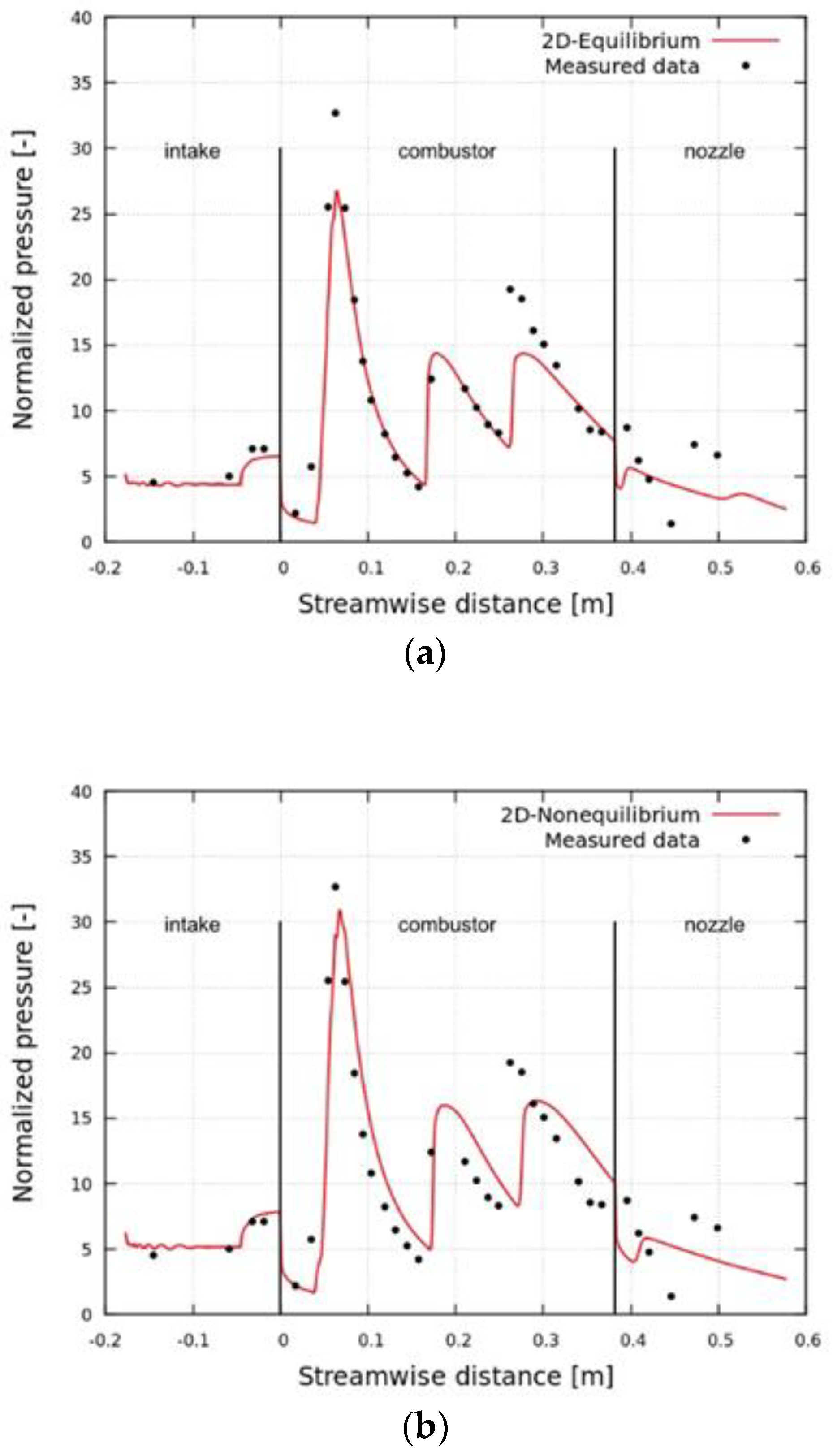
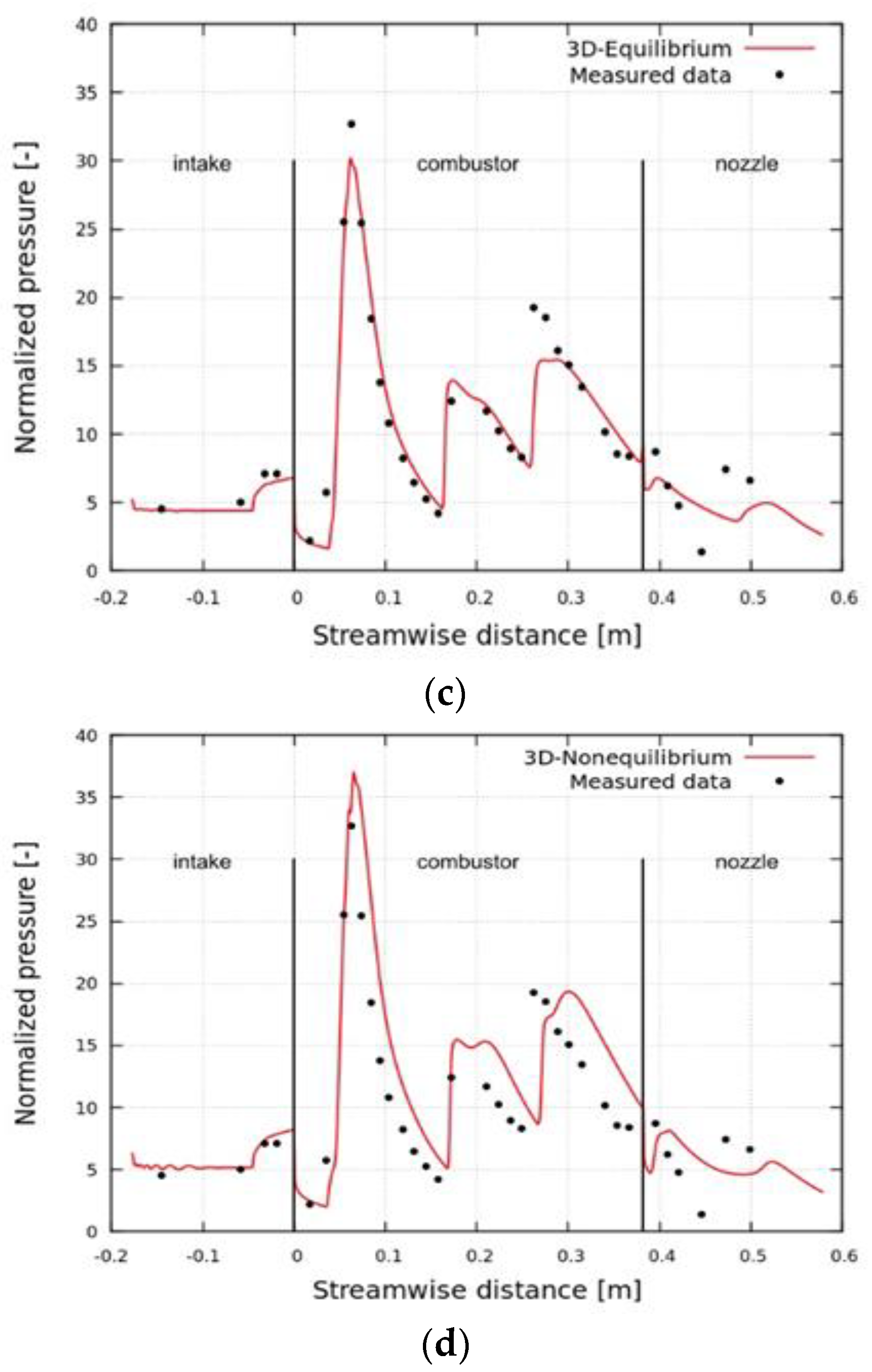
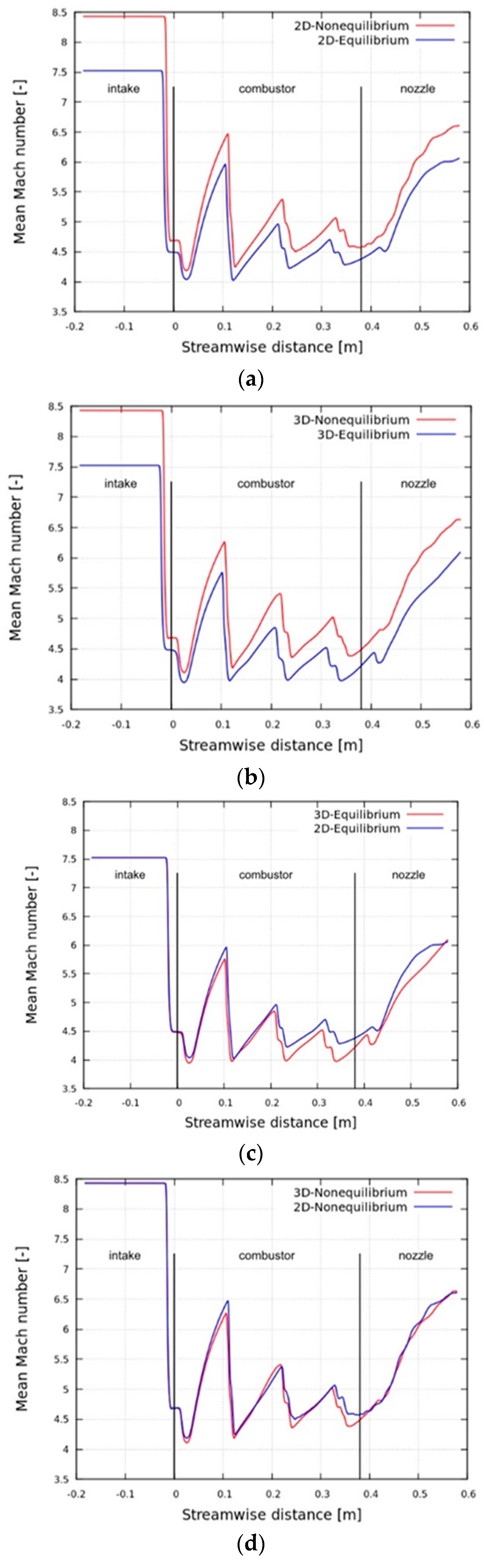
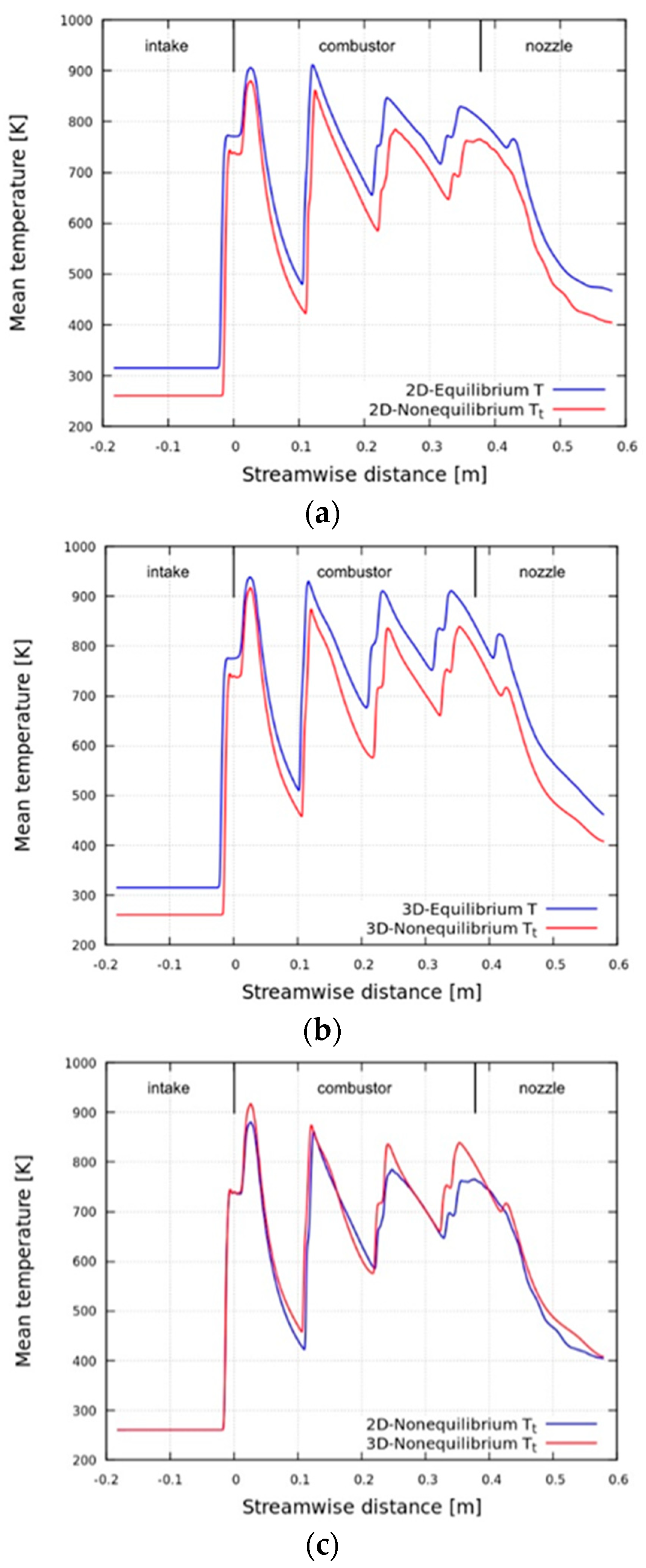
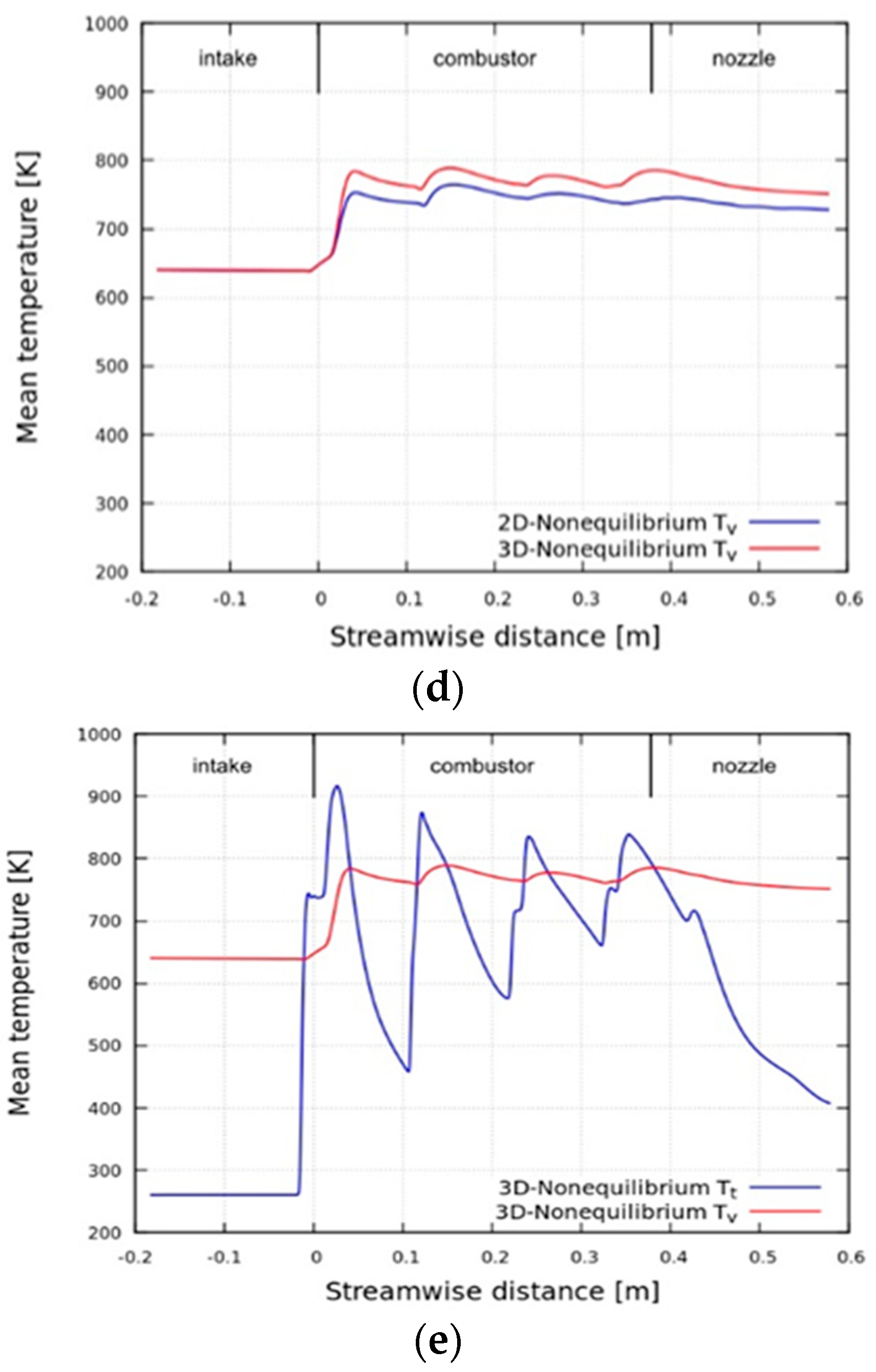
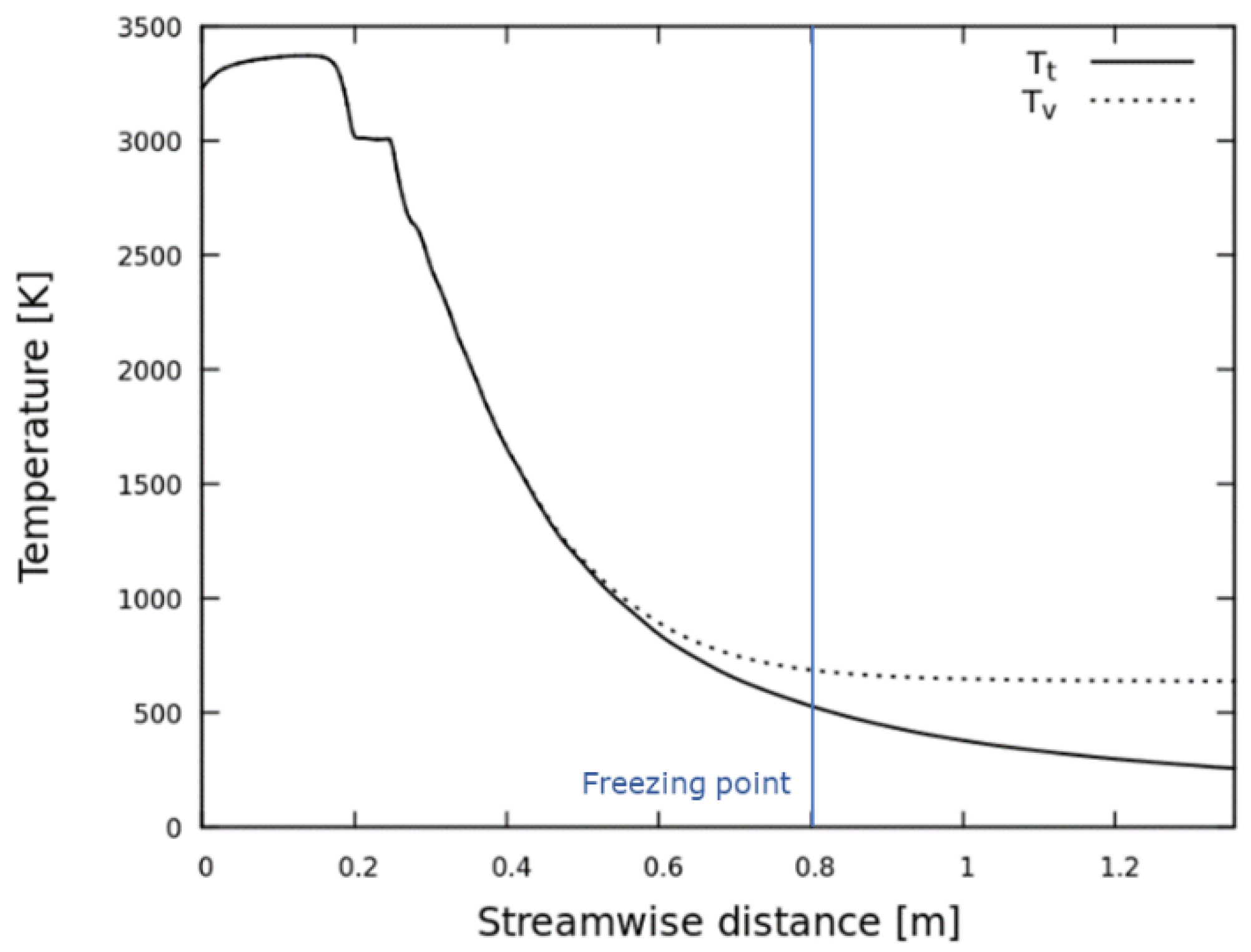
This numerical study was conducted to investigate the flow properties in a model scramjet configuration of the experiment in the T4 shock tunnel. In most numerical simulations of flows in shock tunnels, the inflow conditions in the test section are determined by assuming the thermal equilibrium of the gas. To define the inflow conditions in the test section, the numerical simulation of the nozzle flow with the given nozzle reservoir conditions from the experiment is conducted by a thermochemical nonequilibrium computational fluid dynamics (CFD) solver. Both two-dimensional (2D) and three-dimensional (3D) numerical simulations of the flow in a model scramjet were conducted without fuel injection. Simulations were performed for two types of inflow conditions: one for thermochemical nonequilibrium states obtained from the present nozzle simulation and the other for the data available using the thermal equilibrium and chemical nonequilibrium assumptions. The four results demonstrate the significance of the modelling approach for choosing between 2D or 3D, and thermal equilibrium or nonequilibrium.
Keywords: scramjet engine; thermochemical nonequilibrium; hypersonic flow; shock tunnel scramjet engine; thermochemical nonequilibrium; hypersonic flow; shock tunnel
Graphical Abstract