You are currently on the new version of our website. Access the old version .
EnergiesEnergies
  • Feature Paper
  • Review
  • Open Access

12 November 2020

Systematic Review of Site-Selection Processes in Onshore and Offshore Wind Energy Research

and
Department of Spatial Planning and Development, Aristotle University of Thessaloniki, 54124 Thessaloniki, Greece
*
Author to whom correspondence should be addressed.
This article belongs to the Section A: Sustainable Energy

Abstract

Wind energy has a leading role in achieving a low-carbon or completely carbon-free energy sector in the near future. Scientific research on the site-selection aspects of onshore and offshore wind farms is of great importance, contributing to sustainable, technically and economically viable, and socially acceptable wind energy projects. This systematic review provides direct analysis and assessment of existing site-selection procedures and addresses a gap in knowledge in the onshore and offshore wind energy research field, identifying trends in the thematic modules of site-selection issues. Important insights and useful trends are highlighted in: (1) site-selection methodologies; (2) the type, number, and exclusion limits of exclusion criteria; (3) the type, number, importance, priority, and suitability classes of assessment criteria; (4) studies’ geographic locations; (5) spatial planning scales; (6) wind resource analysis; (7) sensitivity analysis; (8) participatory planning approaches, groups, and contributions; (9) laws, regulations, and policies related to wind farm siting; (10) suitability index classifications (i.e., linguistic and numeric); and (11) micro-siting configuration of wind turbines. Identified insights and trends could motivate the conduction of updated site-selection analyses on onshore and offshore wind energy research, addressing the determined gaps and enhancing global siting implementations.

1. Introduction

Energy market design is adapted to facilitate the accelerated renewable energy growth until 2030 and beyond [1]. Wind energy has a leading role in achieving a low-carbon or completely carbon-free energy sector. Following this aim, wind energy was globally established in 2019 as a mainstream source of clean and cost-competitive energy. In particular, the global wind energy market reached a new milestone of 651 GW cumulative installed capacity at the end of 2019 [1]. However, in this significant spatial diffusion of global onshore and offshore wind farms (WFs), all key aspects of spatial energy planning that correspond to appropriate and sustainable site-selection processes should be considered.
Numerous studies on onshore [2,3,4,5,6,7,8,9] and offshore [10,11,12,13,14,15,16,17] WF siting aimed to solve this multidimensional siting problem by developing innovative site-selection methodologies [2,3,4,5,6,7,8,9,10,11,12,13,14,15,16,17]; applying numerous and various exclusion criteria (EC) and assessment criteria (AC) [2,3,4,5,6,7,8,9,10,11,12,13,14,15,16,17]; determining the relative importance of each AC [2,3,4,5,6,7,8,9,11,12,13,15,17]; conducted thorough wind resource analysis (i.e., the period of time ≥10 years) [12,14]; considering laws, regulations, or policies related to wind energy siting [2,4,5,6,8,10,11,12,13,14,16,17]; and incorporating expert, stakeholder, or public views, concerns, and priorities on site-selection processes [4,6,7,8,12,16,17]. Detailed analysis of these key aspects of spatial energy planning and a systematic review of site-selection processes globally applied in different geographic locations reveal critical insights for the improvement of existing siting procedures and the fulfillment of international energy targets goals.
Preceding reviews conducted on onshore [18,19] and offshore [20,21,22] wind energy research has provided useful insights on: (i) barriers to large-scale implementations of onshore WFs by category (e.g., economic, financial, social) and by location [18], (ii) associated risks with wind energy in forest areas [19], (iii) the trends of the key characteristics of commissioned and under-construction offshore European WFs (e.g., commissioning country, number of wind turbines, and investment cost) [20], (iv) the characteristics of foundation types (e.g., gravity, float-type) of offshore wind energy converters [21], and (v) research generally and exclusively done in the offshore wind energy field on the basis of the types of study goals and their main characteristics [22]. However, no reviews, and especially no systematic reviews of site-selection processes and their related aspects of spatial energy planning can be found in the international literature. The present systematic review addresses an important gap in knowledge in the onshore and offshore wind energy research field. An advantage of this systematic review is that it focuses on both on- and offshore wind energy research, and develops a workflow that can directly identify insights and trends in the site-selection processes, and its related aspects, in spatial energy planning, with the aim to inform and improve future studies and WFs’ global implementation.
The remainder of the article is structured as follows. Section 2 presents the workflow followed for the systematic review and the thematic modules reviewed in each considered on- and offshore wind energy siting study. Section 3 presents the results of qualitative synthesis and quantitative meta-analysis. Section 4 introduces and discusses critical insights and useful trends revealed from detailed analysis, and lastly, Section 5 provides concluding remarks and key findings.

2. Materials and Methods

The main objective of the systematic review of site-selection processes in on- and offshore wind energy siting research is to identify potential gaps and shortages in these processes in order to reveal valuable insights for the: (i) development of new and innovative site-selection tools, methodologies, criteria, approaches, or policies; and (ii) improvement of key aspects of existing siting procedures. Accordingly, the present review addresses four main research questions: (1) Are there data trends in site-selection processes in on- and offshore wind energy research? (2) Can these trends provide a basis to inform and/or improve future studies and implementations? (3) Are there potential gaps and shortages in site-selection processes? (4) Can these gaps reveal valuable insights for the development of new and innovative site-selection planning tools, methodologies, criteria, approaches, or policies and/or for the improvement of key aspects of the existing siting procedures?
Search terms used for the systematic review were: (i) onshore WF siting, (ii) offshore WF siting, (iii) GIS onshore WFs, (iv) GIS offshore WFs, (v) site-selection onshore WFs, (vi) site-selection offshore WFs, (vii) spatial planning onshore wind, and (viii) spatial planning offshore wind. All searches were conducted during March 2019 and January 2020 in various scientific databases (e.g., MDPI, Science Direct) and in selected peer-reviewed international conference proceedings (e.g., Institute of Electrical and Electronics Engineers (IEEE) digital library). Hence, national or local conference proceedings and the gray literature were eliminated.
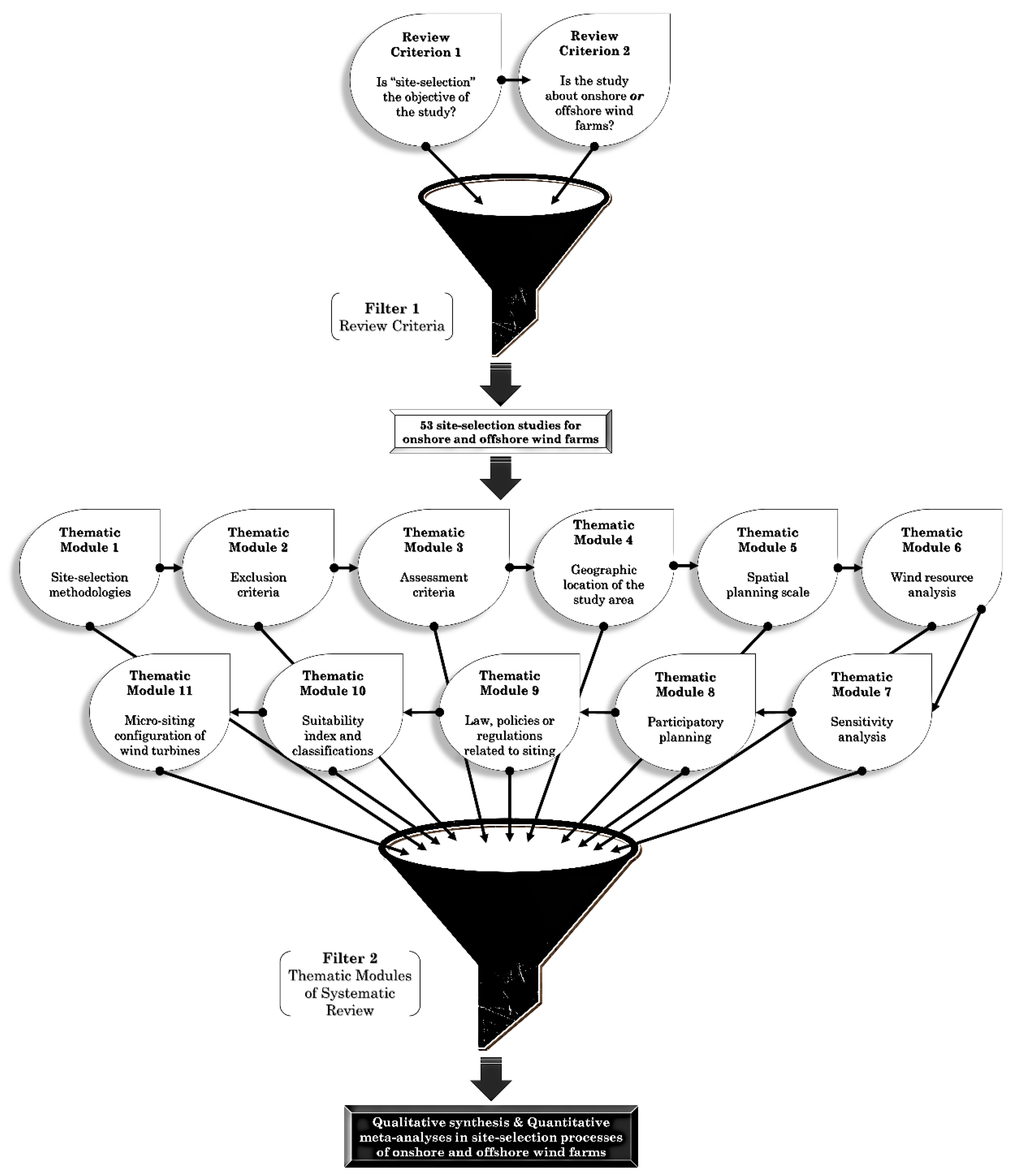
Research filters used for the systematic literature review were: (i) review criteria (Filter 1) and (ii) thematic modules of the systematic review (Filter 2). The schematic workflow of the systematic review, and thematic modules reviewed in each considered on- and offshore wind energy siting study are presented (Figure 1) and analyzed below.
Figure 1. Schematic depiction of workflow followed for the systematic review.

2.1. Filter 1—Review Criteria

All search results were filtered according to the two following review criteria: the study focused (1) on site-selection issues, and (2) or on on- and/or offshore WF siting. Therefore, studies were either oriented toward different scientific topics (e.g., risk management) or conducting site-suitability analysis for other renewable energy systems (e.g., photovoltaics, biomass power plants) or different systems (e.g., waste management) were excluded. As a result, 53 onshore [2,3,4,5,6,7,8,9,23,24,25,26,27,28,29,30,31,32,33,34,35,36,37,38,39,40,41,42,43,44] and offshore [10,11,12,13,14,15,16,17,45,46,47,48,49,50,51,52,53,54,55,56,57,58,59] wind energy siting studies (46 peer-reviewed journal articles and 7 peer-reviewed international conference papers) were selected for further analysis.

2.2. Filter 2—Thematic Modules of Systematic Review

Each selected study was further investigated through 11 main thematic modules addressing various aspects of WF site-selection processes.
A plethora of essential datasets were produced, and used for synthesis and meta-analysis. The datasets were structured into (a) qualitative, and (b) quantitative data (Table 1).
Table 1. Datasets produced in accordance with selected thematic modules and data type. Note: EC, exclusion criteria; AC, assessment criteria; WF, wind farm.

3. Results

The systematic review of mainly peer-reviewed journal articles and international conference papers yielded 53 studies that were oriented toward the site-selection issue in on- and offshore wind energy research. The proposed workflow of the systematic review gave credence, quality assurance, and accuracy to the authors’ qualitative synthesis and quantitative meta-analysis.

3.1. Thematic Module 1—Site-Selection Methodologies

3.1.1. Frequency of Occurrence per Methodological Stage

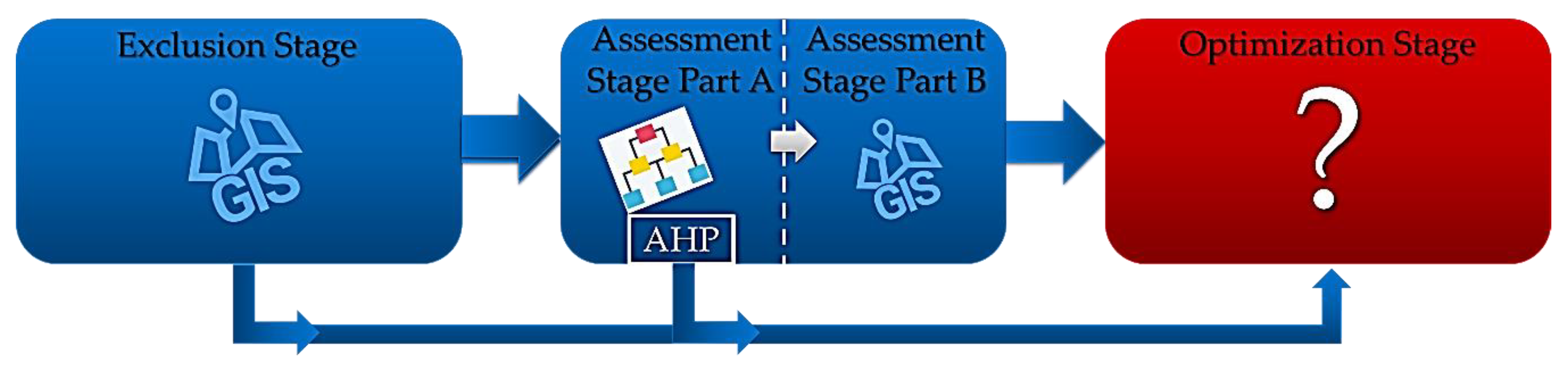
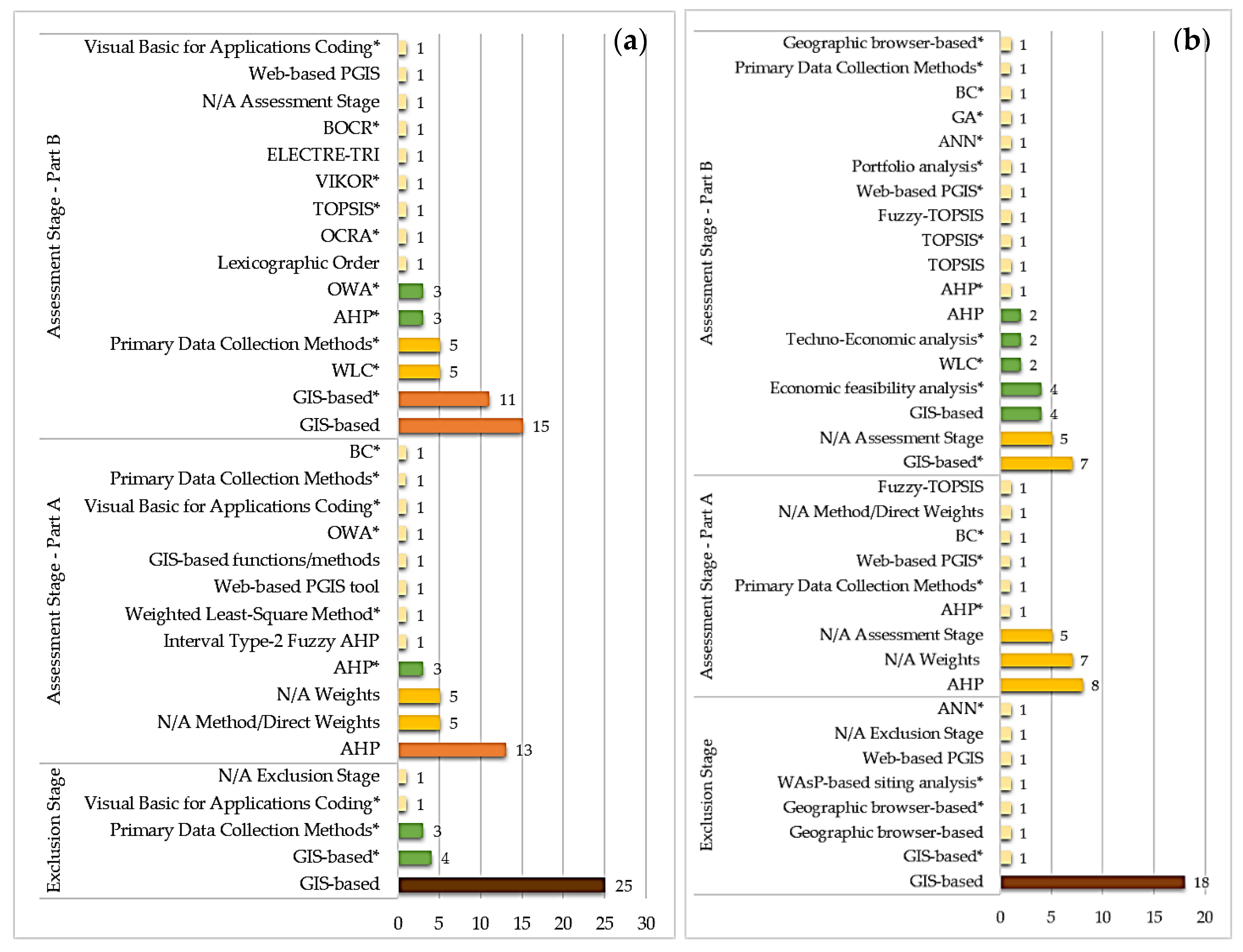
The proposed and applied site-selection methodologies in each considered study were analyzed in accordance with the methodological stage (i.e., Exclusion Stage (ES), and Assessment Stages Part A (ASPA) and Part B (ASPB); Figure 2). ASPA refers to the assessment of AC, while ASPB refers to the assessment of suitable sites based on ASPA results. In onshore wind energy research, GIS-based methodologies are the most frequently used (29 of 30 studies at the ES and 26 at the ASPB), followed by primary data-collection methods (i.e., questionnaires, interviews, or the Delphi method; 3 studies) at the ES, and by the weighted linear combination (WLC) and primary data-collection methods (5 studies) at the ASPB. In offshore wind energy research, GIS-based methodologies are also the most frequently applied (19 of 23 studies at the ES and 12 studies at the ASPB), followed by economic feasibility analysis methods (4 studies) at the ASPB.
Figure 2. Frequency of occurrence of each methodology per methodological stage in (a) onshore and (b) offshore wind energy research. Used methodologies in combination with other approaches in the relevant stages denoted with *.
The most frequent method used for assigning weights to decision criteria (i.e., at the ASPA) was the analytic hierarchy process (AHP) method in both onshore [2,3,4,5,6,7,8,9,23,27,29,33,37,39,40,42,44] and offshore [11,12,13,15,17,45,48,52,57] wind energy siting research (i.e., 17 of 20 (85%) and 9 of 10 (90%) studies that used a method for assigning weights to the AC, respectively). Specifically, the AHP was used mostly for assigning weights to the decision criteria (i.e., at the ASPA) and less frequently for prioritizing decision alternatives (i.e., at the ASPB) in the relevant siting studies. Lastly, 15 and 14 diverse methodological approaches in total were identified in on- and offshore wind energy siting research, respectively.

3.1.2. Combinations of GIS-Based and Other Site-Selection Methodologies

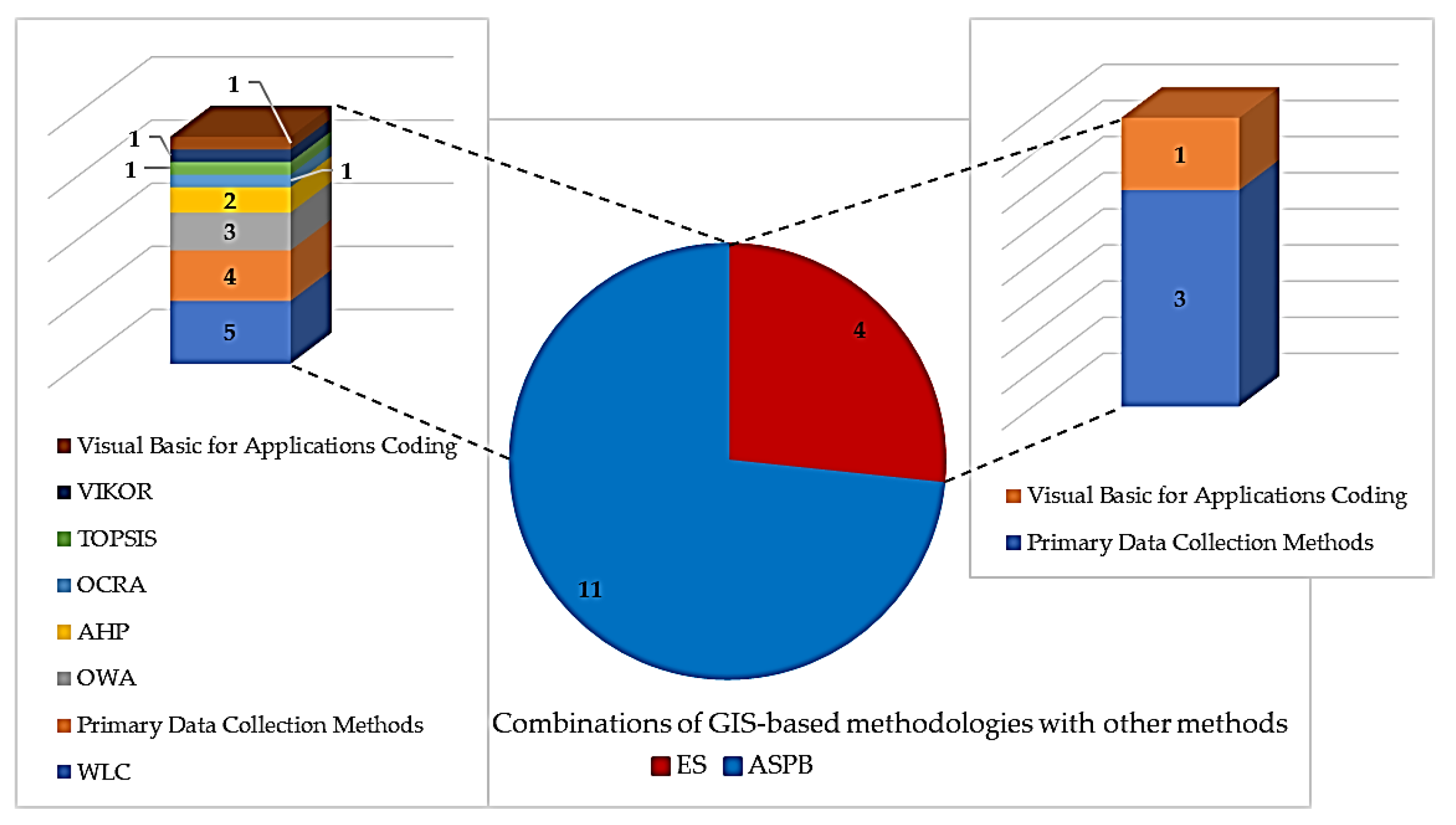
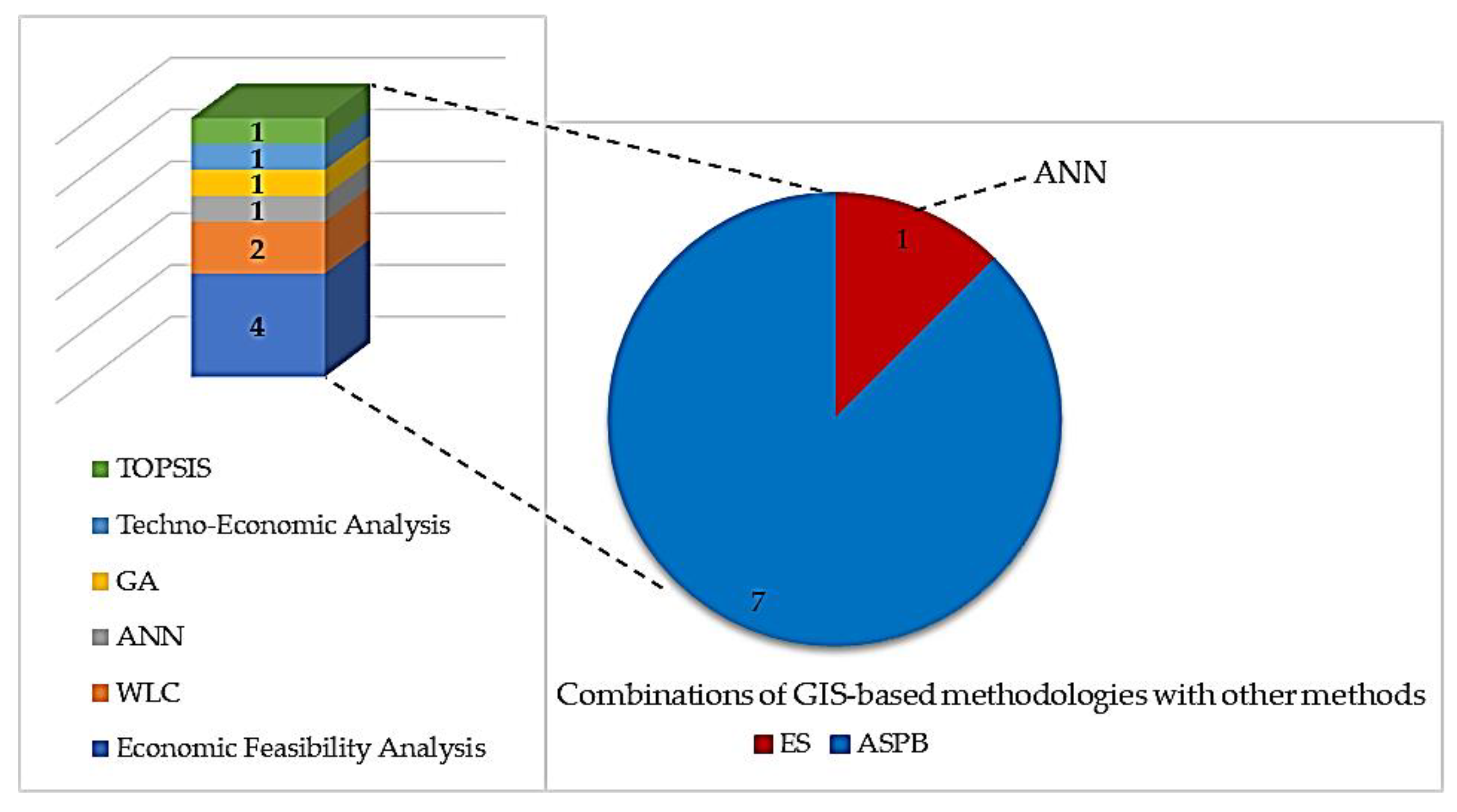
In WF siting studies, GIS-based methodologies were combined with other methods, especially at the ASPB (Figure 3 and Figure 4). More specifically, in onshore wind energy research, GIS was mostly combined with the WLC method (5 studies) [2,4,5,26,36] and primary data-collection methods (4 studies) [6,25,27,36]. In offshore wind energy research, it was mostly combined with economic feasibility analysis (4 studies) [10,15,49,52] and WLC (2 studies) [11,52] methods. In several cases, more than one methodologies were combined with GIS for the identification of the most suitable sites for onshore or offshore WF development (e.g., GIS-based methodology in combination with AHP and ordered weighted averaging (OWA) in [9] or with an artificial neural network (ANN) and genetic algorithm (GA) in [56]). In total, eight and six diverse methodological approaches were combined with GIS in on- and offshore wind energy siting research, respectively.
Figure 3. Frequency of occurrence of combinations of GIS-based methodologies with other methods per methodological stage in onshore wind energy research.
Figure 4. Frequency of occurrence of combinations of GIS-based methodologies with other methods per methodological stage in offshore wind energy research.

3.2. Thematic Module 2—EC

3.2.1. Onshore Wind Energy

The EC used in each onshore wind energy siting research varied in number, type, and exclusion limits applied for each criterion and were related to various factors, such as the unique characteristics and climatic conditions of each location, the policies associated with each country, and the available geographic information data. In total, 28 land exclusion criteria (LEC), which are presented in Table 2, were identified. The mean number of LEC applied in the onshore wind energy siting studies was 10, whereas predominant was 12. Additionally, the maximal number of LEC applied in a study was 17 [31], whereas there was also a study with no LEC [44]. For recording additional information for all criteria used in [31], the authors included the relevant doctoral thesis [60] in their research.
Table 2. Type of land exclusion criteria (LEC) identified in studies included in this systematic review in accordance with their frequency of occurrence, mean, min, max, and predominant value(s).
The most restrictive limit of LEC was 17,000 m from civil/military aviation areas [31,60], whereas the least restrictive limit that also consisted of the predominant limit was 0 m and referred to protected environmental areas [5,8,23,24,28,30,31,32,33,36,40,43,60], bird habitats and migration corridors [2,5,31,36,37,43,60], agricultural land [2,5,25,29,30,37], and military zones [23,24,32,43]. Regarding the two most crucial criteria in terms of energy efficiency, LEC 11 and LEC 24, the predominant limit was 5 m/s for the former, whereas no predominant limit was identified for the latter. For LEC 3 and LEC 7, lower and upper limits were commonly applied for safety and social reasons and economic and technical reasons, respectively. Lastly, for LEC 5, an upper exclusion limit was applied as it is a minimization criterion.

3.2.2. Offshore Wind Energy

The EC applied in each offshore wind energy siting study varied in number, type, and related exclusion limits. In total, 19 marine exclusion criteria (MEC), which are presented in Table 3, were identified. The mean number of MEC applied in the offshore wind energy siting studies was 6, whereas predominant numbers of MEC were 3, 6, and 7. Additionally, the maximal number of MEC applied to a study was 13 [12,57], whereas there was a study with no MEC [59].
Table 3. Type of marine exclusion criteria (MEC) identified in studies included in this systematic review in accordance with their frequency of occurrence, mean, min, max, and predominant value(s).
The most restrictive limit of MEC was 25,000 m from the shore and was applied to protect the landscape, and avoid visual and acoustic disturbances [48]. The least restrictive (and predominant) limit was 0 m and was applied from protected environmental areas [10,11,15,45,47,48,51,52,53,54,55,58], verified shipping routes [10,11,14,17,46,51,53,58], military zones [10,11,12,17,46,47,48,51,55,57], bird habitats and migration corridors [10,17,47,51,53,55], pipelines and underwater cables [11,12,46,57], and fishing areas [15,47,55,58]. For MEC 1, an upper limit for economic and technical reasons was frequently applied, whereas in some cases, for technical reasons and social causes, a lower limit was set. Additionally, for MEC 13, a lower limit for safety reasons and an upper limit for economic and technical causes were typically applied. MEC 9 is minimization and it obtained an upper exclusion limit.
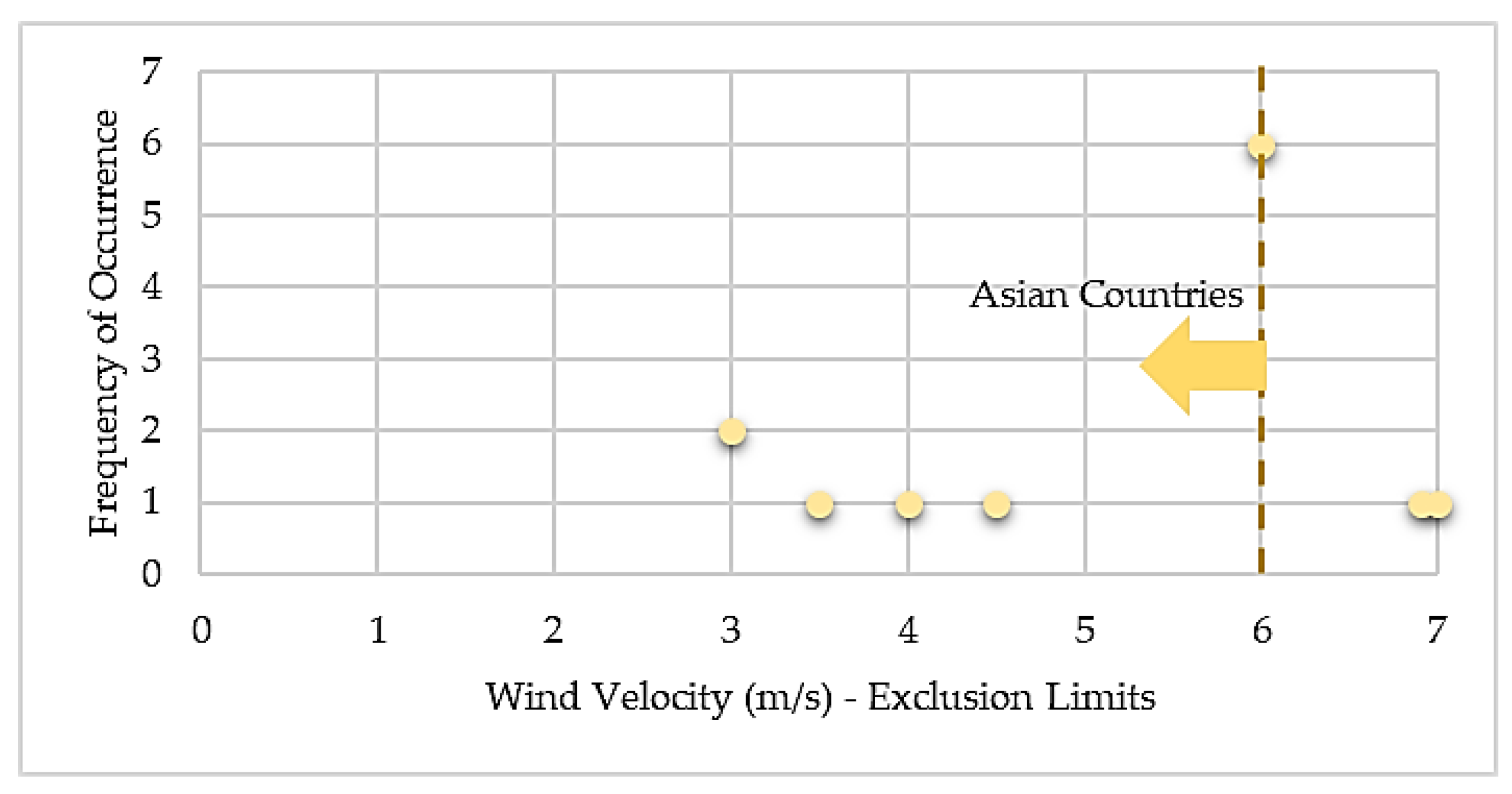
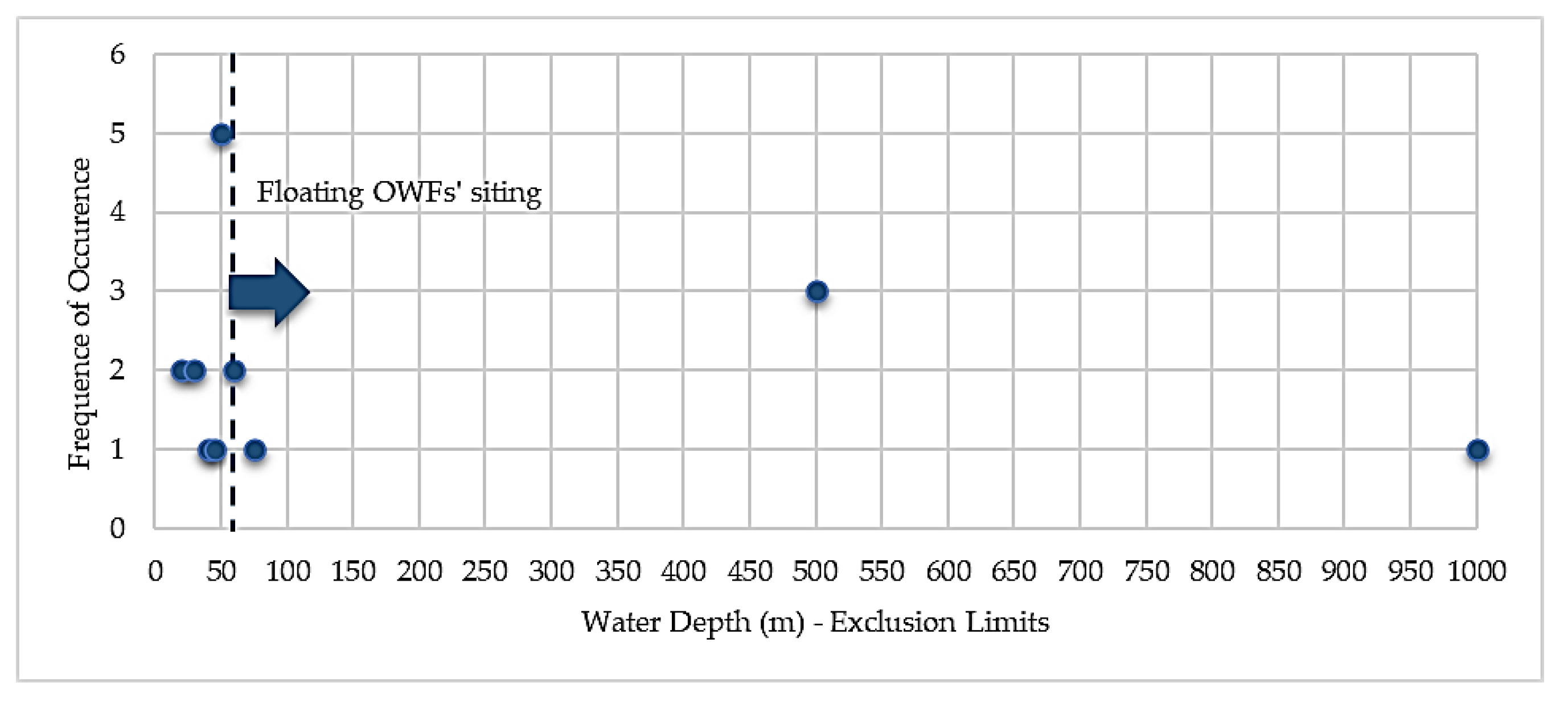
The two most crucial MEC in terms of energy efficiency were MEC 4 and MEC 17. The predominant value of MEC 4 was 6 m/s. In studies conducted for Asian countries where wind potential is commonly low, the exclusion limit of MEC 4 was also low (e.g., 3, 3.5, or 4 m/s) and much lower than the limit applied in studies for European or North American countries (i.e., 6 or 7 m/s) (Figure 5). Lastly, only five studies [12,48,50,54,58] performed site-selection analysis for floating offshore WFs (i.e., defined exclusion limits greater than 60 m water depth), whereas the remaining studies developed a site-selection procedure for fixed support structures (Figure 6).
Figure 5. Frequency of occurrence of exclusion limits applied for “wind velocity” criterion in the offshore wind energy siting studies.
Figure 6. Frequency of occurrence of exclusion limits applied for “water depth” criterion in the offshore wind energy siting studies.

3.3. Thematic Module 3—AC

3.3.1. Onshore Wind Energy

The AC in each siting study varied in number, type, assessment weights, priority position, and their optimal and poor values. Fifty-two land assessment criteria (LAC) were identified. Twenty-four were used in more than one study, whereas the remaining 28 only once (e.g., proximity to other renewable energy systems [35], underground cables [36], social acceptability [6], land value [5], and surface roughness [33]). Table 4 presents the most frequently used LAC. The mean number of LAC was 7 and the predominant was 5. The maximal number of LAC in a study was 16 [35], while there was 1 study with no LAC [32].
Table 4. Type of land assessment criteria (LAC) identified in studies included in this systematic review in accordance with their frequency of occurrence, mean weight (i.e., relative importance), priority position, and their optimal and poor value(s).
The five most important criteria based on their mean weight were: (1) LAC 1, (2) LAC 10, (3) LAC 24, (4) LAC 9, and (5) LAC 3. The five LAC with the highest priority were: (1) LAC 1, (2) LAC 10, (3) LAC 6, (4) LAC 3, and (5) LAC 7. LAC 1 and LAC 3 were two of the five most frequently used and important LAC in terms of mean weight and priority position. Although LAC 5 was frequently used in the relevant literature, it was considered as a criterion of either moderate (in terms of mean weight) or low (in terms of priority position) importance.
The mean poor value of LAC 1 (≤5.20 m/s) was the same as the mean exclusion limit (5.20 m/s) at the ES. The mean optimal values of LAC 1 were equal to or even greater than 8.47 m/s. This high value set LAC 1 as quite a restrictive criterion for the determination of optimal sites for WF installation. LAC 8 could also be considered a restrictive factor since optimal WF sites were pinpointed farther than 13,500 m from civil/military aviation areas. Additionally, LAC 5 was quite a restrictive criterion since optimal WF sites were located to land sites with less than or equal to 3.91% of slope. The least restrictive LAC was LAC 22, as optimal WF locations were pinpointed farther than 500 m from religious sites.

3.3.2. Offshore Wind Energy

Marine assessment criteria (MAC) were 28 in total. Most (17 MAC) were used in more than one study, whereas the remaining 11 only once (e.g., electrical energy demand [12], community acceptance [59], project payback period [59], net present value [10], and extendibility of wind project [59]). Table 5 presents the most frequently used MAC. The mean MAC number was 4, whereas the predominant MAC numbers were 0 and 7. Additionally, the maximal MAC number applied in a study was 15 [59], whereas there were several studies with no MAC [46,47,50,51,55,58].
Table 5. Type of marine assessment criteria (MAC) identified in studies included in this systematic review in accordance with their frequency of occurrence, mean weight (i.e., relative importance), priority position, and their optimal and poor value(s).
The five most important criteria in terms of their mean weight were: (1) MAC 1, (2) MAC 2, (3) MAC 15, (4) MAC 3, and (5) MAC 12. The five MAC with the highest priority were: (1) MAC 1, (2) MAC 15, (3) MAC 2, (4) MAC 13, and (5) MAC 6. MAC 1 and MAC 2 were two of the five most frequently used and important MAC based on their mean weight and priority position. Although MAC 15 was considered an extremely important criterion in the literature, it was applied only in two studies. MAC 4 was identified as a frequently used criterion; however, it was considered of moderate (in terms of mean weight) and low (in terms of priority position) importance. Lastly, MAC 3 was a criterion of high importance in terms of mean weight, priority position, and frequency of use.
MAC 1 and MAC 10 were two quite restrictive criteria, as their mean optimal values were greater than or equal to 9.42 m/s and 675 W/m2, respectively. MAC 2 was also a restrictive criterion since optimal WF locations were pinpointed to marine sites with less than or equal to 42.5 m water depth. Additionally, MAC 4 was quite a restrictive factor since optimal WF sites were located farther than 20,835 m from land and marine protected environmental areas. MAC 6 was the least restrictive MAC, as optimal WF sites were those that were either located farther than 3704 m from verified shipping routes or appeared with low shipping density.

3.4. Thematic Module 4—Geographic Location

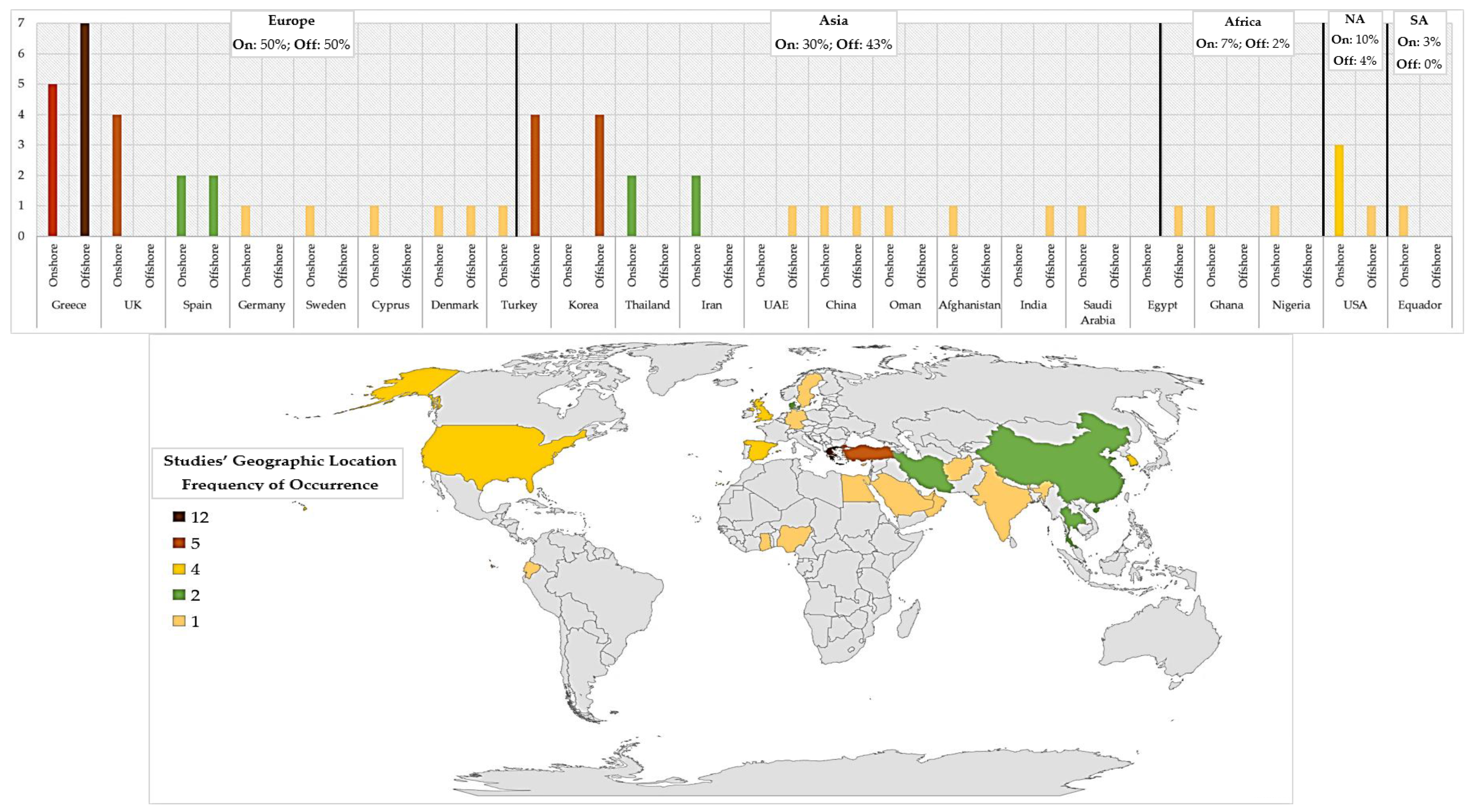
Regarding onshore WF siting research, studies were conducted in 30 different global locations of 18 countries, and most were found for European countries (Figure 7). More specifically, five studies were carried out in Greece and four in the United Kingdom. In addition, many studies (30%) were conducted in Asia. North America, Africa, and South America were inadequately investigated, with most applications focusing on the United States, West Africa, and Ecuador, respectively. No studies could be found for Australia or Antarctica.
Figure 7. Frequency of occurrence of geographic location of onshore and offshore WF siting studies on global, continental, and national scale.
Regarding offshore WF siting research, studies were conducted in 17 different global locations of 10 countries, and most were carried out also for European countries (50%). Many studies were also conducted in Asia (43%). In particular, seven studies were found for Greece, followed by Turkey and Korea (four studies). North America and Africa were inadequately studied (4% and 2% of the studies, respectively), whereas no applications could be found for South America, Australia, or Antarctica.
Gray on the map (Figure 7) reveals that a great fraction of the world is yet to be investigated regarding the development of wind energy projects; 18 of 195 (9.2%) countries and 10 of 152 (6.6%) countries that are surrounded by water were investigated for onshore and offshore WF siting, respectively. The reviewed papers referred to only 7 of 44 European countries (16%), even though the most frequently occurring studies included in this systematic review were conducted for European countries.

3.5. Thematic Module 5—Spatial Planning Scale

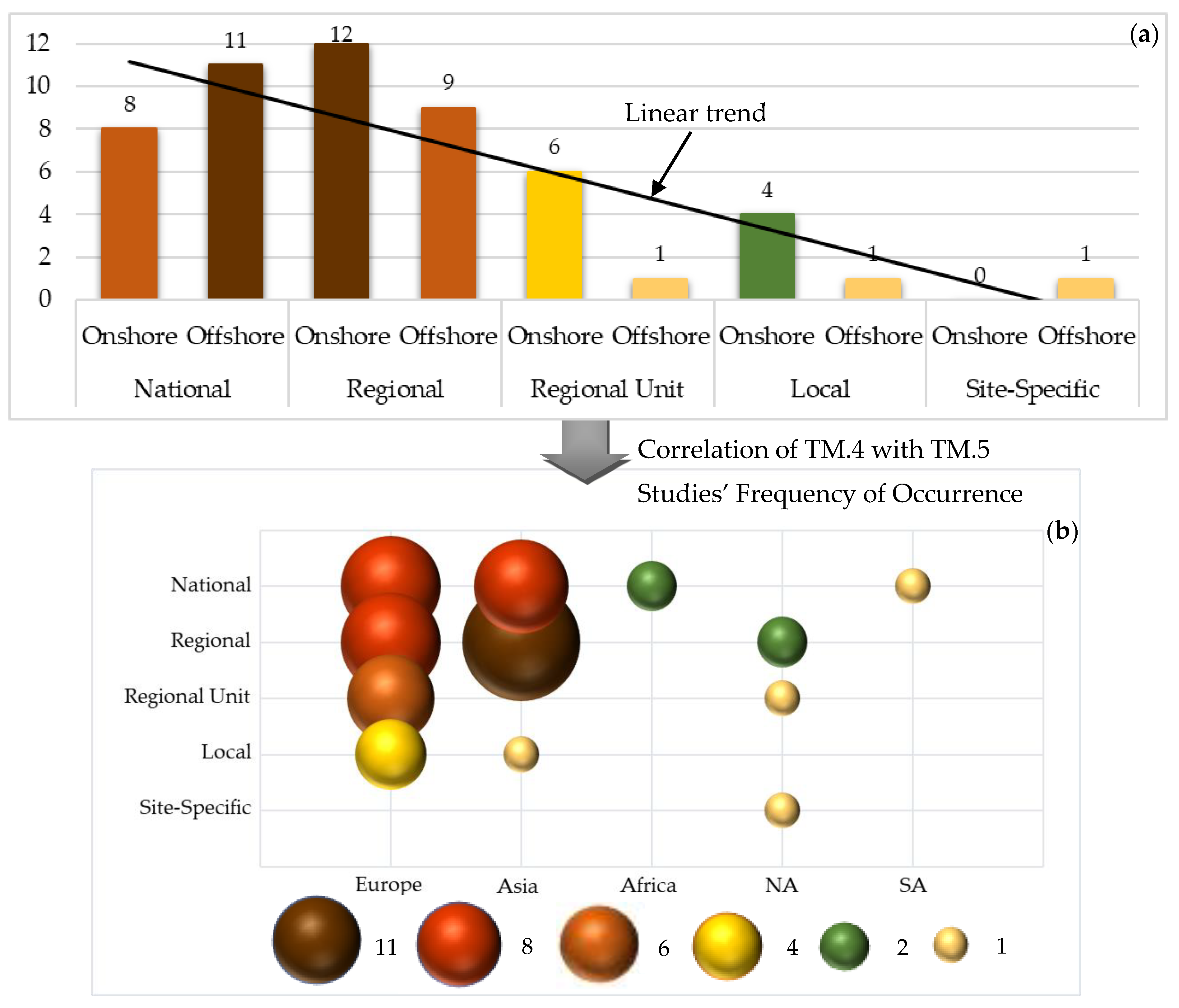
Most studies (40 of 53) referred to large spatial planning scales (i.e., national and regional scales). Half of the reviewed offshore studies (47.80%) and 27% of the onshore studies were performed on the national scale. There were scant siting applications on small spatial planning scales (i.e., local and site-specific scales), especially on site-specific scales (Figure 8a). Thus, the linear trend of frequency of occurrence of these studies tended downward from large to small spatial planning scales. However, an outlier was identified in national applications of onshore wind energy siting research since the number of studies on the regional scale surpassed the number of studies on the national scale.
Figure 8. Frequency of occurrence of (a) spatial planning scales and (b) their correlation with geographic locations of studies included in this systematic review.
On the basis of correlation analysis of TM.4 and TM.5, most studies conducted on national and regional scales (35 of 40) were applied to European or Asian countries (Figure 8b). On the national scale, there were two studies in Africa [7,40], only one in South America [42], and no site-selection application in North America. On the regional unit scale, the majority of onshore siting applications (5 studies [2,5,6,8,37]) were found in Europe and one [26] in North America, and only 1 offshore siting application [14] was found, also in Europe. Additionally, five studies were carried out on the local scale [15,25,31,36,43], with the majority (4 of 5 studies) found on European locations. Only 1 of 53 studies referred to the site-selection scale (North America) [16].

3.6. Thematic Module 6—Wind Resource Analysis

The parameters of wind analysis included: (a) methodology, (b) height, (c) period of time, and (d) spatial resolution of wind data. The identified methodologies for estimating and/or mapping wind resources in a region were categorized as follows: (a) climate modeling, (b) GIS interpolation analysis, and (c) other GIS analyses by using built-in geoprocessing software tools (Table 6). The most common software used for climate modeling was Wind Atlas Analysis and Application Program (WAsP); for GIS analyses, it was the ESRI ArcGIS software. Some studies used various interpolation techniques for estimating wind resources in the relevant study area. The most-reported were inverse distance weighting (IDW) and the creation of triangular irregular network (TIN) techniques for onshore and offshore WF siting applications, respectively.
Table 6. Methodologies employed for wind resource analysis and related characteristics. Note: WAsP, Wind Atlas Analysis and Application Program; IDW, inverse distance weighting; ANN, artificial neural network; GA, genetic algorithm; TIN, triangular irregular network.
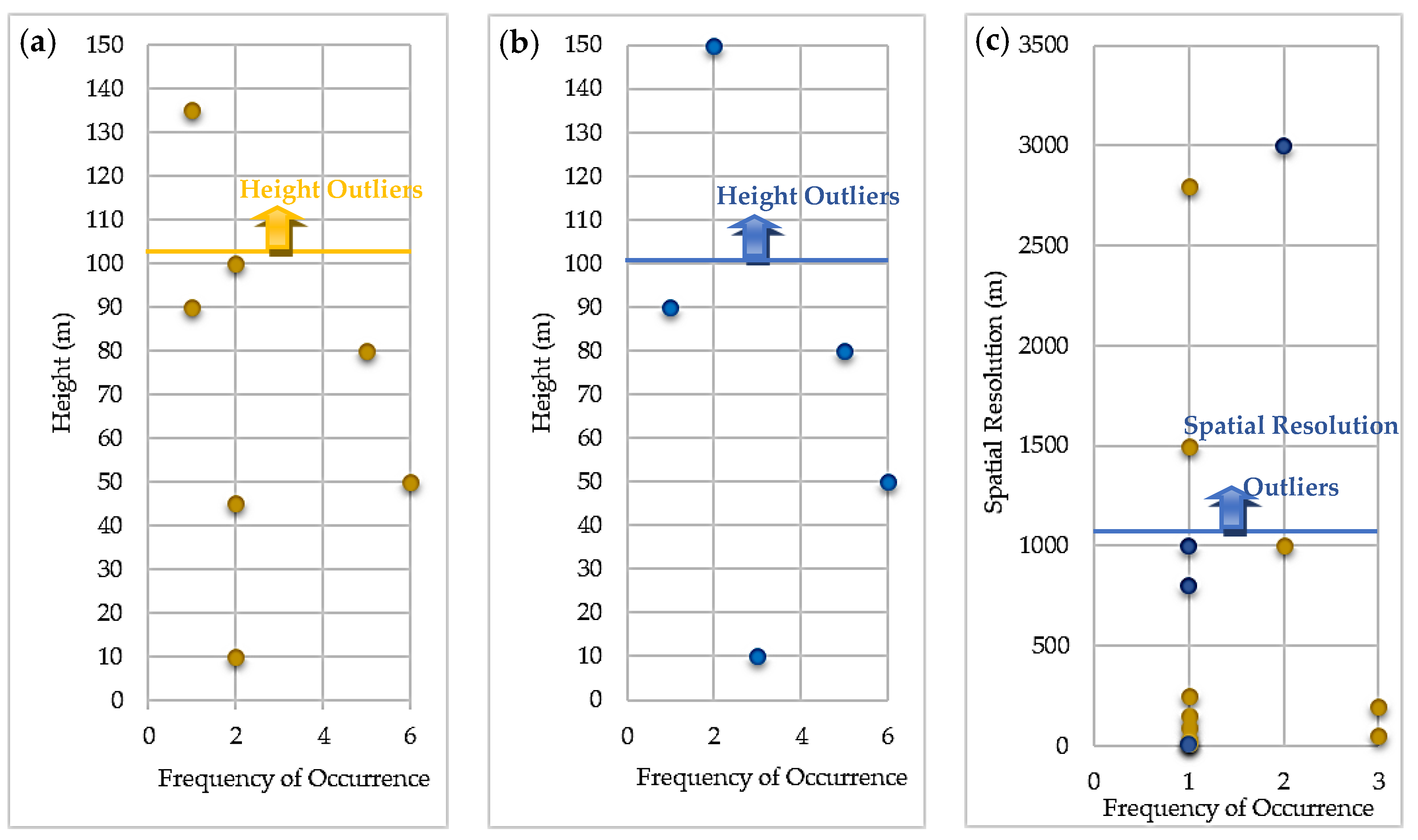
In onshore WF applications, wind analysis height and period of time were reported in 19 (Figure 9a) and 3 studies, respectively. In offshore WF applications, the respective parameters were reported in 15 (Figure 9b) and 10 studies, respectively. Heights of wind analysis >100 m were estimated as outliers, and 3 studies [8,51,59] analyzed wind data within this range. Most onshore and offshore studies used a height equal to 50 m for wind data analysis (Table 7). The period of time in offshore and onshore wind analysis reached 20 and 2 years, respectively.
Figure 9. Frequency of occurrence of (a) height of wind data on onshore WF siting studies, (b) height of wind data on offshore WF siting studies, and (c) spatial resolution of wind data on onshore and offshore WF siting studies.
Table 7. Height and period of time of wind resource analysis.
Fifteen onshore and five offshore studies reported the spatial resolution of wind data. Spatial resolutions for wind data ranged from 10 to 2800 m and from 10 to 3000 m in onshore and offshore wind energy siting applications, respectively (Figure 9c). Spatial resolutions of >1000 m were estimated as outliers, and four publications [9,28,47,50] used resolutions within this range. Lastly, spatial resolutions of 50 and 200 m were frequently used in onshore WF siting studies, whereas no value of spatial resolution prevailed in offshore studies since publications that reported this information were really scant.

3.7. Thematic Module 7—Sensitivity Analysis

Sensitivity analysis was conducted in 7 of 30 (23.35%) and 4 of 23 (17.40%) (Table 8 and Table 9) onshore and offshore WF siting applications, respectively. Sensitivity analysis focused on changing AC weights. The AHP method was the predominant technique for conducting sensitivity analysis (6 of 7 in onshore and 4 of 4 in offshore wind energy siting studies). The proposed and applied policy scenarios in the relevant siting studies included: (a) balanced weight scenarios (i.e., equal weights), (b) policy scenarios focusing on environmental and/or social criteria, and (c) policy scenarios focusing on technical and/or economic criteria.
Table 8. Type of sensitivity analysis applied on site-selection applications of onshore wind energy research. Note: AHP, analytic hierarchy process; VBAC, visual basic for application coding; BC, borda count.
Table 9. Type of sensitivity analysis applied to site-selection applications of offshore wind energy research.
The most frequently employed scenario was “balanced weights” in the relevant siting studies, whereas there was a balance between environmental/social and technical/economical scenarios. The minimal number of scenarios regarding sensitivity analysis was 1, the maximal was 4, and there were predominantly 3 on onshore and 4 on offshore wind energy siting applications.

3.8. Thematic Module 8—Participatory Planning

Thirteen onshore and four offshore studies incorporated participatory planning within their site-selection framework. The parameters of participatory planning included: (a) involved participatory group, (b) methodology for incorporating each participatory group, (c) number of participants, and (d) the contribution of each participatory group in the site-selection process.
The most frequently used methodology for the incorporation of experts in the site-selection process was AHP (Table 10), which was primarily used for AC prioritization. Primary data-collection methods were mainly used for the definitions of EC and AC, the determination of EC limits, and the determination of AC suitability classes. The public was involved in the site-selection process either by social choice voting methods, such as Borda Count (BC), or by methodologies used for creating an asynchronous and user-friendly environment for them, such as web-based participatory GIS (PGIS) platforms.
Table 10. Frequency of occurrence of each involved participatory group and employed methodologies for their incorporation within the site-selection process. Note: BOCR, benefits opportunities costs and risks; BC, borda count; PGIS, participatory GIS.
The number of expert participants ranged from 1 to 64 in the onshore wind energy siting applications, while it was reported only in 1 offshore siting study [12] (7 experts). The number of public participants was reported only in 1 onshore siting study [26] (30 participants).
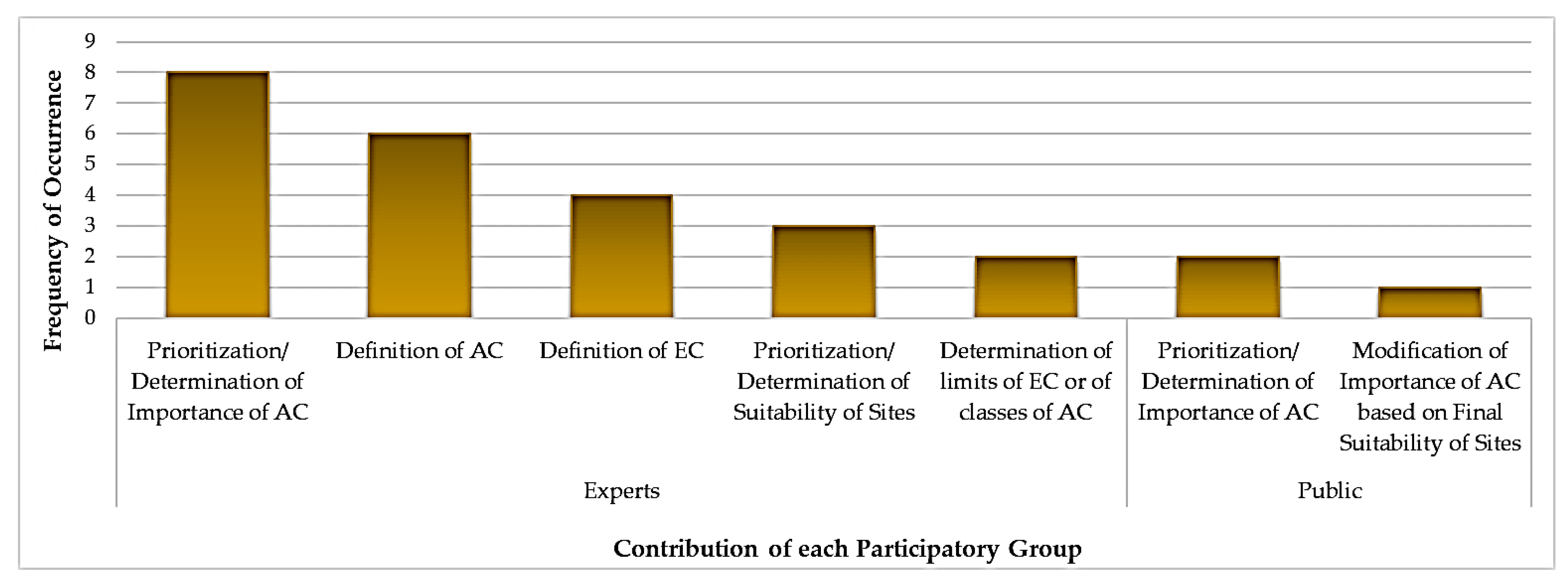
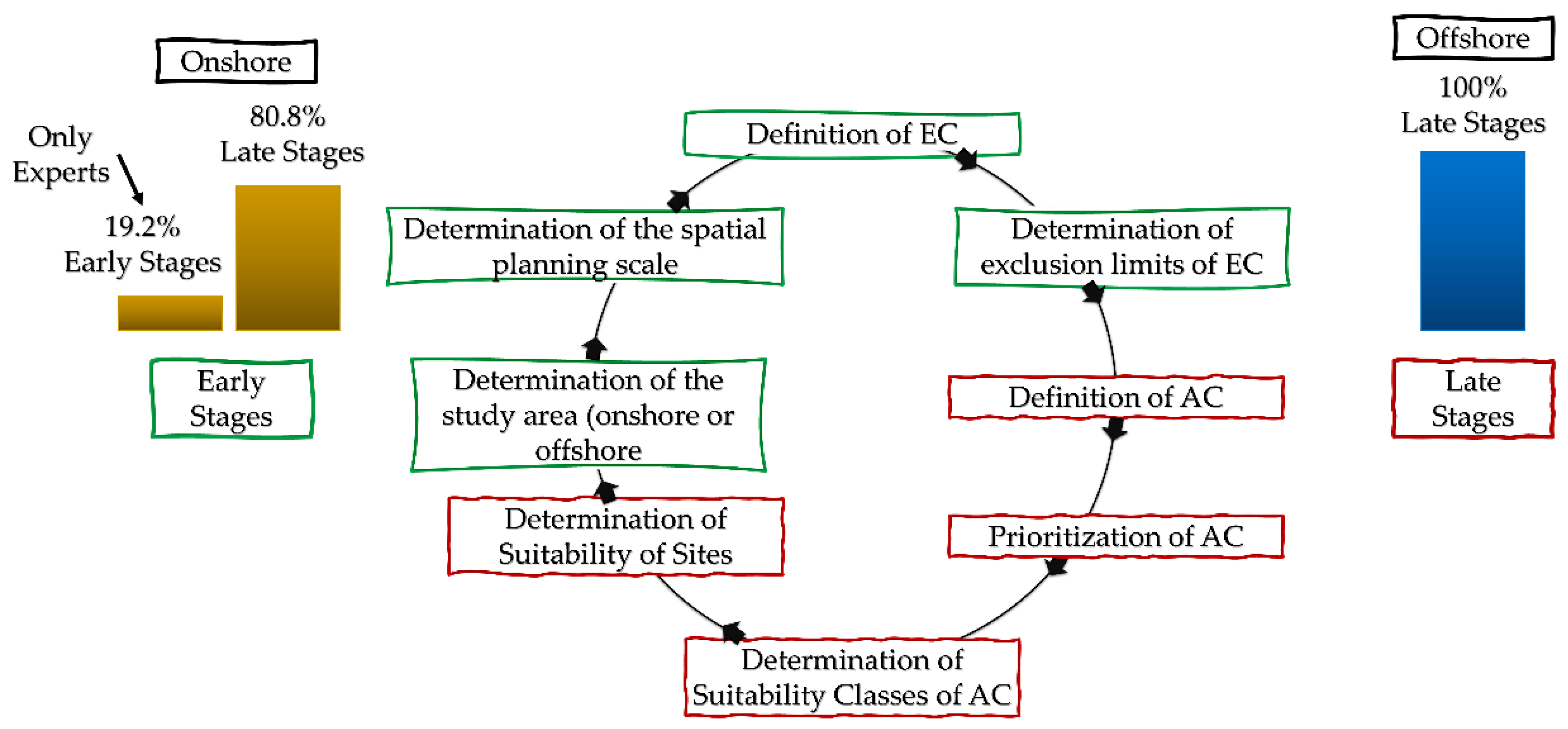
In onshore WF siting studies, the most common contribution of each participatory group was the prioritization of AC (8 studies), followed by the definition of AC (6 studies) (Figure 10). More specifically, experts mainly contributed to the ASPA and ASPB stages of the site-selection process; however, there were several studies [4,7,25,27], where they also participated in the ES. The public exclusively contributed to the ASPA of the site-selection process. In the case of offshore WF siting, participants contributed to the assessment stages of the site-selection process, whereas no study incorporated any participatory group to the ES. Participant contributions included: (a) definition of AC (experts), (b) prioritization/determination of AC importance (experts and any type of participant), and (c) prioritization/determination of site suitability (any type of participant). A study [16] developed a participatory planning approach for the incorporation of any type of participant in the site-selection process. In the above-mentioned study, a hypothetical case study for the verification of the site-selection framework was used. As a result, the actual impact of public participation in the site-selection process for offshore WF development was lacking.
Figure 10. Type and frequency of occurrence of contributions of each participatory group on onshore wind energy siting applications.

3.9. Thematic Module 9—Law, Regulations, and Policies Related to Wind Energy Siting

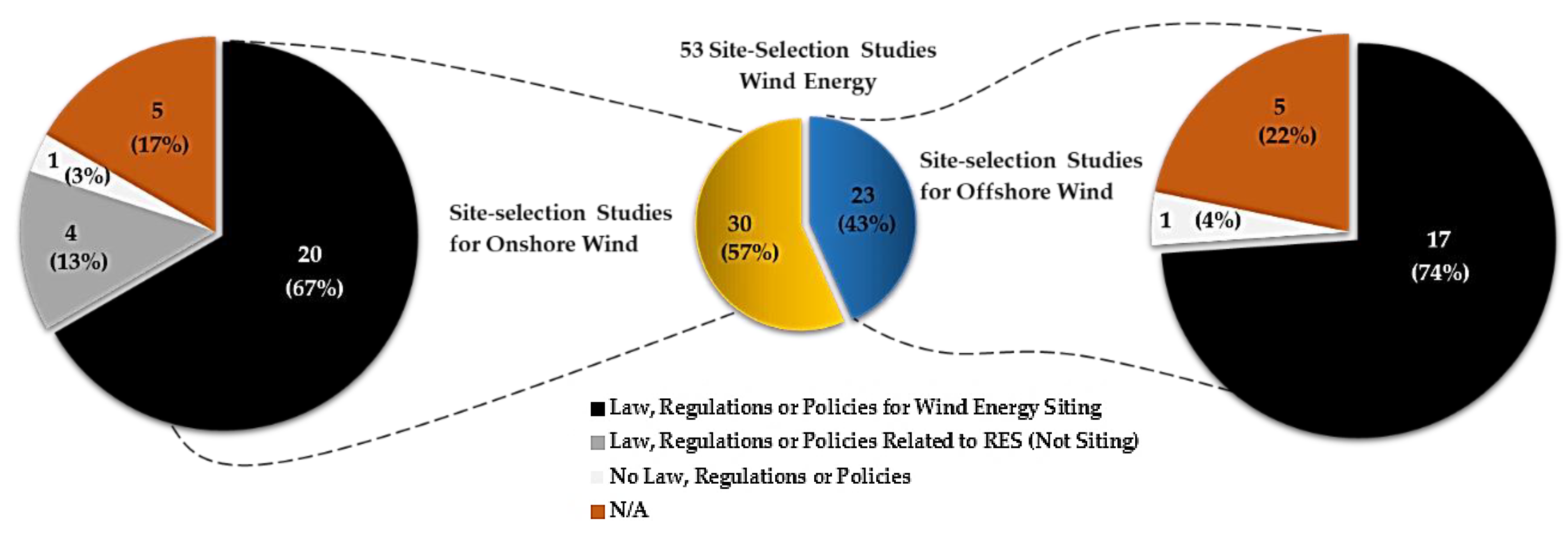
National, European, or international laws, regulations, or policies related to wind energy siting were considered in 20 and 17 studies on onshore and offshore wind energy research, respectively (Figure 11). However, many studies developed a site-selection framework without considering and/or even mentioning laws, regulations, and policies related to wind energy siting or renewable energy sources (RES) in general. These studies were mainly conducted for Asia (9 studies), North America (2 studies), and Africa (1 study). All studies for European regions considered the relative legislative frameworks or policies related to WF site-selection and wind energy development.
Figure 11. Frequency of occurrence of laws, regulations, or policies that were considered for WF siting and development.

3.10. Thematic Module 10—Suitability Index and Classifications

Several different classifications of suitability index (SI) were developed and applied for the proper determination of the suitability of onshore and offshore WF sites. Twenty-five onshore and ten offshore studies developed and reported a SI. The most commonly used SI scale was from 0 to 1 (i.e., (0, 1)) in both onshore and offshore WF siting studies (Table 11).
Table 11. Frequency of occurrence of each type of suitability index (SI) employed in the site-selection process.
Several suitability classes were determined for the majority of SI scales in order to correspond the SI value of each site to a specific suitability and thus describe it in linguistic form (e.g., a value of 8.15 of SI corresponds to a site of high suitability). A classification system of 4 suitability classes was frequently employed in both onshore and offshore WF siting studies, followed by a classification of a system of 3 suitability classes. Ranges from 3 to 10 and from to 2 to 9 of suitability classes were found in onshore and offshore wind energy siting applications, respectively.
From studies that had developed a SI for the specific determination of site suitability, 17 and 5 studies used discrete suitability classes in onshore and offshore WF siting applications, respectively, in order to correspond SI values in linguistic terms. Some linguistic terms used for the description of site suitability were: (a) from low to high suitability, (b) from least to most suitable, and (c) from less to extremely or particularly or superbly suitable. The remaining studies developed a continuous SI scale in which the higher the suitability value was, the higher the suitability in the site.

3.11. Thematic Module 11—Micro-Siting Configuration of Wind Turbines

Micro-siting configuration was examined in 5 of 30 (16.70%) and 7 of 23 (30.45%) onshore and offshore WF siting applications, respectively (Table 12). Micro-siting configuration mainly focused on the calculation of the technical wind energy potential of the proposed suitable areas on the basis of selected wind turbine models, site conditions (e.g., wind direction, wind resource, shape of suitable site), and technical specifications. The distance between two successive turbines at a line parallel to the prevailing wind direction (Dx) ranged from 3~10Drotor (rotor diameter) in onshore WF siting studies and from 5~12Drotor in offshore WF siting studies. The relevant values for the distance between two successive turbines at a perpendicular to the prevailing wind direction (Dy) were between 3~10Drotor and 3~8Drotor. In the case of offshore WF siting, researchers frequently used a model of 5 MW.
Table 12. Micro-siting configuration of wind turbines in onshore and offshore WF siting studies. Note: Drotor, rotor diameter; MW, megawatt.
Several studies determined the specific location and number of wind turbines within the suitable sites by using built-in advanced editing or other software tools [12,14,17,50,51,57]. Only one study [5] used the built-in geoprocessing software tools in GIS to automatically locate the specific site of wind turbines based on a defined layout. The specific determination of wind turbines contributed to the estimation of the total investment cost of wind projects in some cases [12,57].

5. Conclusions

Scientific research in the site-selection aspects of onshore and offshore WFs is of great importance, contributing to sustainable, technically and economically viable, and socially acceptable wind energy projects. Despite its importance, no efforts have been previously carried out on the analysis and assessment of existing site-selection procedures. The present systematic review provides such an analysis and assessment, and addresses the existing gap in knowledge in the onshore and offshore wind energy research field, identifying trends and insights in all thematic modules of site-selection issues. This systematic review was driven by four research questions: (1) are there data trends in site-selection processes in onshore and offshore wind energy research? (2) can these trends be used as a basis in order to inform and/or improve future studies and implementations? (3) are there potential gaps and shortages in site-selection processes? (4) can these gaps reveal valuable insights for the development of new and innovative site-selection planning tools, methodologies, criteria, approaches, or policies, and/or for the improvement of key aspects of existing siting procedures? All the above questions are fully addressed by analyses presented in this review article. Important insights and useful trends are highlighted in: (1) site-selection methodologies; (2) type, number, and exclusion limits of EC; (3) type, number, importance, priority, and suitability classes of AC; (4) studies’ geographic locations; (5) spatial planning scales; (6) wind resource analysis; (7) sensitivity analysis; (8) participatory planning approaches, and participatory groups and contributions; (9) laws, regulations, and policies related to WF siting; (10) SI classifications (i.e., linguistic and numeric); and (11) micro-siting configuration of wind turbines. These identified insights and trends could motivate the conduction of updated site-selection analyses on onshore and offshore wind energy research.
The insights of this systematic review can be used as a basis for enhancing future studies and globally improving siting implementations. The main concluding remarks of the present systematic review are summarized as follows: (a) the lack of methodologies, techniques, and tools that incorporate the optimization stage on the basis of objective facts in the site-selection framework was highlighted; (b) the identification of all employed EC in the current relevant literature and related exclusion limits (i.e., min, max, mean, and predominant values) can be used as a basis for future siting implementations; (c) the identification of optimal and poor values for each LAC and MAC can contribute to the development of an optimization stage in future onshore and offshore site-selection procedures; (d) “wind velocity” (LAC 1) and “proximity to high-voltage electricity grid” (LAC 3) are the most frequently used criteria, and two of the five most important LAC in terms of their mean weight and their priority position; (e) “wind velocity” (MAC 1) and “water depth” (MAC 2) are the most frequently used criteria, and two of the five most important MAC based on their mean weight and their priority position; (f) on geographic locations with high wind energy growth (Europe and Asia), siting studies were conducted on large spatial planning scales (national and regional scales); (g) wind resource analysis of longer time periods are conducted in offshore compared to onshore WF siting studies since the risk of the offshore investments is much higher; (h) studies that incorporate all participatory groups’ opinions from the early stages and involve them consecutively in the whole site-selection process are missing and should be conducted; and (i) the lack of optimal micro-siting configurations of wind turbines in onshore and offshore WF siting studies.

Author Contributions

Conceptualization, S.S. and D.G.V.; methodology, S.S.; software, S.S.; validation, S.S. and D.G.V.; formal analysis, S.S.; investigation, S.S.; resources, S.S. and D.G.V.; data curation, S.S.; writing—original draft preparation, S.S.; writing—review and editing, D.G.V.; visualization, S.S.; supervision, D.G.V. All authors have read and agreed to the published version of the manuscript.

Funding

This research received no external funding.

Conflicts of Interest

The authors declare no conflict of interest.

References

  1. Lee, J.; Zhao, F. Global Wind Report 2019; Global Wind Energy Council: Brussels, Belgium, 2020. [Google Scholar]
  2. Latinopoulos, D.; Kechagia, K. A GIS-based multi-criteria evaluation for wind farm site selection. A regional scale application in Greece. Renew. Energy 2015, 78, 550–560. [Google Scholar] [CrossRef]
  3. Baseer, M.A.; Rehman, S.; Meyer, J.P.; Mahbub Alam, M. GIS-based site suitability analysis for wind farm development in Saudi Arabia. Energy 2017, 141, 1166–1176. [Google Scholar] [CrossRef]
  4. Georgiou, A.; Polatidis, H.; Haralambopoulos, D. Wind Energy Resource Assessment and Development: Decision Analysis for Site Evaluation and Application. Energy Sources Part A Recovery Util. Environ. Eff. 2012, 34, 1759–1767. [Google Scholar] [CrossRef]
  5. Tegou, L.-I.; Polatidis, H.; Haralambopoulos, D.A. Environmental management framework for wind farm siting: Methodology and case study. J. Environ. Manag. 2010, 91, 2134–2147. [Google Scholar] [CrossRef]
  6. Bili, A.; Vagiona, D.G. Use of multicriteria analysis and GIS for selecting sites for onshore wind farms: The case of Andros Island (Greece). Eur. J. Environ. Sci. 2018, 8, 5–13. [Google Scholar] [CrossRef]
  7. Ayodele, T.R.; Ogunjuyigbe, A.S.O.; Odigie, O.; Munda, J.L. A multi-criteria GIS based model for wind farm site selection using interval type-2 fuzzy analytic hierarchy process: The case study of Nigeria. Appl. Energy 2018, 228, 1853–1869. [Google Scholar] [CrossRef]
  8. Höfer, T.; Sunak, Y.; Siddique, H.; Madlener, R. Wind farm siting using a spatial Analytic Hierarchy Process approach: A case study of the Städteregion Aachen. Appl. Energy 2016, 163, 222–243. [Google Scholar] [CrossRef]
  9. Al-Yahyai, S.; Charabi, Y.; Gastli, A.; Al-Badi, A. Wind farm land suitability indexing using multi-criteria analysis. Renew. Energy 2012, 44, 80–87. [Google Scholar] [CrossRef]
  10. Kim, C.-K.; Jang, S.; Kim, T.Y. Site selection for offshore wind farms in the southwest coast of South Korea. Renew. Energy 2018, 120, 151–162. [Google Scholar] [CrossRef]
  11. Mahdy, M.; Bahaj, A.S. Multi criteria decision analysis for offshore wind energy potential in Egypt. Renew. Energy 2018, 118, 278–289. [Google Scholar] [CrossRef]
  12. Spyridonidou, S.; Vagiona, D.G.; Loukogeorgaki, E. Strategic Planning of Offshore Wind Farms in Greece. Sustainability 2020, 12, 905. [Google Scholar] [CrossRef]
  13. Vagiona, D.G.; Kamilakis, M. Sustainable site selection for offshore wind farms in the South Aegean-Greece. Sustainability 2018, 10, 749. [Google Scholar] [CrossRef]
  14. Christoforaki, M.; Tsoutsos, T. Sustainable siting of an offshore wind park a case in Chania, Crete. Renew. Energy 2017, 109, 624–633. [Google Scholar] [CrossRef]
  15. Gavériaux, L.; Laverrière, G.; Wang, T.; Maslov, N.; Claramunt, C. GIS-based multi-criteria analysis for offshore wind turbine deployment in Hong Kong. Ann. GIS 2019, 25, 207–218. [Google Scholar] [CrossRef]
  16. Mekonnen, A.D.; Gorsevski, P.V. A web-based participatory GIS (PGIS) for offshore wind farm suitability within Lake Erie, Ohio. Renew. Sustain. Energy Rev. 2015, 41, 162–177. [Google Scholar] [CrossRef]
  17. Emeksiz, C.; Demirci, B. The determination of offshore wind energy potential of Turkey by using novelty hybrid site selection method. Sustain. Energy Technol. Assess. 2019, 36, 100562. [Google Scholar] [CrossRef]
  18. Farkat Diógenes, J.R.; Claro, J.; Rodrigues, J.C.; Loureiro, M.V. Barriers to onshore wind energy implementation: A systematic review. Energy Res. Soc. Sci. 2020, 60, 101337. [Google Scholar] [CrossRef]
  19. Enevoldsen, P. Onshore wind energy in Northern European forests: Reviewing the risks. Renew. Sustain. Energy Rev. 2016, 60, 1251–1262. [Google Scholar] [CrossRef]
  20. Rodrigues, S.; Restrepo, C.; Kontos, E.; Teixeira Pinto, R.; Bauer, P. Trends of offshore wind projects. Renew. Sustain. Energy Rev. 2015, 49, 1114–1135. [Google Scholar] [CrossRef]
  21. Oh, K.-Y.; Nam, W.; Sung Ryuc, M.; Kim, J.-Y.; Epureanu, B.I. A review of foundations of offshore wind energy convertors: Current status and future perspectives. Renew. Sustain. Energy Rev. 2018, 88, 16–36. [Google Scholar] [CrossRef]
  22. Peters, J.L.; Remmers, T.; Wheeler, A.J.; Murphy, J.; Cummins, V. A systematic review and meta-analysis of GIS use to reveal trends in offshore wind energy research and offer insights on best practices. Renew. Sustain. Energy Rev. 2020, 128, 109916. [Google Scholar] [CrossRef]
  23. Ramirez-Rosado, I.J.; Garcia-Garrido, E.; Fernandez-Jimenez, A.; Zorzano-Santamaria, P.J.; Monteiro, C.; Miranda, V. Promotion of new wind farms based on a decision support system. Renew. Energy 2008, 33, 558–566. [Google Scholar] [CrossRef]
  24. van Haaren, R.; Fthenakis, V. GIS-based wind farm site selection using spatial multi-criteria analysis (SMCA): Evaluating the case for New York State. Renew. Sustain. Energy Rev. 2011, 15, 3332–3340. [Google Scholar] [CrossRef]
  25. Baban, S.M.J.; Parry, T. Developing and applying a GIS-assisted approach to locating wind farms in the UK. Renew. Energy 2001, 24, 59–71. [Google Scholar] [CrossRef]
  26. Gorsevski, P.V.; Cathcart, S.C.; Mirzaei, G.; Jamali, M.M.; Ye, X.; Gomezdelcampo, E. A group-based spatial decision support system for wind farm site selection in Northwest Ohio. Energy Policy 2013, 55, 374–385. [Google Scholar] [CrossRef]
  27. Ali, S.; Taweekun, J.; Techato, K.; Waewsak, J.; Gyawali, S. GIS based site suitability assessment for wind and solar farms in Songkhla, Thailand. Renew. Energy 2019, 132, 1360–1372. [Google Scholar] [CrossRef]
  28. Janke, J.R. Multicriteria GIS modeling of wind and solar farms in Colorado. Renew. Energy 2010, 35, 2228–2234. [Google Scholar] [CrossRef]
  29. Watson, J.J.W.; Hudson, M.D. Regional Scale wind farm and solar farm suitability assessment using GIS-assisted multi-criteria evaluation. Landsc. Urban Plan. 2015, 138, 20–31. [Google Scholar] [CrossRef]
  30. Anwarzai, M.A.; Nagasaka, K. Utility-scale implementable potential of wind and solar energies for Afghanistan using GIS multi-criteria decision analysis. Renew. Sustain. Energy Rev. 2017, 71, 150–160. [Google Scholar] [CrossRef]
  31. Simão, A.; Densham, P.J.; Haklay, M. (Muki) Web-based GIS for collaborative planning and public participation: An application to the strategic planning of wind farm sites. J. Environ. Manag. 2009, 90, 2027–2040. [Google Scholar] [CrossRef]
  32. Siyal, S.H.; Mörtberg, U.; Mentis, D.; Welsch, M.; Babelon, I.; Howells, M. Wind energy assessment considering geographic and environmental restrictions in Sweden: A GIS-based approach. Energy 2015, 83, 447–461. [Google Scholar] [CrossRef]
  33. Bennui, A.; Rattanamanee, P.; Puetpaiboon, U.; Phukpattaranont, P.; Chetpattananondh, K. Site selection for large wind turbine using GIS. In Proceedings of the 3rd International Conference on Engineering and Environment, Phuket, Thailand, 10–11 May 2007. [Google Scholar]
  34. Noorollahi, Y.; Yousefi, H.; Mohammadi, M. Multi-criteria decision support system for wind farm site selection using GIS. Sustain. Energy Technol. Assess. 2016, 13, 38–50. [Google Scholar] [CrossRef]
  35. Tsoutsos, T.; Tsitoura, I.; Kokologos, D.; Kalaitzakis, K. Sustainable siting process in large wind farms case study in Crete. Renew. Energy 2015, 75, 474–480. [Google Scholar] [CrossRef]
  36. Hansen, H.S. GIS-based multi-criteria analysis of wind farm development. In Proceedings of the 10th Scandinavian Research Conference on Geographical Information Science, Stockholm, Sweden, 13–15 June 2005. [Google Scholar]
  37. Panagiotidou, M.; Xydis, G.; Koroneos, C. Environmental siting framework for wind farms: A case study in the Dodecanese Islands. Resources 2016, 5, 24. [Google Scholar] [CrossRef]
  38. Aydin, N.Y.; Kentel, E.; Duzgun, S. GIS-based environmental assessment of wind energy systems for spatial planning: A case study from Western Turkey. Renew. Sustain. Energy Rev. 2010, 14, 364–373. [Google Scholar] [CrossRef]
  39. Sadeghi, M.; Karimi, M. GIS-based solar and wind turbine site selection using multi-criteria analysis: Case study Tehran, Iran. Int. Arch. Photogramm. Remote Sens. Spat. Inf. Sci. 2017, 42, 469–476. [Google Scholar] [CrossRef]
  40. Sarpong, D.; Baffoe, P.E. Selecting Suitable Sites for Wind Energy Development in Ghana. Ghana Min. J. 2016, 16, 8–20. [Google Scholar]
  41. Harper, M.; Anderson, B.; James, P.; Bahaj, A. Identifying suitable locations for onshore wind turbines using a GIS-MCDA approach. In Proceedings of the 17th International Conference on Sustainable Energy Technologies, Bologna, Italy, 17–20 July 2017. [Google Scholar]
  42. Villacreses, G.; Gaona, G.; Martínez-Gomez, J.; Juan Jijon, D. Wind farms suitability location using geographical information system (GIS), based on multi-criteria decision making (MCDM) methods: The case of continental Ecuador. Renew. Energy 2017, 109, 275–286. [Google Scholar] [CrossRef]
  43. Sánchez-Lozano, J.M.; García-Cascales, M.S.; Lamata, M.T. Identification and selection of potential sites for onshore wind farms development in Region of Murcia, Spain. Energy 2014, 73, 311–324. [Google Scholar] [CrossRef]
  44. Lee, A.H.I.; Chen, H.H.; Kang, H.-Y. Multi-criteria decision making on strategic selection of wind farms. Renew. Energy 2009, 34, 120–126. [Google Scholar] [CrossRef]
  45. Vagiona, D.G.; Karanikolas, N.M. A multicriteria approach to evaluate offshore wind farms siting in Greece. Glob. NEST J. 2012, 14, 235–243. [Google Scholar]
  46. Argin, M.; Yerci, V. The assessment of offshore wind power potential of Turkey. In Proceedings of the 9th International Conference on Electrical and Electronics Engineering (ELECO), Bursa, Turkey, 26–28 November 2015. [Google Scholar]
  47. Kim, J.Y.; Kang, K.S.; Oh, K.Y.; Lee, J.S.; Ryu, M.S. A study on the site selection of offshore wind farm around Korean Peninsula. In Proceedings of the 3rd International Conference on Ocean Energy, Bilbao, Spain, 6–8 October 2010. [Google Scholar]
  48. Vasileiou, M.; Loukogeorgaki, E.; Vagiona, D.G. GIS-based multi-criteria decision analysis for site selection of hybrid offshore wind and wave energy systems in Greece. Renew. Sustain. Energy Rev. 2017, 73, 745–757. [Google Scholar] [CrossRef]
  49. Möller, B. Continuous spatial modelling to analyse planning and economic consequences of offshore wind energy. Energy Policy 2011, 39, 511–517. [Google Scholar] [CrossRef]
  50. Schallenberg-Rodríguez, J.; Montesdeoca, N.G. Spatial planning to estimate the offshore wind energy potential in coastal regions and islands. Practical case: The Canary Islands. Energy 2018, 143, 91–103. [Google Scholar] [CrossRef]
  51. Argin, M.; Yerci, V.; Erdogan, N.; Kucuksari, S.; Cali, U. Exploring the offshore wind energy potential of Turkey based on multicriteria site selection. Energy Strategy Rev. 2019, 23, 33–46. [Google Scholar] [CrossRef]
  52. Stefanakou, A.-A.; Nikitakos, N. A decision support model for site selection of offshore wind farms. In Proceedings of the 9th International Scientific Conference on Energy and Climate Change, Athens, Greece, 12–14 October 2016. [Google Scholar]
  53. Saleous, N.; Issa, S.; Al Mazrouei, J. GIS-based wind farm site selection model offshore Abu Dhabi Emirate, UAE. Int. Arch. Photogramm. Remote Sens. Spat. Inf. Sci. 2016, 41, 437–441. [Google Scholar] [CrossRef]
  54. Mani Murali, R.; Vidya, P.J.; Modi, P.; Jaya Kumar, S. Site selection for offshore wind farms along the Indian coast. Indian J. Geo Mar. Sci. 2014, 43, 1401–1406. [Google Scholar]
  55. Kim, T.; Park, J.-I.; Maeng, J. Offshore wind farm site selection study around Jeju Island, South Korea. Renew. Energy 2016, 94, 619–628. [Google Scholar] [CrossRef]
  56. Lee, K.-H.; Jun, S.-O.; Pak, K.-H.; Lee, D.-H.; Lee, K.-W.; Park, J.-P. Numerical optimization of site selection for offshore wind turbine installation using genetic algorithm. Curr. Appl. Phys. 2010, 10, S302–S306. [Google Scholar] [CrossRef]
  57. Spyridonidou, S.; Vagiona, D.G. Spatial energy planning of offshore wind farms in Greece using GIS and a hybrid MCDM methodological approach. Euro Mediterr. J. Environ. Integr. 2020, 5. [Google Scholar] [CrossRef]
  58. Castro-Santos, L.; Lamas-Galdo, M.I.; Filgueira-Vizoso, A. Managing the oceans: Site selection of a floating offshore wind farm based on GIS spatial analysis. Mar. Policy 2020, 113, 103803. [Google Scholar] [CrossRef]
  59. Deveci, M.; Ozcan, E.; John, R. Offshore Wind Farms: A Fuzzy Approach to Site Selection in a Black Sea Region. In Proceedings of the 4th IEEE Texas Power and Energy Conference, College Station, TX, USA, 6–7 February 2020. [Google Scholar]
  60. Simão, A. A Learning-Enhancing, Web-Based Public Participation System for Spatial Planning: An Application to the Wind Farm Siting Problem. Ph.D. Thesis, University College London (UCL), London, UK, 2008. [Google Scholar]
  61. National Renewable Energy Laboratory: Wind Energy Resource Atlas of the United States. Available online: https://rredc.nrel.gov/wind/pubs/atlas/tables/1-1T.html (accessed on 10 May 2020).
Publisher’s Note: MDPI stays neutral with regard to jurisdictional claims in published maps and institutional affiliations.

Article Metrics

Citations

Article Access Statistics

Multiple requests from the same IP address are counted as one view.