Article

Operation Analysis of a SAG Mill under Different Conditions Based on DEM and Breakage Energy Method


1
School of Electrical & Information Engineering, Changsha University of Science & Technology, Changsha 410114, China
2
School of Energy and Power Engineering, Changsha University of Science & Technology, Changsha 410114, China
3
School of Automation, Central South University, Changsha 410083, China
*
Author to whom correspondence should be addressed.
Energies 2020, 13(20), 5247; https://doi.org/10.3390/en13205247
Submission received: 14 July 2020 / Revised: 31 August 2020 / Accepted: 29 September 2020 / Published: 9 October 2020
(This article belongs to the Section K: State-of-the-Art Energy Related Technologies)

Abstract

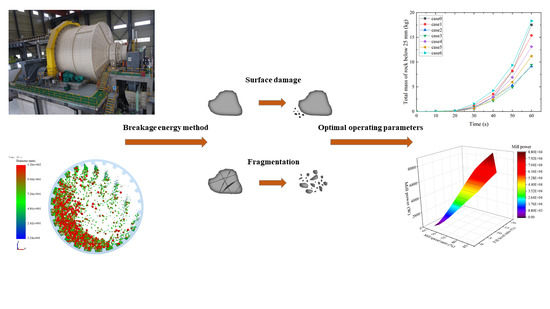
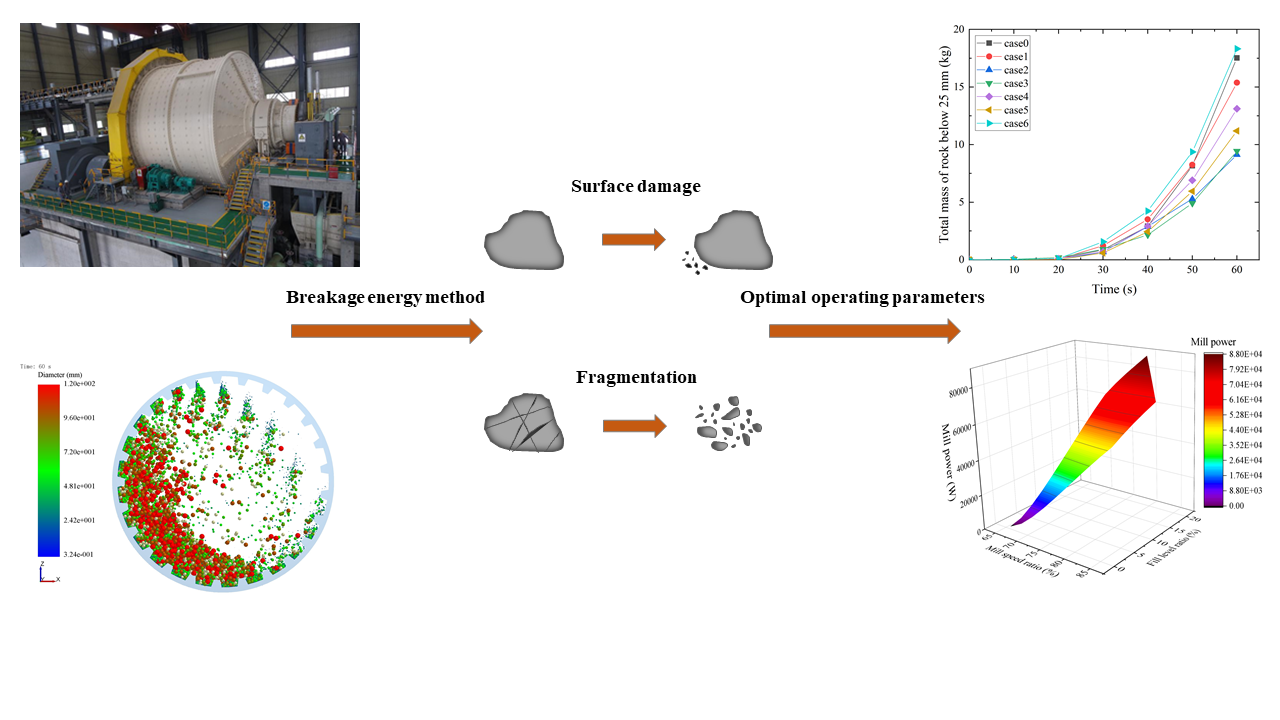
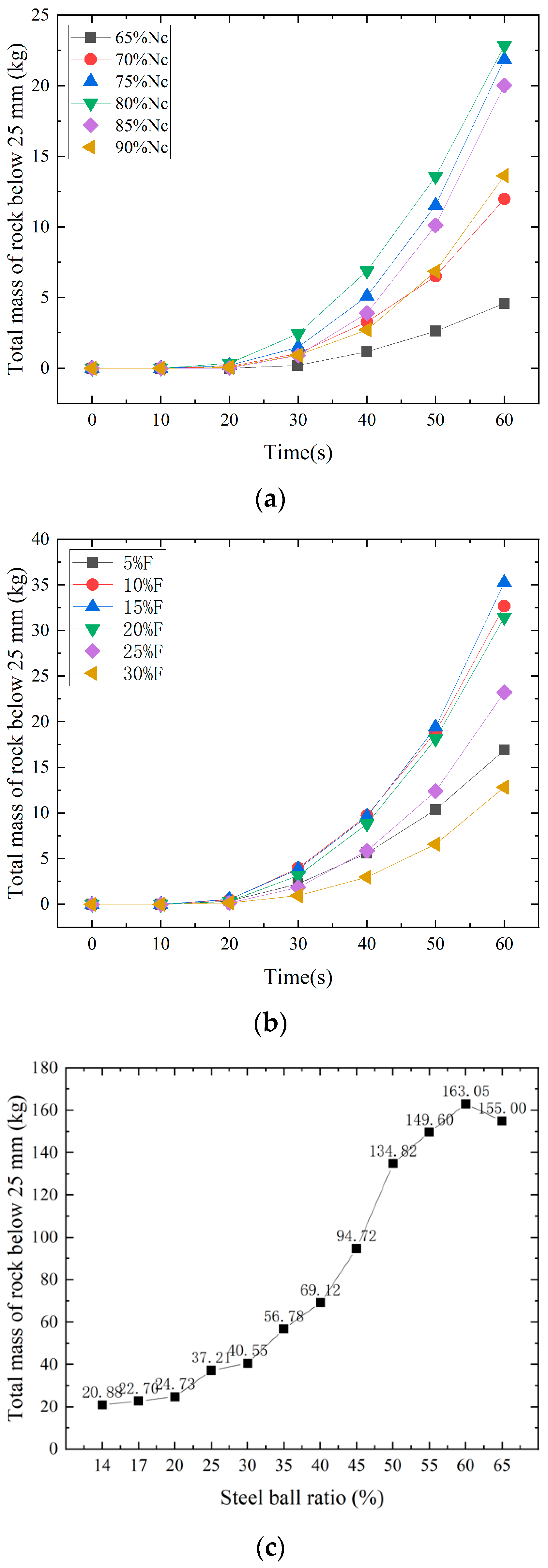
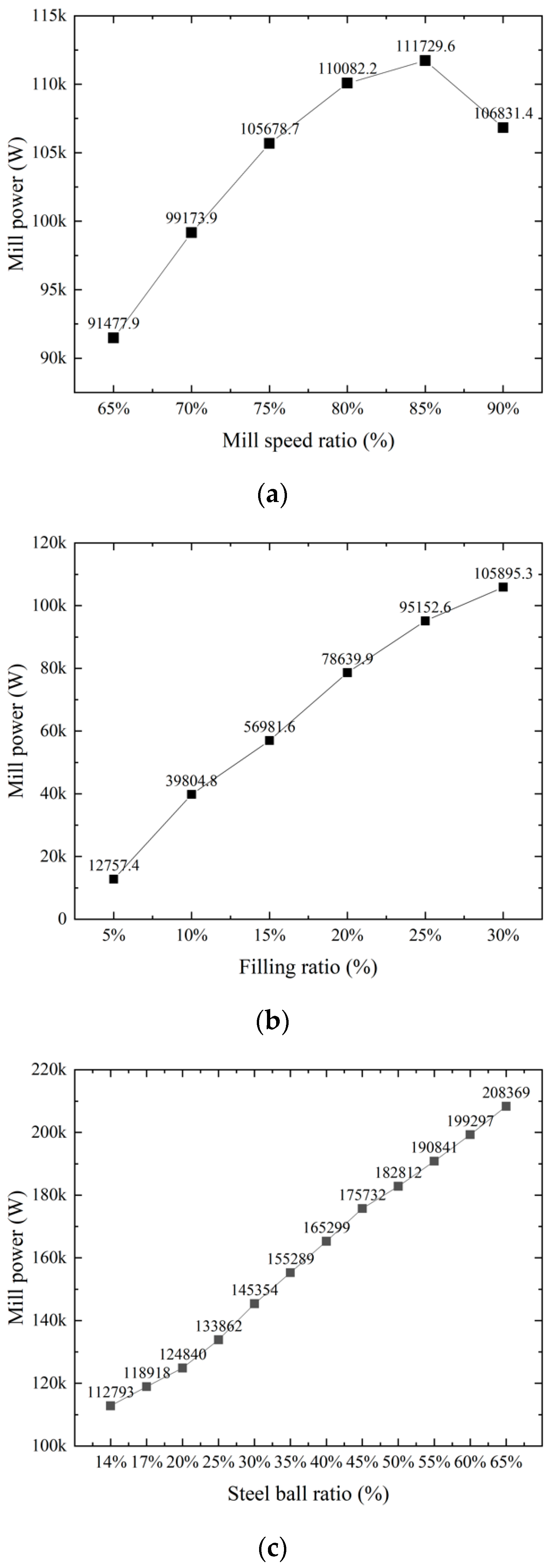
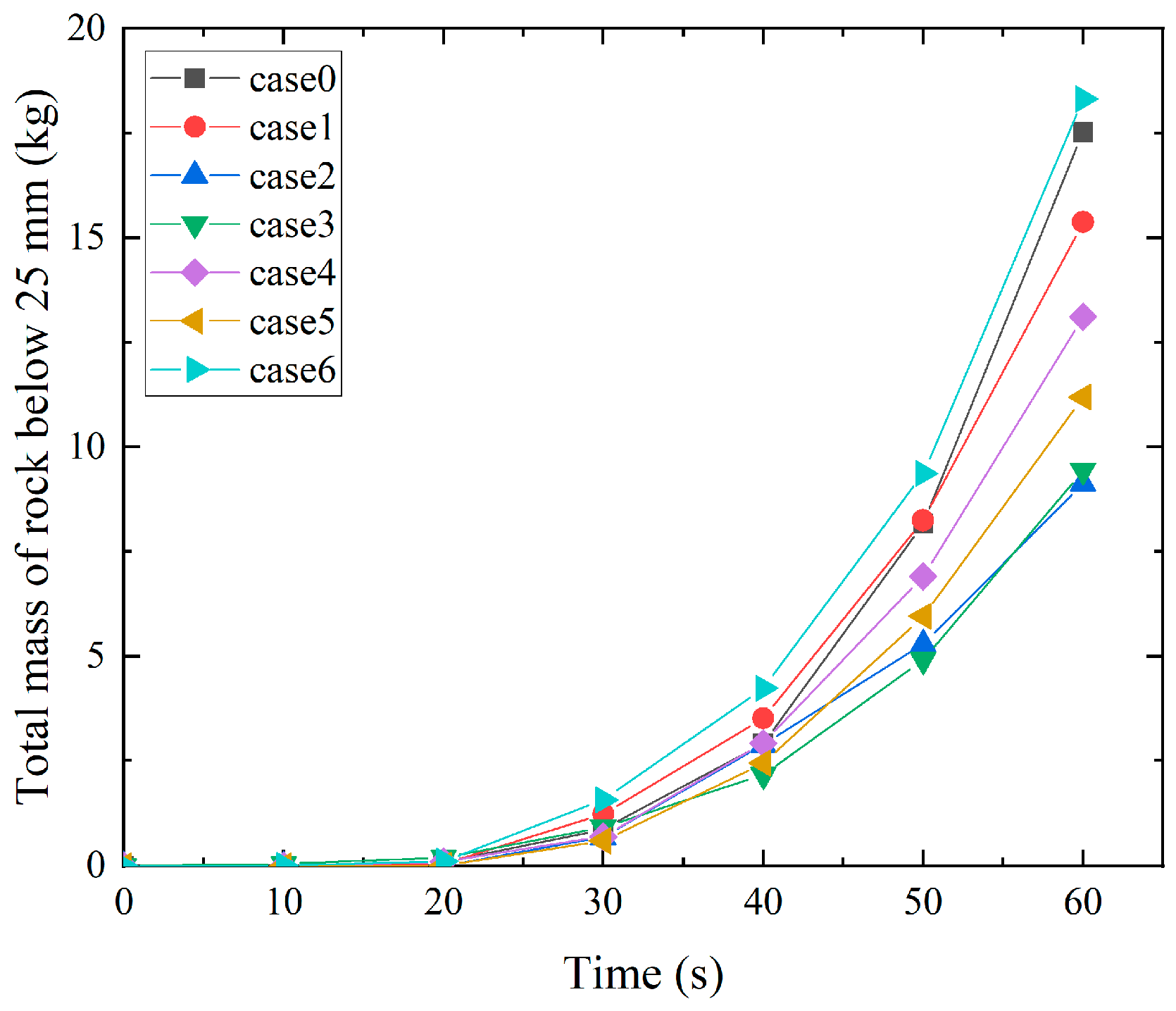
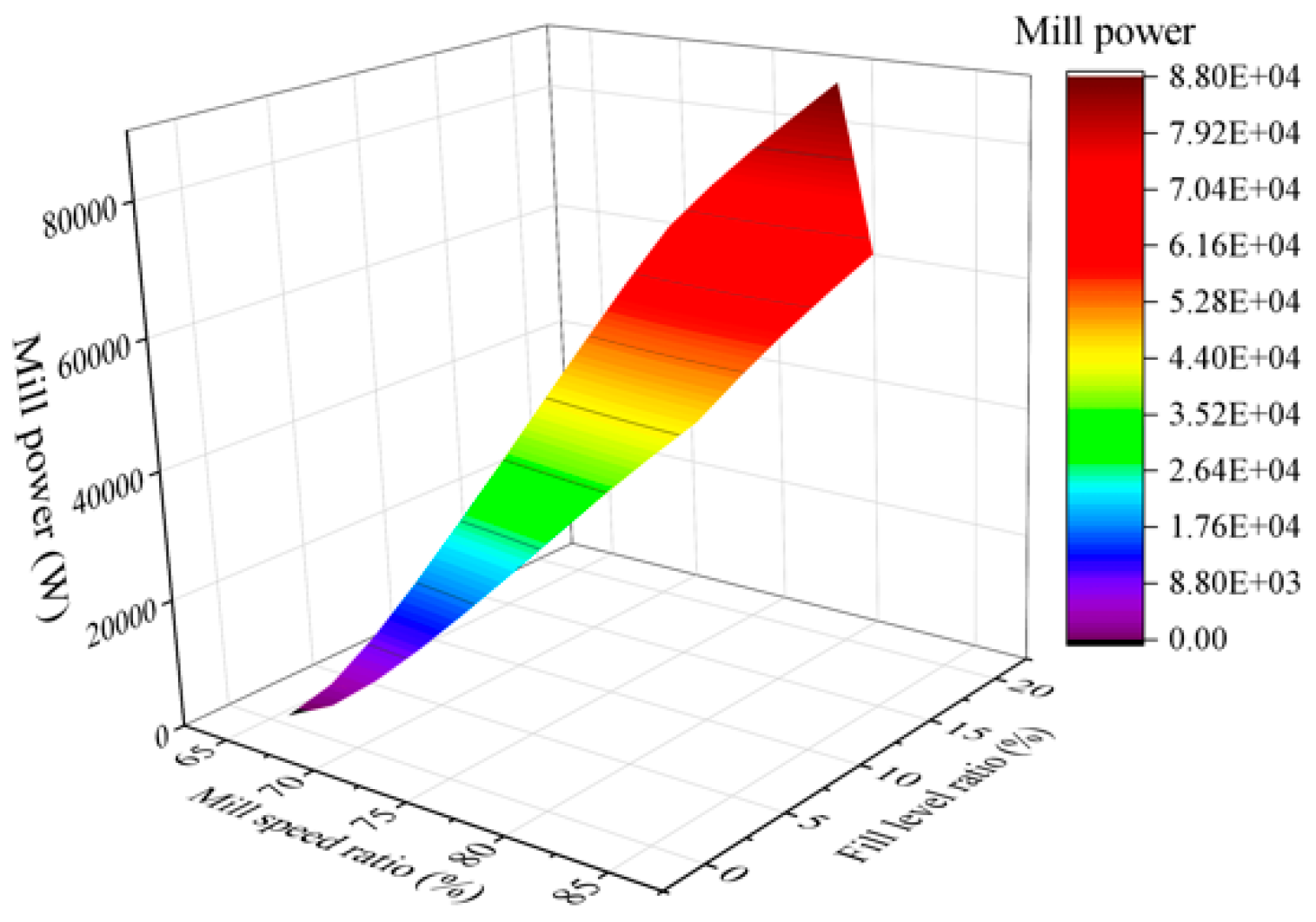
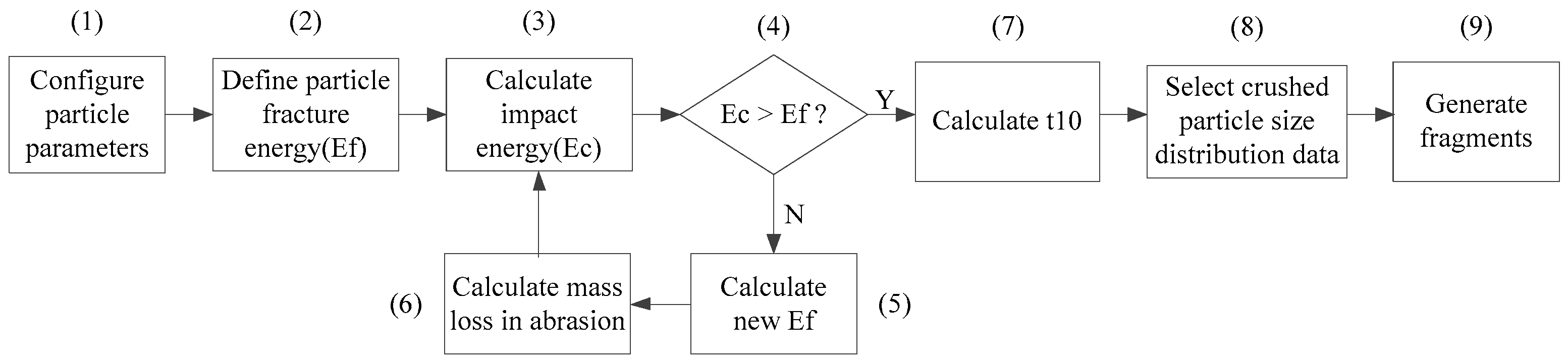
As one of the machines widely used in mining, a semi-autogenous grinding (SAG) mill can significantly improve the roughing efficiency of rock. But the SAG mill still faces the obstacles of significant energy consumption and empirical operation parameters. In order to obtain the optimal operation parameters of a SAG mill, in this paper, the discrete element method (DEM) is used to simulate the breakage process of the particles by controlling three parameters, i.e., the mill speed ratio, the mill fill level ratio, and the steel ball ratio. This method simulates the particles size, mill power, and qualified particles quality of crushed particle, which reveal the grinding strength and energy consumption of the SAG mill. In this paper, the grinding changes of a SAG mill under different parameter conditions are explored. Firstly, an experiment on the influence of a single parameter change on the mill’s operation is set up, and then the influence of three parameter changes on the mill’s operation is analyzed. These changes are characterized by particle size and mill power. Simulation results under the 5250 × 500 mm mill model show that the mill operates with the optimal effect when the mill is under the condition of 80% critical speed and 15% fill level; the power of the mill does not increase linearly with an increase in the mill speed ratio, but will decrease after 85% of the critical speed, and finally increase again; the optimal steel ball ratio in the SAG mill depends on the simulation time (mill actual working time) and the limitation of the rated power. The mill speed, fill level ratio, and steel ball ratio can significantly affect mill operation, and our conclusions can provide a reference for an actual situation.
Keywords: SAG mill; DEM; mill power; mill speed; steel ball ratio; fill level SAG mill; DEM; mill power; mill speed; steel ball ratio; fill level
Graphical Abstract