Article

Smoothed Particle Hydrodynamics Simulation of High Velocity Impact Dynamics of Molten Sand Particles


1
Karlsruhe Institute of Technology, Institute of Thermal Turbomachinery, Kaiserstr. 12, 76131 Karlsruhe, Germany
2
US Army Research Laboratory, Aberdeen Proving Ground, MD 21005, USA
3
Department of Aerospace Engineering, University of Maryland, College Park, MD 20742, USA
*
Author to whom correspondence should be addressed.
Current address: Department of Mechanical and Aerospace Engineering, George Washington University, Washington, DC 20052, USA.
Energies 2020, 13(19), 5134; https://doi.org/10.3390/en13195134
Submission received: 14 August 2020 / Revised: 23 September 2020 / Accepted: 24 September 2020 / Published: 2 October 2020

Abstract

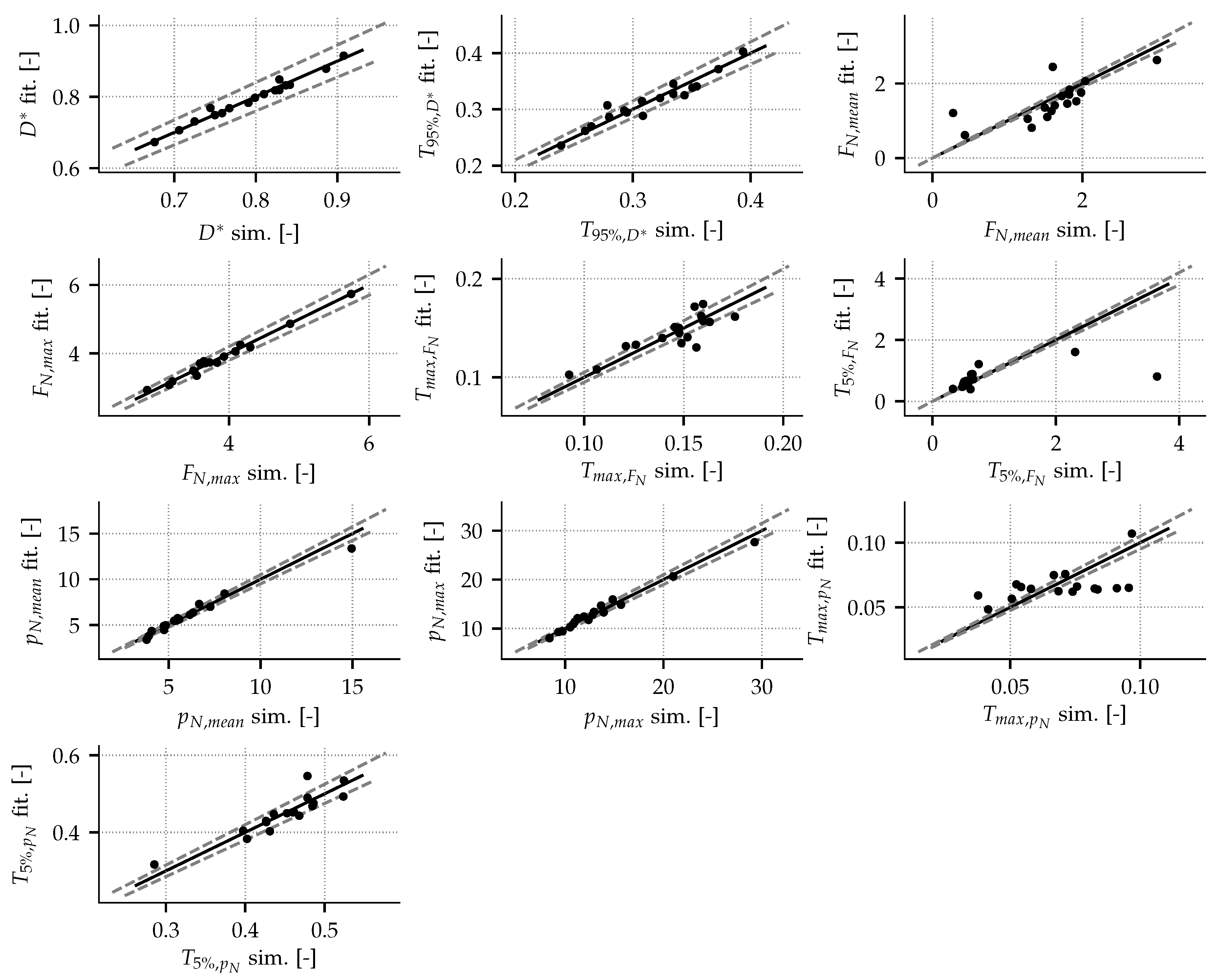
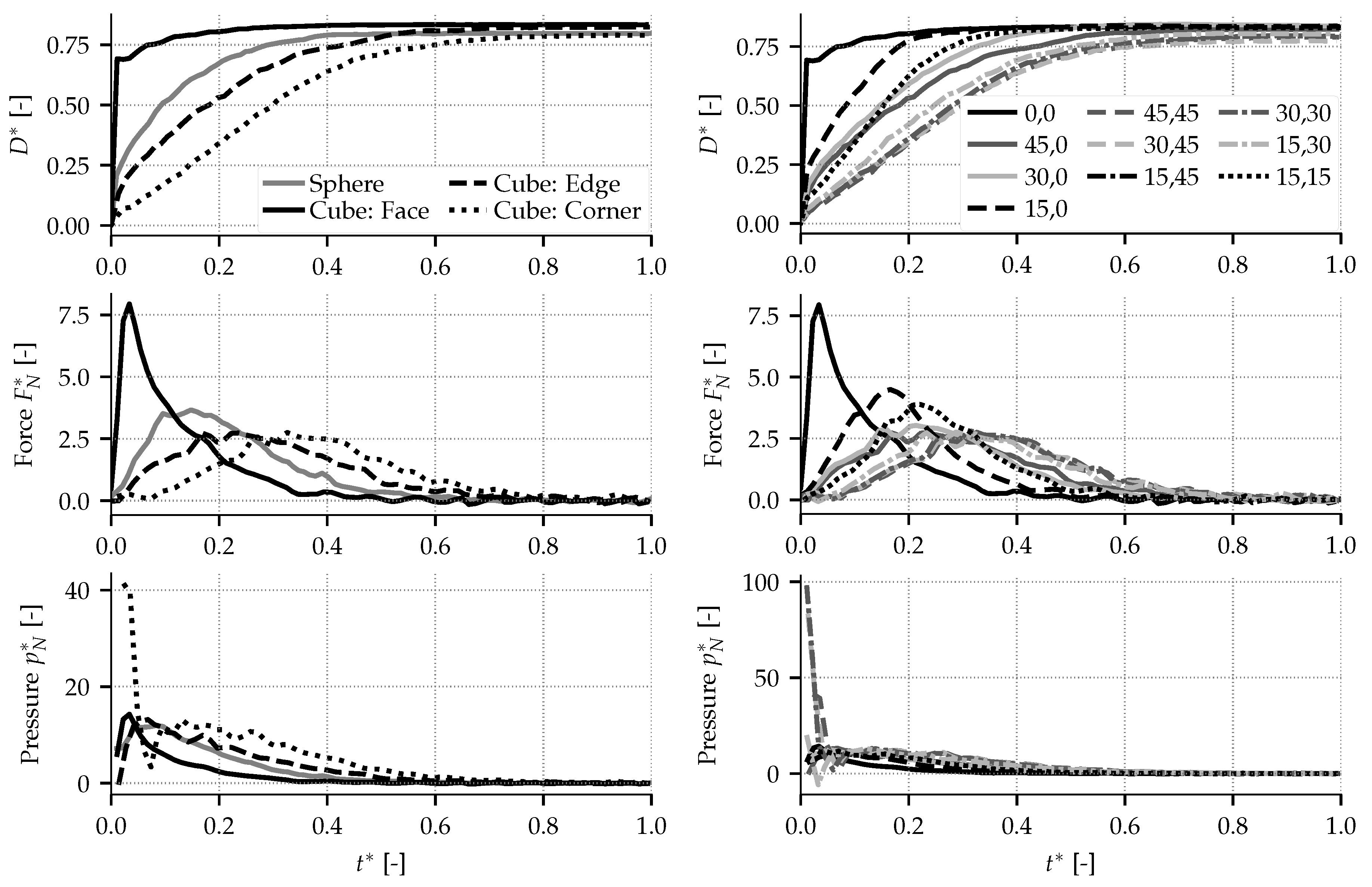
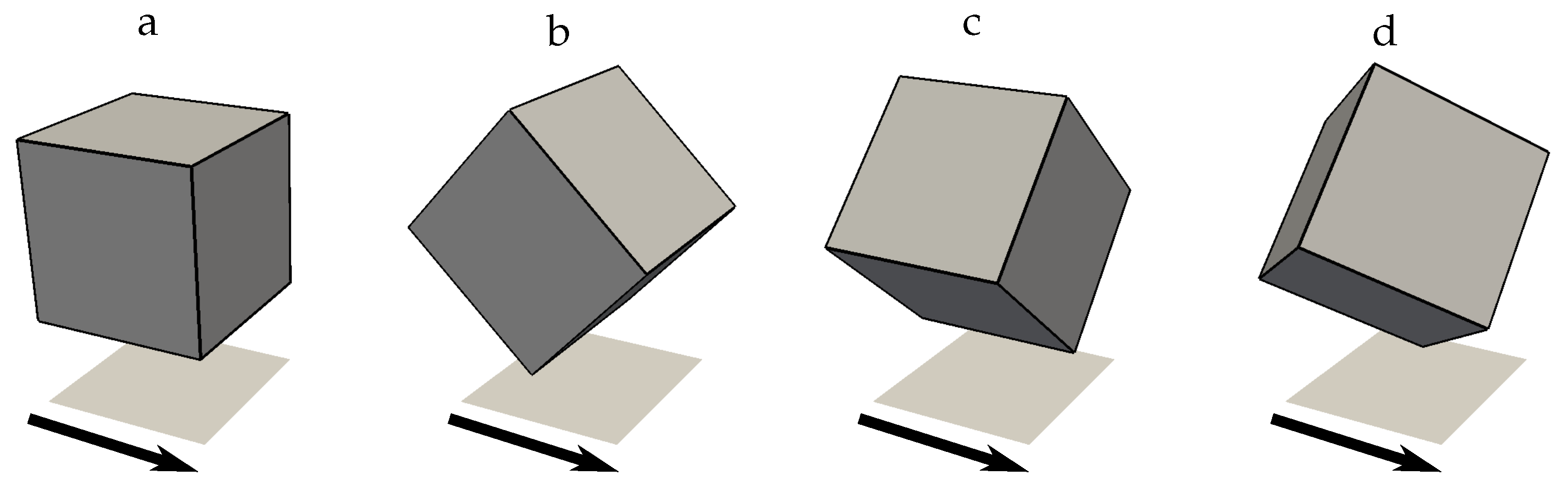
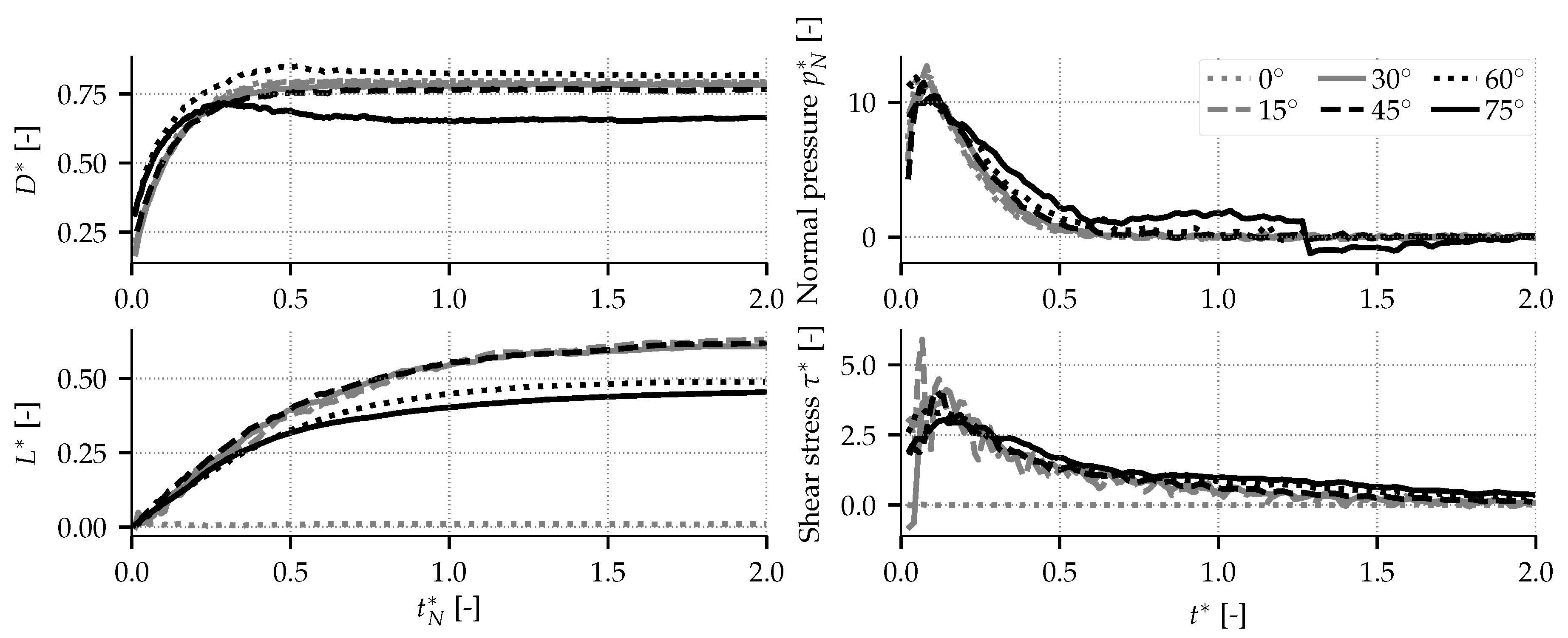
Sand ingestion is highly detrimental for gas turbines because it leads to erosion and corrosion of engine components, accelerating material fatigue and contributing to global engine failure. In this paper the high velocity impact of a molten sand particle onto a solid wall is investigated by means of the Smoothed Particles Hydrodynamics method where the three phases are taken into account. Nominal conditions are a 25 μm particle composed of molten sand (dynamic viscosity μl=11 Pa·s) impacting the wall at a velocity of 250 m/s. The influence of different parameters are explored such as the mechanical properties of the molten sand particle (density, viscosity, surface tension), the impact conditions (velocity magnitude, particle size and angle of impact) as well as the particle shape (sphere or cube with different geometrical features impacting the wall). It is found that the particles do not form a lamella during the impact but mostly conserve its initial shape. It is also confirmed that sharp features such as edges lead to a larger normal pressure at the impact location. Correlations to quantify (i) the spread factor, (ii) the maximum and mean impact force and impact pressure and (iii) the slip distance are derived for the first time based on the investigated parameters. The importance of these correlations is that they provide information needed to implement low-order models for studying impact and deposition of molten sand in engineering simulations.
Keywords: smoothed particle hydrodynamics; molten sand; droplet impact; gas turbine smoothed particle hydrodynamics; molten sand; droplet impact; gas turbine