Review of Heat Recovery Technologies for Building Applications


Abstract
1. Introduction
2. The Definition of Heat Recovery Systems
3. Types of Heat Recovery Systems for Residential Building Applications
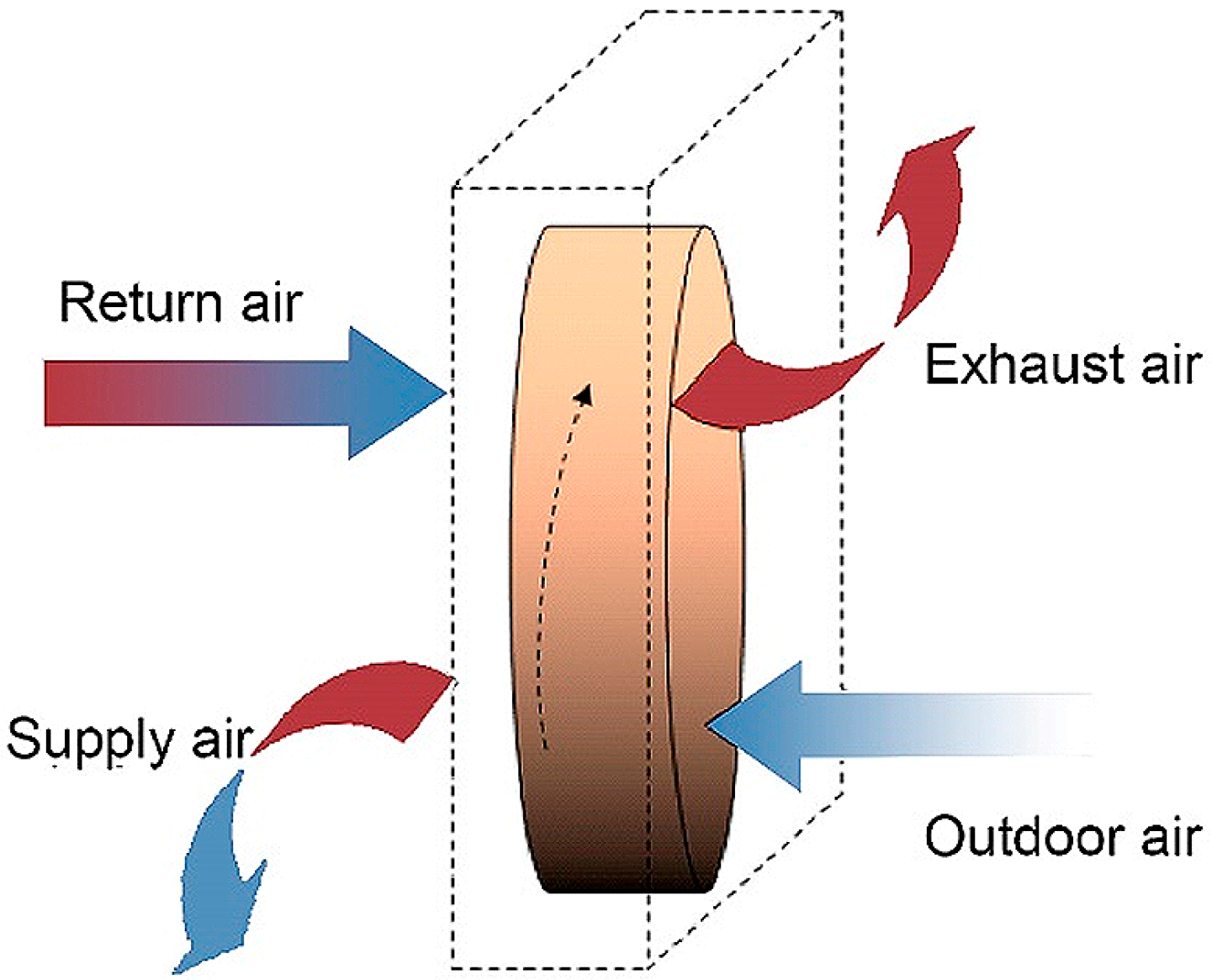
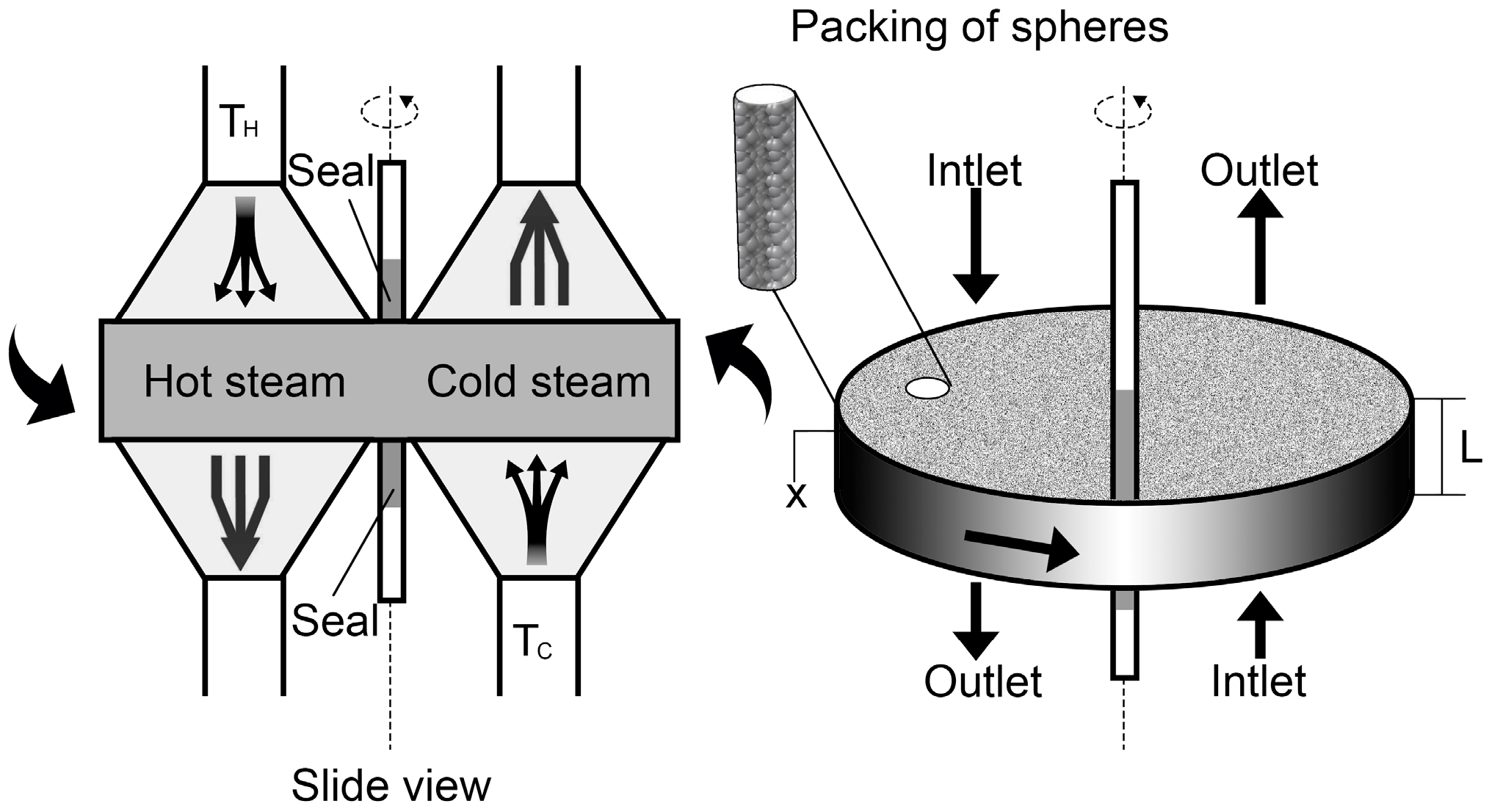
3.1. Rotary Wheel
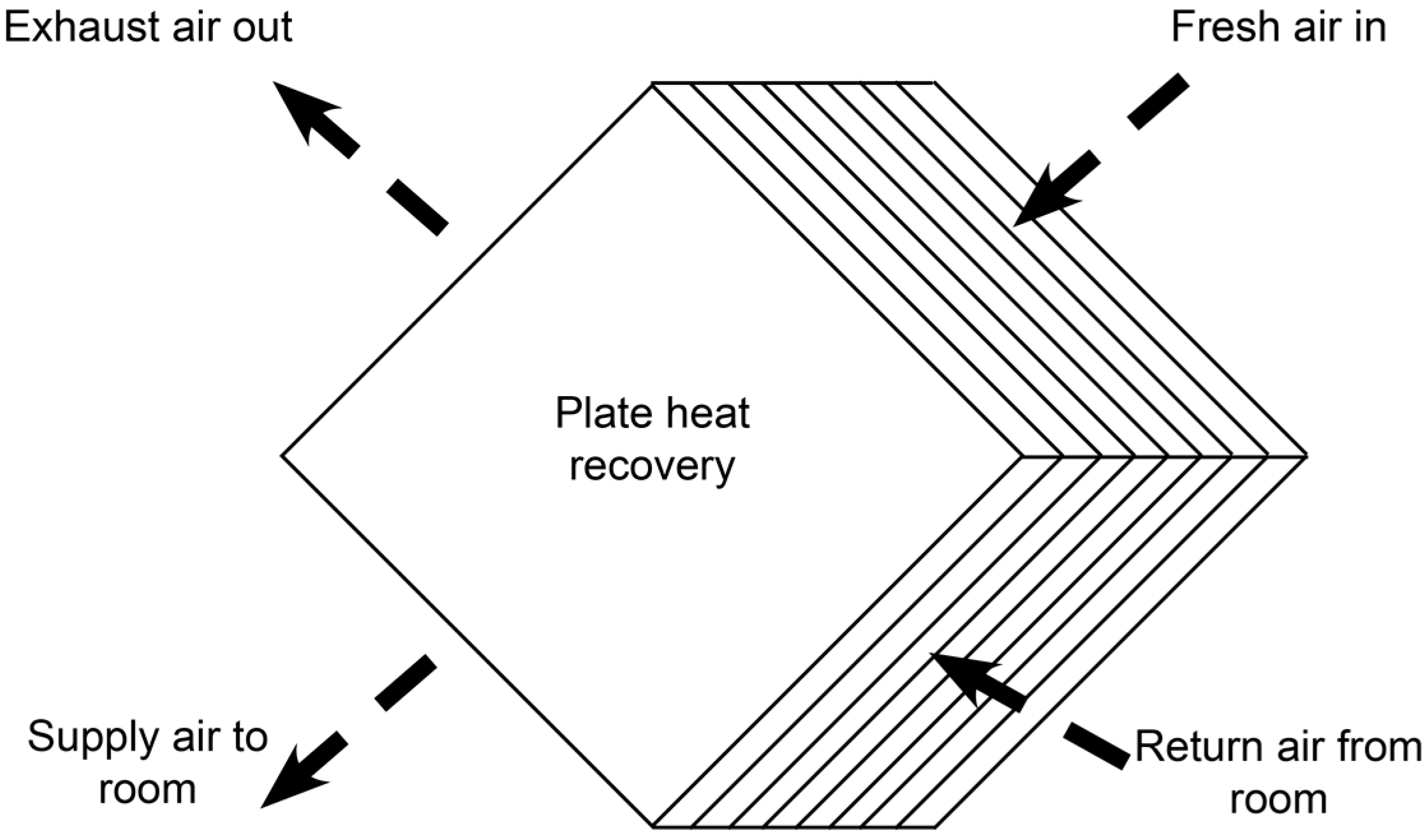
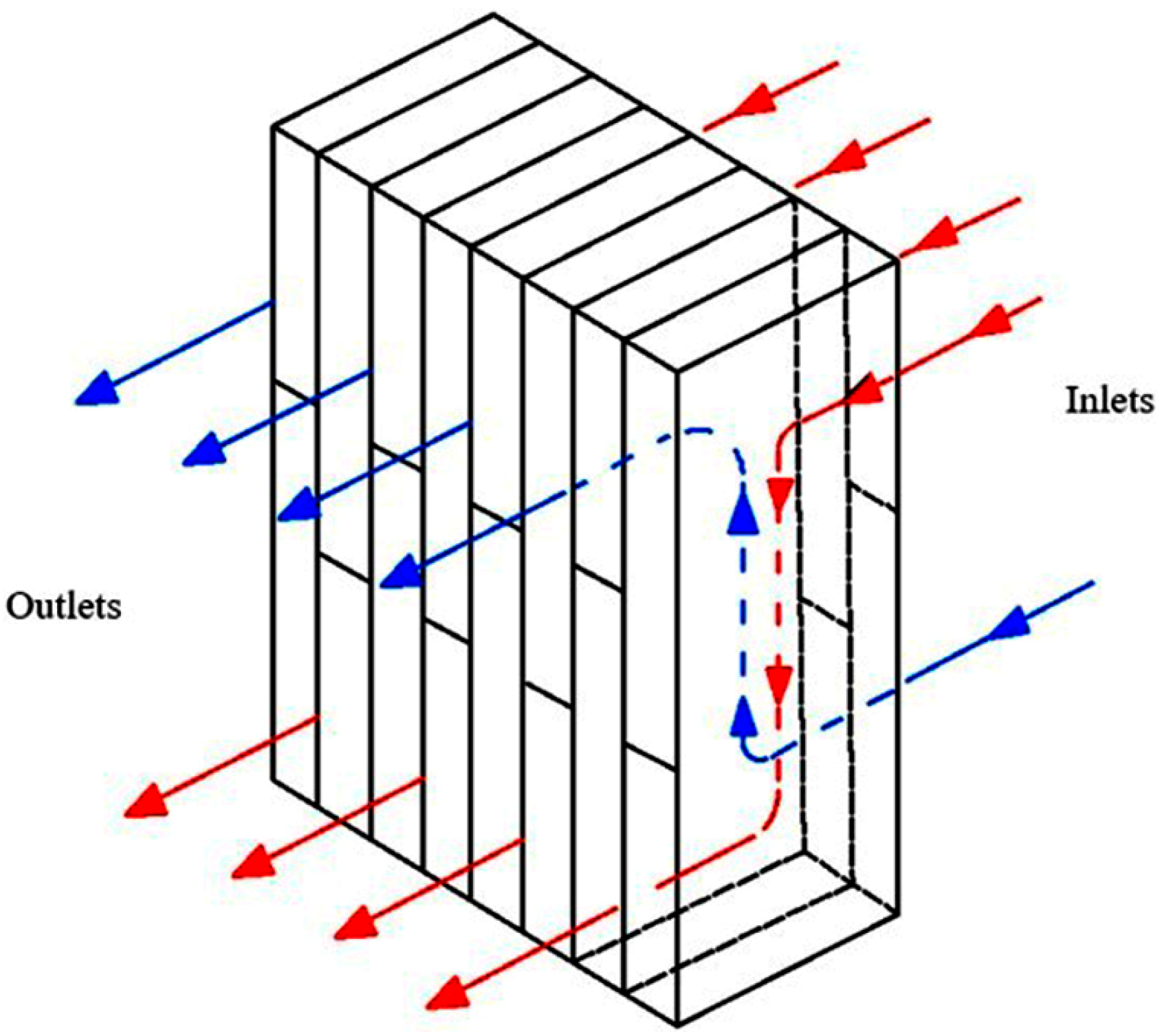
3.2. Fixed-Plate
- Flow pattern [26].
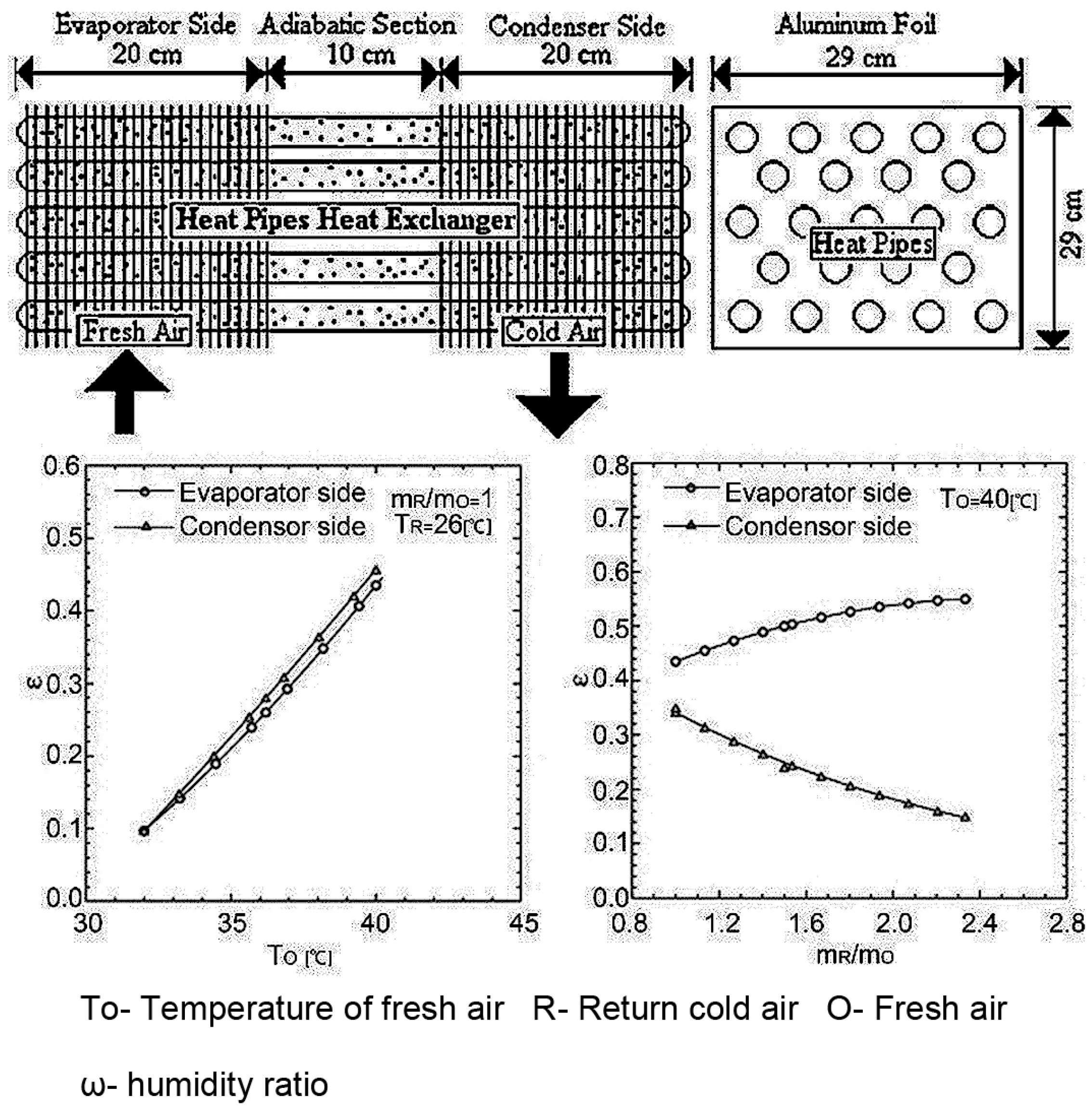
3.3. Heat Pipe
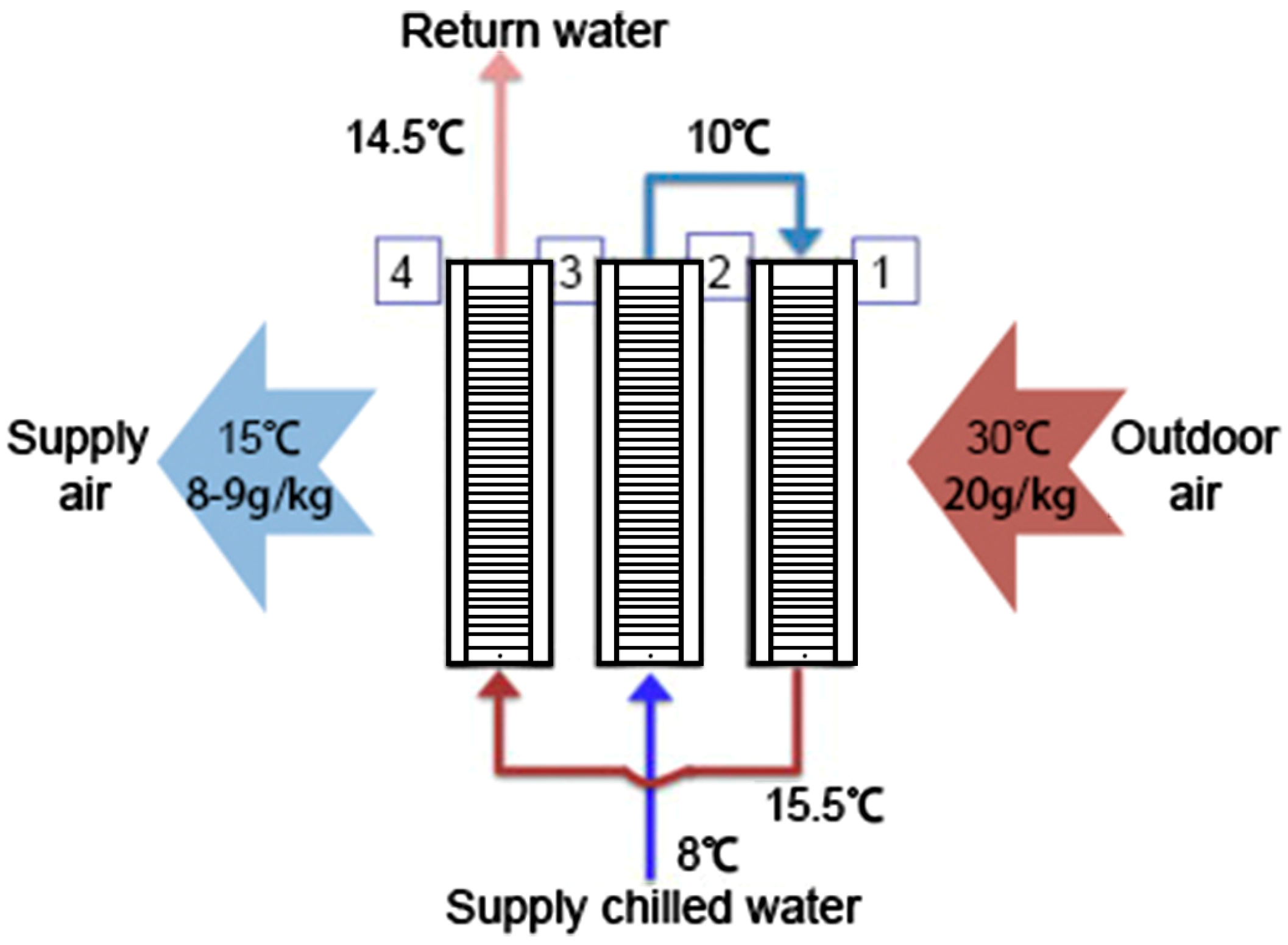
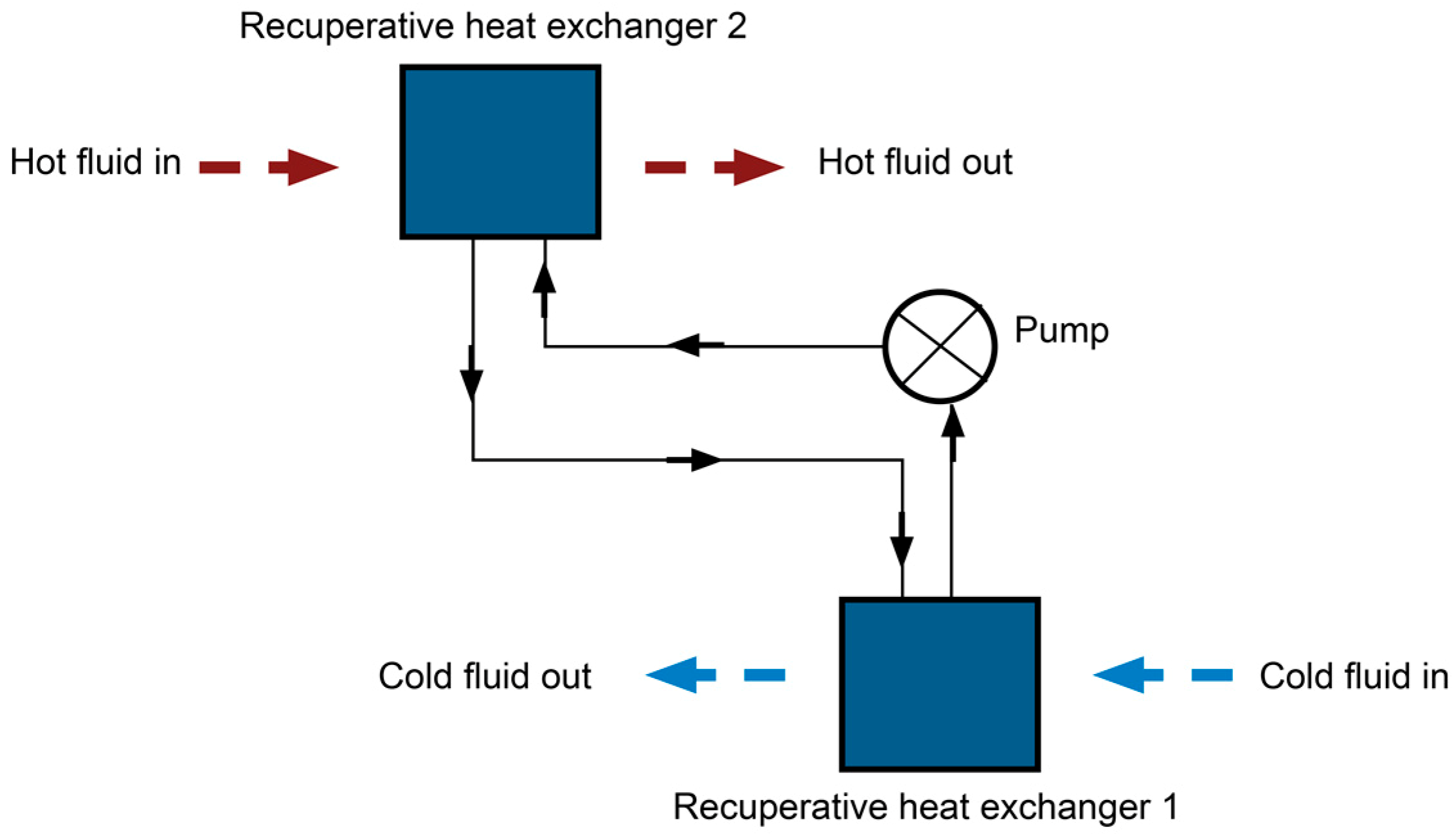
3.4. Run-Around
4. Applications of Heat Recovery in Energy-Saving Systems of Residential Buildings
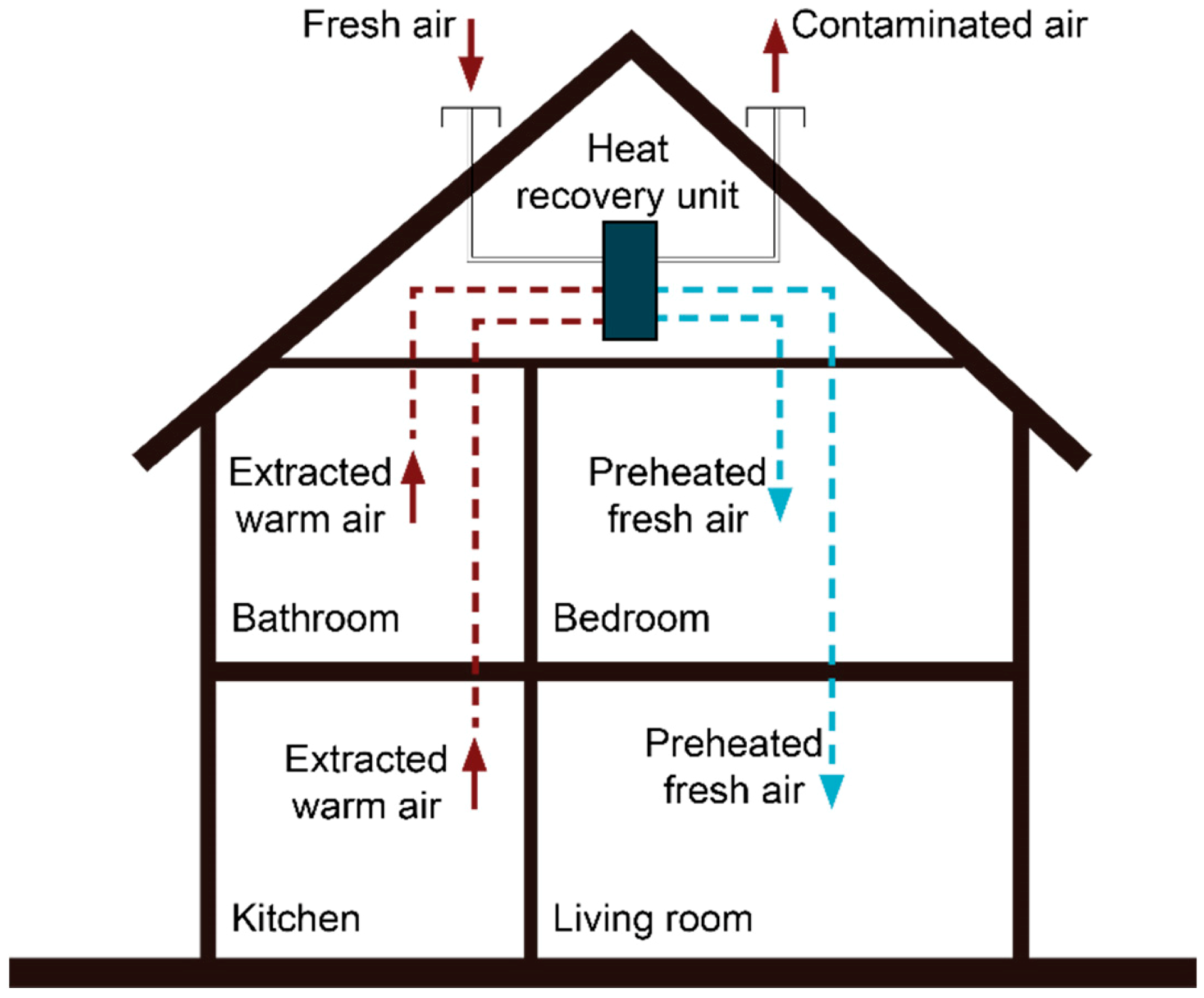
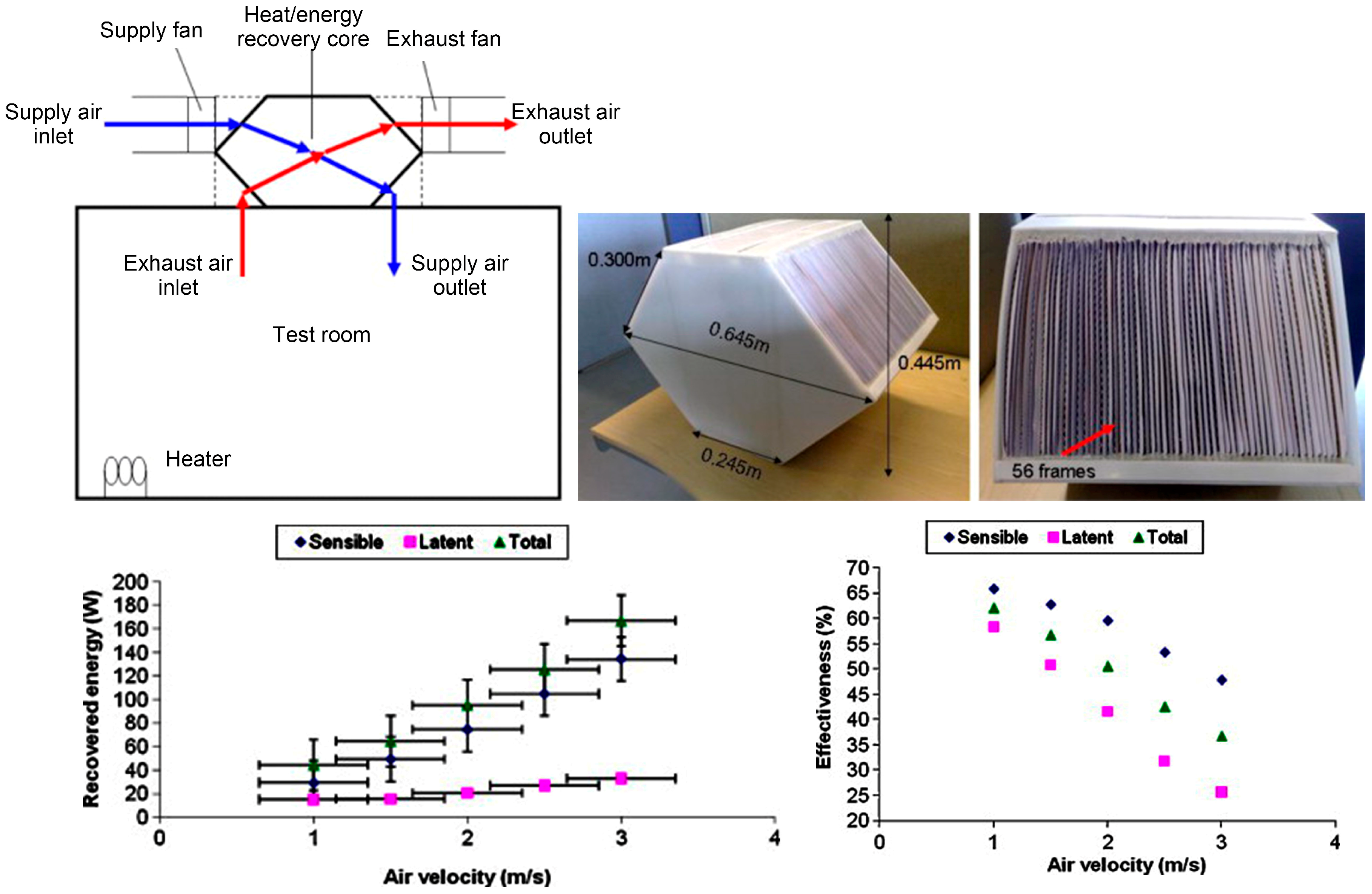
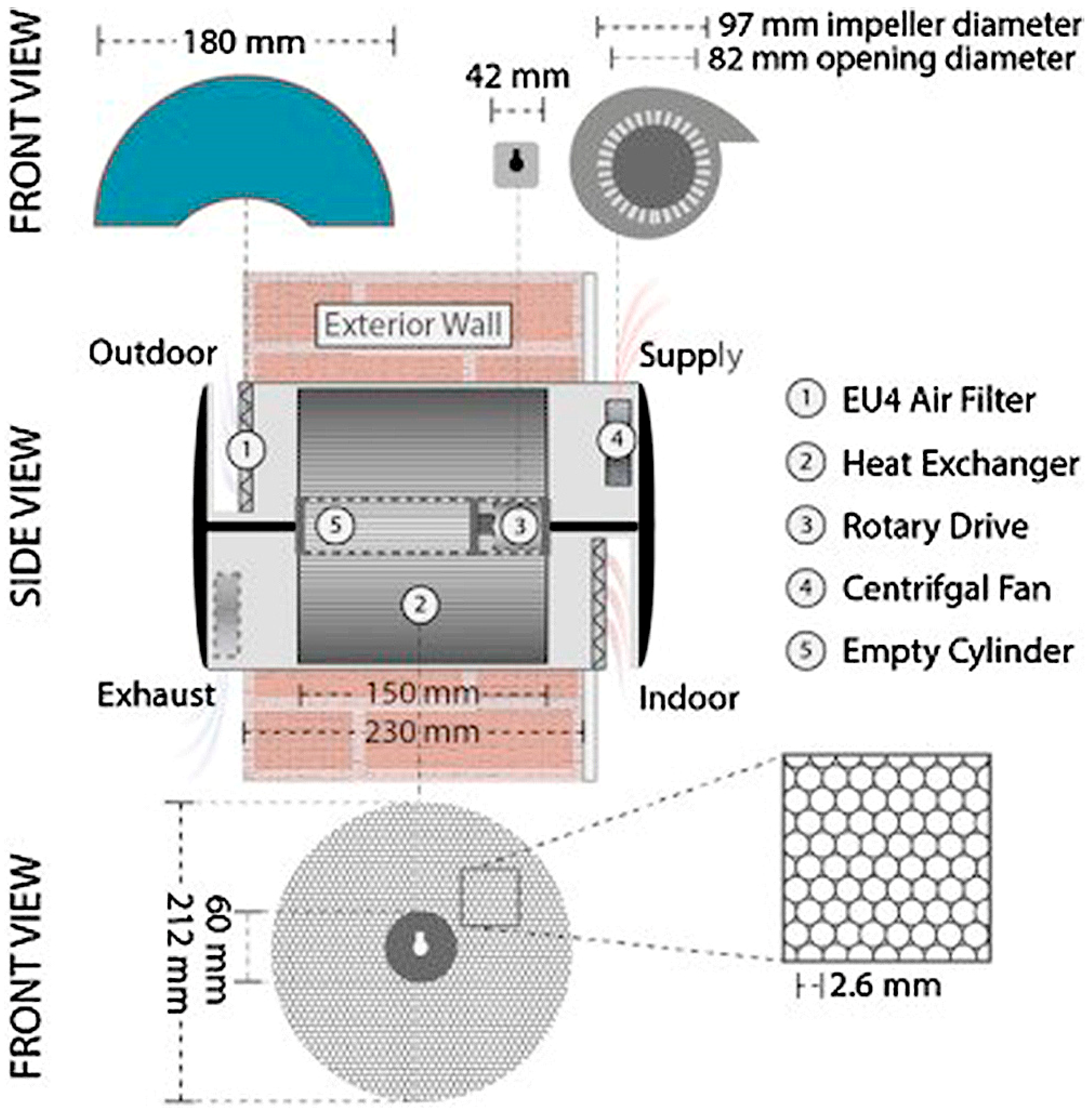
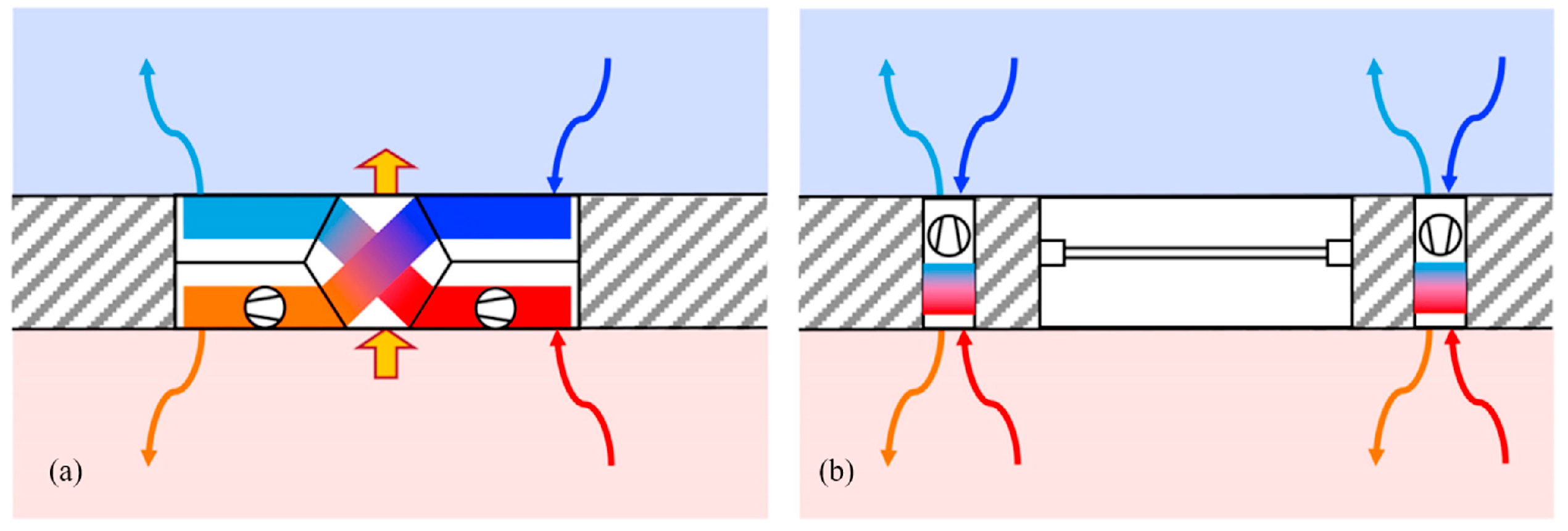
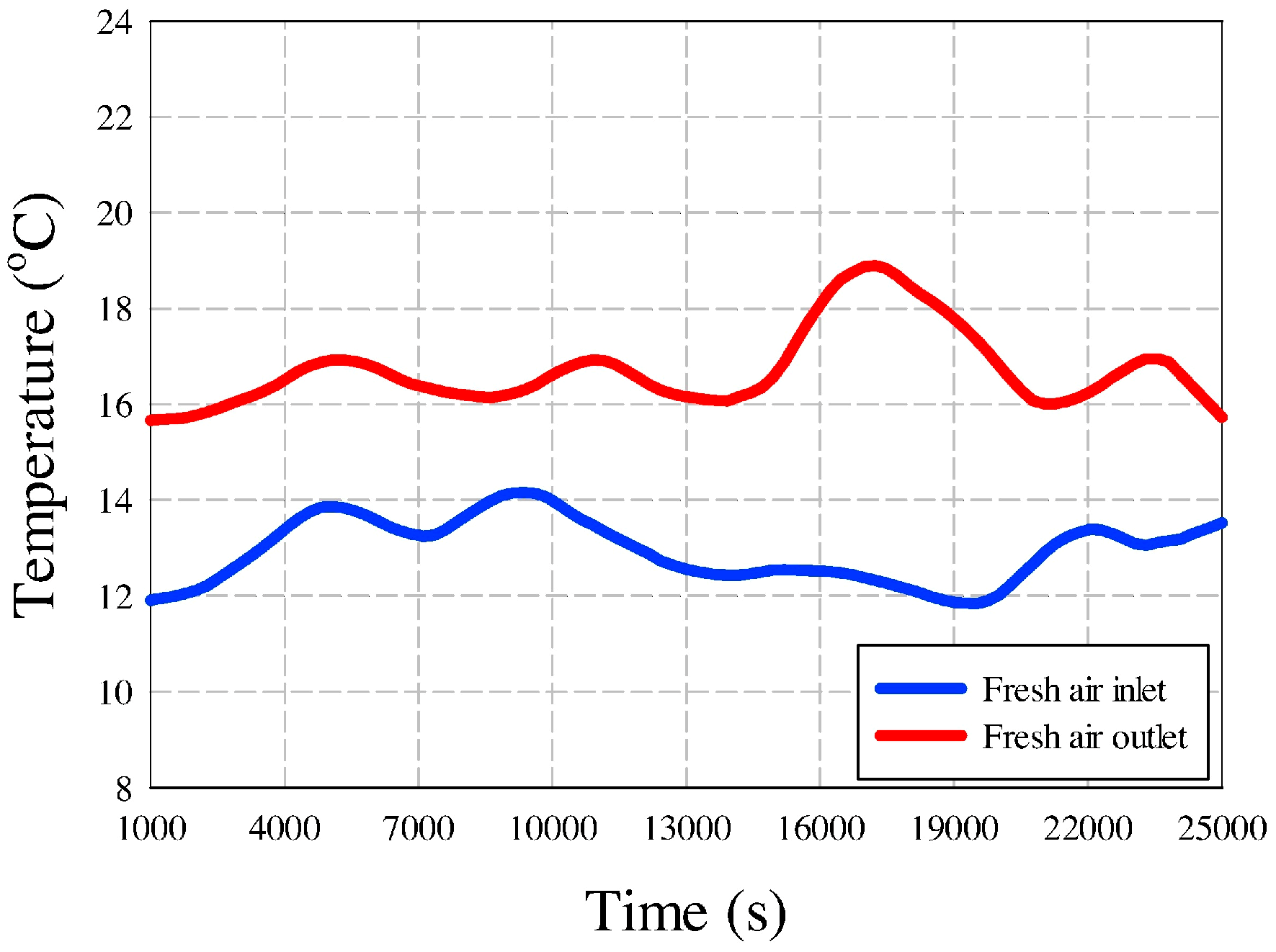
4.1. Heat-Recovery-Assisted Decentralized Ventilation System
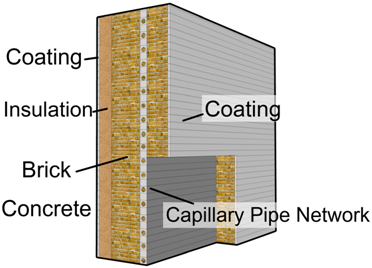
4.2. Heat Recovery Combined with Passive Systems for Building Components
- Can reach the desired airflow rate (8 L/s to 10 L/s per person) for wind tower combination system applications [54];
4.3. Heat Recovery in Dehumidification Systems
- Rotary desiccant wheels are always the better choice for adjusting the relative humidity of airflows [59]. These systems can achieve moisture removal rates of 1.7 g/kg~7 g/kg [60,61]. Rotary desiccant wheels find wide use in various climate conditions, mostly in humid and hot climates. However, more optimal models and verification are needed, including extensive cross-sectional area [62], airflow and rotation speed control [63], and lower pressure drop strategies [59];
- For fixed-plate heat exchangers, enthalpy heat recovery can improve frost resistance compared to fixed-plate sensible heat recovery, as well as better sensible and latent effectiveness and smaller space due to its more compact design compared to common cross-flow heat recovery system [64]. Fixed-plate enthalpy heat recovery enjoys a bright future in residential building applications as it helps to avoid cross contamination and to improve air quality with the dehumidification system. To achieve better thermal performance of enthalpy heat exchangers and more wide-ranging applications for different climate conditions, increasing transfer units or changing the properties of membrane materials chemically might be considered;
- Solid desiccant cooling technology is energy-saving and eco-friendly. Desiccant-coated heat recovery can transfer sensible and latent heat at the same time. It has been found that silica gel-coated heat recovery has better performance than polymer-coated heat recovery [65]. As the dehumidification and regeneration cycles greatly affect the dehumidification process, the best adjustable mode should be identified. However, it would be hard to repair or replace desiccant-coated heat recovery system, as this would bring about high costs to the system, making it unsuitable for small-scale residential building applications.
4.4. Heat Recovery with Thermoelectric Units
- Heat exchangers combined with TE modules have more potential to achieve better thermal performance under optimal condition simulations [71]. However, further study is needed to investigate their long-term operation in domestic building applications;
- These novel systems benefit from their compact size, low electric energy consumption, environmental-friendly device structure, and rather low cost [71], which makes them a sensible choice with which to deal with heat loss during building ventilation;
- Since TE modules create redundant heat during their operation, the application of energy storage materials might be considered to balance out cooling and heating needs [72].
5. Summary
- The combination of heat recovery with passive systems of building components can obviously reduce heat losses and inlet air flow rate. The combination of heat pipe and rotary wheel heat recovery with wind towers would be more compact than normal fixed-plate heat recovery [40]. However, unexpected noise from the DC motor for rotary wheel heat recovery could be an issue. Further real-scale testing is needed for complex building wall systems to improve their heat flux stability. In addition to wind towers and roofs, chimneys and transom could also be chosen to be combined with heat recovery technology.
- The effects of air pollution on decentralized ventilation with heat recovery systems lack further investigation. Future study is also needed to deal with bypass leakages during operation [44].
- Regarding heat recovery-assisted dehumidification systems, desiccant material should have low sensible heat effectiveness [63]. Meanwhile, for membrane heat recovery, increasing transfer units could be considered as a means to process better heat transfer.
- Heat recovery combined with TE modules should be developed due to its compact size, low electric energy consumption, environmental-friendly devices, and rather low cost. Further study is needed to investigate its long-term operation in domestic building applications.
- Heat pipe heat recovery systems enjoy more potential to be combined with other sustainable technologies such as thermoelectric modules and solar energy systems due to its advantages, including handy manufacturing and convenient maintenance, a lack of cross contamination, and greater thermal conductance [39,73].
Funding
Conflicts of Interest
References
- Pérez-Lombard, L.; Ortiz, J.; Pout, C. A review on buildings energy consumption information. Energy Build. 2008, 40, 394–398. [Google Scholar] [CrossRef]
- Tommerup, H.; Svendsen, S. Energy savings in Danish residential building stock. Energy Build. 2006, 38, 618–626. [Google Scholar] [CrossRef]
- Omer, A.M. Energy, environment and sustainable development. Renew. Sustain. Energy Rev. 2008, 12, 2265–2300. [Google Scholar] [CrossRef]
- Cox, P.M.; Betts, R.a.; Jones, C.D.; Spall, S.A.; Totterdell, I.J. Acceleration of global warming due to carbon-cycle feedbacks in a coupled climate model. Nature 2000, 408, 184–187. [Google Scholar] [CrossRef]
- Zhao, D.X.; He, B.J.; Johnson, C.; Mou, B. Social problems of green buildings: From the humanistic needs to social acceptance. Renew. Sustain. Energy Rev. 2015, 51, 1594–1609. [Google Scholar] [CrossRef]
- Cuce, P.M.; Riffat, S. A comprehensive review of heat recovery systems for building applications. Renew. Sustain. Energy Rev. 2015, 47, 665–682. [Google Scholar] [CrossRef]
- Mardiana-Idayu, A.; Riffat, S.B. Review on heat recovery technologies for building applications. Renew. Sustain. Energy Rev. 2012, 16, 1241–1255. [Google Scholar] [CrossRef]
- Waugaman, D.G.; Kini, A.; Kettleborough, C.F. A review of desiccant cooling systems. J. Energy Resour. Technol. 1993, 115, 1–8. [Google Scholar] [CrossRef]
- Nóbrega, C.E.L.; Brum, N.C.L. Modeling and simulation of heat and enthalpy recovery wheels. Energy 2009, 34, 2063–2068. [Google Scholar] [CrossRef]
- Tu, R.; Liu, X.H.; Jiang, Y. Performance comparison between enthalpy recovery wheels and dehumidification wheels. Int. J. Refrig. 2013, 36, 2308–2322. [Google Scholar] [CrossRef]
- Ruivo, C.R.; Angrisani, G.; Minichiello, F. Influence of the rotation speed on the effectiveness parameters of a desiccant wheel: An assessment using experimental data and manufacturer software. Renew. Energy 2015, 76, 484–493. [Google Scholar] [CrossRef]
- Jani, D.B.; Mishra, M.; Sahoo, P.K. Solid desiccant air conditioning - A state of the art review. Renew. Sustain. Energy Rev. 2016, 60, 1451–1469. [Google Scholar] [CrossRef]
- Dallaire, J.; Gosselin, L.; da Silva, A.K. Conceptual optimization of a rotary heat exchanger with a porous core. Int. J. Therm. Sci. 2010, 49, 454–462. [Google Scholar] [CrossRef]
- Golubovic, M.N.; Hettiarachchi, H.D.M.; Worek, W.M. Evaluation of rotary dehumidifier performance with and without heated purge. Int. Commun. Heat Mass Transf. 2007, 34, 785–795. [Google Scholar] [CrossRef]
- Sauer, H.J.; Howell, R.H. Promise and potential of air-to-air energy recovery systems. Int. J. Refrig. 1981, 4, 182–194. [Google Scholar] [CrossRef]
- Simonson, C. Heat and Energy Wheels. In Encyclopedia of Energy Engineering and Technology; CRC Press: Boca Raton, FL, USA, 2007; Volume 2, pp. 794–800. [Google Scholar]
- Besant, R.W.; Simonson, C.J. Air-To-Air Energy Recovery. ASHRAE J. 2000, 42, 31–42. [Google Scholar]
- Roulet, C.A.; Heidt, F.D.; Foradini, F.; Pibiri, M.C. Real heat recovery with air handling units. Energy Build. 2001, 33, 495–502. [Google Scholar] [CrossRef]
- Richard, S.; Frederick, G.H. Plate-Type Heat Exchanger. U.S. Patent US2,193,405A, 12 March 1940. [Google Scholar]
- Mardiana-Idayu, A.; Riffat, S.B. An experimental study on the performance of enthalpy recovery system for building applications. Energy Build. 2011, 43, 2533–2538. [Google Scholar] [CrossRef]
- Nasif, M.; Al-Waked, R.; Morrison, G.; Behnia, M. Membrane heat exchanger in HVAC energy recovery systems, systems energy analysis. Energy Build. 2010, 42, 1833–1840. [Google Scholar] [CrossRef]
- Sammeta, H.; Ponnusamy, K.; Majid, M.A.; Dheenathayalan, K. Effectiveness charts for counter flow corrugated plate heat exchanger. Simul. Model. Pract. Theory 2011, 19, 777–784. [Google Scholar] [CrossRef]
- Abu-Khader, M.M. Plate heat exchangers: Recent advances. Renew. Sustain. Energy Rev. 2012, 16, 1883–1891. [Google Scholar] [CrossRef]
- Khan, T.S.; Khan, M.S.; Chyu, M.C.; Ayub, Z.H. Experimental investigation of single phase convective heat transfer coefficient in a corrugated plate heat exchanger for multiple plate configurations. Appl. Therm. Eng. 2010, 30, 1058–1065. [Google Scholar] [CrossRef]
- Lu, Y.; Wang, Y.; Zhu, L.; Wang, Q. Enhanced performance of heat recovery ventilator by airflow-induced film vibration (HRV performance enhanced by FIV). Int. J. Therm. Sci. 2010, 49, 2037–2041. [Google Scholar] [CrossRef]
- Gherasim, I.; Taws, M.; Galanis, N.; Nguyen, C.T. Heat transfer and fluid flow in a plate heat exchanger part I. Experimental investigation. Int. J. Therm. Sci. 2011, 50, 1492–1498. [Google Scholar] [CrossRef]
- Feist, W. Cool, Temperate Climate; Passive House Institute: Skive, Denmark, 2019. [Google Scholar]
- TECHNICAL INFORMATION HCC 2 Home Ventilation Unit for Suspended Ceiling. Available online: https://www.dantherm.com/media/2351812/home-ventilation-hcc2-datasheet.pdf (accessed on 6 March 2019).
- Yau, Y.H.; Ahmadzadehtalatapeh, M. A review on the application of horizontal heat pipe heat exchangers in air conditioning systems in the tropics. Appl. Therm. Eng. 2010, 30, 77–84. [Google Scholar] [CrossRef]
- Kreith, F.; Manglik, R.M.; Bohn, M.S. Principles of Heat Transfer; Cengage learning: Boston, MA, USA, 2012; ISBN 1133714854. [Google Scholar]
- Chaudhry, H.N.; Hughes, B.R.; Ghani, S.A. A review of heat pipe systems for heat recovery and renewable energy applications. Renew. Sustain. Energy Rev. 2012, 16, 2249–2259. [Google Scholar] [CrossRef]
- Shao, L.; Riffat, S. Flow loss caused by heat pipes in natural ventilation stacks. Appl. Therm. Eng. 1997, 17, 393–399. [Google Scholar] [CrossRef]
- Gan, G.; Riffat, S.B. Naturally ventilated buildings with heat recovery: CFD simulation of thermal environment. Build. Serv. Eng. Res. Technol. 1997, 18, 67–75. [Google Scholar] [CrossRef]
- Srimuang, W.; Amatachaya, P. A review of the applications of heat pipe heat exchangers for heat recovery. Renew. Sustain. Energy Rev. 2012, 16, 4303–4315. [Google Scholar] [CrossRef]
- Ersöz, M.A.; Yildiz, A. Thermoeconomic analysis of thermosyphon heat pipes. Renew. Sustain. Energy Rev. 2016, 58, 666–673. [Google Scholar] [CrossRef]
- Abd El-Baky, M.A.; Mohamed, M.M. Heat pipe heat exchanger for heat recovery in air conditioning. Appl. Therm. Eng. 2007, 27, 795–801. [Google Scholar] [CrossRef]
- Yau, Y.H. Application of a heat pipe heat exchanger to dehumidification enhancement in a HVAC system for tropical climates-A baseline performance characteristics study. Int. J. Therm. Sci. 2007, 46, 164–171. [Google Scholar] [CrossRef]
- Lin, S.; Broadbent, J.; McGlen, R. Numerical study of heat pipe application in heat recovery systems. Appl. Therm. Eng. 2005, 25, 127–133. [Google Scholar] [CrossRef]
- Diao, Y.H.; Liang, L.; Kang, Y.M.; Zhao, Y.H.; Wang, Z.Y.; Zhu, T.T. Experimental study on the heat recovery characteristic of a heat exchanger based on a flat micro-heat pipe array for the ventilation of residential buildings. Energy Build. 2017, 152, 448–457. [Google Scholar] [CrossRef]
- Zeng, C.; Liu, S.; Shukla, A. A review on the air-to-air heat and mass exchanger technologies for building applications. Renew. Sustain. Energy Rev. 2017, 75, 753–774. [Google Scholar] [CrossRef]
- Vali, A.; Simonson, C.J.; Besant, R.W.; Mahmood, G. Numerical model and effectiveness correlations for a run-around heat recovery system with combined counter and cross flow exchangers. Int. J. Heat Mass Transf. 2009, 52, 5827–5840. [Google Scholar] [CrossRef]
- Dhital, P.; Besant, R.W.; Schoenau, G.J. Integrating Run-Around Heat Exchanger Systems into the Design of Large Office Buildings; American Society of Heating, Refrigerating and Air-Conditioning Engineers, Inc.: Atlanta, GA, USA, 1995. [Google Scholar]
- Manz, H.; Huber, H. Experimental and numerical study of a duct/heat exchanger unit for building ventilation. Energy Build. 2000, 32, 189–196. [Google Scholar] [CrossRef]
- Baldini, L.; Kim, M.K.; Leibundgut, H. Decentralized cooling and dehumidification with a 3 stage LowEx heat exchanger for free reheating. Energy Build. 2014, 76, 270–277. [Google Scholar] [CrossRef]
- Smith, K.M.; Svendsen, S. Development of a plastic rotary heat exchanger for room-based ventilation in existing apartments. Energy Build. 2015, 107, 1–10. [Google Scholar] [CrossRef]
- Coydon, F.; Herkel, S.; Kuber, T.; Pfafferott, J.; Himmelsbach, S. Energy performance of façade integrated decentralised ventilation systems. Energy Build. 2015, 107, 172–180. [Google Scholar] [CrossRef]
- Cuce, P.M.; Cuce, E. Toward cost-effective and energy-efficient heat recovery systems in buildings: Thermal performance monitoring. Energy 2017, 137, 1–8. [Google Scholar] [CrossRef]
- Sun, Z.; Zhang, Z.; Duan, C. The applicability of the wall implanted with heat pipes in winter of China. Energy Build. 2015, 104, 36–46. [Google Scholar] [CrossRef]
- Zhang, Z.; Sun, Z.; Duan, C. A new type of passive solar energy utilization technology - The wall implanted with heat pipes. Energy Build. 2014, 84, 111–116. [Google Scholar] [CrossRef]
- Niu, F.; Yu, Y. Location and optimization analysis of capillary tube network embedded in active tuning building wall. Energy 2016, 97, 36–45. [Google Scholar] [CrossRef]
- Li, A.; Xu, X.; Sun, Y. A study on pipe-embedded wall integrated with ground source-coupled heat exchanger for enhanced building energy efficiency in diverse climate regions. Energy Build. 2016, 121, 139–151. [Google Scholar] [CrossRef]
- Cuce, P.M.; Cuce, E.; Riffat, S. A novel roof type heat recovery panel for low-carbon buildings: An experimental investigation. Energy Build. 2016, 113, 133–138. [Google Scholar] [CrossRef]
- Calautit, J.K.; Hughes, B.R. A passive cooling wind catcher with heat pipe technology: CFD, wind tunnel and field-test analysis. Appl. Energy 2016, 162, 460–471. [Google Scholar] [CrossRef]
- Calautit, J.K.; Hughes, B.R.; O’Connor, D.; Shahzad, S.S. CFD and Wind Tunnel Study of the Performance of a Multi-Directional Wind Tower with Heat Transfer Devices. Energy Procedia 2015, 75, 1692–1697. [Google Scholar] [CrossRef]
- Calautit, J.K.; O’Connor, D.; Hughes, B.R. A natural ventilation wind tower with heat pipe heat recovery for cold climates. Renew. Energy 2016, 87, 1088–1104. [Google Scholar] [CrossRef]
- Mardiana, A.; Riffat, S.B.; Worall, M. Integrated heat recovery system with wind-catcher for building applications: Towards energy-efficient technologies. Mater. Process. Energy Commun. Curr. Res. Technol. Dev. 2013, 720–727. Available online: http://www.formatex.info/energymaterialsbook/book/720-727.pdf (accessed on 6 March 2019).
- Aflaki, A.; Mahyuddin, N.; Al-Cheikh Mahmoud, Z.; Baharum, M.R. A review on natural ventilation applications through building façade components and ventilation openings in tropical climates. Energy Build. 2015, 101, 153–162. [Google Scholar] [CrossRef]
- Kabeel, A.E. Adsorption-desorption operations of multilayer desiccant packed bed for dehumidification applications. Renew. Energy 2009, 34, 255–265. [Google Scholar] [CrossRef]
- O’Connor, D.; Calautit, J.K.; Hughes, B.R. A novel design of a desiccant rotary wheel for passive ventilation applications. Appl. Energy 2016, 179, 99–109. [Google Scholar] [CrossRef]
- Chen, C.H.; Hsu, C.Y.; Chen, C.C.; Chiang, Y.C.; Chen, S.L. Silica gel/polymer composite desiccant wheel combined with heat pump for air-conditioning systems. Energy 2016, 94, 87–99. [Google Scholar] [CrossRef]
- Tsujiguchi, T.; Osaka, Y.; Kodama, A. Feasibility study of simultaneous heating and dehumidification using an adsorbent desiccant wheel with humidity swing. Appl. Therm. Eng. 2017, 117, 437–442. [Google Scholar] [CrossRef]
- Zhou, X.; Goldsworthy, M.; Sproul, A. Performance investigation of an internally cooled desiccant wheel. Appl. Energy 2018, 224, 382–397. [Google Scholar] [CrossRef]
- Tu, R.; Liu, X.H.; Jiang, Y. Performance analysis of a two-stage desiccant cooling system. Appl. Energy 2014, 113, 1562–1574. [Google Scholar] [CrossRef]
- Liu, P.; Justo Alonso, M.; Mathisen, H.M.; Simonson, C. Performance of a quasi-counter-flow air-to-air membrane energy exchanger in cold climates. Energy Build. 2016, 119, 129–142. [Google Scholar] [CrossRef]
- Ge, T.S.; Dai, Y.J.; Wang, R.Z.; Peng, Z.Z. Experimental comparison and analysis on silica gel and polymer coated fin-tube heat exchangers. Energy 2010, 35, 2893–2900. [Google Scholar] [CrossRef]
- Chen, C.H.; Huang, P.C.; Yang, T.H.; Chiang, Y.C.; Chen, S.L. Polymer/alumina composite desiccant combined with periodic total heat exchangers for air-conditioning systems. Int. J. Refrig. 2016, 67, 10–21. [Google Scholar] [CrossRef]
- Engarnevis, A.; Huizing, R.; Green, S.; Rogak, S. Heat and mass transfer modeling in enthalpy exchangers using asymmetric composite membranes. J. Memb. Sci. 2018, 556, 248–262. [Google Scholar] [CrossRef]
- Ge, T.S.; Dai, Y.J.; Wang, R.Z.; Li, Y. Feasible study of a self-cooled solid desiccant cooling system based on desiccant coated heat exchanger. Appl. Therm. Eng. 2013, 58, 281–290. [Google Scholar] [CrossRef]
- Zhao, Y.; Ge, T.S.; Dai, Y.J.; Wang, R.Z. Experimental investigation on a desiccant dehumidification unit using fin-tube heat exchanger with silica gel coating. Appl. Therm. Eng. 2014, 63, 52–58. [Google Scholar] [CrossRef]
- Zhao, Y.; Dai, Y.J.; Ge, T.S.; Wang, H.H.; Wang, R.Z. A high performance desiccant dehumidification unit using solid desiccant coated heat exchanger with heat recovery. Energy Build. 2016, 116, 583–592. [Google Scholar] [CrossRef]
- Cai, Y.; Mei, S.-J.; Liu, D.; Zhao, F.-Y.; Wang, H.-Q. Thermoelectric heat recovery units applied in the energy harvest built ventilation: Parametric investigation and performance optimization. Energy Convers. Manag. 2018, 171, 1163–1176. [Google Scholar] [CrossRef]
- Liu, Z.; Li, W.; Zhang, L.; Wu, Z.; Luo, Y. Experimental study and performance analysis of solar-driven exhaust air thermoelectric heat pump recovery system. Energy Build. 2019, 186, 46–55. [Google Scholar] [CrossRef]
- Lv, S.; He, W.; Jiang, Q.; Hu, Z.; Liu, X.; Chen, H. Study of different heat exchange technologies in fl uence on the performance of thermoelectric generators. Energy Convers. Manag. 2018, 156, 167–177. [Google Scholar]
- Remeli, M.F.; Verojporn, K.; Singh, B.; Kiatbodin, L.; Date, A. Passive Heat Recovery System using Combination of Heat Pipe and Thermoelectric Generator. Energy Procedia 2015, 75, 608–614. [Google Scholar] [CrossRef]
- Ioffe, A.F.; Stil’Bans, L.S.; Iordanishvili, E.K.; Stavitskaya, T.S.; Gelbtuch, A.; Vineyard, G. Semiconductor thermoelements and thermoelectric cooling. Phys. Today 1959, 12, 42. [Google Scholar] [CrossRef]
- Fairuz, M.; Date, A.; Orr, B.; Chet, L.; Singh, B.; Dalila, N.; Affandi, N.; Akbarzadeh, A. Experimental investigation of combined heat recovery and power generation using a heat pipe assisted thermoelectric generator system. Energy Convers. Manag. 2016, 111, 147–157. [Google Scholar]
- Emre, M.; Dincer, I. Performance assessment of a thermoelectric generator applied to exhaust waste heat recovery. Appl. Therm. Eng. 2017, 120, 694–707. [Google Scholar]
- Orr, B.; Akbarzadeh, A.; Lappas, P. An exhaust heat recovery system utilising thermoelectric generators and heat pipes. Appl. Therm. Eng. 2017, 126, 1185–1190. [Google Scholar] [CrossRef]
- Cao, Q.; Luan, W.; Wang, T. Performance enhancement of heat pipes assisted thermoelectric generator for automobile exhaust heat recovery. Appl. Therm. Eng. 2018, 130, 1472–1479. [Google Scholar] [CrossRef]




| Types of Heat Recovery | Rotary Wheel | Fixed-Plate | Heat Pipe | Run-Around |
|---|---|---|---|---|
| Main airflow arrangements | Counter flow, parallel flow | Cross flow, counter flow, parallel flow | Counter flow, parallel flow | N/A |
| Typical efficiency | Above 80% | 50~80% | 45~55% | 45~65% |
| Air speed (m/s) | 2.5~5 | 0.5~5 | 2~4 | 1.5~3 |
| Air pressure (Pa) | 100~170 | 25~370 | 100~500 | 100~500 |
| Temperature range (°C) | −60~800 | −60~800 | −40~35 | −45~500 |
| Advantages [7] | High efficiency, compact equipment, potential to recover sensible and latent heat. | Compact, relatively high heat transfer coefficient, no cross contamination, easy maintenance, can be coupled with counter-current flow which enables the production of closed-temperature differences, capable of recovering sensible and latent heat. | Fixed components, no extra power supply, high reliability, separate air duct, compact, suitable for naturally ventilated building, fully reversible, easy maintenance but only capable of recovering sensible heat. | Air ducts can be located side by side, ducts can be physically separated, no cross contamination, only capable of recovering sensible heat. |
| Building Component | Images | Research Methodology | Key Features | Outcomes | Economic Analysis | Reference |
|---|---|---|---|---|---|---|
| Building wall | 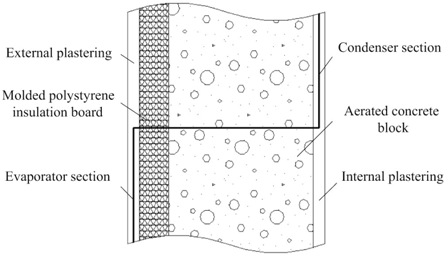 | Experimental investigation with 1720 mm × 1720 mm wall implanted with heat pipes (WIHP) and theoretical analysis | A new type of passive solar utilization technology; WIHP; different direction facing wall according to the located regions. | Application of the integration could reduce heat loss by more than 14.47% in winter. | NA | [48,49] |
 | MATLAB based simulation | Multilayer wall with capillary pipe network; significantly reduces building load; three locations for heat pipes including external, middle, and internal. | The wall could help save power energy from 2 W to 39 W with variation in outdoor air temperature depending on the season. | NA | [50] | |
 | TRNSYS software simulation | A pipe-embedded wall integrated with ground source-coupled heat exchanger; multi-criteria system design. | Using the same number of ground source-coupled heat exchangers (GDHE) the system could achieve over 30% energy savings in hot summer and cold winter climates. | NA | [51] | |
| Roof | 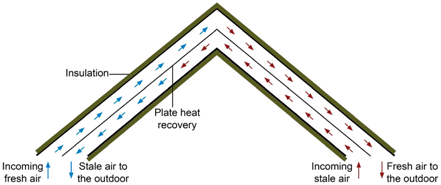 | Experimental investigation with a real-scale test house | A plate-type heat exchanger parallel-flow arrangement under roof application; recovers waste heat; preheats fresh air using stale air. | Heat recovery efficiency was found to be around 89%. The coefficient of its thermal performance is 4.5. | Relatively low cost of polycarbonate sheet-based roof type heat recovery panel, about €14.31/m2. | [52] |
| Wind tower | 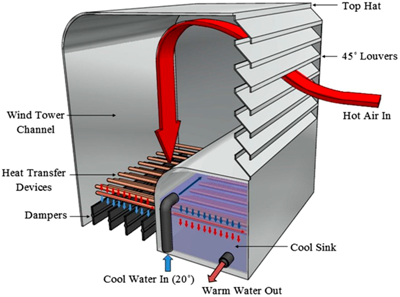 | CFD software simulation | A cooling wind tower incorporating heat pipe technology and cool sink; passive cooling system. | System can cool down air flow up to 12 °C, and at lower weed speeds (1–2 m/s), it can reduce the temperature significantly. | NA | [53,54] |
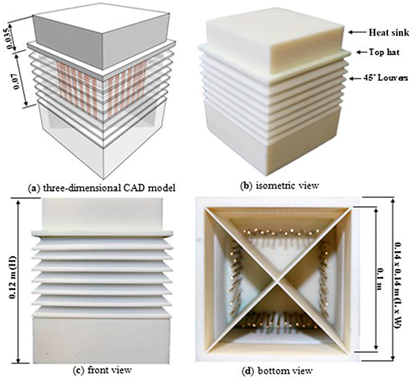 | CFD software simulation and experimental investigation (1:10 scale experimental platform) | Heat pipes integrated into a multi-directional wind tower; recovers exhaust heat. | The application of the system can heat the supply air by up to 4.5 °C. In addition, the heat pipes can slow down the air supply rates by up to 8–17%. | NA | [55] | |
 (Redrawn by authors) (Redrawn by authors) | Experimental investigation using a large-scale chamber (3 m × 3 m × 5.6 m) with a wind catcher unit (0.7 m× 3.2 m × 0.45 m) | Integrated system with heat recovery and wind catcher; helps to assist air flow. | The combination system can cool down the inlet air temperature up to 0.9–1.8 °C. The heat exchange rate of the unit varies from 50% to 70% with different air flow velocities, which range from 1.2 to 3.1 m/s. | NA | [56] |
| Type | Images | Key Features | Research Methodology | Results | Climate Conditions | Reference |
|---|---|---|---|---|---|---|
| Rotary desiccant wheel |  | Rotary wheel with polymer composite desiccant, sandwiched between the condenser and evaporator section of a heat pump with air channels | Laboratory experiment | Moisture removal capacity can achieve 7 g/kg. The desiccant wheel-heat pump system can decrease relative humidity from 59% to 45% and cool down the air from 32 °C to 29 °C during testing. | Humid subtropical climate | [60] |
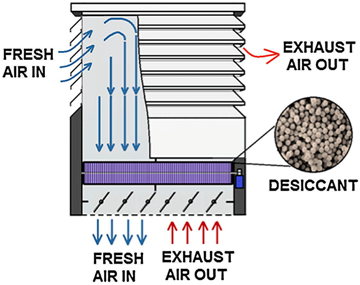 | Rotary desiccant wheel with passive ventilation, coated in silica gel particles | Laboratory experiment and CFD simulation | The model can achieve 55% of airflow dehumidification with lower regeneration air temperature and a lower pressure drop. | Temperate marine climate | [59] | |
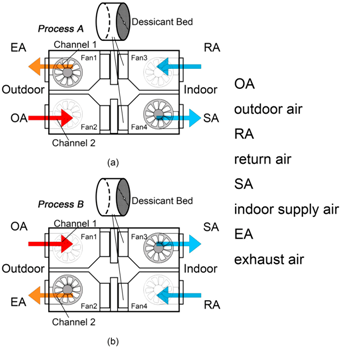 (Redrawn by authors) (Redrawn by authors) | Periodic total rotary heat recovery with polymer/alumina composite desiccant | Laboratory experiment | Silica gel and active alumina desiccant material can achieve high moisture removal, 2.1 g/kg and 1.7 g/kg, at regenerating temperatures of 40 °C and 25 °C, respectively. | Humid subtropical climate | [66] | |
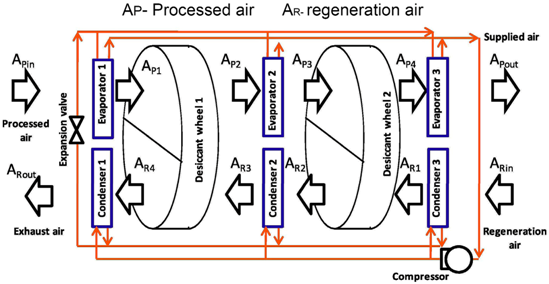 | Heat pump-driven two-stage desiccant wheel system | Mathematical model and laboratory experiment | The COP was calculated as 5.5 under summer conditions with a supply air humidity ratio of 10 g/kg. | Humid continental climate | [63] | |
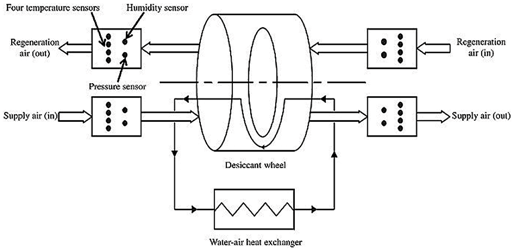 | Internally cooled 64% desiccant-coated wheel with heat exchanger | Laboratory experiment | The overall cooling capacity can increase by 64% and the EER by 21% with this model compared to those using an adiabatic desiccant wheel. | Humid subtropical climate | [62] | |
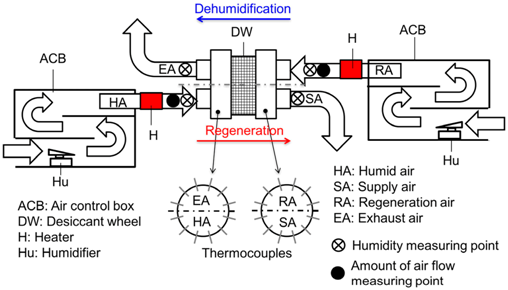 | Desiccant wheel using humidity swing adsorption (HSA) | Theoretical study and laboratory experiment | The unit can achieve a temperature rise of up to 9.4 °C with an adsorption-to-regeneration air ratio of 1:2 and 8 rph rotary speed. | Humid continental climate | [61] | |
| Fixed-plate | 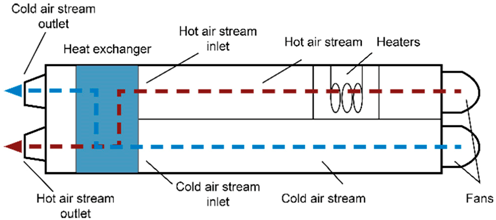 | Membrane heat exchanger using Kraft paper to transfer heat and moisture, assisting heating, ventilation, and air conditioning (HVAC) system. | Laboratory experiment and HPRate software analysis | The unit can help save up to 8% of annual energy consumption in hot and humid climates. | Humid subtropical climate | [21] |
 | Novel quasi-counter-flow membrane energy exchanger | Theoretical calculation and laboratory experiment | Under cold conditions, the unit can obtain 88.5–94.5% sensible effectiveness and 73.7–83.5% latent effectiveness with supply air temperature ranging from −4 to 10 °C. | Cold climate | [64] | |
 | Heat exchanger with asymmetric composite membranes | Mathematical model (outdoor relative humidity range 45%−90%) | For cooling, increasing outdoor relative humidity will cause decreased sensible heat transfer efficiency and increased latent heat transfer efficiency. For heating with outdoor relative humidity below 60%, a higher relative humidity (RH) rate will cause a slightly increased latent effectiveness while also producing a rather stable and sensible effectiveness. | NA | [67] | |
| Desiccant-coated heat exchanger |  | Desiccant-coated heat exchanger, desiccant cooling system | Mathematical model | Under simulated conditions, the lowest humidity ratio of supply air decreases from about 9.5 g/kg to 8 g/kg. The cooling capacity of the model increased by 30% compared with other desiccant-coated heat recovery systems without self-cooled recovery. | Humid subtropical climate | [68] |
 | Fin-tube heat exchanger with silica gel coating | Outdoor experiment investigation | The average moisture removal rate is 5.3 g/kg and the average thermal COP was calculated as being 0.34. | Humid subtropical climate | [69] | |
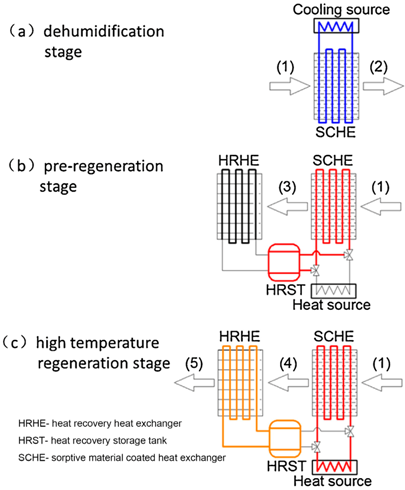 | Solid desiccant-coated heat exchanger | Outdoor experiment investigation | The average moisture removal rate was 8 g/kg and the thermal COP was calculated as being 1.2. | Humid subtropical climate | [70] |
| Type | Images | Extent of Study | Research Methodology/Software | Outcomes | Economic Analysis | Suggestions | Reference |
|---|---|---|---|---|---|---|---|
| Fixed-plate |  | Theoretical analysis | Mathematical model including cost-performance model | By controlling operating variables, including thermoelectric numbers, filling factors, length of P-N legs, couple numbers of thermoelectric cooler (TEC), and overall thermal conductance, separately, the COP of the system varies from 2.18 to 4.37. | Under the optimal parametric conditions, the operating cost of the heat exchanger with thermoelectric module (HE-TE) system is lower than 0.02 $/kWh. | Further study is needed to test the feasibility of cost-performance conditions when multiple TECs are applied. | [71] |
 | Experimental investigation | Establish an experimental platform | This novel system can achieve overall coefficients of cooling and heating of about 50.6% and 57.9%, respectively, under optimal operating current and voltage. | NA | Phase change material (PCM) could be considered as the thermal energy storage of the solar-driven exhaust air thermoelectric heat pump recovery (SDEATHP) system to balance the cooling or heating needs of fresh air handling. | [72] | |
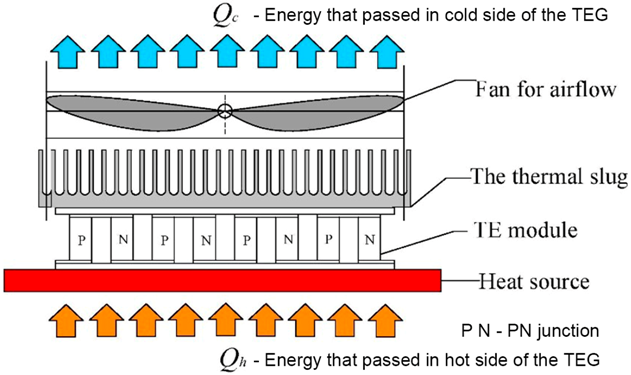 | Experimental investigation | Laboratory conditions and MATLAB mathematic model | The finned heat sink with thermoelectric units has relatively poor output performance compared to the heat pipe with TE units. | Heat exchanger cost is $15.12/(W/K). | [73] | ||
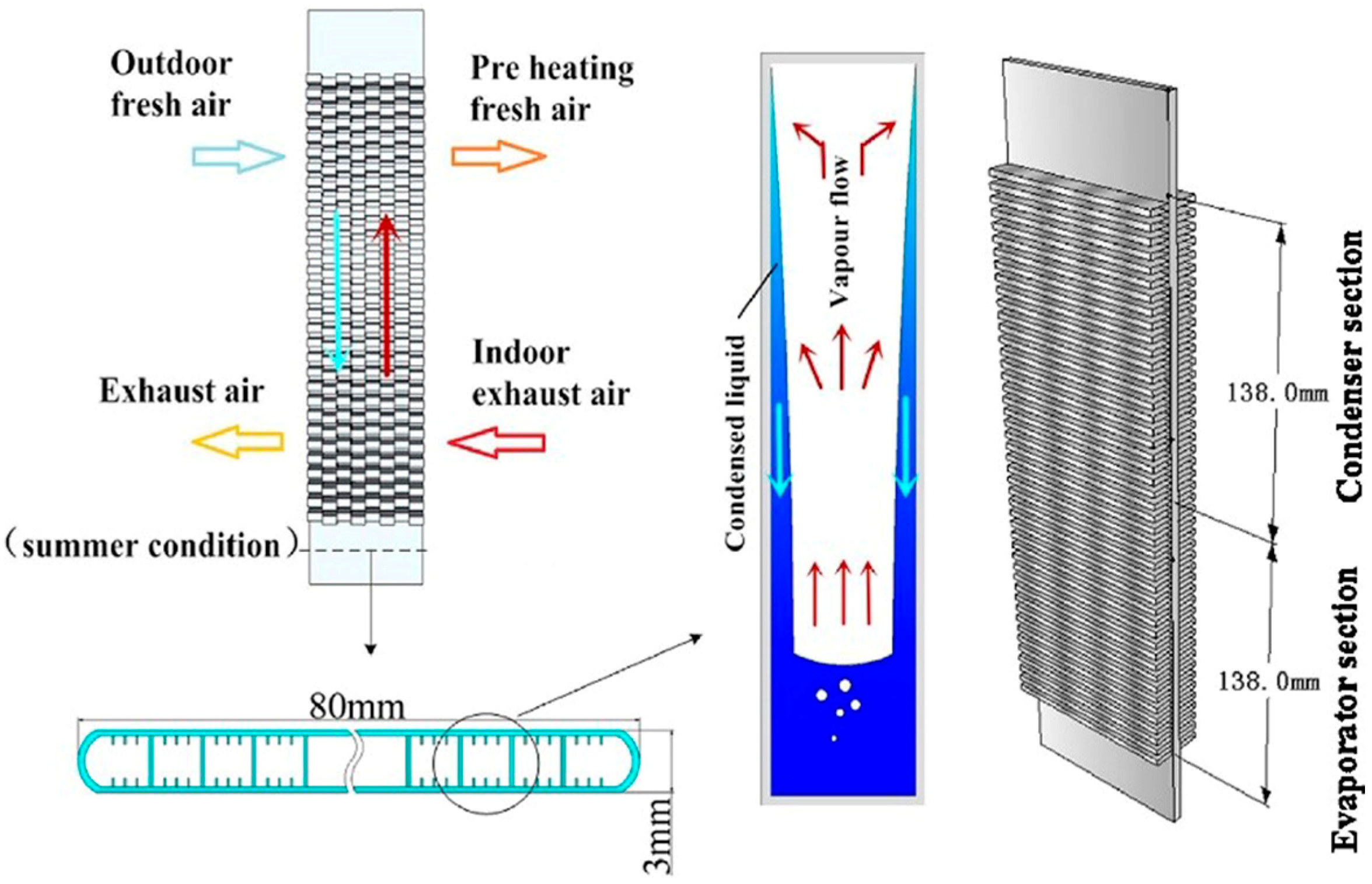
| Heat pipe |  | Theoretical analysis and experimental investigation | Theoretical model using effectiveness-NTU (number of transfer unit) method and laboratory scale with two separate airducts (170 mm × 160 mm) | With increasing air flow velocity, the heat recovery efficiency increased from 67.9% to 72.4%. | N/A | [74] | |
 | Experimental investigation | Laboratory condition and mathematic model | The heat pipe combined with the thermoelectric unit cooling method shows better output performance compared to that of the heat sink. | Heat exchanger cost is $10.67/(W/K). | [73] |
© 2019 by the authors. Licensee MDPI, Basel, Switzerland. This article is an open access article distributed under the terms and conditions of the Creative Commons Attribution (CC BY) license (http://creativecommons.org/licenses/by/4.0/).
Share and Cite
Xu, Q.; Riffat, S.; Zhang, S. Review of Heat Recovery Technologies for Building Applications. Energies 2019, 12, 1285. https://doi.org/10.3390/en12071285
Xu Q, Riffat S, Zhang S. Review of Heat Recovery Technologies for Building Applications. Energies. 2019; 12(7):1285. https://doi.org/10.3390/en12071285
Chicago/Turabian StyleXu, Qi, Saffa Riffat, and Shihao Zhang. 2019. "Review of Heat Recovery Technologies for Building Applications" Energies 12, no. 7: 1285. https://doi.org/10.3390/en12071285
APA StyleXu, Q., Riffat, S., & Zhang, S. (2019). Review of Heat Recovery Technologies for Building Applications. Energies, 12(7), 1285. https://doi.org/10.3390/en12071285