Article

Energy Storage Scheduling in Distribution Systems Considering Wind and Photovoltaic Generation Uncertainties


by
Iver Bakken Sperstad
1,* and
Magnus Korpås
2
1
SINTEF Energy Research, P.O. Box 4761 Torgarden, NO-7465 Trondheim, Norway
2
Department of Electric Power Engineering, NTNU—Norwegian University of Science and Technology, NO-7491 Trondheim, Norway
*
Author to whom correspondence should be addressed.
Energies 2019, 12(7), 1231; https://doi.org/10.3390/en12071231
Submission received: 15 February 2019 / Revised: 13 March 2019 / Accepted: 25 March 2019 / Published: 30 March 2019
(This article belongs to the Special Issue Modelling and Analysis of Distributed Energy Storage)

Abstract

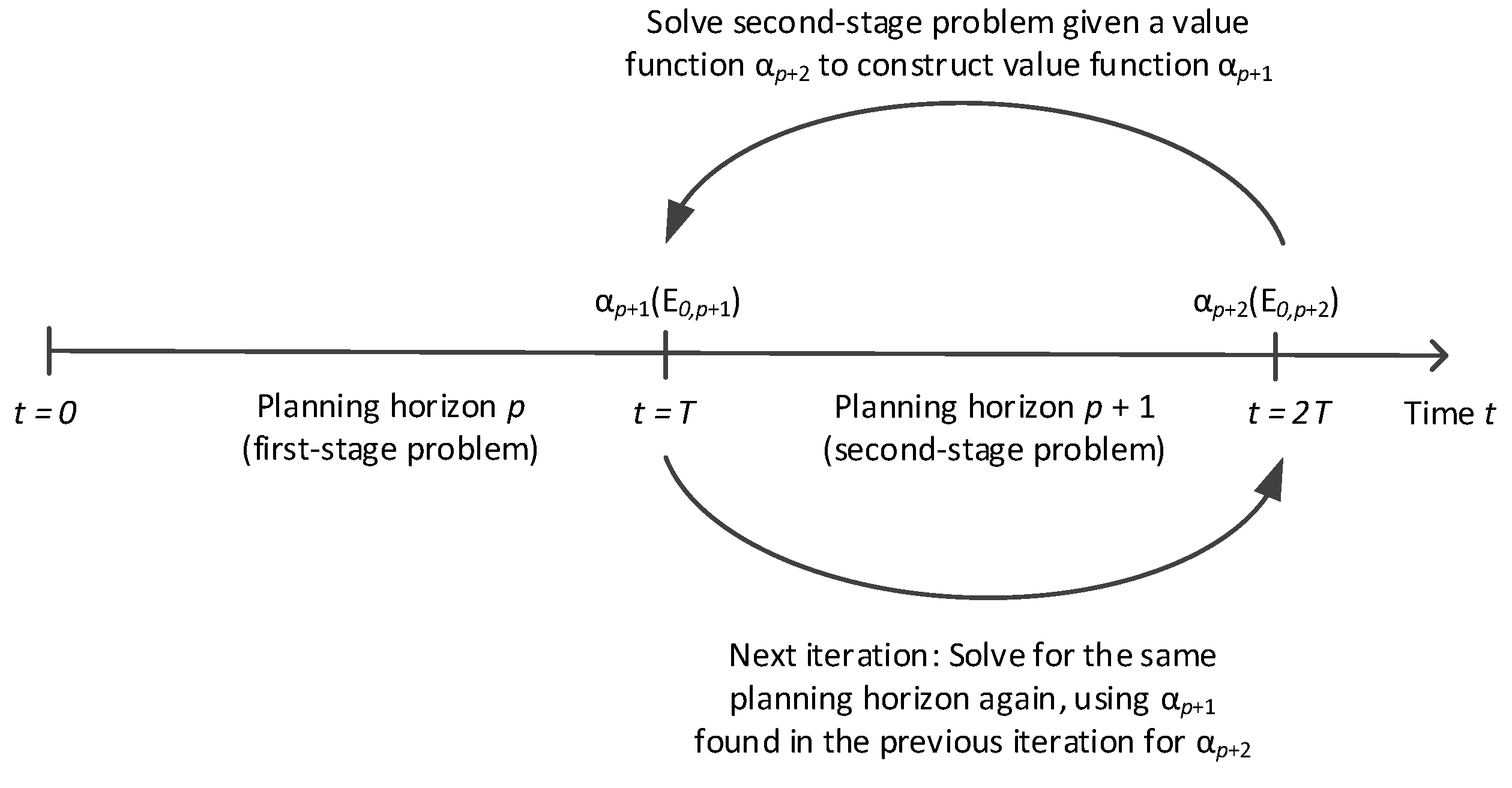
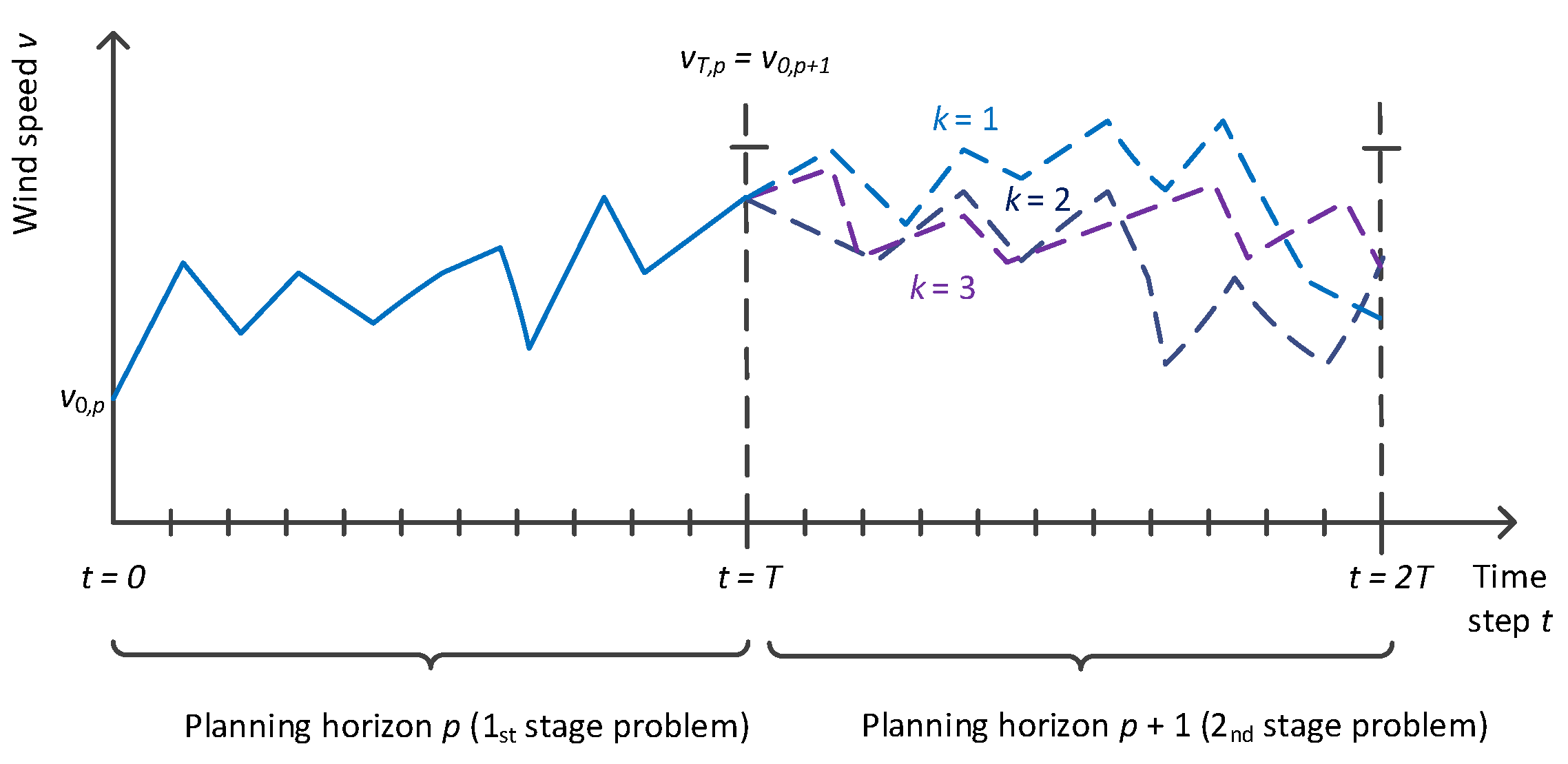
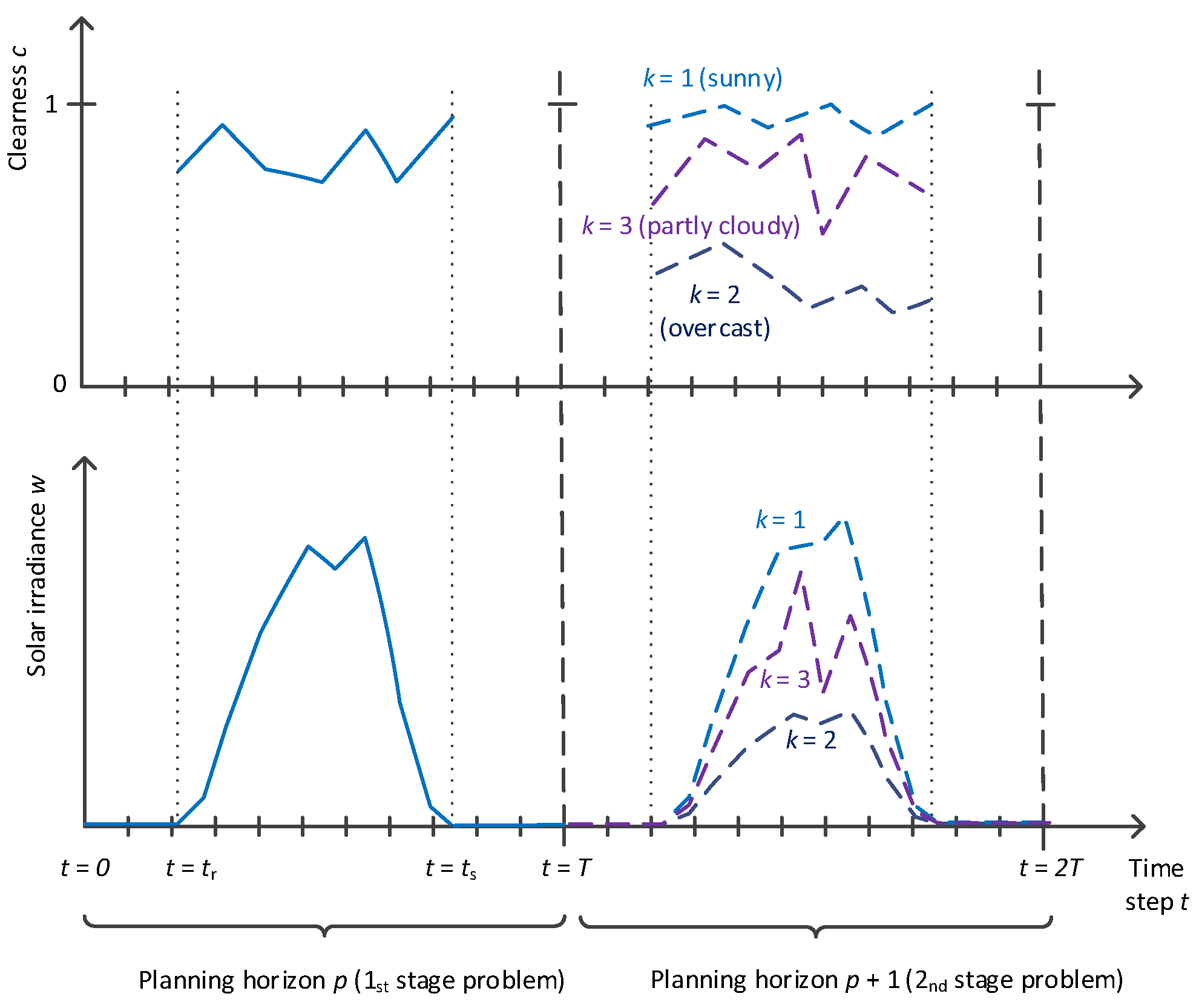
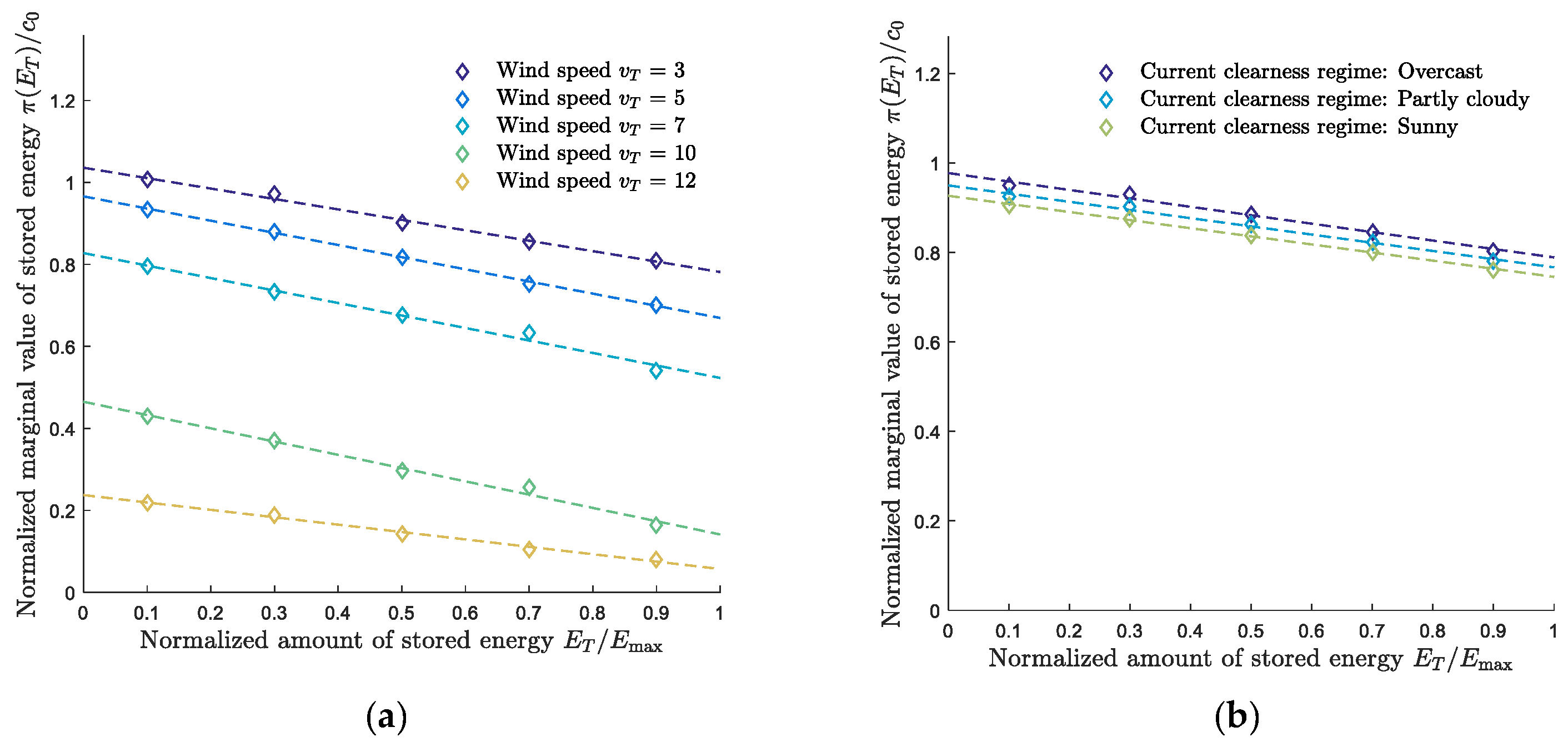
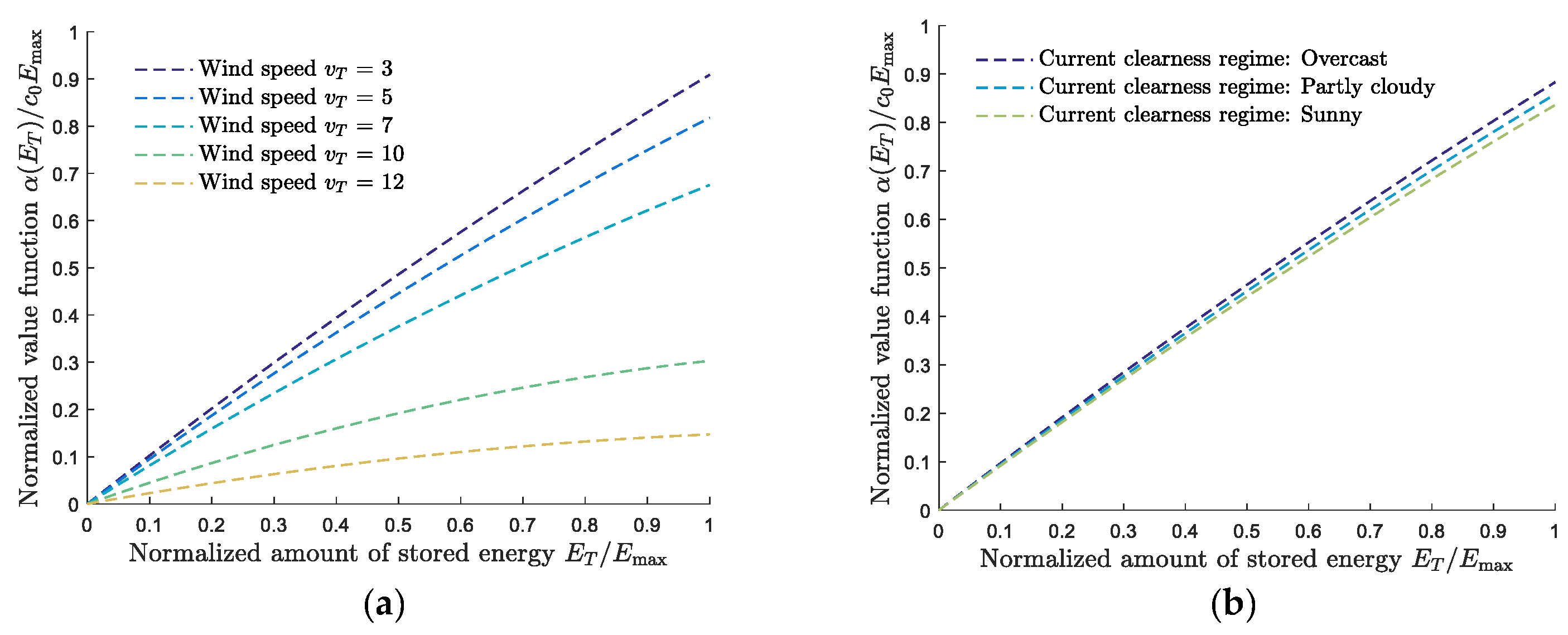
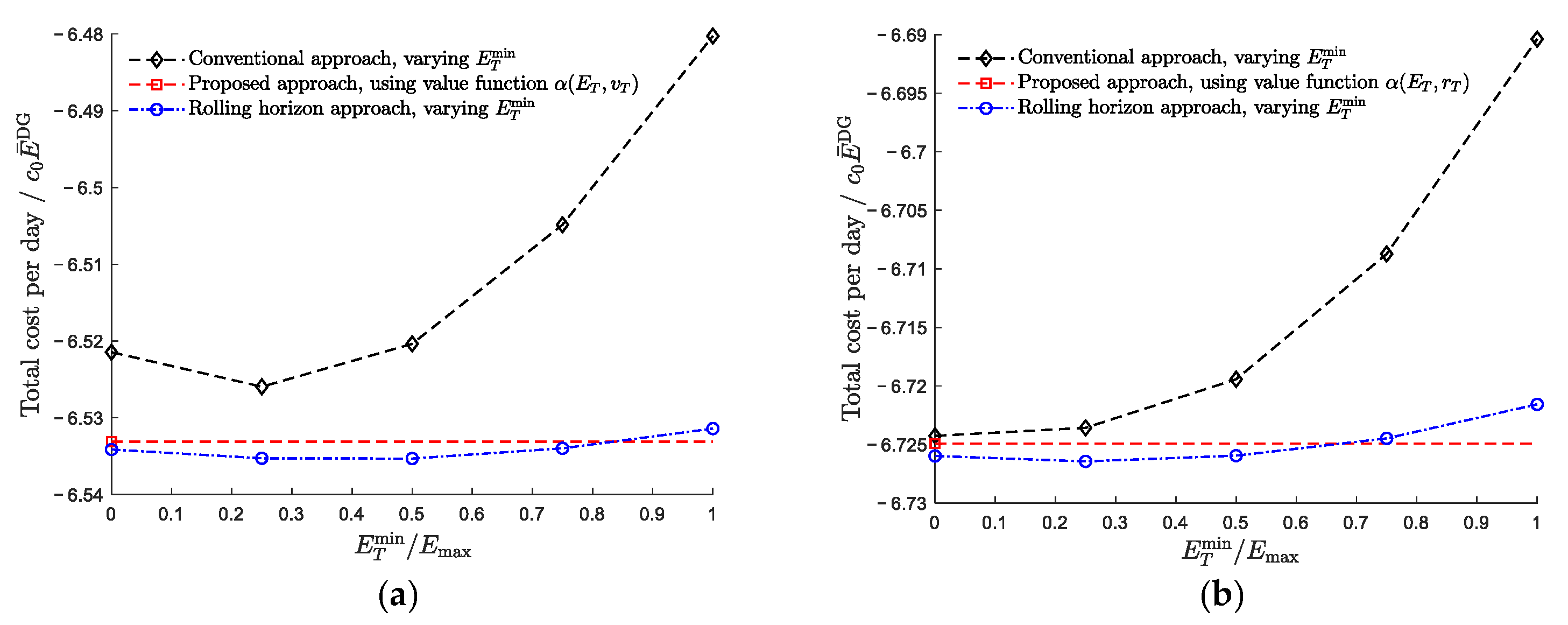
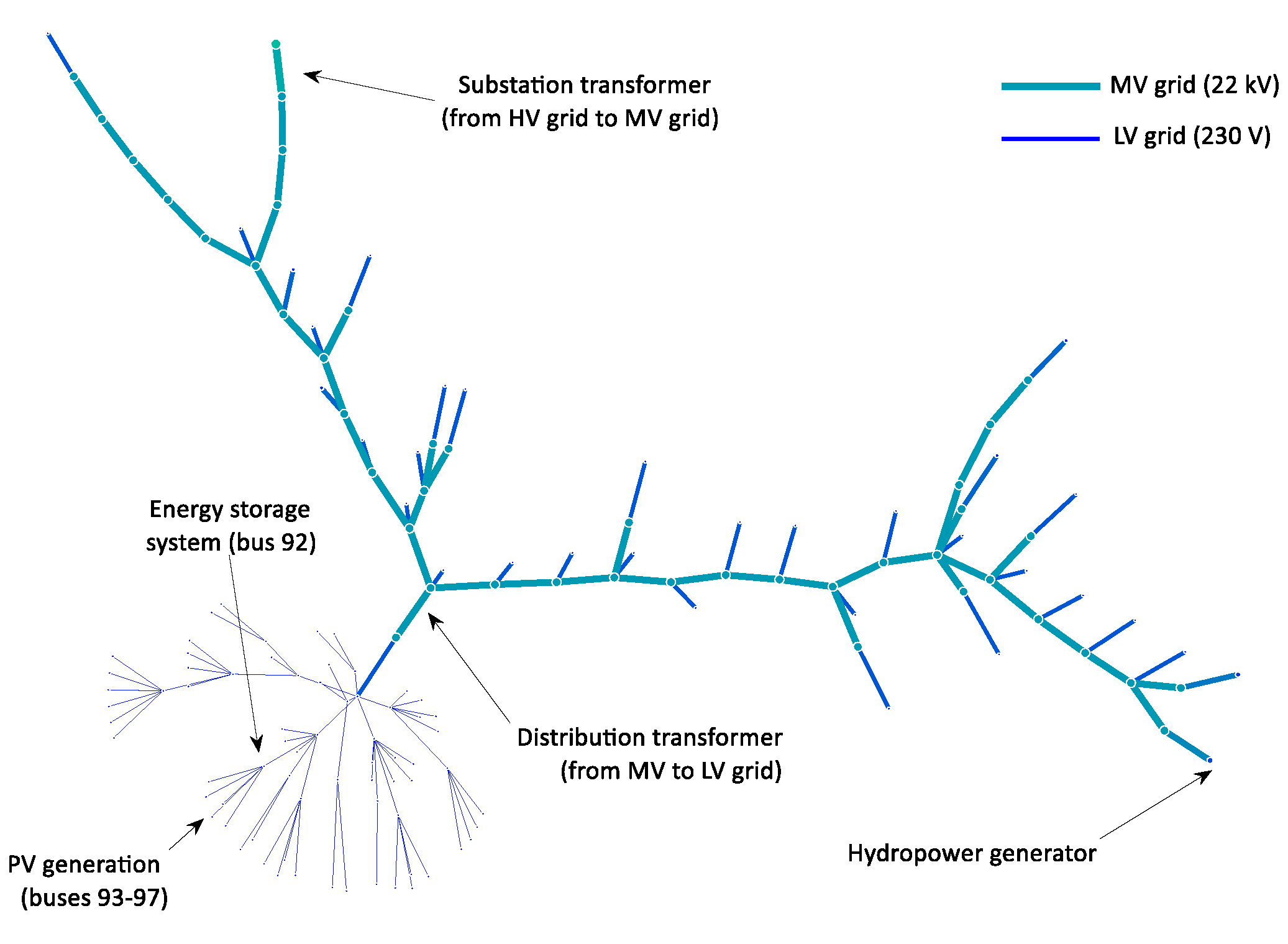
Flexible distributed energy resources, such as energy storage systems (ESSs), are increasingly considered as means for mitigating challenges introduced by the integration of stochastic, variable distributed generation (DG). The optimal operation of a distribution system with ESS can be formulated as a multi-period optimal power flow (MPOPF) problem which involves scheduling of the charging/discharging of the ESS over an extended planning horizon, e.g., for day-ahead operational planning. Although such problems have been the subject of many works in recent years, these works very rarely consider uncertainties in DG, and almost never explicitly consider uncertainties beyond the current operational planning horizon. This article presents a framework of methods and models for accounting for uncertainties due to distributed wind and solar photovoltaic power generation beyond the planning horizon in an AC MPOPF model for distribution systems with ESS. The expected future value of energy stored at the end of the planning horizon is determined as a function of the stochastic DG resource variables and is explicitly included in the objective function. Results for a case study based on a real distribution system in Norway demonstrate the effectiveness of an operational strategy for ESS scheduling accounting for DG uncertainties. The case study compares the application of the framework to wind and solar power generation. Thus, this work also gives insight into how different approaches are appropriate for modeling DG uncertainty for these two forms of variable DG, due to their inherent differences in terms of variability and stochasticity.
Keywords: multi-period optimal power flow; dynamic optimal power flow; battery storage; distribution network; distribution grid; operational planning multi-period optimal power flow; dynamic optimal power flow; battery storage; distribution network; distribution grid; operational planning