Article

An Expeditious Methodology to Assess the Effects of Intermittent Generation on Power Systems


by
Gracita Batista Rosas
1,
Elizete Maria Lourenço
2,*,
Djalma Mosqueira Falcão
3 and
Thelma Solange Piazza Fernandes
2
1
Electrical Engineering Department, Brazilian Energy Utility Companhia Paranaense de Energia (COPEL), Curitiba 81200-240, Brazil
2
Electrical Engineering Department, Federal University of Paraná, Curitiba 81531-980, Brazil
3
Electrical Engineering Department, Federal University of Rio de Janeiro/COPPE, Rio de Janeiro 21941-972, Brazil
*
Author to whom correspondence should be addressed.
Energies 2019, 12(6), 1135; https://doi.org/10.3390/en12061135
Submission received: 2 March 2019 / Revised: 21 March 2019 / Accepted: 21 March 2019 / Published: 23 March 2019
(This article belongs to the Special Issue Optimization Methods Applied to Power Systems Ⅱ)

Abstract

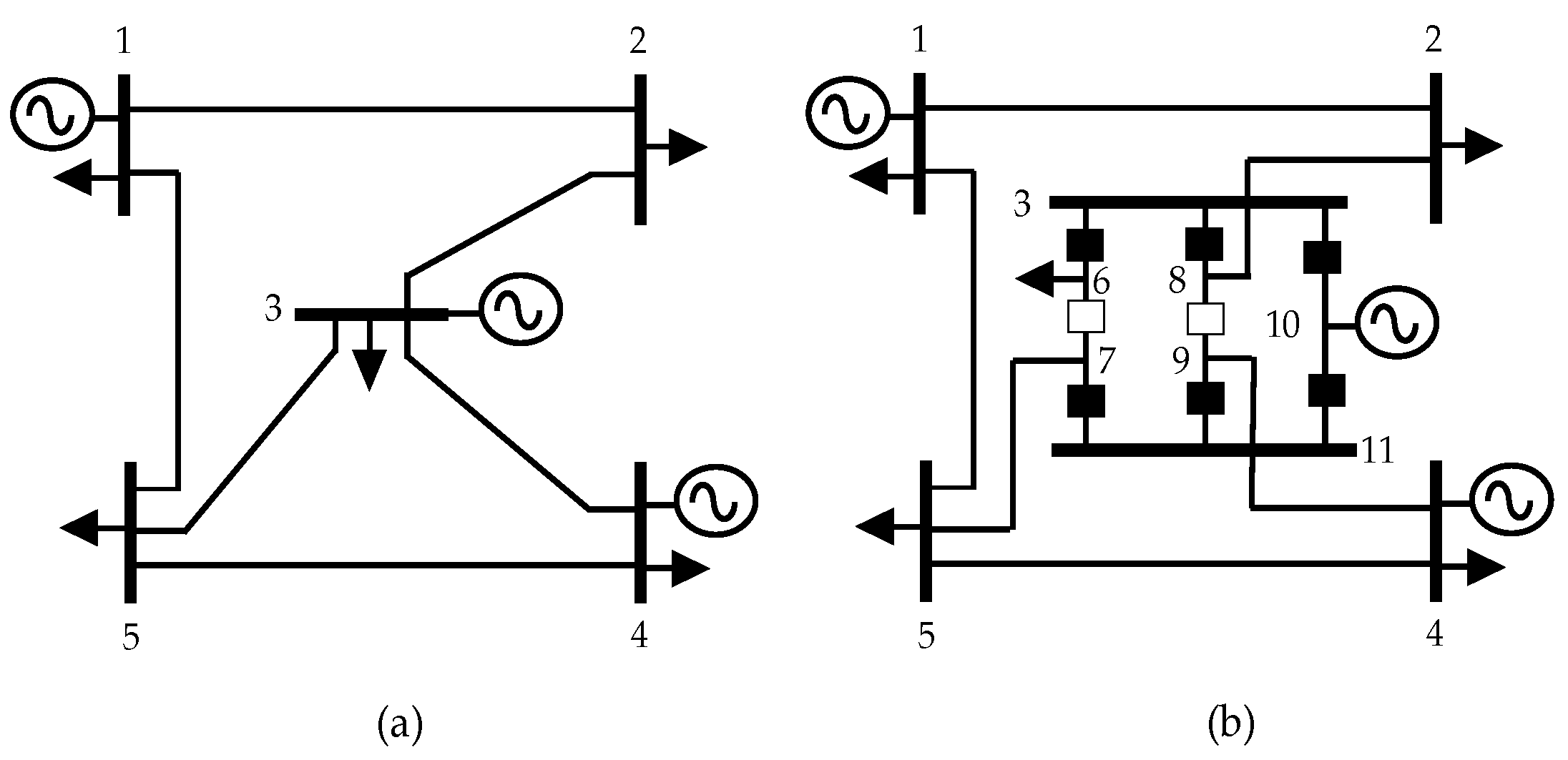
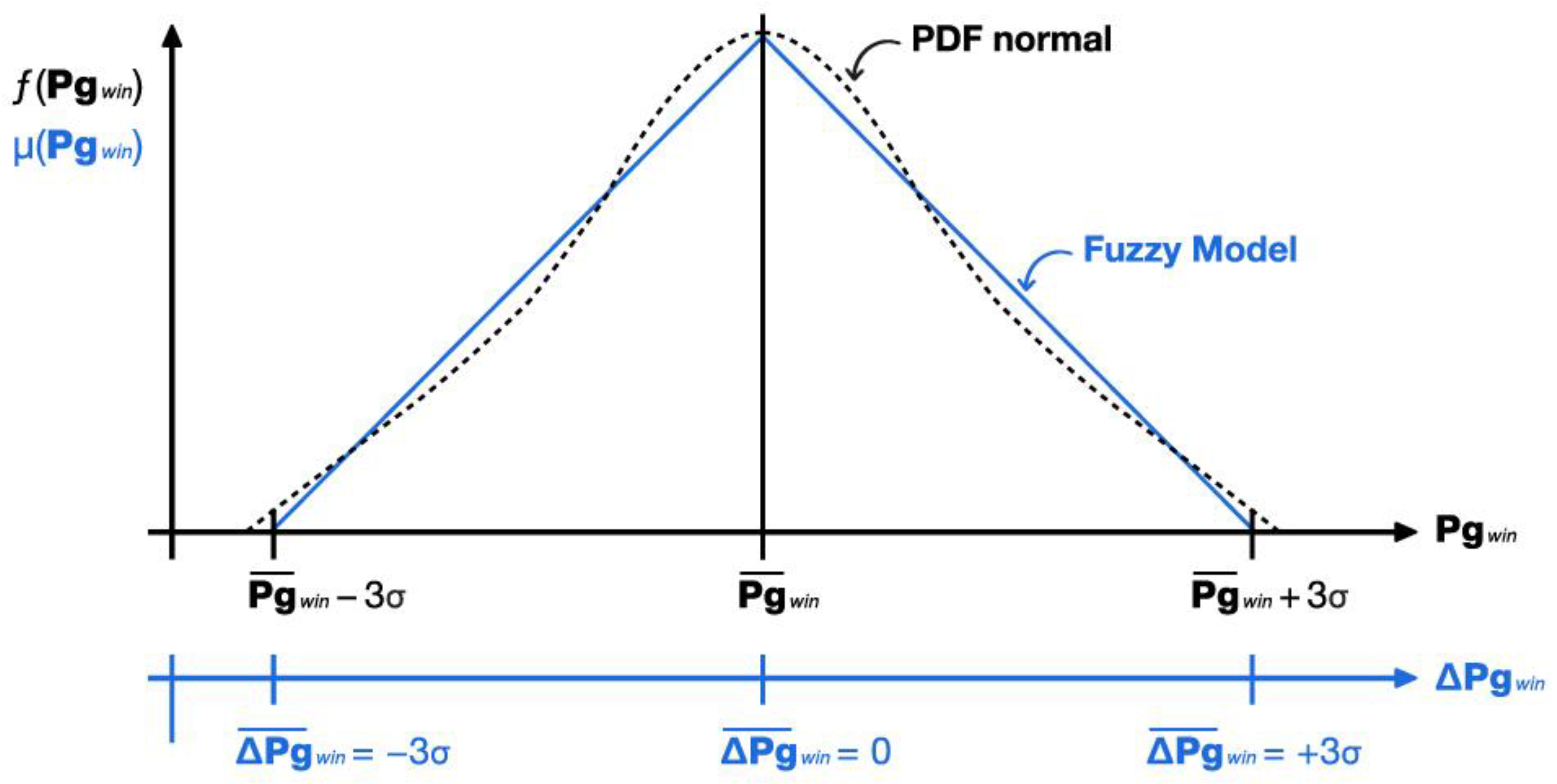
This paper proposes an expeditious methodology that provides hourly assessments of the effect of intermittent wind and solar power generation on the electrical quantities characterizing power systems. Currents are measured via circuit breakers to confirm the correct sizing of devices based on their rated currents. Nodal voltage magnitudes are assessed for compliance with limits imposed by regulatory authorities, whereas the active power produced by hydroelectrical generators is assessed for reserve energy. The proposed methodology leverages a fuzzy extended deterministic optimal power flow that uses in power balance equations the average hourly values of active power generated by wind and solar sources as well as hourly energy load. The power grid is modeled at the substation level to directly obtain power flow through circuit breakers. Uncertainties in power system electrical quantities are assessed for an optimal solution using a Taylor series associated with deviations from the average values of the active power produced by the wind and solar sources. These deviations are represented using a fuzzy triangular model reflecting the approximations of the probability density functions of these powers. The methodology takes into account a subjective investigation that focuses on the qualitative characteristic of these energy sources’ behaviors.
Keywords: circuit breaker; network modeling; optimal power flow; wind and solar energies circuit breaker; network modeling; optimal power flow; wind and solar energies