


Abstract
A setup for testing transformers under load through low power converter is presented in this paper. This setup is used for testing power transformers as it allows to verify their performance under operating conditions regarding aspects such as heating, voltage regulation, and mounting robustness. The main goal of the study is centered on replacing a full power Back-to-Back converter (1 pu) by a fractional power one (less than 0.1 pu). The converter, a Voltage Source Inverter (VSI), is a series connected between two equally sized transformers and controls the current flowing in the system. Load profile configurations set according to power factor, current harmonics, or even power level can be imposed to evaluate the performance of the Transformer Under Test (TUT) and the entire system. Theoretical analysis, and simulation results employing Matlab/Simulink platform, considering a typical transformer of a 75 kVA power distribution grid with 13.8 kV/220 V voltage are presented to corroborate the proposal. The required VSI power achieved in the simulations is a fraction of the total power of transformer under test, and the grid power consumed is also of small order justified by losses.
1. Introduction
Tests on equipment under nominal conditions with general requirements defined in standards [1,2] are useful to verify their behavior in operation, allowing the detection of possible problems before their effective use. In power transformers, it becomes relevant because it allows verifying their performance in operational conditions in aspects such as heating, voltage regulation, robustness of the assembly, and others. Ensuring the reliability of the equipment strengthens the quality of the energy processing in the system to which the transformer is inserted.
Being able to perform the test with recirculation of energy also meets energy efficiency requirements, because the power consumed will be of small order, basically to feed losses in the process. Some works in the technical literature relate in different ways the subject that is of interest of this paper and will be briefly described in this section.
The authors in References [3,4] present a laboratory structure capable of performing tests on power transformers in conditions that are faithful to reality, which becomes a challenge when a high level of energy is required in the tests. It employs two Back-to-Back (B2B) converters whose rated power is the same power as the transformer under test, “TUT”, allowing regeneration of energy. The control is performed by the classical models that adopt proportional–integral controller (PI), and the methodology is proved by computational simulation.
Structures that carry out the load simulation to test equipment of different nature are presented in References [5,6,7,8,9,10,11,12,13,14,15,16], also using B2B converters. Reference [17] describes an active approach to series line compensation in which a synchronous voltage source is used to provide controllable series compensation. This compensator is also found in Reference [18], representing a Static Synchronous Series Compensator (SSSC). The SSSC structure is similar to a series active filter, used for power systems, seen in a low-voltage distribution system with nonlinear loads in Reference [19].
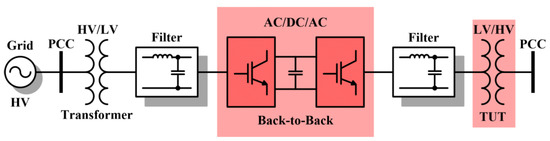
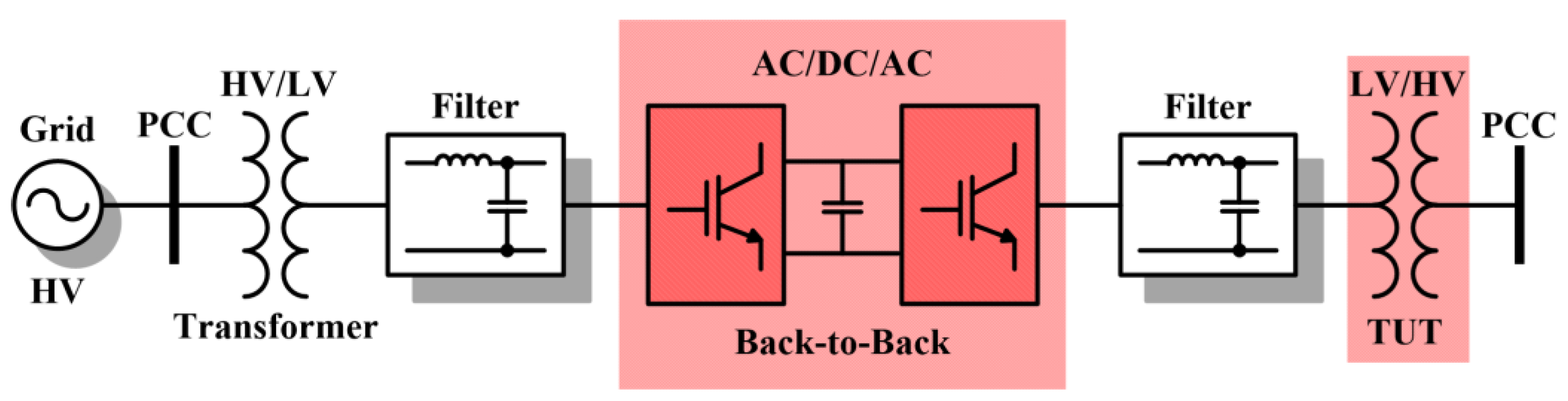
For reliable regenerative load operation, current and/or power detection and control techniques have been extensively studied in References [20,21,22,23]. The disadvantage of the structure of Figure 1 is the rated power of the B2B, which needs to be at least the same as the TUT, in other words, high power level. Generally, the use of large amounts of energy for transformers analysis or other loads is not justified by the amount of energy wasted on testing. This work proposes a new configuration in which the power of the converter is a fraction of the TUT rated power.
Figure 1.
Test structure with load and full load converter.
The structure of this paper is as follows. Section 2 presents the proposed configuration of the system. Section 3 presents the topology developed to fractional power converter tests. Section 4 presents the control strategy to voltage modulation at inverter. Section 5 presents the simulation results and, finally, Section 6 presents the conclusions.
2. Proposed Configuration
The topology was inspired by the operation of a phase-shift transformer used in power systems, which enables the control of active (P) and reactive (Q) power flow between the point of common coupling (PCC), observed in Figure 1, but using a series-connected inverter instead of the B2B converter.
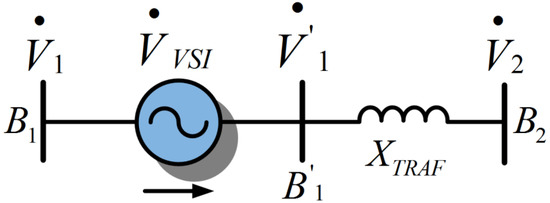
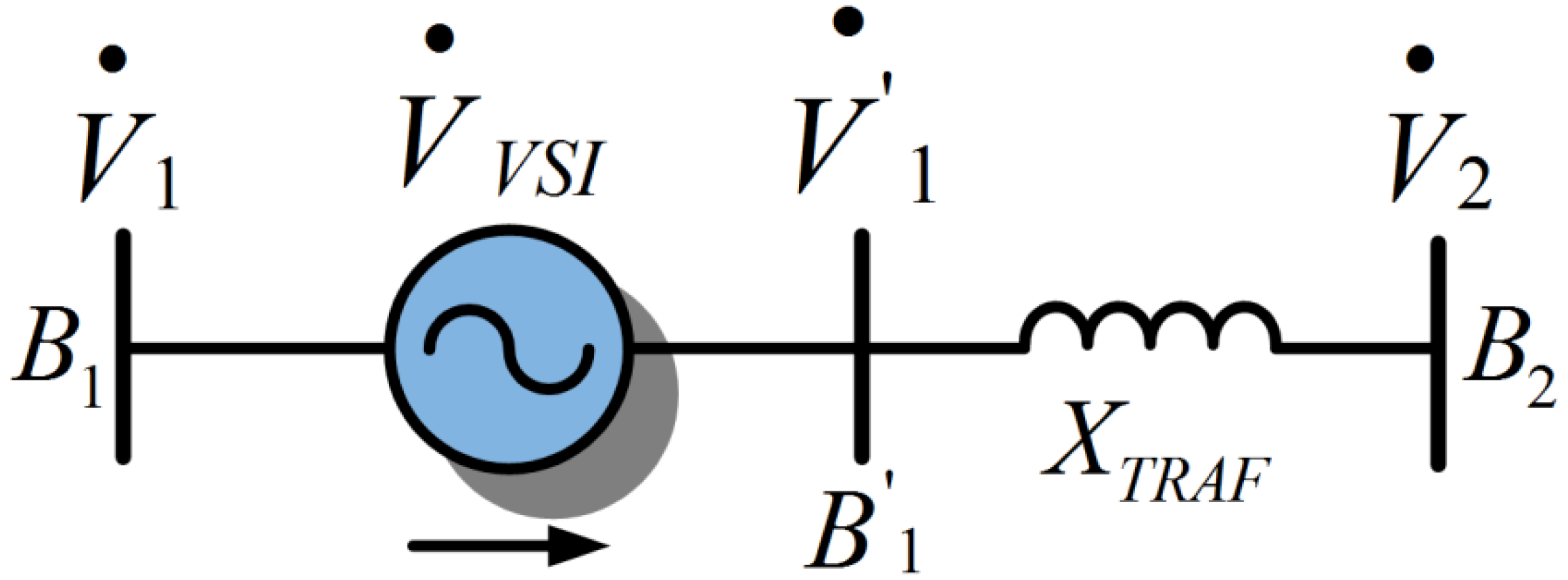
Figure 2 shows a simplified scheme of the system, considering the bus B1 and B2 (which may be the primary or secondary windings of the transformers), and the inverter represented as a voltage source . ( means phasor voltage).
Figure 2.
Simplified diagram of proposed methodology for regenerative tests.
At steady-state operation, the circulating power between transformers can be controlled by adjusting the external voltages (rms voltage and angle) to an appropriate value, since the relations shown in Equations (1) and (2) are known:
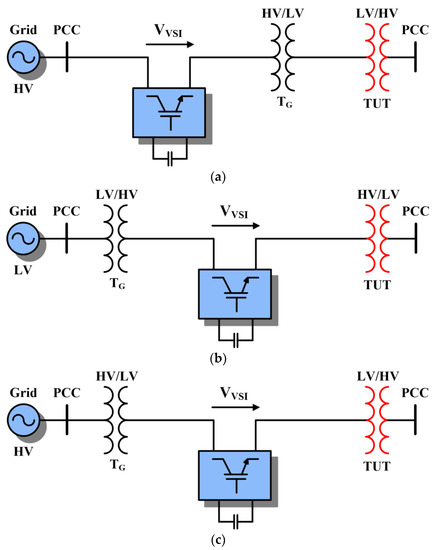
where P12 and Q12 are the active and reactive power flow that circulates between the bus 1 and 2. represents the controlled rms voltage of a virtual bus. V2 represents the rms voltage in the transformer winding TUT. XTRAF represents the reactance of transformer and TUT, seen in Figure 1. The power angle is represented by δ in the equation with the inserted in the high voltage (HV) branch; (a) applies when the HV bus is available, while (b) is used if only the low voltage (LV) bus is available. In (c), a configuration is presented in which the converter is connected in the branch of LV.
Several topologies to build the series-connected inverters are possible, depending on the available power supply. Figure 3 shows in (a) and (b) two alternatives of connection. In (c) a configuration is presented in which the converter is connected in the branch of LV. TG is a general transformer required to match voltage levels.
Figure 3.
Proposed structure using partial power converter (): (a), (b) with lower current converter and (c) with lower voltage converter to test transformer under test (TUT) highlighted (red).
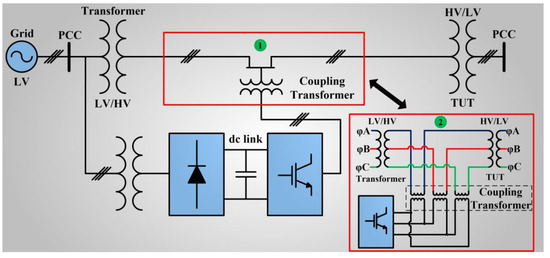
The structure used in the analysis is depicted in Figure 4. The Voltage Source Inverter (VSI) is connected at LV through a three-phase transformer with a rms voltage of 220 V on the primary winding and 380 V on the secondary, Δ/Δ connection. The secondary voltage enables an adequate level of dc link voltage and has a direct effect on the voltage synthesized by the converter. The capacitor in the dc link is equal to 1 mF.
Figure 4.
Structure of the system and connection of the power electronics converter.
Area 1 of Figure 4 indicates through coupling transformers the series connection of the converter to the system between the TUT transformer and the transformer connected to the PCC bus. Area 2 details the effective transformers’ connection of area 1.
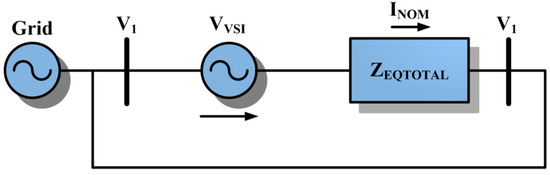
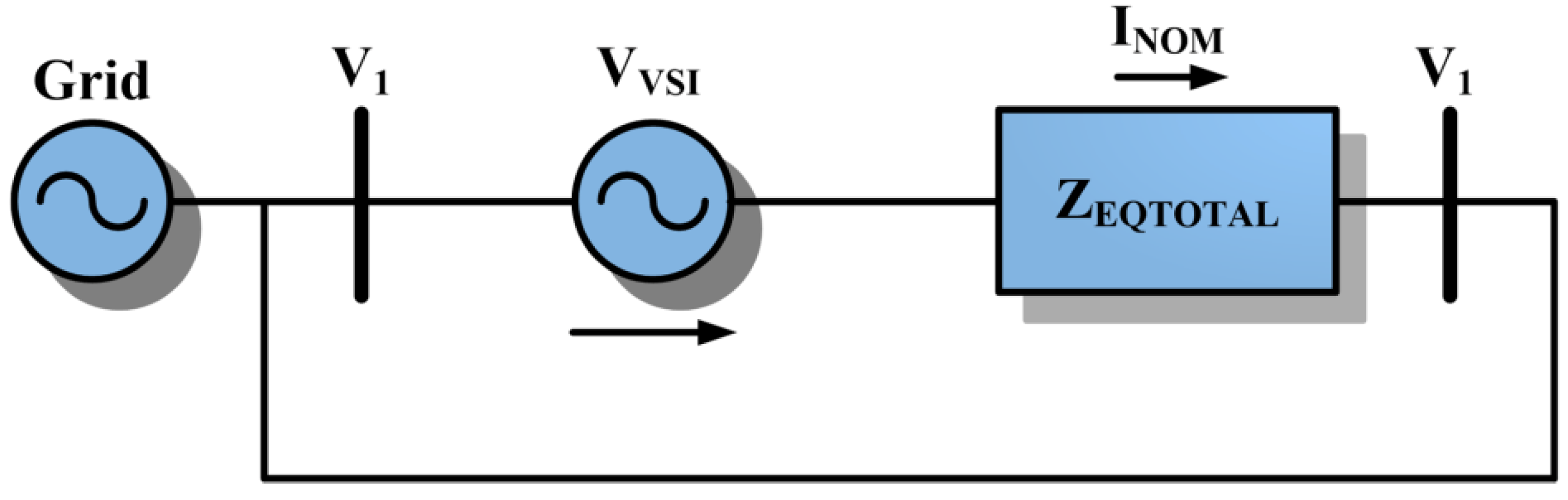
An initial estimation of the voltage value that must be introduced in series with the system might be obtained by applying Kirchhoff’s voltage law to the circuit, which can be represented as in Figure 5 considering the Figure 3b configuration.
Figure 5.
Equivalent system to Kirchhoff’s voltage law analysis.
Equation (3) presents the mesh voltage where all the path impedance (basically series impedance of transformer) is represented by ZEQTOTAL. Since the voltage at the two ends of the mesh is the same, the required voltage to circulate the nominal current INOM is given by Equation (4):
The analysis and topology of the system considered in this paper were simulated on the MATLAB/Simulink platform.
3. System Description
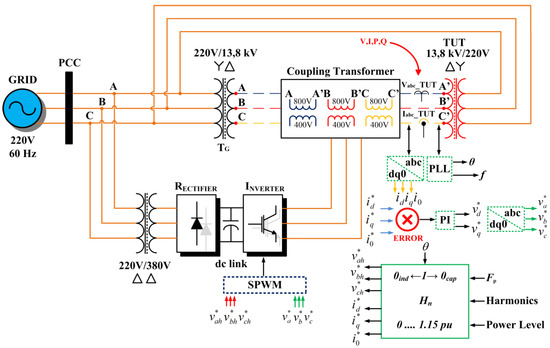
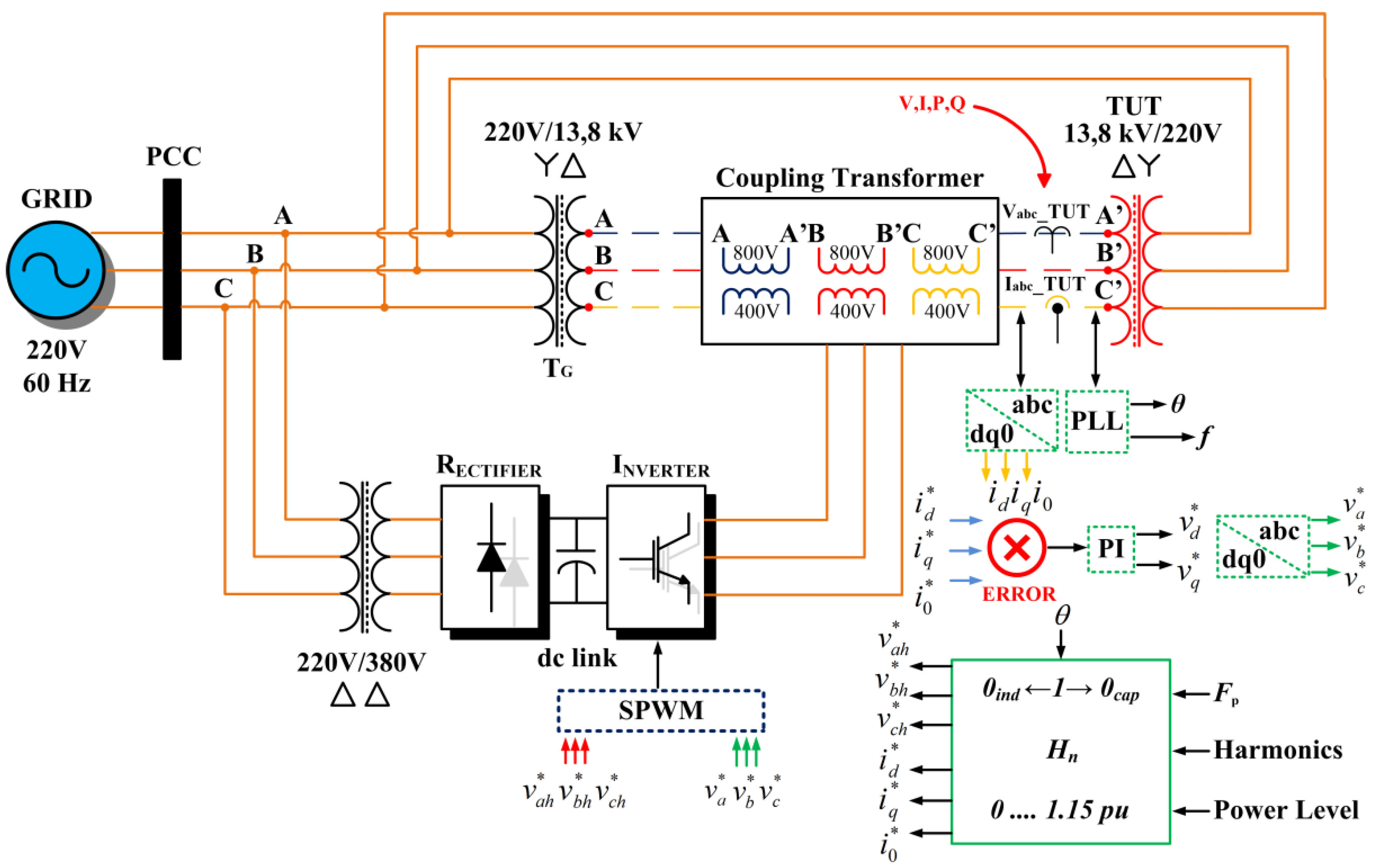
The simulated system, shown in Figure 6, is composed by a three-phase voltage source that provides a line voltage of 220 V/60 Hz. Two transformers (TG and TUT) with characteristics of distribution transformers are used with voltage of 220 V/13.8 kV and Y/Δ connection in the primary and secondary, respectively. The transformer under test is the TUT, in which the parameters of V, I, P, and Q are monitored to evaluate the power conditions that are applied to it.
Figure 6.
Topology proposed for TUT transformer test, showing control strategy and test scenarios.
A three-phase Δ/Δ transformer with voltage of 220 V/380 V is used in the converter connection with the low voltage in order to obtain an adequate dc link voltage in the inverter. An alternative is to replace the three-phase transformer by three single-phase autotransformers.
Three single-phase coupling transformers with voltage 400 V/800 V are used to connect the inverter on the high voltage. The transformers allow voltage level adequacy available by the inverter to the required voltage level in series with the system to impose the reference currents. They are necessary knowing the fact that the inverter output cannot be directly connected to the three-phase line.
The transformers TG (general transformer) and TUT (transformer under test) chosen for the simulation represent identical transformers with the characteristics that are presented in Table 1.
Table 1.
Specification of TG (general transformer) and TUT transformers.
In general descriptions, TG and TUT have Yn connection in the low voltage winding (LV) and delta connection in the high voltage (HV) winding. Both transformers have equal R and L parameters in the primary and secondary winding. The impedance of each transformer, seen at the HV windings, is 38.645 + j80.371 ohms, applied on the Matlab/Simulink platform.
The total equivalent impedance of the circuit to be simulated is 178.36 Ω with a phase angle of 64.32°. With this information, the required voltage in the circuit corresponds to 792 V. The decision was to use an inverter with a 400 V dc link voltage. For voltage compatibility, three equal linear single-phase transformers were used for series connection of the power converter to the system. The nominal apparent power defined corresponds to 2 kVA, 400 V/800 V, nominal frequency of 60 Hz.
4. Control Strategy
The control strategy makes use of synchronous reference frame (SRF) representation in Reference [24]. The phase currents are measured and transformed into dq currents by Equation (5):
The currents of each axis are compared with the respective direct and quadrature reference currents ( and ), composed in order to, most of the time, result in the rated current of the transformer and the error is applied to a PI regulator. As the transient behavior is not being evaluated, cross-components are neglected. The output of the regulators are the reference voltages and for the controlled voltage source, being , , and obtained from the inverse Park transform of and in [25]. These reference voltages are applied to the SPWM (sinusoidal pulse width modulation) inverter for the desired voltage modulation, using here a carrier frequency of 5 kHz. The three-phase voltages are measured at the point of connection of the controlled source (PWM inverter) with the TUT and, using a Phase Locked Loop (PLL), the synchronization angle θ, as well as the frequency f of the system, is found, which reference to dq0 coordinates. The angle of fundamental va voltage was used as reference.
A series of tests can be applied in the system considering power factor (Fp), harmonics, and power level. The Fp can be adjusted with inductive or capacitive characteristic through the relation between and . Harmonics of any order (Hn) and amplitude can be applied. In the main test, it is possible to load the TUT up to 1.15 pu.
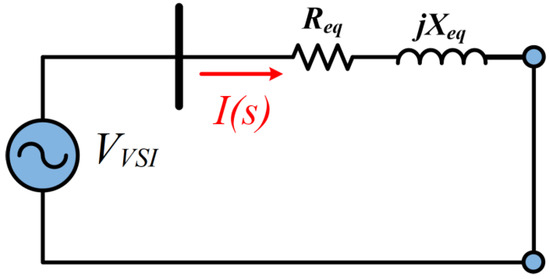
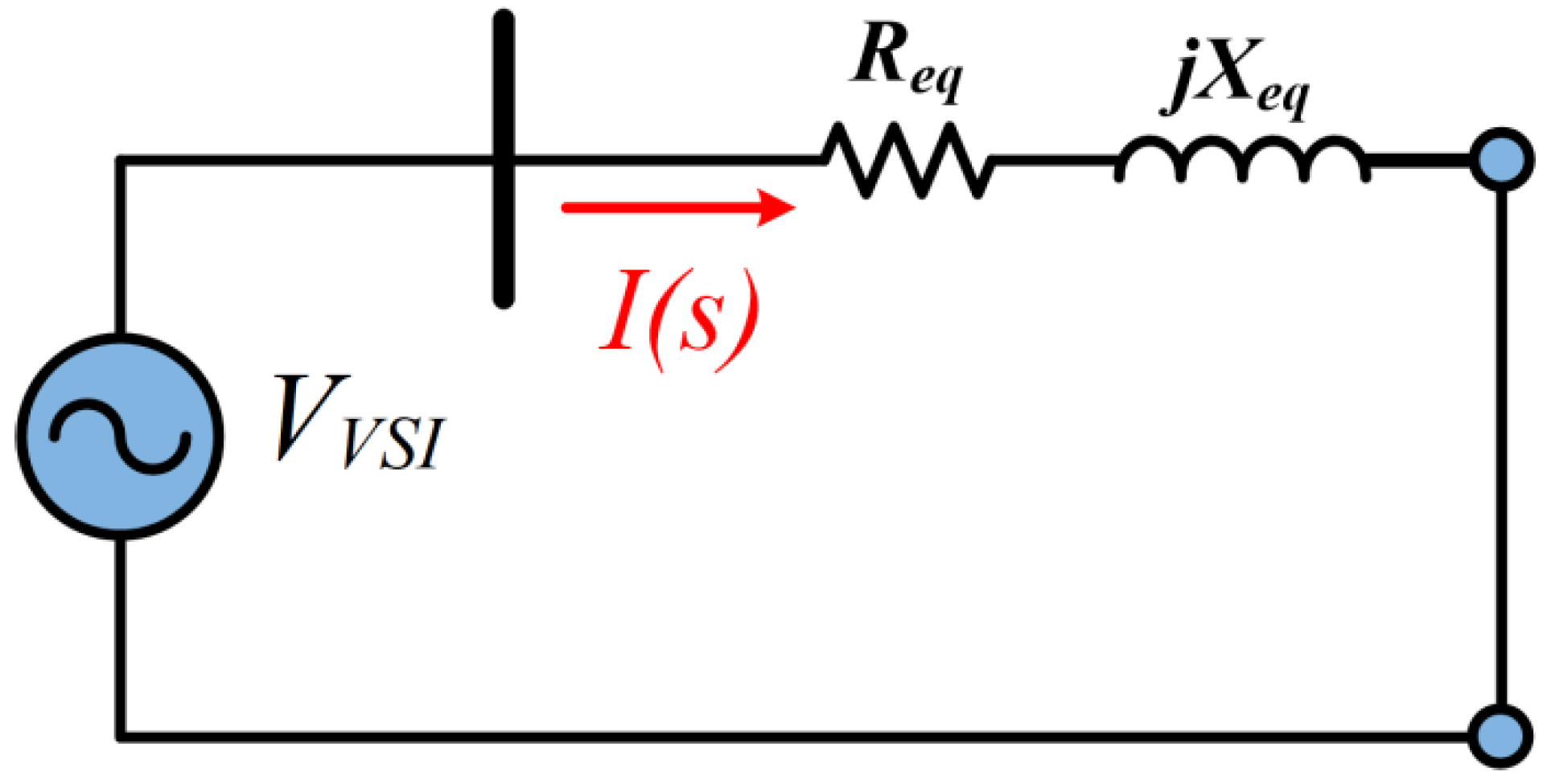
For the analysis of the control loop, the transformer is analyzed as follows. Considering Figure 5, from the controlled series voltage source viewpoint, the grid voltage is zero. The controlled voltage source imposes currents that flow in a closed loop through transformers, with only equivalent series resistance and reactance, as shown in Figure 7.
Figure 7.
Equivalent circuit used for the transformer.
Applying a voltage VVSI(s) and short-circuiting the branch, the relation between the current that will circulate I(s) and the applied voltage, in Laplace, is given by Equation (6):
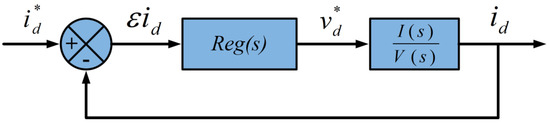
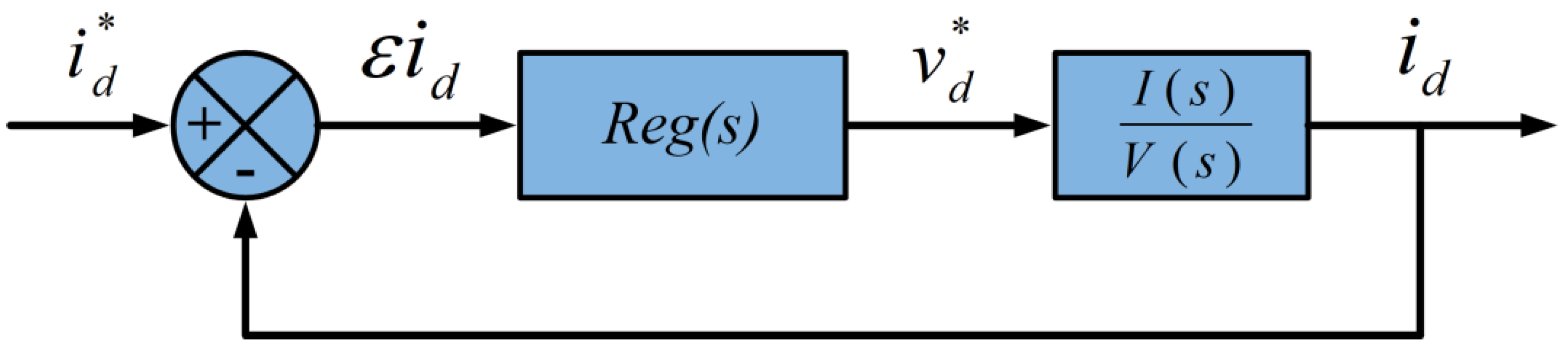
where represents the time constant of the system. It is considered the presence of two transformers in series, in which the parameters of R and L are presented in Table 1. The representation of the Laplace structure for controller design in dq coordinates is given in Figure 8 (shown here for the d axis):
Figure 8.
Closed loop current control.
The transfer function is a first order system. To avoid current overshoot during transitions, a PI regulator is employed, of the form , with pole-zero cancellation, resulting:
The K gain can be found from the desired time constant for a closed-loop step response, that is:
For the transformers used in this study, = 5.3 ms. In the simulation, it was used = 188.67 ms, resulting K = 1000.
Injection of Harmonics
With the increasing development of power electronics, the use of electronic converters has reached a high level of insertion in the power systems. Its advantages, however, do not allow ignoring negative aspects, such as energy efficiency issues resulting from losses in the switching of the converter and the appearance of harmonic content caused by the converter itself in [26] and other nonlinear loads.
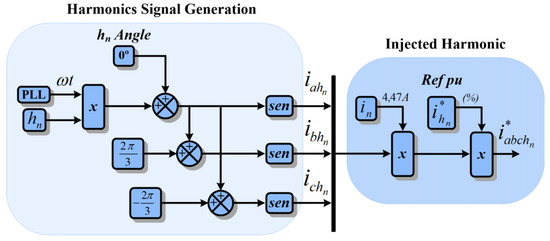
In order to perform a simulation analysis close to real conditions referring to the presence of harmonic distortion in the system, it was chosen to reproduce such characteristics by forcing harmonic current circulation on the TUT. The block diagram of Figure 9 illustrates how harmonics are imposed.
Figure 9.
Block diagram of current harmonics generator.
In signal generation, the harmonic order is defined in hn with angular frequency ωt obtained from the voltage PLL. Once the harmonic three-phase current signal (, , ) is established, the reference harmonic current is injected based on the nominal current in and the desired percentage whatever in pu. The generated harmonic current is applied to the control strategy block diagram, which multiplied by the inductive reactance XL results in the voltages , , and .
These voltages , , and are obtained by multiplying the specified harmonic current and the harmonic inductive reactance XL, as obtained applying Equations (9)–(11):
where XL corresponds to the harmonic reactance of TUT transformer due to its inductance LT, f represents the nominal frequency of the system and hn the order of the harmonic chosen.
The set of Equation (10) defines the current harmonic level applied in each phase , , and , resulting in the product of the nominal value of current imposed on the TUT by the reference value in pu of the harmonic current .
The set of Equation (11) results in the harmonic voltage originating from the current harmonic and added at each phase:
The PLL (Phase Locked Loop) used the native PLL from Simulink. In the harmonic injection tests, the PLL and (Dual Second Order Generalized Integrator) DSOGI-PLL tracker was used in [27].
5. Simulation Results
The results presented were obtained through Matlab/Simulink software.
5.1. First Simulation
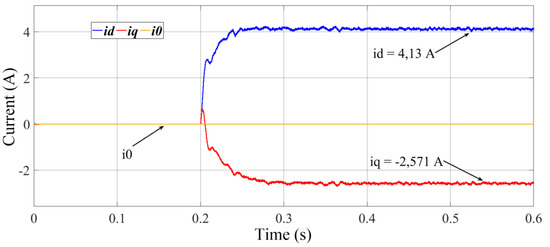
The results found are from the system without harmonics, 1.1 pu and Fp = 0.85 inductive. For this configuration, it means to apply the currents = 4.13 A and = −2.57 A.
Figure 10 shows the id (4.14 A) and iq (−2.57 A) currents after 0.2 s, equal to the reference values.
Figure 10.
Direct axis current (blue) and quadrature axis current (red) measured at high voltage (HV) of system to Fp = 0.85. Vertical axis: 2 A/div. Horizontal axis: 100 ms/div.
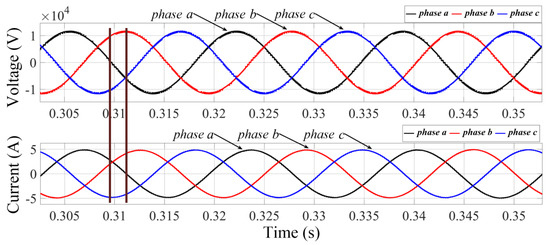
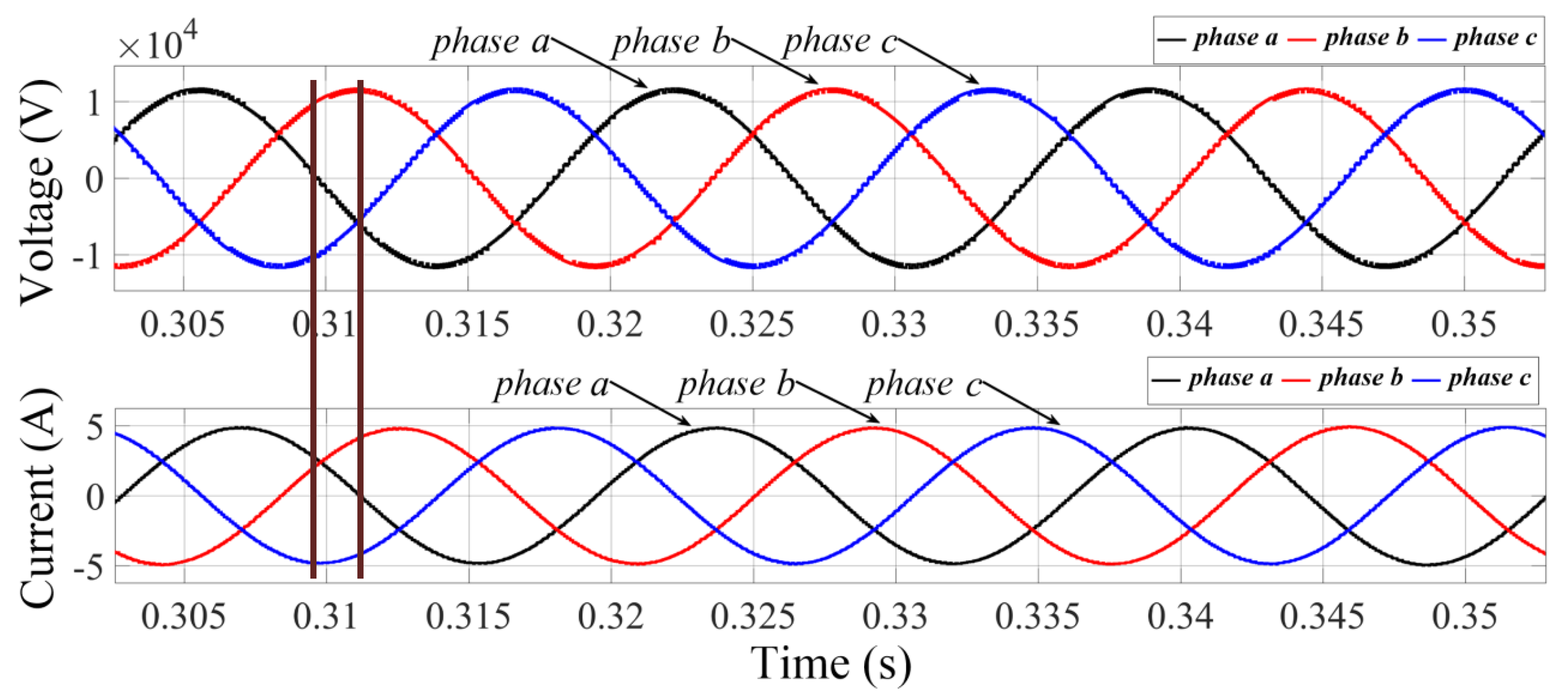
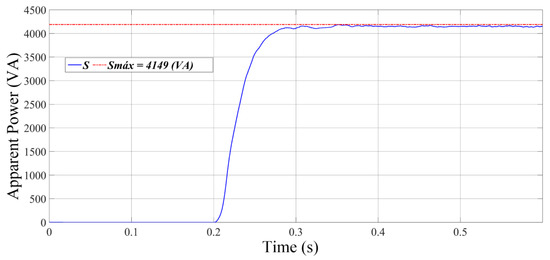
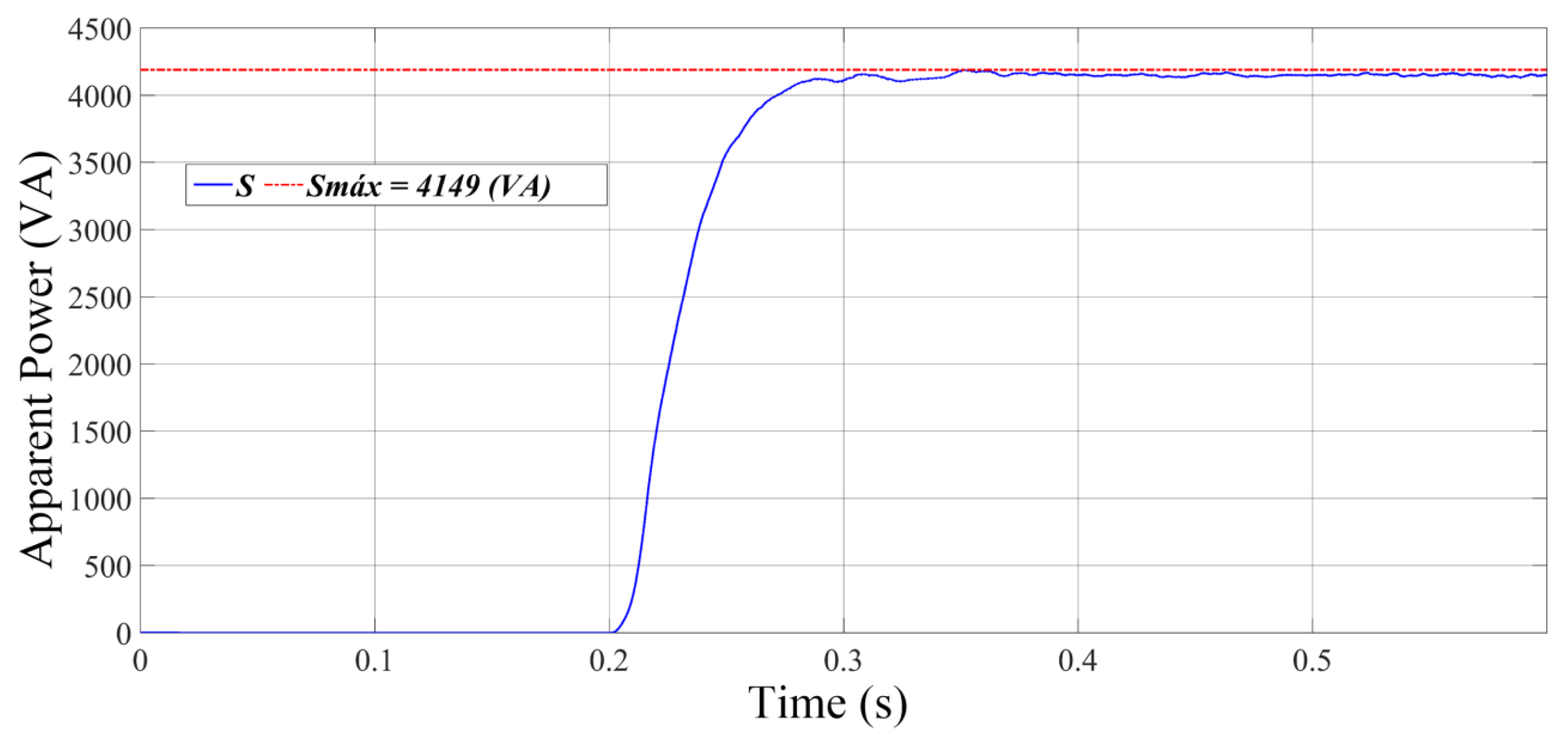
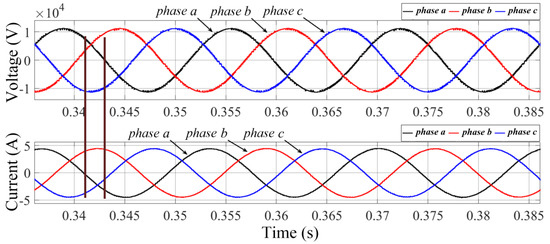
Figure 11 shows measured voltage and current at the TUT input. Two vertical lines of brown color indicate the passage of voltage and current through zero with an approximate time difference equal to 1.5 ms. By the Δt between voltage and current, the angle of 31° at phase “a” is found, confirming Fp = 0.85 inductive. This condition of overload voltage and current reached 11.5 kV and 4.88 A, respectively, exceeding the nominal values of 11.3 kV and 4.47 A. Figure 12 shows the main result of this paper, which refers to the apparent power at the inverter output of fractional value (4.1 kVA) compared to the 75 kVA of the TUT transformer. The previous work [3] used 75 kVA B2B inverter with power at least equal to the power of the TUT. This result is achieved in all simulation scenarios.
Figure 11.
Voltage (upper, 10 kV/div) and current (lower, 5 A/div) imposed to TUT, Fp = 0.85 inductive. Horizontal axis: 5 ms/div.
Figure 12.
Fractional apparent power (S) supplied by the inverter, 500 VA/div. Horizontal axis: 100 ms/div.
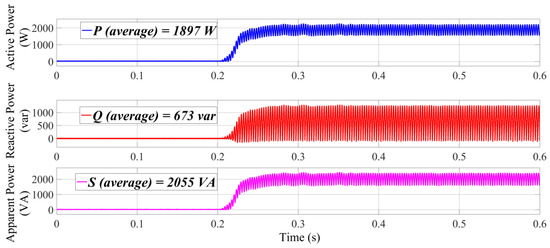
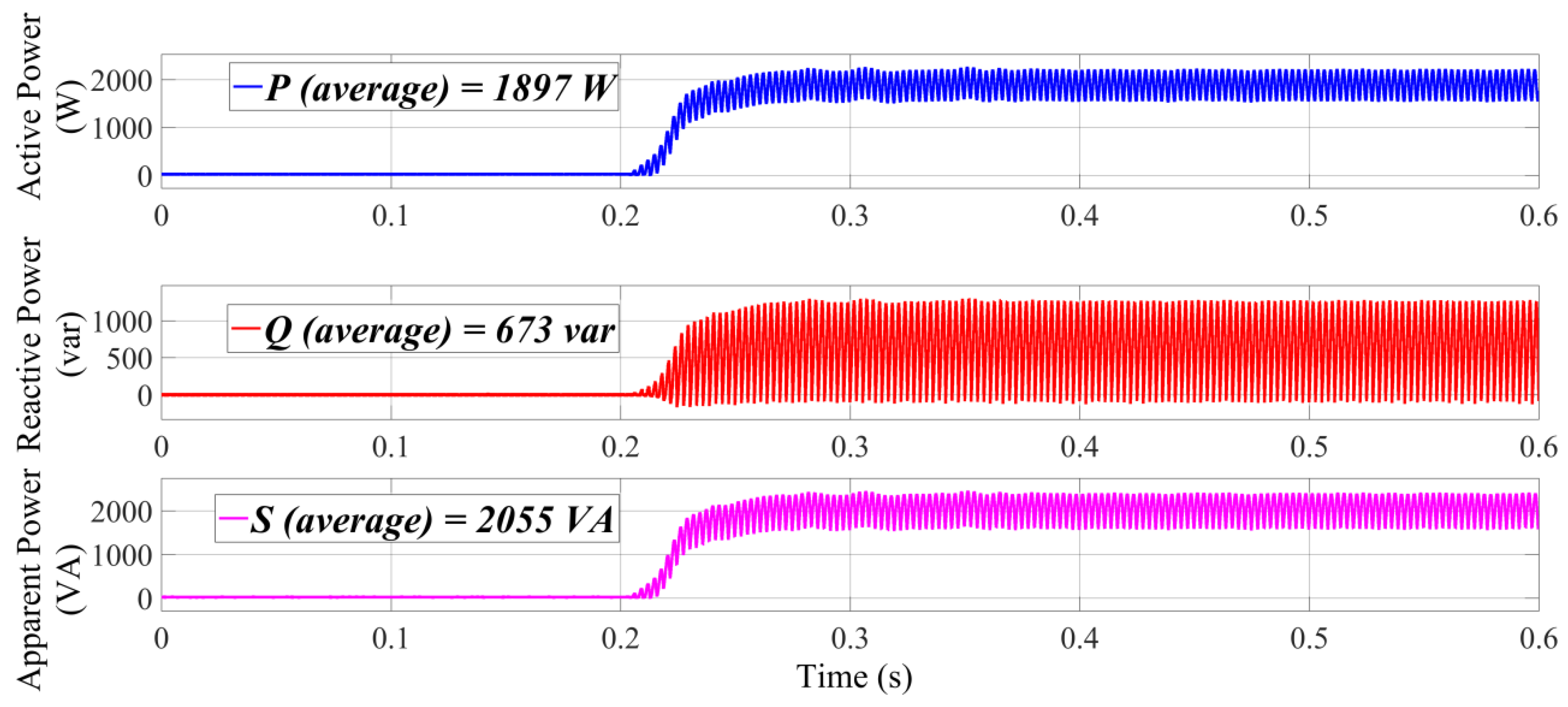
Figure 13 shows optimal result of active and reactive power supplied by the grid. The resulting apparent power from P (1.897 kW) and Q (0.673 kvar), about 2.055 kVA, demonstrates low system power consumption, which is consumed by inverter switching losses as well as system impedances.
Figure 13.
Active, reactive, and apparent power supplied by grid.
5.2. Second Simulation
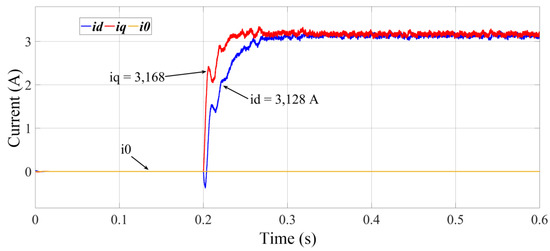
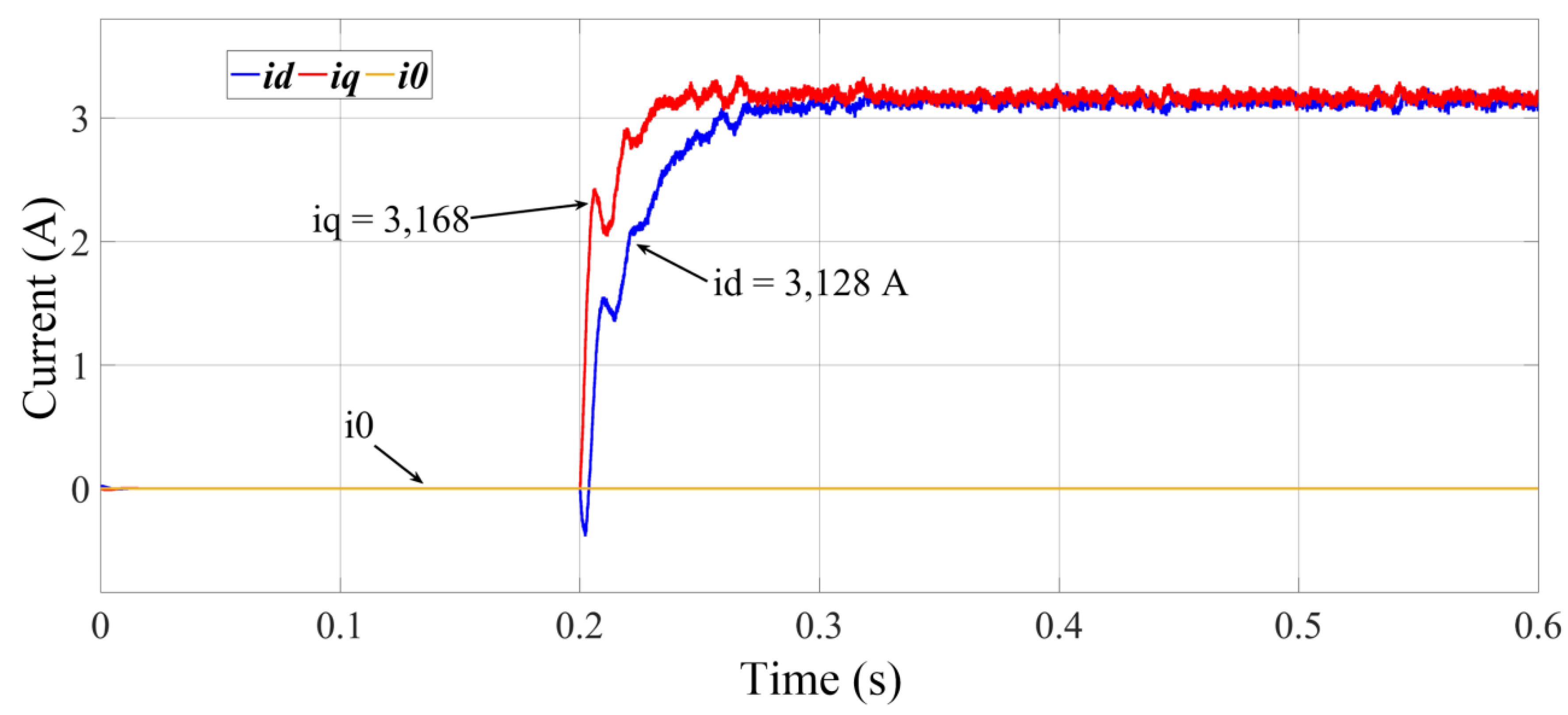
The following test scenario continues without harmonics, 1.0 pu and Fp = 0.7 capacitive. For this configuration, it means to apply the current = 3.13 A and = 3.17 A. Figure 14 shows the and currents after 0.2 s. The measured values are the same as the reference values, 3.13 A and 3.17 A, respectively.
Figure 14.
Direct axis current (blue) and quadrature axis current (red) measured at HV of system to Fp = 0.7. Vertical axis: 1 A/div. Horizontal axis: 100 ms/div.
Figure 15 shows the current leading of the voltage at the input of the TUT. The vertical lines of brown color show the time interval of approximately 2 ms between the passage of the current and voltage by the zero. Thus, it is possible to confirm the 0.7 capacitive power factor with a measured phase difference of approximately 44° relative to phase a.
Figure 15.
Voltage (upper, 10 kV/div) and current (lower, 5 A/div) imposed to TUT, Fp = 0.7 capacitive. Horizontal axis: 5 ms/div.
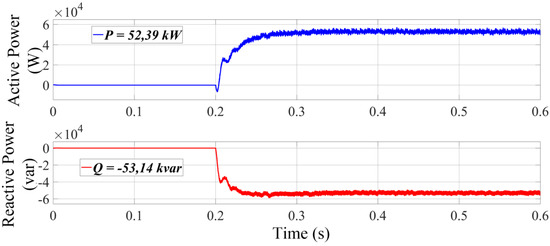
Figure 16 shows the active and reactive power circulating through the TUT after step at t = 0.2 s. The active power measured was 52.39 kW for the defined load level, close to the calculated value of 52.5 kW. The reactive power was −53.14 kvar and the calculated power was 53.5 kvar. The negative sign of Q indicates the capacitive power factor. The resulting S value was approximately 74.6 kVA, close to the nominal 75 kVA of the TUT.
Figure 16.
Active power (upper, 20 kW/div) and reactive power (lower, 20 kvar/div) that circulates at transformer with Fp = 0.7. Horizontal axis: 100 ms/div.
5.3. Third Simulation
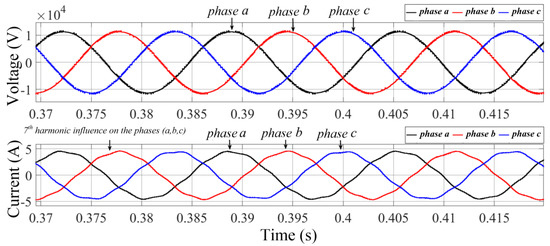
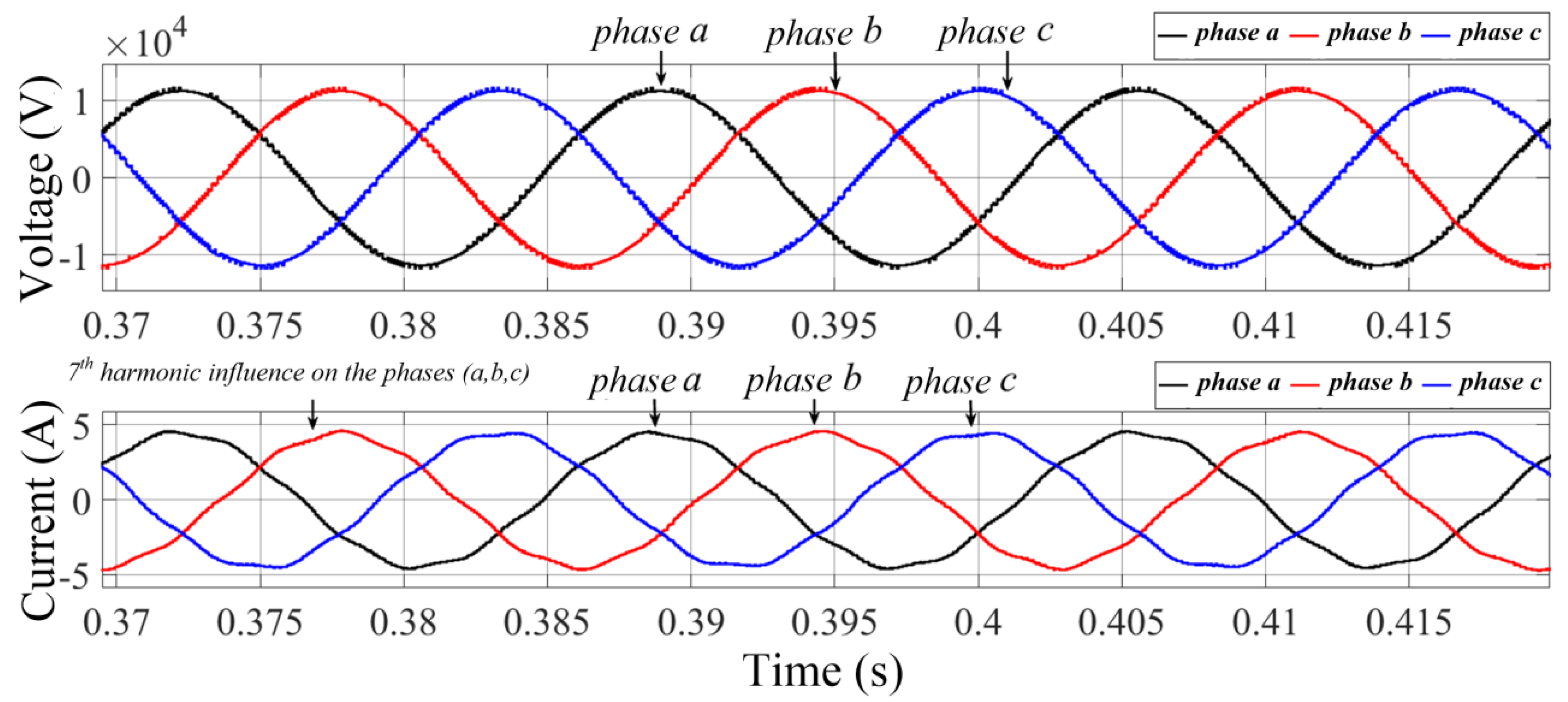
This last test scenario corresponds to 1.0 pu, Fp = 1.0, and adding 7th order harmonic with amplitude of 3%. For this configuration, it means to apply the current = 4.47 A and = 0 A.
Figure 17 shows the voltage (upper) and current (lower) at HV winding of TUT. In the voltage signal the influence of the harmonic is imperceptible, but the harmonic distortion observed in the current signal is evident.
Figure 17.
Voltage (upper, 10 kV/div) and current (lower, 5 A/div) in TUT with 3% 7th harmonic current injection. Horizontal axis: 5 ms/div.
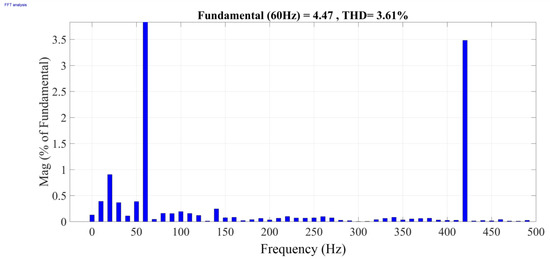
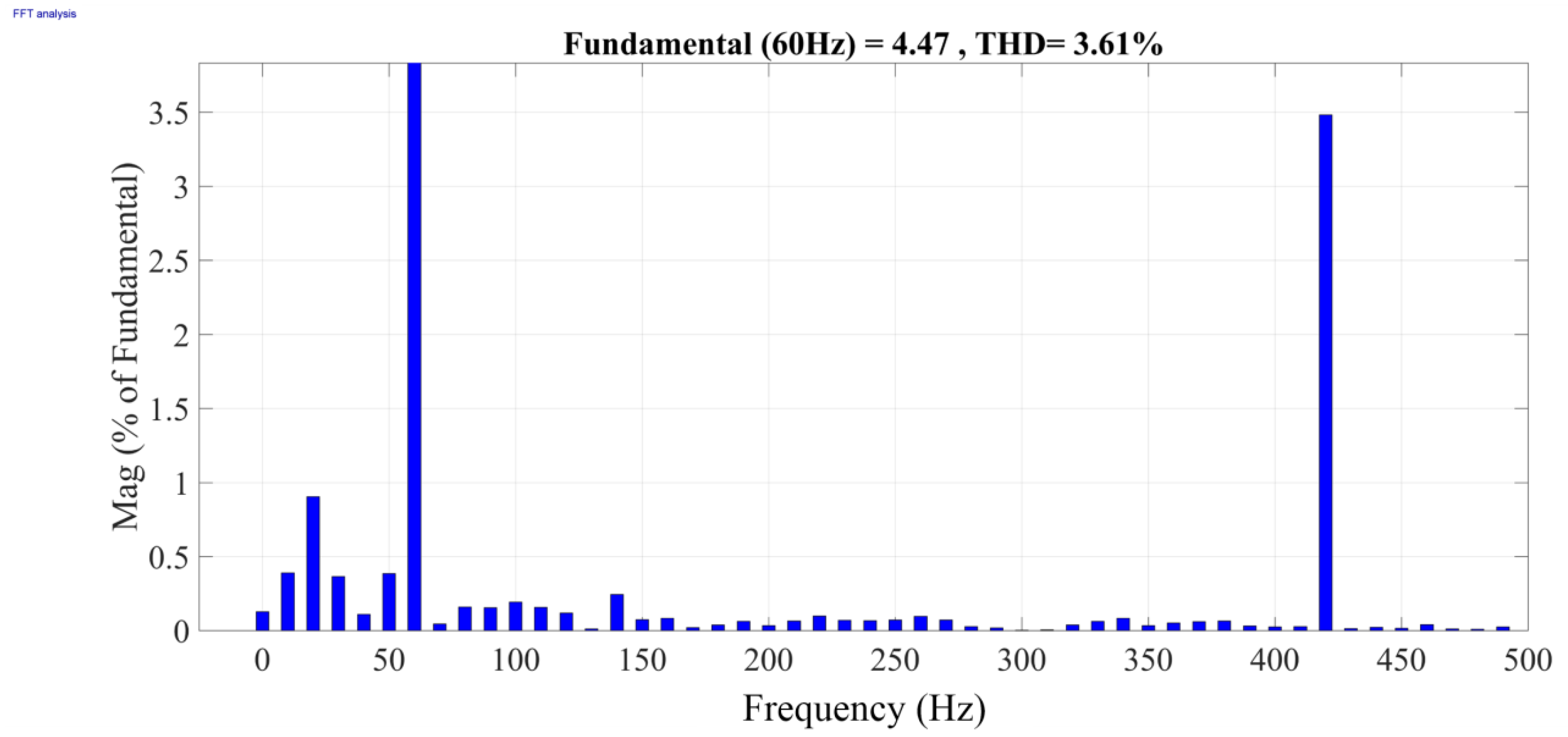
Figure 18 shows the current harmonic spectrum in the TUT. It is observed that, at 420 Hz (h7), the percentage of 3.48% is in relation to the fundamental frequency (4.47 A) and Total Harmonic Distortion (THD) of 3.61%. Thus, the 3% value applied to the 7th order harmonic is confirmed.
Figure 18.
Bar chart with 7th order harmonic on current at high voltage of TUT. Vertical axis: 10%/div. Horizontal axis: 100 Hz/div.
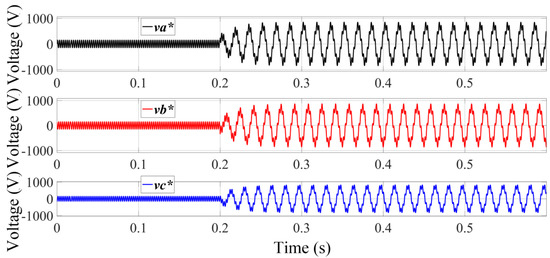
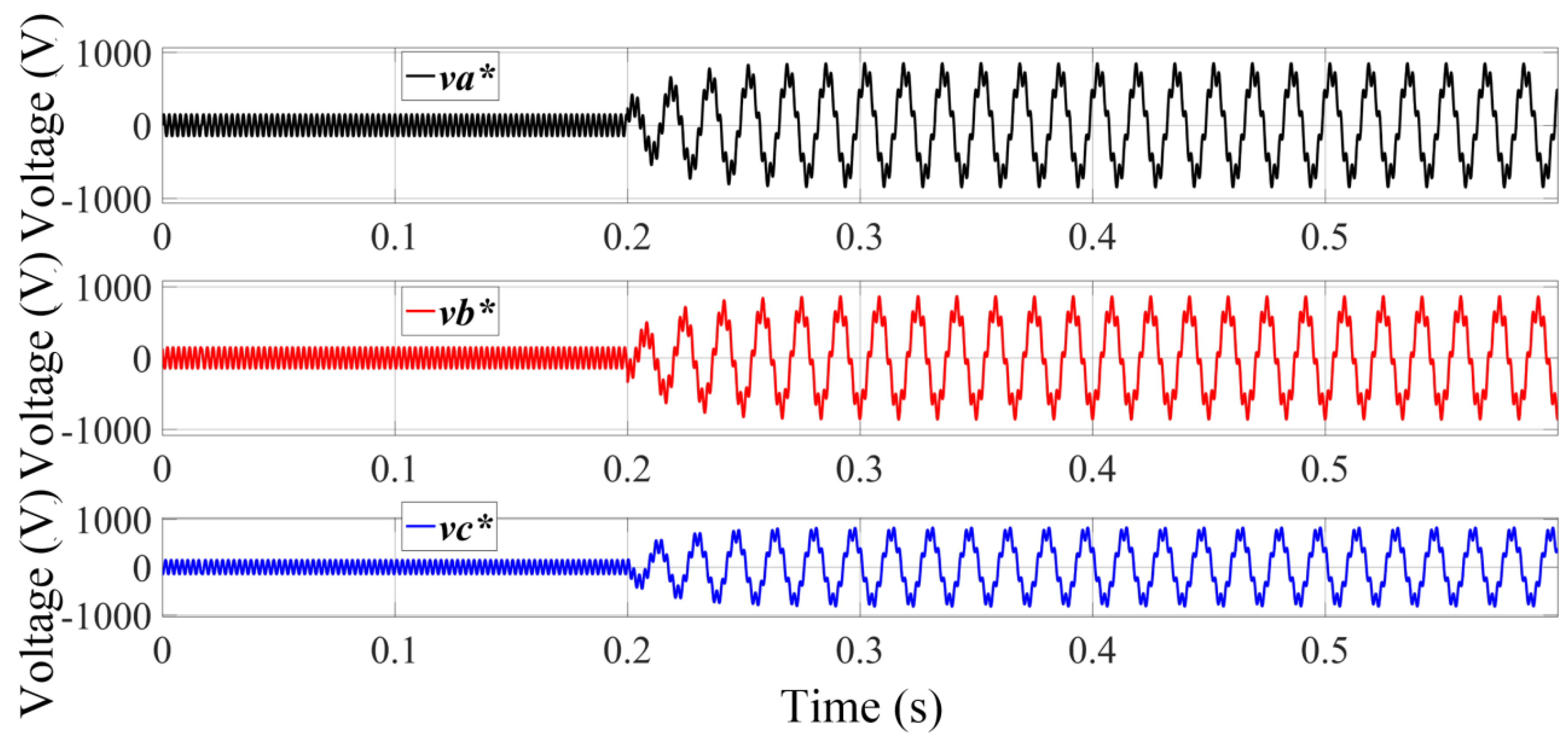
Figure 19 shows the reference voltages , , and , added the reference harmonic voltages , , and .
Figure 19.
Seventh order harmonic with 3% added to the fundamental frequency of reference voltages in phases a (black), b (red), and c (blue). Vertical axis: 1 kV/div. Horizontal axis: 100 ms/div.
6. Conclusions
A fractional power converter for the test of transformers under full load was presented in this paper. The main contribution was to be able to test a 75 kVA transformer with fractional power converter around 4 kVA, which previously adopted a B2B converter of 75 kVA, the same power at the TUT transformer, seen in Reference [3]. The structure was verified by Matlab/Simulink® simulation.
Several simulations were carried out on the TUT transformer and the main ones were presented, basically for power factor, harmonics, and power level. Regarding the power factor, it was possible to vary it with inductive and capacitive characteristics. Concerning injected harmonics, it was possible to test the system for this condition and to validate the current harmonics generation. Overload tests up to 1.15 pu were realized.
The proposed topology is of minimum consumption compared to the power of the TUT, confirmed by the power values that flow from the grid to the system. For a 75kVA, 13.8 kV/220 V full-load test, a three-phase value of 2.0 kVA was found. This great result characterizes the model used as an energy regenerator. The power consumed by the grid is justified by losses in the transformers and power conversion harmonics. The simulations have shown that it is possible to test transformers up to rated power and a little above for any power factor making use of a low-power series-connected inverter, compared to the power of the TUT. Furthermore, it is easy to introduce harmonics in the circulation of current.
Author Contributions
The authors have contributed equally to the paper.
Funding
This publication was financed in part by the Fundação de Amparo à Pesquisa e Inovação do Espírito Santo (Brazil)–FAPES.
Acknowledgments
This study was financed in part by the Coordenação de Aperfeiçoamento de Pessoal de Nível Superior-Brasil (CAPES)-Finance Code 001.
Conflicts of Interest
The authors declare no conflict of interest.
References
- IEEE. Test Code for Liquid-Immersed Distribution, Power, and Regulating Transformers; IEEE C57.12.90; IEEE: Piscataway, NJ, USA, 2016. [Google Scholar]
- IEC. Power Transformers-Part 1: General. International Electrotechnical Commission—IEC; IEC 60076; IEC: Geneva, Switzerland, 2000. [Google Scholar]
- Sousa, C.V.; Matos, F.F.; Rezende, G.M.; Silva, S.R.; Mendes, V.F. Regenerative active electronic load for testing power transformers under linear and nonlinear conditions. J. Control Autom. Electr. Syst. 2016, 27, 105–117. [Google Scholar] [CrossRef] [Scilit]
- Sousa, C.V.; Matos, F.F.; Mendes, V.F.; Lopes, I.J.; Silva, S.R.; Seleme, S.I. Regenerative pwm source for power transformer loading tests. In Proceedings of the International Conference on Industrial Technology, Vina del Mar, Chile, 14–17 March 2010; pp. 961–966. [Google Scholar]
- Wang, C.; Zou, Y.; Jia, K.; Li, F.; Zhang, Y.; She, X. Research on the power electronic load based on repetitive controller. In Proceedings of the Twenty-Third Annual IEEE Applied Power Electronics Conference and Exposition, Austin, TX, USA, 24–28 February 2008. [Google Scholar]
- Massing, J.; Stefanello, M.; Grundling, H.; Pinheiro, H. Adaptive current control for grid-connected converters with LCL filter. IEEE Trans. Ind. Electron. 2012, 59, 4681–4693. [Google Scholar] [CrossRef] [Scilit]
- Eren, S.; Pahlevaninezhad, M.; Bakhshai, A.; Jain, P. Composite nonlinear feedback control and stability analysis of a grid-connected voltage source inverter with LCL filter. IEEE Trans. Ind. Electron. 2012, 60, 5059–5074. [Google Scholar] [CrossRef] [Scilit]
- Han, B.; Bae, B.; Kwak, N. Load simulator with power recovery capability based on voltage source converter-inverter set. In Proceedings of the IEEE Power Engineering Society General Meeting, Tampa, FL, USA, 24–28 June 2007. [Google Scholar]
- Bierhoff, M.H.; Fuchs, F.W. Semiconductor losses in voltage source and current source IGBT converters based on analytical derivation. In Proceedings of the IEEE 35th Annual Power Electronics Specialists Conference, Aachen, Germany, 20–25 June 2004. [Google Scholar]
- Blaabjerg, F.; Chiarantoni, E.; Dell’Aquila, A.; Liserre, M.; Vegura, S. Analysis of the grid side behavior of a LCL-filter based three-phase active rectifier. In Proceedings of the IEEE International Symposium on Industrial Electronics, Rio de Janeiro, Brazil, 9–11 June 2003. [Google Scholar]
- Heerdt, J.A.; Coutinho, D.F.; Mussa, S.A.; Heldwein, M.L. Control strategy for current harmonic programmed AC active electronic power loads. IEEE Trans. Ind. Electron. 2014, 61, 3810–3822. [Google Scholar] [CrossRef] [Scilit]
- Alcalá, J.; Cárdenas, V.; Miranda, H.; Ramírez, J.P.; Charre, S. A three-phase back-to-back converter for reactive power compensation, current harmonic filtering and active power compensation. In Proceedings of the IEEE Energy Conversion Congress and Exposition, Denver, CO, USA, 15–19 September 2013. [Google Scholar]
- Klein, R.L.; Paiva, A.F.; Mezaroba, M. Regenerative ac electronic load with lcl filter. In Proceedings of the 10th IEEE/IAS International Conference on Industry Applications, Fortaleza, Brazil, 5–7 November 2012. [Google Scholar]
- Guimarães, L.F.; Kawahara, L.G.; Annunziato, R.C.; Gules, R. Design and implementation of an electronic load. In Proceedings of the Brazilian Power Electronics Conference, Gramado, Brazil, 27–31 October 2013. [Google Scholar]
- Roncero-Clemente, C.; Milanes-Montero, M.I.; Minambres, M.V.M.; Romero-Cadaval, E. Three-phase regenerative electronic load to test shunt power conditioners. In Proceedings of the 7th International Conference-Workshop Compatibility and Power Electronics (CPE 2011), Tallinn, Estonia, 1–3 June 2011. [Google Scholar]
- Hogan, D.J.; Gonzalez-Espin, F.; Hayes, J.G.; Foley, R.; Lightbody, G.; Egan, M.G. Load and source electronic emulation using resonant current control for testing in a microgrid laboratory. In Proceedings of the IEEE 5th International Symposium on Power Electronics for Distributed Generation Systems (PEDG 2014), Galway, Ireland, 24–27 June 2014. [Google Scholar]
- Gyugyi, L.; Schauder, C.D.; Sen, K.K. Static synchronous series compensator: A solid-state approach to the series compensation of transmission lines. IEEE Trans. Power Deliv. 1997, 12, 406–417. [Google Scholar] [CrossRef] [Scilit]
- Hernandez, A.; Eguia, P.; Torres, E.; Rodríguez, M.A. Dynamic simulation of a SSSC for power flow control during transmission network contingencies. In Proceedings of the IEEE Trondheim Power Tech, Trondheim, Norway, 19–23 June 2011. [Google Scholar]
- Venkatraman, K.; Selvan, M.P.; Moorthi, S. Performance of series active filter in low voltage distribution system with non linear loads. In Proceedings of the Annual IEEE India Conference, Hyderabad, India, 16–18 December 2011. [Google Scholar]
- Marafão, F.P.; Brandão, D.I.; Gonçalves, F.A.S.; Paredes, H.K.M. Decoupled reference generator for shunt active filters using the conservative power theory. J. Control Autom. Electr. Syst. 2013, 24, 522–534. [Google Scholar] [CrossRef] [Scilit]
- Rodriguez, P.; Teodorescu, R.; Candela, I.; Timbus, A.V.; Blaabjerg, F. New positive-sequence voltage detector for grid synchronization of power converters under faulty grid conditions. In Proceedings of the 37th IEEE Power Electronics Specialists Conference, Jeju, Korea, 18–22 June 2006. [Google Scholar]
- Teodorescu, R.; Blaabjerg, F.; Liserre, M.; Loh, P.C. Proportional-resonant controllers and filters for grid-connected voltage-source converters. IEE Proc. Electr. Power Appl. 2006, 750–762. [Google Scholar] [CrossRef] [Scilit]
- Twining, E.; Holmes, D.G. Grid current regulation of a three-phase voltage source inverter with an LCL input filter. IEEE Trans. Power Electron. 2003, 18, 888–895. [Google Scholar] [CrossRef] [Scilit]
- Teodorescu, R.; Liserre, M.; Rodríguez, P. The synchronous reference frame PLL under unbalanced and distorted grid conditions. In Grid Converters for Photovoltaic and Wind Power Systems, 1st ed.; John Wiley & Sons: West Sussex, UK, 2011; pp. 182–186. [Google Scholar]
- Krause, P.C.; Wasynczuk, O.; Sudhoff, S.D. Reference-frame theory. In Analysis of Electric Machinery and Drive Systems, 2nd ed.; IEEE McGraw: New York, NY, USA, 1994; pp. 109–136. [Google Scholar]
- Santos, K.A.G.; Duarte, P.M.; Ribeiro, P.F.; Silveira, P.M. The impact of non-sinusoidal voltages on the harmonic generation of power electronics converters. In Proceedings of the 17th International Conference on Harmonics and Quality of Power (ICHQP 2016), Belo Horizonte, Brazil, 16–19 October 2016. [Google Scholar]
- Rodríguez, P.; Luna, A.; Ciobotaru, M.; Teodorescu, R.; Blaabjerg, F. Advanced Grid Synchronization System for Power Converters under Unbalanced and Distorted Operating Conditions. In Proceedings of the IECON 2006—32nd Annual Conference on IEEE Industrial Electronics, Paris, France, 6–10 November 2006. [Google Scholar]

© 2019 by the authors. Licensee MDPI, Basel, Switzerland. This article is an open access article distributed under the terms and conditions of the Creative Commons Attribution (CC BY) license (http://creativecommons.org/licenses/by/4.0/).