Article

Planning of High Renewable-Penetrated Distribution Systems Considering Complementarity and Cluster Partitioning

School of Electrical Engineering and Automation, Hefei University of Technology, Hefei 230009, China
*
Author to whom correspondence should be addressed.
Energies 2019, 12(11), 2090; https://doi.org/10.3390/en12112090
Submission received: 11 May 2019 / Revised: 27 May 2019 / Accepted: 29 May 2019 / Published: 31 May 2019

Abstract

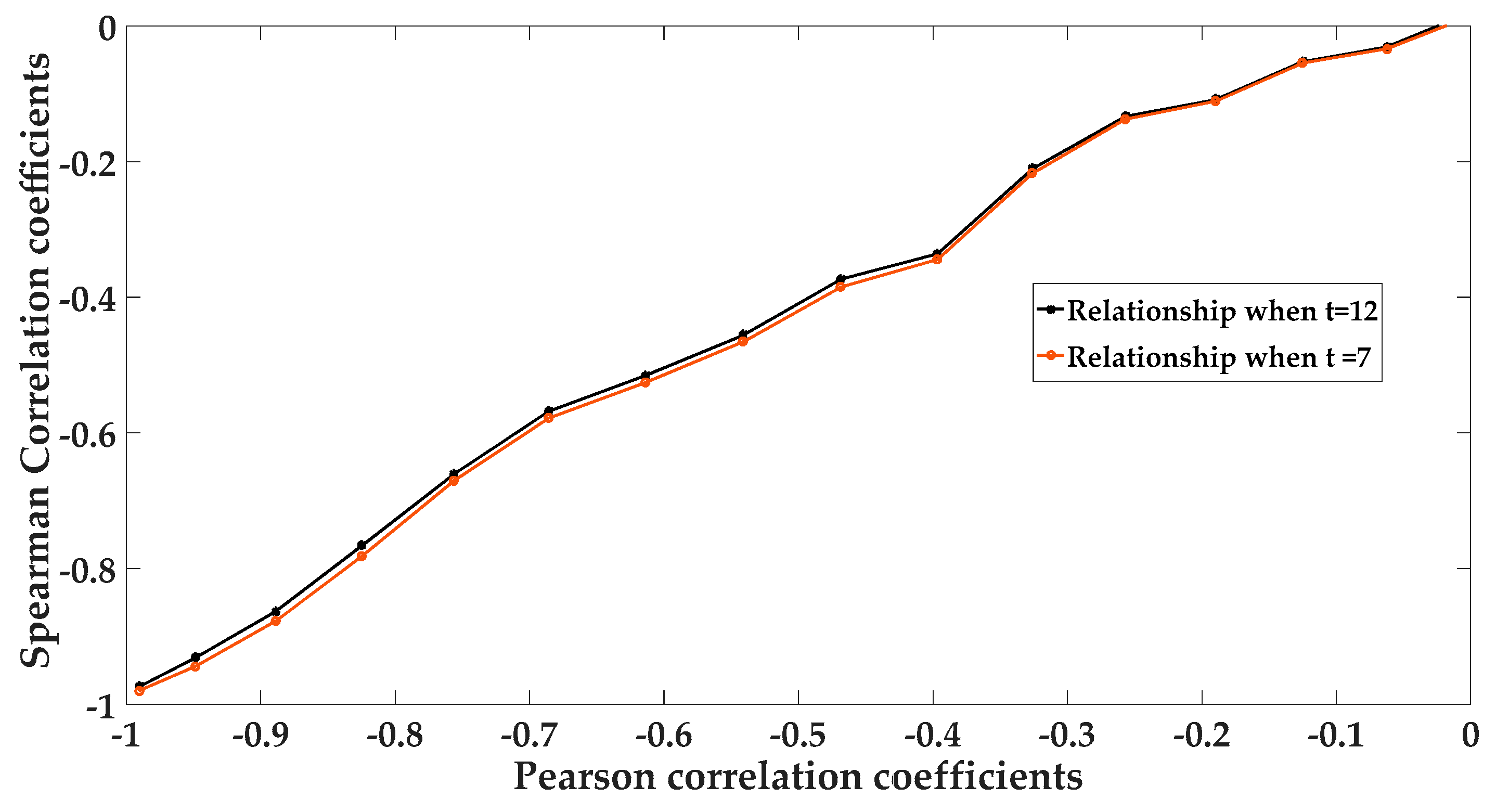
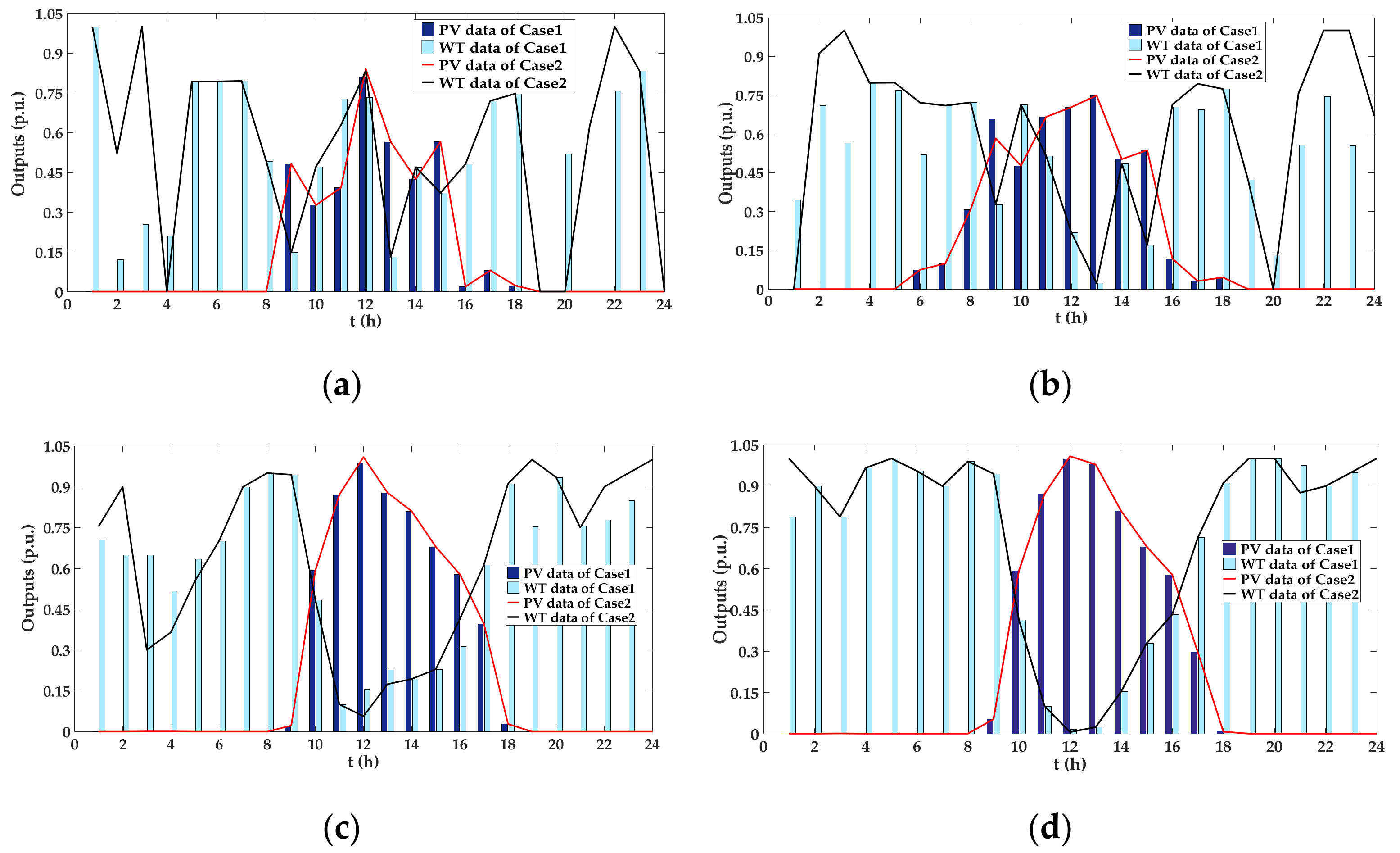
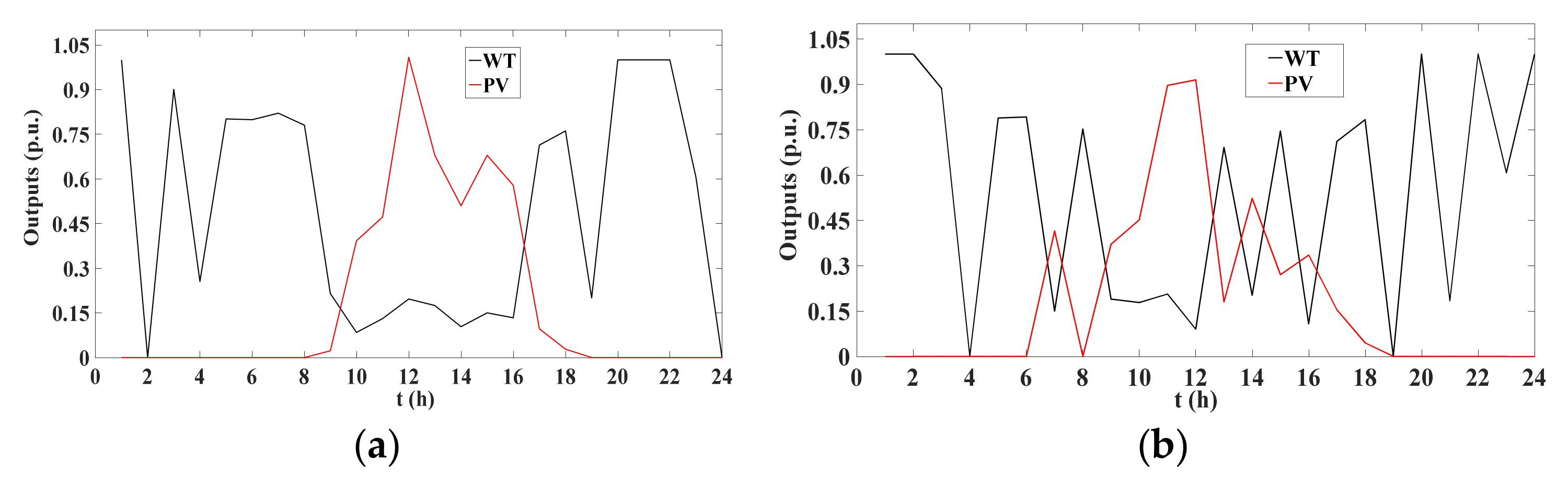
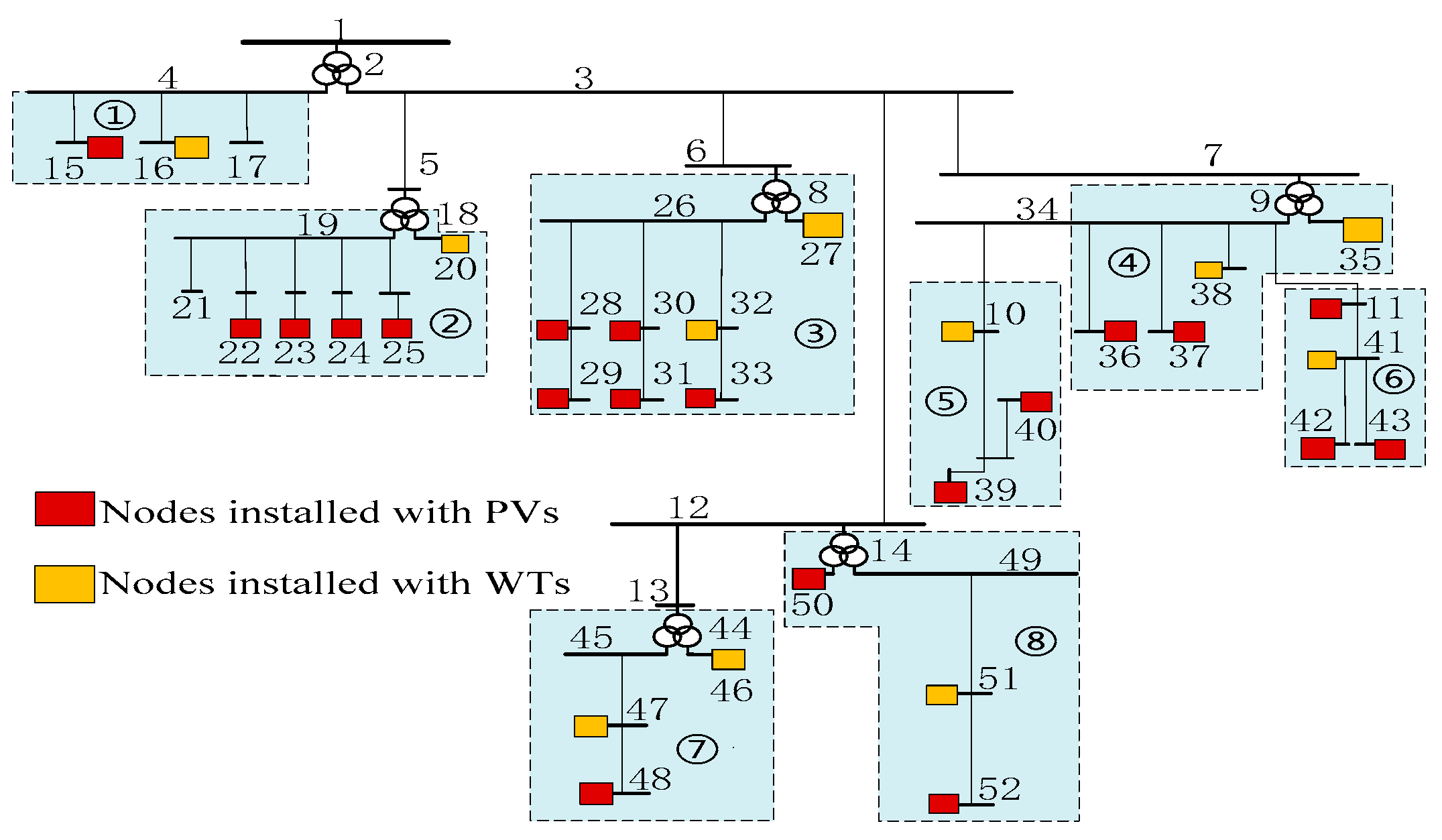
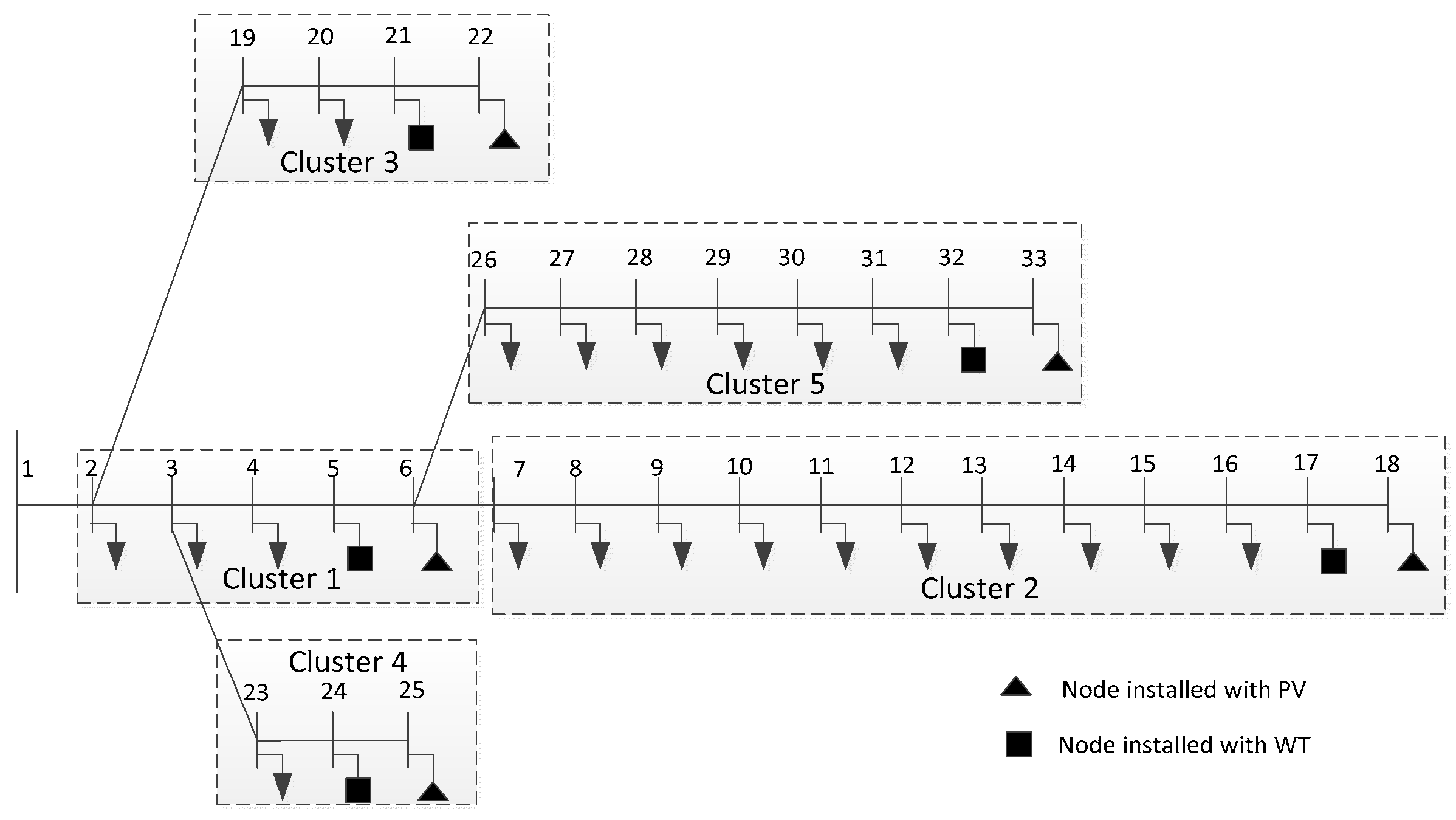
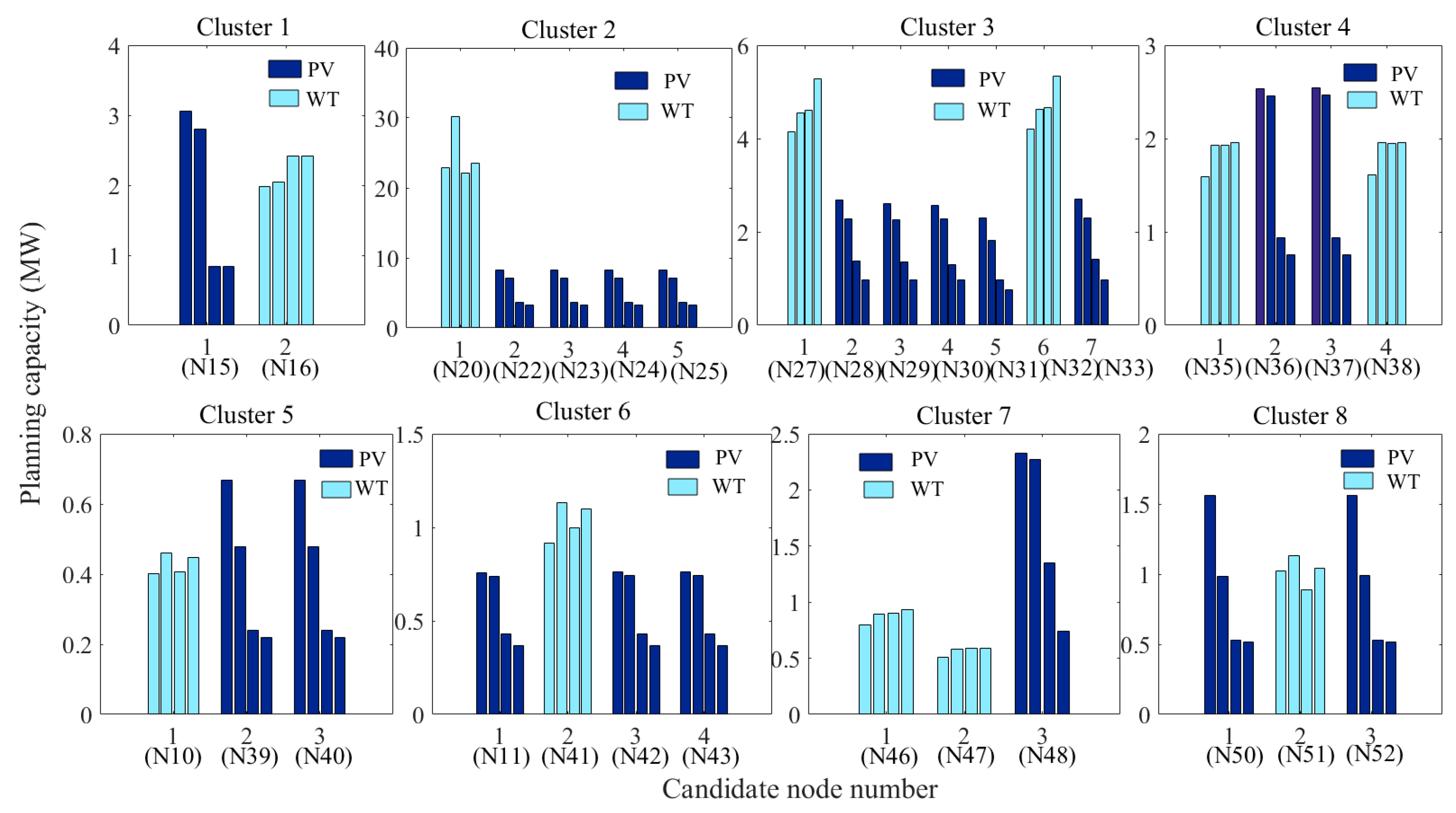
Photovoltaic (PV) and wind power (WT) resources can influence each other in some scenarios, and this influence tends to show that the rise of PV resources may indicate the drop of WT resources, and vice versa. This pattern of PV and WT resources influencing each other is called the complementary characteristics of PV and WT power. The complementary characteristics of the power outputs of different kinds of distributed renewable energy resources (DRERs) and the correlation between DRERs outputs and loads can impact the consumption of DRERs by the loads within the grid, which represents the rate of DRER outputs consumed by loads instead of being reduced. In this regard, this paper investigates a planning strategy for DRERs considering these two factors. An improved co-variance matrix method is applied to generate complementary samples of DRERs and correlated samples of DRERs and loads. The samples generated are used to study the impacts of the degree of correlation between DRERs and loads on the consumption ability of DRERs. The concept of the cluster is introduced as a region including DRERs with complementary characteristics. Based on the cluster partition method and the samples generated, the DRERs planning model is proposed to maximize the profits of different DRER stakeholders. The planning model is transformed into a single objective model through the ideal point method. A Benders decomposition-based method is developed to efficiently solve the proposed model, and an actual network in China is used to illustrate its performance. The results show DRER consumption can be significantly improved by the proposed planning model.
Keywords: renewable energy planning; consumption ability; correlated sample generation method; cluster partition; Benders decomposition renewable energy planning; consumption ability; correlated sample generation method; cluster partition; Benders decomposition