Article

Life-Cycle Cost Minimization of Gas Turbine Power Cycles for Distributed Power Generation Using Sequential Quadratic Programming Method †

1
Department of Environment & Energy Mechanical Engineering, University of Science & Technology (UST), 156 Gajeongbuk-ro, Yuseong-gu, Daejeon 34103, Korea
2
Department of Clean Fuel & Power Generation, Korea Institute of Machinery & Materials (KIMM), 156 Gajeongbuk-ro, Yuseong-gu, Daejeon 34103, Korea
*
Author to whom correspondence should be addressed.
This paper is an improved version of the conference paper, published in the IPCBEE 2017 proceedings.
Energies 2018, 11(12), 3511; https://doi.org/10.3390/en11123511
Submission received: 8 October 2018 / Revised: 6 December 2018 / Accepted: 11 December 2018 / Published: 16 December 2018
(This article belongs to the Section F: Electrical Engineering)

Abstract

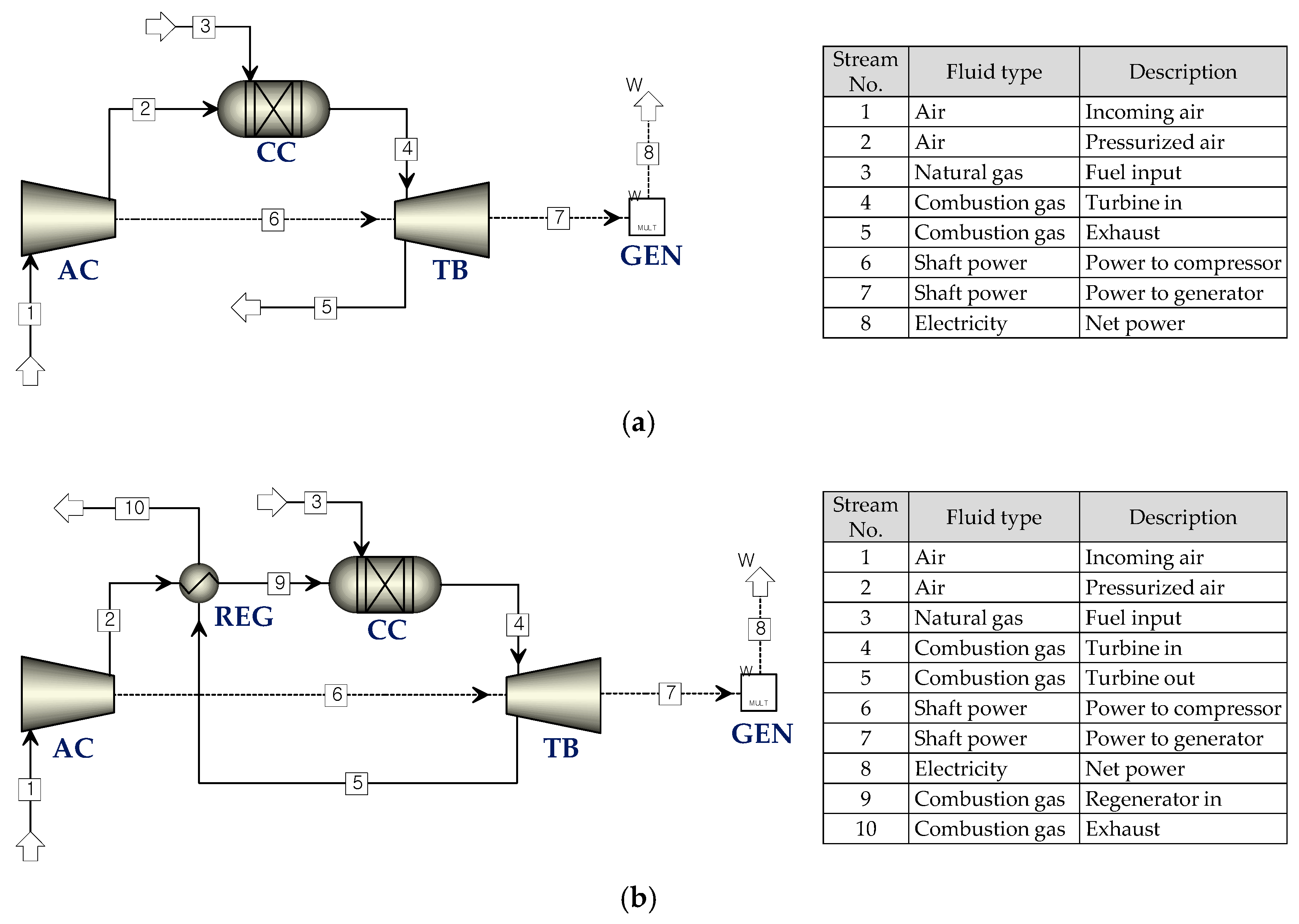
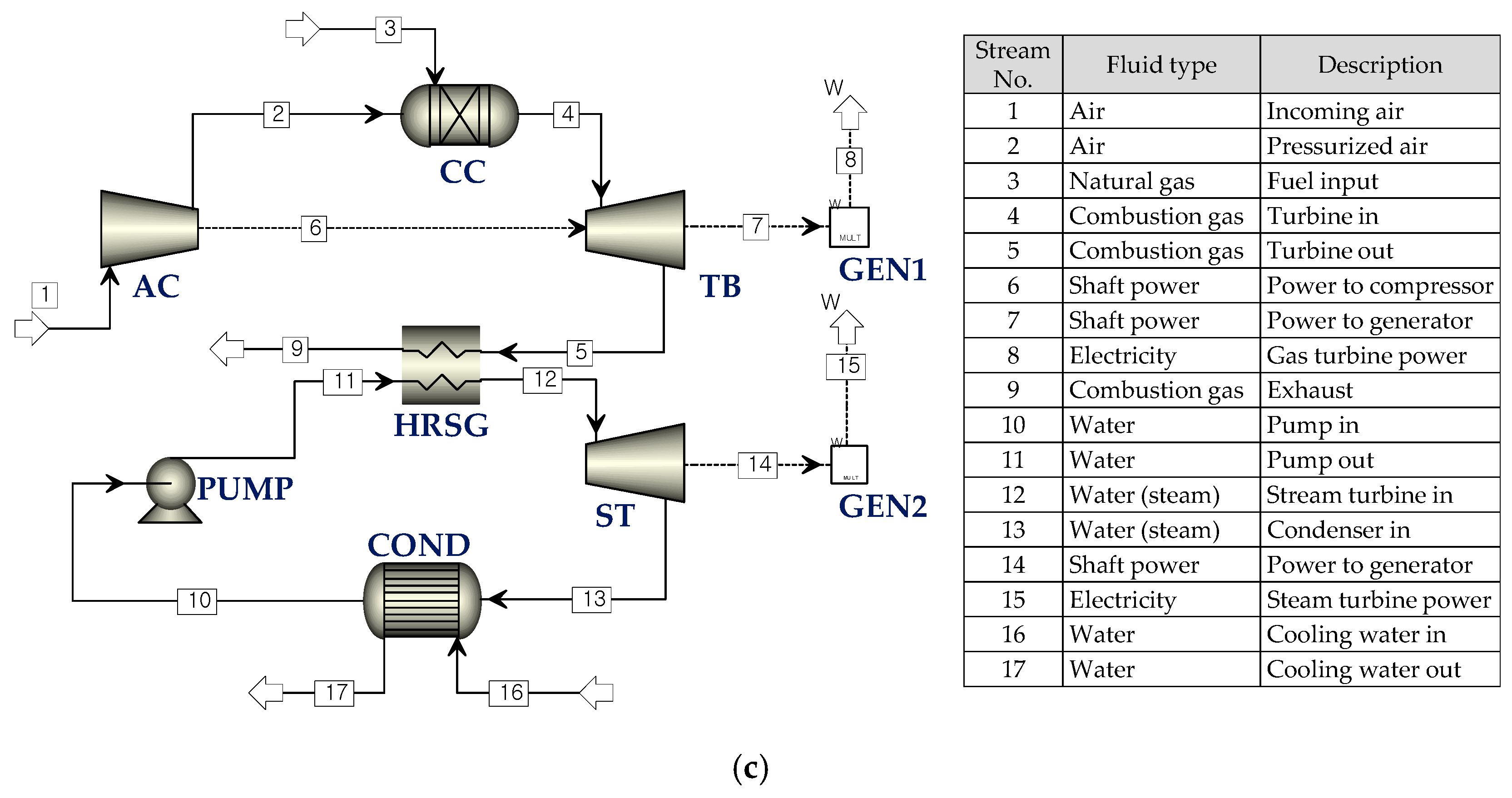
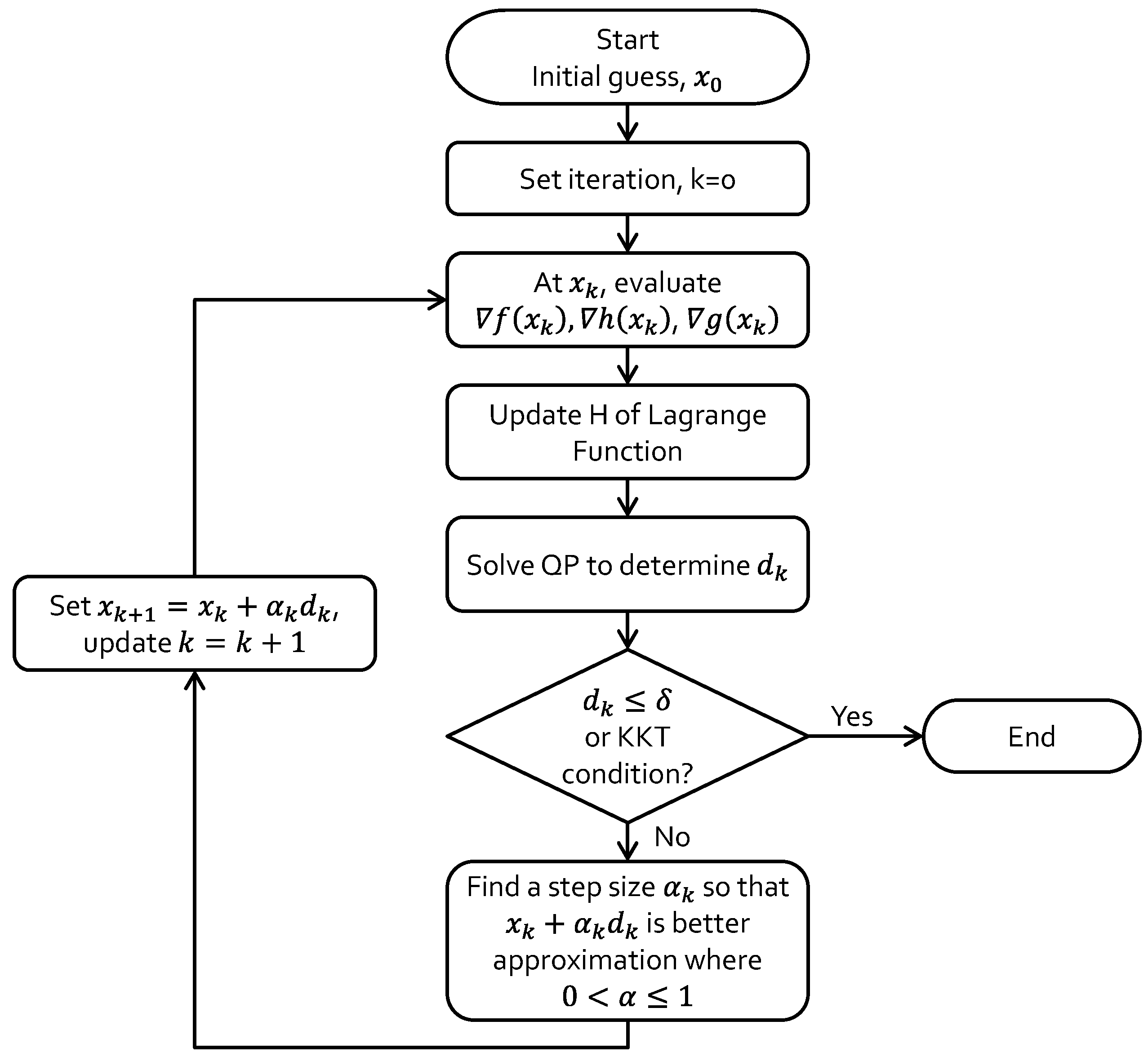
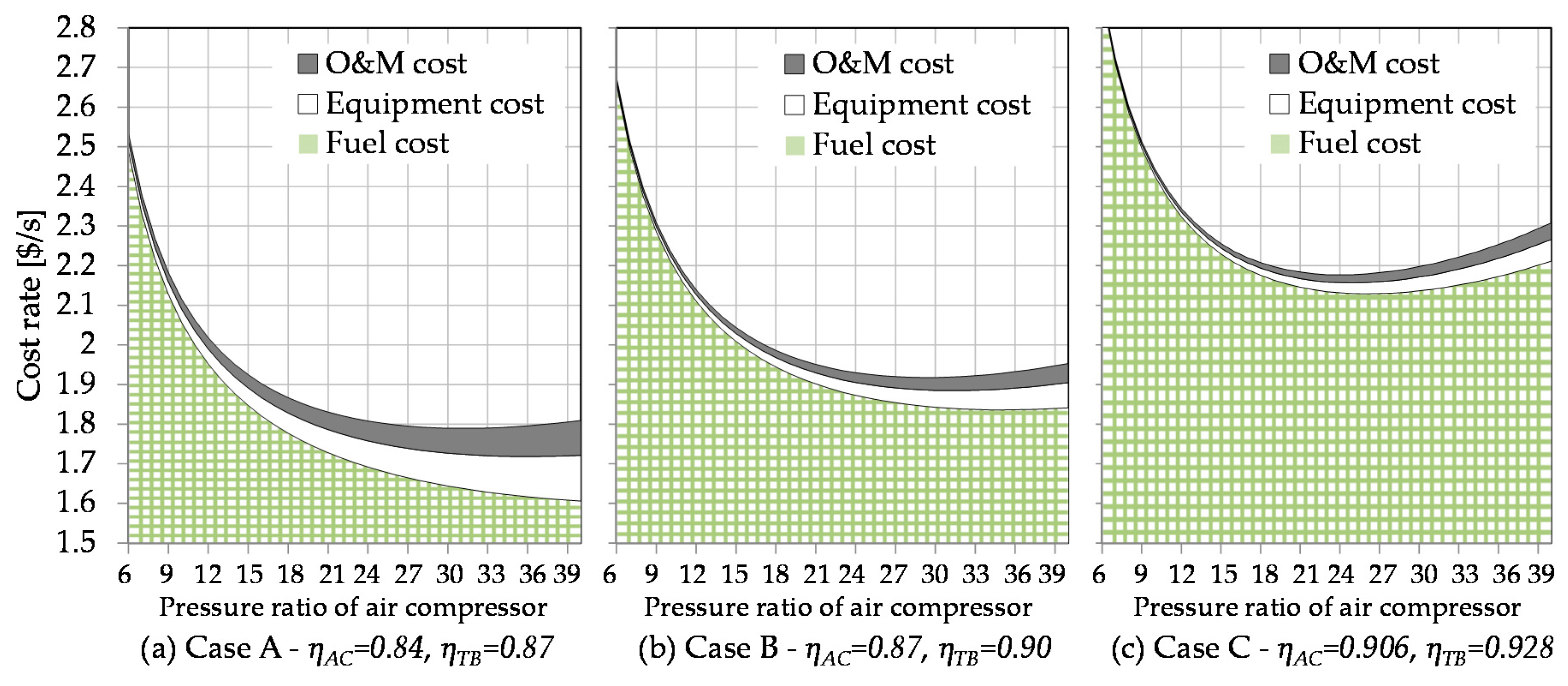
The life-cycle cost reduction of medium-class gas turbine power plants was investigated using the mathematical optimization technique. Three different types of gas turbine power cycles—a simple cycle, a regenerative cycle, and a combined cycle—were examined, and their optimal design conditions were determined using the sequential quadratic programming (SQP) technique. As a modeling reference, the Siemens SGT-700 gas turbine was chosen and its technical data were used for system simulation and validation. Through optimization using the SQP method, the overall costs of the simple cycle, regenerative cycle, and combined cycle were reduced by 7.4%, 12.0%, and 3.9%, respectively, compared to the cost of the base cases. To examine the effect of economic parameters on the optimal design condition and cost, different values of fuel costs, interest rates, and discount rates were applied to the cost calculation, and the optimization results were analyzed and compared. The values were chosen to reflect different countries’ economic situations: South Korea, China, India, and Indonesia. For South Korea and China, the optimal design condition is proposed near the upper bound of the variation range, implying that the efficiency improvement plays an important role in cost reduction. For India and Indonesia, the optimal condition is proposed in the middle of the variation ranges. Even for India and Indonesia, the fuel cost has the largest contribution to the total cost, accounting for more than 60%.
Keywords: gas turbine; power cycles; life-cycle cost; optimization; cost minimization; sequential quadratic programming (SQP) gas turbine; power cycles; life-cycle cost; optimization; cost minimization; sequential quadratic programming (SQP)