Article

A Residential Energy Hub Model with a Concentrating Solar Power Plant and Electric Vehicles


1
School of Electrical Engineering, Zhejiang University, No. 38 Zheda Rd., Hangzhou 310027, China
2
Department for Management of Science and Technology Development, Ton Duc Thang University, Ho Chi Minh City, Vietnam
3
Faculty of Electrical and Electronics Engineering, Ton Duc Thang University, Ho Chi Minh City, Vietnam
4
Department of Electrical and Electronic Engineering, Universiti Teknologi Brunei, Bandar Seri Begawan BE1410, Brunei
*
Author to whom correspondence should be addressed.
Energies 2017, 10(8), 1159; https://doi.org/10.3390/en10081159
Submission received: 16 June 2017 / Revised: 2 August 2017 / Accepted: 3 August 2017 / Published: 7 August 2017

Abstract

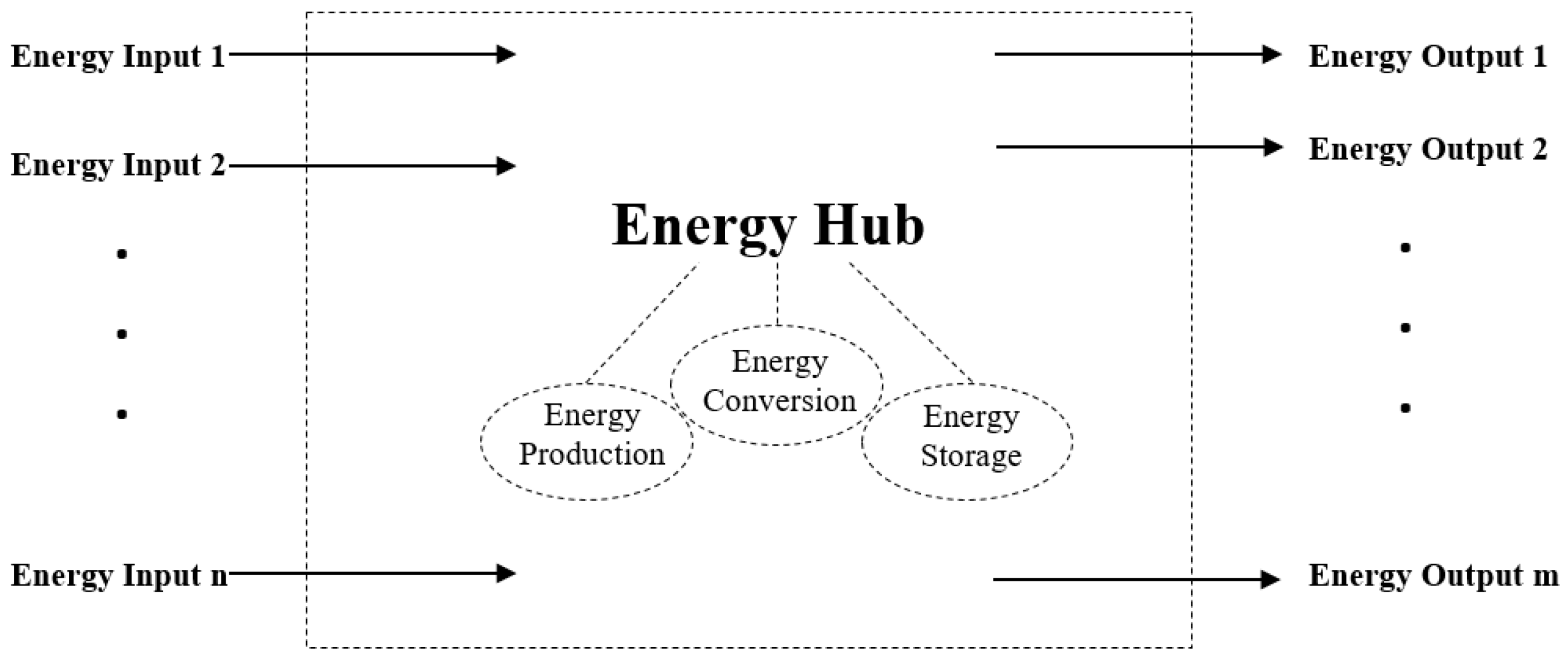
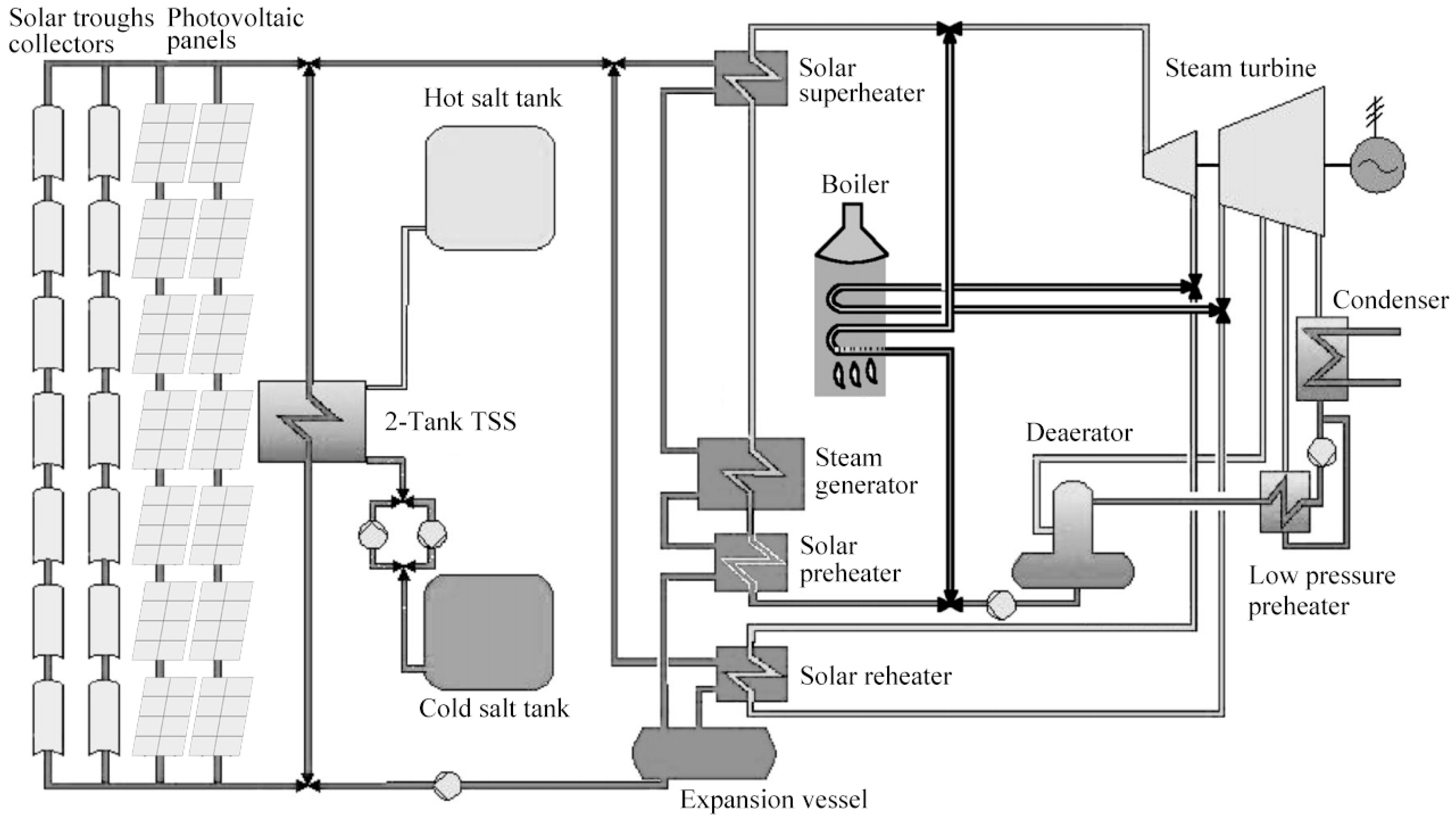
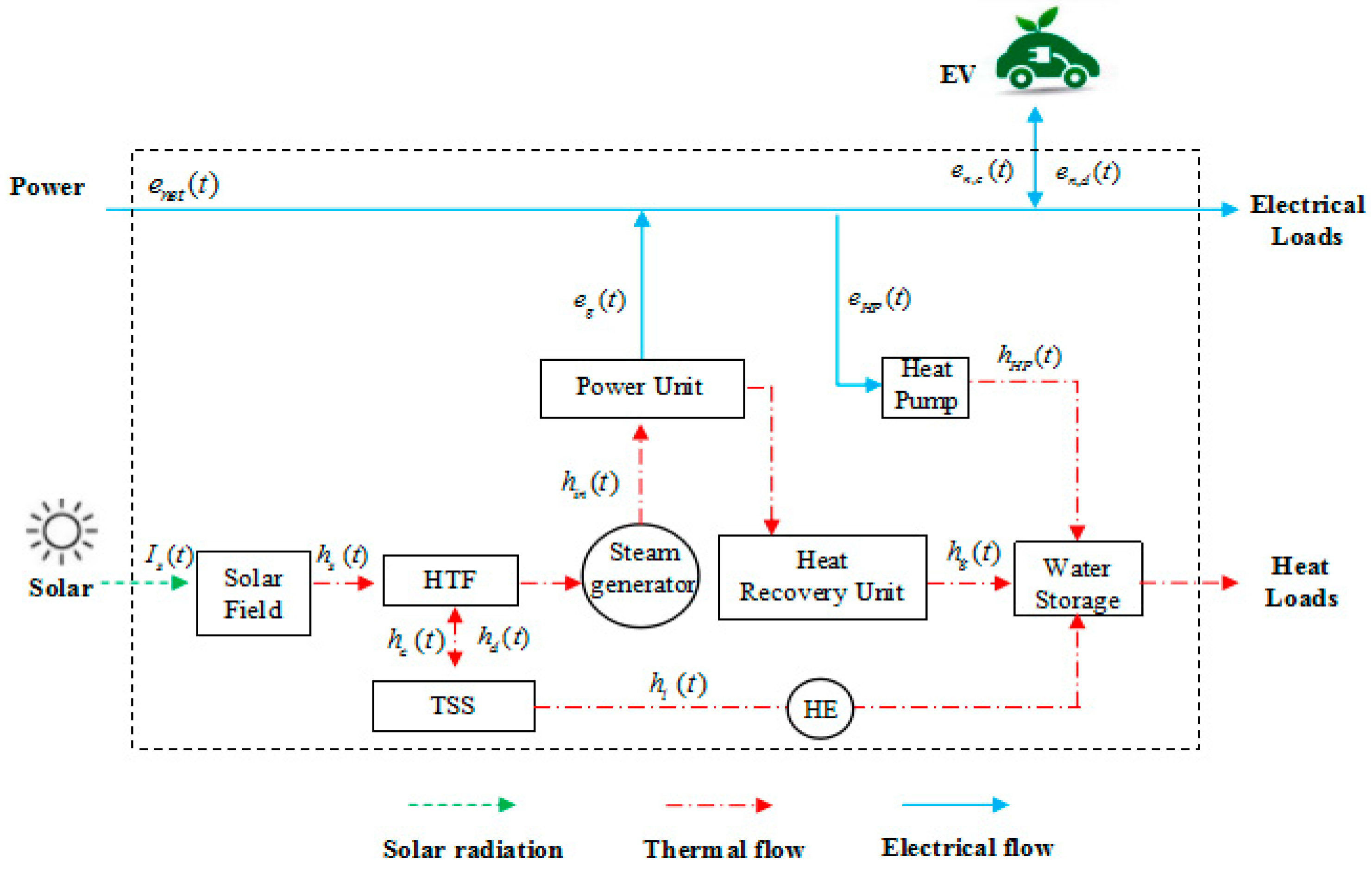
Renewable energy generation and electric vehicles (EVs) have attracted much attention in the past decade due to increasingly serious environmental problems as well as less and less fossil energy reserves. Moreover, the forms of energy utilization are changing with the development of information technology and energy technology. The term “energy hub” has been introduced to represent an entity with the capability of energy production, conversion and storage. A residential quarter energy-hub-optimization model including a concentrating solar power (CSP) unit is proposed in this work, with solar energy and electricity as its inputs to supply thermal and electrical demands, and the operating objective is to minimize the involved operation costs. The optimization model is a mixed integer linear programming (MILP) problem. Demand side management (DSM) is next implemented by modeling shiftable electrical loads such as EVs and washers, as well as flexible thermal loads such as hot water. Finally, the developed optimization model is solved with the commercial CPLEX solver based on the YALMIP/MATLAB toolbox, and sample examples are provided for demonstrating the features of the proposed method.
Keywords: energy hub; concentrating solar power (CSP); demand side management (DSM); thermal storage system (TSS); electric vehicle (EV) energy hub; concentrating solar power (CSP); demand side management (DSM); thermal storage system (TSS); electric vehicle (EV)