Study on the Effect of Flame Instability on the Flame Structural Characteristics of Hydrogen/Air Mixtures Based on the Fast Fourier Transform

Abstract
1. Introduction
2. Experiment Setup and Procedures
3. Results and Discussion
4. Conclusions
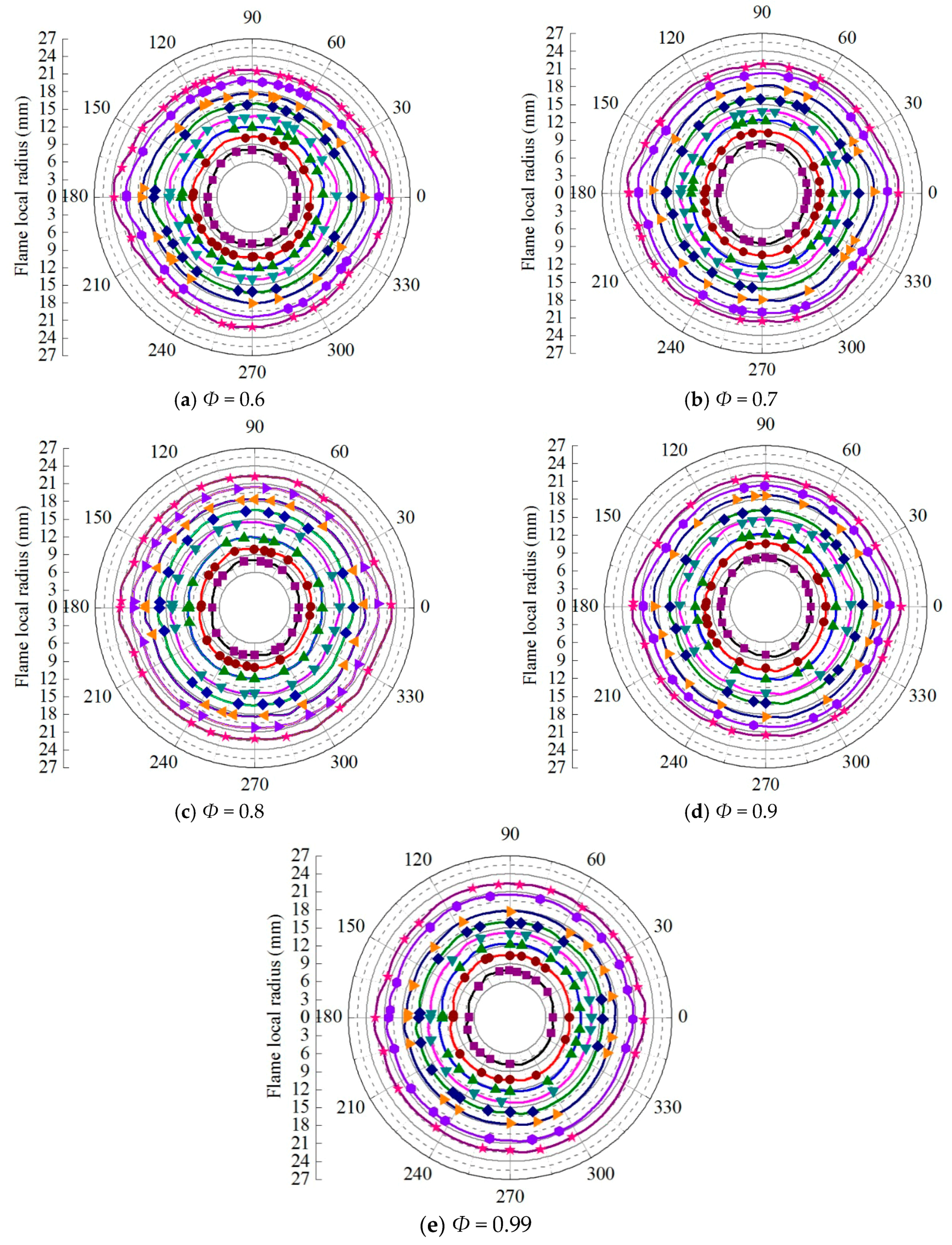
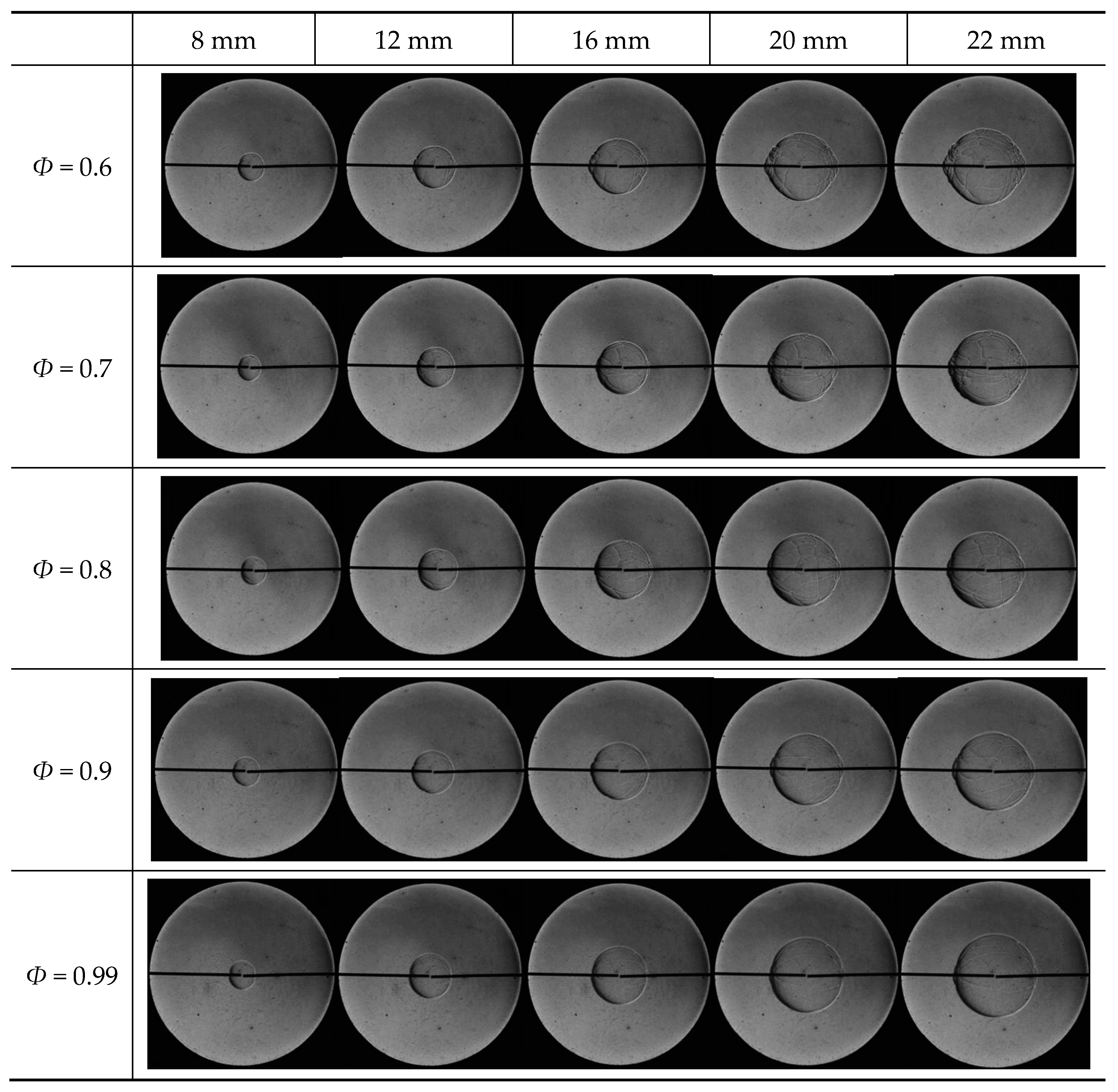
- With the development of the flame, the surface of the flame shows that cracks gradually appear and then develop into cellular structures under the effect of the flame intrinsic instability. With the increase of the equivalence ratio, the effect of the thermal-diffusive instability on the flame front decreases, and the cellular structure in the flame surface gradually weakens.
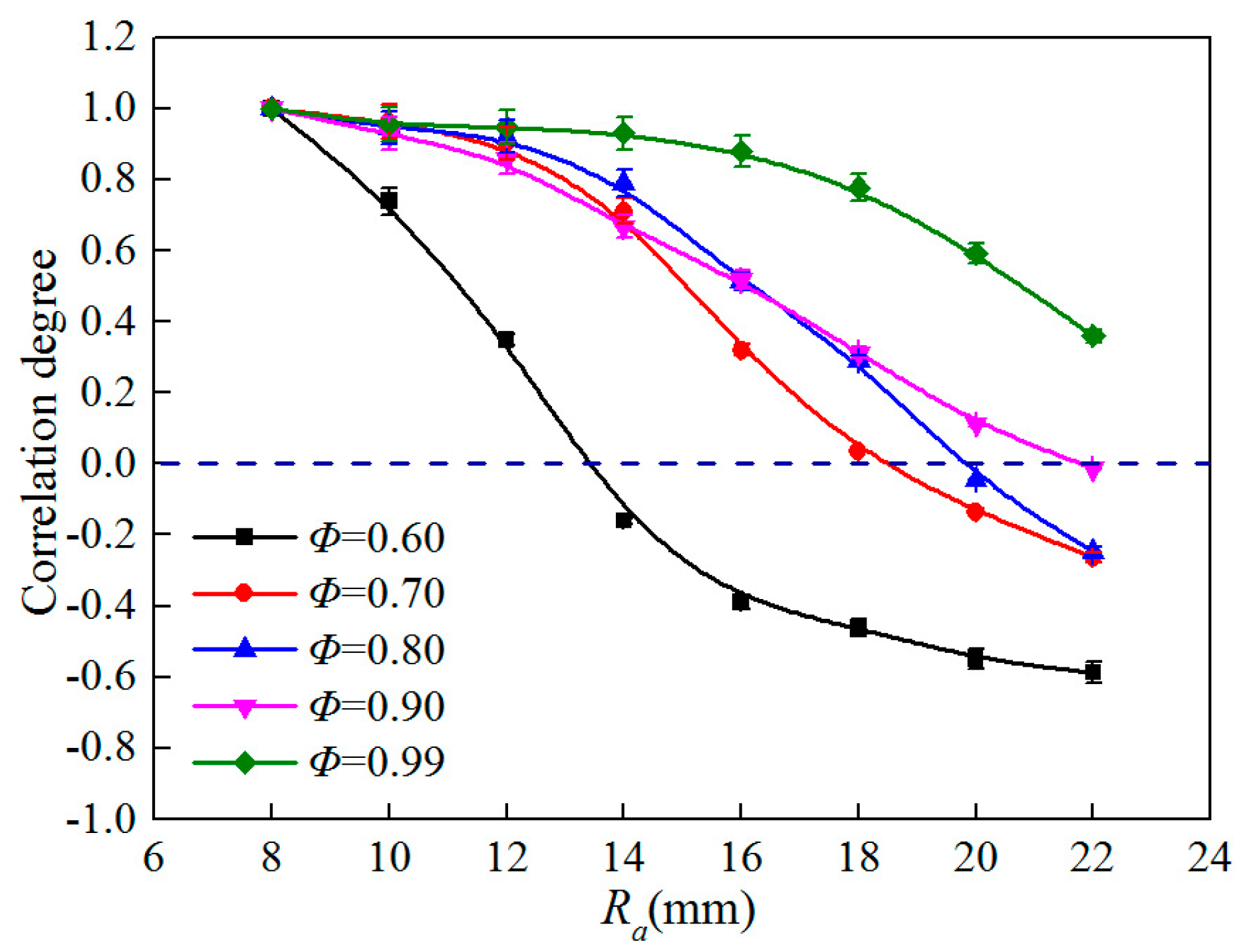
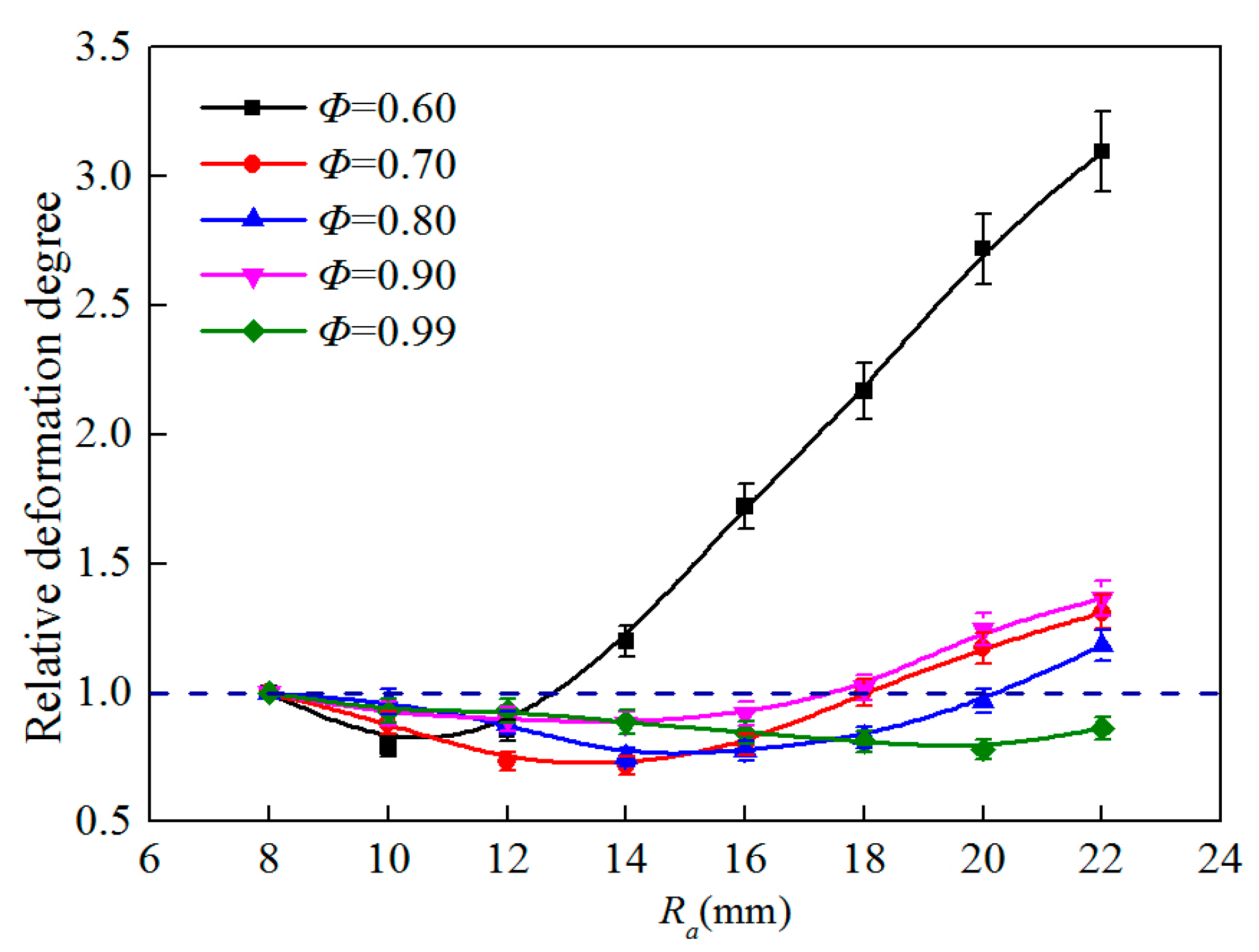
- With the development of the flame, the correlation degree of the flame front gradually decreases, even to below 0. The flame global deformation degree relative to the values when the average flame radius is 8 mm shows a decreasing trend followed by an increasing trend. With the increase of the equivalence ratio, the thermal-diffusive instability of the flame gradually weakens and the wrinkles in the flame front decrease, leading to an increasing trend of correlation degree.
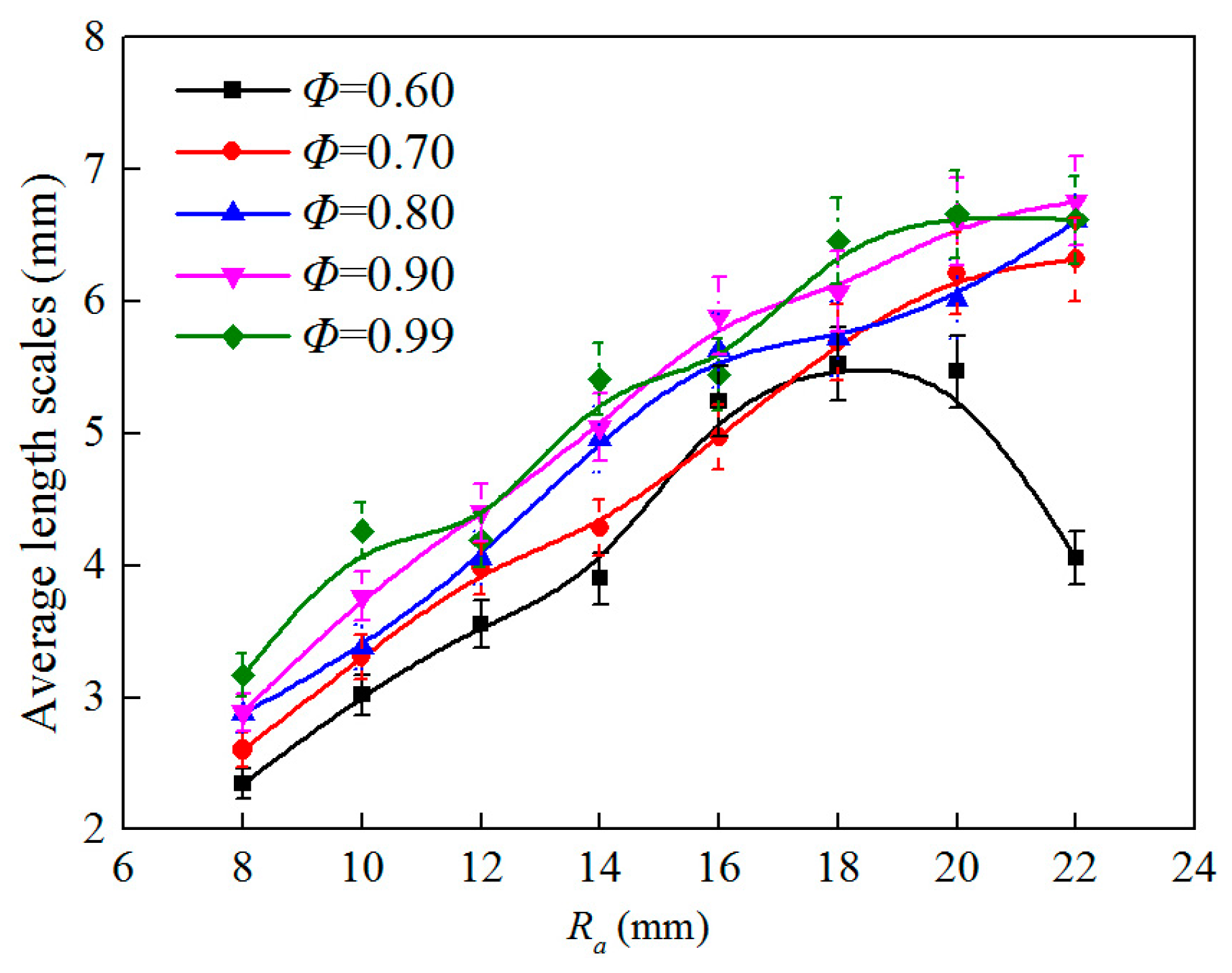
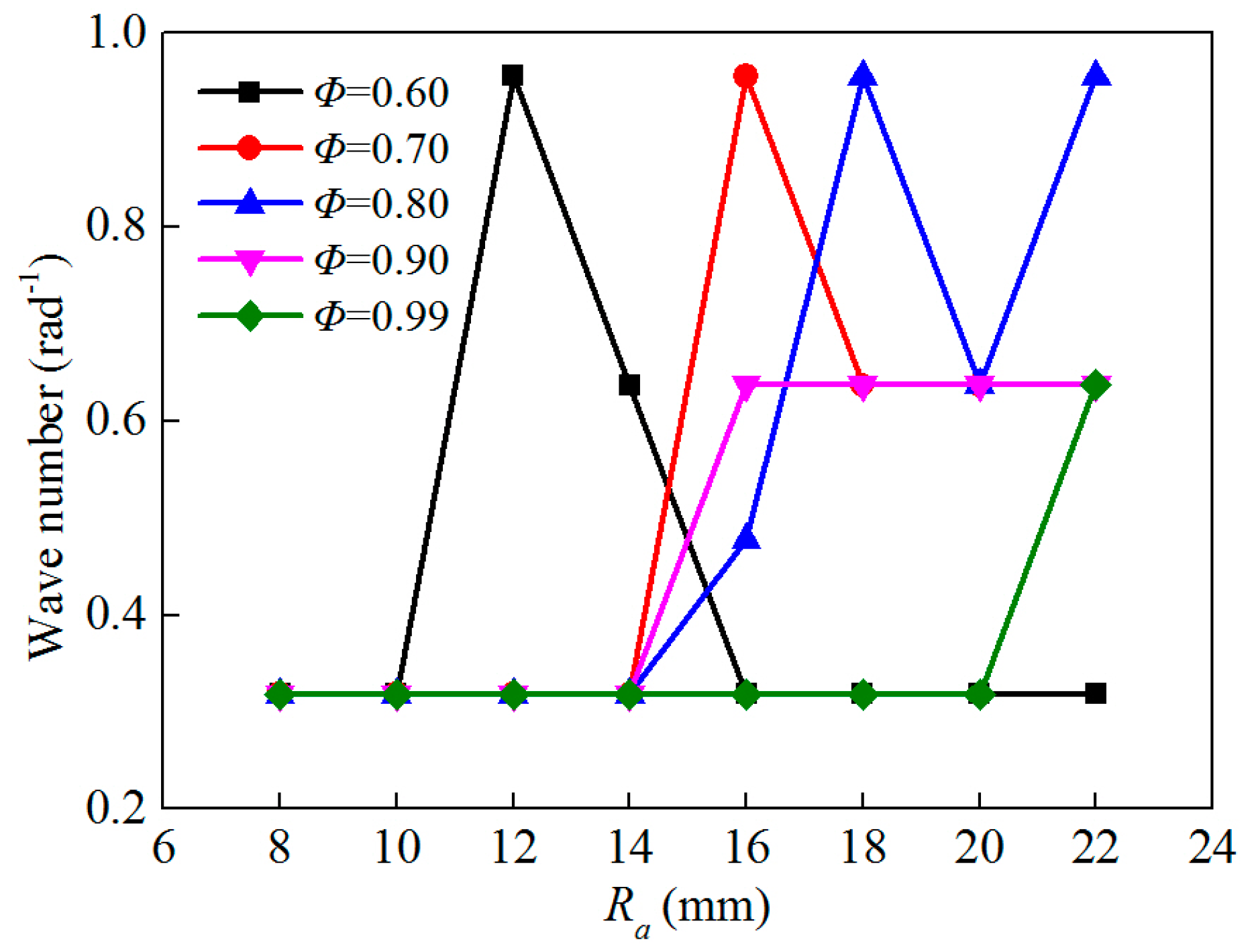
- There are different scale disturbances in flame front which result in the formation of different characteristic length scales. Under the lower equivalence ratio (0.6), the average characteristic length presents first an increase tendency and then a decrease tendency. When equivalence ratio is higher than 0.6, the average characteristic length scale gradually increases, and the growth rate gradually decreases. The average characteristic length shows an increasing trend with the increase of the equivalence ratio.
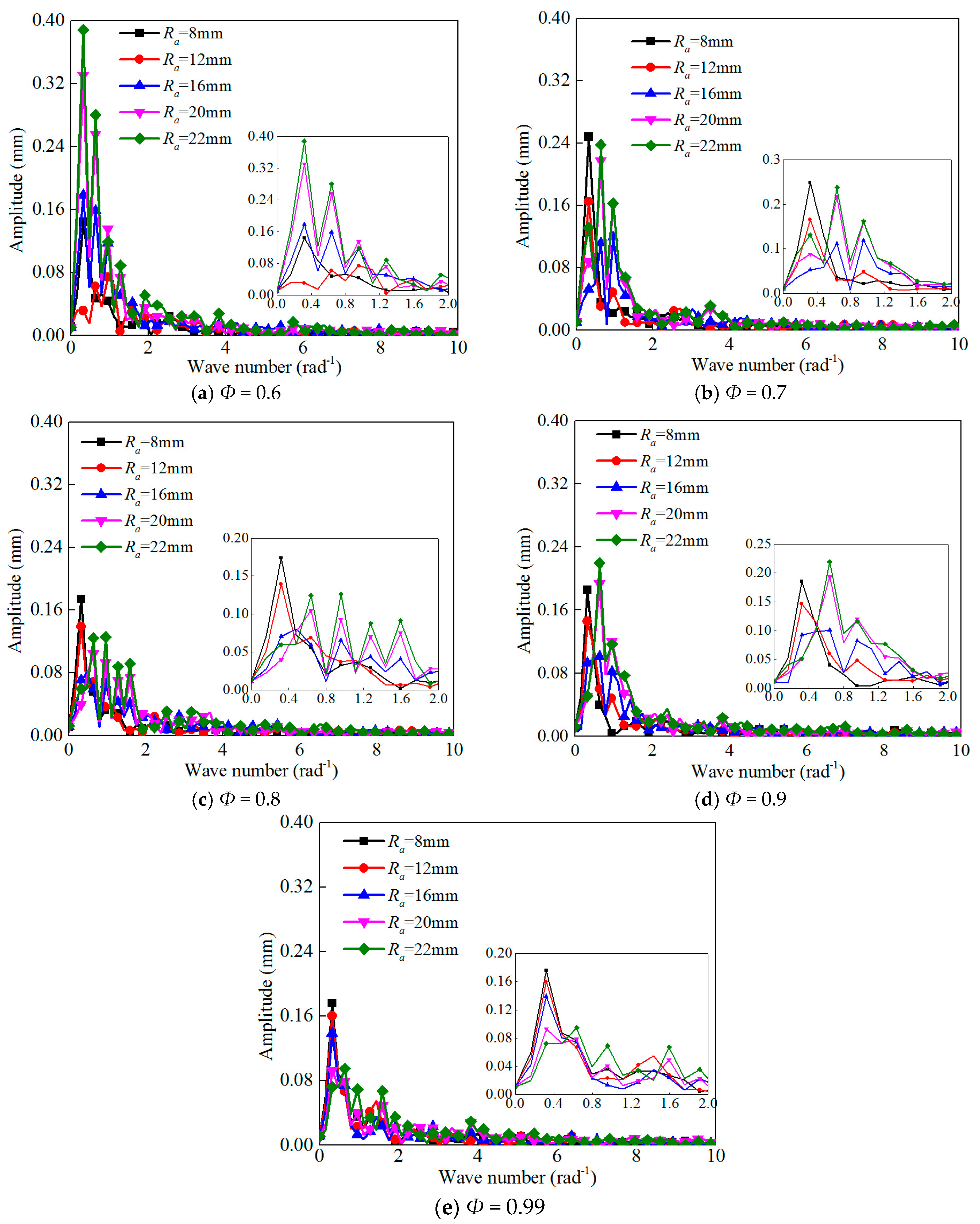
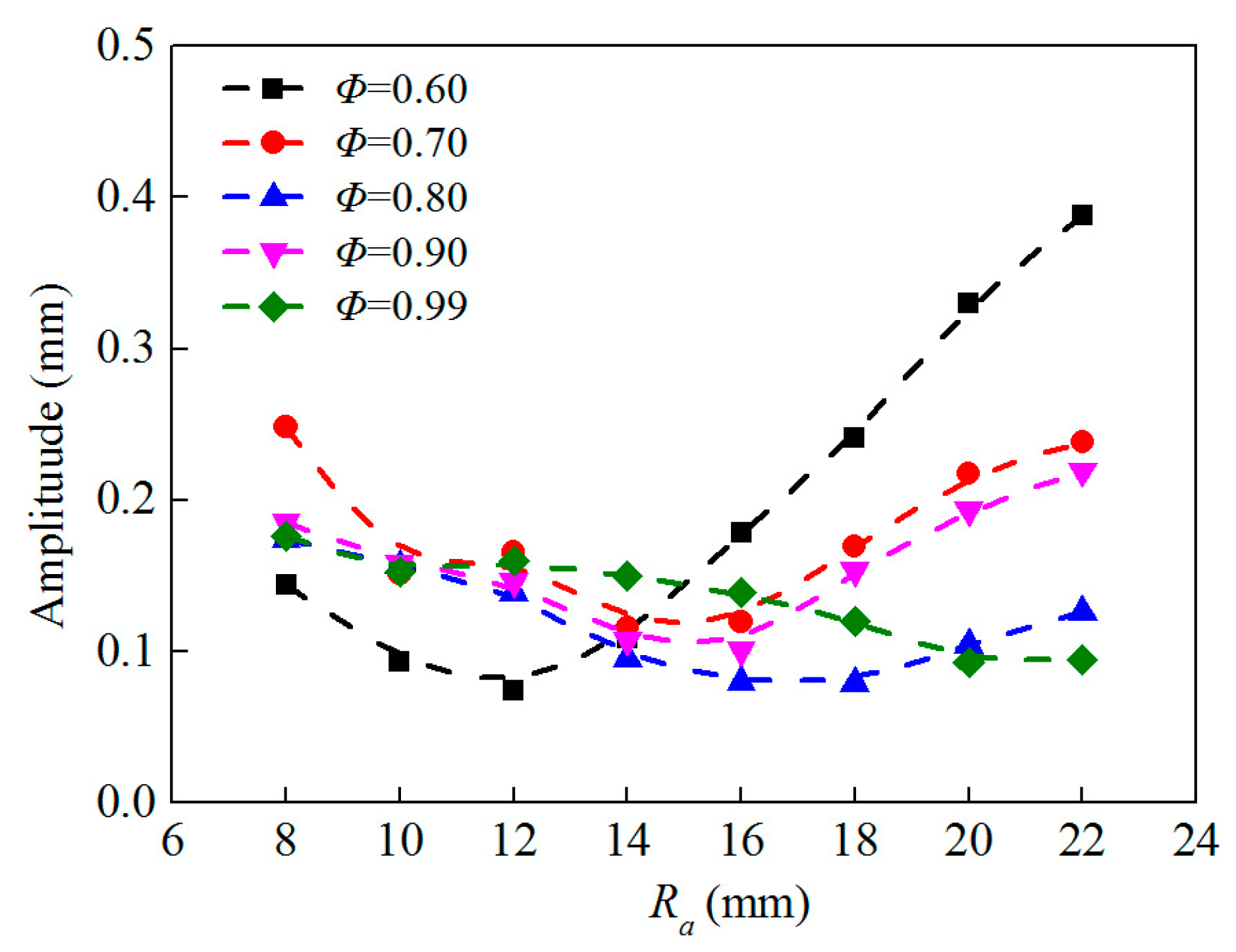
- With the increase of the wavenumber, the amplitudes of the corresponding disturbances show an increasing trend first, followed by a decreasing trend. The larger amplitudes of the disturbances were mainly concentrated in wavenumbers ranging from 0 to 2. When the wavenumber ranges from 1 to 2, the amplitudes of the disturbances present an increase tendency with the development of the flame. However, when the wavenumber ranges from 2 to 10, the disturbance amplitude is relatively small. The evolution of the flame front is the result of the interaction between the disturbances and the stretch rate.
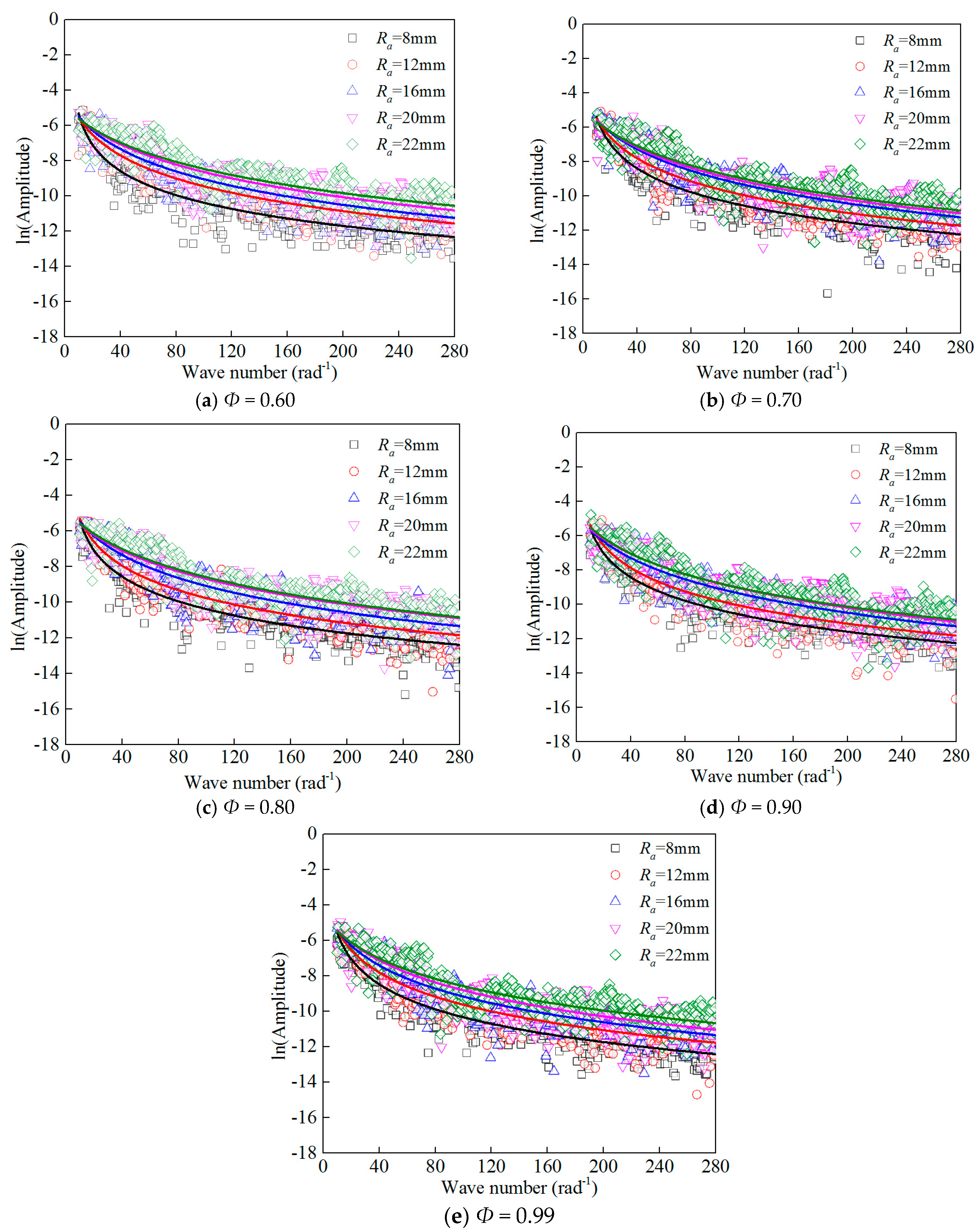
- When the wavenumber ranges from 10 to 280, the logarithm of the amplitudes decreases gradually with the increase of wavenumbers, and the absolute value of the amplitude growth rate also decreases gradually. With the development of the flame, the amplitudes of the disturbances of the same wavenumber increase, which indicates that with the development of the flame, the instability of the flame surface is enhanced and the disturbances with smaller wavelengths can be further developed.
Acknowledgments
Author Contributions
Conflicts of Interest
References
- Zhang, B.; Ji, C.; Wang, S. Combustion analysis and emissions characteristics of a hydrogen-blended methanol engine at various spark timings. Int. J. Hydrog. Energy 2015, 40, 4707–4716. [Google Scholar] [CrossRef] [Scilit]
- Yang, K.; Zhang, H.; Wang, Z.; Zhang, J.; Yang, F.; Wang, E. Study of zeotropic mixtures of ORC (organic Rankine cycle) under engine various operating conditions. Energy 2013, 58, 494–510. [Google Scholar] [CrossRef] [Scilit]
- Li, H.; Li, G.; Sun, Z.; Zhai, Y.; Zhou, Z. Measurement of the laminar burning velocities and markstein lengths of lean and stoichiometric syngas premixed flames under various hydrogen fractions. Int. J. Hydrog. Energy 2014, 39, 17371–17380. [Google Scholar] [CrossRef] [Scilit]
- Ji, C.; Yang, J.; Liu, X.; Zhang, B.; Wang, S.; Gao, B. A quasi-dimensional model for combustion performance prediction of an SI hydrogen-enriched methanol engine. Int. J. Hydrog. Energy 2016, 41, 17676–17686. [Google Scholar] [CrossRef] [Scilit]
- Sun, Z.; Li, G. On reliability and flexibility of sustainable energy application route for vehicles in China. Renew. Sustain. Energy Rev. 2015, 51, 830–846. [Google Scholar] [CrossRef] [Scilit]
- Kim, M.; Kim, J. Optimization model for the design and analysis of an integrated renewable hydrogen supply (IRHS) system: Application to Korea’s hydrogen economy. Int. J. Hydrog. Energy 2016, 41, 16613–16626. [Google Scholar] [CrossRef] [Scilit]
- Unni, J.K.; Govindappa, P.; Das, L.M. Development of hydrogen fuelled transport engine and field tests on vehicles. Int. J. Hydrog. Energy 2017, 42, 631–651. [Google Scholar]
- Yasin, K.; İlker, G.; Tarkan, S.; Levent, Y.; Ahmet, S.D. Effect of hydrogen enrichment on combustion characteristics, emissions and performance of a diesel engine. Int. J. Hydrog. Energy 2016, 41, 656–665. [Google Scholar]
- Yasin, K.; İlker, G.; Tarkan, S.; Levent, Y.; Ahmet, S.D.; Somchai, W. Effects of hydrogen and methane addition on combustion characteristics, emissions, and performance of a CI engine. Int. J. Hydrog. Energy 2016, 41, 1313–1325. [Google Scholar]
- Martínez-Boggio, S.D.; Curto-Risso, P.L.; Medina, A.; Hernandez, A.C. Simulation of cycle-to-cycle variations on spark ignition engines fueled with gasoline-hydrogen blends. Int. J. Hydrog. Energy 2016, 41, 9087–9099. [Google Scholar] [CrossRef] [Scilit]
- Li, H.; Li, G.; Sun, Z.; Zhou, Z.; Li, Y.; Yuan, Y. Effect of dilution on laminar burning characteristics of H2/CO/CO2/air premixed flames with various hydrogen fractions. Exp. Therm. Fluid Sci. 2015, 74, 160–168. [Google Scholar] [CrossRef] [Scilit]
- Li, H.; Li, G.; Sun, Z.; Li, Y.; Yuan, Y. Investigation on dilution effect on laminar burning velocity of syngas premixed flames. Energy 2016, 112, 146–152. [Google Scholar] [CrossRef] [Scilit]
- Lamoureux, N.; Djebaïli-Chaumeix, N.; Paillard, C.E. Laminar flame velocity determination for H2-air-He-CO2 mixtures using the spherical bomb method. Exp. Therm. Fluid Sci. 2003, 27, 385–393. [Google Scholar] [CrossRef] [Scilit]
- Sun, Z.; Li, G. Propagation characteristics of laminar spherical flames within homogenous hydrogen-air mixtures. Energy 2016, 116, 116–127. [Google Scholar] [CrossRef] [Scilit]
- Burluka, A.A.; Gaughan, R.G.; Griffiths, J.F.; Mandilas, C.; Sheppard, C.G.W.; Woolley, R. Experimental observations on the influence of hydrogen atoms diffusion on laminar and turbulent premixed burning velocities. Fuel 2017, 189, 66–78. [Google Scholar] [CrossRef] [Scilit]
- Liu, F.; Bao, X.; Gu, J.; Chen, R. Onset of cellular instabilities in spherically propagating hydrogen-air premixed laminar flames. Int. J. Hydrog. Energy 2012, 37, 11458–11465. [Google Scholar] [CrossRef] [Scilit]
- Sun, Z.; Li, G.; Li, H.; Zhai, Y.; Zhou, Z. Buoyant unstable behavior of initially spherical lean hydrogen-air premixed flames. Energies 2014, 7, 4938–4956. [Google Scholar] [CrossRef] [Scilit]
- Hu, E.; Huang, Z.; He, J.; Zheng, J.; Miao, H. Measurements of laminar burning velocities and onset of cellular instabilities of methane-hydrogen-air flames at elevated pressures and temperatures. Int. J. Hydrog. Energy 2009, 34, 5574–5584. [Google Scholar] [CrossRef] [Scilit]
- Law, C.K.; Jomaas, G.; Bechtold, J.K. Cellular instabilities of expanding hydrogen/propane spherical flames at elevated pressures: Theory and experiment. Proc. Combust. Inst. 2005, 30, 159–167. [Google Scholar] [CrossRef] [Scilit]
- Sivashinsky, G. The rate of expansion of spherical flames. Combust. Theory Model. 2006, 10, 625–637. [Google Scholar]
- Bychkov, V.V.; Liberman, M.A. Dynamics and stability of premixed flames. Phys. Rep. 2000, 325, 115–237. [Google Scholar] [CrossRef] [Scilit]
- Yenerdag, B.; Fukushima, N.; Shimura, M.; Tanahashi, M.; Miyauchi, T. Turbulence-flame interaction and fractal characteristics of H2-air premixed flame under pressure rising condition. Proc. Combust. Inst. 2015, 35, 1277–1285. [Google Scholar] [CrossRef] [Scilit]
- Mukaiyama, K.; Shibayama, S.; Kuwana, K. Fractal structures of hydrodynamically unstable and diffusive-thermally unstable flames. Combust. Flame 2013, 160, 2471–2475. [Google Scholar] [CrossRef] [Scilit]
- Battista, F.; Troiani, G.; Picano, F. Fractal scaling of turbulent premixed flame fronts: Application to LES. Int. J. Heat Fluid Flow 2015, 51, 78–87. [Google Scholar] [CrossRef] [Scilit]
- Hiraoka, K.; Minamoto, Y.; Shimura, M.; Naka, Y.; Fukushima, N.; Tanahashi, M. A fractal dynamic SGS combustion model for large eddy simulation of turbulent premixed flames. Combust. Sci. Technol. 2016, 188, 1472–1495. [Google Scholar] [CrossRef] [Scilit]
- Ng, H.D.; Chao, J.; Yatsufusa, T.; Lee, J. Measurement and chemical kinetic prediction of detonation sensitivity and cellular structure characteristics in dimethyl ether-oxygen mixtures. Fuel 2009, 88, 124–131. [Google Scholar] [CrossRef] [Scilit]
- Diakow, P.; Cross, M.; Ciccarelli, G. Detonation characteristics of dimethyl ether and ethanol-air mixtures. Shock. Waves 2015, 25, 231–238. [Google Scholar] [CrossRef] [Scilit]
- Jiang, Y.; Li, G.; Li, F.; Sun, Z.; Li, H. Experimental investigation of correlation between cellular structure of the flame front and pressure. Fuel 2017, 199, 65–75. [Google Scholar] [CrossRef] [Scilit]
- Askari, O.; Elia, M.; Ferrari, M.; Metghalchi, H. Cell formation effects on the burning speeds and flame front area of synthetic gas at high pressures and temperatures. Appl. Energy 2017, 189, 568–577. [Google Scholar] [CrossRef] [Scilit]
- Karlin, V.; Makhviladze, G. Computational analysis of the steady states of the Sivashinsky model of hydrodynamic flame instability. Combust. Theory Model. 2003, 7, 87–108. [Google Scholar] [CrossRef] [Scilit]
- Karlin, V. Estimation of the linear transient growth of perturbations of cellular flames. Math. Models Methods Appl. Sci. 2003, 14, 1191–1210. [Google Scholar] [CrossRef] [Scilit]
- Wu, J.; Wang, J.; Nie, Y.; Yu, S.; Huang, Z. Experimental study on flame instabilities of laminar premixed CH4/H2/air non-adiabatic flat flames. Fuel 2015, 159, 599–606. [Google Scholar]
- Choi, O.; Min, C.L. Investigation into the combustion instability of synthetic natural gases using high speed flame images and their proper orthogonal decomposition. Int. J. Hydrog. Energy 2016, 41, 20731–20743. [Google Scholar] [CrossRef] [Scilit]
- Kawahara, N.; Tomita, E. Visualization of auto-ignition and pressure wave during knocking in a hydrogen spark-ignition engine. Int. J. Hydrog. Energy 2009, 34, 3156–3163. [Google Scholar] [CrossRef] [Scilit]
- Apicella, B.; Bruno, A.; Wang, X.; Spinelli, N. Fast Fourier Transform and autocorrelation function for the analysis of complex mass spectra. Int. J. Mass Spectrom. 2013, 338, 30–38. [Google Scholar] [CrossRef] [Scilit]
- Pal, B. Fourier transform ultrasound spectroscopy for the determination of wave propagation parameters. Ultrasonics 2017, 73, 140–143. [Google Scholar] [CrossRef] [Scilit] [PubMed]
- Mukherjee, B.; Srivardhan, V.; Roy, P.N.S. Identification of formation interfaces by using wavelet and Fourier transforms. J. Appl. Geophys. 2016, 128, 140–149. [Google Scholar] [CrossRef] [Scilit]
- Li, H.; Li, G.; Sun, Z.; Yu, S.; Zhai, Y.; Zhou, Z. Experimental investigation on laminar burning velocities and flame intrinsic instabilities of lean and stoichiometric H2/CO/air mixtures at reduced, normal and elevated pressures. Fuel 2014, 135, 279–291. [Google Scholar] [CrossRef] [Scilit]
- Schoukens, J.; Rolain, Y.; Pintelon, R. Analysis of windowing/leakage effects in frequency response function measurements. Automatica 2006, 42, 27–38. [Google Scholar] [CrossRef] [Scilit]
- Belega, D.; Petri, D.; Dallet, D. Impact of harmonics on the interpolated DFT frequency estimator. Mech. Syst. Signal Process. 2015, 66, 349–360. [Google Scholar] [CrossRef] [Scilit]
- Tabb, D.L.; Shah, M.B.; Strader, M.B.; Conelly, H.M.; Hettich, R.L.; Hurst, G.B. Determination of peptide and protein ion charge states by Fourier transformation of isotope-resolved mass spectra. J. Am. Soc. Mass Spectrom. 2006, 17, 903–915. [Google Scholar] [CrossRef] [Scilit] [PubMed]

© 2017 by the authors. Licensee MDPI, Basel, Switzerland. This article is an open access article distributed under the terms and conditions of the Creative Commons Attribution (CC BY) license (http://creativecommons.org/licenses/by/4.0/).
Share and Cite
Li, F.-S.; Li, G.-X.; Jiang, Y.-H.; Li, H.-M.; Sun, Z.-Y. Study on the Effect of Flame Instability on the Flame Structural Characteristics of Hydrogen/Air Mixtures Based on the Fast Fourier Transform. Energies 2017, 10, 678. https://doi.org/10.3390/en10050678
Li F-S, Li G-X, Jiang Y-H, Li H-M, Sun Z-Y. Study on the Effect of Flame Instability on the Flame Structural Characteristics of Hydrogen/Air Mixtures Based on the Fast Fourier Transform. Energies. 2017; 10(5):678. https://doi.org/10.3390/en10050678
Chicago/Turabian StyleLi, Fu-Sheng, Guo-Xiu Li, Yan-Huan Jiang, Hong-Meng Li, and Zuo-Yu Sun. 2017. "Study on the Effect of Flame Instability on the Flame Structural Characteristics of Hydrogen/Air Mixtures Based on the Fast Fourier Transform" Energies 10, no. 5: 678. https://doi.org/10.3390/en10050678
APA StyleLi, F.-S., Li, G.-X., Jiang, Y.-H., Li, H.-M., & Sun, Z.-Y. (2017). Study on the Effect of Flame Instability on the Flame Structural Characteristics of Hydrogen/Air Mixtures Based on the Fast Fourier Transform. Energies, 10(5), 678. https://doi.org/10.3390/en10050678