Next Article in Journal
Gauze Application of Phenol for Matrixectomy
Previous Article in Journal
Congenital Clubfoot Associated with an Accessory Soleus Muscle
 
 
Journal of the American Podiatric Medical Association is published by MDPI from Volume 116 Issue 1 (2026). Previous articles were published by another publisher in Open Access under a CC-BY (or CC-BY-NC-ND) licence, and they are hosted by MDPI on mdpi.com as a courtesy and upon agreement with American Podiatric Medical Association.
Article

Mini-Open Technique for the Achilles Tenotomy in Correction of Idiopathic Clubfoot. A Report of 25 Cases

by
Ali Dogan
*,
Ali Murat Kalender
,
Ebubekir Seramet
,
Mustafa Uslu
and
Ahmet Sebik
Department of Orthopaedics, Medicine Faculty of Yuzuncu Yil University, Kazim Karabekir Str. 65100 Van / Turkey
*
Author to whom correspondence should be addressed.
J. Am. Podiatr. Med. Assoc. 2008, 98(5), 414-417; https://doi.org/10.7547/0980414
Published: 1 September 2008

Abstract

Achilles tenotomy is performed for the residual equinus deformity in the Ponseti method of clubfoot treatment. In the present article, we describe a mini-open Achilles tenotomy technique to prevent complications that could occur during tenotomy. This technique was performed on 15 patients (25 feet) during a 3-year period in our clinic on patients whose equinus deformities could not have been corrected by manipulations. Clear improvement (mean angle, 30°) was observed in equinus in our patients, and we have not seen any complication in this method. We conclude that direct visualizing of the tendon with mini-open incision may reduce the risk of neurovascular injury, especially for surgeons who are not experienced.

When the Ponseti method of clubfoot treatment is properly followed, excellent results are obtained in 98% of the patients in the literature.[1] Casting was performed according to the method described by Ponseti.[25] A percutaneous Achilles tenotomy was performed if the foot could not be dorsiflexed to 15° prior to application of the final cast.[2] Tenotomy was performed to the Achilles approximately 1 cm above the calcaneus. In this manner, an additional 10° to 15° of dorsiflexion is typically gained after the tenotomy.[5]
Complications are few and minor in the Ponseti method and are limited to the equipment used and the cast technique.[6] Dobbs et al[7] reported a total of four patients who had serious bleeding complications following the percutaneous tendo Achillis tenotomy. In the present article, a mini-open Achilles tenotomy technique is described to prevent complications that could occur during tenotomy especially for surgeons who are not experienced.

Materials and Methods

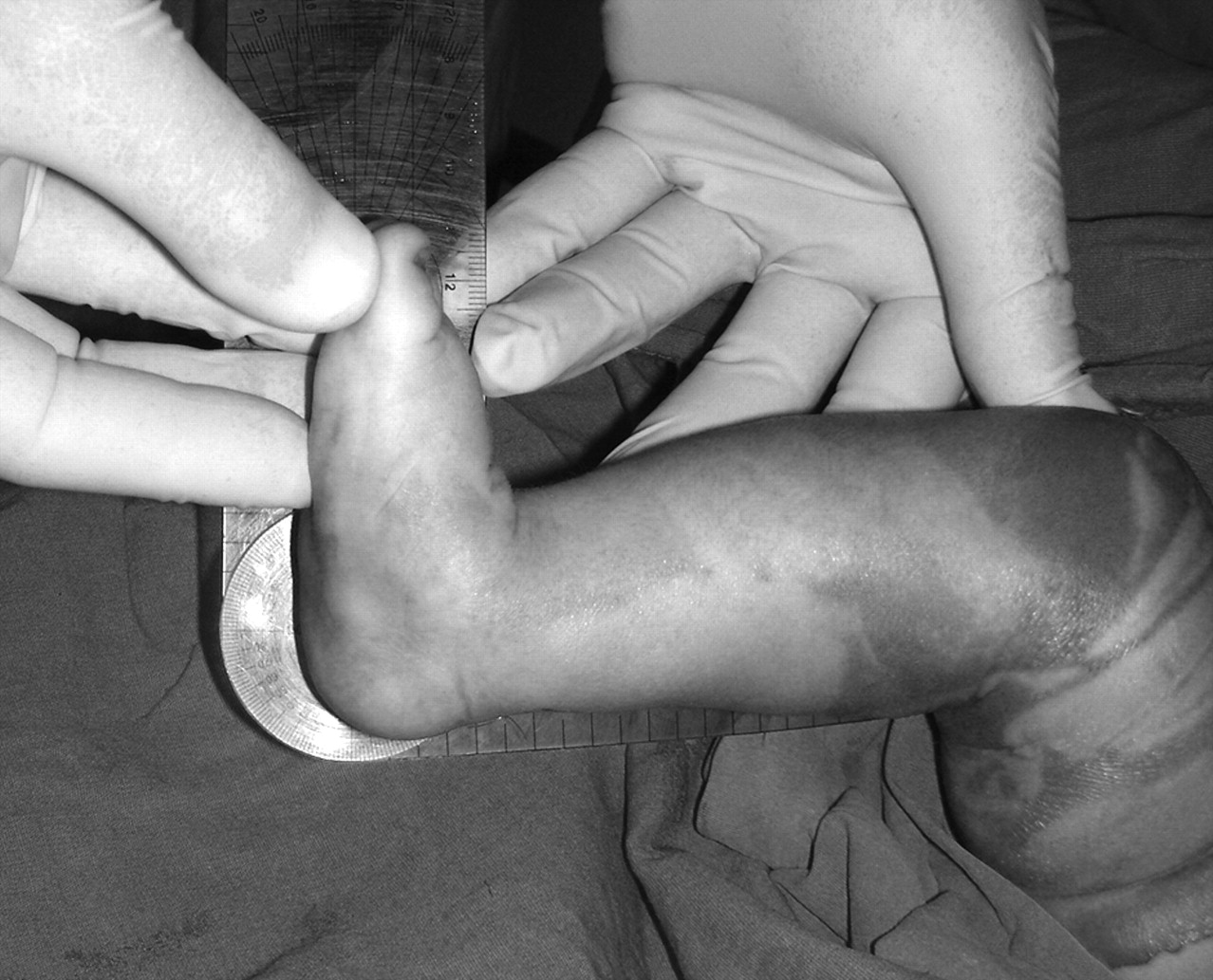
A mini-open Achilles tenotomy technique was performed on 15 patients (25 feet) with clubfoot during a 3-year period at the Department of Orthopaedics and Traumatology, Yuzuncu Yil University (Turkey). Achilles tenotomy was performed when 10° to 15° of dorsiflexion could not be obtained after correction of the forefoot and heel varus. Ankle flexion and dorsiflexion angles were measured preoperatively and postoperatively by goniometer in knee flexion (Figs. 1 and 2). The preoperative and postoperative scores were compared statistically by a paired Student t test.
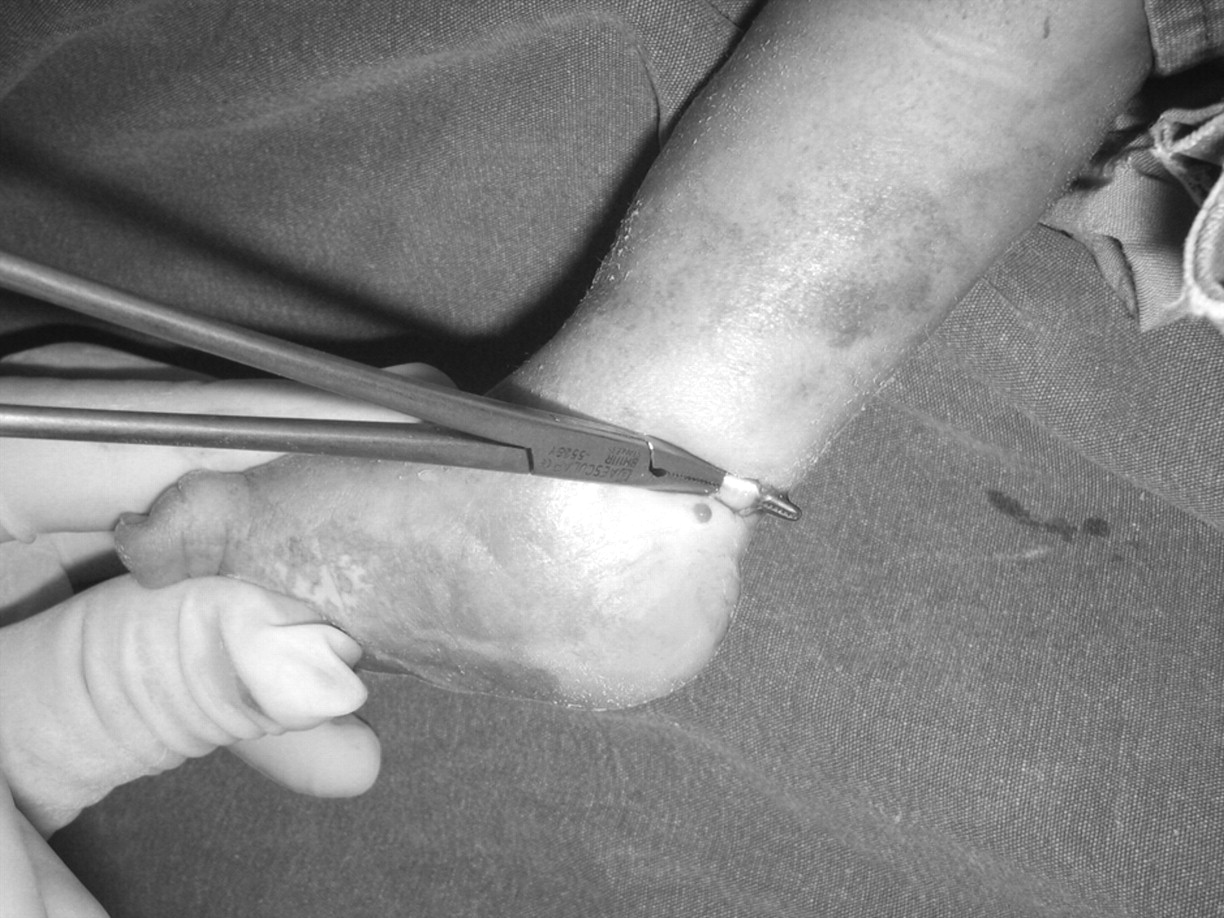
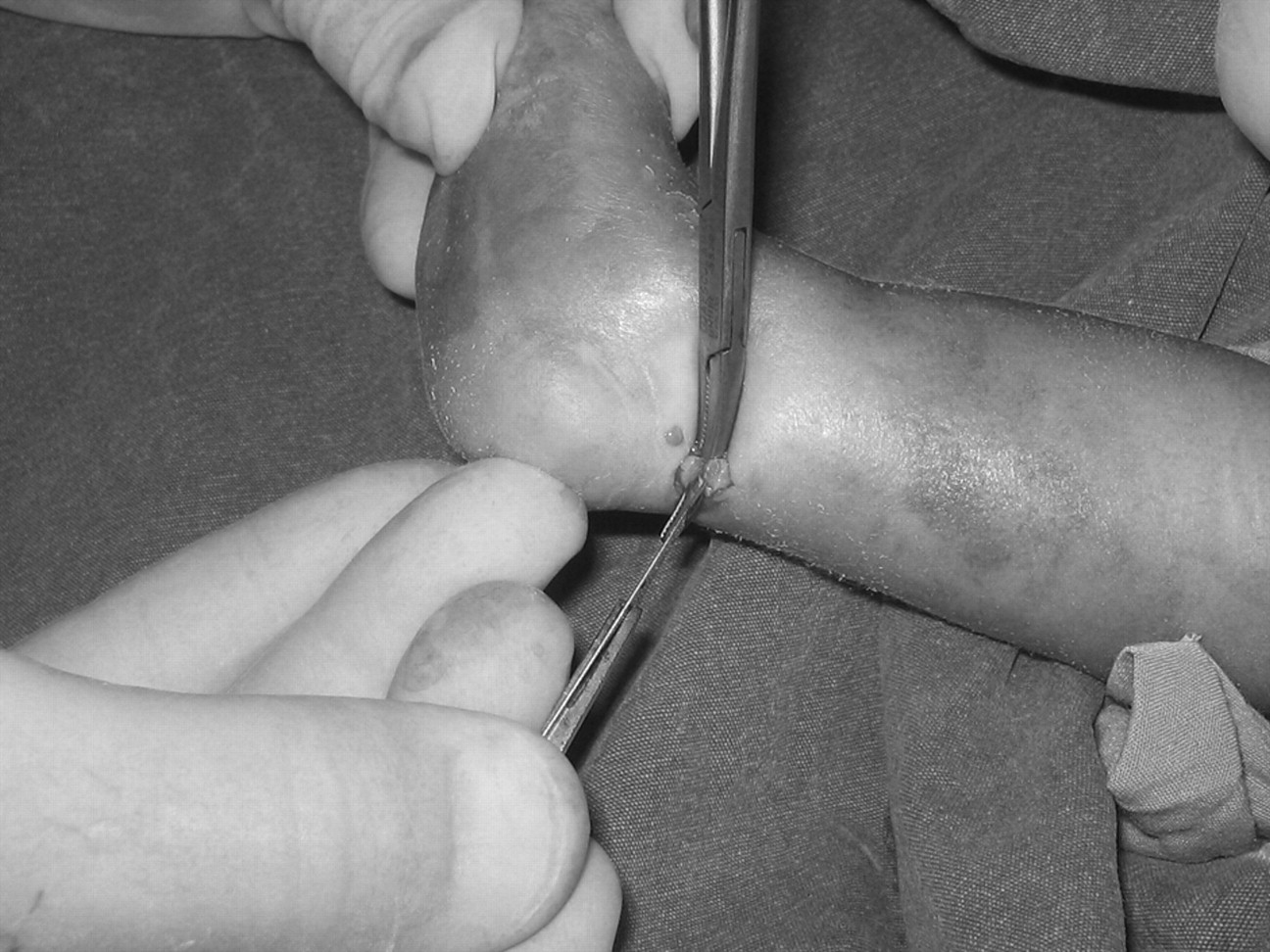
If residual equinus was observed after correction casts, the patient was prepared for tenotomy under local or general anesthesia. The patient is positioned supine on the operating table with the knee flexed to 90°. Under sterile conditions, with the help of an assistant, the foot is maximally dorsiflexed, so that it would be possible to palpate the distal portion of the Achilles tendon over the skin. A small amount (0.5 to 1 mL) of local anesthetic was infiltrated to the planned incision site near the tendon. A 5- to 10-mm longitudinal skin incision was made along the medial edge of the tendon and 1 cm proximal from the calcaneus. The Achilles tendon was exposed under subcutaneous tissue. Then a thin mosquito clamp was traversed beneath the Achilles tendon in a medial-to-lateral direction (Fig. 3). The Achilles was hanged and cut transversely by visualizing with a No. 15 blade, 1 cm proximal from the calcaneal insertion (Fig. 4). After tenotomy, an increase in the dorsiflexion of the ankle was observed. The skin was closed with 4-0 propylene. One more cast was applied for 3 weeks to allow the tenotomy to heal.

Results

The mean plantar flexion angle was 5° (range, 0°–10°); after surgery, the ankle was able to dorsiflex 25° (range, 20°–30°). This difference was statistically significant (P = .0001). In this technique, no complication is seen because the incision is performed over the Achilles tendon after palpating the tendon itself.

Discussion

The Ponseti method for the treatment of clubfoot has better results compared to the Kite method.[1,6,8] Satisfactory correction in children presenting with complex idiopathic deformities can also result.[9] Although there is abundant information in the literature describing the Ponseti manipulative and casting technique to correct clubfeet, there are few publications concerning the technique of percutaneous tendo Achillis tenotomy for residual hindfoot equinus in clubfoot. Achilles tenotomy is performed in approximately 70% to 80% of patients to correct the equinus prior to application of the final cast.[2,10]
Dobbs et al[7] reported a total of four patients who had serious bleeding complications following the percutaneous tendo Achillis tenotomy. Three were due to presumed injury to the peroneal artery, and one was due to injury to the lesser saphenous vein. In most cases in this series, the authors had used the same beaver eye blade (Ref. #5210, Becton Dickinson and Company, New Jersey) as used by Ponseti.[5,7] The end of this blade comes to a sharp point making it more difficult to palpate the tendon edge once the blade penetrates the skin. Dobbs et al[7] speculated that the length of this blade makes the user more prone to advance the blade too far laterally before severing the tendon from front to back. Once the blade is advanced laterally beyond the tendon edge, the peroneal artery, lesser saphenous vein, and sural nerve are all at risk for injury. These authors are told modification of Achilles tenotomy technique by a more rounded beaver eye blade (Ref. #6900, Becton Dickinson and Company) may be reduce that the risk of vascular injury. In that study, Dobbs et al[7] determined another potential mechanism for decreasing the risk; a small open incision may be made to directly visualize the tendon before severing it, which is the technique these authors now use.
Minkowitz et al[11] described a modification of the Achilles tenotomy technique by using a large-gauge hypodermic needle in the outpatient setting. In their technique, the beveled edge of the needle is used as a knife to allow sectioning of the tendon by moving the needle medially and laterally. In this way, the fibers of the Achilles should be easily sectioned after 2 or 3 consecutive movements. They suggested that the use of a 16-gauge needle in the outpatient setting renders the procedure to be cost effective, less disruptive for the family, and more comfortable for the child. They performed this procedure on 12 patients (21 feet) during a 2-year period in an outpatient office setting.
In our clinic, the mini-open technique was performed on 15 patients (25 feet) during a 3-year period. Plantar flexion angles were calculated as 5° preoperatively; postoperatively, dorsiflexion to 25° was reached. In the literature, the Pirani scoring system was typically used for follow-up of clubfoot. Alvarez et al[12] reported an improvement in ankle dorsiflexion of 20° to 25° when using the Pirani scoring system and the botox-A injection after 12 months follow-up.
We have not seen any complication in the mini-open method. There are many studies that indicate the presence of vascular anomalies in the lower extremities of patients with idiopathic clubfoot.[13,14,15] Injury of one of the foot arteries in these patients can result in a potential amputation. Direct visualization of the tendon before severed minimizes these kinds of complications.

Conclusion

The mini-open technique for the Achilles tenotomy improves sufficient correction (mean, 30°) for equinus deformity in clubfoot. We believe that direct visualization of the tendon with the mini-open incision may reduce the risk of neurovascular injury, especially for surgeons who are not experienced.

Acknowledgments

Dr. Dincay Uluc, MD, for assistance with our study.
Financial Disclosure: None reported.
Conflict of Interest: None reported.

References

  1. Morcuende JA, Dolan LA, Dietz FR, et al: Radical reduction in the rate of extensive corrective surgery for clubfoot using the Ponseti method. Pediatrics 113: 376, 2004.
  2. Scher DM, Feldman DS, van Bosse HJ, et al: Predicting the need for tenotomy in the Ponseti method for correction of clubfeet. J Pediatr Orthop 24: 349, 2004.
  3. Ponseti IV: Congenital clubfoot: fundamentals of treatment. Oxford University Press, New York, NY, 1996.
  4. Ponseti IV, Smoley EN: Congenital clubfoot: the results of treatment. J Bone Joint Surg Am 45: 261, 1963.
  5. Ponseti IV, Pirani S, Dietz F, et al: Clubfoot: Ponseti Management 2nd Ed. Global-HELP publication, p 13, 2003. http://www.global-help.org/publications/books/help_cfponseti.PDF. Accessed August 5, 2008.
  6. Lehman WB, Mohaideen A, Madan S, et al: A method for the early evaluation of the Ponseti (Iowa) technique for the treatment of idiopathic clubfoot. J Pediatr Orthop B 12: 133, 2003.
  7. Dobbs MB, Gordon JE, Walton T, et al: Bleeding complications following percutaneous tendoachilles tenotomy in the treatment of clubfoot deformity. J Pediatr Orthop 24: 353, 2004.
  8. Herzenberg JE, Radler C, Bor N: Ponseti versus traditional methods of casting for idiopathic clubfoot. J Pediatr Orthop 22: 517, 2002.
  9. Goksan SB, Bursali A, Bilgili F, et al: Ponseti technique for the correction of idiopathic clubfeet presenting up to 1 year of age. A preliminary study in children with untreated or complex deformities. Arch Orthop Trauma Surg 126: 15, 2006.
  10. Kowalczyk B, Lejman T, Sulko J, et al: [Percutaneous tenotomy of achilles tendon in the treatment of congenital clubfeet: a preliminary report]. Chir Narzadow Ruchu Ortop Pol 69: 335, 2004.
  11. Minkowitz B, Finkelstein BI, Bleicher M: Percutaneous tendo-Achilles lengthening with a large-gauge needle: a modification of the Ponseti technique for correction of idiopathic clubfoot. J Foot Ankle Surg 43: 263, 2004.
  12. Alvarez CM, Tredwell SJ, Keenan SP, et al: Treatment of idiopathic clubfoot utilizing botulinum A toxin: a new method and its short-term outcomes. J Pediatr Orthop 25: 229, 2005.
  13. Greider TD, Siff SJ, Gerson P, et al: Arteriography in club foot. J Bone Joint Surg Am 64: 837, 1982.
  14. Hootnick DR, Packard DS Jr, Levinsohn EM, et al: Confirmation of arterial deficiencies in a limb with necrosis following clubfoot surgery. J Pediatr Orthop Part B 8: 187, 1999.
  15. Sodre H, Bruschini S, Mestriner LA, et al: Arterial abnormalities in talipes equinovarus as assessed by angiography and the Doppler technique. J Pediatr Orthop 10: 101, 1990.
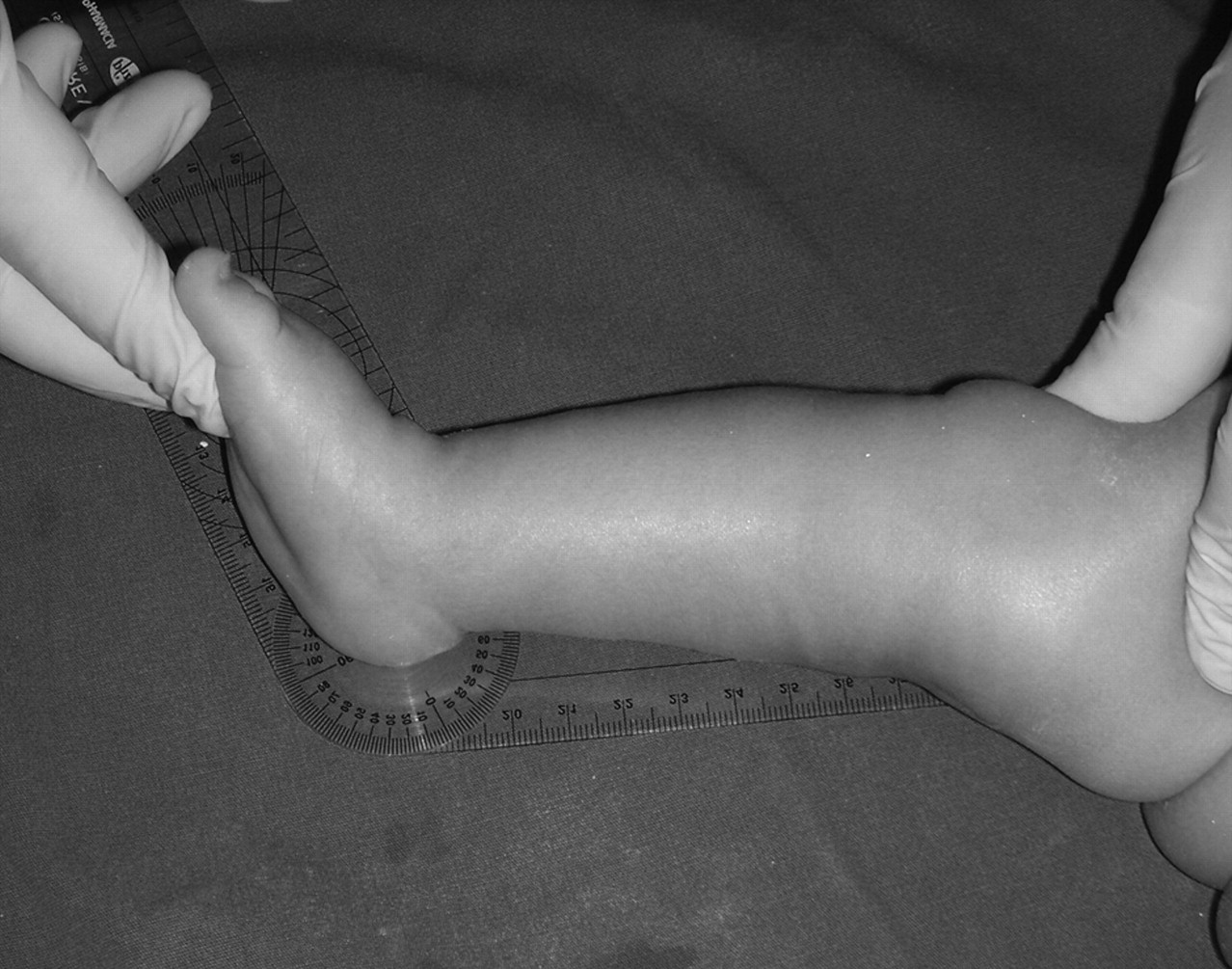
Figure 1. The Achilles tendon was hanged with mosquito passes medially to laterally after exposure.
Japma 98 00414 g001
Figure 2. Tenotomy was applied with a No. 15 blade 1 cm above the calcaneal insertion.
Japma 98 00414 g002
Figure 3. Plantar flexion observed before tenotomy.
Japma 98 00414 g003
Figure 4. Dorsiflexion observed after tenotomy.
Japma 98 00414 g004