The accessory soleus muscle is a rare anatomical variation. It usually appears as a soft-tissue mass bulging medially between the distal part of the tibia and the Achilles tendon and may be mistaken for a tumor or an inflammatory lesion.[
1] Cadaveric studies show a 0.7% to 5.5% incidence of accessory soleus muscle.[
2] The condition may or may not be symptomatic but is sometimes detected incidentally.[
3] Anomalous muscles as well as the accessory soleus muscle may be seen together with clubfoot, but the significance of its presence is unknown.[
4] Turco[
5] identified anomalous muscles in about 15% of patients with clubfoot. Porter recently described an anomalous flexor muscle in the calf of five children with clubfoot. He also observed that patients with this anomalous muscle had a greater frequency of first-degree relatives with clubfoot.[
6]
Almost every tissue in the clubfoot has been described as being abnormal; therefore, whether the anomalous accessory soleus muscle is a contributing factor for clubfoot should be considered. We found only three studies during our literature review that investigated an association between the accessory soleus muscle and clubfoot.[
4,
7,
8]
In the present study, we report a patient with bilateral clubfoot and unilateral right-sided accessory soleus muscle and offer a review of the literature.
Case Study
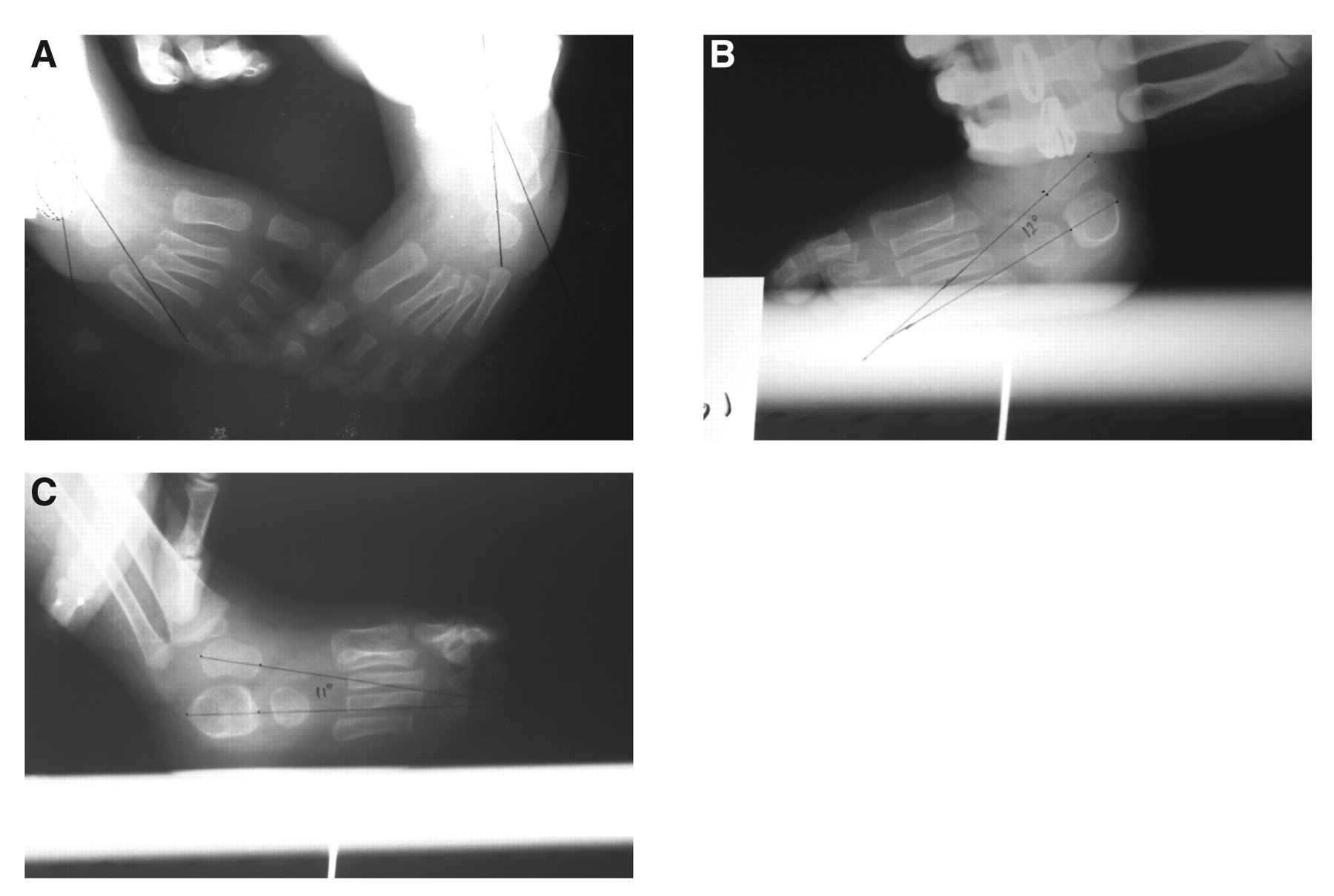
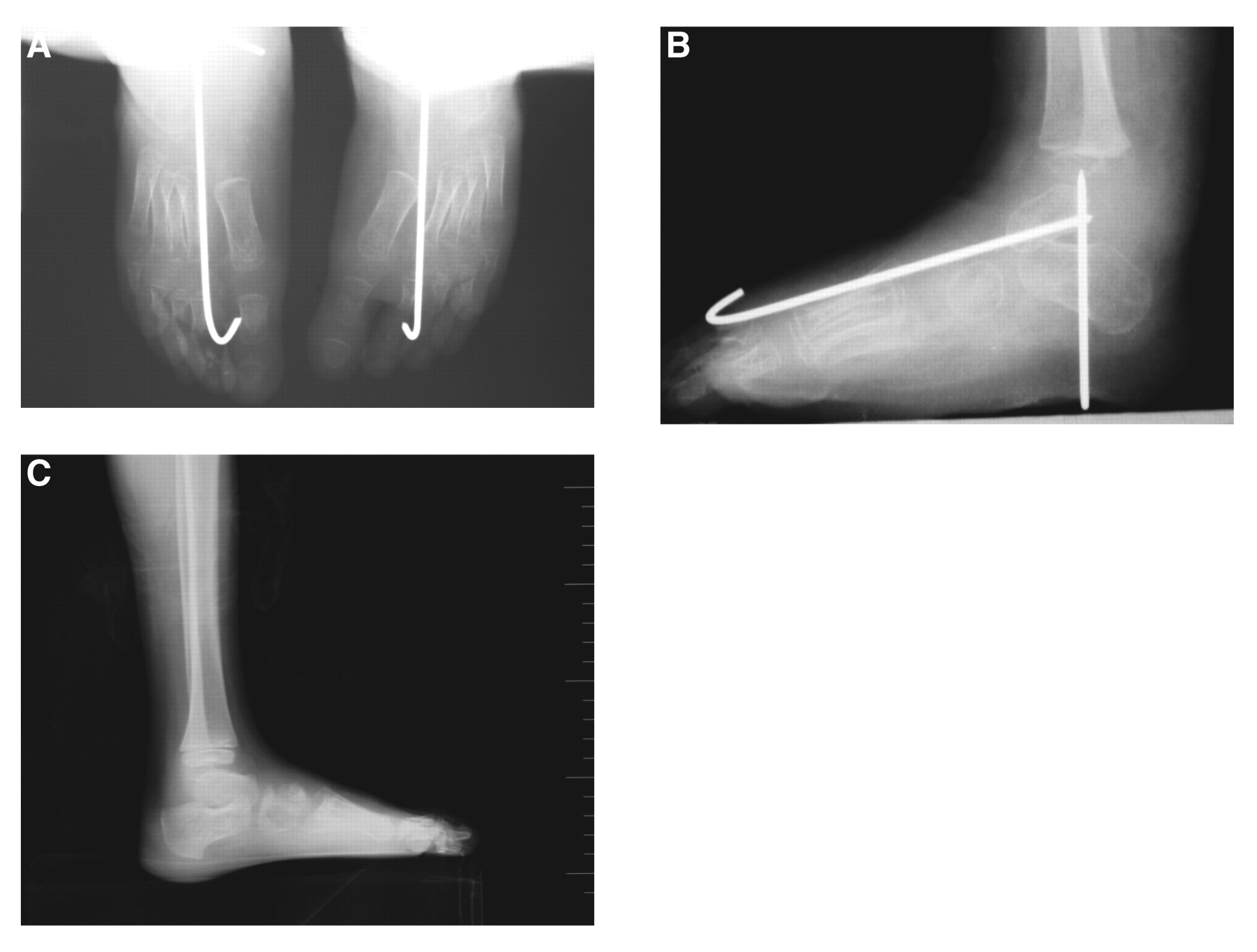
A 16-month-old boy with bilateral clubfeet was admitted to S.B. Izmir Tepecik Education and Research Hospital, Izmir, Turkey. Both feet had severe deformities and they were similar and symmetrical. The anteroposterior talocalcaneal angle measured 17° on the right side and 19° on the left side; the lateral talocalcaneal angle, 12° on the right and 11° on the left (
Fig. 1). His parents were first-degree relatives; his grandmother and grandfather were siblings.
The patient had not been admitted to a foot and ankle surgeon for his feet deformities due to socioeconomic issues within his family. We were the first to treat his feet deformities when he was 16 months old, and conservative treatment had not been attempted prior to the date of admission. Upon physical examination, the rest of the body showed no accompanying deformity. The patient was unable to walk because of his feet deformities; both feet had equinus, varus, and torsional deformity. Plantar creases and a cleft at the posterior part of the ankle were observed bilaterally. Subtalar joints were stiff and both feet were observed to be grade 3 (severe) clubfeet, according to the Dimeglio classification.[
9]
Because the patient was of walking age (16 months), deformities were severe and rigid. Therefore, conservative treatment was not attempted and surgical correction was decided for both feet.
Although we apply an “a la carte” treatment procedure to patients 4 to 12 months old without severe and rigid deformity, the complete subtalar release is our choice for treatment of severe and rigid deformities in patients older than 12 months on the basis of our clinical experience. We made the final decision of treatment intraoperatively.
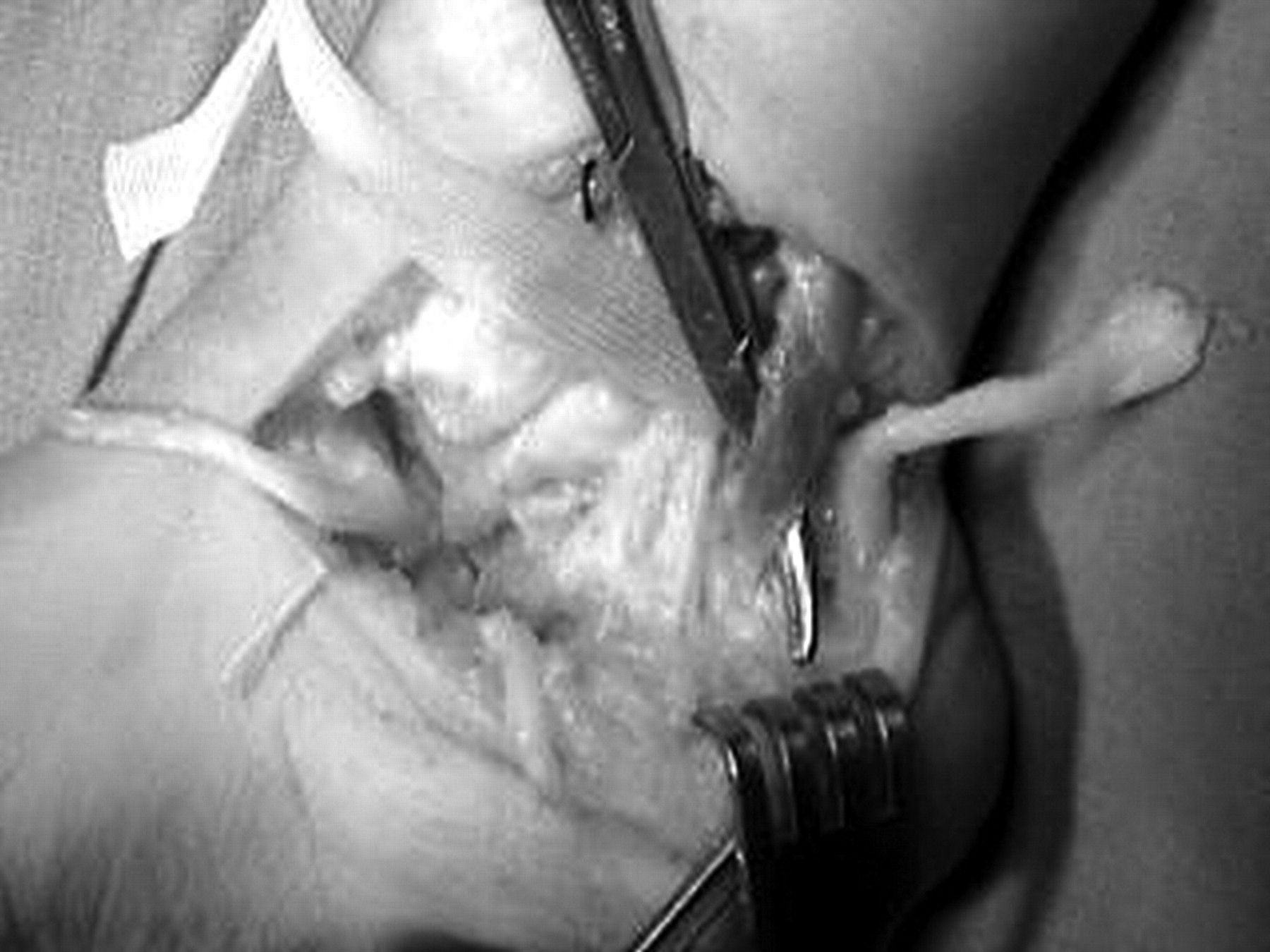
On the first operation, his left foot was treated with complete subtalar release with Cincinnati incision. Two weeks later, the right foot underwent surgery and the cast was changed for the previously operated foot. The Cincinnati incision was made, and during dissection of the deformed tissues and tendons, the accessory soleus muscle was observed incidentally. The distal insertion of the accessory soleus muscle was distinct and tendinous and was located superior to and along the anteromedial border of the calcaneus. It was also anterior and medial to the Achilles tendon. A supernumerary soleus was arising from the anterior aponeurosis of the soleus muscle (
Fig. 2). The distal tendinous insertion and the distal part of the accessory soleus muscle were resected together. Pathologic examination revealed normal muscle and tendinous tissues but an increase in connective-tissue components. The operation was continued in the ordinary manner. We were not aware of any differences between the operation on the left foot and that on the right foot. Postoperative radiographs are seen in
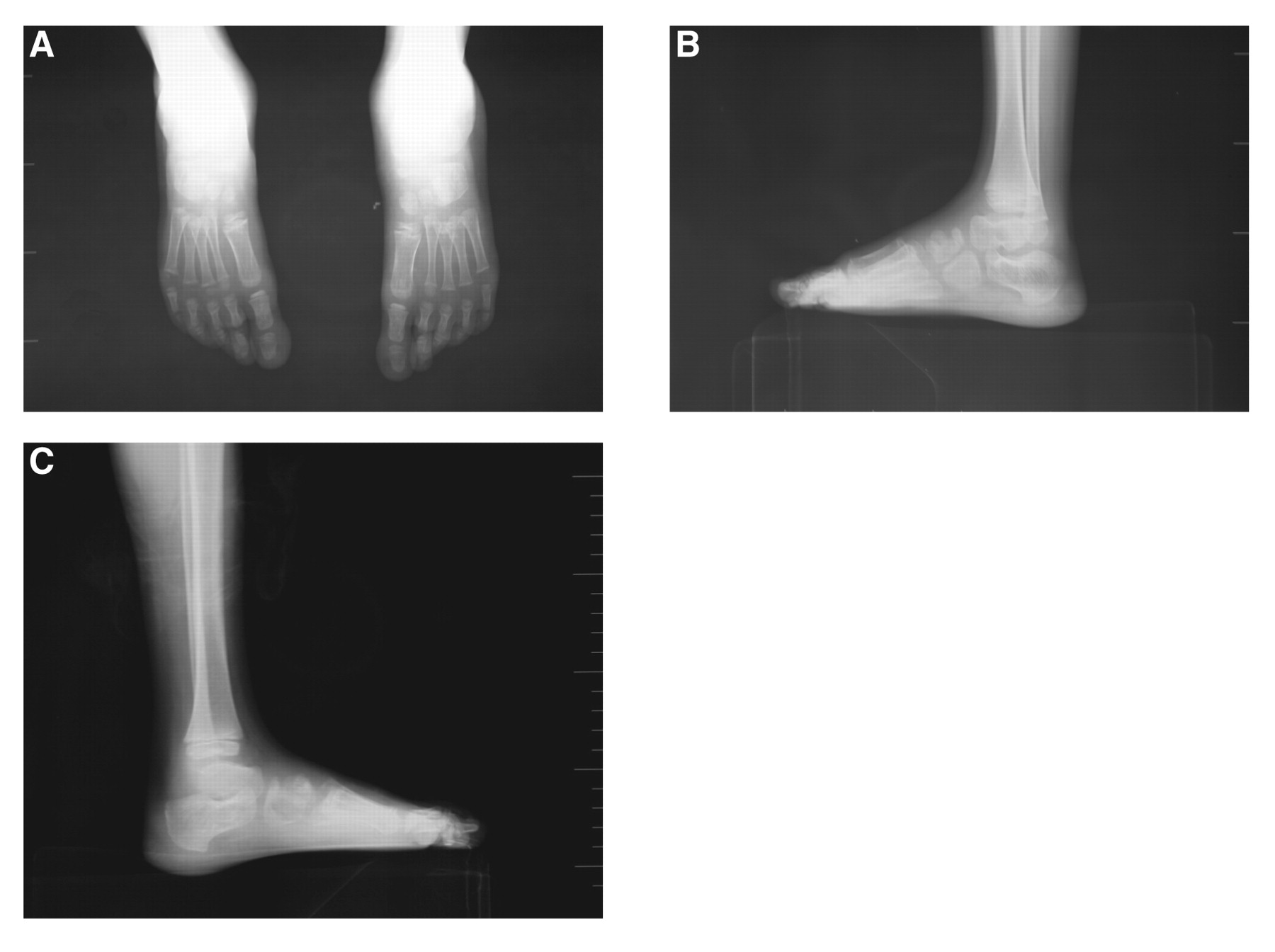
Figure 3. The anteroposterior talocalcaneal angle measured 26° on the right side and 29° on the left; the lateral talocalcaneal angle measured 47° on the right side and 50° on the left. A posterior cast splint was applied for 2 weeks in the equinus position. On postoperative day 14, the cast splint was removed and replaced with an above-the-knee cast under general anesthesia. The position of the cast was regulated so that the ankle would be in 5° dorsiflexion. Four weeks after the above-the-knee cast was placed, the cast and pins were removed and a new cast was applied for 2 weeks. Reverse molded shoes and polyethylene ankle foot orthoses were used on both feet for 2 years. The patient was able to walk 2 months after the second operation. When the child was 5 and a half years old, both feet appeared normal on radiographs (
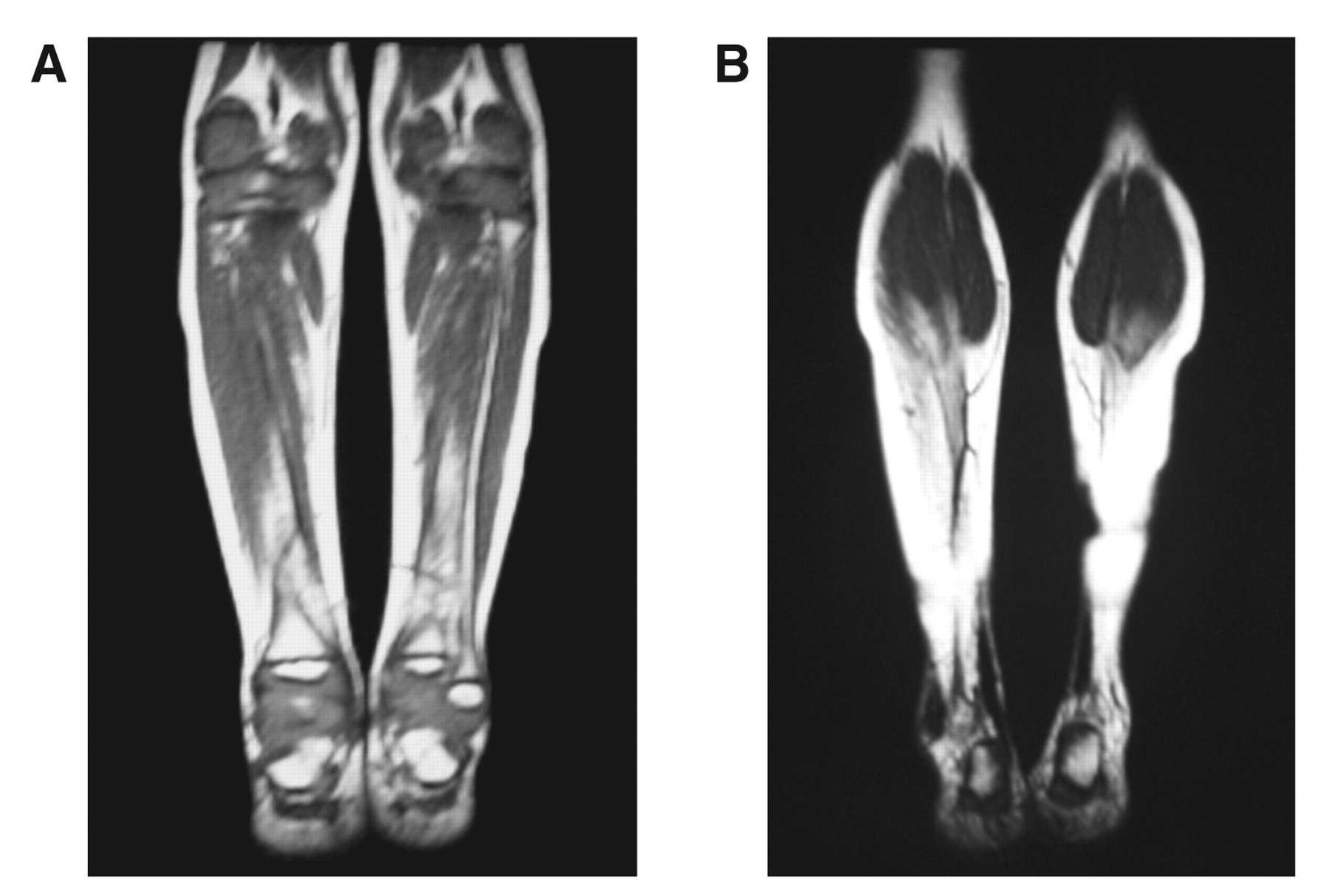
Fig. 4). Neither the accessory soleus nor its remnants were seen on magnetic resonance images (
Fig. 5).
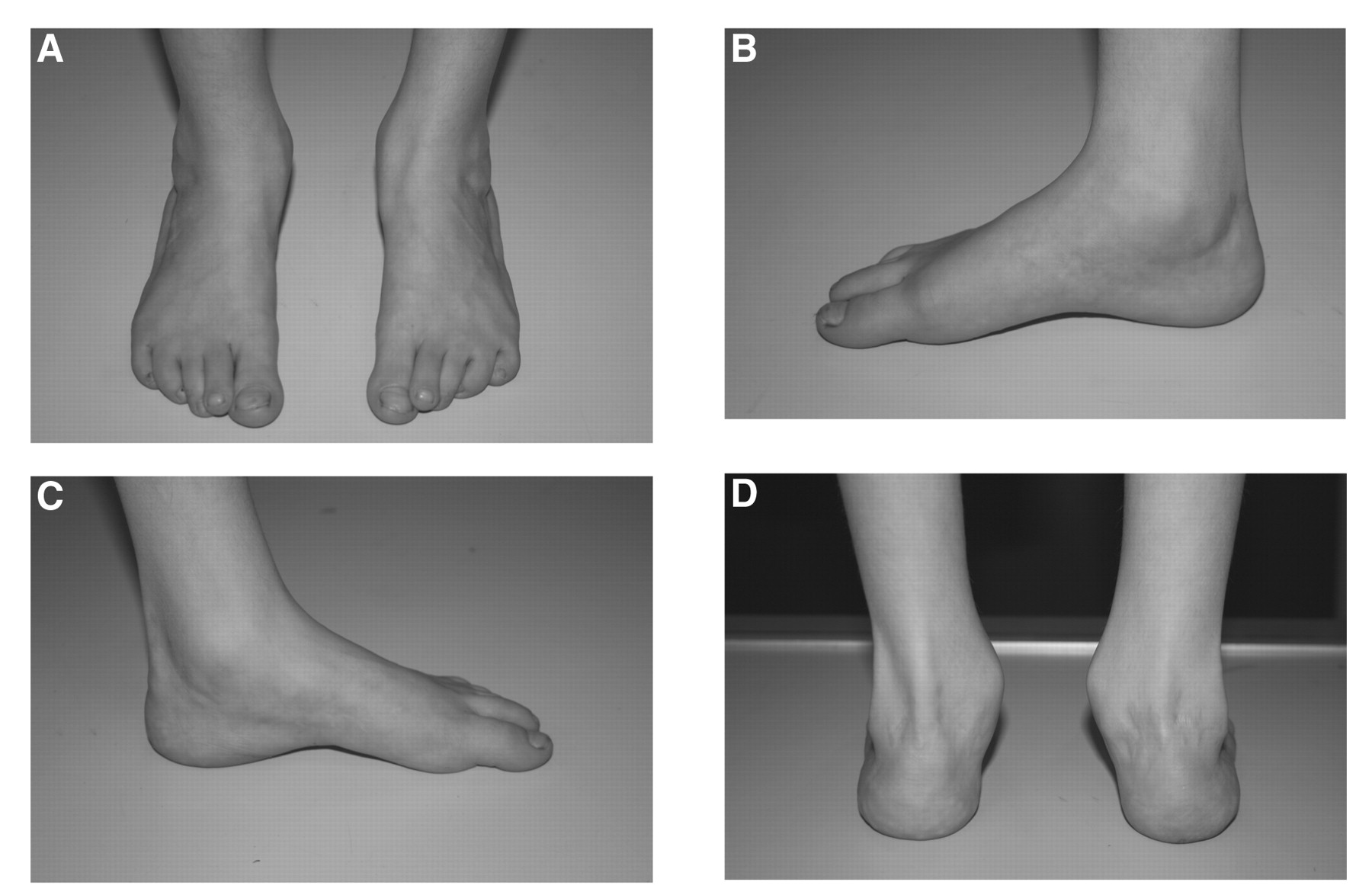
Figure 6 shows the normal appearance of both feet when the child was 6 years and 9 months old. He was walking normally and attempting sports activities easily, and no limp or further problems were observed.
Discussion
The accessory soleus muscle was first described in 1843 as a supernumerary soleus by Cruveilhier.[
2] However, the first clinical cases in the English literature were not reported until 1965, when Dunn[
10] described two patients with an anomalous muscle that simulated a soft-tissue tumor.
Gordon and Matheson stated that the presence of an accessory soleus could be accounted for by the anlage of the soleus splitting early in its embryological development.[
11] The accessory soleus muscle may manifest in the second or third decades of life. The young age of the patients reported in the literature supports the theory that the accessory soleus muscle is of congenital origin. The delay of onset of symptoms until adolescence is probably attributable to the increase in muscle mass and muscle activity during this age.[
1,
12,
13]
Although we found studies of the accessory soleus muscle when the literature was reviewed, we found only limited studies of the accessory soleus muscle together with clubfoot.[
4,
7,
8]
Turco[
5] identified anomalous muscles in about 15% of patients with clubfoot. Porter[
6] recently described an anomalous flexor muscle in the calves of five children with clubfeet. Chotigavanichaya et al[
7] reported the case of a patient in whom a clubfoot could be corrected only after release of an accessory soleus muscle and concluded that this accessory soleus muscle may have been the cause of resistance to correction in this congenital clubfoot.
Danielson[
8] reported two cases of accessory soleus muscle associated with clubfoot and concluded that the accessory soleus muscle is not interpreted as the primary cause of clubfeet but as a highly contributing cause of the rigid varus deformity.
Chittaranjan et al[
4] reported that the significance of the presence of the accessory soleus in a clubfoot is unknown. Disinsertion of its insertion was all that was required to obtain surgical correction of the deformity in this case.
Because the accessory soleus muscle inserts into the anteromedial border of the calcaneus, the foot is forced into the varus position and this should be accepted as one of the deforming factors. It may be stated that, if the patient was diagnosed earlier and if conservative treatment were applied, the accessory soleus muscle could give way to failure.
We conclude that the accessory soleus muscle was not a major deforming factor in the presence of clubfeet in our case because when we cut the accessory muscle, the deformity was not immediately resolved. Nonetheless, the muscle should be cut and released to obtain full correction of the deformity as other structures contributing to deformity. Finally, we observed no difference between the results of the left and right foot in the course of operation and the follow-up period.