Next Article in Journal
Physical Evaluation of Insole Materials Used to Treat the Diabetic Foot
Previous Article in Journal
Sever’s Disease: What Does the Literature Really Tell Us?
 
 
Journal of the American Podiatric Medical Association is published by MDPI from Volume 116 Issue 1 (2026). Previous articles were published by another publisher in Open Access under a CC-BY (or CC-BY-NC-ND) licence, and they are hosted by MDPI on mdpi.com as a courtesy and upon agreement with American Podiatric Medical Association.
Article

Diagnosis of Trichophyton rubrum from Onychomycotic Nail Samples Using Polymerase Chain Reaction and Calcofluor White Microscopy

by
Aditya K. Gupta
1,2,
Muhammad Zaman
2 and
Jagpal Singh
2,*
1
Division of Dermatology, Department of Medicine, Sunnybrook Health Sciences Center, and the University of Toronto, Toronto, Ontario, Canada
2
Mycology Section, Mediprobe Research Inc, London, Ontario, Canada
*
Author to whom correspondence should be addressed.
J. Am. Podiatr. Med. Assoc. 2008, 98(3), 224-228; https://doi.org/10.7547/0980224
Published: 1 May 2008

Abstract

Background: A high rate of false-negative dermatophyte detection is observed when the most common laboratory methods are used. These methods include microscopic observation of potassium hydroxide–digested nail clippings and culture methods using agar-based media supplemented with cycloheximide, chloramphenicol, and gentamicin to isolate dermatophytes. Microscopic detection methods that use calcofluor white staining or periodic acid–Schiff staining may also be substituted for and have previously been reported to be more sensitive than potassium hydroxide–digested nail clippings. Methods: Trichophyton rubrum infections were detected directly from nails in a double-round polymerase chain reaction assay that uses actin gene–based primers. This method was compared with detection of fungal hyphae by using calcofluor white fluorescence microscopy of nail samples collected from 83 patients with onychomycosis who were undergoing antifungal drug therapy. Results: Twenty-six of 83 samples (31.3%) were found to be positive by calcofluor white fluorescence microscopy, and 21 of 83 samples (25.3%) yielded positive results for T rubrum when actin gene–based primers in a double-round polymerase chain reaction assay were used. When calcofluor white fluorescence microscopy and polymerase chain reaction assay were used, the combined detection was 46.9% compared with 31.3% when calcofluor microscopy and culture of nail samples on Sabouraud’s dextrose agar supplemented with cycloheximide, chloramphenicol, and gentamicin were used. Conclusions: These results suggest that the use of a direct DNA protocol is an alternative method for detecting Trichophyton infections. When this protocol is used, the presence of T rubrum DNA is directly detected. However, the viability of the dermatophyte is not addressed, and further methods need to be developed for the detection of viable T rubrum directly from nail samples.

Onychomycosis is a fungal infection of the nail caused by dermatophytes, yeasts, and molds, and it is responsible for approximately 50% of all nail diseases. [1-4] Onychomycosis is the most common nail disease in adults, with toenails much more likely to be infected than fingernails. Onychomycosis presents increasing medical challenges, especially in some disease states, such as diabetes mellitus and immunosuppression, and in old age and increasing life span, [5] where onychomycosis can have a substantial effect on the activities of daily living. [6] Trichophyton rubrum and Trichophyton interdigitale are the main causative agents of onychomycosis, accounting for more than 95% of infections, with approximately 80% to 90% of cases attributed to T rubrum. [7,8] Trichophyton interdigitale has been classified as a member of the Trichophyton mentagrophytes complex, but it was known as T mentagrophytes in the human host before 1999. [8]
The management of onychomycosis is based on identification of the causative agents and consideration of the risk factors, such as older age, diabetes mellitus, abnormal nail morphology, immunodeficiency, and genetic factors. Patients with these risk factors can be more difficult to treat owing to drug interactions with concomitant medications, adverse events, and poor compliance. [9] Furthermore, recurrence in cured patients with these risk factors has been commonly reported. [10] Although the most commonly used topical antifungal drugs are ciclopirox and amorolfine nail lacquers, the best mycologic and clinical cure rates can be achieved by using oral antifungal agents, such as terbinafine and itraconazole. [11,12] The mycologic cure rate is unclear from the literature, with values as high as 80% to 86% [13,14] being reported for terbinafine and itraconazole; in contrast, complete cure rates (mycologic and clinical) for terbinafine and itraconazole are 35% to 50% and 25% to 40%, respectively. [15] The values obtained for mycologic and complete cure rates depend, in part, on an accurate determination of mycologic cure in the nail sample.
Currently, the most common method used for detecting fungal hyphae is microscopic observation of potassium hydroxide (KOH)–digested nail clippings. More accurate detection methods are calcofluor white staining [16] and periodic acid–Schiff staining, [17,18] but these techniques are not routinely used and may be unavailable in some diagnostic laboratories. In addition, the most common culture methods use agar-based media supplemented with cycloheximide, chloramphenicol, and gentamicin for the isolation of dermatophytes. [19-21] Trichophyton rubrum isolates are identified and differentiated from other dermatophytes by means of visual examination of the colony, microscopic morphologic examination, and biochemical analysis after 14 to 21 days of growth. The culture method is currently regarded as the gold standard and is the method of choice, although drawbacks include a false-negative culture rate of at least 30%, a time-consuming protocol, and the inability of various microscopy techniques of KOH-digested nail clippings to distinguish among dermatophytes. In addition, the inability of direct microscopy to fully distinguish most nondermatophytic hyphae from dermatophytic filaments in nails is problematic. [22] Nondermatophytic filamentous fungi have previously been regarded as uncommon primary or secondary pathogens of already diseased nails, but they are increasingly being identified as main sources of infection. [23] Reported prevalence rates of nondermatophytic infections have ranged from 0% to 50%, with most ranging from 2% to 5%. [22] Consequently, dermatophytes, particularly T rubrum, remain the most common causative agents in onychomycosis.
We developed a double-round polymerase chain reaction (PCR) assay for the detection of T rubrum DNA by using a highly variable region of the actin gene from the DNA of the infected nail. This method was found to be highly sensitive and detected T rubrum in 59.7% of samples compared with 22.6% when standard culture methods were used. [24] In this article, we compare this double-round PCR assay with calcofluor white staining microscopy of digested nail and culture methods that use Sabouraud’s dextrose agar supplemented with cycloheximide, chloramphenicol, and gentamicin for the detection of T rubrum in nail samples of patients with dermatophyte toenail onychomycosis who were receiving antifungal drug therapy.

Materials and Methods

Nail Specimens

Onychomycotic toenail samples were collected from 83 patients who had a previously confirmed diagnosis of T rubrum onychomycosis and were receiving antifungal drug therapy. A portion of the nail clippings was used for direct fluorescence microscopy, a second portion was used for culturing, and a third portion was used for DNA extraction.

Fluorescence Microscopy

Nail clippings were digested in 10% KOH for 3 to 4 hours at room temperature. Subsequently, the digested nail material was transferred to the slide and mounted with one or two drops of calcofluor white (BactiDrop; Remel Inc, Lenexa, Kansas) for 15 to 20 min. A fluorescence microscope (Axiovert 200; Carl Zeiss, Gottingen, Germany) and the 4′,6-diamidino-2-phenylindole filter (excitation, 365 nm; emission, 430 nm) were then used to evaluate the sample for the presence of hyphal fragments and fungal spores.

Culturing

The second portion of nail clippings was seeded on Sabouraud’s dextrose agar medium supplemented with chloramphenicol, cycloheximide, and gentamicin (Oxoid Co, Napean, Ontario, Canada). The plates were incubated at 28°C for 14 to 21 days. Dermatophytes grown on the plates were transferred to new Sabouraud’s dextrose agar plates. Trichophyton rubrum was confirmed by biochemical tests and morphologic observation under a microscope.

DNA Extraction from Nail

DNA was extracted from nail clippings using a modification of a previously published protocol. [25] Briefly, infected nail samples collected from patients with onychomycosis were processed for DNA extraction. Nail clippings were ground with a mortar and pestle chilled in liquid nitrogen. Nail powder (20–25 mg) was treated with 500 μL of extraction buffer (10mM Tris-hydrochloride [pH 8.0], 100mM sodium chloride, 50mM EDTA [pH 8.0], and 0.5% sodium dodecyl sulfate), 12.5 μL of proteinase K (20 mg/mL), and 20 μL of 1M dithiothreitol in 2-mL cone tubes. The tubes were incubated at 56°C for 4 to 5 hours. The half tube cone was filled with 0.5-mm zirconia beads and beaten for 10 sec at maximum speed with the help of Mini-Beadbeater-8 (BioSpec Products Inc, Bartlesville, Oklahoma), cooled down for 20 sec, and again beaten for 10 sec; this process was repeated four times. The tubes were centrifuged at 12,000 rpm (Microfuge; Beckman Coulter Inc, Fullerton, California) for 2 min to reduce the foam. The lysed nail solution was collected in a new 1.5-mL Eppendorf tube, and 500 μL of phenol-chloroform-isoamylalcohol (25:24:1) was added, thoroughly mixed, and spun for 5 min at 12,000 rpm. The upper layer was transferred into a sterile microcentrifuge tube, and 500 μL of n-butanol was added. After mixing thoroughly, the tubes were spun for 5 min at 12,000 rpm. The upper layer was discarded, and a centrifugal filter unit (Microcon YM-100; Millipore, Billerica, Massachusetts) was used to purify and concentrate the DNA extract.

PCR Amplification

A double-round PCR approach was used to detect T rubrum DNA from the nail samples. An actin gene (ACT) fragment (602 base pair) was amplified using the Actin-F (CGAACCGTGAGAAGATGACC) and Actin-R (GAACCACCGATCCAGACGGAGTA) primers in the first round, followed by Actin-F and TRO1 (CTATATAGTTTGTTACTGCAGAGGGAC) in the second round of PCR. The first PCR contained 4 μL of DNA isolated from nail, 10% of PCR buffer XII (PCR optimization kit; Fermentas International Inc, Burlington, Ontario, Canada), 1.5mM deoxyribonucleotide triphosphate, 30 pmol of each primer, and 5 U of Taq polymerase (Fermentas International Inc). The second-round reaction contained 1 μL of PCR product from the first-round PCR assay, 10% of PCR buffer XII, 1.5mM deoxyribonucleotide triphosphate, 30 pmol of each primer, and 5 U of Taq polymerase. The PCR cycling conditions for both reactions consisted of a denaturation step at 94°C for 5 min, followed by 35 cycles of denaturation at 94°C for 45 sec, annealing at 62°C for 45 sec, extension at 72°C for 45 sec, and then final extension at 72°C for 10 min. The PCR products were run on 1.5% agarose gel and were visualized under a UV transilluminator in 2.5% to 3% ethidium bromide standard agarose gel.

Results

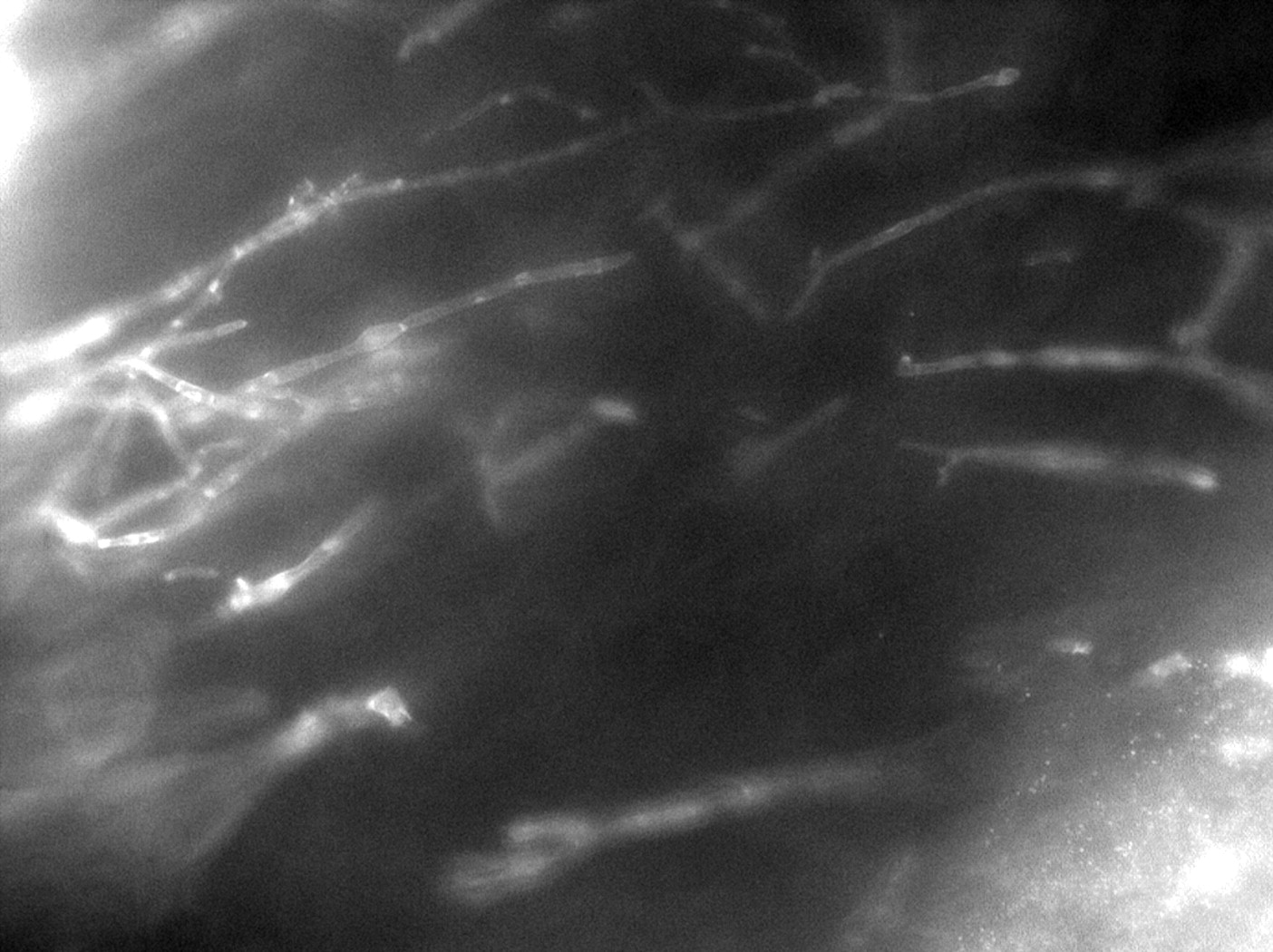
A total of 83 onychomycotic nail samples were collected from patients who were receiving antifungal drug therapy after they had been confirmed as being culture positive for T rubrum at a previous visit. Each toenail sample was subject to calcofluor white microscopy, PCR, and culture methods. The distribution of the samples according to when antifungal drug therapy was commenced is given in Table 1, with the study lasting a total of 84 weeks (therapy duration, 48–60 weeks). Of 83 toenail samples, 28 were from female patients. Hyphae for T rubrum were detected in 26 of 83 samples (31.3%) when calcofluor white fluorescence microscopy was used (Table 2 and Figure 1). Twenty-one of the 83 samples (25.3%) yielded positive results for T rubrum when actin gene–based primers in a double-round PCR assay were used (Table 2). The overall detection rate of calcofluor white microscopy and PCR detection was 46.9% (39 of 83). On the other hand, only 2 samples (2.4%) were found to be culture positive.

Discussion

Trichophyton rubrum is the most frequent causative agent of onychomycosis nail infection; it is isolated from 90% of nail samples that are culture positive, and the prevalence of onychomycosis is reported to be 2% to 18%. The high prevalence of onychomycosis warrants effective, lasting treatment. Currently, when terbinafine—the gold standard oral antimycotic drug therapy for toenail dermatophyte onychomycosis—is used, a mycologic cure rate of 66% to 89% can be achieved (negative KOH microscopy and negative culture). [26,27] Reported infection relapse rates of 25% to 50% [28] point to the need for a careful and sensitive method to substantiate the presence of cure after therapy because there is currently no method for determining whether relapse is due to failure to eradicate the initial infection or represents a new infection after successful therapy. Molecular biology methods may be more accurate for detecting subclinical infection than the traditional methods of light and calcofluor white microscopy and culture.
Trichophyton rubrum onychomycosis infection is generally confirmed by performing light microscopic examination on KOH-digested nails and by culturing subungual debris and nail fragments on Sabouraud’s dextrose agar supplemented with cycloheximide, chloramphenicol, and gentamicin. By using this traditional diagnostic approach, 15% to 30% of samples, or even a higher percentage, give false-negative results. [29-31] The superiority and sensitivity of histopathologic periodic acid–Schiff staining and calcofluor white fluorescent microscopic observation of fungal hyphae from the onychomycotic nail samples has been established over KOH light microscopy. [32]
Recently, a study on the use of PCR assay to directly detect T rubrum DNA from onychomycotic nail samples reported greater sensitivity than traditional culture methods. [33,34] We also developed a double-round PCR assay with greater sensitivity for the detection of T rubrum DNA using the actin gene fragment. [24] The present study uses an actin gene–based PCR assay for T rubrum detection and calcofluor white fluorescence microscopy for evaluating the presence of fungal hyphae in nail samples collected from patients who were receiving antifungal drug therapy. When calcofluor white and the PCR assay were used, T rubrum infection was detected in 46.9% of samples. The major advantage of this protocol is that T rubrum is detected regardless of viability; it detects the organism in 24 to 48 hours and is specific for T rubrum. Although, the use of calcofluor white microscopy and the actin-based PCR assay can detect the presence of T rubrum infection in nail samples, the PCR-based method does not indicate the viability of the organism to the same extent as culture-based methods.
A report has been published that assesses the viability of dermatophytes grown from cultures of skin scrapings by using actin-based, reverse transcriptase–PCR. [35] The choice of the actin gene for this protocol was made on the basis of its essential, species-specific, and highly expressed nature, which are all critical attributes for the development of a method for assessing the viability of T rubrum directly from patient nail samples in the future. Such a method would allow more accurate assessments of the susceptibility of T rubrum to antifungal drug therapy.
Financial Disclosure: None reported.
Conflict of Interest: None reported.

References

  1. Campbell AW, Anyanwu EC, Morad M: Evaluation of the drug treatment and persistence of onychomycosis. ScientificWorld J4: 760, 2004.
  2. Gupta AK, Jain HC, Lynde CW, et al: Prevalence and epidemiology of onychomycosis in patients visiting physicians’ offices: a multicenter Canadian survey of 15,000 patients. J Am Acad Dermatol43: 244, 2000.
  3. Roberts DT: Prevalence of dermatophyte onychomycosis in the United Kingdom: results of an omnibus survey. Br J Dermatol126: (suppl 39):23, 1992.
  4. Summerbell RC, Kane J, Krajden S: Onychomycosis, tinea pedis and tinea manuum caused by non-dermatophytic filamentous fungi. Mycoses32: 609, 1989.
  5. Gupta AK, Konnikov N, MacDonald P, et al: Prevalence and epidemiology of toenail onychomycosis in diabetic subjects: a multicentre survey. Br J Dermatol139: 665, 1998.
  6. Gupta AK, Scher RK, De Doncker P: Current management of onychomycosis: an overview. Dermatol Clin15: 121, 1997.
  7. Evans EG: Causative pathogens in onychomycosis and the possibility of treatment resistance: a review. J Am Acad Dermatol38: S32, 1998.
  8. Graser Y, Kuijpers AF, Presber W, et al: Molecular taxonomy of Trichophyton mentagrophytes and T. tonsurans. Med Mycol37: 315, 1999.
  9. Gupta AK, Ryder JE, Skinner AR: Treatment of onychomycosis: pros and cons of antifungal agents. J Cutan Med Surg8: 25, 2004.
  10. Scher RK, Baran R: Onychomycosis in clinical practice: factors contributing to recurrence. Br J Dermatol149: (suppl 65):5, 2003.
  11. Lecha M, Effendy I, Feuilhade de Chauvin M, et al: Treatment options: development of consensus guidelines. J Eur Acad Dermatol Venereol19: (suppl 1):25, 2005.
  12. Olafsson JH, Sigurgeirsson B, Baran R: Combination therapy for onychomycosis. Br J Dermatol149: (suppl 65):15, 2003.
  13. Evans EG, Sigurgeirsson B: Double blind, randomised study of continuous terbinafine compared with intermittent itraconazole in treatment of toenail onychomycosis. BMJ318: 1031, 1999.
  14. Gupta AK, De Doncker P, Scher RK, et al: Itraconazole for the treatment of onychomycosis. Int J Dermatol37: 303, 1998.
  15. Epstein E: How often does oral treatment of toenail onychomycosis produce a disease-free nail? an analysis of published data. Arch Dermatol134: 1551, 1998.
  16. Monod M, Baudraz-Rosselet F, Ramelet AA, et al: Direct mycological examination in dermatology: a comparison of different methods. Dermatologica179: 183, 1989.
  17. Zabawski EJ Jr, Styles AR, Cockerell CJ: Routine periodic acid-Schiff staining of nail plate fragments in fungal cultures for onychomycosis: a method to increase the sensitivity of diagnosis. Cutis66: 456, 2000.
  18. Weinberg JM, Koestenblatt EK, Jennings MB: Utility of histopathologic analysis in the evaluation of onychomycosis. JAPMA95: 258, 2005.
  19. Anane S, Aoun K, Zallagua N, et al: Onychomycosis in Tunis area: epidemiological and mycological data [in French]. Ann Dermatol Venereol128: 733, 2001.
  20. Baudraz-Rosselet F, Frenk E: In vitro nail invasion by pathogenic and non-pathogenic fungi under different culture conditions. Mycoses33: 553, 1990.
  21. Lateur N, Mortaki A, Andre J: Two hundred ninety-six cases of onychomycosis in children and teenagers: a 10-year laboratory survey. Pediatr Dermatol20: 385, 2003.
  22. Summerbell RC, Cooper E, Bunn U, et al: Onychomycosis: a critical study of techniques and criteria for confirming the etiologic significance of nondermatophytes. Med Mycol43: 39, 2005.
  23. Gupta AK, Ryder JE, Baran R, et al: Non-dermatophyte onychomycosis. Dermatol Clin21: 257, 2003.
  24. Gupta AK, Zaman M, Singh J: Fast and sensitive detection of Trichopyton rubrum DNA from the nail samples of patients with onychomycosis by a double-round polymerase chain reaction-based assay. Br J Dermtol157: 698, 2007.
  25. Anderson TD, Ross JP, Roby RK, et al: A validation study for the extraction and analysis of DNA from human nail material and its application to forensic casework. J Forensic Sci44: 1053, 1999.
  26. Avner S, Nir N, Henri T: Combination of oral terbinafine and topical ciclopirox compared to oral terbinafine for the treatment of onychomycosis. J Dermatol Treat16: 327, 2005.
  27. Gupta AK: Ciclopirox topical solution, 8% combined with oral terbinafine to treat onychomycosis: a randomized, evaluator-blinded study. J Drugs Dermatol4: 481, 2005.
  28. Gupta AK, Lynch LE: Management of onychomycosis: examining the role of monotherapy and dual, triple, or quadruple therapies. Cutis74: 5, 2004.
  29. Clayton YM: Clinical and mycological diagnostic aspects of onychomycoses and dermatomycoses. Clin Exp Dermatol17: (suppl 1):37, 1992.
  30. Fletcher CL, Hay RJ, Smeeton NC: Onychomycosis: the development of a clinical diagnostic aid for toenail disease: part I. Establishing discriminating historical and clinical features. Br J Dermatol150: 701, 2004.
  31. Midgley G, Moore MK, Cook JC, et al: Mycology of nail disorders. J Am Acad Dermatol31: S68, 1994.
  32. Weinberg JM, Koestenblatt EK, Tutrone WD, et al: Comparison of diagnostic methods in the evaluation of onychomycosis. J Am Acad Dermatol49: 193, 2003.
  33. Arca E, Saracli MA, Akar A, et al: Polymerase chain reaction in the diagnosis of onychomycosis. Eur J Dermatol14: 52, 2004.
  34. Kardjeva V, Summerbell R, Kantardjiev T, et al: Forty- eight-hour diagnosis of onychomycosis with subtyping of Trichophyton rubrum strains. J Clin Microbiol44: 1419, 2006.
  35. Okeke CN, Tsuboi R, Kawai M, et al: Isolation of an intron-containing partial sequence of the gene encoding dermatophyte actin (ACT) and detection of a fragment of the transcript by reverse transcription-nested PCR as a means of assessing the viability of dermatophytes in skin scales. J Clin Microbiol39: 101, 2001.

Table 1. Distribution of the Diagnosis of 83 Nail Samples According to Antifungal Drug Treatment Duration
Japma 98 00224 i001
Table 2. Diagnosis of Trichophyton rubrum Infection in 83 Onychomycotic Nail Samples
Japma 98 00224 i002
Figure 1. Calcofluor white fluorescence microscopic detection of dermatophyte hyphae in an onychomycotic nail (original magnification ×400; 4′,6-diamidino-2-phenylindole filter: excitation, 365 nm; emission, 430 nm).
Japma 98 00224 g001