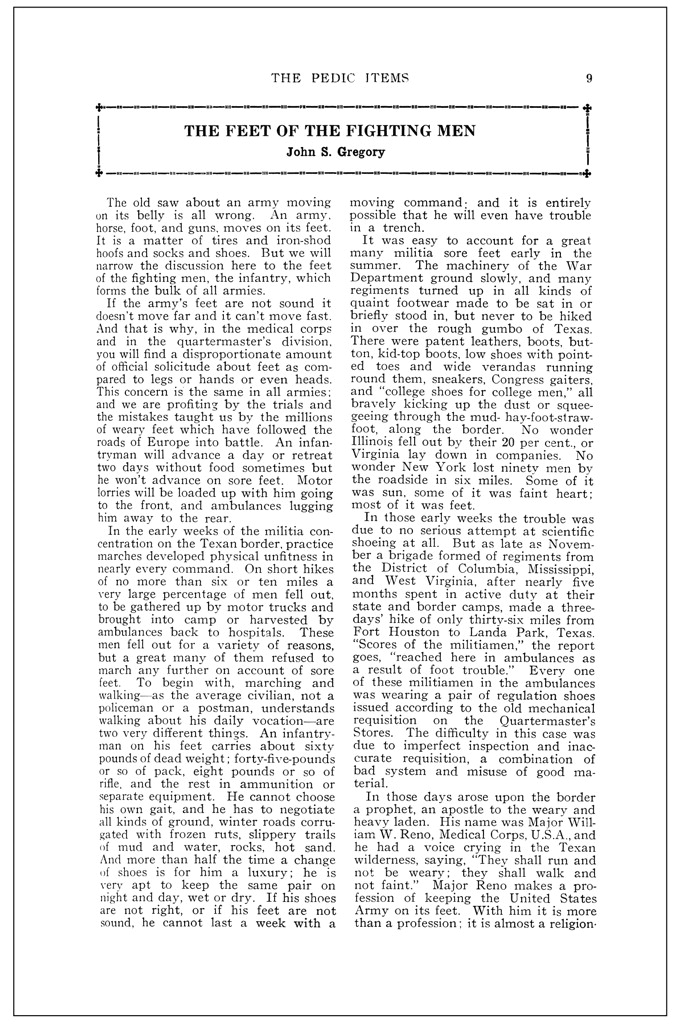
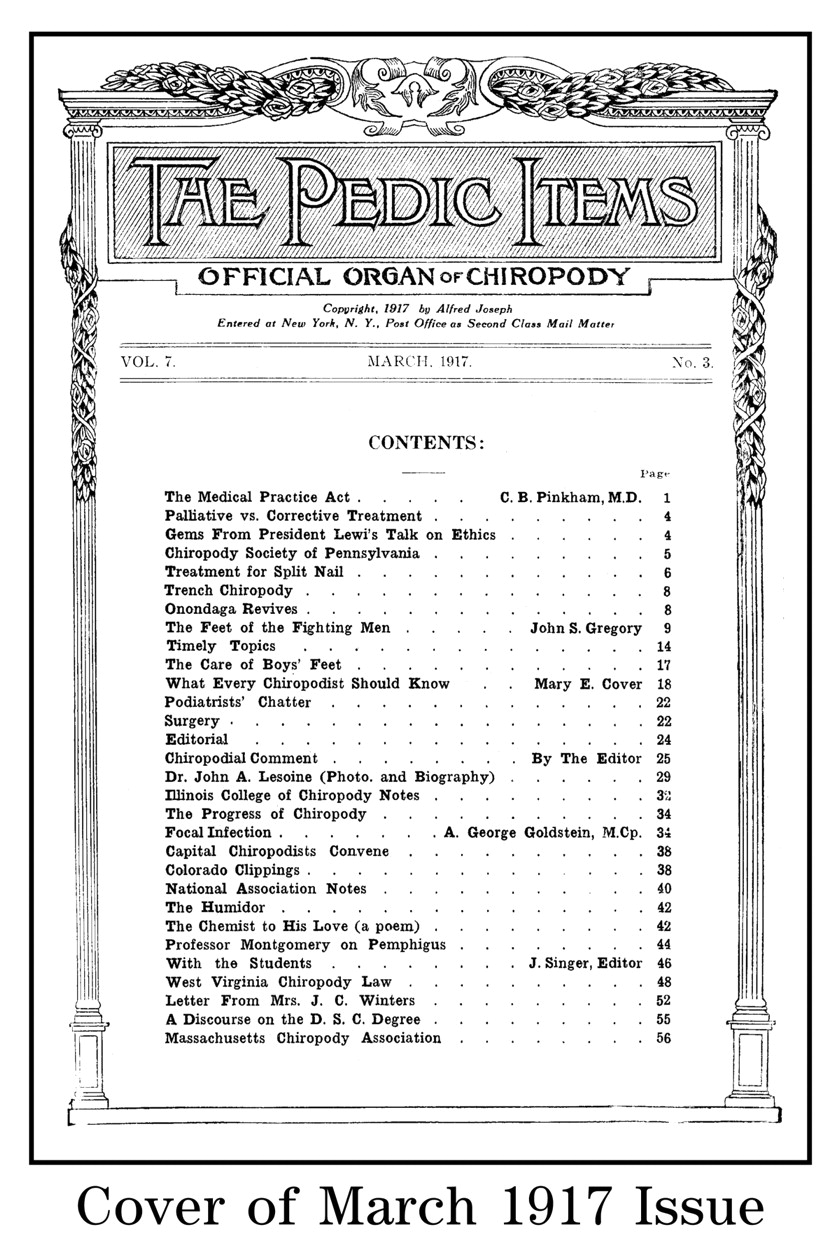
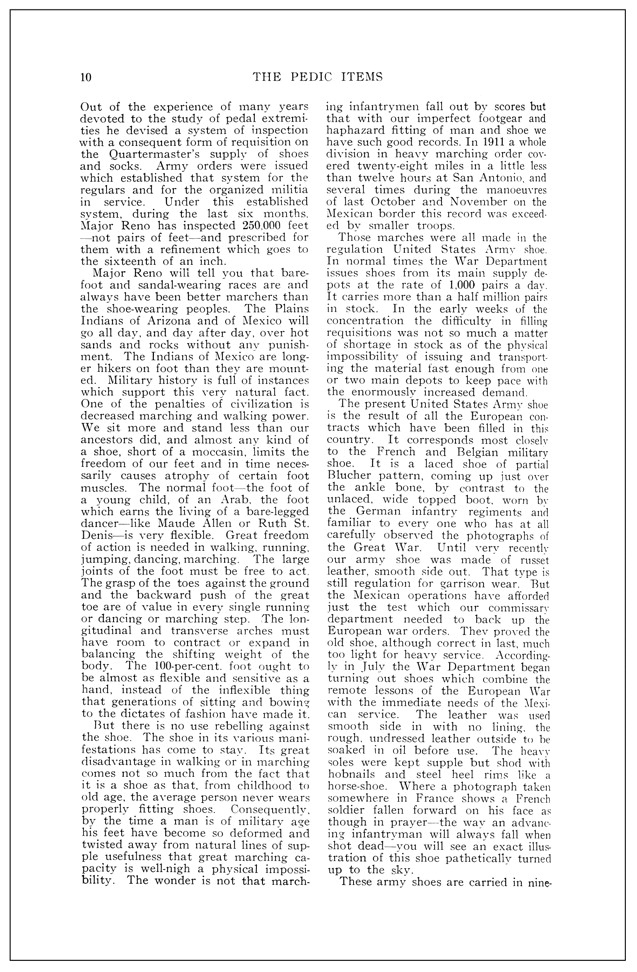
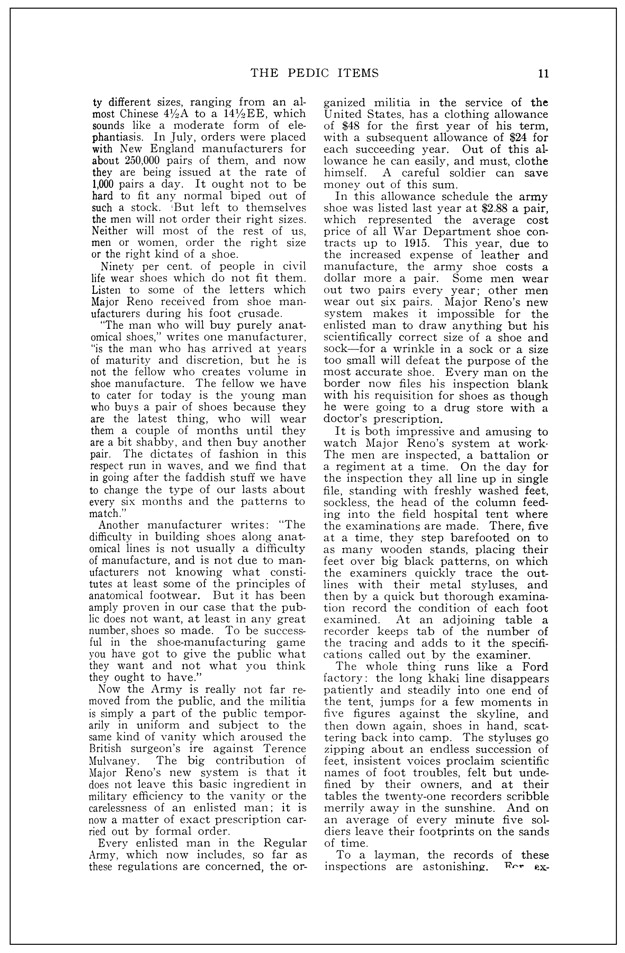
This article, written toward the end of the Great War (World War I), is an interesting exposition of one military surgeon’s goal of ensuring that the “feet of the fighting men” of the United States Army were fit for the soldiers’ missions.
After years of studying European and American military footwear and the foot problems encountered in peacetime training and during wartime, Maj. William W. Reno of the US Army Medical Corps devised a system of foot inspections to ensure that military footwear was available that corresponded to the various foot types found in the population, ending the problem of ill-fitting footwear that had plagued the troops. Major Reno’s foot-inspection system resulted in a precise “prescription” for the troops’ footwear. After “foot screening” all of the enlisted troops under his command, he reported interesting demographic information: for example, the average size of a soldier’s foot in the early 1900s was “7E,” and among 1,087 soldiers inspected, only 290 “normal” feet were found. For the first time in military medicine, soldiers found to have “bad” feet were placed in separate squads and had to “exercise” according to Major Reno’s instructions in order to eventually rejoin the regular units. The common foot problems of “corns,” “bunions,” “ingrowing nails,” “exostoses,” and “pronation” were documented, with the prime cause reported to be “ill-fitted shoes.”
Major Reno knew that an army “moves on its feet,” and his visionary approach to documenting foot problems and prescribing well-fitting shoes and boots greatly advanced the foot health of the US Army for generations to come.