Aneurysmal bone cyst is a locally destructive, benign lesion of bone that was first described in detail by Jaffe and Lichtenstein. [
1] Aneurysmal bone cysts both erode and cause expansion of underlying cancellous and cortical bone [
2] but always remain covered with periosteal new bone that prevents direct extension into surrounding tissues. [
3] Of unknown origin and rare, they can occur in any bone but are more common in the metaphyses of long bones, especially around the knee and in the vertebral column. [
4] These cysts account for approximately 1% of all biopsied bone tumors. [
5] Aneurysmal bone cysts are unique pathologic entities [
6] and have been found to occur in association with primary benign bone tumors, such as chondroblastoma, nonossifying fibroma, [
7,
8] and, more commonly, giant cell tumor. [
9] They share many characteristics of giant cell tumors, but computed tomography demonstrates fluid levels in one-third of aneurysmal bone cysts. [
10,
11] This is not found in giant cell tumors. In a review of several series, Schreuder et al [
4] found that the cysts were slightly more common in females, most frequently in the second decade of life. The most common site was the tibia, with the foot accounting for only 6.3% of all reported cases.
Treatment of aneurysmal bone cysts has ranged from wide resection of the cyst to curettage with bone grafts and the use of adjuvants such as cryotherapy, systemic chemotherapy, radiotherapy, phenol, polymethyl methacrylate, and irradiation. Bone grafts can range from autogenous grafts to allografts to xenografts. We report the use of a commercially available mixture of cancellous bone and demineralized bone matrix (OrthoBlast; GenSci OrthoBiologics Inc, Irvine, California) as an adjuvant treatment after curettage of an aneurysmal bone cyst.
Case Report
A 16-year-old boy presented to the private office of the senior author (B.C.) with the chief complaint of left heel pain that began 2 weeks earlier after pole vaulting at a high school track meet. The patient localized the pain to the area around the plantar medial calcaneal tubercle and along the lateral aspect of the calcaneus. He stated that he could still walk with some pain but that the pain occasionally woke him up at night. His surgical history was significant for an appendectomy without complications as a child. His medical history was unremarkable, and he denied any current medication use or drug allergies and any family history of disease.
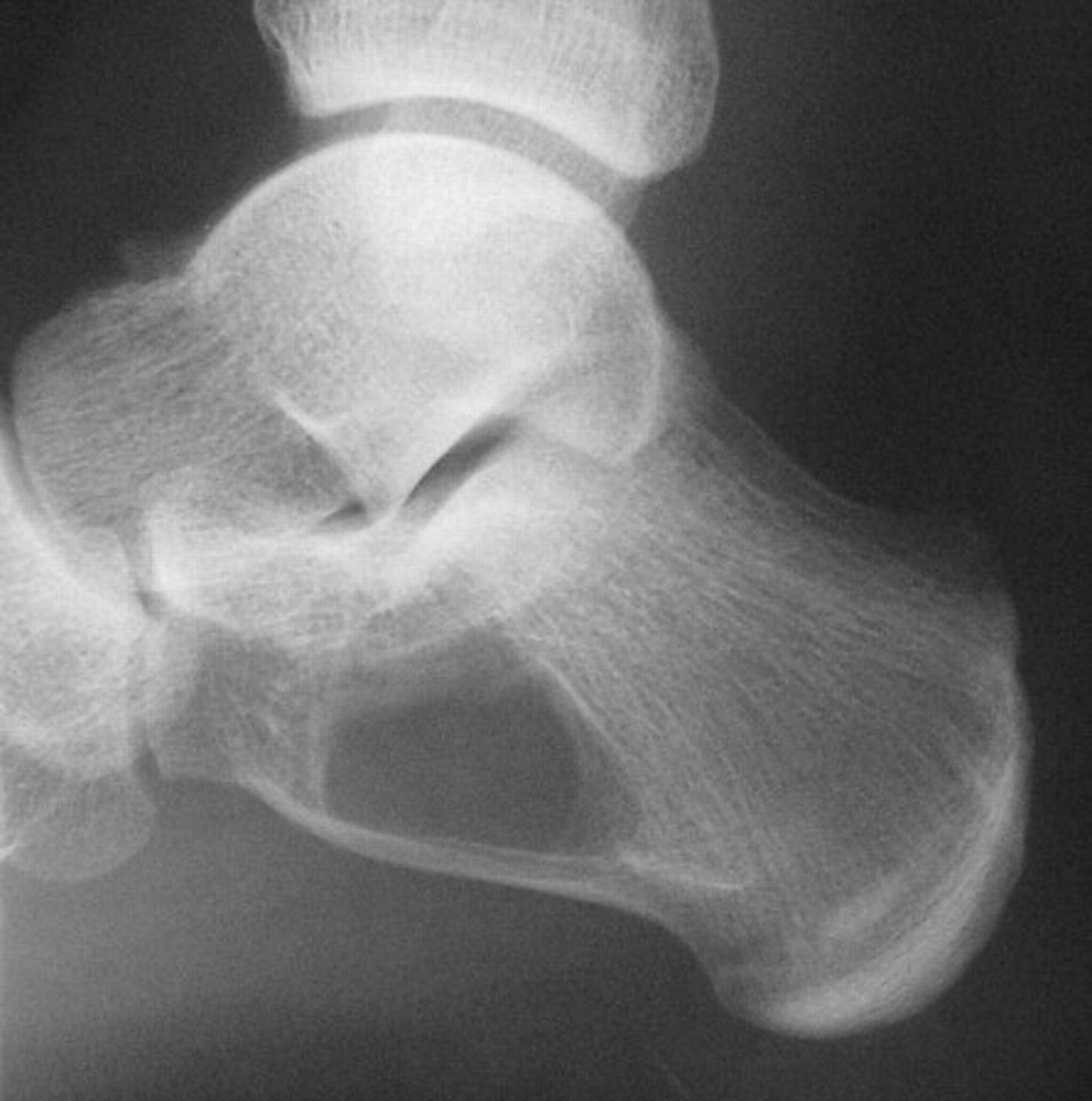
Physical examination of the left foot revealed an intact neurovascular status with no break in the integument, no edema, and no erythema. Moderate pain was elicited with palpation at the plantar medial calcaneal tubercle and with lateral compression of the calcaneal body at the central aspect. A mild gastrocnemius equinus was also demonstrated on the left side, with −6° of dorsiflexion available at the ankle with the knee extended that reduced to normal with knee flexion. Plain film radiographs revealed a 2 × 3-cm lobulated cyst in the calcaneus inferior to the lateral talar process (
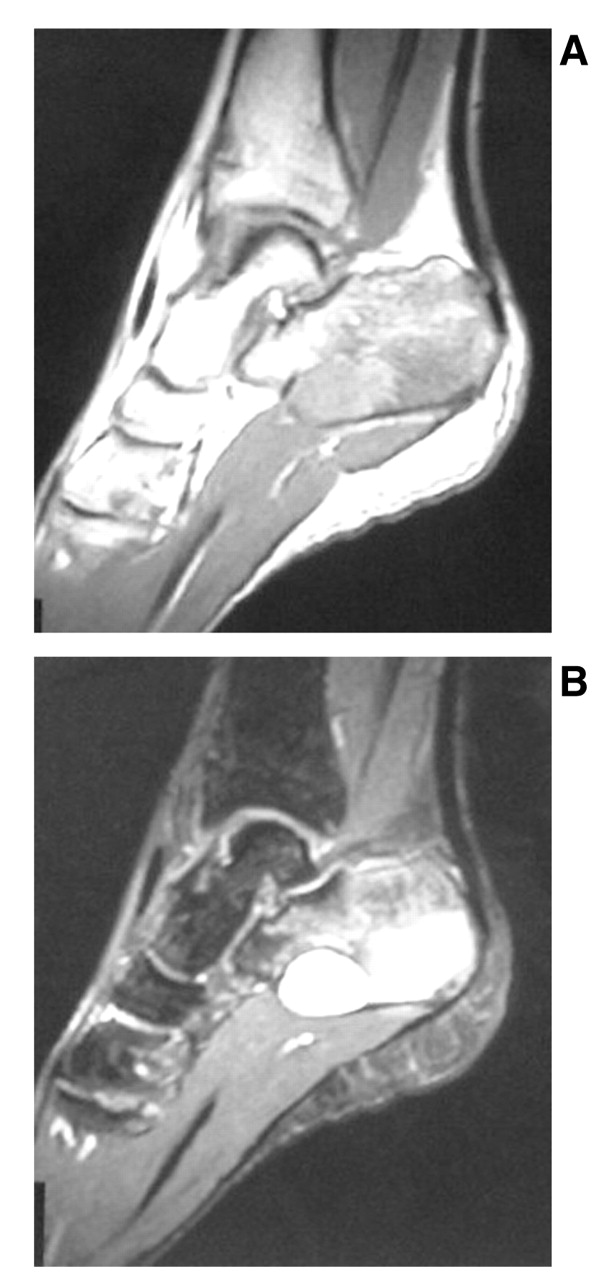
Fig. 1). No other abnormalities were noted. A magnetic resonance image was ordered to determine a more precise location and size of the lesion before surgery and to possibly identify the cyst. Multiplanar T1- and T2-weighted images showed a well-defined cyst in the calcaneus inferior to the lateral talar process (
Fig. 2). There was a broad zone of increased fluid signal throughout most of the posterior portions of the calcaneus. The radiologist noted that the presence of a bone cyst always raises the possibility that the cyst was secondary to a tumor; however, there were no findings suggestive of tumor in this study.
Figure 1.
Lateral radiograph showing the location of the aneurysmal bone cyst.
Figure 1.
Lateral radiograph showing the location of the aneurysmal bone cyst.
Figure 2.
Sagittal T1-weighted (A) and T2-weighted (B) images showing a fluid-filled cyst.
Figure 2.
Sagittal T1-weighted (A) and T2-weighted (B) images showing a fluid-filled cyst.
A 1-cm lateral approach was used, and blunt dissection was carried down to the lateral wall of the calcaneus. A small trephine was used with fluoroscopic guidance to collect a biopsy specimen. Immediately, approximately 15 mL of a brownish serosanguineous fluid was released. Samples of this fluid were sent to the pathology laboratory, and the fluid was also cultured for aerobic and anaerobic organisms. The cyst was curetted and then irrigated with 300 mL of warmed normal saline. This curetted debris was also sent to the pathology laboratory. The deficit was then packed with approximately 14 cc of OrthoBlast. The surgical site was then closed in layers.
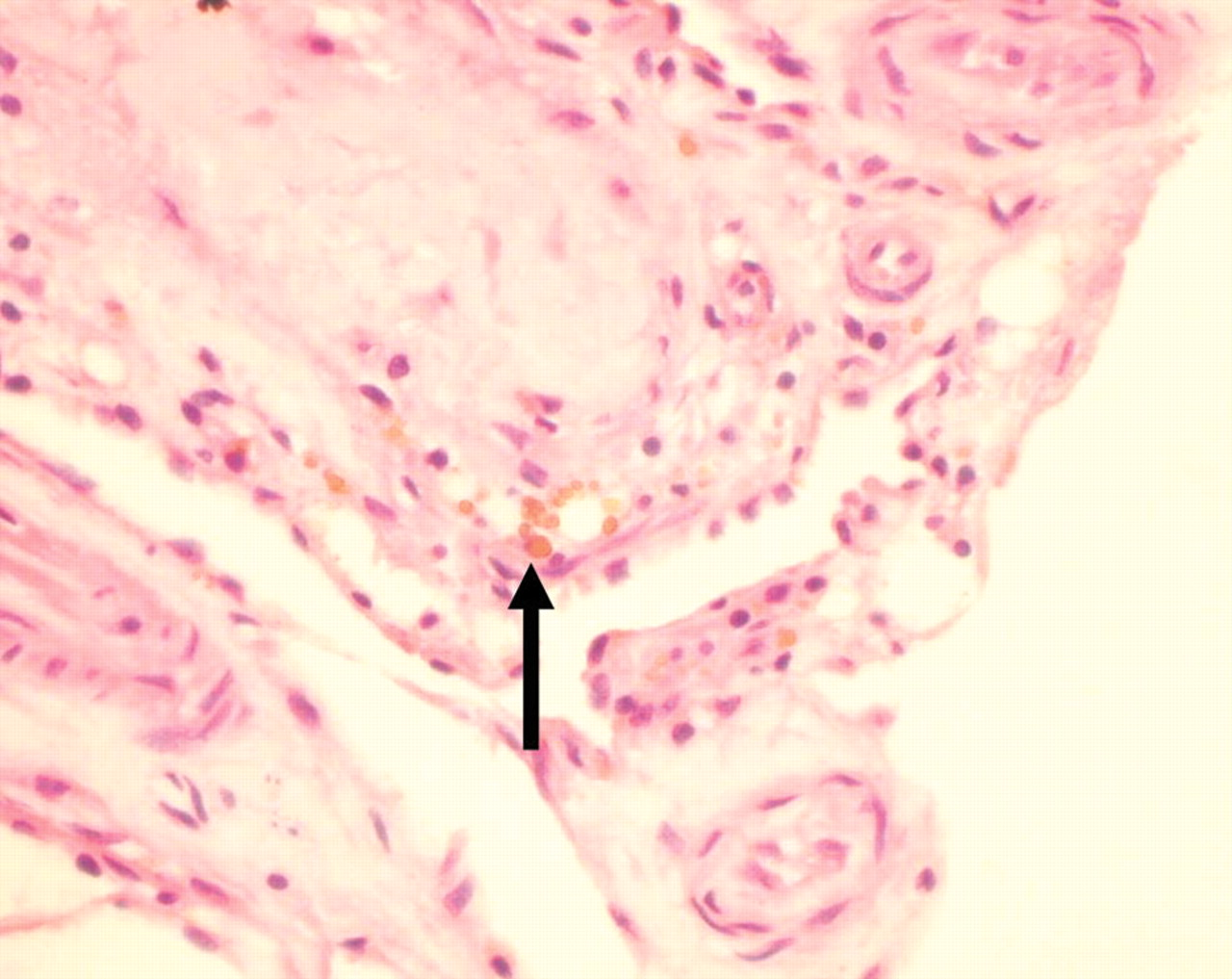
The microbiology report noted no growth in either culture. The pathology report showed some cortical bone with some bony trabeculae and amorphous material. Benign histiocytes were present, some containing hemosiderin pigment (
Fig. 3). There was no evidence of acute inflammation, and no malignant cells were identified. The pathology findings were consistent with aneurysmal bone cyst.
Figure 3.
Pathologic specimen showing histiocytes and hemosiderin pigment (arrow) (H&E, ×400).
Figure 3.
Pathologic specimen showing histiocytes and hemosiderin pigment (arrow) (H&E, ×400).
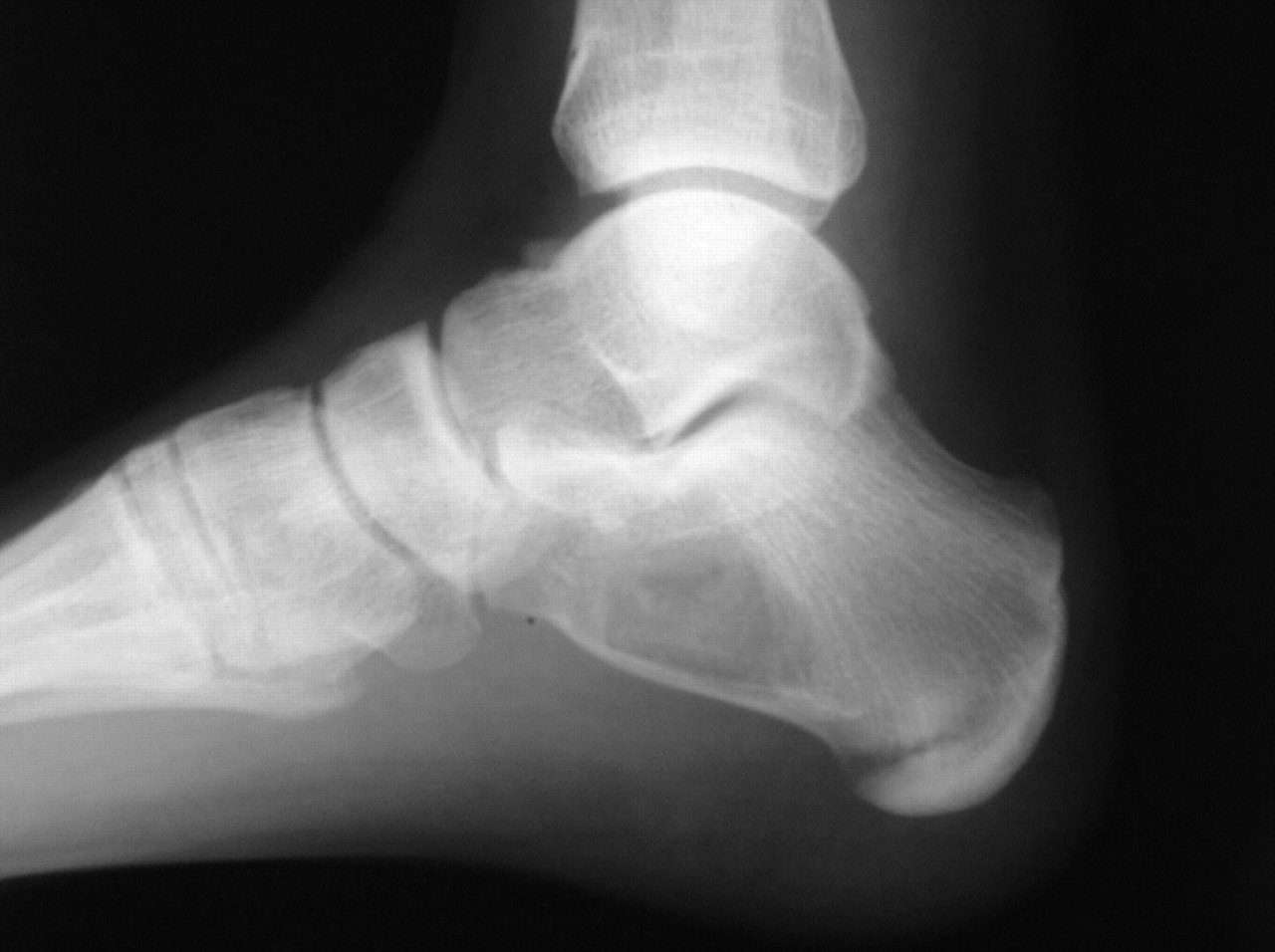
The patient was allowed to gradually return to daily activities and sports 8 weeks after surgery. Four months after surgery, he returned to pole vaulting and ultimately won a state championship in this event. Plain film radiographs taken at this time showed partial consolidation of the bone graft (
Fig. 4). Three years after surgery, the patient remained asymptomatic, with no recurrence evident on plain film radiographs.
Figure 4.
Four-month postoperative lateral radiograph showing partial consolidation of the bone graft.
Figure 4.
Four-month postoperative lateral radiograph showing partial consolidation of the bone graft.
Discussion
Adjuvant therapies with curettage of aneurysmal bone cysts have been described and compared in numerous studies in the literature. After packing the defect with either bone autograft, heterograft, or polymethyl methacrylate, Gibbs et al [
12] actually found no added benefit with the use of other adjuvant therapies. In addition, they found that a rate of local control of almost 90% was achieved with thorough curettage with use of a mechanical bur and without use of liquid nitrogen, phenol, or other adjuvants. Several other authors [
7,
13,
14] have reported similar findings, with no decrease in recurrence when using local adjuvants. Gibbs et al [
12] also noted that young age and open growth plates are associated with an increased risk of local recurrence. In contrast, Schreuder et al [
4] recommend cryotherapy as an adjuvant to the surgical treatment of aneurysmal bone cysts with bone grafting, which achieved consolidation of the lesion in all of their patients. In an excellent review of the literature on aneurysmal bone cysts, Schreuder et al compared the demographics, anatomical distribution, and treatment with recurrences of many studies with their method of curettage, cryotherapy, and bone grafting. They found the following reported recurrence rates: 0% with wide resection; 7.4% with marginal resection; 11.8% with irradiation; 12.8% with curettage, cryotherapy, and bone grafting; 14.2% with curettage and irradiation; and 30.8% with curettage alone and bone grafting techniques.
We have reported the use of a commercially available bone substitute, OrthoBlast, after curettage of an aneurysmal bone cyst in the calcaneus. A similar technique has been reported with injection of demineralized bone matrix and autogenous bone marrow in unicameral bone cysts, with minimal complications and no late recurrences. [
15] This bone substitute has both osteoinductive properties (through demineralized bone matrix that releases bone morphogenic proteins) and osteoconductive properties (through the cancellous bone component). In our case, the patient had early return to athletic activities without pain and has had no recurrence.