Pigmented villonodular synovitis (PVNS) of the foot is rare. In the most extensive epidemiologic study to date, Myers and Masi[
1] found that the knees were most frequently involved (66% of cases), followed by the hips (16%), and that the joints of the foot accounted for only 2% of these lesions. To our knowledge, there has been no previous report of involvement of the calcaneocuboid joint.
Pigmented villonodular synovitis is a benign soft-tissue mass that typically overlies articular spaces yet rarely involves the joint space.[
2–
6] Although it is nonmalignant and nonmetastasizing, PVNS is locally destructive and can result in considerable disability through infiltration and involvement of surrounding soft tissues and bone. The tumor itself is rarely painful, although the bulk of the mass may produce pressure-induced discomfort of the underlying structures. Patients with PVNS in the foot often seek treatment as a result of difficulties with shoe fitting rather than because of pain from the tumor.
There are three forms of PVNS: nodular, localized, and diffuse. The diffuse form of PVNS most frequently affects young adults.[
7] Because this group is generally physically active, two problems arise. First, they may be suspected of having experienced trauma and may be misdiagnosed, delaying appropriate treatment. Second, if the diagnosis is missed initially, the tumor may continue to proliferate and infiltrate structures. If this occurs, the patient may need more extensive resection of tissues, with the potential for biomechanical limitation and loss of function.
The diffuse form of PVNS is most often associated with recurrence in the lower extremity.[
6,
8] When the soft-tissue mass does recur, it is typically associated with increased symptoms. Recurrence has been repeatedly attributed to incomplete resection of proliferative synovium.[
6,
8–
11] It has been suggested that on recurrence, irradiation of the soft-tissue mass should be performed.[
3,
6,
7,
10,
12] The exact cause of PVNS is unknown. Numerous theories have been suggested, including repetitive trauma, disorders of lipid metabolism, and neoplasm, yet no single cause has been universally accepted.[
4,
6,
13]
The patient typically presents with a firm, non-tender, immobile soft-tissue mass. The skin directly above the tumor is frequently warmer than the surrounding skin. This skin may also exhibit mild-to-moderate hyperpigmentation. The overlying skin is often mobile with respect to the tumor, but the soft-tissue mass is immobile with respect to its underlying structures. Patient complaints most frequently center on difficulty with shoes, as the additional bulk of the tumor interferes with fitting. The tumor may be painful when irritated by the shoe or with direct palpation. If the hypertrophic synovium or excess synovial fluid has invaded the joint space, the patient may complain of joint stiffness.[
2,
4–
6]
A moderately opaque soft-tissue mass may be readily seen on plain film radiographs. Degenerative changes in bone, ranging from the development of sclerotic margins to substantial bony erosion, may also be seen. Osseous involvement may be noted on plain radiographs in up to 50% of cases.[
6,
14] Computed tomography has provided more reliable preoperative evaluation of osseous changes.[
15] Sclerotic margins are typically noted without periosteal reaction. These subchondral juxta-articular lesions are cystic, without periosteal reaction, and may be single or multiple. It has been theorized that increased articular pressure from the encroaching mass is responsible for the erosion.[
3,
16] Magnetic resonance imaging can typically confirm a diagnosis of PVNS through characteristic signals.[
15] Because of the unique combination of lipid-laden foam cells and hemosiderin content, low signal intensity of the mass is seen on T1-and T2-weighted images.
Synovium of PVNS is reddish brown to yellow-brown. The macroscopic appearance of the resected tumor is generally tan-red rubbery tissue. Yellow-tan nodules may be dispersed throughout as well as in interwoven fibrocollagenous bands. Hyperplastic villous formation may also be seen. On microscopic examination of the pathologic specimen, clustered foam cells, scattered multinucleated giant cells, and hemosiderin- and lipid-laden macrophages or stromal cells are typical. Hemosiderin may also be found extracellularly or within spindle-shaped or polyhedral stromal cells.
Conservative therapy is often initiated when PVNS is misdiagnosed. Various regimens indicated for the treatment of acute trauma are most often used. No conservative therapy has been demonstrated to be effective in reducing the soft-tissue mass or in delaying progression of the disease. Complete excision of the soft-tissue mass and involved structures is the treatment of choice.[
5,
6,
8–
11] In addition, any subchondral juxta-articular cystic lesions of bone should undergo curettage to remove degenerative bone. Extensive deficits may be repaired through bone grafting and arthrodesis when indicated.
The cases presented here involve young adults who were originally misdiagnosed and developed extensive juxta-articular erosions. The treatment involved substantial curettage of bone and resection of infiltrated intrinsic musculature. Although deemed necessary, these treatments can compromise biomechanical function.
Case 1
A 19-year-old woman visited a private medical office in Daly City, California, with a chief complaint of a painful soft-tissue mass of the right foot. She was seeking a second opinion. The patient stated that the “lump” on her right foot was painful at times and made wearing a shoe difficult. Physical examination revealed a 50 × 5-mm, nonmobile soft-tissue mass overlying the sinus tarsi area of the right foot. The mass was slightly luminescent and easily palpable and was visible on plain film radiographs lateral to the calcaneocuboid joint. No evidence of bony involvement or degenerative changes with respect to osseous structures was noted on plain radiographs.
The patient had originally been sent for magnetic resonance imaging of a “ganglion” of the right foot. The procedure revealed an ill-defined, minimally enhancing, infiltrative soft-tissue mass about the dorsolateral foot in the region of the extensor tendons. Fine-needle aspiration biopsy and cytology of the right foot mass revealed smears that were highly cellular and showed two populations: clusters of bland spindle cells, some of which contained hemosiderin pigment, and bland multinucleated giant cells. Some foamy macrophages were present, as well as scattered inflammatory cells.
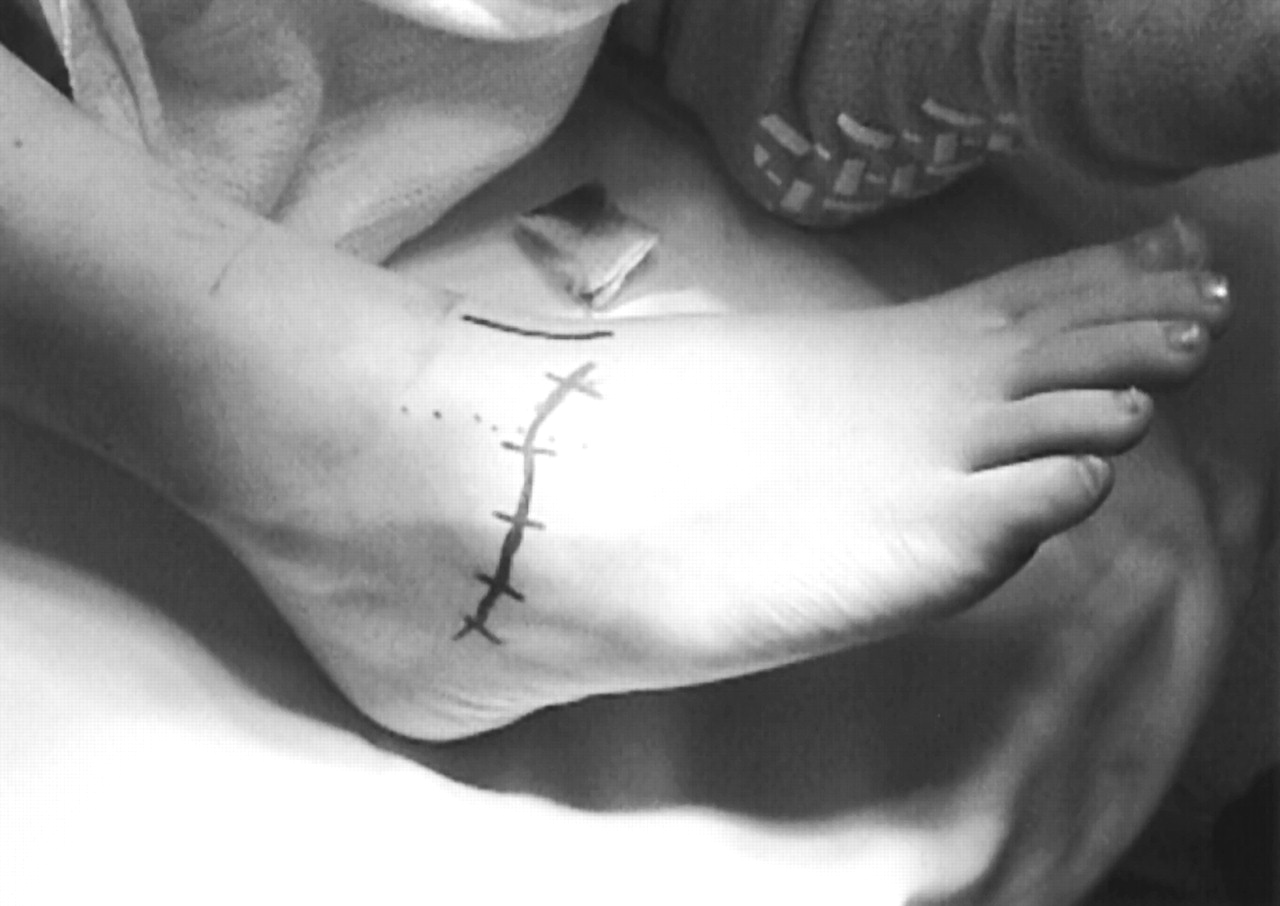
The patient consented to surgical removal of the mass. The incision was centered over the large soft-tissue mass (Fig. 1
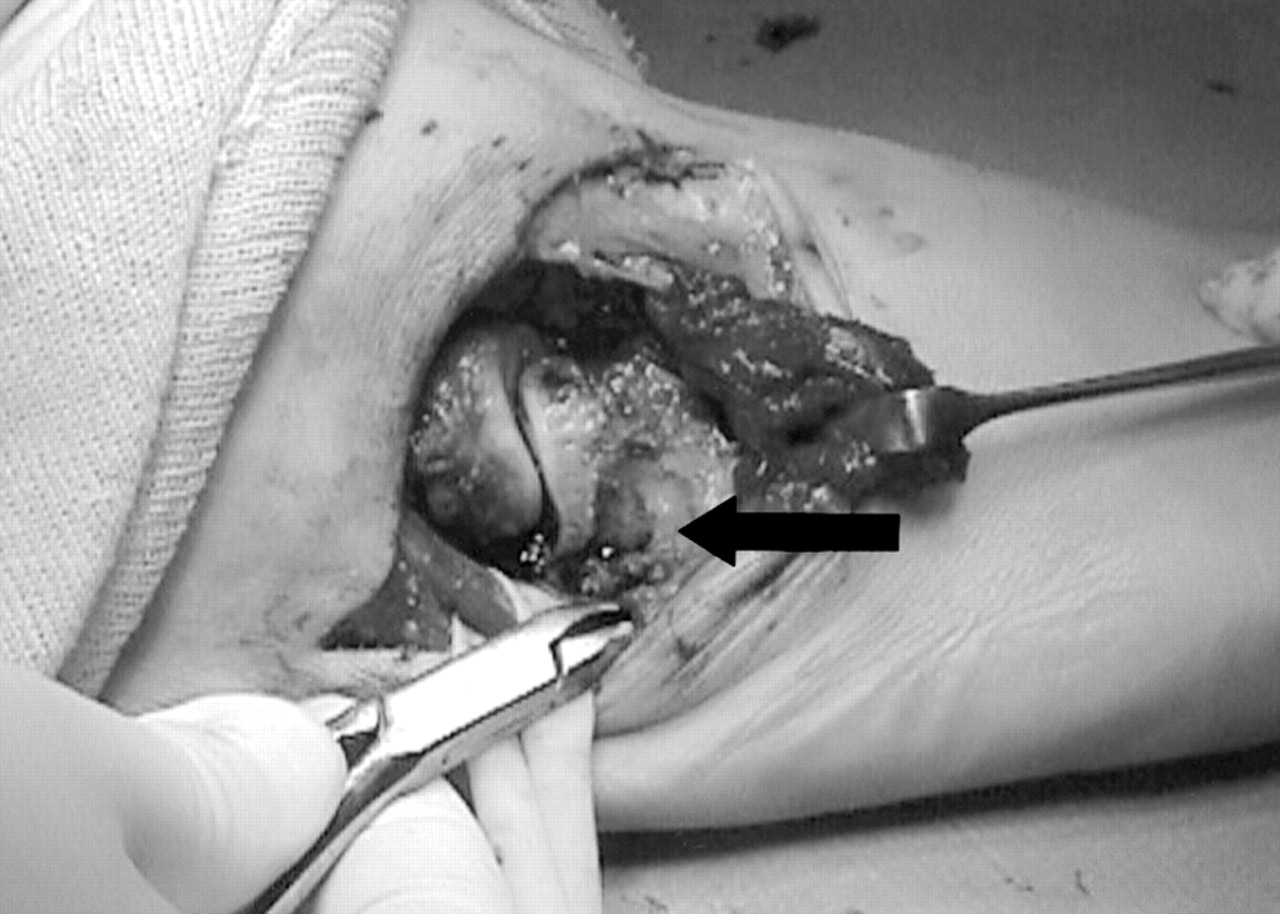
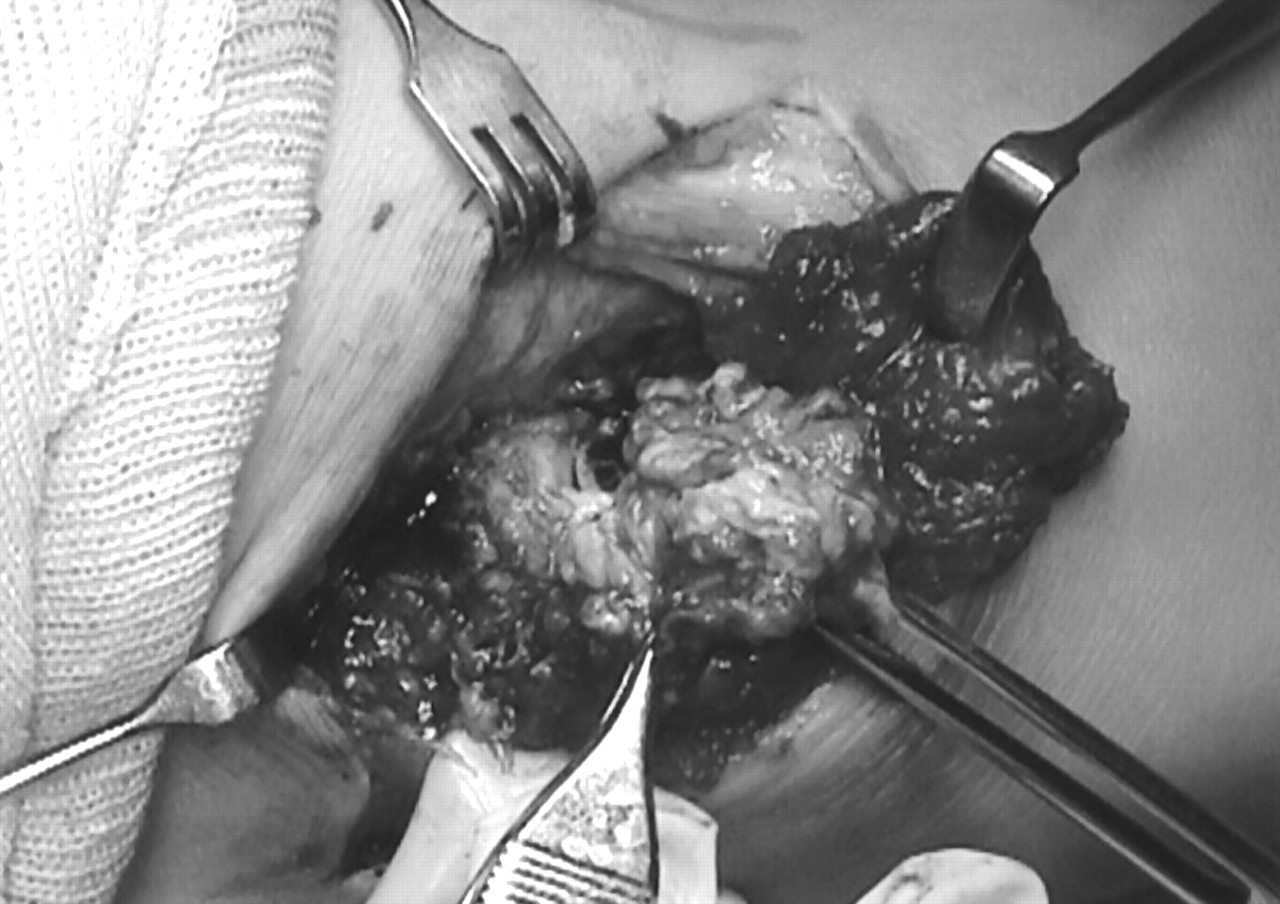
). The mass was noted to infiltrate some of the deeper fibers of the extensor digitorum brevis, the muscle belly of the peroneus tertius, and the sinus tarsi area. The tumor was also noted on both sides of the calcaneocuboid joint, with invasion into the anterior body of the calcaneus proper and the body of the cuboid. There was no evidence of destruction of the articular surfaces of the calcaneocuboid joint. The tumor was reflected off of the surfaces of the cuboid (Fig. 2
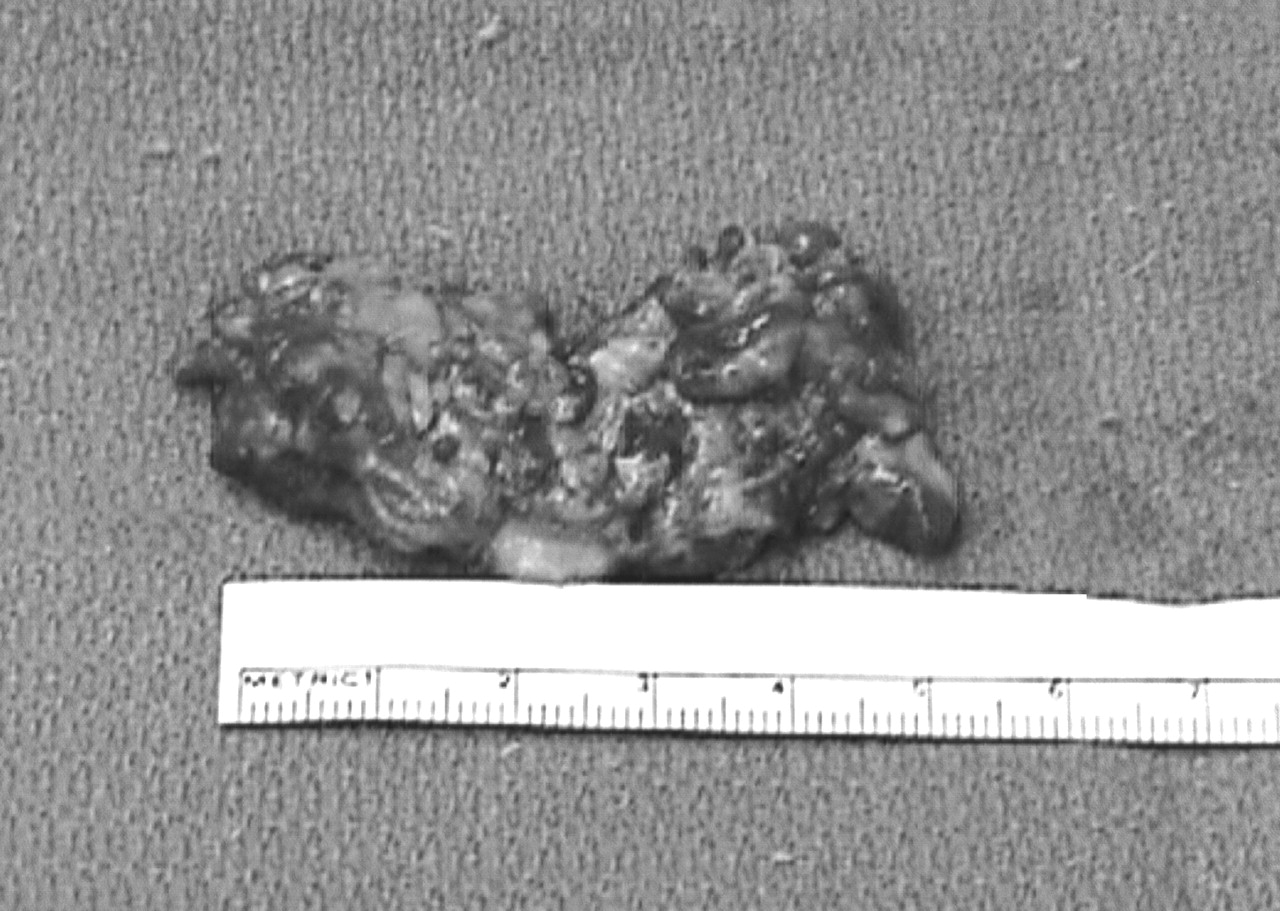
), and it measured approximately 60 mm in length (Fig. 3
). All of the abnormal-appearing soft tissue was removed from the dorsal and plantar aspects of the calcaneus and cuboid and from the subtalar joint and sinus tarsi area. Abnormal osseous tissue was removed until white, healthy-appearing bone was seen (Fig. 4
). In an attempt to provide coverage over the calcaneocuboid joint and the subtalar joint, the muscle belly was repaired back onto the deeper tissues, and the deep fascia was repaired over the muscle belly.
Figure 1 .
Preoperative view showing the soft-tissue mass.
Figure 1 .
Preoperative view showing the soft-tissue mass.
Figure 2 .
The mass is resected while the overlying musculature is retracted.
Figure 2 .
The mass is resected while the overlying musculature is retracted.
Figure 3 .
Villonodular macroscopic appearance of the mass.
Figure 3 .
Villonodular macroscopic appearance of the mass.
Figure 4 .
A cuboid defect is evident following cystic curettage.
Figure 4 .
A cuboid defect is evident following cystic curettage.
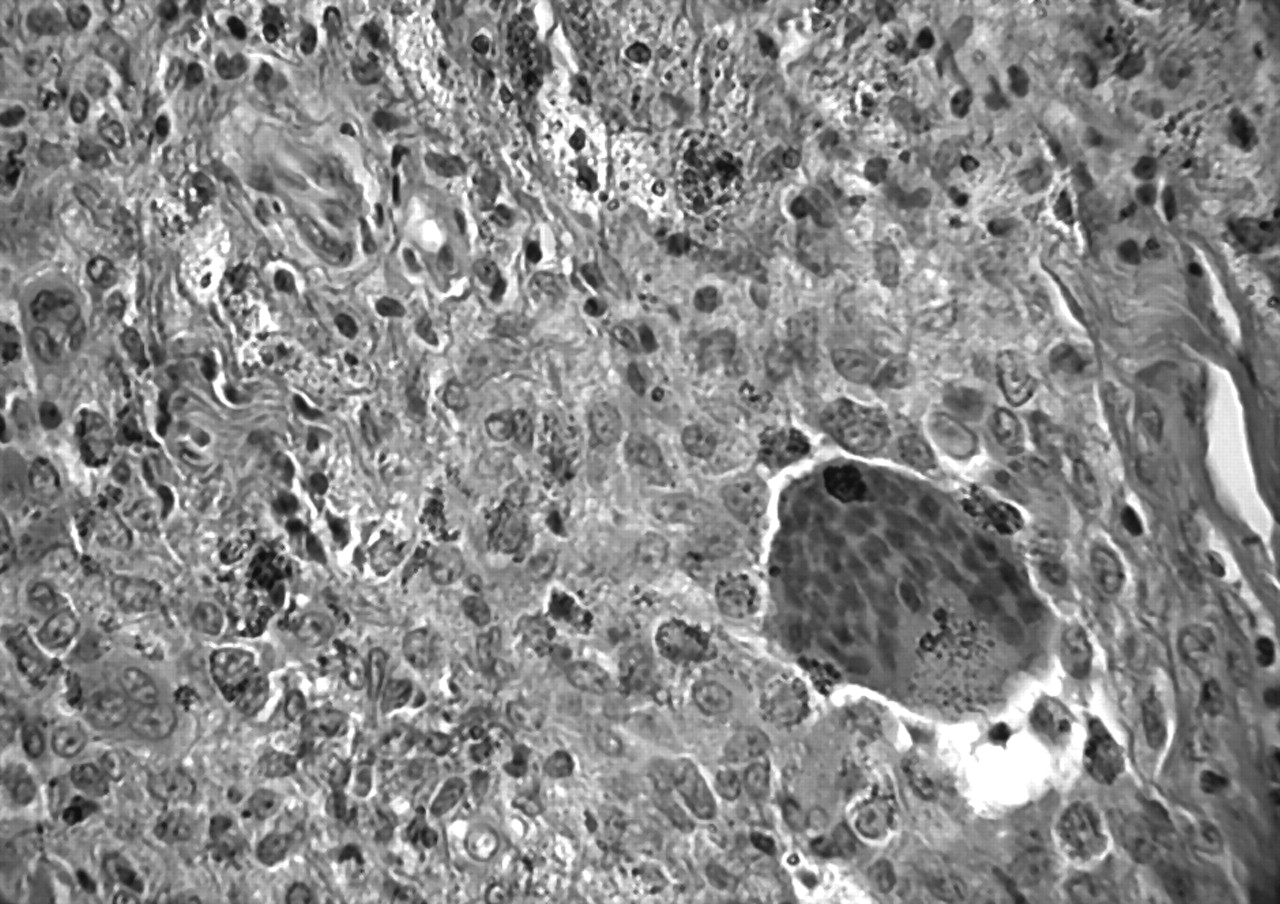
The pathology report included a review of multiple sections of the soft-tissue mass excised from the right foot showing a proliferation of cells characterized by papillary projections and nodules of cells associated with hemosiderin-containing phagocytes (Fig. 5
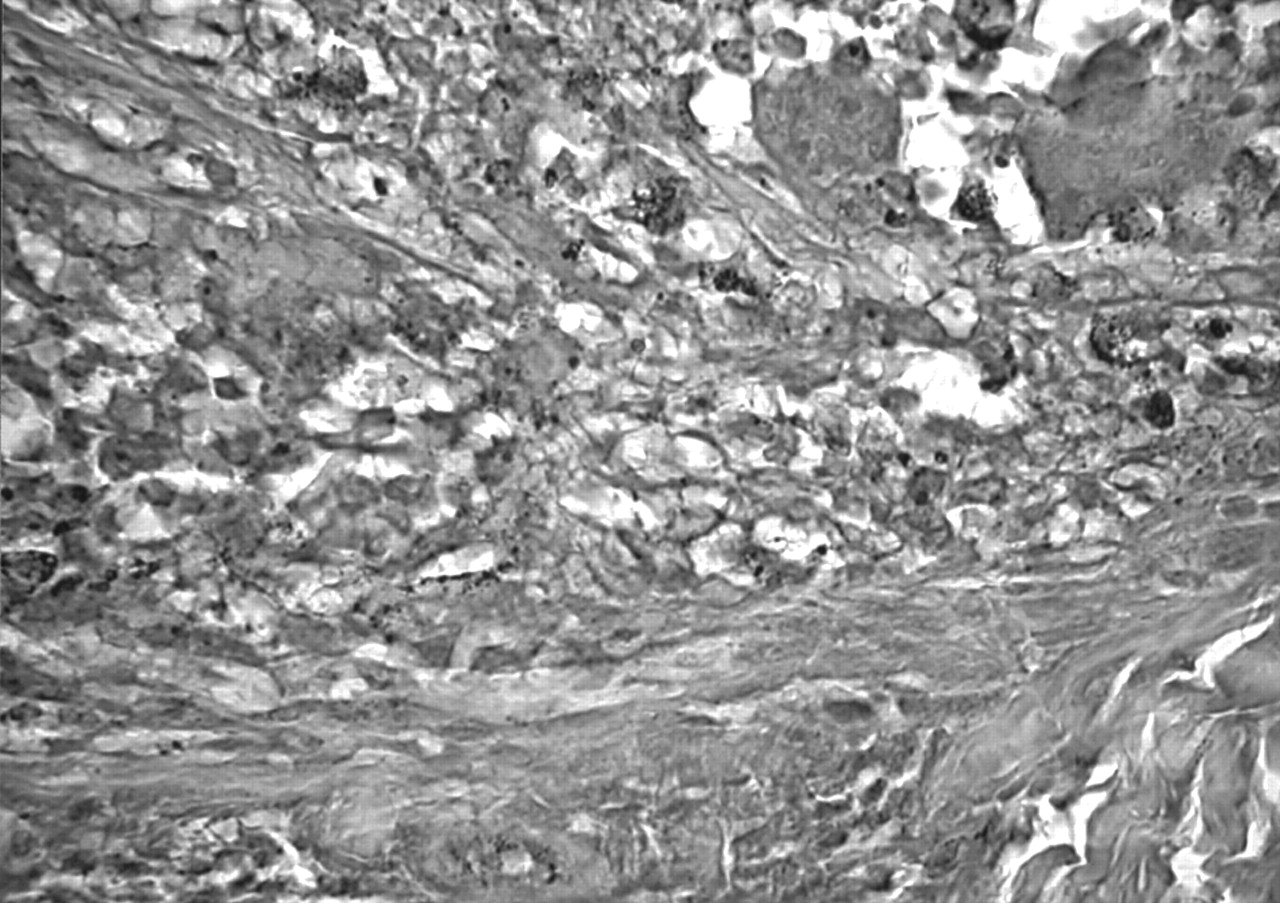
) and large numbers of foamy cells (Fig. 6
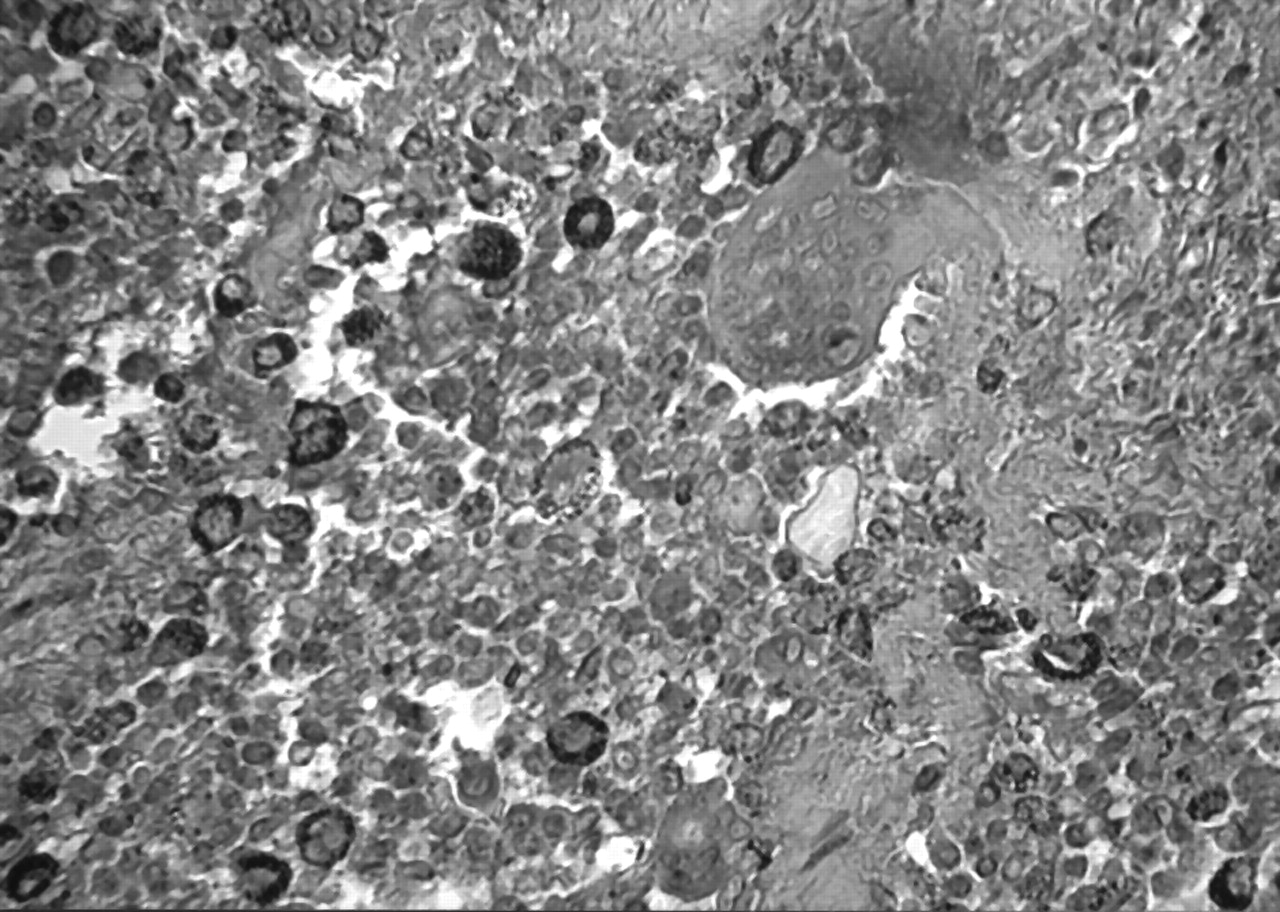
). The large masses of cellular tissues were associated with multinucleated giant cells (Fig. 7
). The pattern was nodular, with multiple varying-sized nodules of the cellular component extending into all margins of the specimen. Occasional mitotic figures were noted. The final diagnosis was confirmed as PVNS. The patient’s postoperative course of recovery was unremarkable. Follow-up with radiation oncology specialists was recommended.
Figure 5 .
Photomicrograph depicting hemosiderin-containing phagocytes (Case 1) (H&E, × 40).
Figure 5 .
Photomicrograph depicting hemosiderin-containing phagocytes (Case 1) (H&E, × 40).
Figure 6 .
Photomicrograph depicting foamy cells with interspersed bands of collagen (Case 1) (H&E, × 40).
Figure 6 .
Photomicrograph depicting foamy cells with interspersed bands of collagen (Case 1) (H&E, × 40).
Figure 7 .
Photomicrograph depicting multinucleated giant cells and lipid-laden macrophages (Case 1) (H&E, × 40).
Figure 7 .
Photomicrograph depicting multinucleated giant cells and lipid-laden macrophages (Case 1) (H&E, × 40).
Case 2
A 32-year-old woman presented to a private medical office in Daly City, California, with a chief complaint of a recurrent, painful soft-tissue mass of the left foot. Her history revealed surgical excision of a soft-tissue mass of the dorsolateral aspect of the left foot 4.5 years earlier that was diagnosed at that time as a giant cell tumor of the tendon sheath. The mass measured 30 × 40 mm, with multiple pieces of brownish tissue interspersed with yellow nodules found within the extensor digitorum brevis muscle. Pathologic examination confirmed the mass as PVNS. The patient reported that a second soft-tissue mass began to appear in the same location approximately 18 months later. This second mass was larger and reportedly more bothersome than the previous one.
Physical examination revealed a 50 × 35-mm soft-tissue mass overlying the sinus tarsi area of the left foot. The mass was slightly luminescent, easily palpable, and nonmobile. A soft-tissue mass was visible on plain film radiographs lateral to the calcaneocuboid joint. No evidence of bony involvement or degenerative changes with respect to osseous structures was noted. Magnetic resonance imaging of the left foot demonstrated a lobulated soft-tissue mass possessing decreased signal intensity on T1- and T2-weighted images, with a significant decrease in signal intensity on gradient echo images extending from the lateral aspect of the head of the talus, talonavicular articulation, navicular, cuboid, and anterior calcaneus to the soft tissue just below the skin surface. The lesion extended to the peroneal tendons along the inferolateral aspect of the calcaneus. There were minimal associated erosions at the level of the navicular, cuboid, and anterior process of the calcaneus. On the basis of signal intensities, the findings were deemed compatible with recurrent PVNS.
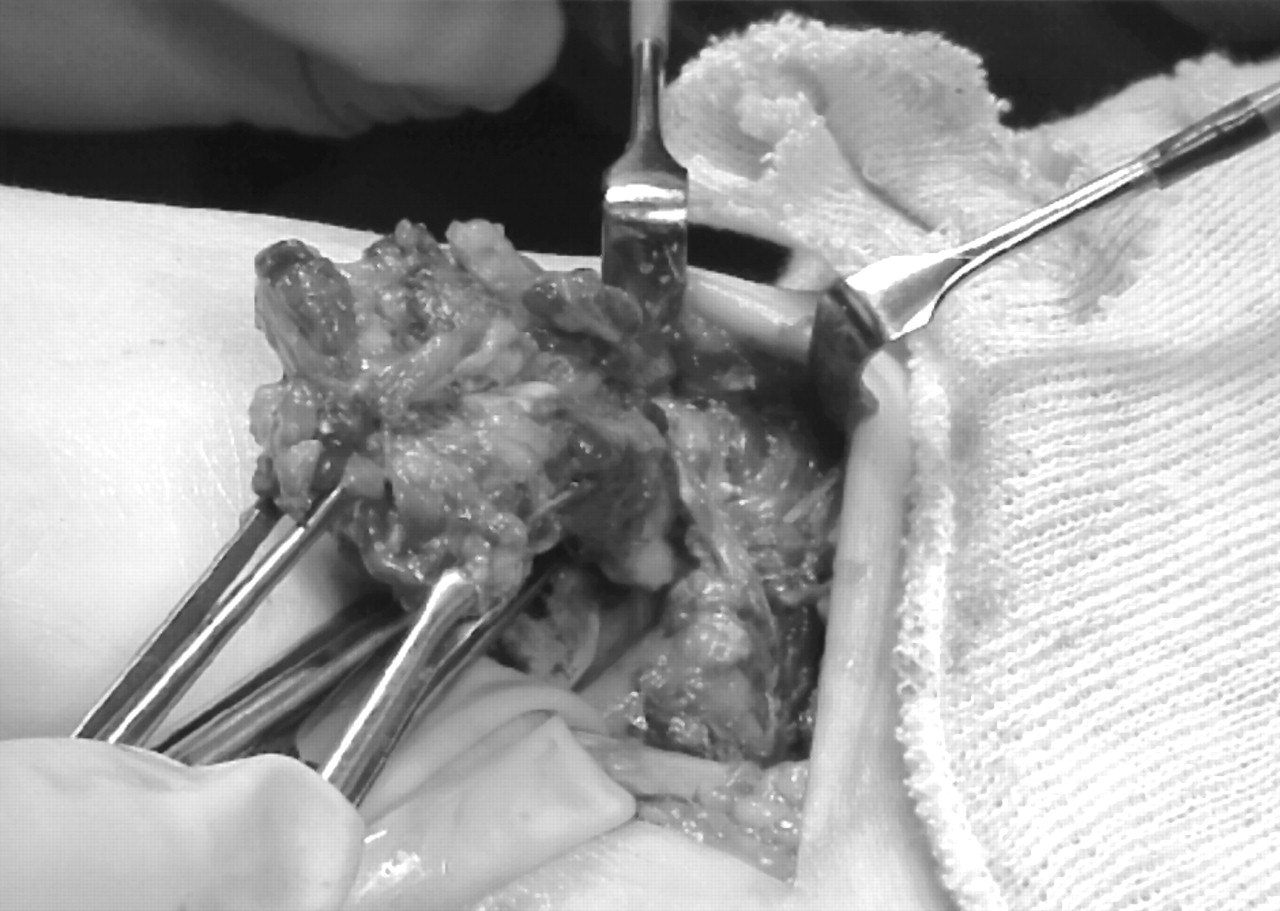
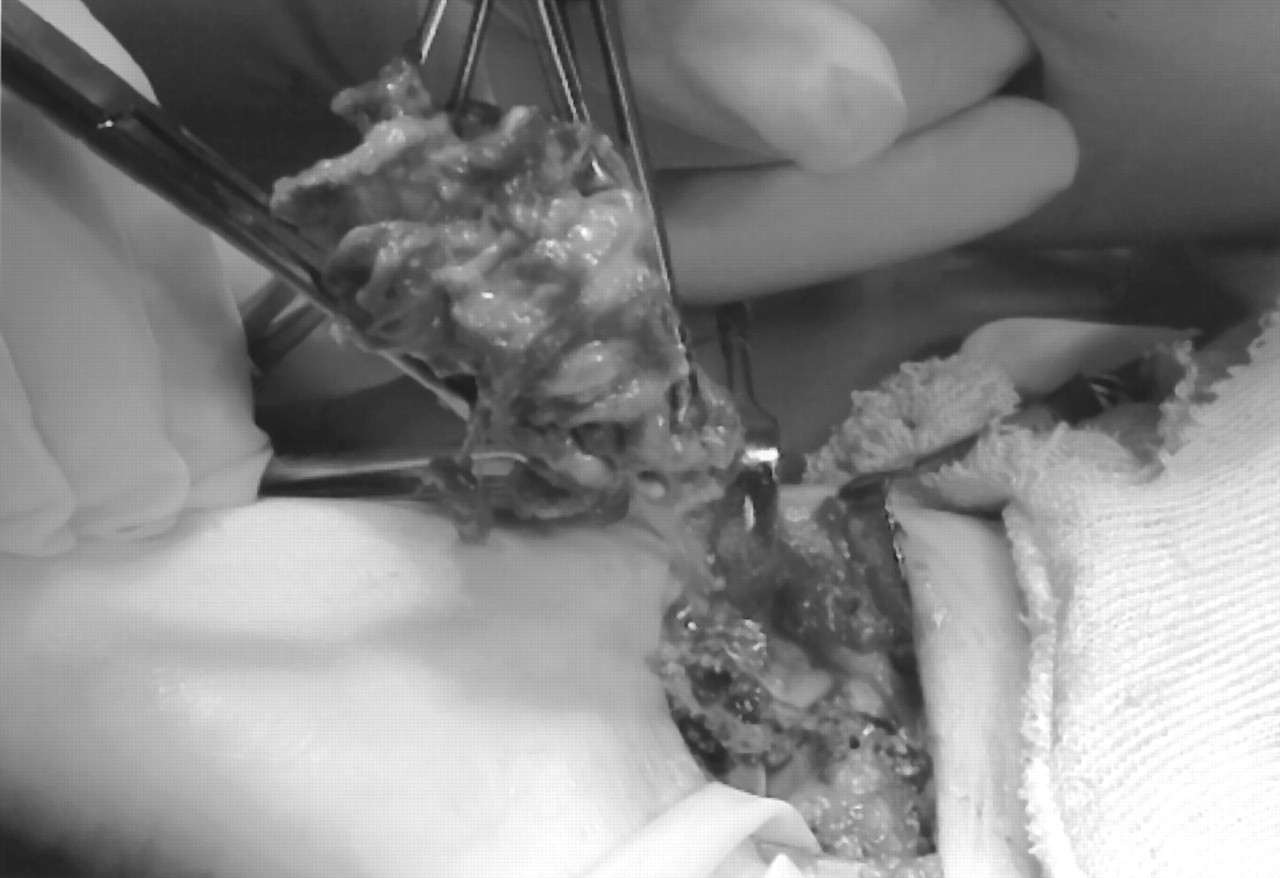
The patient consented to surgical removal of the mass. The incision was placed over the calcaneocuboid/sinus tarsi area of the left foot. The soft-tissue mass was noted to extensively involve the remaining extensor digitorum brevis muscle belly, much of which had been lost to the previous surgery. The tumor was brown in color and had infiltrated a substantial portion of the extensor digitorum brevis (Fig. 8
). The entire soft-tissue lesion was traced from proximal to distal to ensure that all visible evidence of its presence was removed from the surgical site (Fig. 9
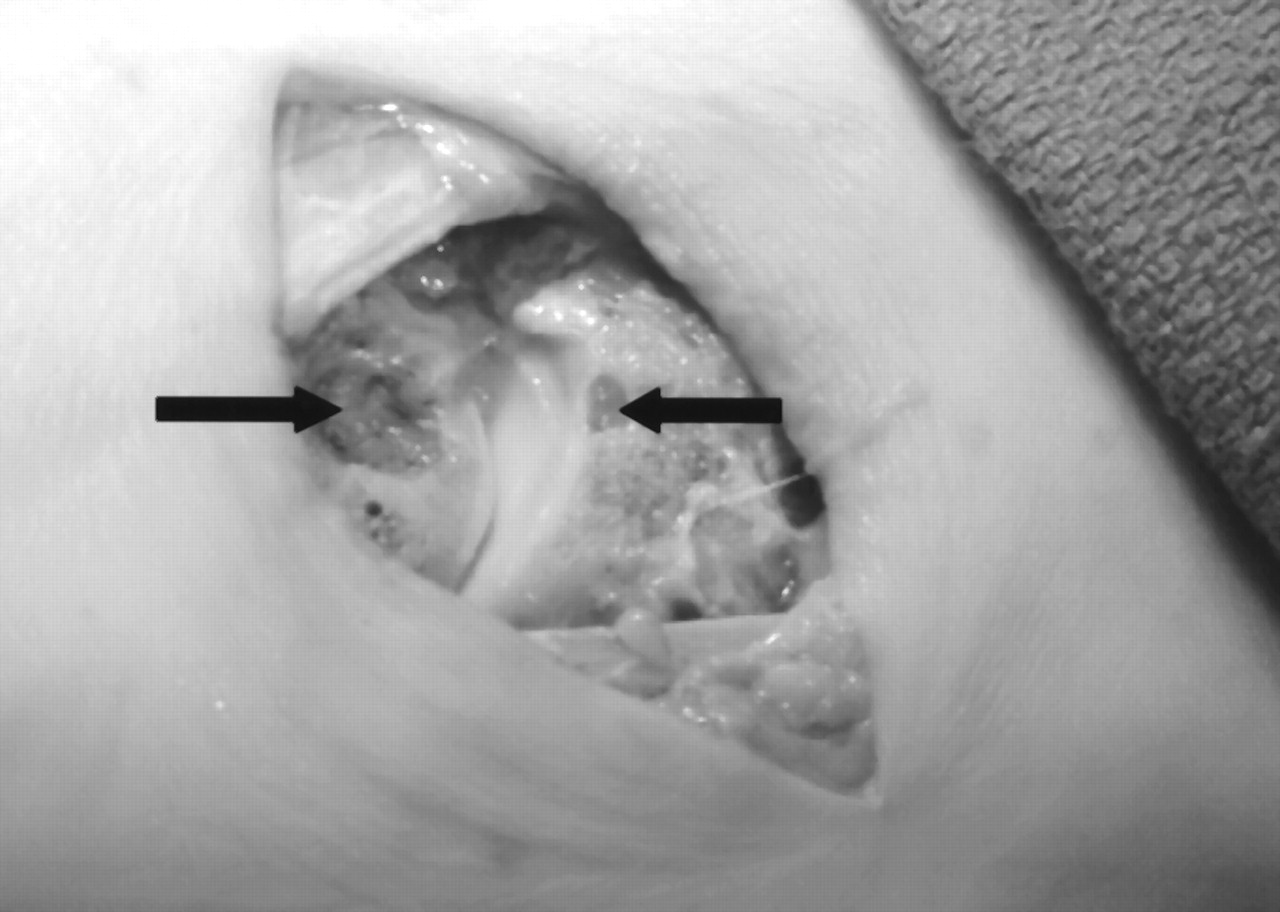
). There was some cortical erosion of the dorsal aspect of the cuboid bone and of the dorsal distal aspect of the calcaneus laterally. The eroded areas underwent curettage down to healthy, viable bone (Fig. 10
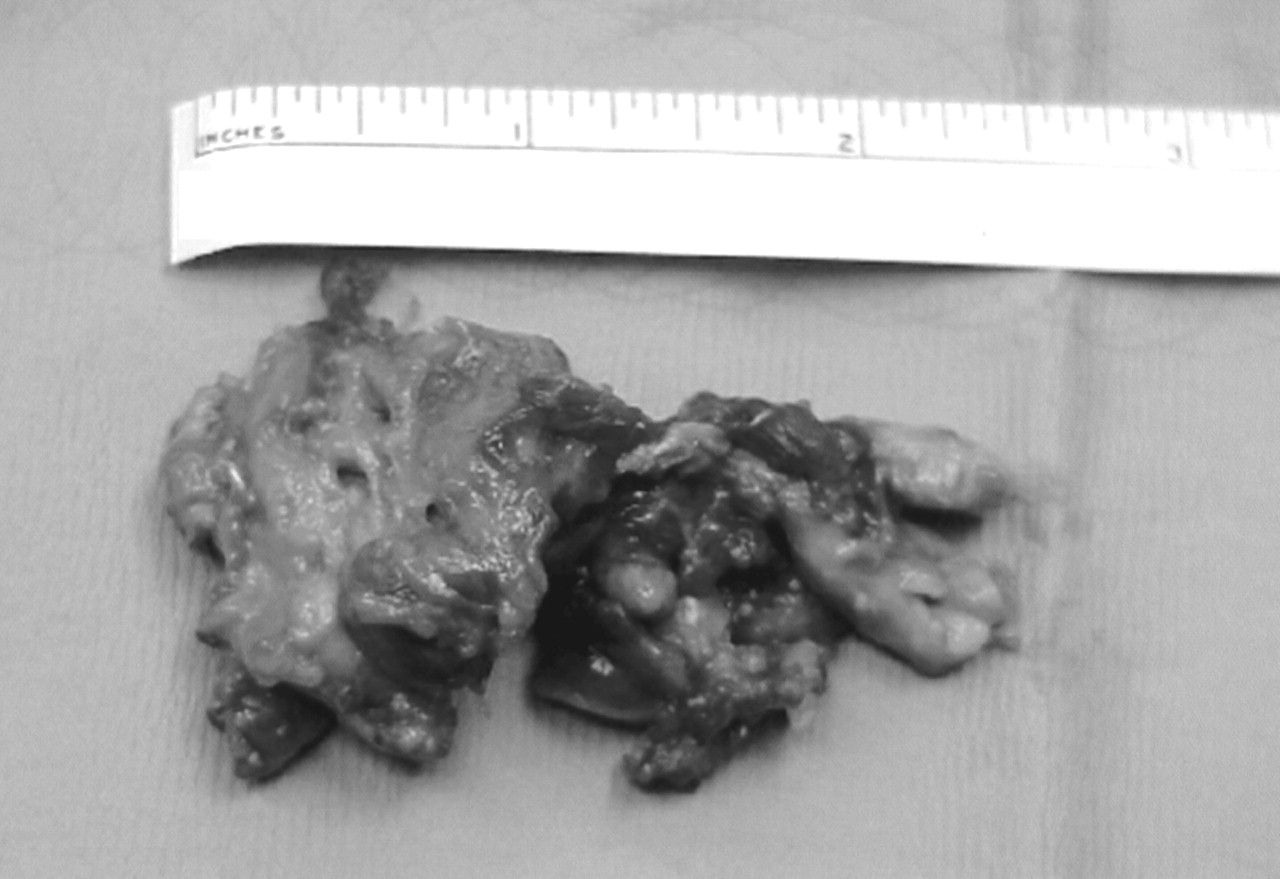
). The mass was measured intraoperatively (65 × 25 mm) and was sent for histopathologic analysis (Fig. 11
).
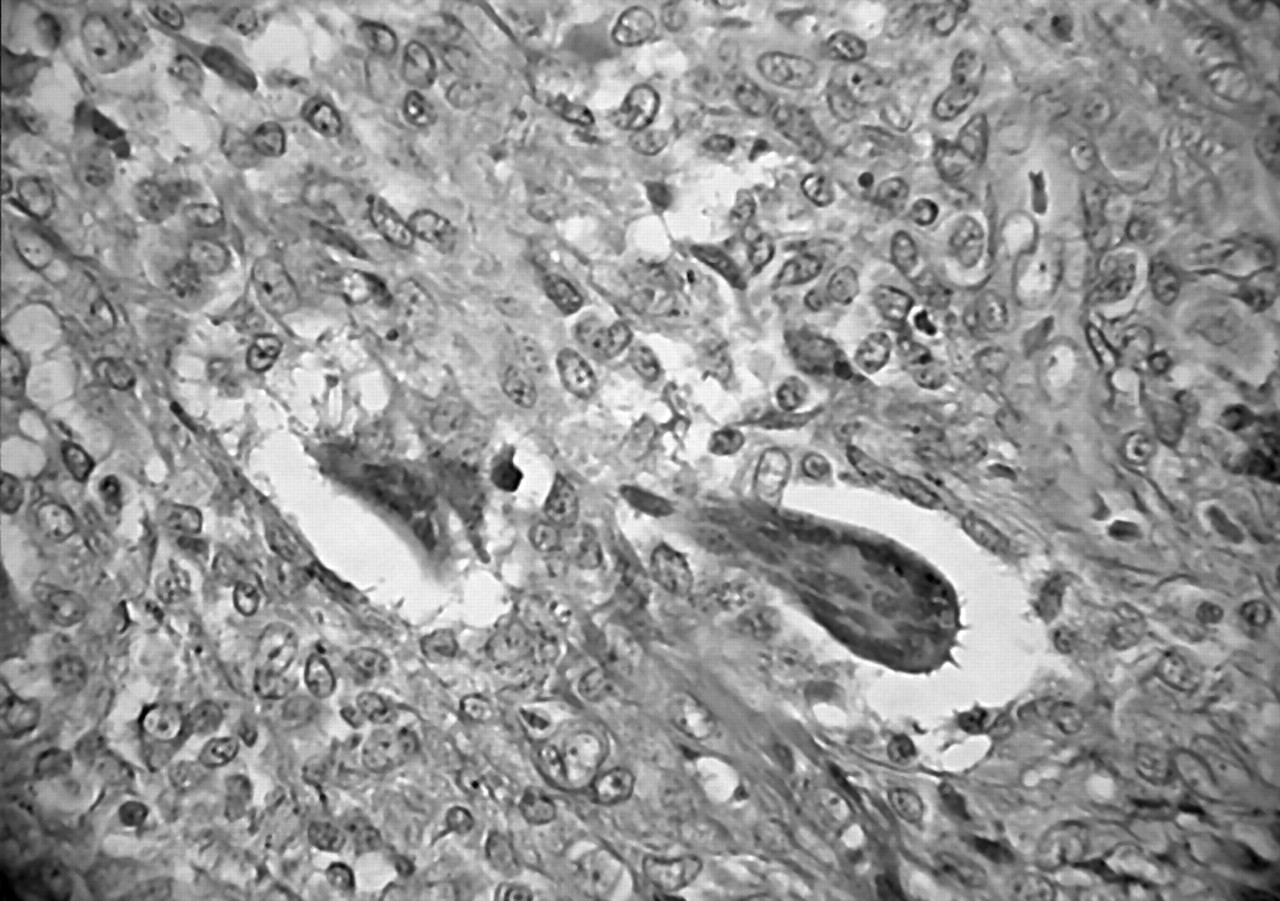
The pathology report described a nodular outgrowth of proliferative cells, histiocytes associated with multinucleated giant cells, and abundant pigmentation (Fig. 12
). Mitotic activity was not seen. No evidence of necrosis was present. The infiltrative pattern was mixed, with a nodular background. These tissues extended to all surgical margins of resection. This overall pattern was consistent with PVNS and with the clinical diagnosis.
Figure 8 .
Resection of the mass and involved intrinsic musculature.
Figure 8 .
Resection of the mass and involved intrinsic musculature.
Figure 9 .
Removal of villonodular mass.
Figure 9 .
Removal of villonodular mass.
Figure 10 .
Juxta-articular erosions of the cuboid and anterior process of the calcaneus (arrows).
Figure 10 .
Juxta-articular erosions of the cuboid and anterior process of the calcaneus (arrows).
Figure 11 .
Macroscopic appearance of the resected mass.
Figure 11 .
Macroscopic appearance of the resected mass.
Figure 12 .
Photomicrograph depicting a multinucleated giant cell and abundant pigmentation (Case 2) (H&E, × 40).
Figure 12 .
Photomicrograph depicting a multinucleated giant cell and abundant pigmentation (Case 2) (H&E, × 40).
Discussion
These cases reinforce previous observations regarding the clinical course of PVNS. Both patients were active young adults who might have been suspected of experiencing a trauma that produced the mass. The cases were originally misdiagnosed and mistreated. Both patients also delayed treatment until considerable tissue infiltration had taken place. Although PVNS is benign, its propensity for infiltration may necessitate extensive tissue resection. In these two cases, the tumor infiltrated a substantial portion of intrinsic musculature and bone in the vicinity of the calcaneocuboid joint. Although it is difficult to predict clinical outcomes, it is possible that the removal of these tissues will affect the biomechanics and function of these patients’ lower extremities. In addition to the infiltrative nature of the diffuse form of PVNS, high rates of recurrence following surgical excision have been noted.[
6,
8–
11] That one of these patients had already had a recurrence of the tumor reinforces these findings. In this case, the recurrent tumor was more invasive and destructive than the previous one. In light of the propensity for recurrence of a tumor of this size and degree of infiltration, consultation and follow-up with a radiation oncologist is appropriate.[
3,
6,
7,
10,
12]
Conclusion
Considering that PVNS is most common in young patients, as demonstrated here, the consequences of the destructive process seem all the more debilitating. Although PVNS is benign, its potential for tissue destruction should lead the clinician to carefully scrutinize soft-tissue tumors overlying articular spaces. Early and aggressive treatment of PVNS is needed to minimize the degree of surgical tissue resection necessitated by tumor infiltration in these patients.