Onychomycosis is a persistent infection of the nail bed that may account for up to half of all nail disorders. [
1-
3] Dermatophytes—keratinolytic molds that invade nails, skin, and hair—are responsible for at least 80% to 90% of cases, with
Trichophyton rubrum and
Trichophyton mentagrophytes the most commonly isolated species from nail specimens. [
1,
4-
5] A recent fungal culture survey of clinically suspected onychomycosis in the patient population of the Foot Clinics of New York, in New York City, showed that of 120 positive cultures 66% contained
T rubrum. [
6] The location from which the nail specimen is taken can influence fungal culture results. As revealed by a recent survey of 30 patients with clinical evidence of distal or lateral subungual onychomycosis, cultures of subungual debris were more likely to be positive than were cultures from the deeper nail bed or nail plate. [
7]
The differential diagnosis of abnormal nails includes psoriasis and lichen planus. Eczema, peripheral vascular disease, aging, neoplasms, and nail trauma may contribute to the etiology. [
8] Safe and effective oral agents, such as terbinafine and itraconazole, make onychomycosis easily treatable and curable. In clinical trials, these agents have shown high clinical and mycologic cure rates in patients with laboratory-confirmed dermatophyte onychomycosis. [
9,
10]
Podiatric physicians traditionally rely on clinical examination and direct microscopy (potassium hydroxide [KOH] examination) together with a fungal culture performed in a central laboratory to confirm a clinical diagnosis of onychomycosis. [
5] However, these techniques are time-consuming, technically demanding, and not suited for use in the office practice setting.
A rapid, easily performed, accurate, low-cost confirmatory test that could be used in conjunction with KOH evaluation would be beneficial in guiding the treatment of onychomycosis with oral agents. [
11] The present study was conducted to evaluate one such method, the dermatophyte test medium (DTM) culture (ACU-DTM; Accuderm, Inc, Ft Lauderdale, Florida). The culture medium was originally described by Taplin et al [
12] as a test for the presence of dermatophytic molds. DTM is less expensive than central laboratory culture, and results are available much sooner. Dermatophyte growth is indicated by a change in the color of the DTM from yellow to red in response to alkaline metabolites that result from growth of dermatophytes. The majority of DTM cultures can be identified within 1 week; fewer than 2% of cultures require 2 weeks to show a change in color. The DTM contains gentamicin and chlorotetracycline to inhibit bacterial growth and cycloheximide to inhibit growth of saprophytic fungi. Although it does not identify specific organisms, a positive DTM culture confirms the presence of dermatophyte pathogens, which account for the vast majority of cases of onychomycosis. [
1,
4-
5] Taplin et al [
12] correctly identified dermatophytes by DTM color change alone in 97% of 1,400 fungal cultures evaluated. Commercially available DTM culture systems may be suitable for use in the general-practice office setting. DTM culture together with KOH evaluation would be expected to provide accurate and timely guidance for the treatment of onychomycosis. Considering the potential benefits of DTM culture to confirm a clinical diagnosis of onychomycosis, the test is underutilized since it may be viewed as inferior to more formal laboratory fungal culture methods such as Sabouraud’s dextrose agar.
The objectives of this large, multicenter, prospective nationwide survey were to compare in-office DTM culture with fungal culture in a central mycology laboratory for confirming a clinical diagnosis of onychomycosis, and to confirm dermatophytes as the primary cause of onychomycosis in a large patient population distributed throughout the United States. Because there were no restrictive inclusion and exclusion criteria beyond recent or concurrent use of antifungal agents, this study population may be more representative of onychomycosis patients than those treated in clinical trials.
Methods
Study Design
A total of 322 US office- and clinic-based podiatric physicians, primary-care physicians, and dermatologists participated in this survey. The sample was stratified by specialty to ensure an approximately equal representation of the three physician groups throughout the geographic regions of the United States. Each investigator was asked to enroll five or more patients, aged 18 or older, with signs and symptoms of onychomycosis. Patients were excluded from the study if they had received oral antifungal treatment within the previous 90 days or had used a topical antifungal agent within the previous 30 days. Patient enrollment was initiated on July 1, 2000, and data collection was completed on February 28, 2002.
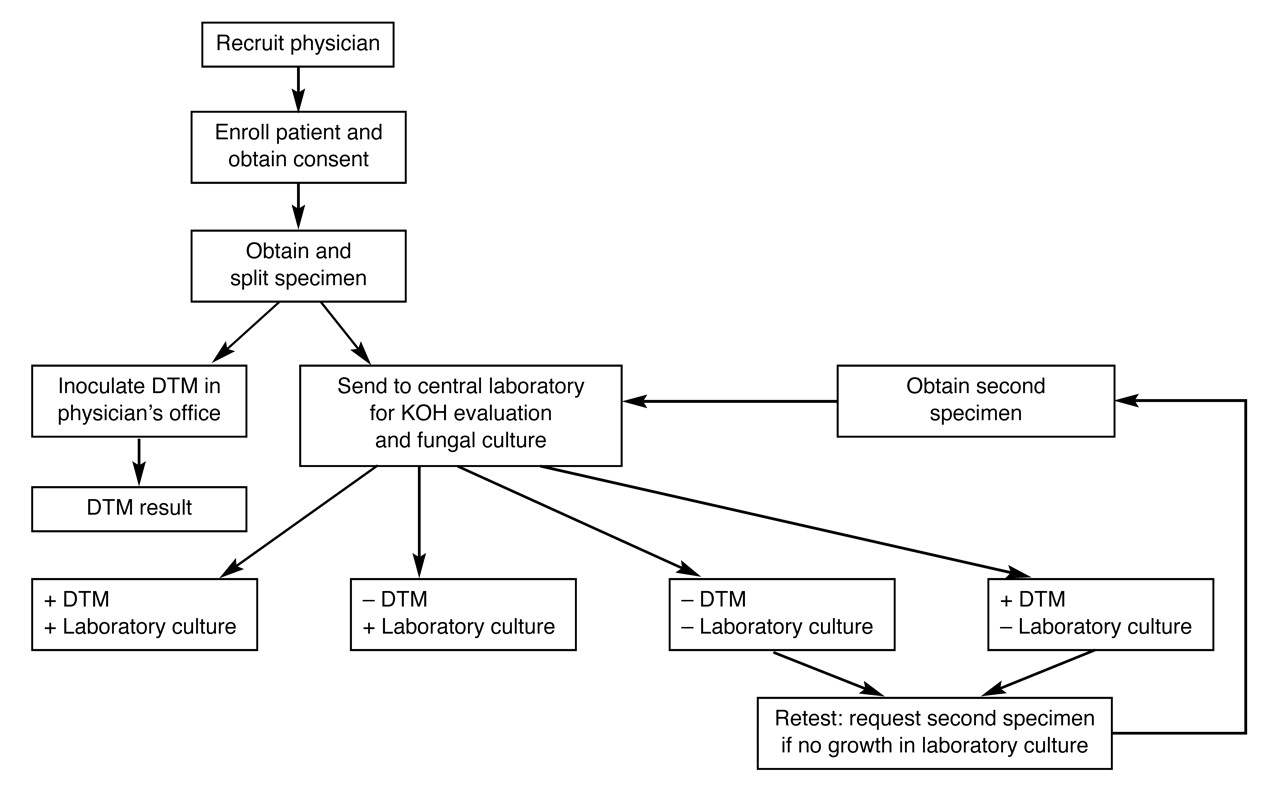
During the initial office visit, the physician explained the nature of the study, obtained written informed consent, collected demographic information, and took a detailed medical history. The physician then obtained a specimen from the toenail bed for mycologic evaluation. Physicians were instructed to obtain pieces of subungual debris from the proximal portion of the nail bed underneath the nail plate. Specimens were divided, and DTM cultures were performed in the office on part of the specimen. The remaining specimen was sent to the University of Texas Fungus Testing Laboratory at the University of Texas Health Science Center, San Antonio, for KOH evaluation and Sabouraud’s dextrose agar culture. The overall study design, disposition of specimens, and testing procedures are shown in
Figure 1. The Western Institutional Review Board, Olympia, Washington, approved the study protocol, the informed consent form for the patient’s review and signature, and all study materials.
Results of DTM evaluations were available within 2 weeks, and clinicians were informed of the culture results from the central laboratory 4 to 6 weeks after the sample was submitted. The initiation of antifungal therapy and the selection of a treatment were left to the physician’s discretion. If the KOH test at the central laboratory was positive for fungal elements and the fungal culture result was negative, regardless of the DTM result, physicians were asked to obtain a second sample for repeat of the culture. The primary analyses conducted in this study were 1) a comparison of the results of laboratory culture and DTM, and 2) a tabulation of the infectious organisms determined by culture result.
Mycologic Evaluations
Physicians were supplied with DTM kits and instructional videotapes on how to obtain the nail bed sample. Each specimen was obtained after cleaning the surface of the nail plate with an alcohol swab and cutting the nail plate with a sterilized curette or clipper to expose the nail bed. Small pieces of the subungual debris were sampled from the proximal nail bed with a probe or curette. Immediately after the specimen was obtained, half was placed on a DTM slant and incubated at room temperature for up to 2 weeks and the remainder sent to the central laboratory for KOH testing and fungal culture. The physicians checked the DTM culture daily for a change of color, which was interpreted as a positive result. False-positive results were avoided by completing all readings by 14 days, after which time overgrowth by nondermatophyte organisms may occur, and by examining the medium for the growth of white colonies typical of dermatophytes. Identification of fungal genus and species was made by evaluation of colony characteristics and light microscopic examination of fungal morphology in reproductive colonies in the samples analyzed by the central laboratory. Central laboratory tests were performed using two growth media: one contained cycloheximide in order to inhibit nondermatophyte pathogens and the other contained Sabouraud’s dextrose agar to allow the growth of yeasts and nondermatophyte fungi known to cause onychomycosis.
Statistical Analysis
The primary objective of this study was to determine the utility of DTM culture to confirm a clinical diagnosis of onychomycosis. Positive DTM culture results were noted to agree with cultures that grew a dermatophyte organism, ie,
T rubrum,
T mentagrophytes, or
Epidermophyton floccosum. Negative DTM cultures were noted to agree with fungal cultures that grew nondermatophytes or did not result in growth. Agreement of the DTM and central laboratory methods was estimated using the κ statistic. The κ statistic and SE were calculated using the SAS software (SAS Institute Inc, Cary, North Carolina). [
14] DTM and central laboratory test results for podiatric, dermatologic, and primary-care physicians were compared and evaluated for statistical significance using normal-distribution 95% confidence intervals (CIs).
Results
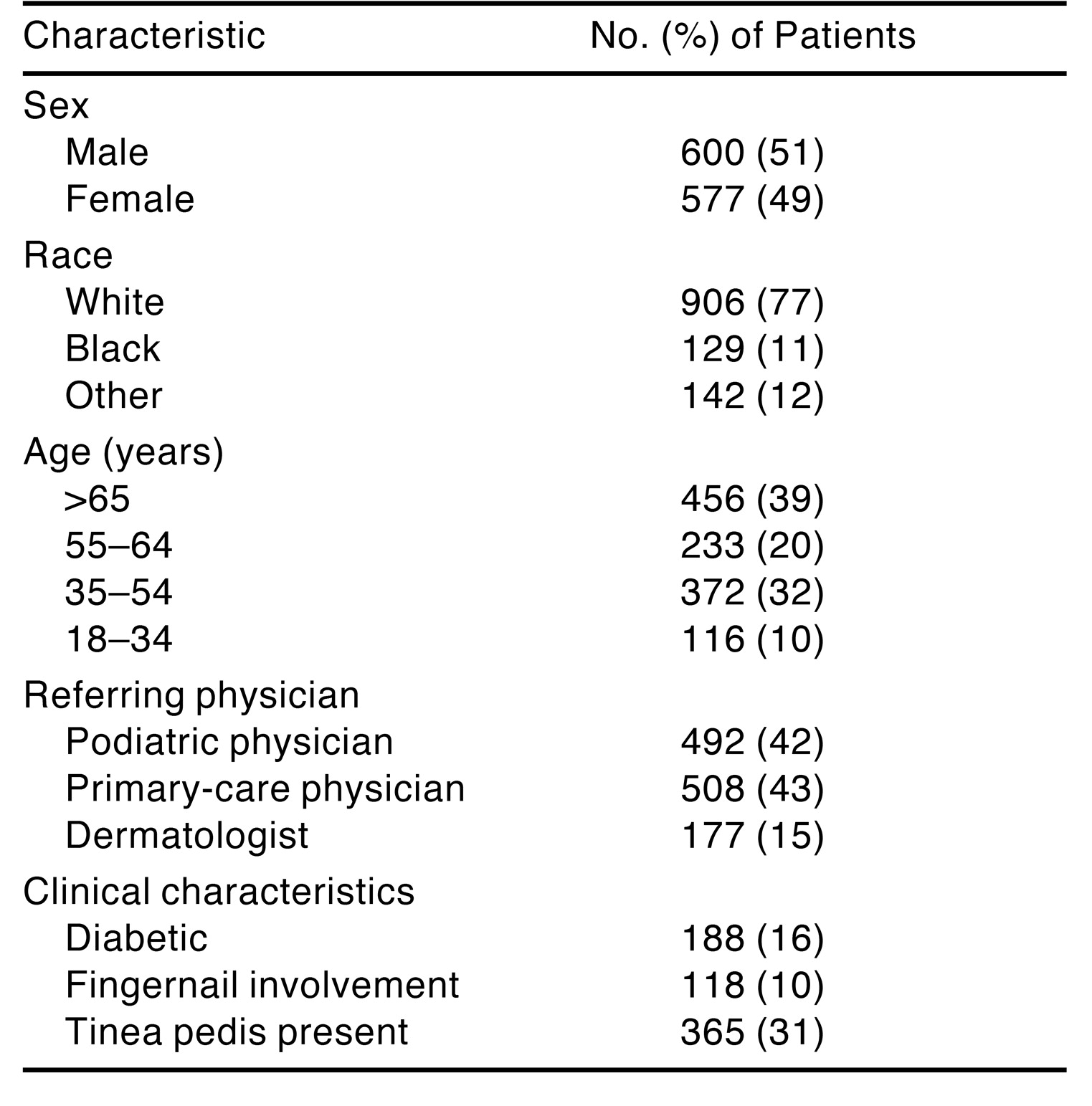
Of the 322 physicians who enrolled patients, 123 were podiatric physicians (38%), 144 were primary-care physicians (45%), and 55 were dermatologists (17%). A total of 1,343 patients with signs and symptoms of onychomycosis were enrolled in this survey, 537 by podiatric physicians (40%), 591 by primary-care physicians (44%), and 215 by dermatologists (16%). Paired DTM and laboratory fungal culture results were available for only 1,177 patients (88%) by the cutoff for data collection. Of those patients, 492 were treated by podiatric physicians. Data from the 1,177 patients with paired DTM and laboratory fungal cultures were included in the compilation of demographic and epidemiologic results. Men and women were about equally represented (51% and 49%, respectively). A majority of patients (n = 906; 77%) were Caucasian. Of note, 59% of the patients (n = 689) were aged 55 or over, with 20% (n = 233) between 55 and 64 years of age and 39% (n = 456) older than 65 years. Sixteen percent (n = 188) of the patients were diabetic (
Table 1). The majority of patients in the study (60%) were diagnosed with onychomycosis in both feet. The nail of the big toe was involved in 90% of diagnosed cases. Patients had involvement of a median of 4.8 toenails. Interestingly, initial examination of the patients’ feet revealed clinical evidence of tinea pedis in 31% (n = 365) of the patients (
Table 1).
When analyzing the entire study population (1,177 patients), 94% of infections were attributable to three dermatophyte species: T rubrum, T mentagrophytes, and E floccosum. In this population of patients for whom paired results were available at the time of data analysis, DTM and laboratory culture results were in agreement (both positive [n = 423] or both negative [n = 388]) in 69% of patients, for a κ of 0.38 (SE = 0.098). DTM culture results were positive in more cases than the laboratory culture results—56% (n = 655) versus 47% (n = 557).
DTM versus Central Laboratory Test Results for Specimens Harvested by Podiatric Physicians
When analyzing only samples collected by podiatric physicians, results from 71% of the specimens exhibited DTM and central laboratory agreement (347/492 patients). Forty-three percent of the tested specimens yielded positive DTM and central laboratory results, while 27% yielded negative DTM and central laboratory results (κ = 0.41; SE = 0.099). Similar to what was observed in the overall study population, DTM cultures yielded positive results more often than the central laboratory tests—61% (302/492)
versus 54% (267/492) (
Table 2).
This article reports the final study results obtained from the patients enrolled by the podiatric physician investigators from July 1, 2000, to February 28, 2002. The results from a study population of 670 patients enrolled between July 1, 2000, and May 5, 2001, have been reported previously. [
13]
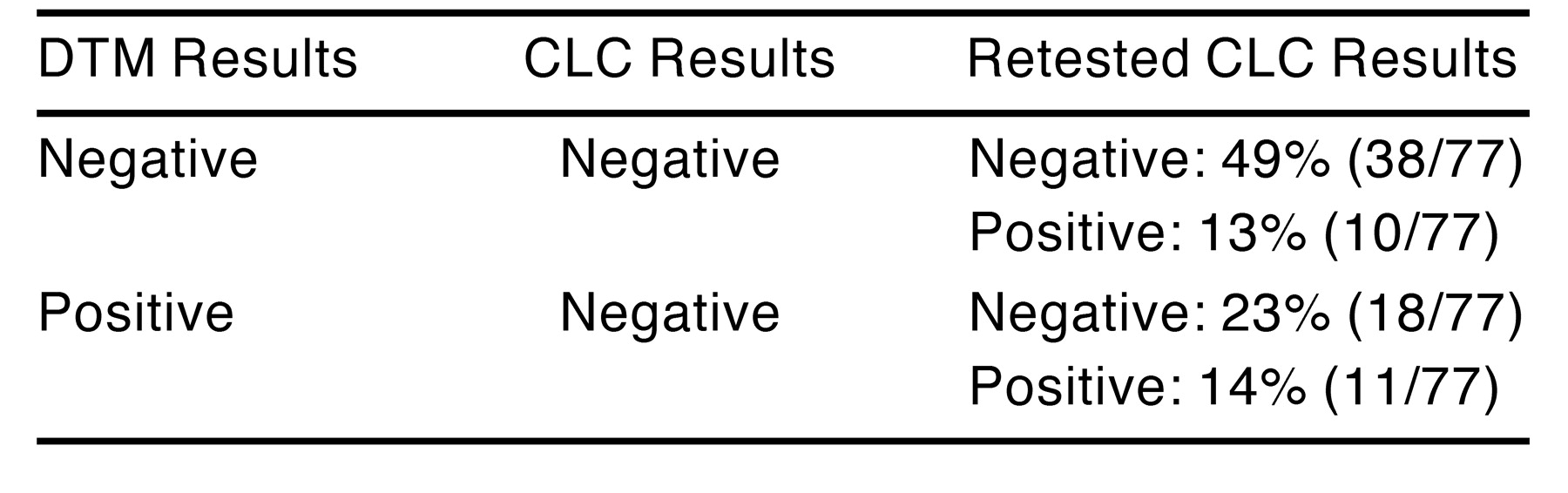
Laboratory fungal cultures were negative in 225 of the 492 podiatry patients (46%) with a positive KOH test. A second specimen was requested from these patients for retesting, and laboratory results had been obtained for 77 patients at the time of data analysis. The retest fungal culture was positive in 21 patients, 27% of the total who were retested. Of these, 10 of the positive retests were in patients who had a negative DTM culture, and 11 were in patients whose DTM culture was initially positive (
Table 3).
Identification of Causative Organisms
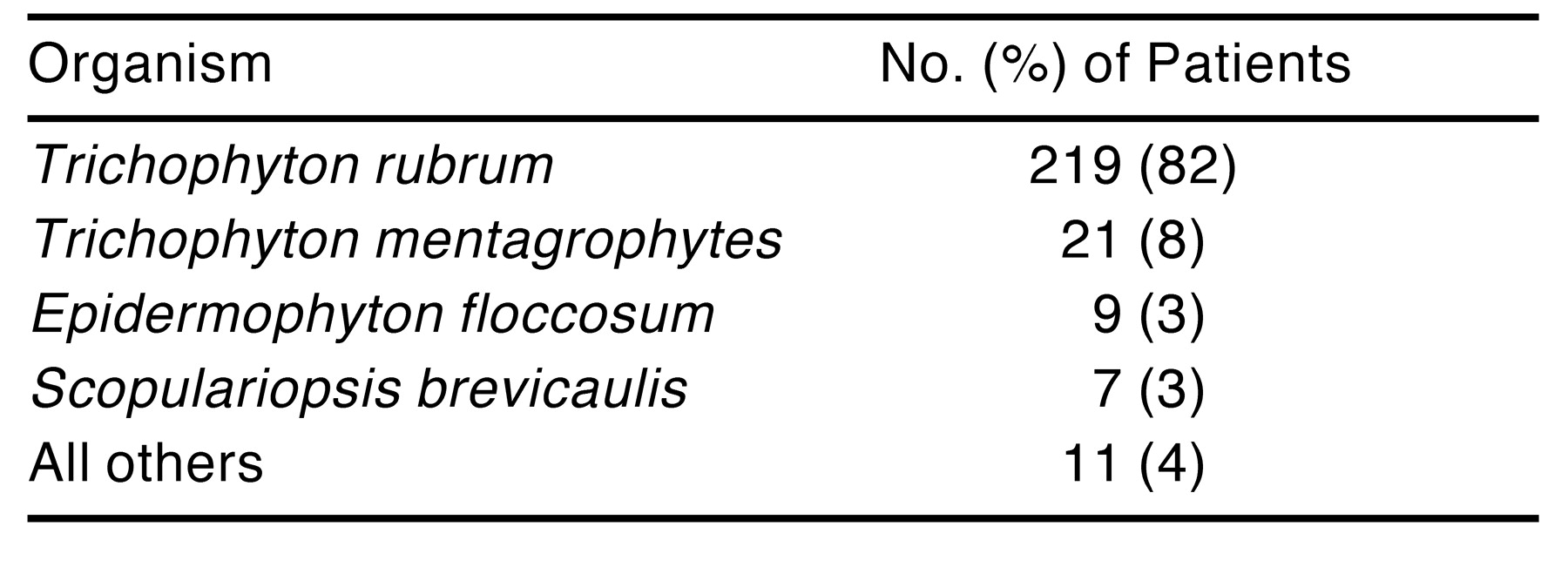
As shown in
Table 4, central laboratory tests identified a dermatophyte (
T rubrum,
T mentagrophytes, or
E floccosum) as the causative organism in 93% (249/267) of the specimens. The remaining 7% of the isolates included
Scopulariopsis brevicaulis (3%) and other nondermatophytes (4%). Identification of fungal genus and species was made by observation of colony characteristics and microscopic examination of reproductive colonies in the central laboratory samples.
DTM and Central Laboratory Test Results by Medical Specialty
Mycologic test results for nail specimens harvested by primary-care, dermatologic, and podiatric physicians are shown in
Table 5. The table lists the percentage of samples yielding matched and unmatched test results by medical specialty and their corresponding 95% CIs. Each row totals 100%. The number of samples submitted by dermatologists (n = 178) is slightly greater than one-third of the number submitted by primary-care (n = 507) and podiatric physicians (n = 492), as the number of participants for each specialty was chosen to reflect average physician demographics. Of the samples harvested by primary-care physicians, 28% yielded positive results with both tests (+/+), while 38% yielded negative results with both tests (–/–). In contrast, 43% of the samples collected by podiatric physicians yielded matched positive results (+/+), while only 27% yielded matched negative results (–/–). The difference between matched primary-care and podiatric physician results is statistically significant. Of the samples collected by dermatologists, 37% yielded matched positive results (+/+) and 32% yielded matched negative results (–/–). The difference between these rates and those from samples collected by primary-care and podiatric physicians could not be deemed significant with a 95% CI test partly because of the small size of the dermatology sample.
Discussion
The present survey results indicate that in-office DTM culture can detect the presence of dermatophytes in nail specimens from patients with suspected onychomycosis at least as well as laboratory fungal culture. Of the total patients with positive KOH results and matched DTM and fungal cultures, 71% of the cases showed an agreement between DTM culture and central laboratory results. The κ coefficient of 0.41, a measure of agreement between multiple tests, indicates a moderate degree of agreement beyond what would occur by chance. [
15] Overall, the DTM culture was also more likely than the central laboratory culture to exhibit a positive result for causative organisms of onychomycosis: 61% (302/492)
versus 54% (267/492), respectively.
The study culture results also confirm dermatophytes as the primary cause of toenail onychomycosis, accounting for 93% of culture-confirmed cases. The most frequently isolated pathogen was T rubrum (82%), followed by T mentagrophytes (8%) and E floccosum (3%). Most patients had onychomycosis involvement of both feet and an equal number of infected toenails on both feet. In the present study, clinical evidence of tinea pedis was found in 31% of the patients enrolled. This prevalence is smaller than that reported in earlier studies and may reflect a lack of recognition by some of the practitioners.
Treatment of onychomycosis is often based on a single positive mycologic test together with a clinical diagnosis. A positive culture result is desirable together with KOH testing because KOH testing indicates the presence of fungal elements in a nail specimen but gives no information about the viability of the mold or fungus. In the present study, 357 podiatric patients out of a total of 492 with clinically suspected onychomycosis and a positive KOH result also had positive results with either DTM or laboratory fungal culture (
Table 2). Laboratory fungal culture identified a maximum of 75% of the positive patients (267/357), and DTM culture identified 85% (302/357). If the retest results for the patients who were initially negative by both culture methods were included in the analysis, the projected number of infected patients would be 374 (357 + [10/77 × 135] = 374) (
Tables 2 and
3). With the addition of the retest results, DTM culture identified 81% (302/374) of the projected infections and laboratory fungal culture identified 71% (267/374). If DTM or fungal cultures are negative but there is a positive KOH test and a strong clinical suspicion of onychomycosis, repeat culture or pathologic evaluation may be beneficial in confirming the diagnosis.
In the primary report of the DTM culture method, Taplin et al [
12] correctly identified dermatophytes by DTM color change alone in 97% of 1,400 fungal cultures evaluated. In their description of the DTM culture method, Taplin et al reported that in 610 paired cultures, 211 fungal cultures (35%) and 240 DTM cultures (39%) were positive for dermatophytes. DTM culture systems are now available that can easily be used in a podiatric physician office to obtain early confirmation of onychomycosis, allowing rapid implementation of treatment. Results of paired DTM and KOH evaluations may be available within about 1 week, considerably faster than those of paired KOH and fungal culture, and at a far lower cost.
Lack of agreement between DTM and fungal culture in this study occurred most frequently in specimens with a positive DTM result and a negative fungal culture despite positive KOH results (90/492 patients; 18%). There are a number of possible explanations for the combination of positive KOH tests and negative cultures. The specimen submitted may be insufficient for adequate culture; when divided, there may have been sufficient fungal elements for detection by the KOH test and perhaps DTM, but not by culture. Bacteria may also be present in the patient specimen. Although selective media are used to reduce or eliminate bacterial contamination, the bacteria present may overgrow and prevent the growth of fungi. Other environmental fungi may be present that grow more rapidly than dermatophytes and the other molds or fungi expected in this type of specimen. Finally, the fungal elements submitted may not be viable.
The observation that dermatophytes are the causative pathogen in more than 90% of the 267 patients with positive laboratory fungal cultures is consistent with earlier reports. Kemna and Elewski [
16] identified dermatophyte isolates in 82% of culture-positive onychomycosis specimens from 16 states, obtained from a variety of clinical and research sources. Dermatophytes represented 91.3% of nail pathogens identified in the screening phase of the US Multicenter Onychomycosis Study of Terbinafine. [
17] Ghannoum et al [
2] identified dermatophytes in 60% of culture-positive nail samples obtained from patients visiting a dermatologist for reasons other than onychomycosis, the lowest prevalence rate identified in a recent large-scale study. The etiologic status of the nondermatophytes that were isolated could not be determined because of lack of follow-up cultures, and the authors concluded that most were likely to be contaminants. In another large study, Gupta et al [
18] found that 1,137 patients out of 2,505 with toenail abnormalities (45.4%) had onychomycosis confirmed by mycologic culture. Of those with a positive culture, dermatophytes were isolated in 90.5%.
Thus it appears that DTM culture compares favorably with the central mycology laboratory culture that has traditionally been used to demonstrate the presence or absence of dermatophytes in nail specimens, and the results are available sooner. These findings reinforce the use of the in-office DTM culture to assist in confirming clinically suspected onychomycosis. The cost of the DTM culture used in this study was $1.00 per patient, and the cost of each fungal culture was $25.00. While a definitive diagnosis of onychomycosis requires identification of a causative organism, identification of genus and species is of less import for initiation of treatment, as dermatophyte organisms are sensitive to the oral antifungal agents approved for treatment of onychomycosis, and the great majority of cases result from dermatophyte infection.
The Importance of Specimen Quality
Aside from the intrinsic sensitivity of the mycologic tests, the physical characteristics of the nail samples are expected to play a significant role in the accuracy of either fungal examination. This was confirmed when the results for DTM and central laboratory tests for the sample collected by podiatric physicians were compared with results from comparable samples collected by primary-care physicians and dermatologists. Despite identical training in the procedure to collect nail samples for mycologic evaluations and agreement to follow identical experiment protocols, clear differences were found in the mycologic results for the three physician groups. As shown in
Table 5, a trend can be observed in the percentage of matched (both positive or both negative) mycologic evaluation results across the samples collected by primary-care, dermatologic, and podiatric physicians. The samples harvested by primary-care physicians exhibited the lowest degree of positive-positive agreement between DTM and central laboratory results, followed by those acquired by dermatologists and podiatric physicians. The difference pattern is reversed when comparing negative-negative results: primary-care physicians reported the lowest percentage, followed by dermatologists and then podiatric physicians. Interestingly, when positive-positive and negative-negative results are combined, the reported trends are no longer observed (total matched results: 66% ± 4.1%, 69% ± 6.8%, and 71% ± 4.4% for primary-care, dermatologic, and podiatric physicians, respectively). The fact that no pattern is observed when the positive-positive and negative-negative results are combined, nor among the unmatched results (positive-negative or negative-positive), suggests that the differences detected across the matched samples are caused by systematic differences in the way nail samples were harvested by each of the physician groups rather than by random fluctuations among samples.
Conclusion
The findings of this large study support the use of DTM culture to assist in confirming a presumptive diagnosis of onychomycosis. In combination with KOH testing, DTM culture is at least as effective as central mycology laboratory testing in detecting the presence or absence of dermatophytes in toenail specimens. Furthermore, dermatophytes have been confirmed as the primary cause of onychomycosis in this large nationwide survey. DTM culture is an easy, inexpensive indicator of dermatophyte infection that can lead to more rapid confirmation and guide earlier treatment of onychomycosis with the currently available oral agents.
The authors have presented evidence of the susceptibility of mycologic tests to the quality of nail samples and highlight the need to collect nail specimens using appropriate techniques. This is of particular importance in patient populations who require extreme care when harvesting nail samples because of the risk of foot injury and its complications, such as those suffering from diabetes. The data presented here indicate that the special expertise of podiatric physicians in the treatment of foot-related illnesses translates into more accurate mycologic testing.