Falls may occur because a health-care professional has failed to assess for underlying risk factors that may contribute to this event. Literature reports[
1,
2,
3,
4,
5,
6,
7,
8,
9] have presented associations between falls and functional impairments in body systems that play a role in maintaining stability, such as proprioception, muscle strength, and reaction time. All fall risk factors are classified as either extrinsic or intrinsic contributors. Extrinsic causes of falls are environmental factors, such as wet floors, poor lighting, absent handrails, missing shower mats, tripping over clutter, missing a step, and inappropriate footwear. Intrinsic factors are associated with a patient’s physiologic deficiency related to his or her health and include reduced vision or hearing, vestibular or proprioceptive dysfunction, dementia, cardiac arrhythmia, transient ischemic attacks, dehydration, postural hypotension, and medication use. Specific therapeutic medication classes have been reviewed to assess their role as potential contributors to fall injuries.[
1,
2,
6,
9,
11,
12,
13,
14,
15] Often, medications such as sedatives, psychotropic agents, antihypertensive agents, and diuretics are considered the principle classes of drugs responsible for causing falls.[
12] Elderly patients often experience multiple diseases necessitating polypharmacy, and many drugs can increase instability, interfere with coordination, and cause postural hypotension, all of which lead to a general interference with a patient’s ability to sense reality and to be oriented to the environment.[
11]
Materials and Methods
The medications selected for review were the 200 most frequently prescribed drugs (brand and generic names) in 2000 as measured by Scott-Levin based on more than 2.04 billion prescriptions.[
18] A literature review was conducted to identify intrinsic adverse effects attributed to these medications that may cause a patient to fall and their prevalence rates. The data obtained were primarily qualitative and were based on reports in the current compendium,[
18,
19,
20,
21,
22,
23] recent journal articles, and drug package inserts. Current literature sources were used to resolve conflicting information presented in reference materials.
A table was constructed listing the medications alphabetically by brand name (with generic names in parentheses), followed by information concerning adverse drug effects associated with falling or injuries and the prevalence rates. These adverse effects were chosen to be reviewed because of previous reports that demonstrated a positive relationship between these adverse effects and unavoidable falls.[
8,
9] Four hundred forty-eight adverse effects were identified and organized into 13 broad categories: abnormal coordination, abnormal gait, accidental trauma/fall, dizziness, edema, lower-extremity discomfort, nerve changes, syncope, tendon changes, vascular changes, vertigo, weakness, and miscellaneous. Changes in visual acuity were not reported as a specific category in this review because of the ambiguity and difficulty in its assessment as presented in the current literature.
Dizziness, defined as a sensation of unsteadiness accompanied by a feeling of movement within the head, was the adverse effect reported most frequently. The neuromuscular control system of walking provides appropriate shock absorption, prevents collapse, and maintains balance of the upper extremity. It is known that use of certain medications can profoundly affect balance, although the mechanism is not always clear. This adverse effect is exaggerated during prolonged medication use by the elderly because of changes in hepatic and renal clearance rates.
The purpose of walking is to transport the body safely and efficiently across level ground, uphill, and downhill with minimal expenditure of energy. The body’s center of mass during the gait cycle must stay within the pelvis. If the body’s center of mass is ever outside the pelvic area while walking in a straight line, then pathologic situations should be considered and the potential for falls is increased. Both the abnormal coordination and the abnormal gait categories identify adverse effects that interfere with a patient’s ability to keep his or her center of gravity within the pelvic area during normal ambulation. Abnormal muscular coordination causes patients to lose their balance, resulting in fall injuries. Because the underlying causative agent of a fall injury is energy in the form of mechanical force, use of medications that impair a patient’s coordination and gait function contributes strongly to the potential for injury.
Edema is an abnormal excess accumulation of serous fluid in connective tissue. Lower-extremity edema affects a patient’s choice of footwear. When a patient chooses a loose-fitting shoe or an unsecured shoe such as a slipper because of its comfort, the shoe’s construction plays a role in increasing the risk of fall injuries.[
24] Most slippers have smooth leather or cloth soles and low or absent heels. The lack of traction afforded by this footwear virtually guarantees falls on smooth surfaces such as linoleum, tile, or wood floors, especially when they are wet.[
24,
25] A recent study[
26] found that men and women aged 65 years and older wear slippers all day at home because they are convenient and comfortable.
The lower-extremity discomfort category groups adverse effects that cause localized physical suffering, such as pain, cramps, and claudication. Excessive tissue tension is the primary cause of musculoskeletal pain. One study[
27] has shown that the presence of foot pain impairs balance and functional ability. The physiologic reaction to pain introduces deformity and muscle weakness as two obstacles to effective walking. Muscle weakness occurs secondary to joint swelling, causing both pain and reduced activity. In patients with disabilities, painful ambulation causes a voluntary increase in walking speed and an increase in physiologic energy expenditure.[
28] These intrinsic alterations in gait put the patient at risk for fall injuries.
Both neuropathy and paresthesia are grouped in the nerve changes category. Neuropathy is defined as an abnormal degenerative state of the nervous system or nerves. Proprioceptor nerves sense the stretching of ligaments and give information about position and movement during the gait cycle. Impairment of proprioception affects walking because it prevents patients from knowing the position of their hip, knee, ankle, or foot during gait. This impairment prevents patients from understanding the type of contact they have with the surface during walking. As a result, patients do not know when it is safe to transfer their body weight onto the appropriate limb. Walking is characteristically slow and cautious in patients with moderate impairment. Patients with greater deficiency are unable to use their available motor control because they cannot trust the motion that occurs. Polyneuropathy results in a loss of protective sensation and, subsequently, in a number of biomechanical risks contributing to possible fall injuries.
Syncope is defined as loss of consciousness resulting from insufficient blood flow to the brain. This group includes adverse effects such as fainting and orthostatic or postural hypotension. The relationship among syncope, blackout, and fainting as an intrinsic contributor to a subsequent fall injury is well documented.[
2,
3,
4,
6,
8,
9]
During ambulation, muscles and tendons stabilize joints by pulling distal bones against proximal bones or the floor and by accelerating and decelerating the movement of the leg. The tendon change category includes adverse effects describing tendinitis, tenosynovitis, synovitis, and Achilles tendon rupture. Most pathologic tendon changes precipitate or exacerbate abnormal function of the lower extremity because of their influence on a patient’s anatomy.
The vascular change category includes ischemic digits, purple toe syndrome, thrombophlebitis and venous thrombus, thromboembolic phenomena, and deep-vein thrombosis. This category was included for completeness. It identifies lower-extremity vascular changes that may be present as signs of a more serious ailment. Although vascular changes cause pain and disruption of normal gait during walking, this category should be viewed in and of itself as a sign of a more serious event rather than merely as a contributor to a fall injury.
Vertigo is defined as a chaotic state associated with various disorders in which the individual or the individual’s surroundings seem to whirl dizzily. This category is separate from the dizziness category because it represents medications that specifically reference “vertigo” as an adverse event. Impaired balance has been documented as an intrinsic contributor to fall injuries.[
1,
3,
4,
5,
6,
7,
8,
9]
The weakness category includes weakness and asthenia. People with muscle weakness cannot meet the demands of walking. Disuse muscular atrophy contributes to the limitations of walking. Patients with muscle weakness can modify the timing of muscle action to avoid threatening postures and can induce a protective alignment during the stance phase of gait. These patients reduce the obvious demands of walking by traveling at a slower speed.
The final category, miscellaneous disorders, is used to group adverse effects that do not fit into any other category and includes parkinsonism, avascular necrosis, footdrop, fractures, paralysis, restless leg syndrome, and ankle clonus.
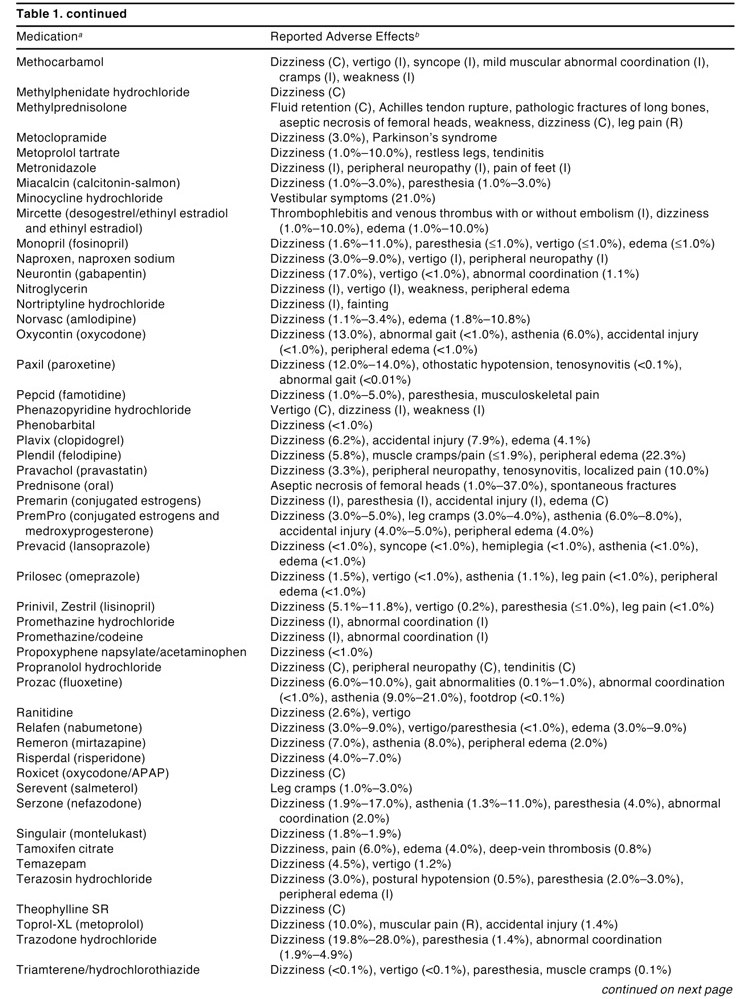
Medications and their adverse effects (and prevalence rates) associated with fall injuries are listed in
Table 1. Adverse effect prevalence rates were not available for all 169 medications reviewed. Adverse effects reported as common are defined as “expected and sometimes inevitable”; those reported as infrequent and rare occur in approximately 1% to 10% and in fewer than 1% of patients, respectively.[
22]
Table 1.
Medications with Adverse Effects That May Cause Fall Injuries
Table 1.
Medications with Adverse Effects That May Cause Fall Injuries
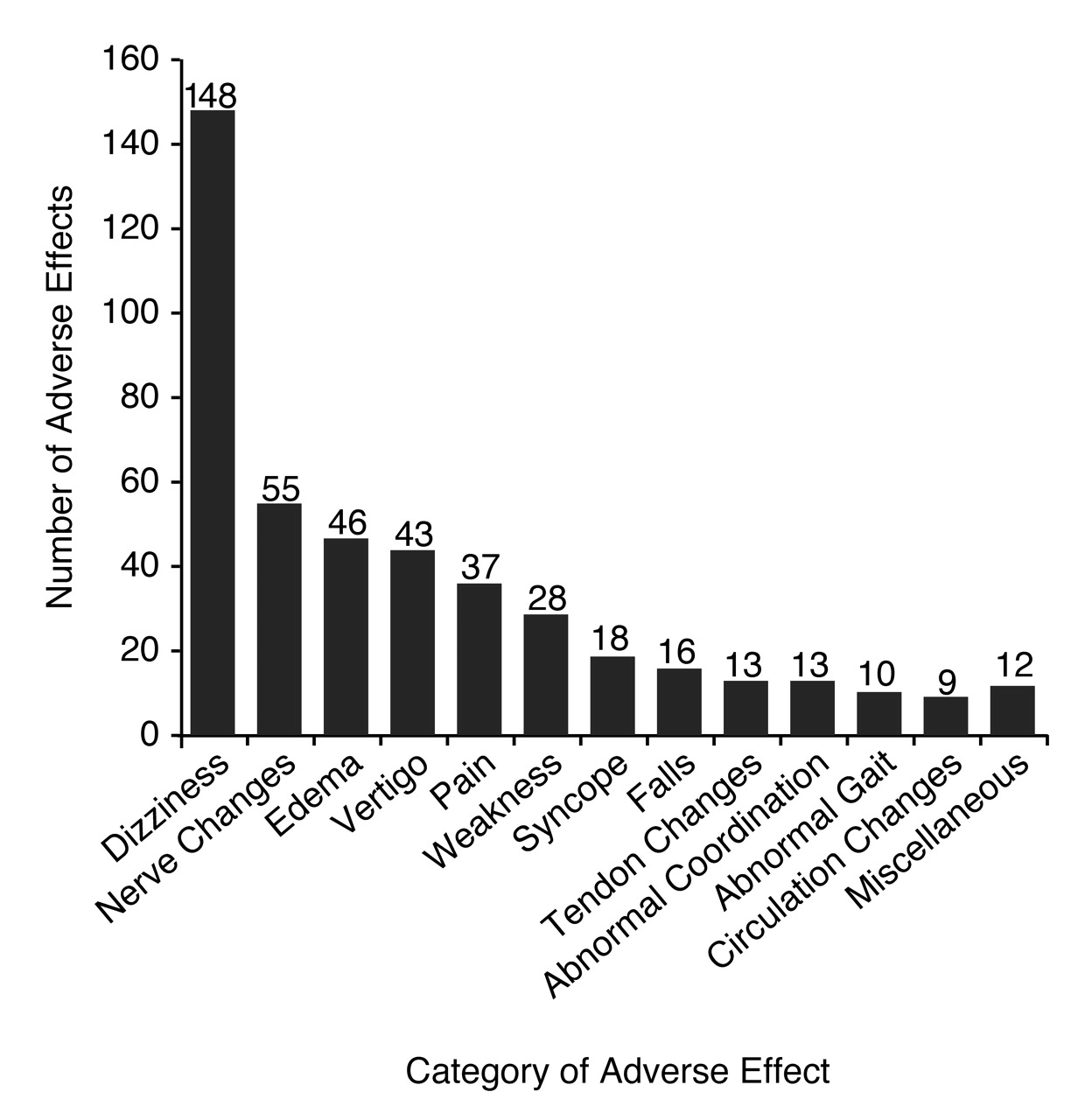
Counts and rates were derived arithmetically to determine the frequency of occurrence of each adverse effect (
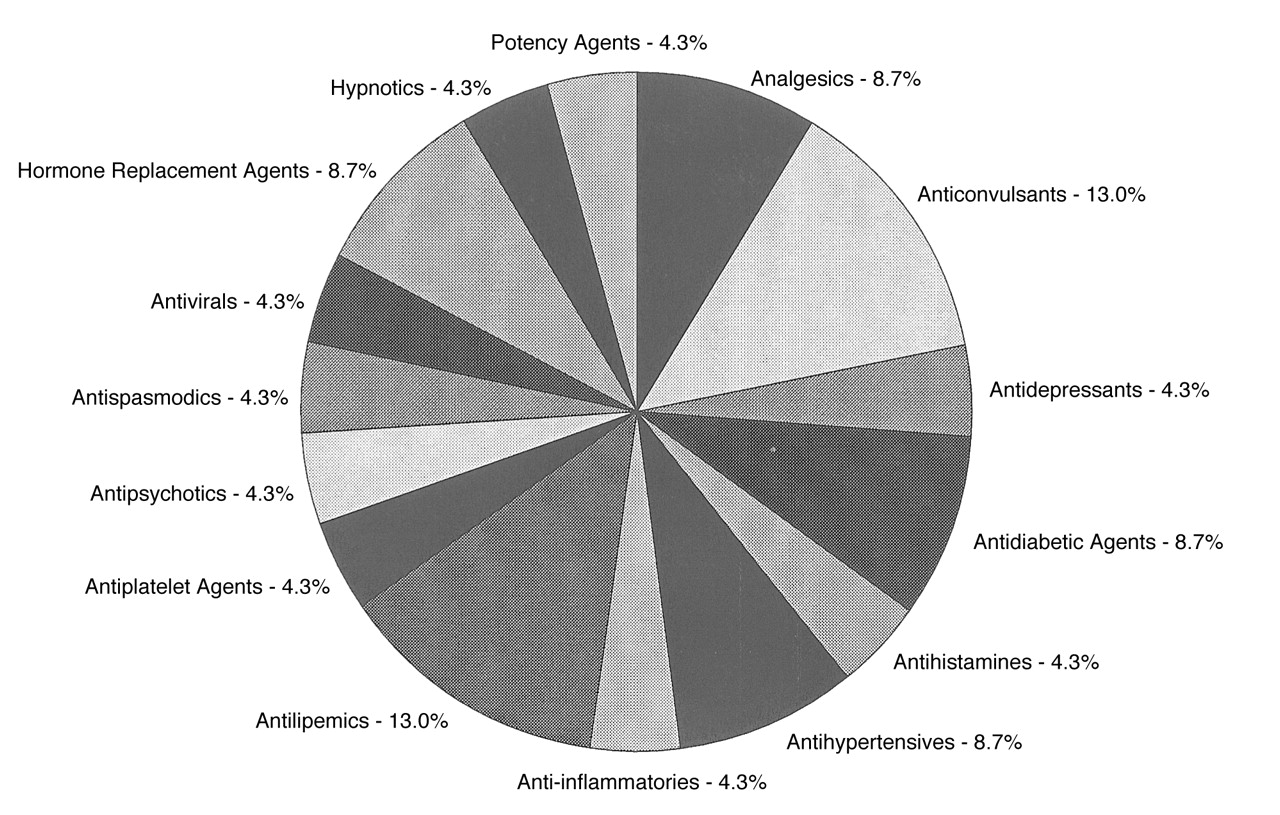
Fig. 1). The abnormal gait and traumatic injury categories are further illustrated by therapeutic class (
Fig. 2). Finally,
Table 2 lists medications that have no recorded adverse effects contributing to fall injuries.
Table 2.
Medications with No Data Regarding Adverse Effects Contributing to Fall Injuries
Table 2.
Medications with No Data Regarding Adverse Effects Contributing to Fall Injuries
Figure 1.
Distribution of reported adverse effects (n = 448) contributing to falls of the most frequently prescribed drugs (n = 169) by adverse effect categories.
Figure 1.
Distribution of reported adverse effects (n = 448) contributing to falls of the most frequently prescribed drugs (n = 169) by adverse effect categories.
Figure 2.
Breakdown by therapeutic class of the 23 reviewed drugs documented in the literature as associated with falls, traumatic injury, or abnormal gait. Percentages represent proportions of the 26 adverse effects associated with each class.
Figure 2.
Breakdown by therapeutic class of the 23 reviewed drugs documented in the literature as associated with falls, traumatic injury, or abnormal gait. Percentages represent proportions of the 26 adverse effects associated with each class.
Results
The 200 most frequently prescribed medications for new and refill prescriptions in 2000 were reviewed for reported adverse effects involving the potential for inducing falls or other traumatic injuries. During the review, it was noted that duplicates were present owing to listing of medications by both brand and generic names. The actual number of different medications reviewed was 169. Adverse effects of documented traumatic injuries and falls were reported for 9.5% of the medications reviewed (n = 16). Adverse effects defined by the previous categories that could result in a fall injury were reported for 92.9% of the medications (n = 157), and no adverse effects were reported for 7.1% (n = 12).
The three most frequent adverse effects encountered with use of these medications were dizziness, nerve changes, and edema. Of the 157 medications, 94.3% (n = 148) were associated with dizziness, 35.0% (n = 55) with changes in nerve function, and 29.3% (n = 46) with edema or fluid retention. Vertigo was associated with 27.4% (n = 43) of the medications reviewed, pain with 23.6% (n = 37), weakness with 17.8% (n = 28), and syncope with 11.5% (n = 18).
The prevalence of adverse effects reported in the remaining categories were as follows: accidental falls/trauma, 10.2% (n = 16); tendon changes, 8.3% (n = 13); abnormal coordination, 8.3% (n = 13); gait abnormalities, 6.4% (n = 10); circulation changes, 5.7% (n = 9); and miscellaneous lower-extremity effects, 7.6% (n = 12). The combined number of adverse effects in the falls and abnormal gait categories is 26. An analysis of these adverse effects is presented in
Figure 2, which represents a breakdown by therapeutic class of the 23 reviewed drugs documented in the literature as associated with falls, traumatic injury, or abnormal gait.
Discussion
Although this article is based on subjective data, these adverse effects are common and affect the patient’s quality of life. Moreover, the effects that prescription medications have on a patient’s ability to walk may affect the patient’s overall health. For example, previous studies have identified certain classes of medications that may contribute to fall injuries.[
29,
30,
31] It is the author’s intention to warn the reader that fall injuries occurring in the elderly population may result from any medication and not just from psychoactive medications. Because it was not possible in this study to distinguish between the effects of the medications and those of the underlying medical conditions and diseases being treated, the reported adverse effects may be due to either the drug or the disease.
Lipitor (atorvastatin calcium), an antilipemic agent, was the most commonly prescribed medication in 2000. Cholesterol-reducing agents (specifically, statins) and antidepressants (specifically, serotonin selective reuptake inhibitors) were ranked number one and number two for total sales in 2000, respectively.[
32] Thus these two categories would be expected to have high reported prevalence rates compared with the other therapeutic classes reviewed. In theory, the more patients exposed to a drug, the greater the prevalence of an adverse effect to be observed and reported. In the case of antidepressants, a relatively low percentage (4.3%) was found. There are two possible explanations for this finding. First, the actual number of drugs in this class included in this review is only 12 (7.1%). Second, the newer antidepressants have fewer anticholinergic and sedative adverse effects than those used in the past.
The risk of falling increases with the number of risk factors present. Tinetti et al[
1] targeted patients receiving four or more medications in one of their clinical intervening study arms. Drug therapy was reassessed, resulting in reductions in the proportion of subjects who fell and in the incidence of falls. Granek et al[
2] showed that the odds of falling were higher for people taking antidepressants, hypnotics, and vasodilators. Also, they studied drug combinations and found that the use of both two- and three-drug combinations was more common in patients who had a fall incident. As the baby boomer generation enters the new millennium facing chronic conditions that come with age—diabetes mellitus, high cholesterol, arthritis, and hypertension—multiple-drug regimens will become more common. Therefore, with the increased use of medications, fall injuries in both institutional and community environments will increase. This increase will be proportional to drug adverse effects. The health-care provider must become knowledgeable about the potential for all medications, especially the most frequently prescribed ones, to induce fall injuries.