The development of ultrasonography has enabled the physician to observe plantar pedal soft-tissue anatomy with real-time technology, digital image processing, and linear array high-frequency transducers.[
1-
4] Ultrasonography allows the examiner to visualize plantar fascia band thickness and guide injection or surgical treatment, and it helps establish a diagnosis of plantar fasciitis. During ultrasonographic examination, patients can directly verbalize to the examiner the absence or presence of pain when the plantar fascia bands are palpated.
Ultrasonography has previously been used to measure the thickness of the plantar fascia in patients with painful heels, with researchers focusing on the medial band’s contribution to the patient’s symptoms.[
5-
7] Studies of the effectiveness of conservative modalities for the treatment of heel pain show that 65% to 95% of patients obtain relief from a variety of conservative therapies.[
8] Some patients with plantar fasciitis do not respond to conservative care, suggesting that these treatments are not completely effective for all three bands of plantar fascia or that the diagnosis is incorrect. Ultrasonography facilitates visualization of asymptomatic and symptomatic plantar fascia, which helps to establish a diagnosis of plantar fasciitis.[
9-
11]
The aims of this ultrasonography study were the following: to determine the involvement of the medial, central, and lateral bands of the plantar fascia in patients with plantar fasciitis; to compare the respective thicknesses of the symptomatic medial, central, and lateral bands of the plantar fascia with those of the asymptomatic bands; and to establish a plantar fascia index (the ratio of the mean thickness of symptomatic medial, central, and lateral plantar fascia bands to that of asymptomatic bands).
Ultrasonographic Imaging
Ultrasonographic imaging is based on the recorded echo of transmitted sound waves from a given object, such as tendon, bone, or foreign material. The transmitted sound wave is reflected back as an echo to a transducer and the signal is then received and processed by the machine. The ultrasound image visualized on the monitor is produced from acoustic impedance mismatches at the interface between objects. For example, when sound waves encounter an object of high mass density (eg, bone), a high acoustic impedance mismatch is produced and object images will appear hyperechoic or brighter on ultrasound.[
5] An object with lower mass density (eg, air, blood, abscess, inflammation) will produce a low acoustic impedance mismatch when sound waves are encountered, and such objects will appear hypoechoic or black on the ultrasound image. Objects that produce a high acoustic impedance mismatch will have a signal void or acoustic shadow beyond the object. An acoustic shadow is caused by highly attenuating structures, where a gross acoustic mismatch is created at the interface of the object.[
12-
14]
Methods
All adult patients from the private practice of the senior author (P.K.V.) and from the ultrasonographer’s patient files examined between January 2, 1997, and June 1, 2000, diagnosed as having plantar fasciitis were eligible for study entry. Patients were excluded from this study if they had any of the following: 1) a history of inflammatory arthritis; 2) a connective-tissue disorder; 3) recent trauma to the heel or plantar fascia; 4) a congenital defect of the lower extremity; 5) previous heel surgery; 6) nonsteroidal anti-inflammatory medication use; or 7) a corticosteroid heel injection within the previous 8 weeks.
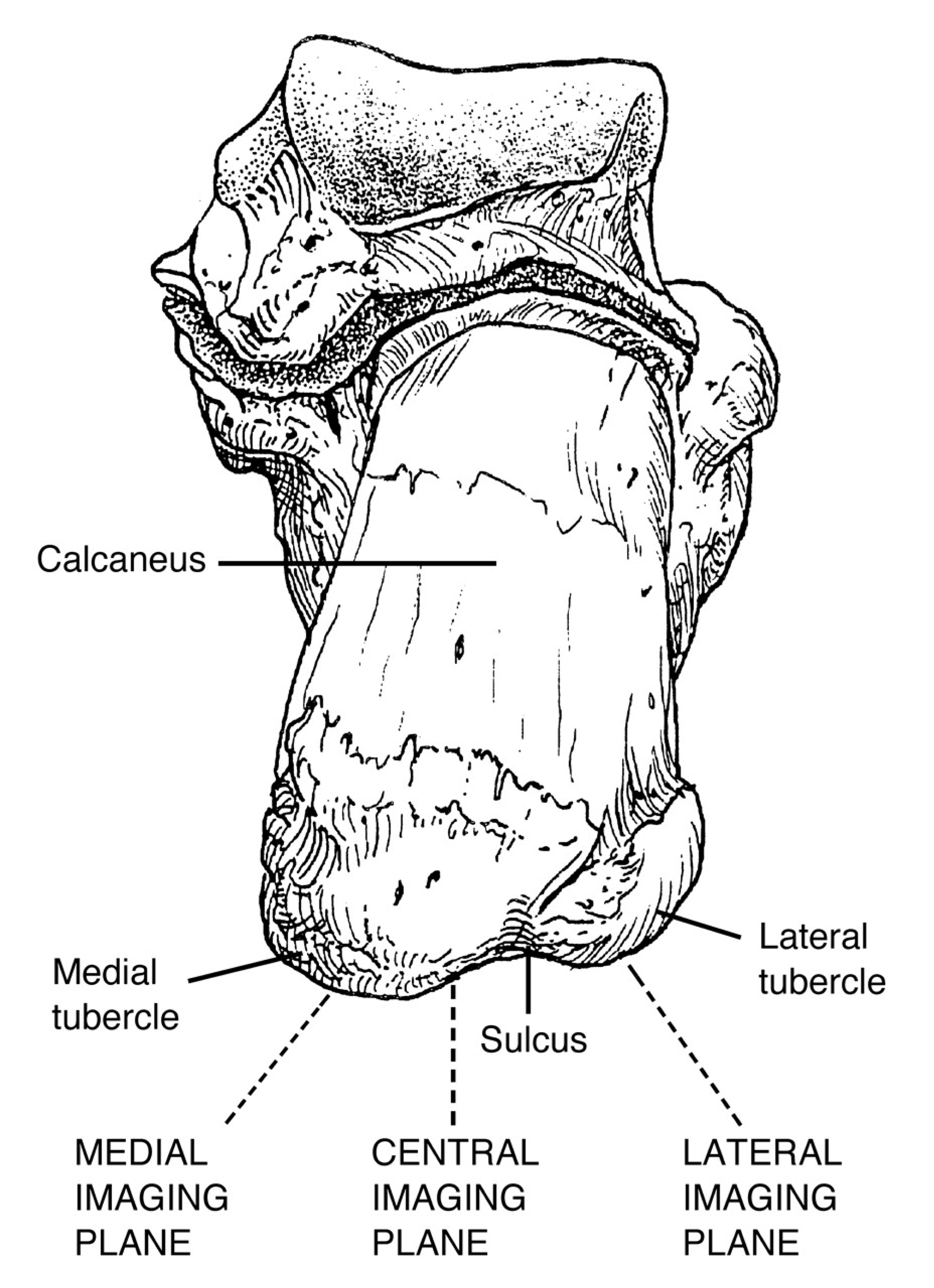
The diagnostic criteria for plantar fasciitis consisted of plantar heel pain with tenderness of the plantar fascia on palpation. One hundred nine adults with a clinical diagnosis of plantar fasciitis met the inclusion criteria (28 males and 81 females; mean age, 47.6 years; age range, 16 to 76 years) and were evaluated using a linear 7.0-MHz ultrasound transducer (Acuson 128XT; Acuson Corp, Mountain View, California). There were 102 patients with bilateral plantar fasciitis and 7 with unilateral plantar fasciitis. The symptomatic and asymptomatic medial, central, and lateral bands of the plantar fascia were located and the thickness recorded for each patient (
Fig. 1). While patients were evaluated with the ultrasonography, they directly verbalized to the examiner the absence or presence of pain when the plantar fascia bands were palpated.
The control group consisted of 16 asymptomatic patients, 13 men and 3 women, with an absence of heel pain in either foot. The mean age of the control group was 49.6 years (range, 31 to 68 years).
Although all of the bands of the plantar fascia were examined, only 52 of the 109 symptomatic patients had the thickness of their asymptomatic central and lateral bands quantitatively recorded. In these 52 patients there were 148 asymptomatic bands of a possible 312 bands that were compared with the control bands and all of the symptomatic plantar fascia bands.
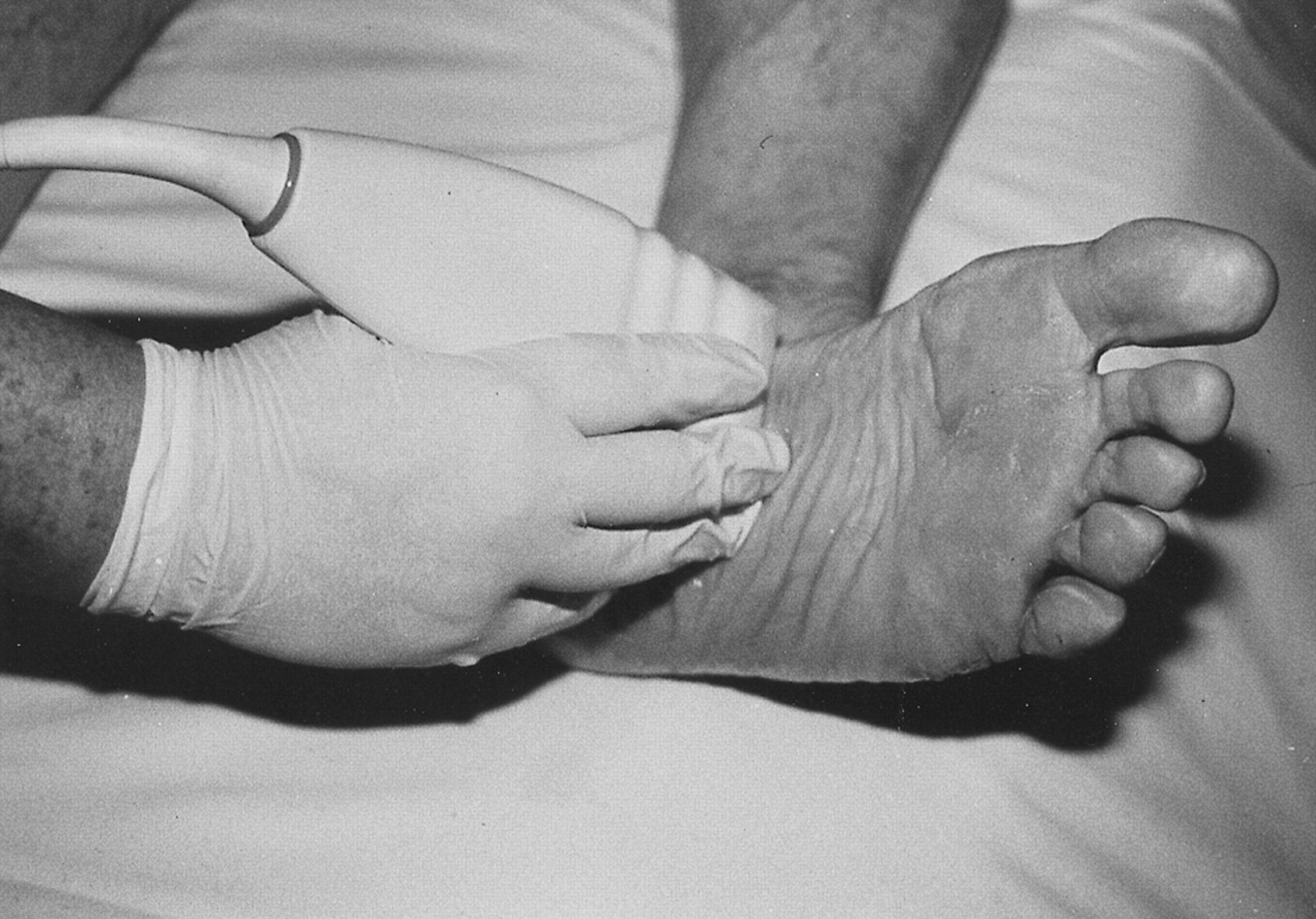
Ultrasonographic examinations were performed by two ultrasonographers and were interpreted by three radiologists. Patients were positioned prone, with their feet hanging over the edge of the examination table. The medial, central, and lateral aspects of the heel at the insertion of the plantar fascia were palpated to determine the location of the corresponding bands. A bead of acoustic gel was applied to the cover of the head of the transducer, which was then placed longitudinally on the plantar aspect of the foot (
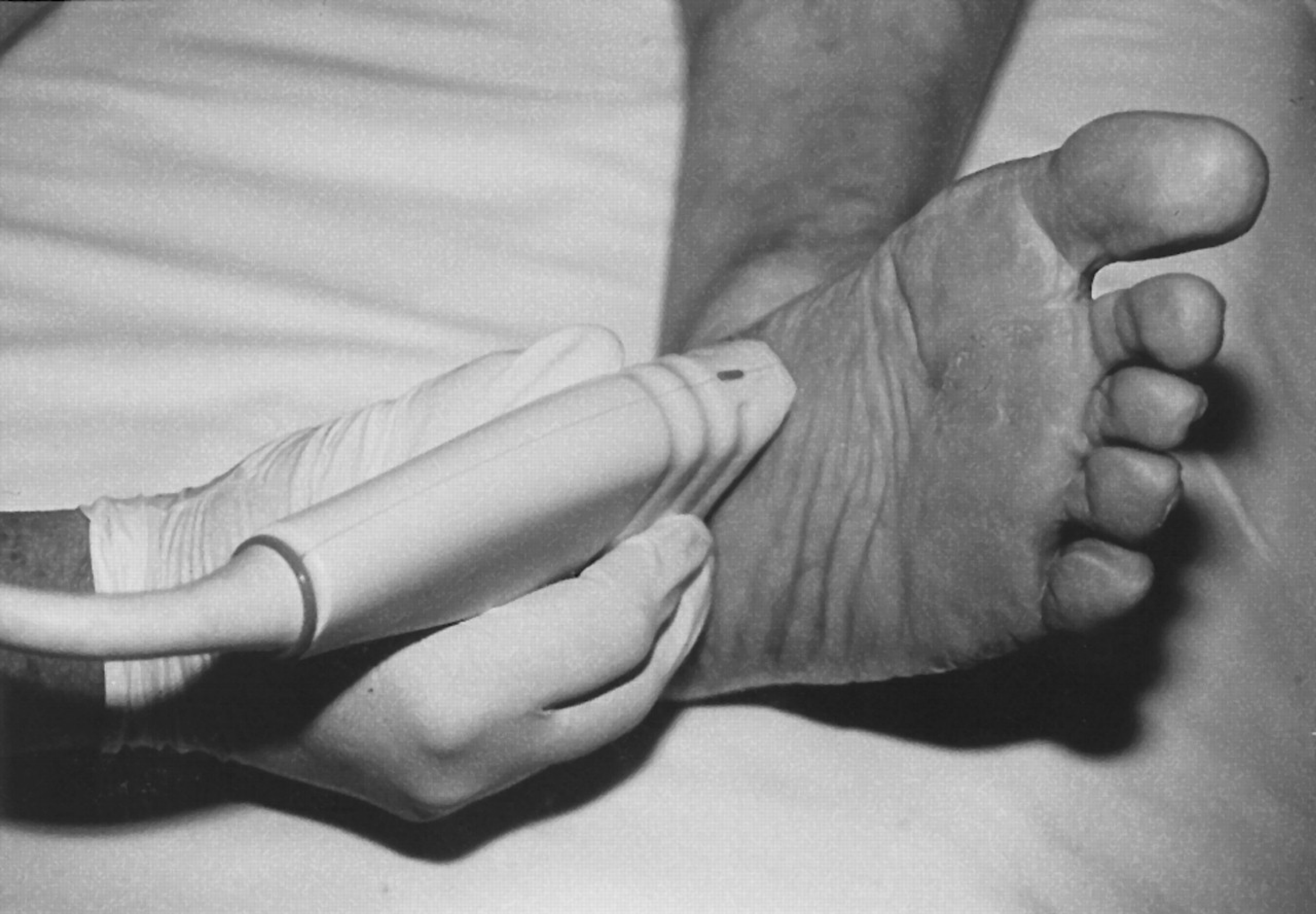
Fig. 2). The focus was adjusted to the depth of the plantar fascia at its attachment to the calcaneus. Ultrasonographic scanning was performed during dynamic dorsiflexion of the toes to stretch the plantar fascia, allowing its margins to be delineated. Images were recorded on both VHS video and emulsion film (Fuji Corp, Japan) using a multi-image camera. Transverse sonograms were also obtained to determine the thickness of the plantar fascia bands proximally near its insertion into the calcaneus (
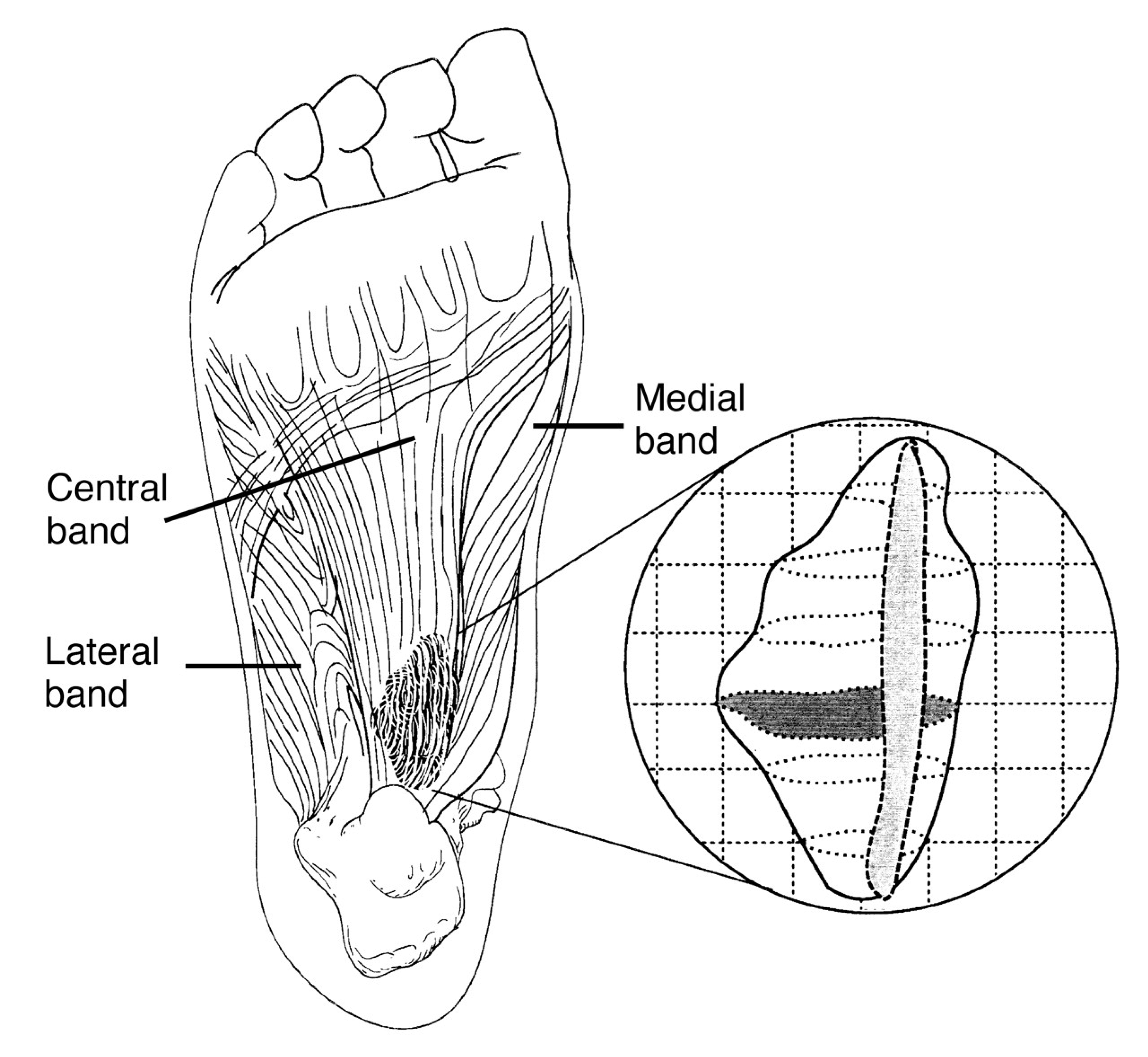
Fig. 3). Together, longitudinal and transverse views help to isolate the symptomatic medial, central, and lateral plantar fascia bands (
Fig. 4).
A Student’s t-test was used to compare the means of the asymptomatic and symptomatic medial, central, and lateral bands of the plantar fascia.
Results
One hundred nine patients with painful plantar fasciitis underwent ultrasonographic examination of their plantar fascia. There were no significant differences between the right and left feet for patients with bilateral plantar fasciitis for the medial (T = 1.21; Tcrit = 1.65), central (T = 1.27; Tcrit = 1.66), and lateral (T = 0.64; Tcrit = 1.67) bands; therefore, the right and left feet were combined for the remainder of the analysis.
The average thickness of all symptomatic bands was 5.35 mm, which was significantly greater than that for all asymptomatic bands, which was only 2.70 mm (
t = 23.39; T
crit = 1.65;
P < .001). Separate ultrasonographic measurements were performed for the thickness of the medial, central, and lateral plantar fascia bands for the 211 symptomatic feet (
Table 1). All 211 symptomatic feet had involvement of the medial band, which averaged 5.9 mm thick; 143 feet with painful plantar fasciitis had involvement of the central band, which averaged 5.3 mm thick; and 54 feet with painful heels had involvement of the lateral band, with thickness averaging 4.4 mm. The medial, central, and lateral bands of the control group measured an average of 2.9, 2.8, and 2.3 mm, respectively (
Table 2).
The mean age of patients with painful heels was 47.6 years (range, 16 to 76 years) (
Table 3) and of asymptomatic controls was 49.6 years (range, 31 to 68 years).
Discussion
Ultrasonic detection and measurement of plantar fascia bands is dynamic, as it simultaneously combines direct palpation of the affected site with quantitative measurement of each plantar fascia band. This is unlike a magnetic resonance imaging evaluation, in which the patient must be static and removed from the examiner. In addition, sole palpation of the plantar fascia to elicit pain is subjective. Ultrasonography should be used when plantar fascia symptoms persist or when clinical presentation is atypical.[
4,
15-
17]
To the authors’ knowledge, this is the first clinical ultrasonography study to statistically quantify and correlate symptomatic and asymptomatic medial, central, and lateral bands of the plantar fascia. The results of this study should assist the practitioner by providing symptomatic and asymptomatic average plantar fascia band thicknesses. By knowing the location and thickness of each plantar fascia band, the practitioner will be better able to guide injections, determine the location for fasciotomy, and prevent postoperative complications caused by releasing the wrong band or by inadvertent total plantar releases.
There are many ultrasonography devices on the market today. It is important to select a device that provides ample resolution to allow visualization of intrasubstance tears of tendon, ligament, or fascia that could be missed easily with devices that have lower resolution. In selecting a machine to provide ample resolution, one must consider not only the frequency of the transducer but also the number of processing channels and the programming sophistication.
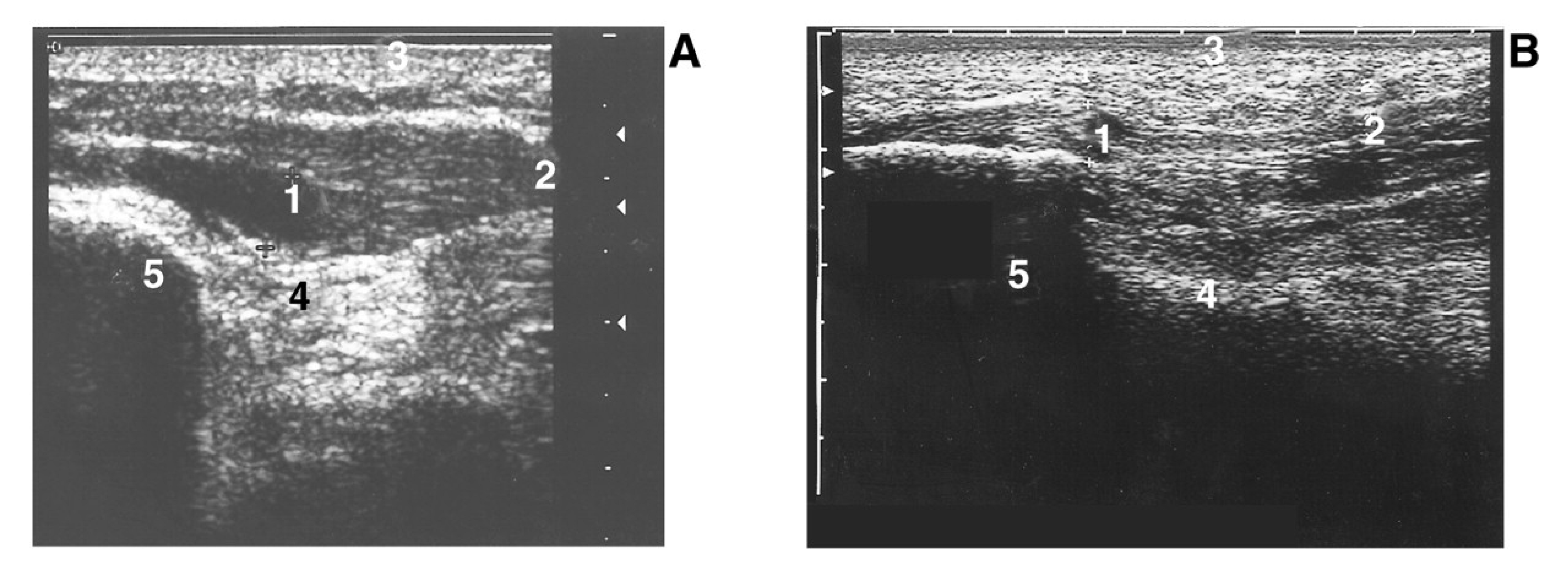
The results of the present study agree with those of previous ultrasonography studies that report the average thickness of symptomatic and asymptomatic plantar fascia to be 5.6 mm and 3.6 mm, respectively (
Fig. 5,
Table 4).[
6,
7] In a related anatomical study,[
18] 200 fresh-frozen cadaveric specimens had mean medial, central, and lateral plantar fascia band thicknesses of 4.5, 1.6, and 2.5 mm, respectively. In the present study, patients with plantar fasciitis had the medial band involved in 100% of cases, the central band involved in 68%, and the lateral band involved in 26%. The differences in involvement of each plantar fascia band have biomechanical implications and suggest an independent axis of motion of the first, fifth, and lesser rays of the foot.[
19,
20] Furthermore, an independent axis of motion of the first, fifth, and lesser rays of the foot would also help explain how asymptomatic plantar fascia bands in the control group were similar to the asymptomatic bands in patients with plantar fascia pain.
When an individual has plantar fascia pain, symptomatic and asymptomatic plantar fascia band thicknesses should be compared for the purpose of directing treatment or evaluating the outcome of treatment. For this reason, the authors suggest establishing a plantar fascia index: the ratio of the mean thickness of symptomatic medial, central, and lateral plantar fascia bands to that of the corresponding asymptomatic bands. For this study, the index value is 1.98 (5.35/2.70 mm). The higher the index value, the greater the thickness of the plantar fascia. Individual anatomical differences dictated by a person’s age and phenotype would normalize inherent plantar fascia thickness.
Interestingly, most individuals in this study with plantar fasciitis were aged 41 to 60 years (
Table 3). Fewer symptomatic individuals were older than 60 years (and thus prone to arthritides) and younger than 41 years (and thus usually more physically active).
Figure 1.
Posteroanterior view of the calcaneus showing the plantar ultrasonographic imaging planes.
Figure 1.
Posteroanterior view of the calcaneus showing the plantar ultrasonographic imaging planes.
Figure 2.
Longitudinal placement of the ultrasonographic transducer on the plantar surface of the foot. The ultrasonographic transducer is parallel to the long axis of the foot.
Figure 2.
Longitudinal placement of the ultrasonographic transducer on the plantar surface of the foot. The ultrasonographic transducer is parallel to the long axis of the foot.
Figure 3.
Transverse placement of the ultrasonographic transducer on the plantar surface of the foot. The ultrasonographic transducer is perpendicular to the long axis of the foot.
Figure 3.
Transverse placement of the ultrasonographic transducer on the plantar surface of the foot. The ultrasonographic transducer is perpendicular to the long axis of the foot.
Figure 4.
Illustration of the plantar aspect of the foot depicting enlarged medial and central plantar fascia bands at the calcaneus. The inset shows the isolation of enlarged medial and central bands that are located by longitudinal and transverse placement of the ultrasonographic transducer.
Figure 4.
Illustration of the plantar aspect of the foot depicting enlarged medial and central plantar fascia bands at the calcaneus. The inset shows the isolation of enlarged medial and central bands that are located by longitudinal and transverse placement of the ultrasonographic transducer.
Figure 5.
Longitudinal sonograms of symptomatic (A) and asymptomatic (B) plantar fascia. A, The symptomatic plantar fascia is shown as a black thickened space (area 1) with decreased echogenicity. The distal plantar fascia is less thickened and less symptomatic (area 2). Skin and subcutaneous tissue (area 3) and tissue deep to the plantar fascia (area 4) are represented by white stippling. Acoustic shadowing of the calcaneus is blackened (area 5). B, The asymptomatic plantar fascia is shown by fine blackened parallel echogenic lines with slight variation in thickness or echogenicity (areas 1 and 2). Skin and subcutaneous tissue (area 3) and tissue deep to the plantar fascia (area 4) are represented by white stippling. Acoustic shadowing of the calcaneus is blackened (area 5).
Figure 5.
Longitudinal sonograms of symptomatic (A) and asymptomatic (B) plantar fascia. A, The symptomatic plantar fascia is shown as a black thickened space (area 1) with decreased echogenicity. The distal plantar fascia is less thickened and less symptomatic (area 2). Skin and subcutaneous tissue (area 3) and tissue deep to the plantar fascia (area 4) are represented by white stippling. Acoustic shadowing of the calcaneus is blackened (area 5). B, The asymptomatic plantar fascia is shown by fine blackened parallel echogenic lines with slight variation in thickness or echogenicity (areas 1 and 2). Skin and subcutaneous tissue (area 3) and tissue deep to the plantar fascia (area 4) are represented by white stippling. Acoustic shadowing of the calcaneus is blackened (area 5).
Table 1.
Ultrasonographic Detection and Measurement of Symptomatic Medial, Central, and Lateral Plantar Fascia Bands
Table 1.
Ultrasonographic Detection and Measurement of Symptomatic Medial, Central, and Lateral Plantar Fascia Bands
Table 2.
Symptomatic and Asymptomatic Medial, Central, and Lateral Plantar Fascia Band Thicknesses
Table 2.
Symptomatic and Asymptomatic Medial, Central, and Lateral Plantar Fascia Band Thicknesses
Table 3.
Age Distribution of 211 Feet with Plantar Fasciitis
Table 3.
Age Distribution of 211 Feet with Plantar Fasciitis
Table 4.
Ultrasonography of Symptomatic versus Asymptomatic Plantar Fascia
Table 4.
Ultrasonography of Symptomatic versus Asymptomatic Plantar Fascia