Scholarly journals are an important forum for the dissemination of advances in the theory and practice of the health professions and can provide a useful archive of the profession’s development. Currently, four major journals are considered to be the primary sources of original foot and ankle research literature: the Journal of the American Podiatric Medical Association, the Journal of Foot and Ankle Surgery, The Foot, and Foot and Ankle International. Of these journals, JAPMA is the oldest, having evolved from The Pedic Items, which was first published in 1907.
As JAPMA is the primary academic journal in the podiatric medical profession, its contents can be assumed to provide a general indicator of the research activities of the profession as a whole. This study evaluated publication patterns in JAPMA over a 10-year period in order to chart the progress of podiatric medical literature during this time. In particular, this study investigated 1) the relative proportions of original research, literature reviews, and case reports; 2) the topic areas in which articles were published; and 3) characteristics of the authors, including country of origin and professional background.
Discussion
The
Journal of the American Podiatric Medical Association is the most established scholarly publication in the field of podiatric medicine. However, from 1991 to 2000, more than two-thirds of the articles published in the
Journal were either case reports or literature reviews. The paucity of original research in the podiatric medical literature was highlighted in 1987 by Harris [
1], and more recently by Turlik and Kushner [
2], who reported that only 1% of a sample of 322 articles published in JAPMA and the
Journal of Foot and Ankle Surgery were randomized controlled trials. This is somewhat disappointing, particularly given that outcomes research has been recognized as a high priority for the podiatric medical profession [
3].
Assuming that the contents of JAPMA provide a reasonably accurate indicator of research activity in the profession, the results presented in
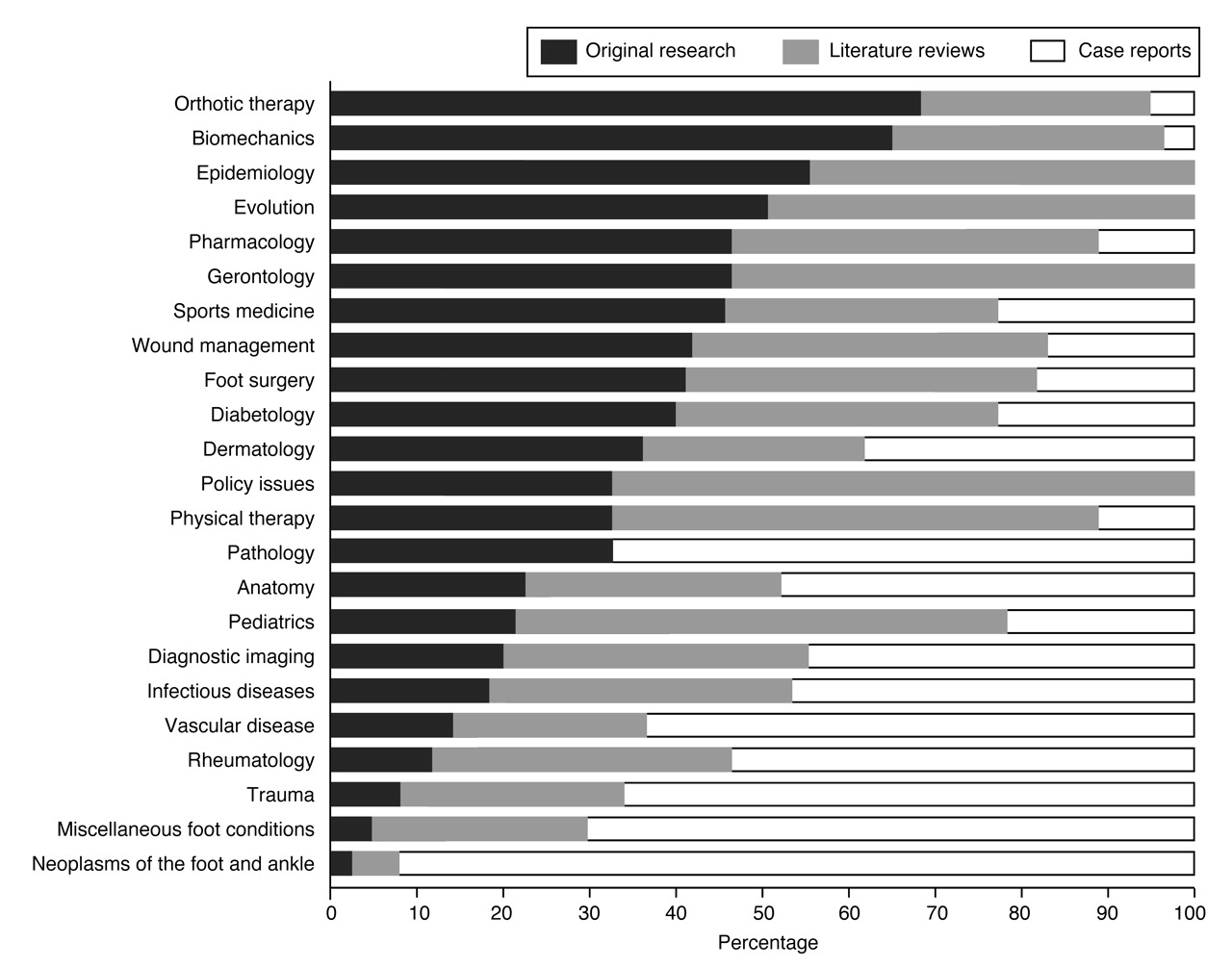
Figure 5 offer some useful insights into the relative strength of the research base for different specialty areas of podiatric medicine. It would appear that orthotic therapy and biomechanics receive the most attention from researchers, while other important specialty areas, such as pediatrics, are largely represented by review articles. The small proportion of original research articles in pediatrics is of particular concern given the ongoing debate regarding the treatment of pediatric flatfoot, an area of practice driven largely by clinical experience rather than research evidence [
4]. The proportion of original articles in foot surgery, dermatology, rheumatology, and diabetology is also relatively low; it is likely, however, that many original articles in these areas are published in journals covering other specialties [
1].
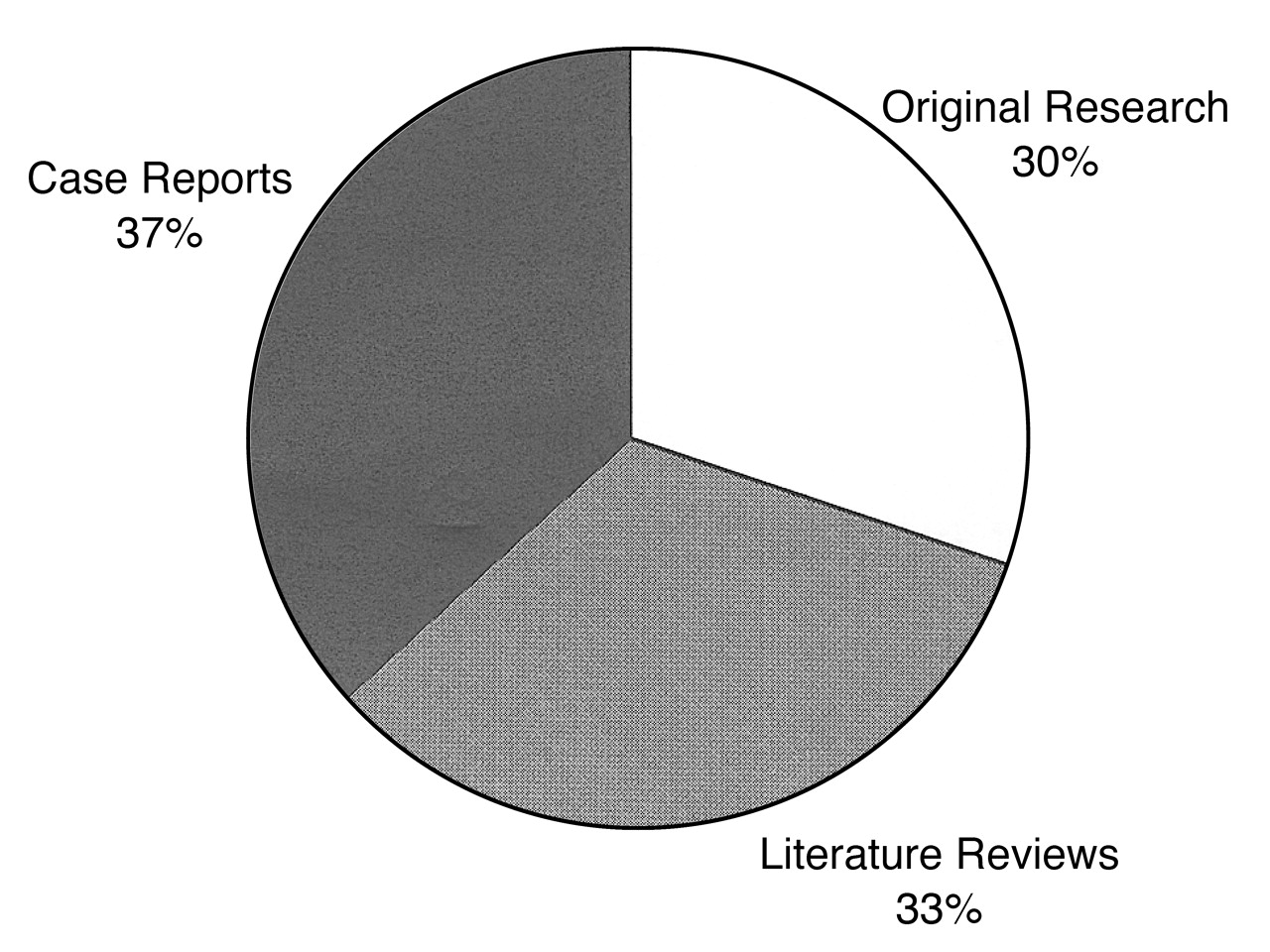
Review articles composed approximately one-third of the
Journal content. Most review articles were related to foot surgery or biomechanics. Review articles play an important role in synthesizing primary research for dissemination to clinicians; significantly, however, all of the review articles in the
Journal have been “journalistic” or “narrative” reviews, in which authors arbitrarily select articles for inclusion and subjectively discuss their implications. Systematic reviews, in which the author states an explicit objective and uses an objective approach for summarizing the available evidence, are preferable, as they limit author bias [
5]. Although there is not enough available research literature on many foot and ankle conditions to support worthwhile systematic reviews, this is gradually changing with the recent publication of systematic reviews pertaining to treatment of the diabetic foot [
6–
10], heel pain [
11], and fungal infections of the foot [
12]. The increasing emphasis on systematic reviews suggests that this technique may need to be incorporated into the undergraduate curriculum of schools of podiatric medicine and continuing education courses for practicing podiatric physicians.
Case reports composed slightly more than one-third of the
Journal and were related mostly to neoplasms of the foot and ankle or other miscellaneous foot conditions. The value of case reports is a matter of considerable debate in the scientific and medical literature. A number of journal editors consider case reports to be anecdotal and of little scientific worth, while others suggest that case reports are of considerable clinical interest and may stimulate further investigation into less common conditions [
13–
15]. Many large medical journals have largely stopped publishing case reports [
16], while the
British Medical Journal has developed a new style of case report, the evidence-based case report, which describes the application of available research evidence in the management of individual patients [
17]. This style of article may offer some benefits over the traditional case report, as it requires the authors to state how they used the available literature to inform their management of the condition, rather than simply describing the details of the case.
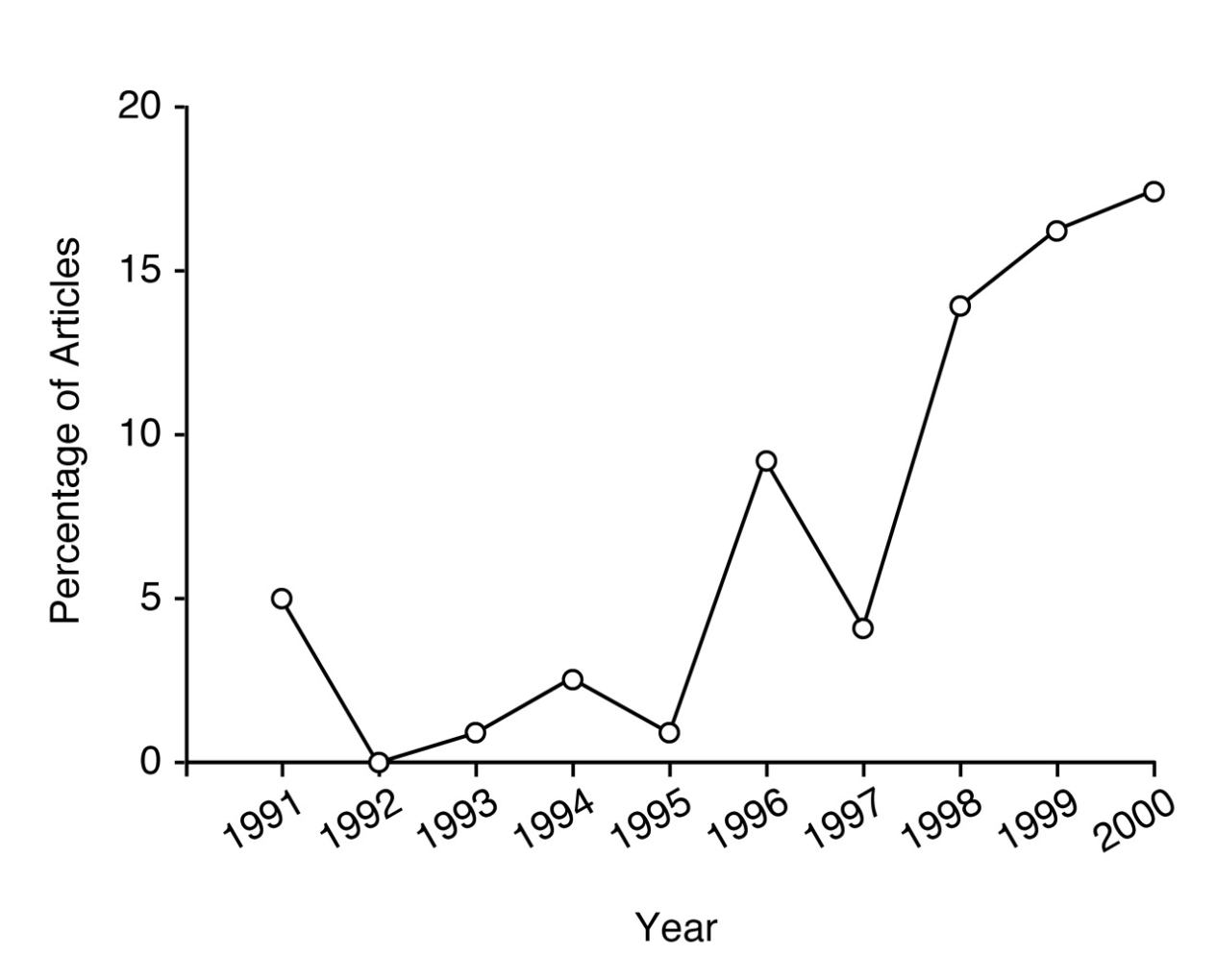
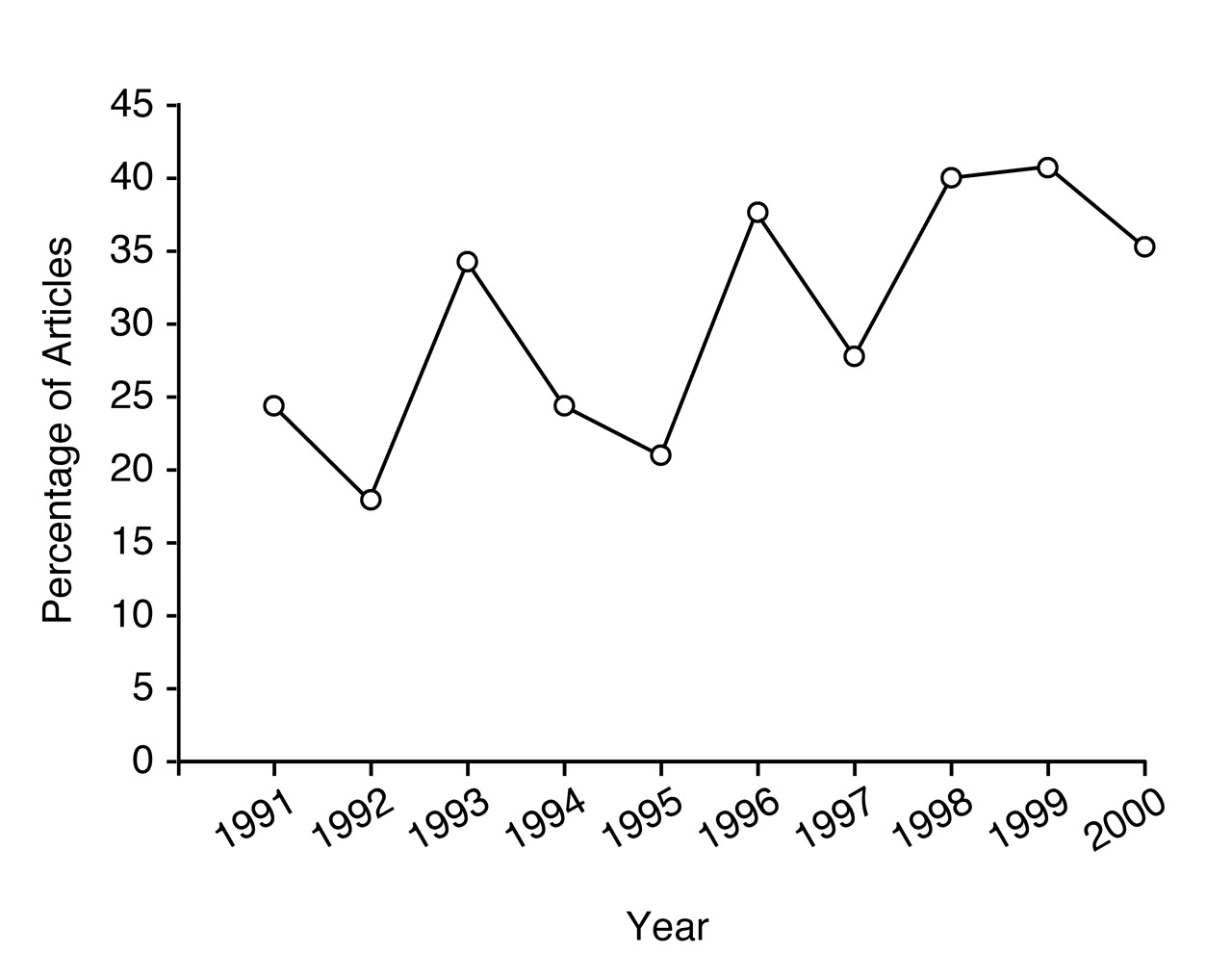
Two significant trends emerged over the 10-year period chosen for this review: a gradual increase in the proportion of original research articles and a steady increase in the number of non-US authors publishing in the
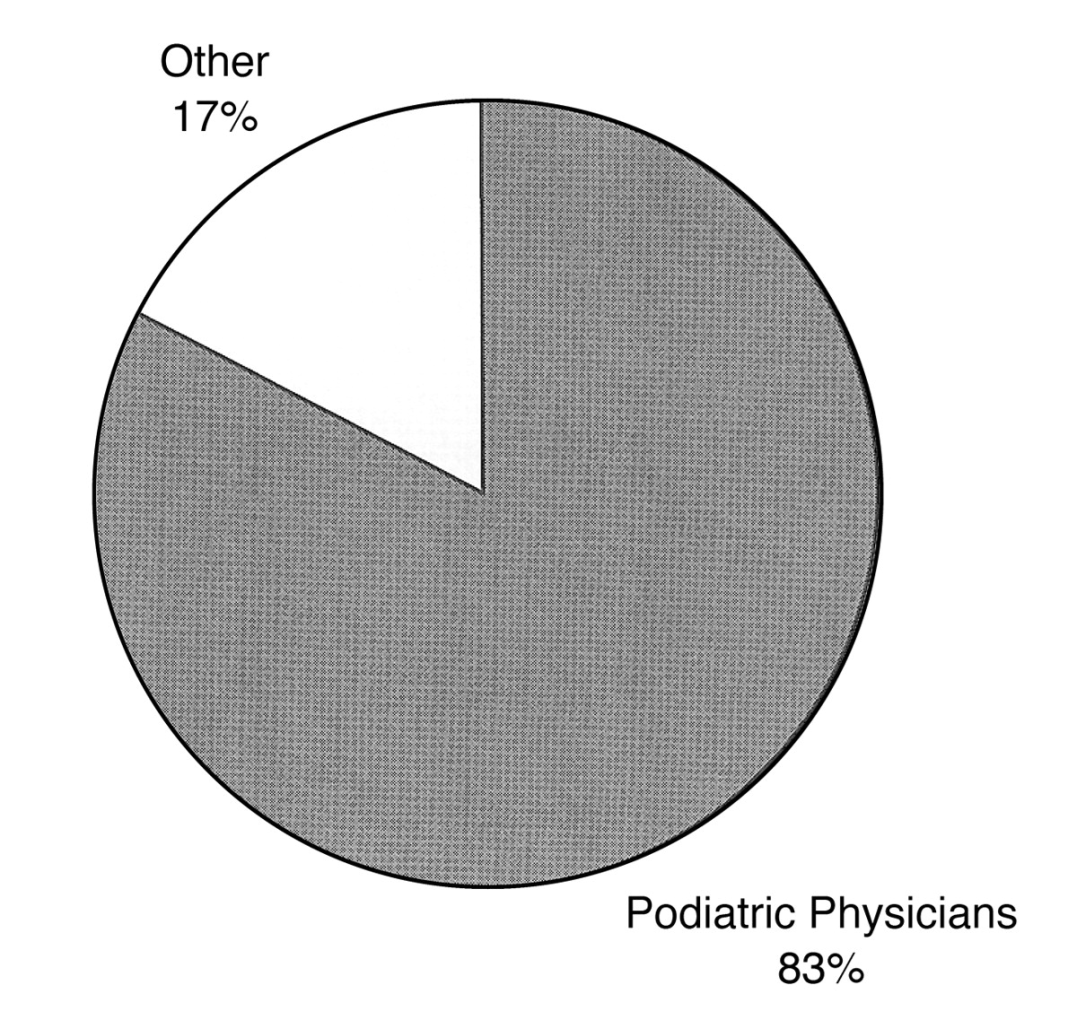
Journal. From 1991 to 1995, 23.5% of articles were based on original research, while this proportion increased to 36% from 1996 to 2000. This modest yet promising trend suggests that the research base of the podiatric medical profession may be improving. However, it is significant that a large proportion of original research articles in JAPMA, particularly in the areas of biomechanics and orthotic therapy, were published by physical therapists rather than podiatric physicians. While the multidisciplinary authorship of the
Journal should continue to be encouraged, this observation suggests that a stronger research culture may currently exist in physical therapy. The apparent weakness of the research culture in podiatric medicine has been attributed to a range of factors, including inadequate research funding, limited undergraduate coverage of research methods, and the heavy clinical caseload of lecturers in podiatric medical schools [
18]. Interestingly, many of these deficiencies have previously been identified in the physical therapy profession [
19], suggesting that there are inherent, yet not insurmountable, difficulties in developing and maintaining a strong research culture in the allied health professions.
The steady increase in the proportion of articles published by authors outside the United States is encouraging, as it suggests that the
Journal has a rising international profile. A recent survey of podiatry academic staff in Australia found that JAPMA rated much higher in terms of perceived prestige than the “local” journal, the
Australasian Journal of Podiatric Medicine, and most staff members stated that they would consider JAPMA for future submissions [
20]. Fewer articles were published by authors from the United Kingdom, possibly because members of the Society of Chiropodists and Podiatrists in the United Kingdom (until recently) received
The Foot as part of their membership and are therefore more likely to publish in that journal. A recent analysis of publication patterns in
The Foot revealed that approximately two-thirds of articles in the journal were written by authors from the United Kingdom [
21].
It would appear that authors outside the United States provide the Journal with a different range of articles than their US counterparts. Articles published by non-US authors were more likely to be original research and to be related to biomechanics, orthotic therapy, or gerontology. This may reflect differences in the scope of podiatric medical practice between different countries, as outside the United States the practice of foot surgery is generally limited to nail avulsion procedures. This limitation in scope of practice means that nonsurgical podiatric physicians tend to direct their investigative effort toward conservative podiatric medicine, which may have the long-term effect of making these areas of practice more evidence-based than foot surgery. However, it also needs to be recognized that a large proportion of original research relating to foot surgery may be directed toward other journals in the field, such as the Journal of Foot and Ankle Surgery and Foot and Ankle International.
The results of this study need to be viewed in light of the limitations of the study design. First, the categorization of articles into a single topic area is inherently subjective and is particularly difficult to do for those that cover more than one topic (eg, a paper on the use of foot orthoses in the diabetic patient could be classified under either the “orthotic therapy” or “diabetology” topic heading). Thus the breakdown of articles into topic areas should be considered a general guide only. Second, no attempt was made to categorize original research articles according to study design, so these results can be used only to indicate the quantity, rather than the quality, of original research in the
Journal. Given that only 1% of articles published in JAPMA and the
Journal of Foot and Ankle Surgery were randomized controlled trials [
2], the results reported here suggest that even if the amount of original research produced by the profession is increasing, the quality of the evidence is still quite low.
Figure 1.
Categories of articles published in JAPMA, 1991–2000.
Figure 1.
Categories of articles published in JAPMA, 1991–2000.
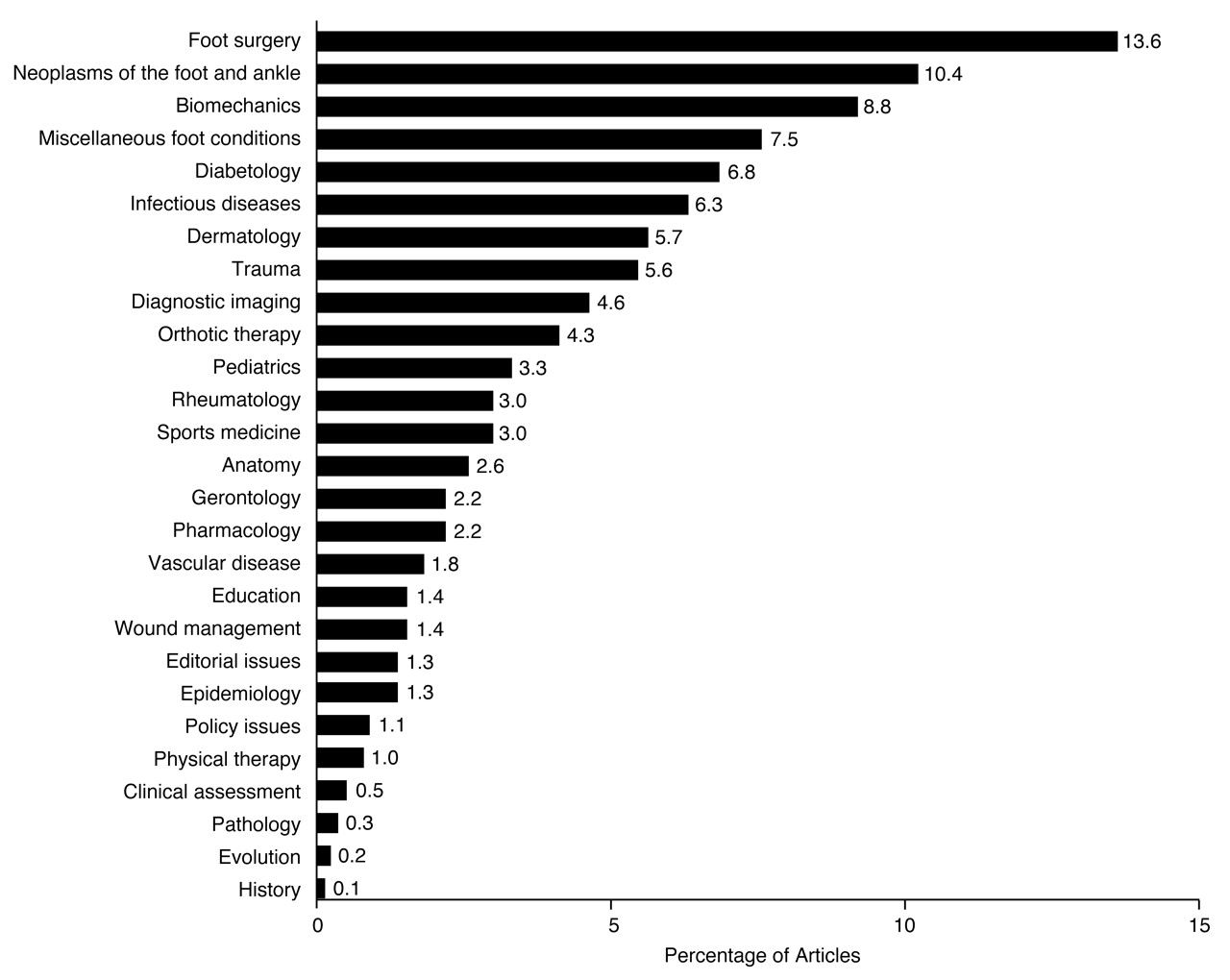
Figure 2.
Topics of articles published in JAPMA, 1991–2000.
Figure 2.
Topics of articles published in JAPMA, 1991–2000.
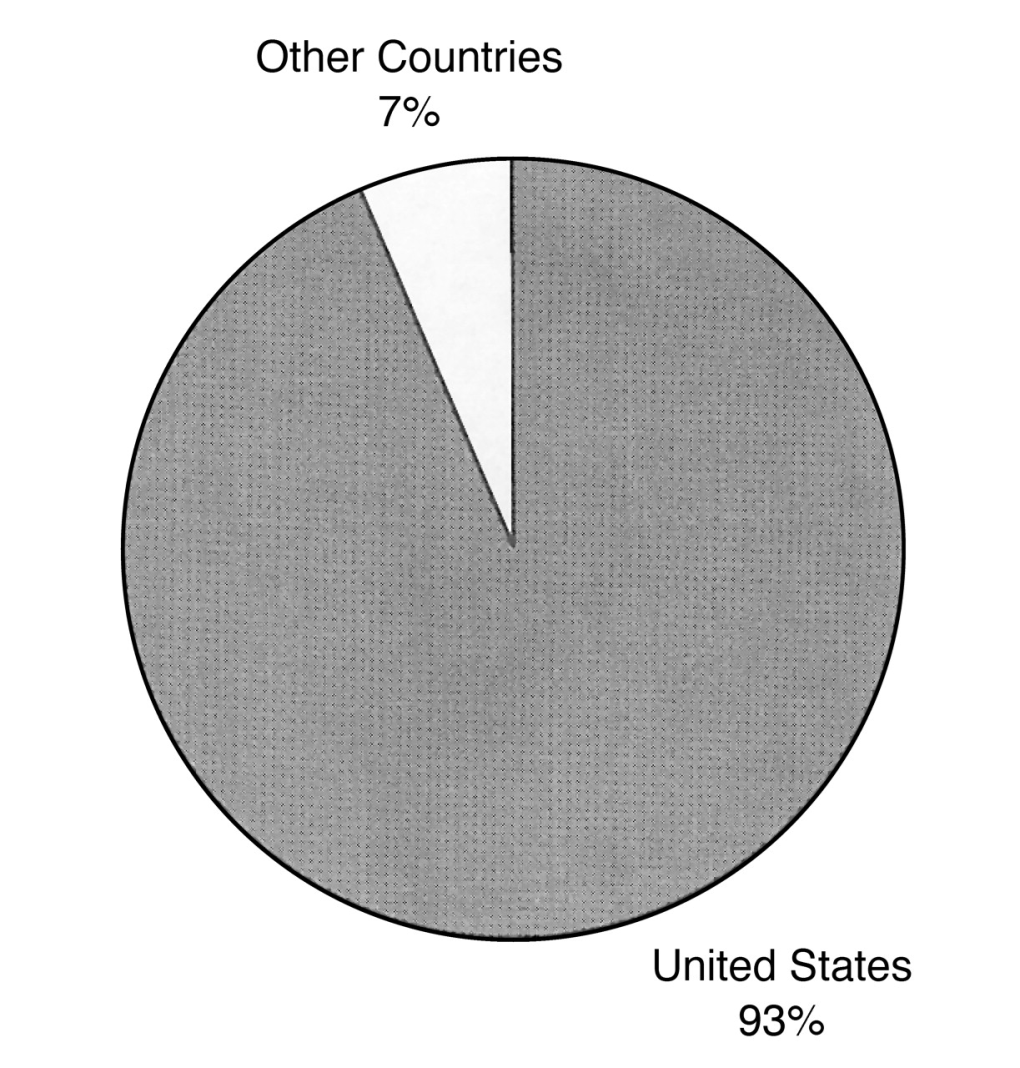
Figure 3.
Country of primary author.
Figure 3.
Country of primary author.
Figure 4.
Professional background of primary author.
Figure 4.
Professional background of primary author.
Figure 5.
Breakdown of each topic area by type of article.
Figure 5.
Breakdown of each topic area by type of article.
Figure 6.
Proportion of articles written by non-US authors from 1991 to 2000.
Figure 6.
Proportion of articles written by non-US authors from 1991 to 2000.
Figure 7.
Proportion of original research articles from 1991 to 2000.
Figure 7.
Proportion of original research articles from 1991 to 2000.