This study attempted to evaluate the efficacy of functional foot orthoses in the control of pain, disability, and activity in subjects with hemophilic joint destruction as defined by Johnson and Babbitt [
1].
Hemophilia is a bleeding disorder affecting males that is genetically transmitted by a sex-linked recessive gene by apparently normal females [
2-
4]. There are three major types of bleeding disorders: classical hemophilia or hemophilia A, in which there is insufficient factor VIII; hemophilia B, in which factor IX is low [
3,
5]; and von Willebrand’s disease, which is associated with prolonged bleeding and is caused by deficiencies of factor VIII, related antigens, and platelet factor [
3]. Only patients with hemophilia A were studied in this project.
The severity of hemophilia A varies from person to person. According to Gamble et al [
4], it can be divided into four levels: 1) mild, where the functional plasma level is between 20% and 60%; 2) moderate, where the plasma level is between 5% and 20%; 3) moderate severe, where plasma levels are between 1% and 5%; and 4) severe, where plasma levels are less than 1%.
Hemophilic arthritis is the most common feature of hemophilia, accounting for 85% of all episodes of bleeding [
2]. The most commonly involved joints are the knees, elbows, and ankles [
6,
7]. Gamble et al [
4] state: “During the second decade of life Haemoarthritis occurs more often in the ankle than in the knee.”
Heijnen [
8] reports that without the use of antihemophilia factor replacement therapy, approximately five joints will be affected with arthritis by the age of 20.
Arnold and Hilgartner [
5] staged hemophilic joints into five progressive degrees of deterioration based upon radiological findings. Johnson and Babbitt [
1] supported these radiological stage assessments with reference to range of motion. No literature was found relating to level of pain in the stages of joint degeneration, and this therefore represented a valuable area of research.
Foot orthoses of varying types have been used to control pain in hemophilic joints, mostly by splinting the joints and preventing as much motion at that joint as possible. A review of the literature failed to find any reference that scientifically validates the use of foot orthoses; in particular, no reference could be found on the use of functional foot orthoses in the treatment of hemophilic arthritis. This omission of research represents a valuable area of study.
The efficacy of functional foot orthoses has recently been questioned in the literature, yet the apparent benefits of this therapy have long been reported. In some recent pilot work carried out by the authors, hemophilic patients treated with orthoses have shown significant improvement in both joint function and pain level. The exact effect of orthoses on joint function is not yet clearly defined. Little literature is currently available that demonstrates the full effect of foot orthoses. This paper attempted to answer the question: Does the use of orthoses reduce the amount of pain experienced by subjects with hemophilia?
Methods
This study attempted to quantify the level of pain, disability, and activity before and after the use of functional foot orthoses in subjects with hemophilia A. It is part of a larger, more comprehensive study that reviews the range of motion of the joints of the lower limb, and some of the exclusion criteria in
Table 1 may at first appear inappropriate.
All subjects with ankle pain were evaluated as to their suitability to receive functional foot orthoses. Subjects with extremely limited joint range of motion (< 30° of ankle motion, < 10° of subtalar joint motion) were excluded from the study on the basis of the theory of how functional orthoses work [
9]; ie, the orthoses allow some degree of motion to occur in the foot.
Null Hypotheses
The following null hypotheses were tested:
1) Functional foot orthoses do not reduce ankle pain in subjects with hemophilia A.
2) Functional foot orthoses do not improve disability in subjects with hemophilia A.
3) Functional foot orthoses do not improve activity levels in subjects with hemophilia A.
4) Functional foot orthoses do not improve the overall foot function index score in subjects with hemophilia A.
Sixteen subjects with hemophilia A were recruited for the study on a voluntary basis. This was achieved through direct advertising and the presentation of talks to the Haemophilia Association of Western Australia.
Table 1.
Exclusion Criteria.
Table 1.
Exclusion Criteria.
Both feet of each subject were assessed as it was deemed possible that the arthritis would affect each ankle differently, leading to differing ranges of motion. There was, therefore, a potential difference in stage classification within the same subject.
Data on the individuals’ average (±SD) age (24 ±6.2 years); weight (average 65 ± 13.2 kg); and height (average 165 ± 5.6 cm) were collected by means of a self-reporting questionnaire, which was completed during the initial interview. A standardized technique was used to collect all foot function index data and information. To maintain the homogeneity of the study, exclusion criteria were established. Since the study attempted to collect baseline data, control over the subjects entering the study was deemed important. The exclusion criteria helped to improve the homogeneity of the study population and reduce the effects of pathological variants. Subjects were excluded from the study if they met any of the criteria listed in
Table 1.
Subjects with ankle pain were allocated to their appropriate stage of joint motion, described as follows. Stages 1 and 2: 56% to 90% of normal range of motion [
10]; Stage 3: up to 55% of dorsiflexion and plantarflexion; Stage 4: up to 44% of dorsiflexion and plantarflexion; and Stage 5: up to 22% of dorsiflexion and plantarflexion.
Functional foot orthoses were issued to each subject. The orthoses were standardized as to materials and design (4-mm polypropylene Root orthoses with a 4° rearfoot post) as first described by Root et al [
9]. The same experimenter took the negative plaster casts, and the same orthotic laboratory manufactured all of the devices.
Before the orthoses were issued, subjects were required to complete a Foot Function Index questionnaire outlined by Budiman-Mak et al [
11]. This questionnaire is a measure of foot pain and disability. It is a self-administered index consisting of 23 items divided into three subscales: the foot pain, disability, and activity subscales. Calculating the average of the three subscale scores provides a total foot function score. These scores are then used as an indication of any change in the patient’s condition. After wearing the orthoses for 6 weeks, subjects completed a second Foot Function Index questionnaire. The number of ankle joint bleeds during the 6 weeks was also determined.
All subjects were required to sign a freedom-of-consent document prior to participation in the study. This form outlined the purpose and risks of the research and indicated that the experiment was conducted within the guidelines for human experimentation set out by the National Health and Medical Research Council. Ethical clearance was also obtained from the Curtin University of Technology Human Research Ethical Committee.
To assure confidentiality, all subject information was coded by means of a coding system known only to the main researcher. All data will be securely retained for a 5-year period after the completion of this project.
Results
The data were analyzed by means of simple paired two-sample t-tests. No statistical analysis was carried out on the number of bleeds occurring during this time. However, all subjects reported a noticeable reduction of ankle bleeds coinciding with the intervention of functional foot orthoses.
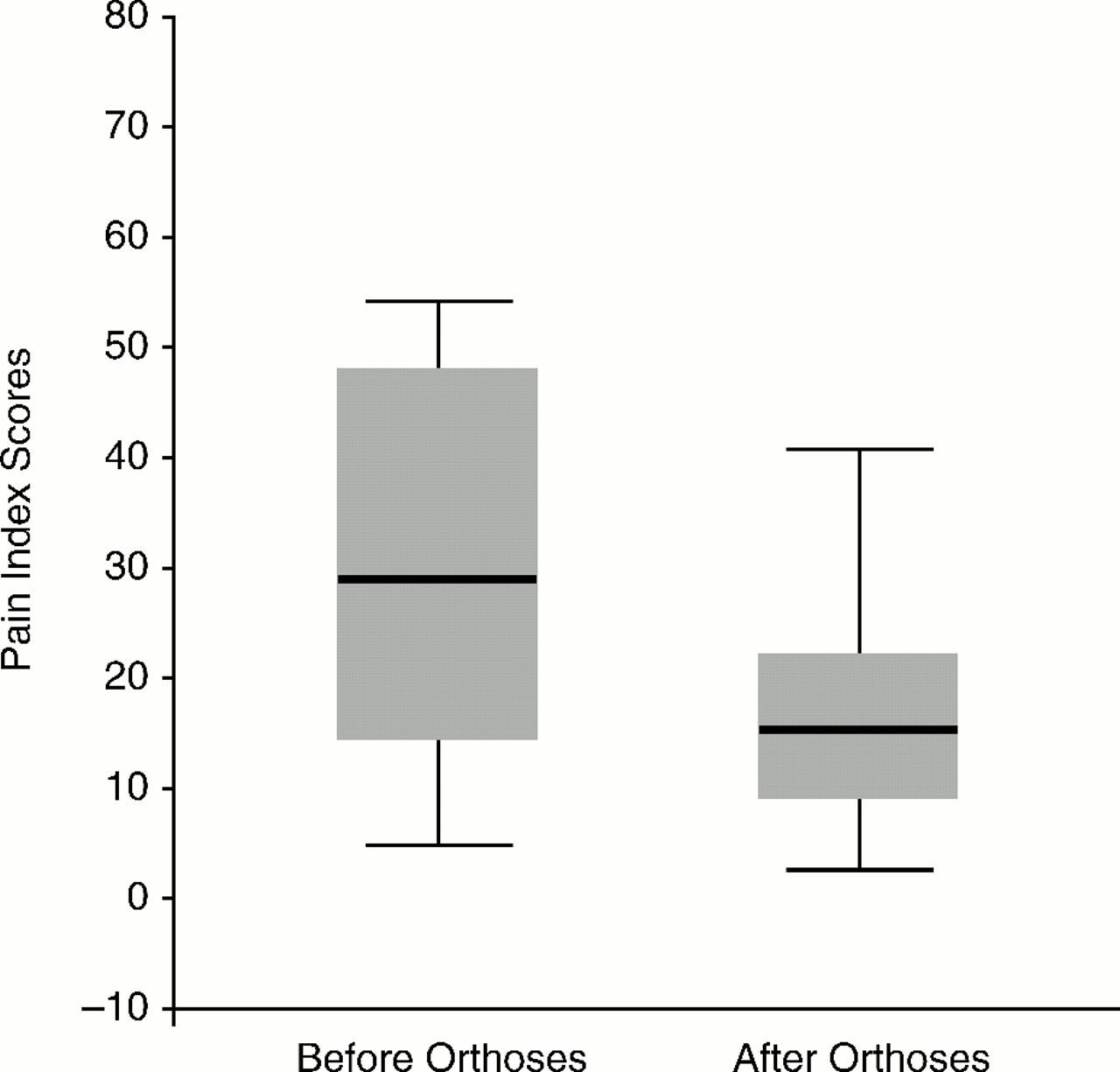
Figure 1 shows the before orthoses and after orthoses pain index. The foot pain index showed significant (
P < .05) reduction in the level of pain after the use of orthoses.
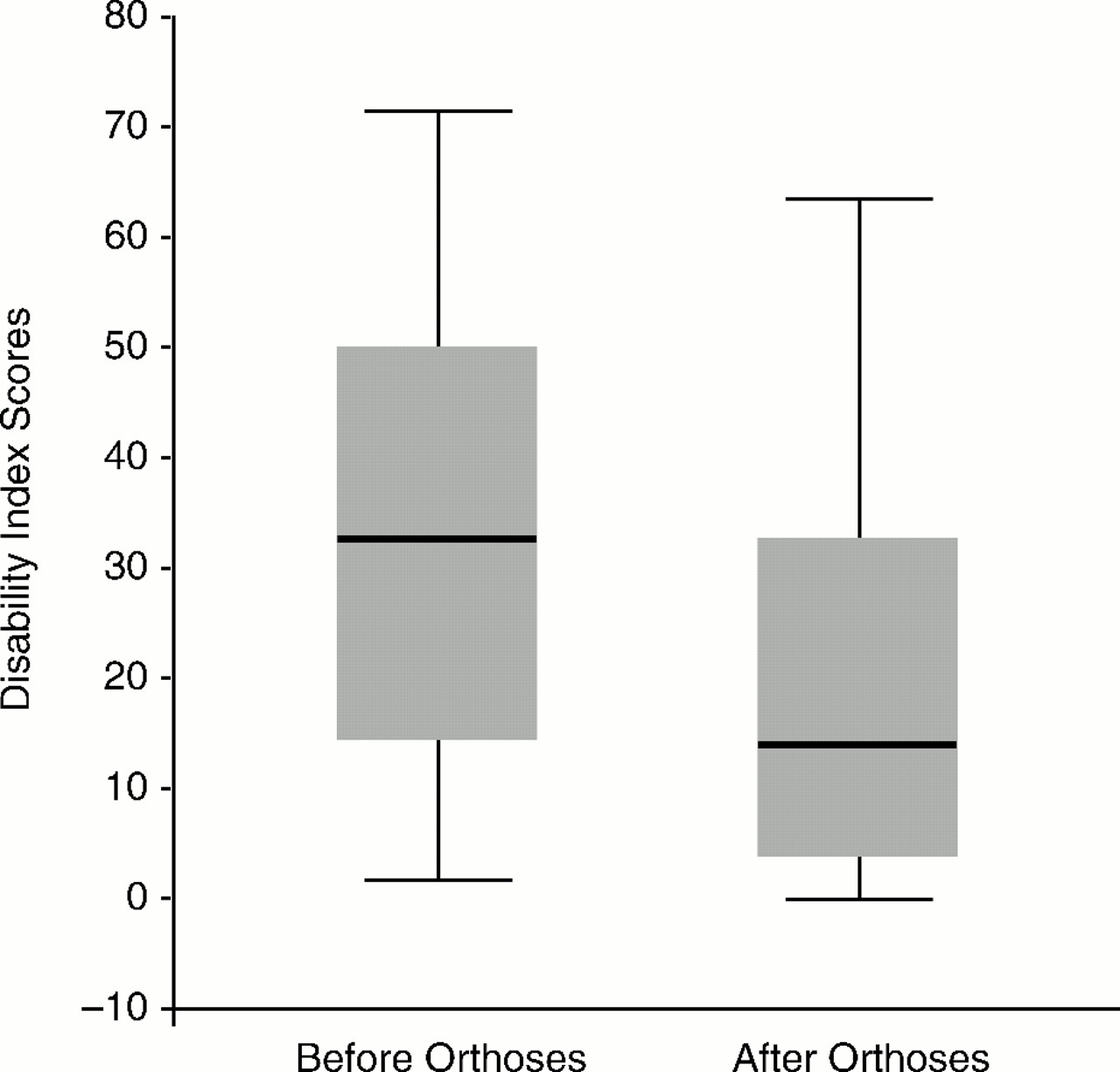
Figure 2 shows the before orthoses and after orthoses disability index. The disability index scores showed no significant improvement (
P > .05) after the intervention with orthoses.
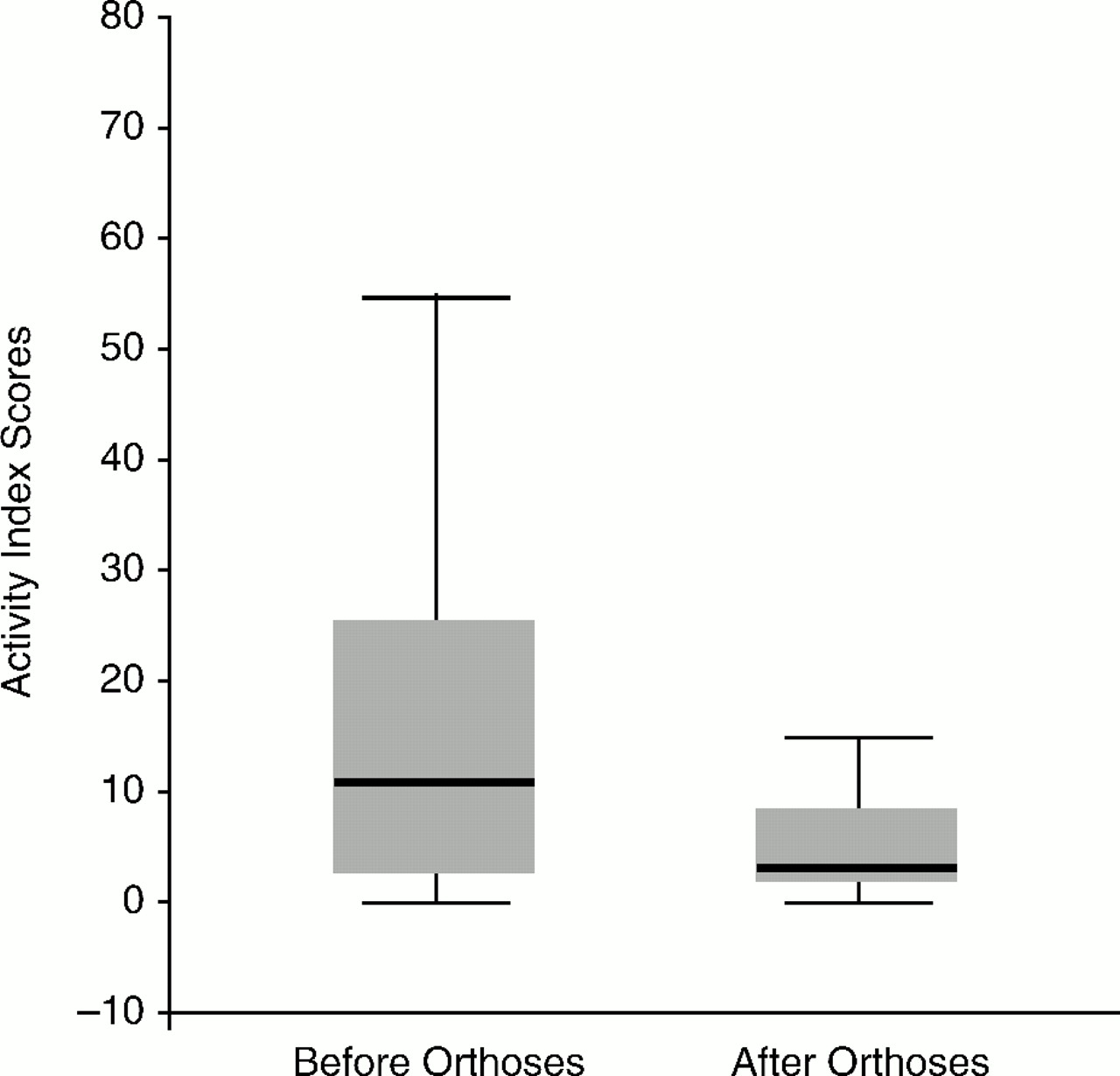
Figure 3 shows the before orthoses and after orthoses activity index. The activity index scores showed no significant improvement (
P > .05) after the intervention with orthoses.
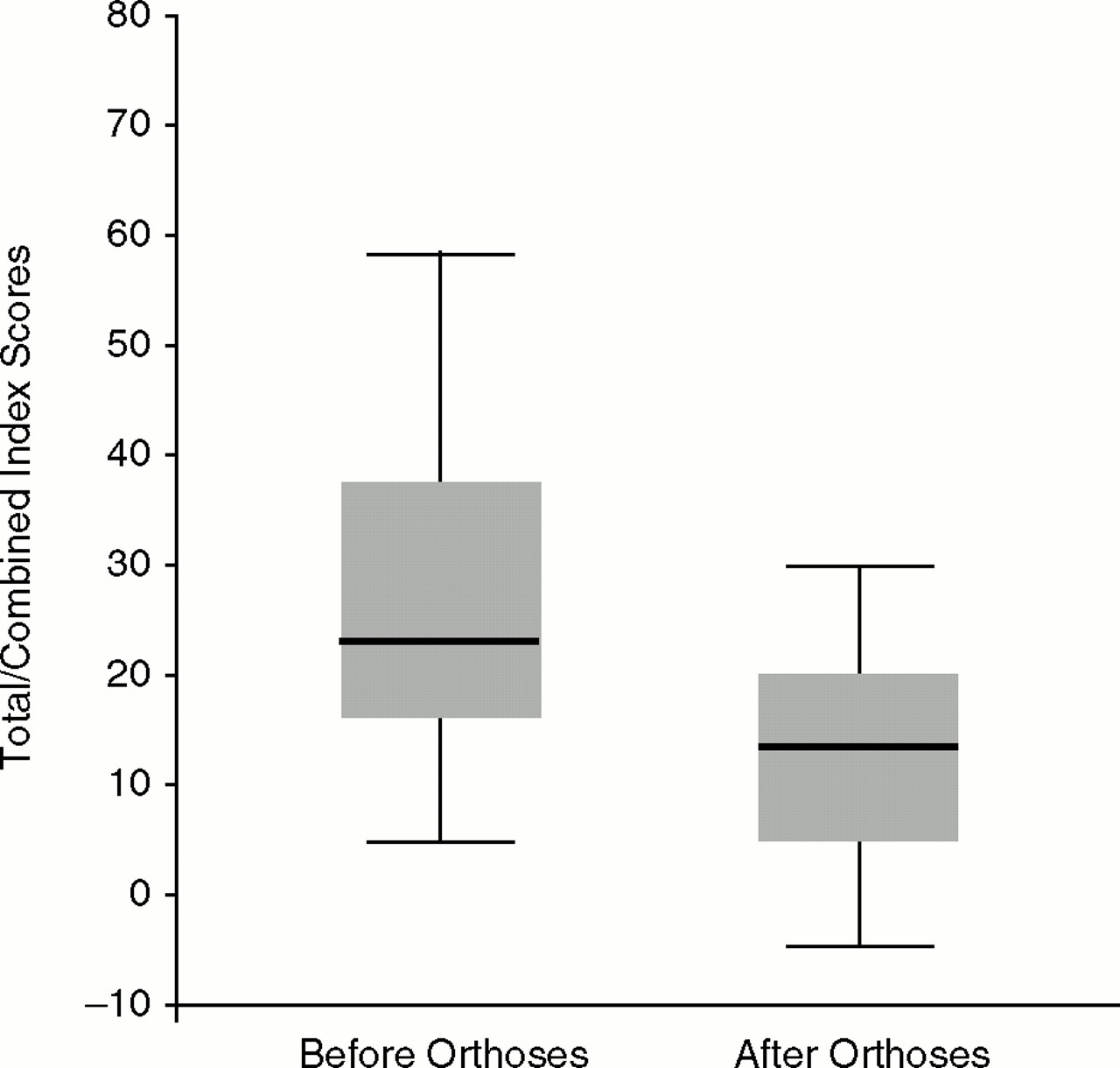
Figure 4 shows the before orthoses and after orthoses overall disability/pain index. The foot disability/pain index showed significant (
P < .05) reduction in all categories after the use of orthoses.
The study would therefore lead to the acceptance of null hypotheses 2 and 3 and the rejection of 1 and 4.
Figure 1.
The before orthoses and after orthoses pain index scores. Null hypothesis 1 is rejected at the P < .05 level, as significant improvement of pain levels is shown after the use of orthoses. The thick horizontal line represents the mean.
Figure 1.
The before orthoses and after orthoses pain index scores. Null hypothesis 1 is rejected at the P < .05 level, as significant improvement of pain levels is shown after the use of orthoses. The thick horizontal line represents the mean.
Figure 2.
The before orthoses and after orthoses disability index scores. Null hypothesis 2 is accepted at the P > .05 level, as no significant improvement is shown in the disability index after the use of orthoses. The thick horizontal line represents the mean.
Figure 2.
The before orthoses and after orthoses disability index scores. Null hypothesis 2 is accepted at the P > .05 level, as no significant improvement is shown in the disability index after the use of orthoses. The thick horizontal line represents the mean.
Figure 3.
The before orthoses and after orthoses activity index scores. Null hypothesis 3 is accepted at the P > .05 level, as no significant improvement is shown in the activity index after the use of orthoses. The thick horizontal line represents the mean.
Figure 3.
The before orthoses and after orthoses activity index scores. Null hypothesis 3 is accepted at the P > .05 level, as no significant improvement is shown in the activity index after the use of orthoses. The thick horizontal line represents the mean.
Figure 4.
The before orthoses and after orthoses total/combined index scores. Null hypothesis 4 is rejected at the P < .05 level, as significant improvement is shown in the total/combined pain/disability/activity index after the use of orthoses. The thick horizontal line represents the mean.
Figure 4.
The before orthoses and after orthoses total/combined index scores. Null hypothesis 4 is rejected at the P < .05 level, as significant improvement is shown in the total/combined pain/disability/activity index after the use of orthoses. The thick horizontal line represents the mean.
Discussion
This study found that the reduction of pain was a major effect of the orthotic intervention. This improvement was so significant that it dramatically affected the overall foot function index score for all subjects. All of the subjects in the study reported that the reduction of pain had a significant improvement on their lives. All 16 subjects reported a reduction of ankle bleeds during the period in which the orthoses were used. Anecdotally, 40% of the subjects reported a return to full-time work; 60% reported having more stamina and being more active. However, the Foot Function Index was not sensitive enough to support these self-reported results.
The link between ankle bleeds and pain levels is a major problem for subjects with hemophilia A; its importance to the patient has already been shown with self-reported improvements in health. The importance of the reduction in pain levels is dramatically seen when levels of use of antihemophilia factor are also reviewed. For example, in one subject 22,500 units of antihemophilia factor were used per month to control joint bleeds. After the intervention with orthoses, this was reduced to 15,000 units per month, clearly indicating an improvement in the number of joint bleeds. The reduction in the amount of antihemophilia factor used will result in considerable cost savings to Australia’s health budget. Thus, this work is highly significant in terms of patient health and health-dollar savings. Other factors may, of course, come into play with respect to the number of units of antihemophilia factor used by the patient. Also, a few patients reported an increase in the use of antihemophilia factor, mainly owing to accidental injury but unrelated to the use of the foot orthoses. How long the benefits of the orthoses can be maintained has yet to be determined and will be the focus of future research.
Conclusion
This study presents the initial findings of a much larger population study looking at the efficacy of functional foot orthoses and their effect on joint pain and mobility. The initial findings are highly significant, with both patient and health-funding issues showing positive outcomes. The need for more research is highlighted by the fact that several subjects in this initial study improved only marginally or regressed slightly with the intervention of functional foot orthoses. Knowledge of all factors associated with the potential for ankle and other joint bleeds is required before any definitive conclusion on the efficacy and use of functional orthoses can be reached.