There have been reports of taste disturbance or loss as a reversible side effect of oral terbinafine therapy; however, it appears that no objective taste testing was used to confirm these losses.[
1-
3] In a large Dutch study, more than 80 patients who related taste disturbances reported a full return within 4 months of discontinuing the therapy. Furthermore, this study stated that taste disturbances occur in 1 of 800 patients.[
3] In 1993, a Swiss study reported six reversible cases of taste abnormality. In 1996, a postmarketing survey of more than 10,000 patients found that reversible taste disturbances occurred in 0.6% of patients (mean taste recovery time, 42 days; range 2 to 186 days). A review of these studies and others failed to reveal any confirmation of taste deficit through objective taste testing.[
1-
3] The following is a case report of a 3-year taste disturbance associated with the use of oral terbinafine in a patient, who, in fact, exhibited normal taste threshold scores.
Case Report
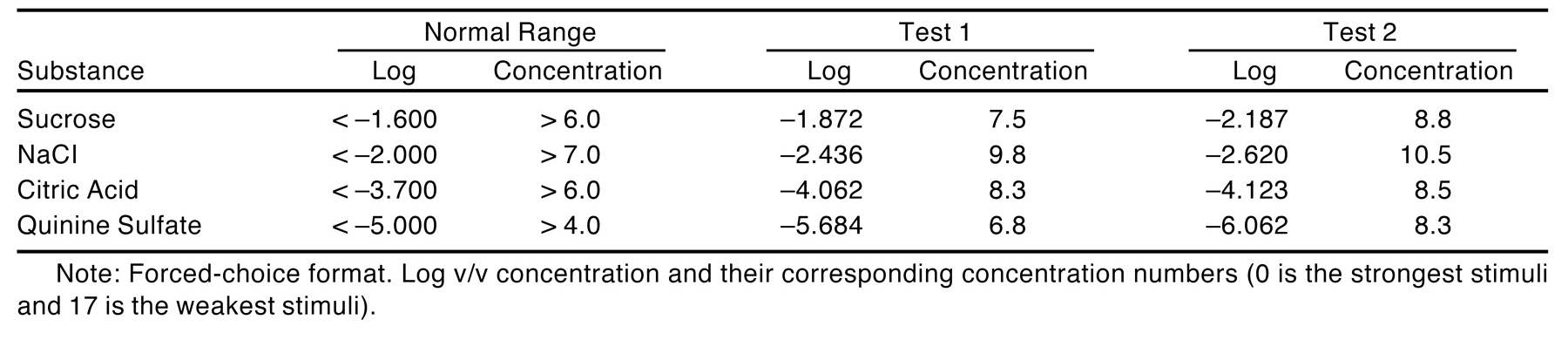
A 40-year-old woman with onychomycosis, previously treated with griseofulvin and itraconazole, was placed on oral terbinafine 250 mg daily. The patient related no side effects until approximately 2½ months into therapy, at which time she complained of generalized taste loss. A diminished taste of sweets, particularly an inability to differentiate between various types of soft drinks, bothered her. The terbinafine was discontinued and the patient was referred for formal threshold taste testing. Whole mouth known detection thresholds were established for sucrose (sweet), NaCI (salt), citric acid (sour), and quinine sulfate (bitter) using a standardized technique (Monell-Jefferson Taste & Smell Clinic, Philadelphia, Pennsylvania). The patient scored within the normal limits in all categories as adjusted for sex and age. During the next 8 weeks, a gradual partial taste improvement was subjectively noted. Taste testing was repeated 14 months later (
Table 1). Results were again normal, with little variation from the previous study (
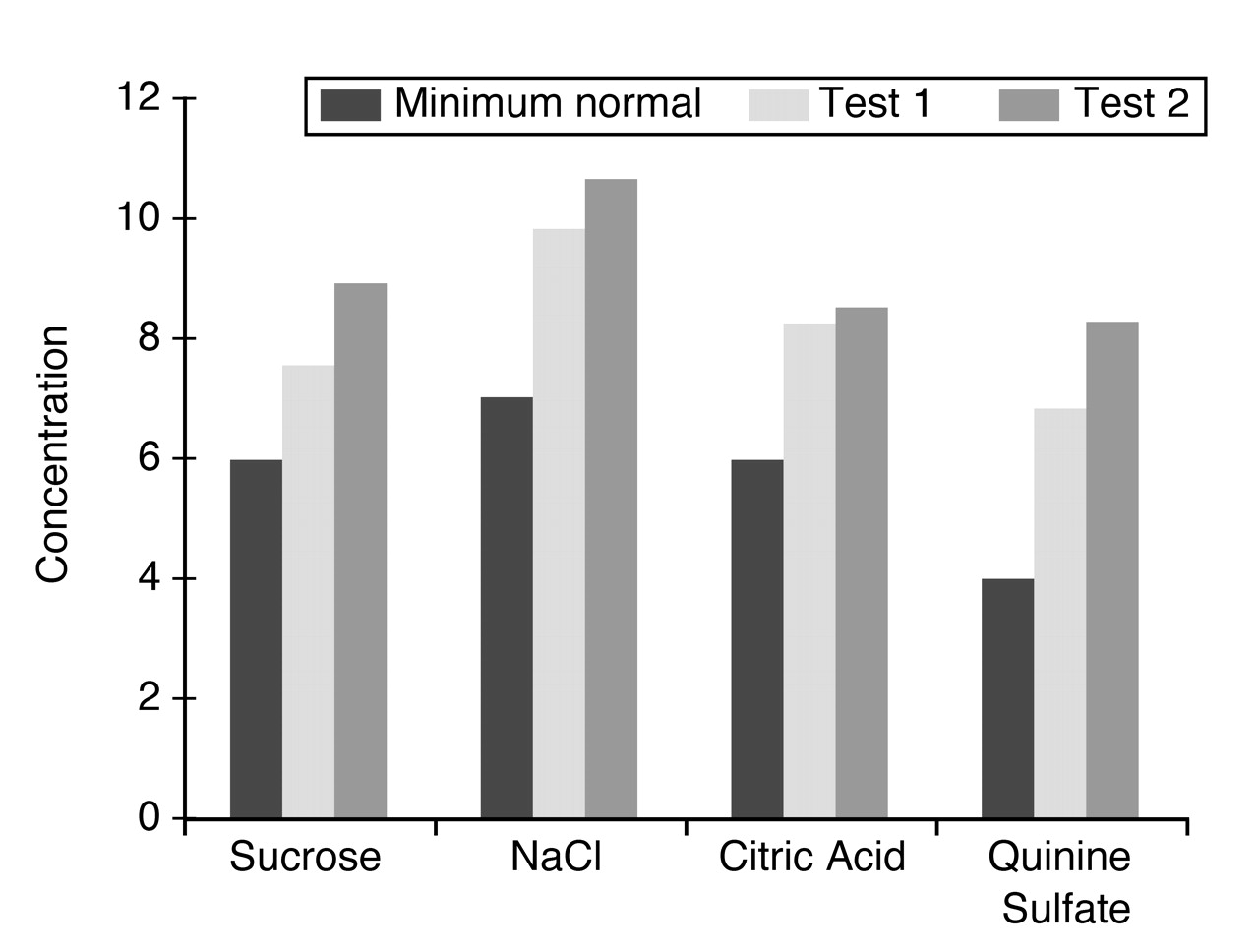
Fig. 1). Upon follow-up at 28 months, the patient estimated that she had experienced approximately 75% taste recovery of her general taste loss, but still had not recovered from her loss of sweet and hot, spicy food discrimination.
Figure 1.
Illustration of taste scores falling well above minimum normal cutoff on both test sessions. Minor variations of scores between the two test trials are also noted.
Figure 1.
Illustration of taste scores falling well above minimum normal cutoff on both test sessions. Minor variations of scores between the two test trials are also noted.
Table 1.
Formal Threshold Taste Results
Table 1.
Formal Threshold Taste Results
Discussion
While a review of the medical literature reveals numerous reports of transient taste disturbance associated with oral terbinafine, these disturbances have not been documented by formal taste testing. The present case of a patient who exhibited a long-standing taste disturbance with normal taste thresholds calls into question the involvement of the four cardinal tastes as the culprit. If true objective taste perceptions are unaltered, then other possibilities, such as smell deficits, must be considered. Complaints of taste loss often reflect loss of smell, not taste function.[
4] In this case, loss of hot, spicy perception may not indicate loss of basic taste, but perhaps an oral sensory loss (R.L. Doty, personal communication, 1999). The future use of formal threshold taste testing may be helpful in clarifying the involved mechanisms in terbinafine-related taste dysfunction.