Foot, leg, and back discomfort are common among people whose occupations require prolonged periods of standing, especially when the work areas consist of hard, unyielding concrete ground. [
1-
3] The effectiveness of shock-absorbing materials used as insoles to attenuate ground reaction forces experienced by weightbearing joints is well documented. [
4-
8] Insoles have been shown to reduce the impact of heel strike on the leg and low back by as much as 50% [
4] and to decrease symptoms of chronic low back pain [
8] and degenerative joint disorders. [
5] In jobs that require prolonged periods of standing, cushioned footwear insoles are recommended to help relieve back pain. [
9]
Although insoles and orthoses have been shown to reduce shock absorption in the laboratory and in athletes, their use in relieving foot discomfort in clinical trials of large groups of active working individuals has not been tested.
The purpose of the present study was to determine the effectiveness of customized insoles in relieving foot, leg, and back discomfort in a relatively healthy work group whose employment necessitates prolonged standing and walking. A secondary purpose was to determine the nature and extent of foot problems in a healthy work group (New York City Police Department) and to determine what individuals do to relieve foot discomfort.
Materials and Methods
The study group consisted of police officers from the New York City Police Department who either walked all day on foot patrol or otherwise led an active workday. Subjects were recruited from the New York City Police Department for participation in this study on a random and voluntary basis. Individuals had to be actively employed by the police department and had to spend a majority of their time on active duty standing or walking on hard surfaces. Police officers performing primarily sedentary work were excluded from the study. Also excluded were those under medical care for back, leg, or foot problems and individuals under medical care for systemic arthritis, neurologic disease, diabetes mellitus, or collagen vascular disease, as well as those taking oral medications for back, leg, or foot pain.
All participants completed a prewear questionnaire and were fitted for CompuSole (Flushing, New York) insoles. After approximately 2 weeks, the insoles were distributed, and police officers wore them in their customary work shoes for 5 weeks. At the end of the 5-week period, the subjects answered a postwear questionnaire that was similar to the prewear questionnaire.
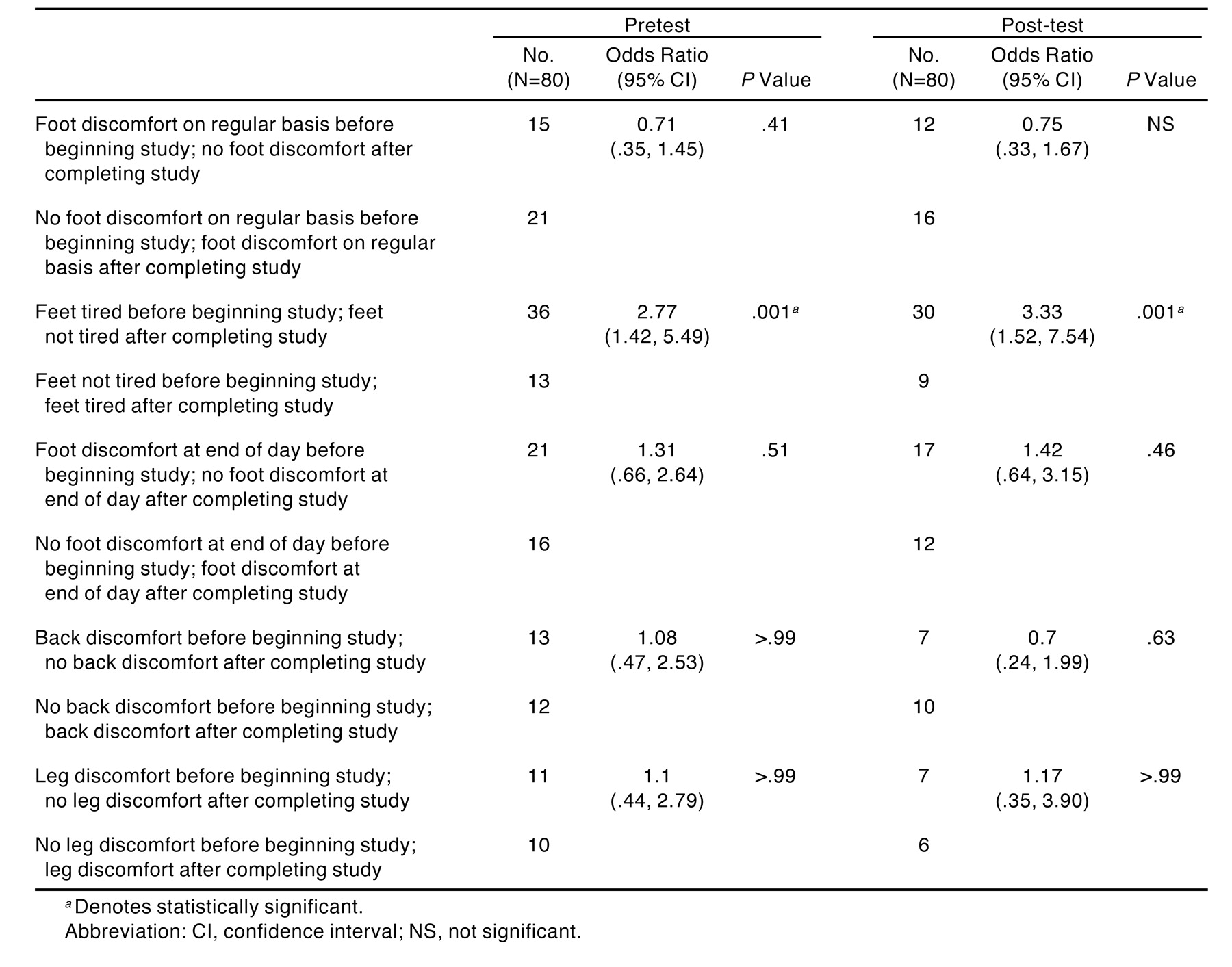
This study was performed by means of a paired design statistical analysis. Each officer served as his or her own control. In a paired design format, only discordant results contribute to the analysis (officers with no pain before and no pain after did not contribute to the analysis). McNemar’s test for correlated proportions was used to compare dichotomous responses to prewear and postwear questions. Odds ratios with 95% confidence intervals (CI), to assess the precision of the estimates, for paired data are presented, and two-tailed P values were computed. Statistical significance was assessed at P = .05.
The prewear and postwear questionnaires were designed jointly by the New York City Police Department and the New York College of Podiatric Medicine. The New York City Police Department collaborated in constructing questions that applied specifically to police officers. Therefore, previously constructed foot questionnaires were considered inappropriate. This study was approved by the Internal Research Board of the New York College of Podiatric Medicine.
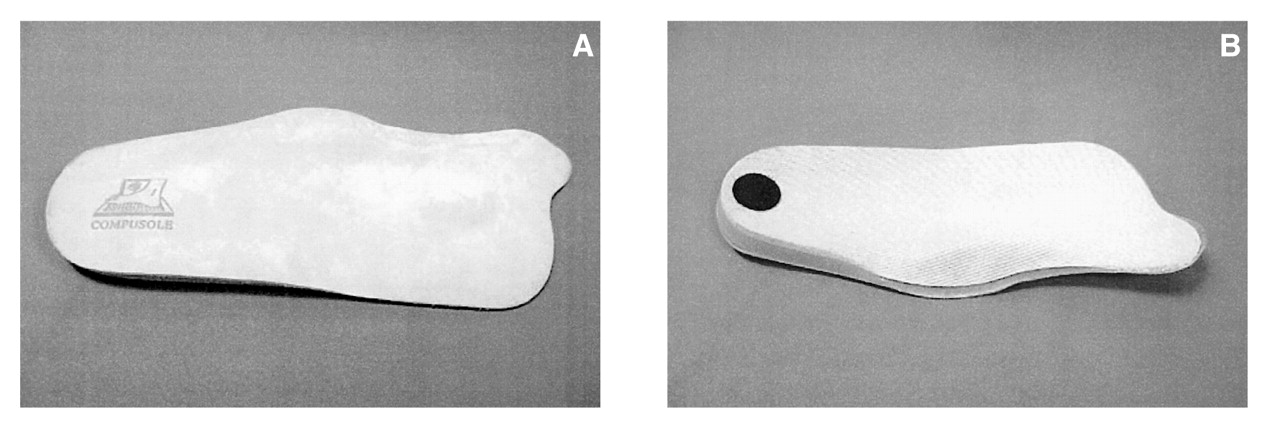
The CompuSole insole was selected for use in this study. This insole is a 3/
4–length customized foot insole composed of multilayer elastomeric materials with a suede leather top cover (
Fig. 1). A proprietary computerized pressure force plate, which delineates areas of high pressure, helps customize the insole. The insoles for each foot may be constructed differently according to the pressure reading. Components are frequently added to redistribute pressure in the metatarsals, arch, and heel. Modifications are built into the insole based on the results of the pressure analysis; these modifications consisted of four different scaphoid pads, four different metatarsal pads, and three different heel combinations.
Figure 1.
The CompuSole insole. A, Top surface; B, bottom surface.
Figure 1.
The CompuSole insole. A, Top surface; B, bottom surface.
Results
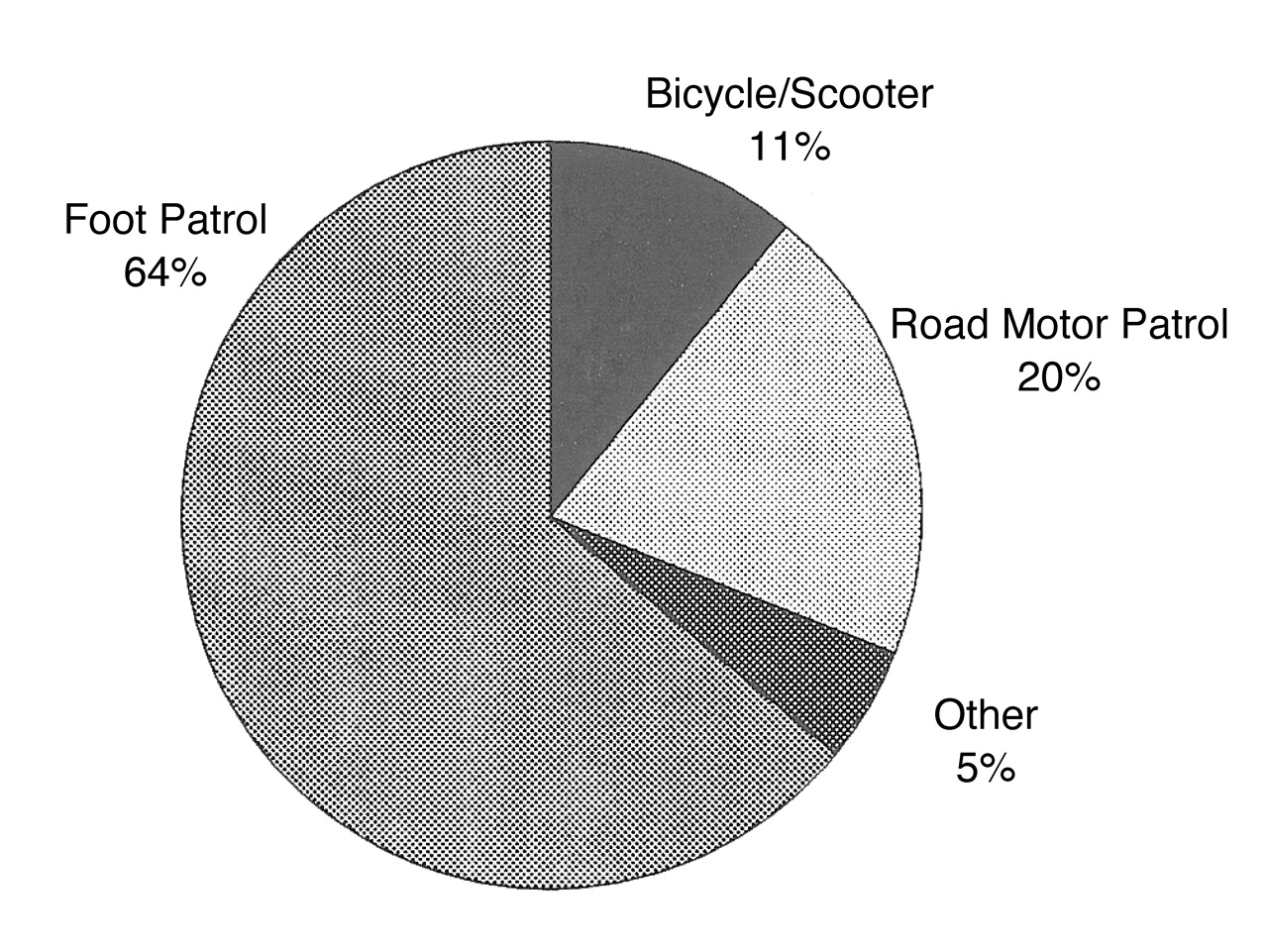
One hundred forty-eight police officers answered the prewear questionnaire and were fitted for insoles: 120 men and 28 women, with an average age of 32.5 years. Sixty-four percent of the police officers worked on foot patrol, which involved walking an average of 3.2 miles per day (
Fig. 2). Only 24% (36) were joggers or runners; this group exercised a mean of ½ mile per day.
Figure 2.
Police work of 148 police officers. “Other” includes administrative/clerical, central processing unit, highway, domestic violence, transit, community affairs, anticrime, youth officer, school safety, arrest processing, narcotics, and public safety.
Figure 2.
Police work of 148 police officers. “Other” includes administrative/clerical, central processing unit, highway, domestic violence, transit, community affairs, anticrime, youth officer, school safety, arrest processing, narcotics, and public safety.
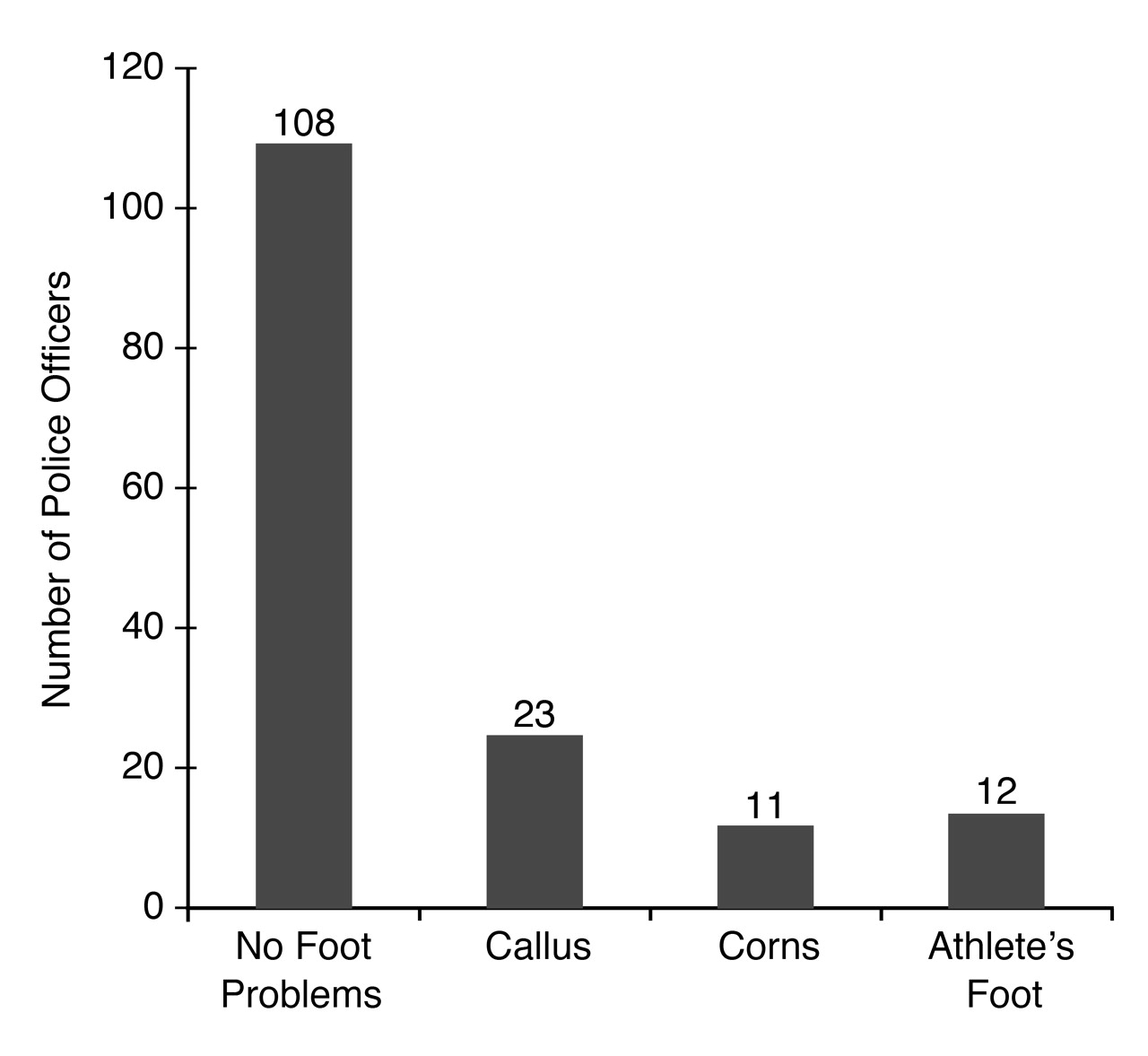
Approximately one-fifth (33) of the police officers in this study experienced foot pain or discomfort at the end of the day. Calluses, corns, or athlete’s foot were present in 7% to 16% of respondents (
Fig. 3). Approximately 18% (22) previously had sought treatment for a foot problem and 20% (30) had worn orthoses at one time in their life. Most individuals (95%) had never had foot, knee, or back surgery; however, two police officers had a history of back surgery and three had a history of foot or knee surgery.
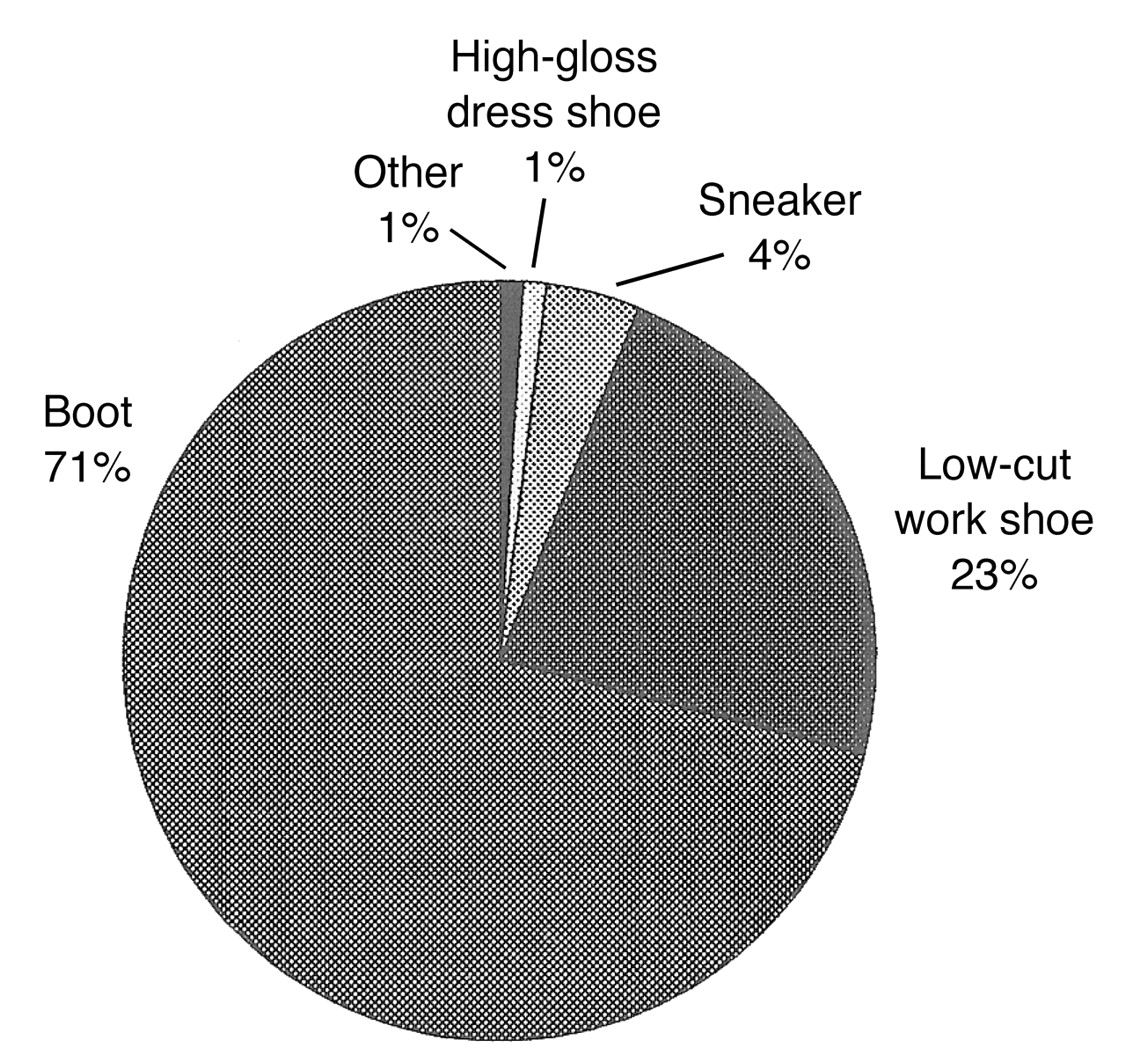
The majority of police officers wore a boot during the workday. However, low-cut work shoes, dress shoes, and sneakers were also worn (
Fig. 4). The average age of the officers’ shoes was 20 months.
Figure 3.
Foot problems in 148 police officers.
Figure 3.
Foot problems in 148 police officers.
Figure 4.
Footwear in 148 police officers.
Figure 4.
Footwear in 148 police officers.
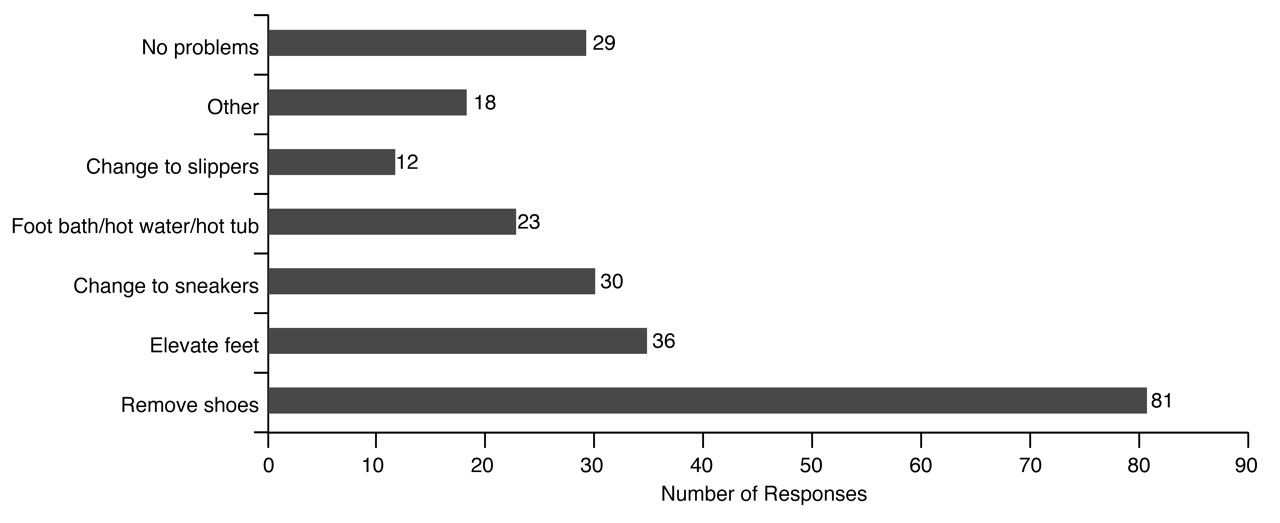
The police officers engaged in a variety of behavior to eliminate foot discomfort at the end of the day. The most common were to remove shoes (81), elevate feet (36), or change to sneakers (30) (
Fig. 5).
Figure 5.
Types of things police officers do to relieve foot pain (N=148). “Other” includes foot massage, pedicure, relaxation, sitting, foot lotion, walking it off, resting, loosening laces, and leaving work.
Figure 5.
Types of things police officers do to relieve foot pain (N=148). “Other” includes foot massage, pedicure, relaxation, sitting, foot lotion, walking it off, resting, loosening laces, and leaving work.
The postwear questionnaire was answered by 122 (82.4%) of the original 148 subjects. Of those completing the postwear questionnaire, 80 police officers (70 men and 10 women, with an average age of 33.4 years) wore the insoles for the entire 5-week study period (66% of those completing the postwear questionnaire). The remaining 42 police officers wore the insoles for an average of 2.4 weeks.
The remainder of the analysis is based on the 122 police officers who answered the prewear and postwear questionnaire. Police officers wore the insoles for an average of 7.15 hours per day. The insole fit comfortably in the shoe in 75% (91) of the subjects. An average break-in period of 4 days was required in 60% (73) of police officers.
McNemar’s test for correlated proportions was used to compare dichotomous responses to prewear and postwear questions. Odds ratios and 95% CI for paired data are presented, and two-tailed
P values were computed. Statistical significance was assessed at
P = .05 (
Table 1).
Table 1 shows that there was a significant reduction in foot fatigue at the end of the day after wearing the insoles. The odds ratio for paired data was 2.77 (95% CI, 1.22, 5.49), with an associated
P value of .001, which is significant. This means that for officers who experienced a change (positive or negative) in foot tiredness after the treatment, these changes were 2.77 times more likely to reflect an improvement in foot tiredness as opposed to a worsening in foot tiredness.
Sixty-eight percent (83) of the subjects stated that they noted improvement in discomfort after wearing the insoles and 60% (73) said they were more comfortable at work and were able to perform work activities with less discomfort after wearing the insoles. Participants rated their satisfaction with their insoles as 5.0 on a rating scale from 0 to 10, and 70% said they would continue wearing the insoles after the study was completed.
Discussion
First, it must be acknowledged that 42 police officers (approximately 34% of those completing the postwear questionnaire) did not wear the insoles for the entire 5-week study period. These officers did wear the insoles for an average of 2.4 weeks, however. The officers provided a number of reasons for not wearing the insoles, including discomfort or being unable to get used to them, changing shoes and being unable to wear the insoles in the new shoe, and just generally preferring not to wear them. Two officers stated that they changed shoes too frequently, and one cited losing the insoles. Other officers did not provide any reason for discontinuing the study and were unavailable for follow-up.
In the present study, customized cushioned insoles were effective in improving generalized discomfort in individuals who stand and walk for more than 75% of their workday. Customized insoles appeared to be most effective in relieving foot fatigue or “tired” feet. There was no improvement in discomfort in the back or legs after wearing the insoles when paired prewear and postwear questionnaires were matched (
Table 1).
Table 1.
Discomfort in Foot, Leg, and Back After Wearing the Insole.
Table 1.
Discomfort in Foot, Leg, and Back After Wearing the Insole.
In other studies, insoles have been found to reduce pain in the back, knee, and leg as well as in the foot. A study of 30 postal workers wearing insoles for a 3-month work period resulted in a reduction of 67% in perceived pain at the feet, knees, or back as measured by the Borg scale. [
10] However, subjects in that study had chronic complaints of pain in the feet, knees, or back that were not currently being treated by a physician. Furthermore, in their rating scale, the authors grouped foot, knee, and back pain together, so it is not possible to evaluate whether respondents truly had equal improvement in all three areas. A study of 96 women wearing polyurethane insoles for 5 weeks reported significant reduction in back, foot, and leg pain. [
1] This study also focused on individuals who already had established pain. Similarly, nursing students experienced a significant reduction in previously existing lower-back pain after wearing viscoelastic insoles for 5 weeks. [
2]
Constantly standing or walking on hard pavement and floors is considered to be a major cause of foot problems. [
2] Foot problems in people whose employment involves standing or walking all day are also frequently attributed to footwear. In a study of workers employed in a broad range of active work, and who were required to wear safety footwear that incorporated a steel toe cap, 91% of subjects reported one or more foot problems and most respondents blamed their foot problems on the safety footwear. [
11] In one study, approximately 50% of waitresses developed foot problems after 3 years on the job; most of the waitresses attributed their problems to the high-heeled shoes they were required to wear. [
12]
Police officers in the current study rated satisfaction with their insoles in the mid-level range: as 5.0 on a rating scale from 0 to 10. The level of comfort that subjects derive from shoe inserts has been clearly related to their softness and shape. [
13,
14] Although the CompuSole insole is composed of multilayer elastomeric materials, it is possible that the stiff work boots worn by the majority of police officers may have interfered with the comfort and effectiveness of the insole. Similarly, US Coast Guard trainees wearing stiff-soled boondocker shoes with either Spenco (Spenco Medical Corp, Waco, Texas) or Poron (Rogers Corp, Woodstock, Connecticut) insoles frequently rated the insoles as fair, although both insoles were effective in reducing lower-extremity injuries caused by friction and shock. [
15] In a study of Israeli army soldiers, the stiff-soled heavy Zohar army boots were superior to softer running and walking shoes in reducing tibial compression strain. [
16] However, stiff-soled work boots frequently used by the military and police department are likely to result in intrinsic foot problems. The localized foot discomfort created by the work boots is easily ameliorated by the addition of the soft insole.
Conclusion
The effectiveness of customized cushioned insoles in relieving postwork discomfort in New York City police officers was determined. One hundred twenty-two police officers from the New York City Police Department, walking an average of 3 miles per day, wore CompuSole insoles for up to 5 weeks for an average of 7 hours per day, mostly in their work boots. There was a significant reduction in tired feet at the end of the workday in police officers wearing the insoles; however, there was no improvement in discomfort in the back or legs. Sixty-eight percent noted improvement in foot discomfort at the end of the workday after wearing the insoles, and 60% said they were more comfortable at work and were able to perform activities with less discomfort when wearing the insoles. Seventy percent said they would continue wearing the insoles after the study was completed. Therefore, the CompuSole insole is a simple cost-effective measure to relieve postwork discomfort in individuals who stand or walk all day on the job.