Cutaneous squamous cell carcinoma affects approximately 100,000 people in the United States each year, a large majority of them whites. It is the second most common skin cancer in whites, after basal cell carcinoma [
1]. Although this skin cancer is most prevalent in whites, it has also been documented in patients of other races [
2]. Squamous cell carcinoma is a slowgrowing skin cancer that steadily invades nearby tissues and often metastasizes [
3]. Predisposing factors include sun exposure, tar and oils of tobacco, burns, radiation, drainage from osteomyelitis, and ulcerations [
1]. This condition is considered a low-grade malignancy, but according to a 1994 report from the Mayo Clinic [
4], if it is not detected early, or if it is not treated, it may spread to the lymph nodes, as it does in 2% to 20% of cases. Most literature reports of squamous cell carcinoma document cases in fair-skinned individuals who have had excessive sun exposure. It has been reported that of all cases of squamous cell carcinoma, 84% are found in the head and neck area; of cases involving the lower extremity, only 2.3% involve the foot [
5]. A review of the literature revealed various presentations of foot ulcerations that developed into squamous cell carcinoma, also termed Marjolin’s ulcer. The majority of these ulcers affect the plantar aspect of the foot. It has been shown that Marjolin’s ulcers involving the digits are rare [
6].
Case Report
A 75-year-old white man with type 2 diabetes mellitus presented to the Columbus Veterans Affairs Outpatient Center of Ohio with an ulcer on the right hallux. The ulcer was located at the nail bed, and it had first appeared 30 years earlier, after the patient dropped a soft-drink bottle on the toe. At the time of injury, the nail became detached, and it was subsequently removed. The nail grew back, later falling off to reveal an ulcer at the surface of the nail bed. The nail grew back again and was finally removed approximately 10 years prior to presentation. The patient had been given a diagnosis of osteomyelitis of the distal right hallux several months before presenting to the authors.
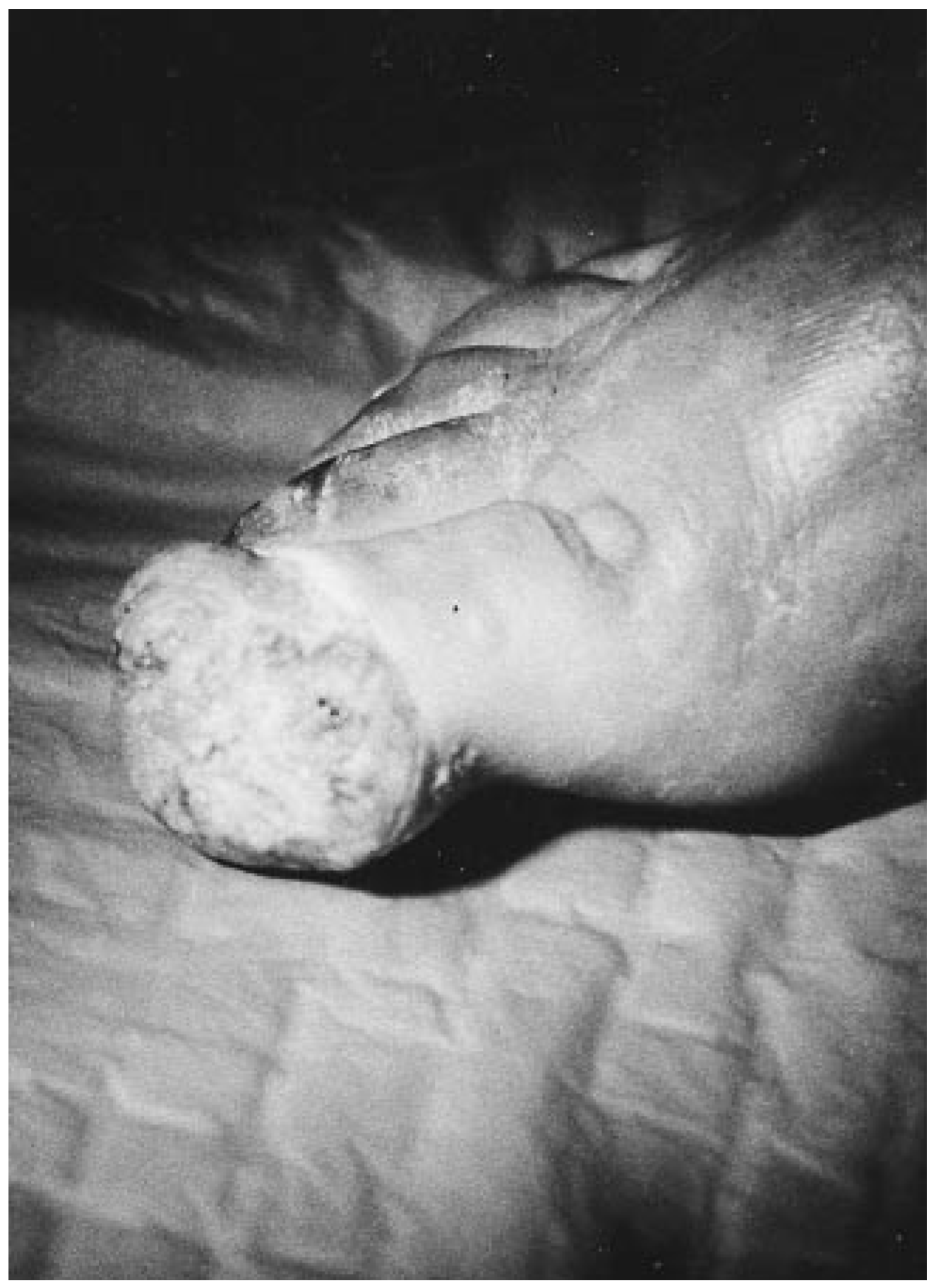
Physical examination revealed a 2.0 × 3.0-cm ulcer on the dorsal distal aspect of the nail bed region of the right hallux. The ulcer appeared verrucous and bulbous, with a base of granular and fibrotic tissue. There was a hyperkeratotic rim with edema, malodor, and serous drainage, but no surrounding erythema (
Figure 1). Pulses were nonpalpable in the lower extremities, and there was also 3+ pitting edema bilaterally. Doppler ultrasonographic examination, with a hand-held device, demonstrated biphasic patterns of the posterior tibial and dorsalis pedis pulses bilaterally. Examination of the superficial inguinal nodes revealed no lymphadenopathy. Testing with a 5.07 Semmes-Weinstein monofilament revealed no sensory response in either foot. The lungs were clear, and the heart had an irregular rate and rhythm (which the patient’s primary physician was monitoring).
Tissue culture findings of the wound revealed gram-negative rods, Enterococcus, and Propionibacterium. The fungal culture revealed no saprophytes, dermatophytes, yeasts, or molds. The results of the laboratory tests were unremarkable except for low hematocrit and hemoglobin levels and elevated levels of blood urea nitrogen, creatinine, and blood glucose.
Previously obtained radiographs taken at different times yielded inconsistent findings. A nuclear threephase bone scan was obtained and revealed a hot area at the right hallux, a finding consistent with osteomyelitis.
On the basis of the presumed osteomyelitis, amputation was planned. The patient was being prepared to have the affected toe amputated when he suffered a stroke. His physical condition delayed surgical treatment.
Subsequently, the patient’s ulcer increased in size and changed in appearance to a more verrucous lesion. The authors’ differential diagnosis of the ulcer included osteomyelitis, squamous cell carcinoma, verruca, and tuberculosis of the bone. A biopsy revealed infiltrating, focally keratinizing, poorly differentiated squamous cell carcinoma. A hallux disarticulation at the first metatarsophalangeal joint was performed on the right foot.
Postoperative Pathologic Findings
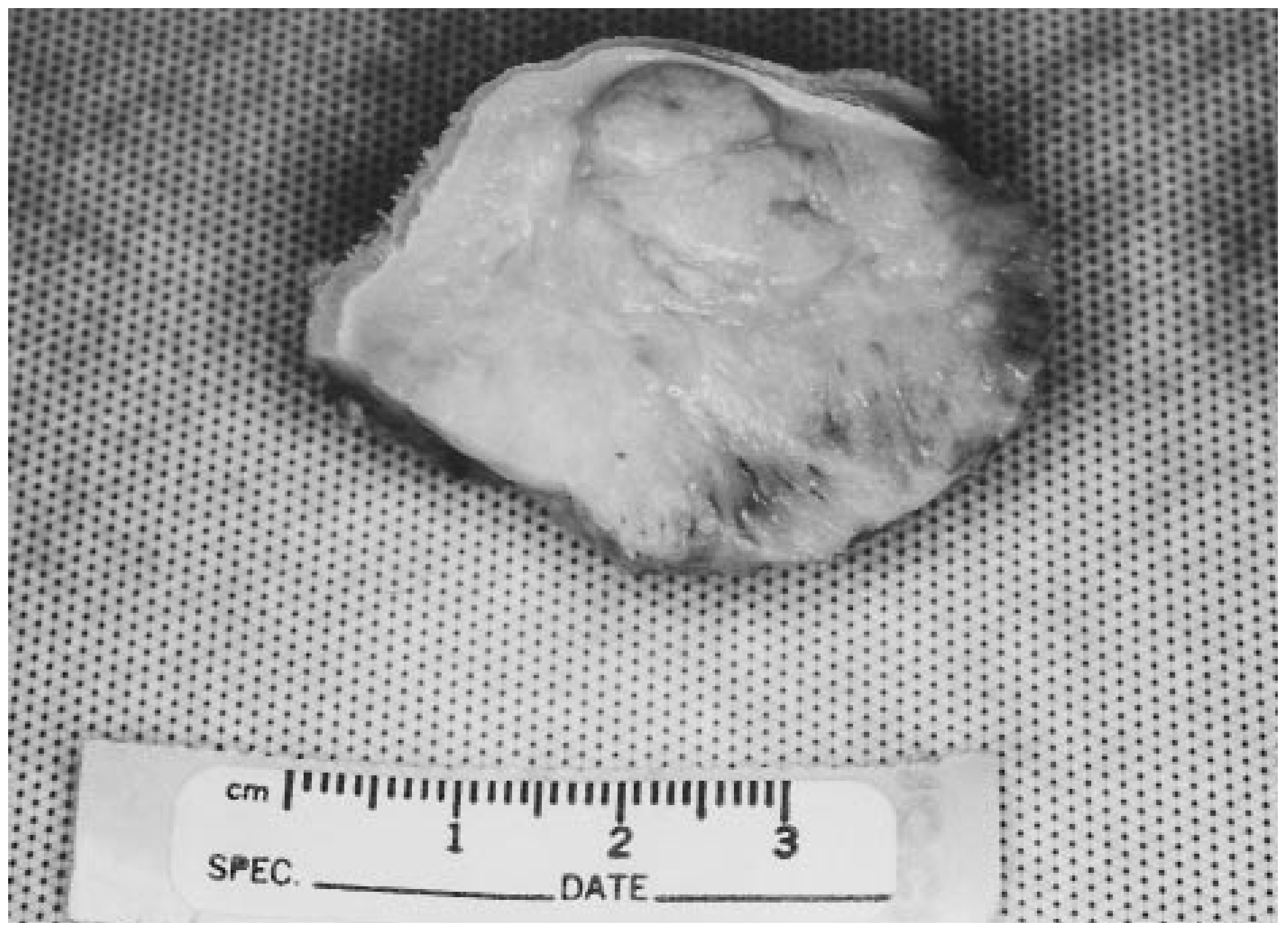
The distal two-thirds of the specimen consisted of a large (6.5 × 5.5 × 3.5-cm) ulcerated, fungus-like tumor that was grayish pink in color and had destroyed the entire nail. When the lesion was examined in crosssection, it appeared to extend through the bone and to involve the entire thickness of the hallux (
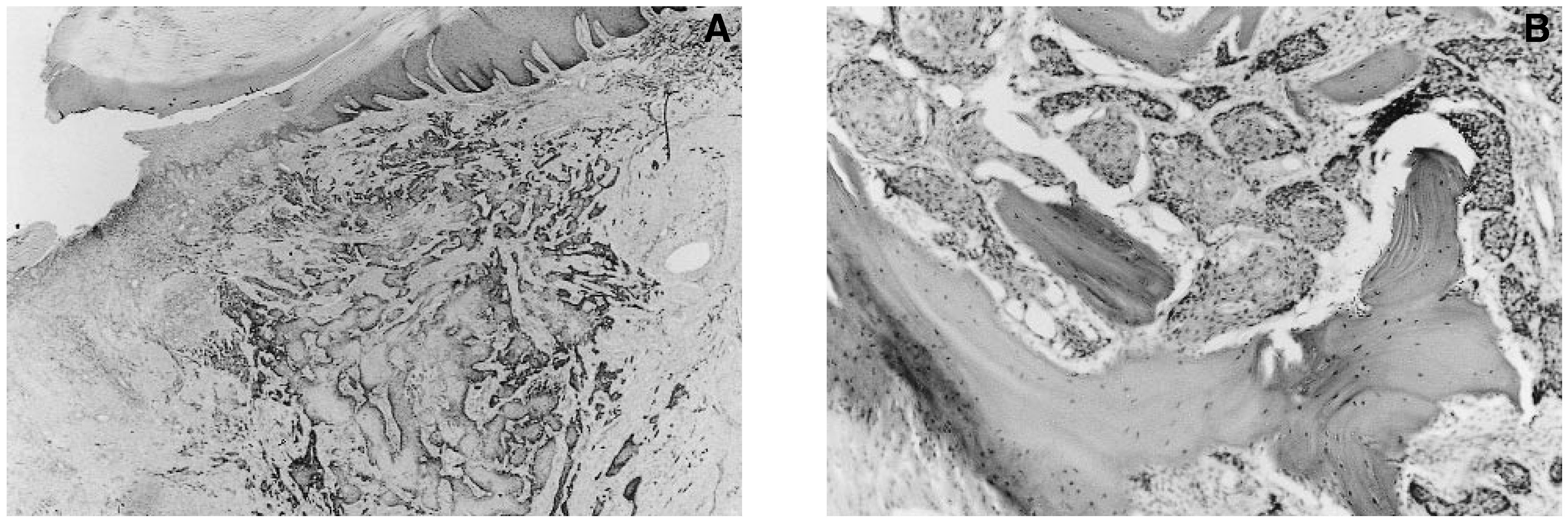
Figure 2). Microscopic examination revealed that the tumor was an invasive well-differentiated and moderately differentiated, ulcerated squamous cell carcinoma that invaded the entire thickness of the toe and infiltrated the bone. The sheets and irregular masses of the malignant squamous cells were deeply invasive and had many keratin squamous pearls. Mild cytologic atypia was noted (
Figure 3).
Discussion
Squamous cell carcinoma is a malignant neoplasm of the surface epithelium. The case reported here involved invading tumor masses of mature and atypical squamous cells with varying degrees of atypia, keratinization, and mitosis. Squamous cell tumors are graded 1 to 4, depending on the proportion of differentiated cells, the degree of atypia, and the depth of penetration and the architectural patterns of invasion. The different fields in a tumor may show different patterns and differentiation; thus the grading is based on the least-differentiated portion [
7].
Cutaneous squamous cell carcinoma has a 95% cure rate when detected and treated early. However, when it is not detected at an early stage, aggressive treatment is needed. The patient in this study had a hallux disarticulation at the metatarsophalangeal joint of the right foot. The sesamoids were removed, as well as the articular surface of the first metatarsal, to preserve the osseous integrity. The pathology report revealed that the margins of the specimen were infiltrated by tumor, indicating further spread of the disease proximally. The patient was immediately referred to the radiation oncology department. The patient has been lost to follow-up, but several telephone conversations with home caregivers revealed that the wound was healing and the patient was doing well. The patient has continued to consult a radiation oncologist.
Although the surgical treatment protocol followed in this case was appropriate, it may have been better to perform a frozen section examination and possible further amputation or Mohs’ surgery. If a frozen section of the margin is removed for examination and the margin is found to contain tumor, immediate resection or follow-up resection is required. An alternative to this treatment is Mohs’ surgery. When surgical amputation is being planned, this technique may prove to be superior. Mohs’ surgery requires one physician to serve as both surgeon and pathologist. The cancerous tissue is removed in stages and immediately examined microscopically to ensure that the cancer is completely removed. This is considered to be the best treatment for head and neck cancers for which prior treatments have failed. This treatment is associated with higher cure rates than any other cancer treatment modality (up to 99%) and the lowest chance of recurrence of the cancer. After complete excision of the cancerous lesion, local reconstruction is performed. Although this type of excision is recommended for cases of carcinoma in the head and neck region, it has been shown to be successful in the foot [
5]. Mohs [
8] reported that cutaneous squamous cell carcinoma of the foot and toe has a 71.4% cure rate.
When a lesion has spread locally, the best treatment is excision of the proximal tissue. If the proximal spread of the affected tissue extends beyond the point at which local excision can be effective, or if a patient refuses further amputation, there are alternative treatments that may be considered. These alternative treatments include radiation and chemotherapy. However, prevention of cutaneous squamous cell carcinoma through close follow-up of chronic ulcers is always preferable.