Many different types of procedures are used to alleviate first metatarsophalangeal joint pain due to trauma, hallux valgus, and hallux limitus; among these procedures are capital or base osteotomies, joint arthroplasty, cheilectomy, joint replacement, and arthrodesis [
1,
2,
3]. Joint preservation may be achieved with cheilectomy or capital or base osteotomy. Jointdestructive procedures (procedures that remove part or all of the original joint) include Keller arthroplasty, arthrodesis, and joint replacement (implant). A patient’s age, activity level, bone stock, and concurrent deformities must be taken into consideration in the decision whether to use an implant [
1,
2,
4,
5]. The goals of joint prosthesis are to correct deformity, to restore or improve motion, and to relieve pain [
1,
4,
56]. Complications and disadvantages of joint prosthesis include bony overgrowth, resorption or fragmentation around the implant system, foreign body reaction, subchondral cyst formation, malalignment of the joint, short lifespan of the implant, and relative difficulty of the procedure, as compared with other first metatarsal surgical procedures [
1,
4,
5]. In relatively mild cases, osteotomy procedures may be considered [
1,
2]. Implants have been used most successfully in patients who had significant arthritis of the joint and in patients in whom a pain-free joint was unattainable with joint-preservation techniques.
Case Report
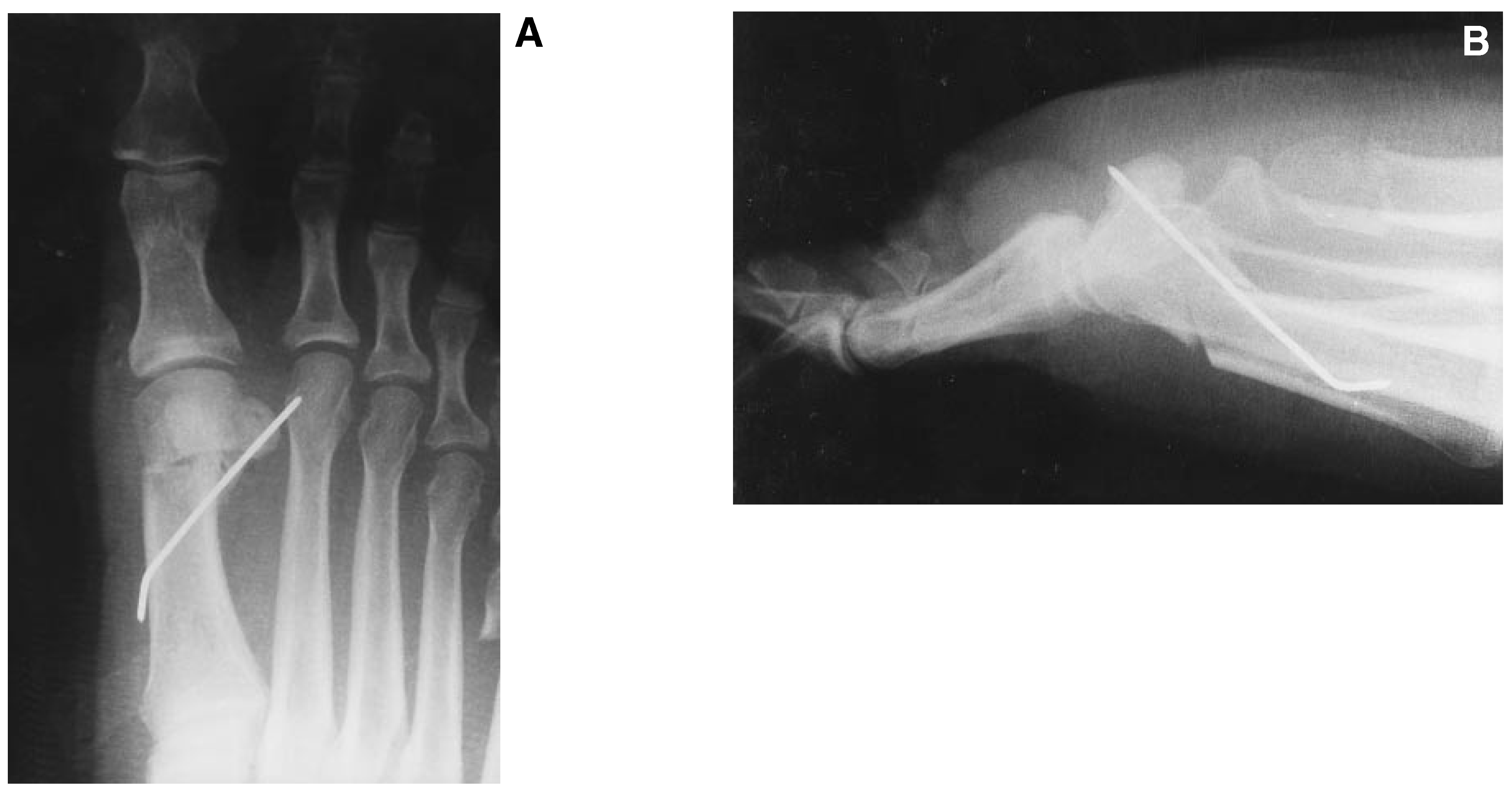
A 40-year-old woman presented to Sheehan Memorial Hospital in Buffalo, New York, in March 1991 with the chief complaint of a painful bunion of the first metatarsal of her right foot. Her medical history at the time of initial presentation was unremarkable except for an allergy to pentazocine lactate; she also had a history of tobacco use and alcohol consumption (two beers per day). The patient denied use of any medications. Her surgical history was significant for an osteotomy for treatment of a tailor’s bunion of the left foot. Physical examination revealed intact neurovascular and musculoskeletal systems, a moderate hallux abducto valgus deformity, hammer toes (second through fourth metatarsals) with plantar lesions, and a tailor’s bunion of the right foot. An anteroposterior radiograph revealed a first intermetatarsal angle of 13°, a hallux abductus angle of 26°, a proximal articular set angle of 24°, a sesamoid position of 5, a metatarsus adductus angle of 10°, good bone stock, and no osteophytes (Fig. 1). Preoperatively, the laboratory data, electrocardiogram, and chest radiograph results were all within normal limits. On March 22, 1991, the patient underwent an Austin bunionectomy with a buried 0.045 Kirschner wire, after which she was placed in a cast and instructed to remain nonweightbearing. Postoperative radiographs revealed a plantarly displaced capital fragment with unstable fixation (Fig. 2). Subsequently, the patient developed pain from the buried Kirschner wire, and 6 weeks after the original procedure she underwent a second procedure to remove the Kirschner wire. The patient was then placed in a surgical shoe, and physical therapy to increase the range of motion of the first metatarsophalangeal joint was begun.
Figure 1.
Preoperative anteroposterior weightbearing radiograph revealing a moderate increase in the intermetatarsal angle and good bone stock.
Figure 1.
Preoperative anteroposterior weightbearing radiograph revealing a moderate increase in the intermetatarsal angle and good bone stock.
Figure 2.
Postoperative radiographs following Austin bunionectomy. A, Anteroposterior view demonstrating poor fixation and lateral gapping of the capital fragment. B, Lateral view demonstrating plantarflexion of the capital fragment.
Figure 2.
Postoperative radiographs following Austin bunionectomy. A, Anteroposterior view demonstrating poor fixation and lateral gapping of the capital fragment. B, Lateral view demonstrating plantarflexion of the capital fragment.
At follow-up clinic visits, the patient continued to have pain with active and passive range of motion of the first metatarsophalangeal joint, as well as forefoot edema. Five months after the initial procedure, radiographs and computed tomographic scans showed bone callus with only partial healing of the first metatarsal osteotomy site. At this time, a third procedure was used to repair the delayed union of the first metatarsal. Intraoperatively, the head of the first metatarsal was noted to be displaced plantarly and only partially fused. The affected area of bone was removed by means of en bloc resection, and the capital fragment was placed in good alignment and secured with Kirschner wires (Fig. 3). A cast was applied and worn for 2 months. Radiographs 1 month postoperatively did not show definite bone callus at the surgical site; therefore, use of the EBI bone stimulator system (EBI Corp, Parsippany, New Jersey) was instituted.
Figure 3.
Postoperative radiograph following removal of affected bone with Kirschner-wire fixation.
Figure 3.
Postoperative radiograph following removal of affected bone with Kirschner-wire fixation.
At follow-up clinic visits, the patient was noted to have walked on the cast, and she admitted that she did not use the bone stimulator on a daily basis as instructed. Radiographs 2 months postoperatively revealed partial healing of the repaired osteotomy. At this time, the Kirschner wires were removed and physical therapy was begun. Use of the bone stimulator was continued for another 7 months and no further changes were noted on serial radiographs. Eleven months following surgery for the delayed union, bone scintigraphy revealed marked uptake around the first metatarsophalangeal joint, with increased perfusion to the osteotomy.
The first metatarsal osteotomy site eventually healed; however, the patient continued to experience pain in the joint that worsened during ambulation. Radiographs obtained at 14 months following surgery for the delayed union revealed prominent dorsal spurring, irregular joint-space narrowing, and subchondral cyst formation consistent with stage II hallux limitus [
7]. On January 7, 1993, the patient underwent a fourth surgical procedure, a cheilectomy of the first metatarsophalangeal joint. She was allowed postoperative ambulation in a surgical shoe. The postoperative course was unremarkable and the patient reported a 90% improvement in symptoms 2 weeks following surgery. She was completely painfree at 4 weeks, and at 2.5 months following surgery she was told she could discontinue clinic follow-up visits.
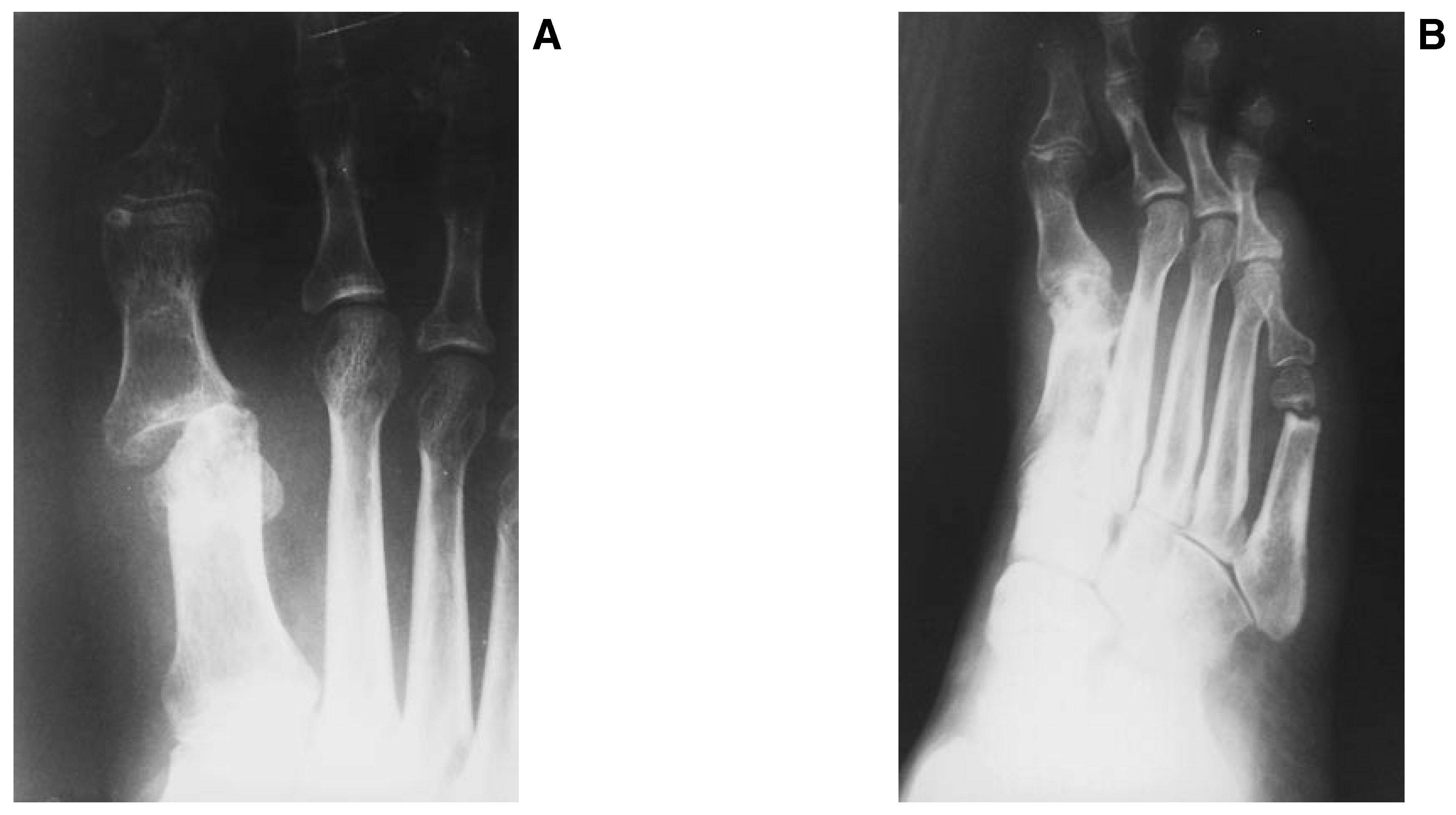
On February 9, 1994, 1 year following cheilectomy and 3 years following the initial bunionectomy, the patient returned complaining of pain in her right foot. At the time of presentation, the patient was 43 years old with a medical history now pertinent for hypertension, gastritis, sinusitis, and alcohol abuse. Medications included fluoxetine, nifedipine, zolpidem, and sucralfate. Physical examination revealed intact neurovascular and musculoskeletal systems. Symptomatic tylomas under the first and second metatarsals and previous surgical scarring were noted on dermatologic examination. Radiographically, there was significant shortening and elevation of the first metatarsal, with decreased and painful range of motion at the metatarsophalangeal joint, lack of full ground purchase of the hallux with hammering at the interphalangeal joint, obliteration of the first metatarsophalangeal joint space with erosion medially, subchondral cysts dorsally, and contracture of the second through fourth metatarsals causing retrograde plantarflexion at the metatarsophalangeal joints (Fig. 4). On weightbearing, there was excessive weight placed on the lateral aspect of the right foot to avoid full weightbearing on the first metatarsal. The diagnosis at this time was iatrogenic stage III hallux limitus7 of the metatarsophalangeal joint with lesser metatarsalgia.
Figure 4.
A, Anteroposterior radiograph obtained 3 years after the initial bunionectomy demonstrating significant shortening and medial erosion of the first metatarsal with no lateral joint space. B, Medial oblique view showing subchondral cyst formation and dorsal spurring.
Figure 4.
A, Anteroposterior radiograph obtained 3 years after the initial bunionectomy demonstrating significant shortening and medial erosion of the first metatarsal with no lateral joint space. B, Medial oblique view showing subchondral cyst formation and dorsal spurring.
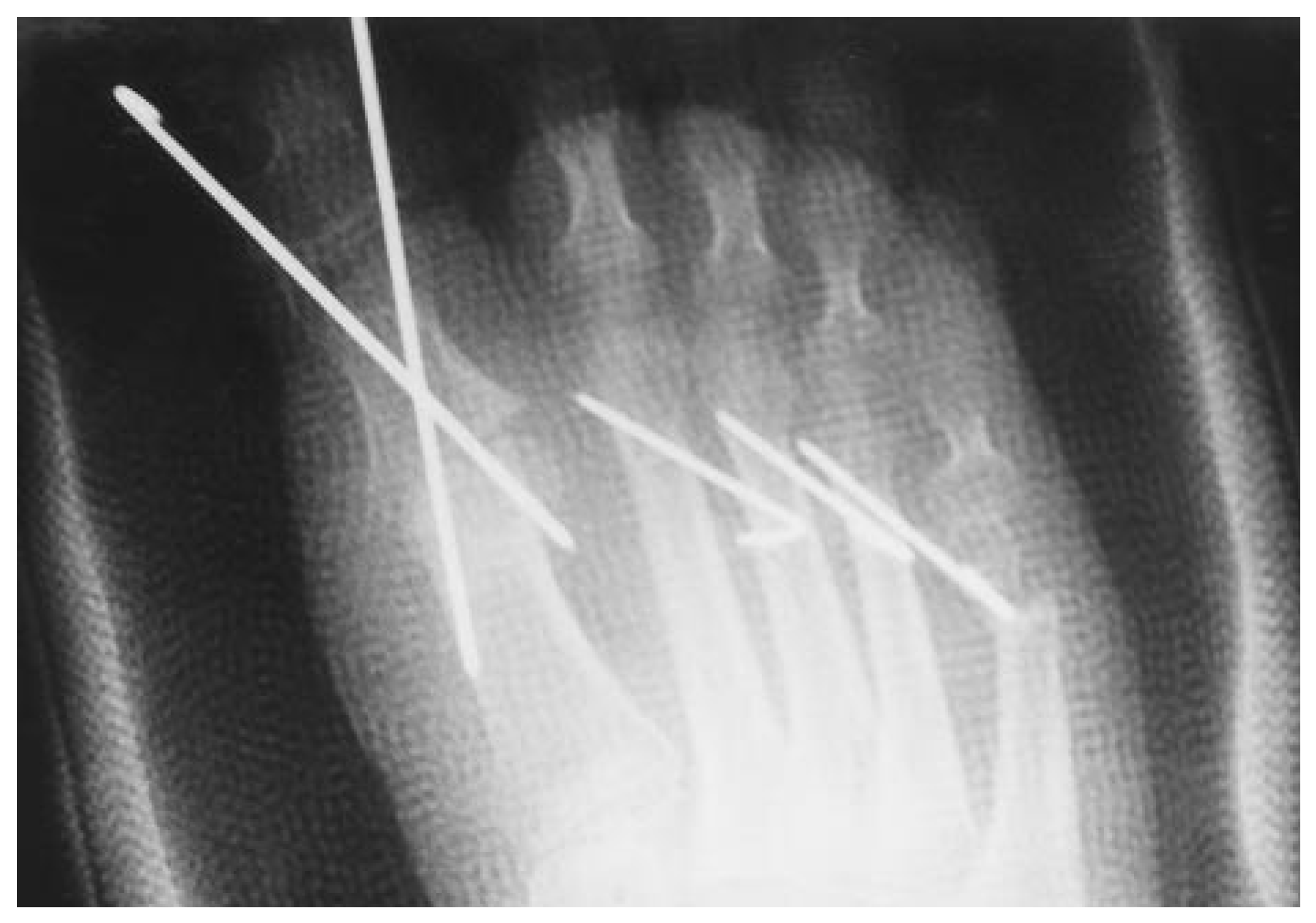
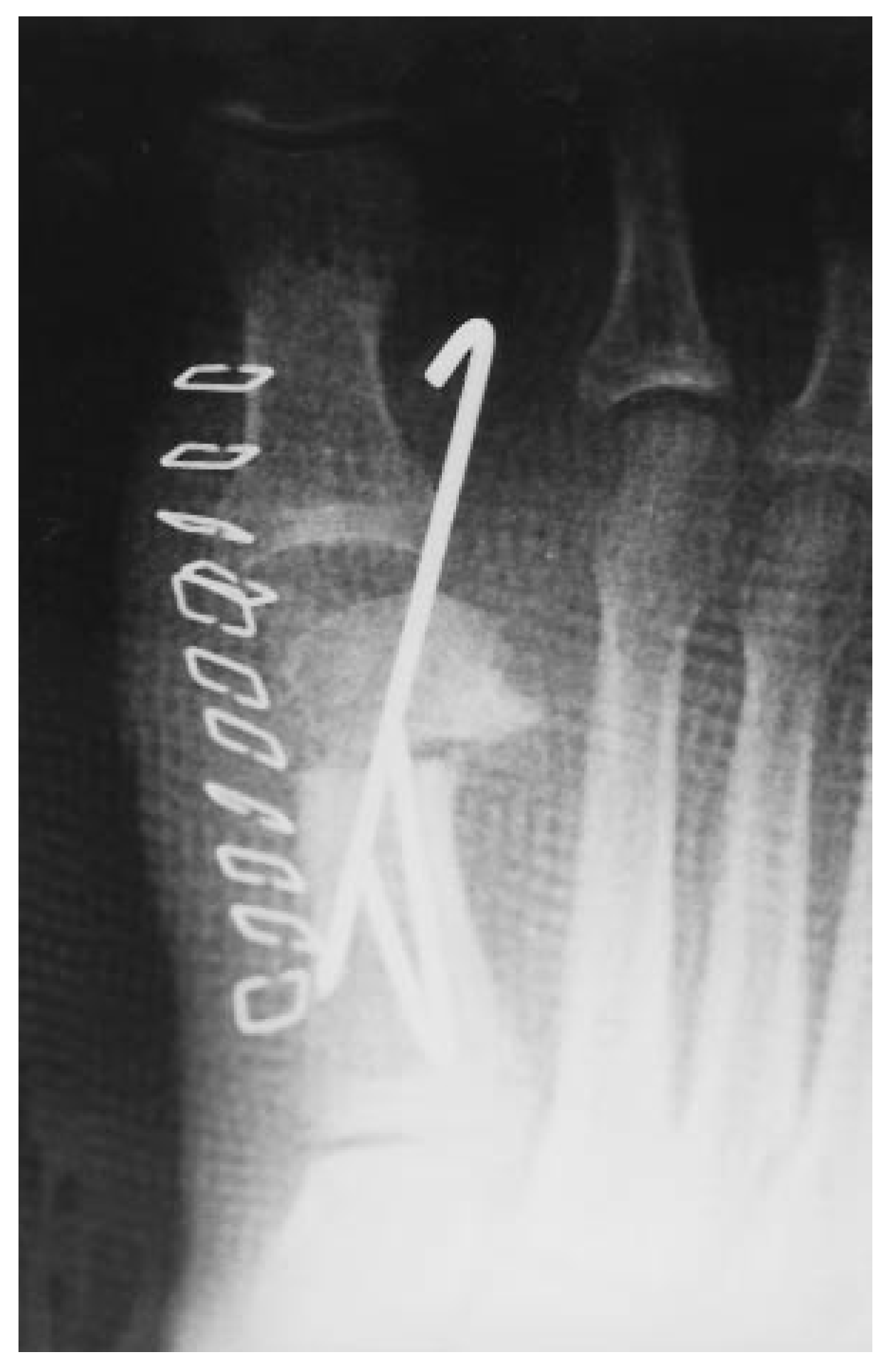
Conservative care was rendered for several months and included anti-inflammatory medication, padding, and orthoses, but the patient experienced no relief of pain. Several surgical treatment options were discussed, including lengthening of the first metatarsal with grafting, a pan–metatarsal head resection procedure, and a joint fusion with lesser metatarsal osteotomies. On May 3, 1994, the patient underwent a first metatarsophalangeal joint arthrodesis with two crossed 0.062 Kirschner wires and dorsiflexing but shortening wedge osteotomy of the second through fourth metatarsals secured with 0.045 Kirschner wires, followed by nonweightbearing cast immobilization. Postoperative radiographs revealed that the fusion and osteotomies were in good alignment with good apposition (Fig. 5). At 6 weeks following surgery, the patient began gradual weightbearing in the cast. Ambulation in a surgical shoe was begun at week 8, after all Kirschner wires were removed, with the exception of the wires across the second metatarsal and the distal medial arthrodesis site. These wires were removed at the ninth and eleventh weeks following surgery, respectively. Radiographs at the eleventh week demonstrated healing at all surgical sites except the distal medial arthrodesis site. At 14 weeks postoperatively, there was persistent tenderness at the site of the first metatarsophalangeal joint fusion and forefoot edema. The EBI system, as used in previous treatment, was reinstituted to enhance healing, but use of the surgical shoe was decreased gradually, while the time spent wearing athletic shoes was gradually increased, at the patient’s request. At 5 months postoperatively, the right-foot pain had decreased; however, radiographs demonstrated bone callus at the fusion site with visible osteotomy lines consistent with a delayed union.
Figure 5.
Postoperative radiograph showing the first metatarsophalangeal joint fusion and osteotomies in the second through fourth metatarsals with Kirschner-wire fixation.
Figure 5.
Postoperative radiograph showing the first metatarsophalangeal joint fusion and osteotomies in the second through fourth metatarsals with Kirschner-wire fixation.
The patient returned to work but continued to complain of right-foot “achiness,” swelling at the end of the day, pain in the great toe at propulsion, and an inability to walk “flat” on her right foot. The differential diagnosis included delayed union or nonunion, reflex sympathetic dystrophy, and arthritis. Reflex sympathetic dystrophy was subsequently ruled out because of the lack of severe pain and temperature changes. In January 1995, 8 months after the first metatarsophalangeal joint fusion, a cast was placed on the right foot for 8 weeks, followed by use of a surgical shoe for several weeks. Use of the EBI system was continued. Fourteen months postoperatively, clinical examination revealed no edema, erythema, calor, or signs of motion at the fusion site, but there was continued sensitivity at the surgical area, with radiographs revealing a nonunion.
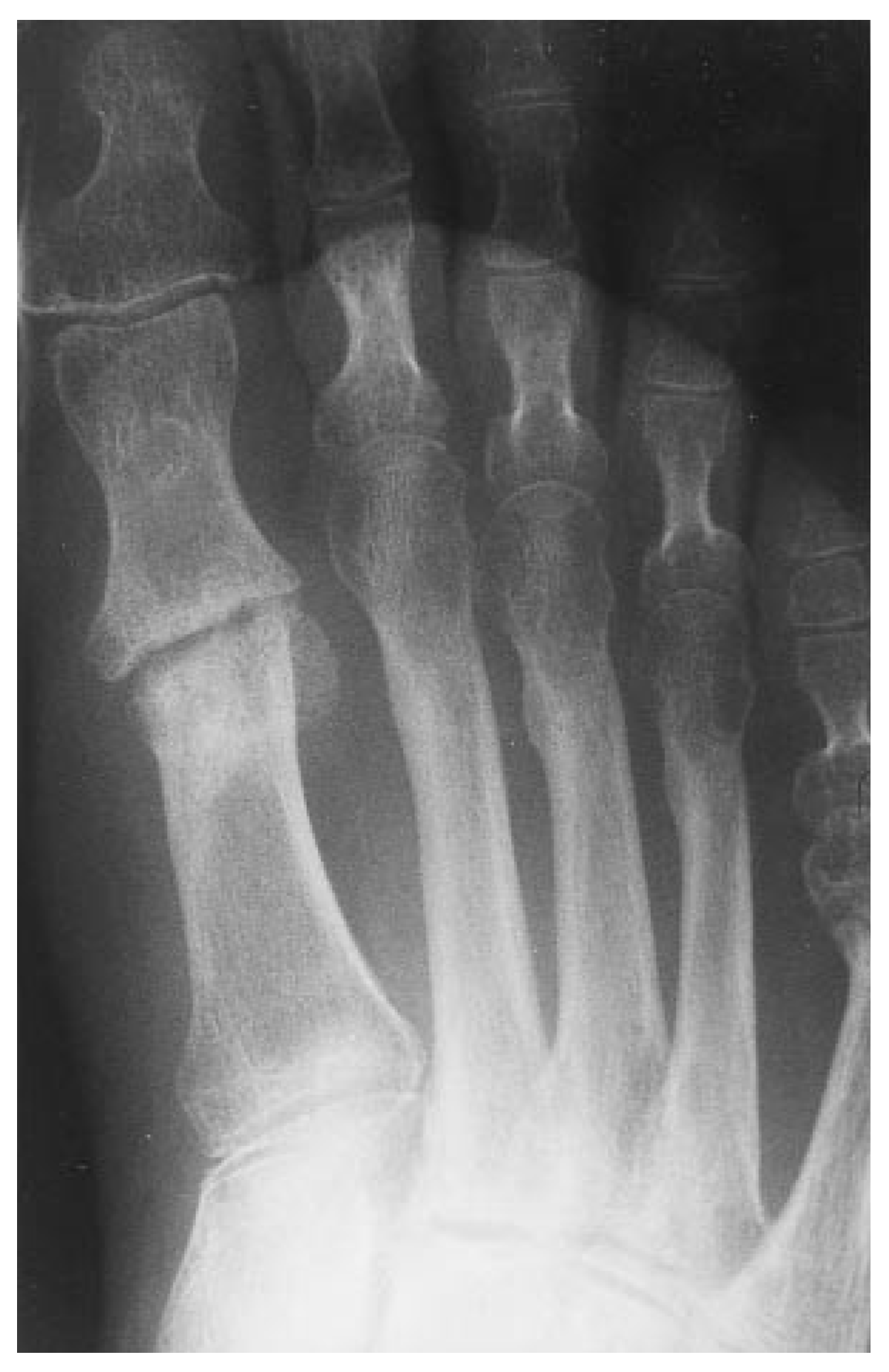
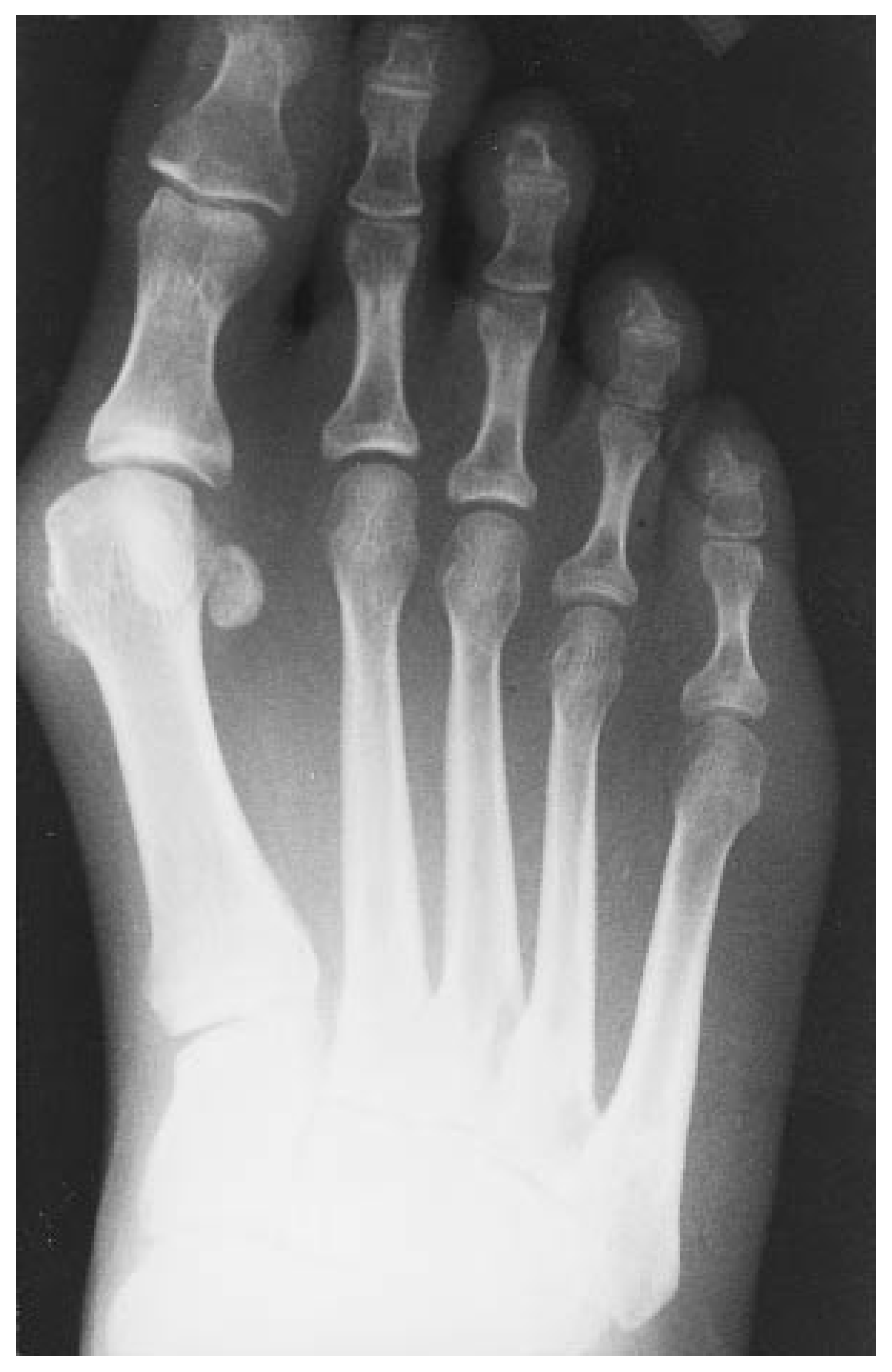
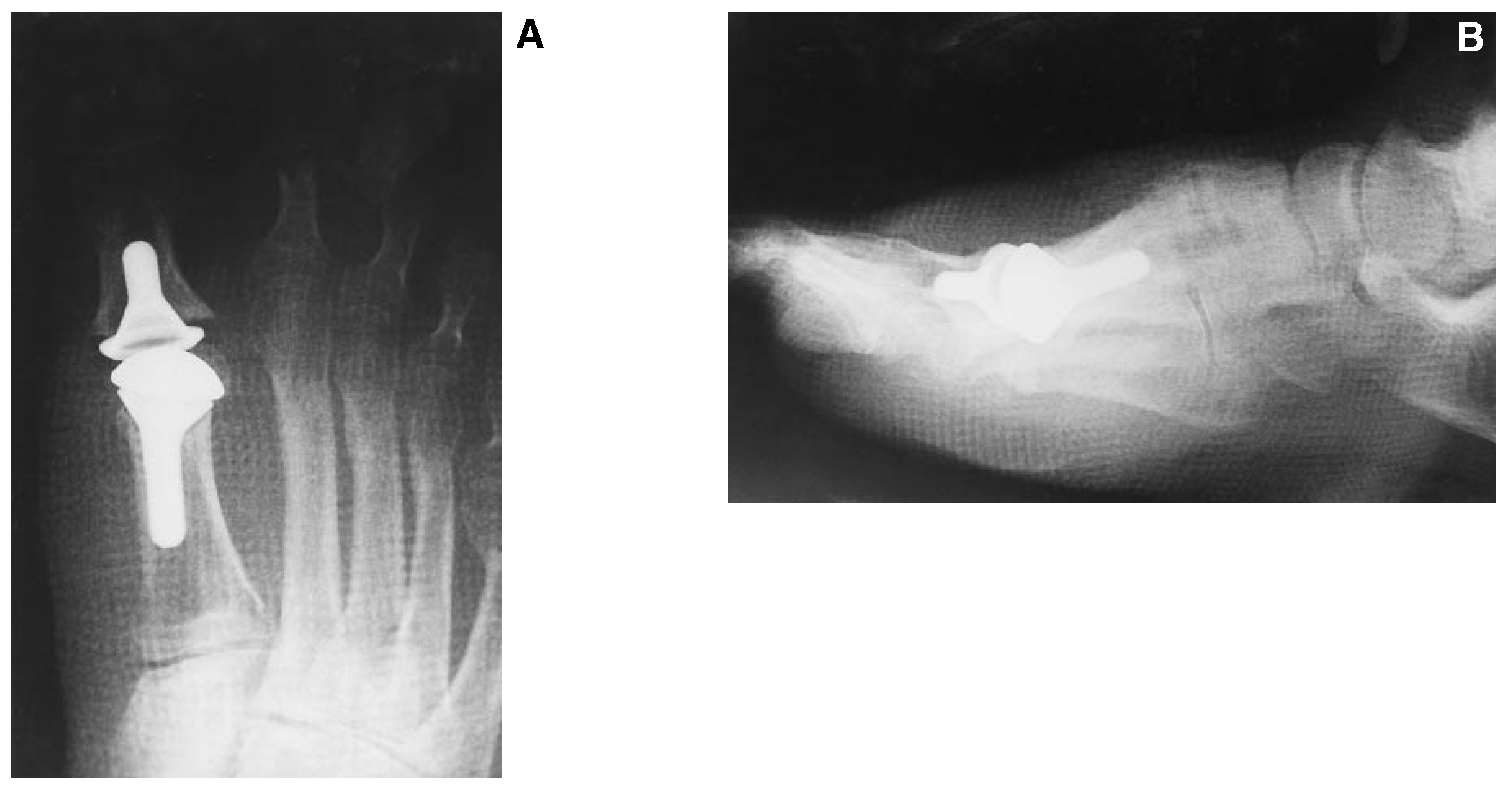
On January 8, 1996, the patient again underwent surgery for placement of a joint prosthesis using the ReFlexion titanium two-component implant system for the first metatarsophalangeal joint. Intraoperatively, a pseudarthrosis was identified at the previous fusion site. Approximately 2 mm of bone was resected on each side of the pseudarthrosis prior to implant placement. Good alignment and stability were achieved. The patient was placed in a forefoot cast with partial weightbearing allowed. Preoperative and postoperative radiographs are shown in
Figure 6 and
Figure 7, respectively. At immediate follow-up visits, there was no edema, erythema, or calor. There was still some pain associated with range of motion, but it was “better now than before the surgery,” in the words of the patient.
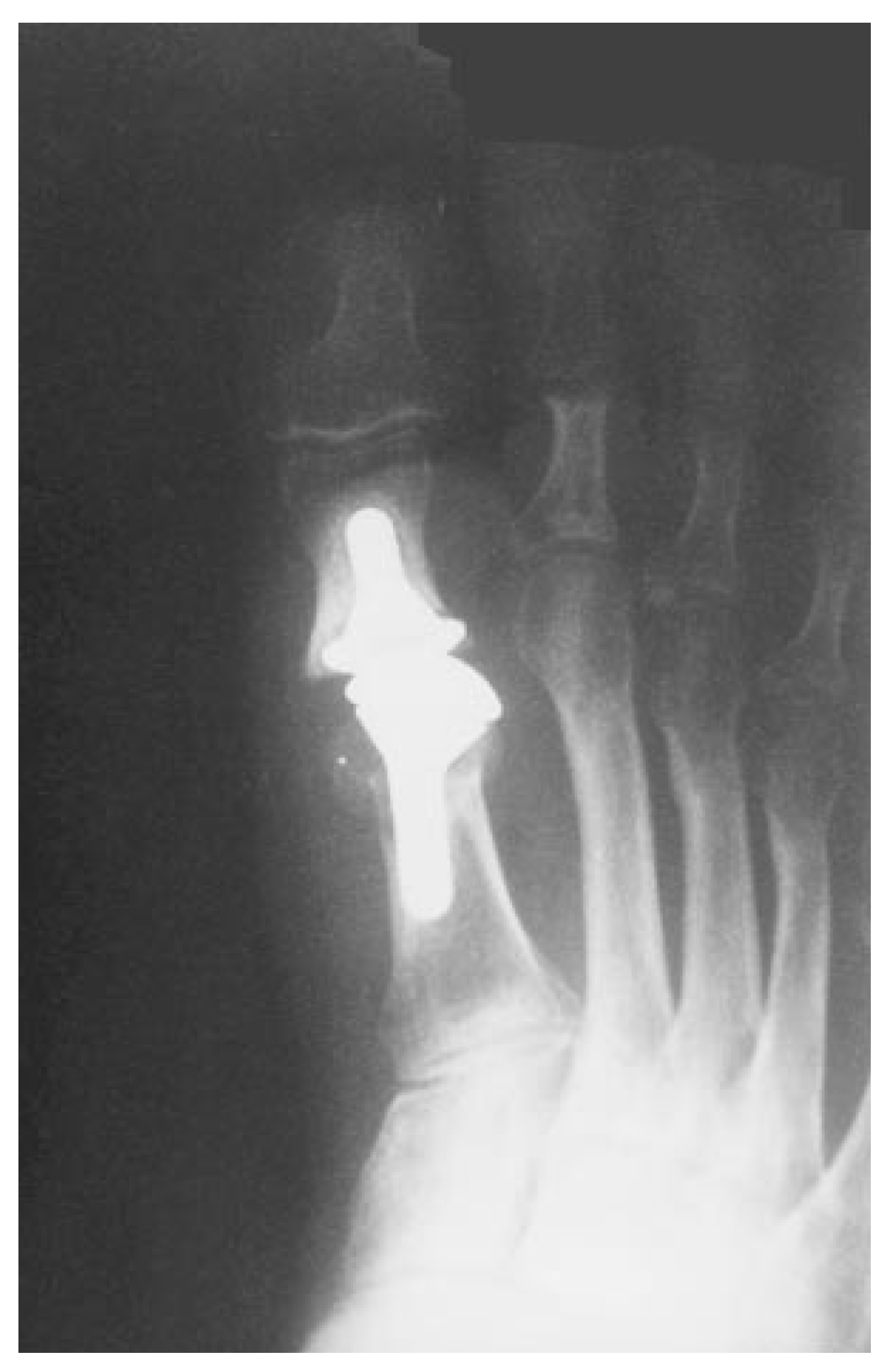
Twenty-four months following total joint replacement, and 7 years following the original hallux abducto valgus surgery, the patient was pleased with the outcome and could walk in athletic shoes with little discomfort. The patient had a small tyloma under the second metatarsal that was asymptomatic. The implant system appeared intact in the most recent (20 months postoperative) radiograph (Fig. 8) and there was no evidence of significant loosening or fragmentation.
Figure 8.
Radiograph showing intact implant system20 months following surgery.
Figure 8.
Radiograph showing intact implant system20 months following surgery.