Next Article in Journal
Normal values of plantar pressure measurements determined using the EMED-SF system
Previous Article in Journal
Analysis of release of the first branch of the lateral plantar nerve
 
 
Journal of the American Podiatric Medical Association is published by MDPI from Volume 116 Issue 1 (2026). Previous articles were published by another publisher in Open Access under a CC-BY (or CC-BY-NC-ND) licence, and they are hosted by MDPI on mdpi.com as a courtesy and upon agreement with American Podiatric Medical Association.
Article

Use of electrostimulation in the treatment of diabetic neuroarthropathy

by
John F. Grady
1,
John J. O'Connor
2,
Timothy M. Axe
2,
Emil J. Zager
2,
Lynn M. Dennis
3 and
Lori A. Brenner
4
1
Fellow, American College of Foot and Ankle Surgeons; Director of Podiatric Residency, Department of Veterans Affairs, Chicago Healthcare System, Westside Division, Chicago, IL. Mailing address: 4650 Southwest Hwy, Oak Lawn, IL 60453
2
Fellow, American College of Foot and Ankle Surgeons; Clinical Attending Podiatric Physician, Department of Veterans Affairs, Chicago Healthcare System, Westside Division, Chicago, IL
3
Research Fellow, Foot & Ankle Associates, Oak Lawn, IL
4
Submitted during second-year residency, Department of Veterans Affairs, Chicago Healthcare System, Westside Division, Chicago, IL
J. Am. Podiatr. Med. Assoc. 2000, 90(6), 287-294; https://doi.org/10.7547/87507315-90-6-287
Published: 1 June 2000

Abstract

Charcot’s joint is a difficult and sometimes frustrating condition to treat, for both the patient and the physician. The authors give a brief overview of Charcot’s joint and the treatment options available. They discuss the use of bone stimulators and how electrostimulation may be used to help arrest the progression of Charcot’s deformity. To the authors’ knowledge, the use of electrostimulation for the treatment of Charcot’s joint has been described only once in the literature; three patients were evaluated in that study. In the current study, 11 patients were evaluated, with promising results obtained, thus supporting the findings of the previous study. (J Am Podiatr Med Assoc 90(6): 287-294, 2000)

Charcot-type changes in the diabetic foot constitute a very destructive and debilitating process. There are approximately 15.7 million people (5.9% of the population) with diabetes mellitus in the United States. [1] A 1972 statistic indicates that an estimated 1 in 680 patients with diabetes will develop Charcot’s joint (neuroarthropathy). [2] The earliest report of neuroarthropathy was provided by Mitchell in 1831. [3] In 1868, Jean-Marie Charcot, [4] a French neurologist, first described bone destruction in the knee and elbow, which was commonly seen in patients with tabes dorsalis. It was not until 1936 that Jordan [5] described neuropathic arthropathy in patients with diabetes.

Causes of Charcot’s Deformity

There are many causes of Charcot’s deformity, with diabetes mellitus being the most common one. [6] Other causes include tabes dorsalis, syringomyelia, leprosy, multiple sclerosis, poliomyelitis, myelodysplasia, chronic alcoholism, spinal cord lesions, and pernicious anemia. [7] All of these disease processes result in a neurologic deficit. In diabetes, there is demyelination of peripheral nerves, which can cause sensory, motor, and autonomic neuropathy. These neuropathies cause insensitivity, muscle imbalance, and osteopenia. Studies have demonstrated that patients with diabetes—either type 1 or type 2—have decreased bone mineral density compared with ageand sex-matched controls. [8] This may result in an increased risk of fracture. Edmonds et al [9] have demonstrated increased radionuclide uptake in the feet of diabetic patients with neuroarthropathy. This suggests that increased blood flow in bone and arteriovenous shunting lead to increased osteoclastic activity and reduced bone density. [10] Treatment of Charcot’s deformity is aimed at arresting the destructive process and minimizing the extent of deformity.

Signs and Symptoms

Clinical signs of Charcot’s joint include unexplained edema, erythema, joint crepitus, and an increase in temperature of about 2°C compared with the contralateral side. [11] These symptoms usually do not cause pain, and pulses are usually palpable. Approximately 20% of patients with this condition have involvement of both lower extremities. [12] To aid in the clinical diagnosis of Charcot’s joint, the classification system of Eichenholtz [13] can be used to examine the neuroarthropathy radiographically at three stages: 1) developmental (destructive), 2) coalescence (healing), and 3) reconstruction (remodeling).

Treatment Options

Various treatment options are used to help control the debilitating forces of a Charcot joint. The goals of treatment are to preserve skin integrity, avoid infection, and prevent amputation. [14] Banks and McGlamry [15] have reported that once amputation occurs, a second amputation occurs in 55% of cases within 5 years. To avoid the progression of the disease, once Charcot’s joint is diagnosed, the patient is placed in a cast and advised to keep weight off of the affected extremity until coalescence is complete. When the patient is able to bear weight, he or she can be placed in extra-depth shoes with custom-made accommodative Plastazote orthoses (Zotefoams Ltd, Croydon, England). [16] If more support is needed, an ankle-foot orthosis can help treat mild ankle instability. [14] If the instability is too great, a patellar-tendon-bearing brace can provide greater support and disperse forces along the entire leg to the tibial tuberosity. [14] Patellartendon-bearing braces can reduce mean peak forces on the distal extremity by 32% to 90%. [17]
Other popular conservative treatments for Charcot’s joint are total-contact casting with plaster [18] and the use of the Charcot Restraint Orthotic Walker (Orthotic Service, Brea, California). [19] The Charcot Restraint Orthotic Walker is a rigid, bivalved, custommade ankle-foot orthosis that encloses the entire lower leg.
A newer treatment for diabetic neuroarthropathy is bisphosphonates. In a study reported on by Selby et al [20] in 1993, pamidronate was administered to patients to reduce the amount of bone loss. The authors found that this treatment improved the patients’ symptoms and caused a reduction in the Charcot activity (measured by a decrease in the temperature of the affected foot and a decrease in alkaline phosphatase activity, which measures bone activity).
Surgical intervention is another treatment option in patients with Charcot’s joint. Cleveland [21] first introduced this treatment for the Charcot foot in 1939 when he fused unstable joints. The early literature indicates that arthrodesis of a neuropathic joint was not favored because of failure, [22] pseudarthrosis, and infection. In cases where conservative methods have failed, however, arthrodesis may play an important role in decreasing the chance of ulceration and possibly preventing an amputation. Surgery should be avoided during the initial stage of Charcot’s joint, which is the hypervascular stage, because postoperative hyperemia could exacerbate the destructive process. [23] The major contributing factor to the success of surgical intervention is patient selection. [24] Patients undergoing this type of treatment must be very compliant because of the extensive postoperative immobilization period. The nonweightbearing period can last up to 6 months, and the patient may be in a wheelchair during that time. [25]

Electrostimulation of Bone

The earliest report of the use of electrical energy to directly stimulate bone healing was by Hartshorne [26] in 1841. In 1953 and 1954, Yasuda and colleagues [27] studied electrical fields and bone formation. They demonstrated the development of subperiosteal callus in bones under mechanical stress. The callus was formed as a result of the electrical potentials induced by the mechanical stress (piezoelectricity). Electronegative potentials are generated in areas of compression and electropositive potentials are generated in areas of tension. Yasuda et al [27] then showed that passing 10 μA of continuous current along the bone could result in a similar callus formation. Increased osteoblastic activity would be seen on the concave side of bone, which has an electronegative potential. This is why the cathode (negatively charged electrode) is placed at the site of nonunion or at the fracture site. [28]

Mechanism of Action of Bone Stimulators

The exact mechanism of electrostimulation’s induction of an osteogenic response is not known. [29] One theory is that areas of electrostimulation generate an increased number of hydroxyl ions, which increases the pH and also decreases the tissue oxygen pressure. These findings correlate well with what happens in natural bone healing. [30,31] Cyclic adenosine monophosphate increases both in naturally healing bone and in areas that have been electrically stimulated. [32] Electrically stimulated chondroblasts, osteoblasts, and chondrocytes are found to release calcium into the surrounding medium. [33] Brighton et al [34,35] made some observations regarding this phenomenon. With proper current and voltage (which should be between 10 and 25 V, depending on coil size and the distance between the two coils), [36] bone forms in the area where the cathode is placed and necrosis occurs where the anode is placed. Currents of less than 5 μA do not produce osteogenesis, currents of 5 to 20 μA produce progressively increasing amounts of bone formation, and currents of greater than 20 μA produce necrosis. [35,37] Another finding by Brighton [35] is that direct current is more effective than pulsed current. However, the results of a study by Sakai et al [38] show that intermittent pulsed electromagnetic field stimulation is more effective on both cell proliferation and glycosaminoglycan synthesis of cartilage cells than continuous stimulation. Their major hypothesis is that mechanical stress on bone and cartilage is translated into a cellular electrical signal and then into a biochemical message. Sakai et al [38] believe that the electrical change of the cell environment causes the promotion of cell propagation; therefore, the duration of nonstimulation is as important as the duration of stimulation.

Types of Bone Stimulators

Bone stimulators administer current by either intermittent pulsed electromagnetic fields or direct current stimulation. Either a partially or a totally invasive procedure can achieve direct current stimulation. [28] Dwyer and Wickham [39] used the first totally implantable bone-growth stimulator in 1969 to treat failed posterior spinal fusions. Complications associated with these devices include soft-tissue reaction and possible breakage of the cathode wire; advantages include a short and simple operation to implant the device. [40] The semi-invasive technique was developed by Brighton et al [41] at the University of Pennsylvania. Contraindications include synovial pseudarthrosis and a bone gap greater than half the diameter of bone. An important issue with the pulsed electromagnetic field stimulator was whether it was compatible with metallic devices and whether it could be used on patients with internal hardware. In the United States, both the US Food and Drug Administration and the American Society for Testing and Materials require that stainless-steel devices be made from a nonmagnetic 316L formulation and cobalt-chrome alloys, which, by their nature, are nonmagnetic. [36]

Pulsed Electromagnetic Field Stimulators

The authors recommend that pulsed electromagnetic field bone stimulation be used for the treatment of Charcot’s deformity, and this is the type of stimulation used in the current study. In November 1979, this became the first electrical approach to be approved as safe by the US Food and Drug Administration. Pulsed electromagnetic field stimulators are surgically noninvasive and deliver current by means of two opposing coils of wires mounted on the external surfaces of a cast or skin. The coils face each other at 180°. [36] As stated previously, pulsed electromagnetic field stimulators may be less effective in producing osteogenesis than direct current stimulators. Also, they deliver current to a generalized area, and patient compliance and cooperation are needed for success. [28] These devices work very well for treatment of Charcot’s deformity because there are usually multiple areas that need treatment, and surgery should be avoided, if possible.

Introduction to the Findings

Diabetes is the most common cause of neuroarthropathy encountered by podiatric physicians. Diabetic patients are predisposed to poor wound healing, and this population has high morbidity and amputation rates. Diabetes is associated with 67,000 foot and leg amputations each year. [1] People with diabetes account for approximately 50% of all nontraumatic amputations in the United States. The risk of amputation is greater for a person over 40 years old who has had diabetes for more than 10 years. [42] Therefore, this new treatment for neuroarthropathy may offer promising results by helping to prevent Charcot’s deformity and ulceration and possibly partial foot amputation and loss of the entire limb.
The authors theorize that electrostimulation will help a patient who is in the first, or developmental, stage of neuroarthropathy progress to the end of the coalescence stage. It has been suggested that bone demineralizes in stage 1 of Charcot’s deformity as a result of increased blood flow to the area. This results in reduced bone density; as a result, pathologic fractures may occur. Electrostimulation increases osteoblastic activity, which, in theory, should counteract the osteoclastic action, which is caused by the increased blood flow in the early stages of Charcot’s deformity. Electrostimulation, therefore, should aid in achieving coalescence before significant destruction can occur.
The authors present their findings from a study of 11 patients with Charcot’s arthropathy secondary to diabetes mellitus. All of these patients had pathologic fractures of the foot and were treated with some form of immobilization as well as electrostimulation. The findings of this study are similar to those of Bier and Estersohn [43] in 1987. In that study, patients wore bone stimulators for a minimum of 8 hours per day up to a maximum of 10 to 12 hours per day, either continuously or cumulatively, and were also placed in a cast and instructed not to bear weight. Participants were assessed every 4 to 6 weeks for compliance and radiographic improvement. The bone stimulator use was stopped and the casts were removed after approximately 3 to 4 months. Participants were then placed in Unna boots to reduce any residual edema. All three patients who participated in the study had disappearance of Charcot’s deformity in 3 to 4 months. The current report supports those initial findings of Bier and Estersohn. [43]

Results

The 11 patients participating in this study had diabetes-related neuroarthropathy involving joints of the foot or ankle; all patients used a bone stimulator during treatment. Eight patients had stage 1 Charcot’s deformity and three had stage 2 Charcot’s deformity (Table 1). All participants were immobilized with an Equalizer Walker (Royce Medical Products, Camarillo, California) or an Unna boot with a surgical shoe. All patients were also treated with a bone stimulator. The cathode of the bone stimulator was placed directly over the affected joint and the anode was placed at 180° with respect to the cathode. The patients were allowed to bear weight during the course of the study to help prevent the development of problems in the other foot. Various other factors had to be considered such as the patients’ age, their health status, and the possibility of the development of disuse osteopenia. The Equalizer Walkers were used instead of casts to allow visualization for weekly assessment, to help control edema, and to prevent cast irritation.
The length of time a bone stimulator is applied depends on the type and make of the equipment. The patients in this study used the bone stimulator on their affected areas for 30 min each day. Bone consolidation time with treatment with the bone stimulator varied: the shortest treatment time was 2 months and the longest was 5 months. Six patients had ulcers related to the Charcot deformity and were treated appropriately with local wound care and debridement. These patients were evaluated weekly until the ulcers had healed. The other five patients were evaluated every 2 weeks.
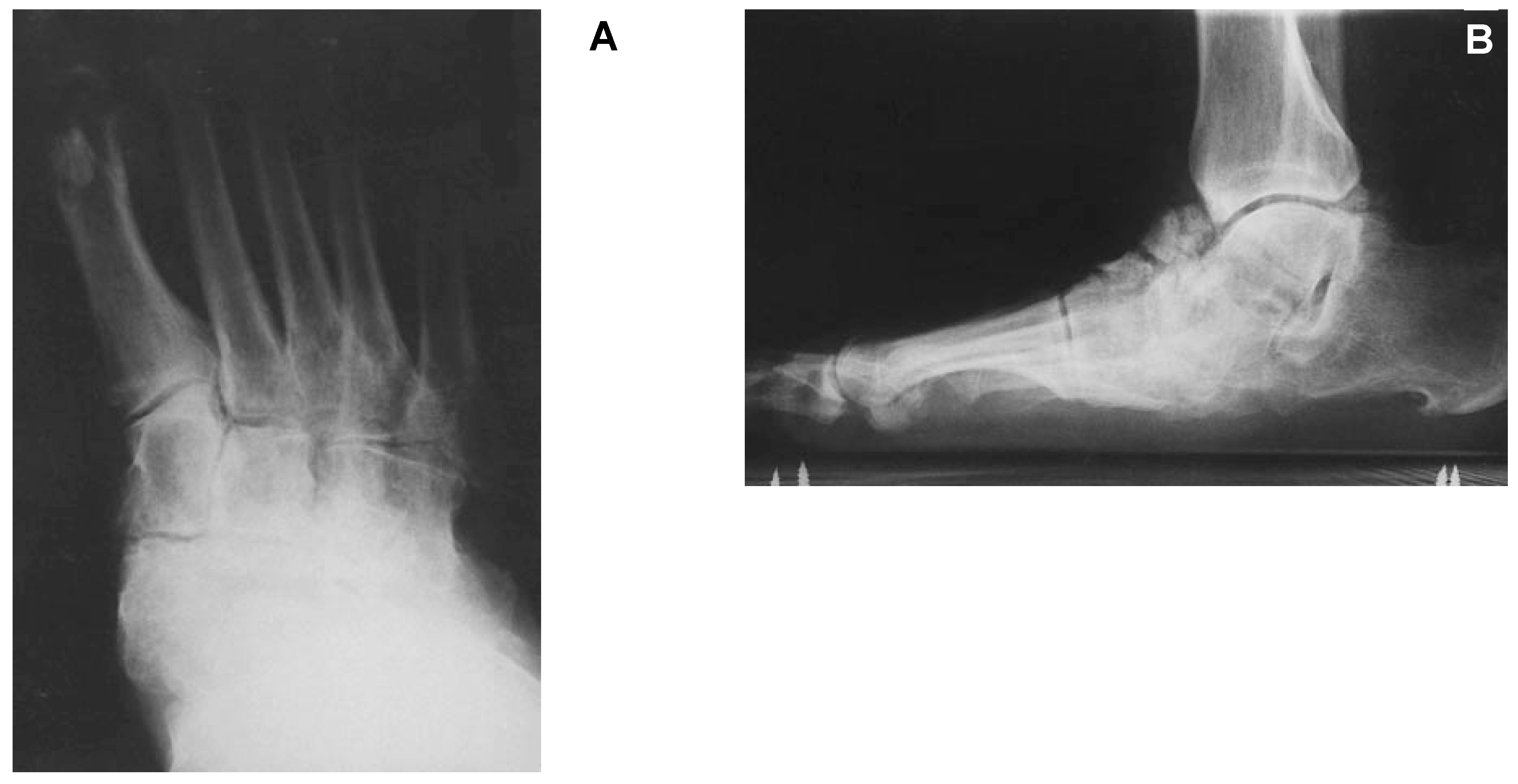
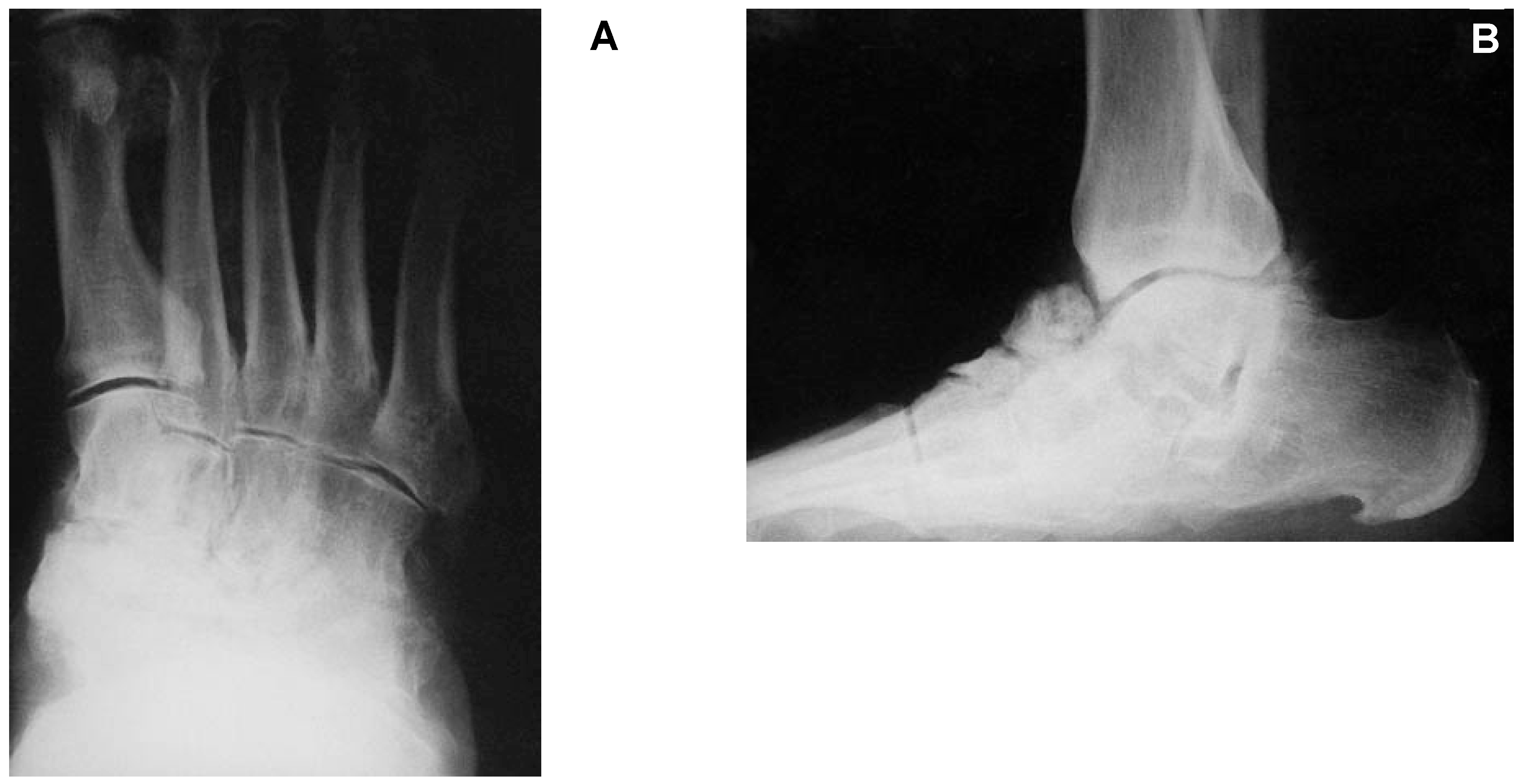
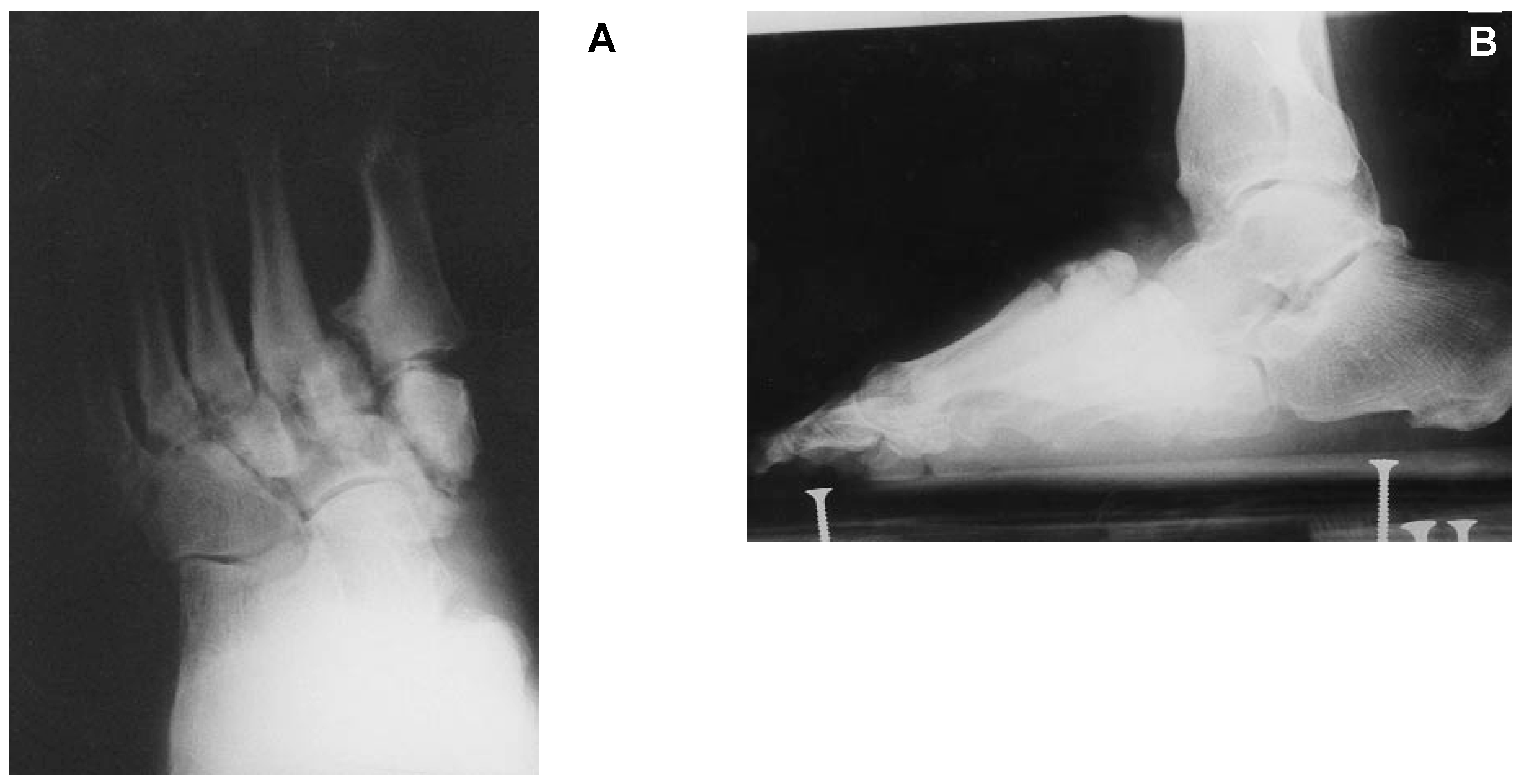
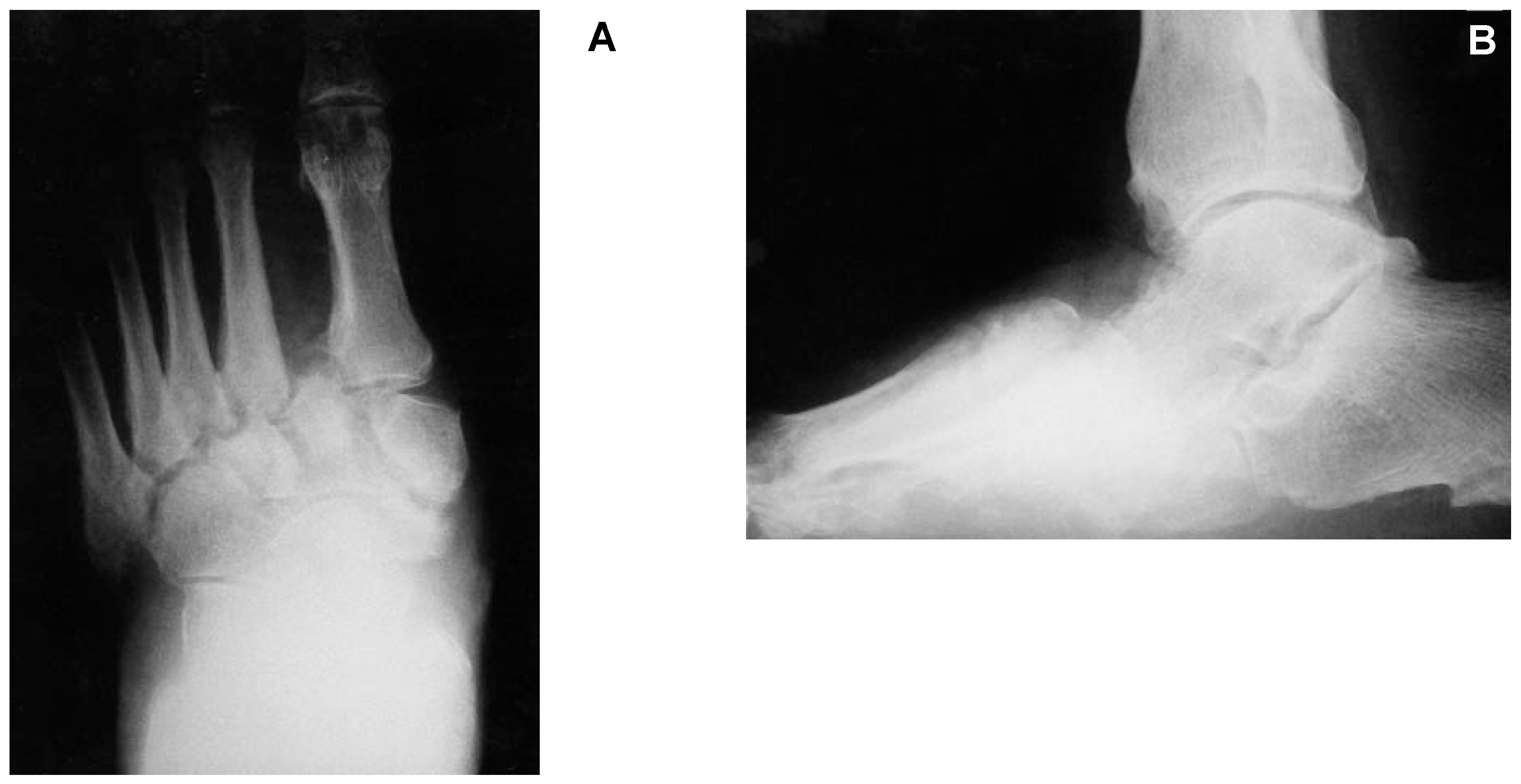
Radiographs were obtained an average of every 4 weeks to evaluate the Charcot deformity. The average time of radiographically confirmed consolidation of bone was 3.5 months. Figure 1 and Figure 2 show anteroposterior and lateral views of the tarsal bones before and after the use of the bone stimulator. Figure 3 and Figure 4 are the same views of a different patient before and after use of the bone stimulator at Lisfranc’s joint.
When the patients ceased using the bone stimulator, there was also clinical resolution of the Charcot deformity, such as a decrease in edema, erythema, and crepitus. The patients were prescribed appropriate footwear. The rate of patient compliance in this study was 100%. These patients were followed for an average of 18 months. One patient had reactivation of the Charcot deformity 9 months following cessation of use of the bone stimulator. To date, there have been no complications related to use of a bone stimulator for the treatment of Charcot’s deformity.

Conclusion

The results of this study suggest that electrostimulation is an effective treatment for diabetic neuroarthropathy. A bone stimulator, if used in the first two stages of Charcot’s deformity, can aid in arresting the progression of Charcot-type changes in the foot and ankle. A bone stimulator is easy to use and generally associated with a high rate of patient compliance, which is necessary for the success of any treatment. In addition, control of blood glucose levels and proper medical management of all underlying diseases, as well as proper local wound care, if necessary, are essential to the success of this treatment. More studies on this topic must be performed, but the authors believe that the use of bone stimulators in conjunction with other forms of treatment, such as immobilization, will arrest the progression of Charcot’s deformity when it is identified in stages 1 and 2. With the proper diagnosis and prompt intervention in the treatment of diabetic neuroarthropathy, the serious sequelae of further soft-tissue destruction, ulceration, and possible amputation may be prevented.
Acknowledgment. Michelle Handley for her invaluable assistance with gathering data for the study.
Table 1. Data on the Patients Participating in the Study.
Japma 90 00287 i001

References

  1. National Diabetes Fact Sheet. Centers for Disease Control and Prevention Web site. Available online: http://www. cdc.gov/diabetes/pubs/facts98.htm (accessed on 24 May 2000).
  2. SINHA, S; MUNICHOODAPPA, CS; KOZAK, GP. Neuroarthropathy (Charcot joints) in diabetes mellitus. Medicine (Baltimore) 1972, 51, 191. [Google Scholar] [CrossRef] [PubMed]
  3. MITCHELL J: On a new practice in acute and chronic rheumatism. Am J Med Sci 1831, 8, 55.
  4. CHARCOT, JM. Sur quelques arthropathies qui paraissent depender d’une lesion du cerveau ou de la moelle epiniere. Arch Des Physiol Norm et Path 1868, 1, 161. [Google Scholar]
  5. JORDAN, WR. Neuritic manifestations in diabetes mellitus. Arch Intern Med 1936, 57, 307. [Google Scholar] [CrossRef]
  6. SALTZMAN, CL; JOHNSON, KA; GOLDSTEIN, RH; ET, AL. The patellar tendonbearing brace as treatment for neurotrophic arthropathy: a dynamic force monitoring study. Foot Ankle 1992, 13, 14. [Google Scholar] [CrossRef]
  7. STICHA, RS; FRASCONE, ST; WERTHEIMER, SJ. Major arthrodeses in patients with neuropathic arthropathy. J Foot Ankle Surg 1996, 35, 560. [Google Scholar] [CrossRef]
  8. SELBY, PL. Osteopenia and diabetes. Diabet Med 1988, 5, 423. [Google Scholar] [CrossRef]
  9. EDMONDS, ME; CLARKE, MB; NEWTON, S; ET, AL. Increased uptake of bone radiopharmaceutical in diabetic neuropathy. Q J Med 1985, 57, 843. [Google Scholar]
  10. CARTER, DR; HAYES, HC. The compressive behavior of bone as a two-phase porous structure. J Bone Joint Surg Am 1977, 59, 954. [Google Scholar] [CrossRef]
  11. GOUGH, A; ABRAHA, H; LI, F; ET, AL. Measurement of mark-ers of osteoclast and osteoblast activity in patients with acute and chronic diabetic Charcot neuroarthropathy. Diabet Med 1997, 14, 527. [Google Scholar] [CrossRef]
  12. FRYKBERG RG: Osteoarthropathy. Clin Podiatr Med Surg 1987, 4, 351. [CrossRef]
  13. EICHENHOLTZ, SN. Charcot Joints; Charles C Thomas: Springfield, IL, 1966. [Google Scholar]
  14. GIURINI, JM. Applications and use of in-shoe orthoses in the conservative management of Charcot foot defor-mity. Clin Podiatr Med Surg 1994, 11, 271. [Google Scholar] [CrossRef]
  15. BANKS, AS; MCGLAMRY, ED. Charcot foot. JAPMA 1989, 79, 213. [Google Scholar] [CrossRef]
  16. PINZUR, MS; SAGE, R; STUCK, R; ET, AL. A treatment algorithm for neuropathic (Charcot) midfoot deformity. Foot Ankle 1993, 14, 189. [Google Scholar] [CrossRef]
  17. STAROS, A; PEIZER, E. Application of Veterans’ Administration Prosthetics Center below-knee weight-bearing brace to a bilateral case. Artif Limbs 1965, 9, 675. [Google Scholar]
  18. LAVERY, LA; ARMSTRONG, DG; WALKER, SC. Healing rates of diabetic foot ulcers associated with midfoot fracture due to Charcot’s arthropathy. Diabet Med 1996, 14, 46. [Google Scholar] [CrossRef]
  19. MORGAN, JM; BIEHL, WC; WAGNER, W. Management of neuropathic arthropathy with the Charcot Restraint Or-thotic Walker. Clin Orthop 1993, 296, 58. [Google Scholar] [CrossRef]
  20. SELBY, PL; YOUNG, MJ; BOULTON, AM. Bisphosphonates: a new treatment for diabetic Charcot neuroarthropathy? Diabet Med 1994, 11, 28. [Google Scholar] [CrossRef]
  21. CLEVELAND, M. Surgical fusion of unstable joints due to neuropathic disturbance. Am J Surg 1939, 43, 580. [Google Scholar] [CrossRef]
  22. YALE I, YALE J: Neuropathic Arthropathy; Williams & Wilkins: Baltimore, 1984.
  23. WILSON, M. Charcot foot osteoarthropathy in diabetes mellitus. Mil Med 1991, 156, 563. [Google Scholar] [CrossRef] [PubMed]
  24. REINHERZ, RP; CHELEUITTE, ER; FLEISCHLE, JG. Identification and treatment of the diabetic neuropathic foot. J Foot Ankle Surg 1995, 34, 74. [Google Scholar] [CrossRef]
  25. PAPA, J; MYERSON, M; GIRARD, P; ET, AL. Salvage with arthrodesis in intractable diabetic neuropathic arthropathy of the foot and ankle. J Bone Joint Surg Am 1993, 75, 1056. [Google Scholar]
  26. HARTSHORNE, E. On the causes and treatment of pseudoarthrosis and especially that form of it sometimes called supernumerary joint. Am J Med Sci 1841, 1, 121. [Google Scholar]
  27. YASUDA, I; NOGUCHI, K; SATA, T. Dynamic callus and elec-tric callus. J Bone Joint Surg Am 1955, 37, 1292. [Google Scholar]
  28. COHEN, M; ROMAN, A; LOVINS, JE. Totally implanted direct current stimulator as treatment for a nonunion in the foot. J Foot Ankle Surg 1993, 32, 375. [Google Scholar]
  29. LAVINE, LS; GRODINSKY, AJ. Current concepts review: elec-trical stimulation of repair of bone. J Bone Joint Surg Am 1987, 69, 626. [Google Scholar]
  30. BRIGHTON, CT; HEPPENSTALL, RB. Oxygen tension in zones of the epiphyseal plate, the metaphysis and diaphysis: an in vitro and in vivo study in rats and rabbits. J Bone Joint Surg Am 1971, 53, 719. [Google Scholar]
  31. BRIGHTON, CT; ADLER, S; BLACK, J; ET, AL. Cathodic oxygen consumption and electrically induced osteogenesis. Clin Orthop 1975, 107, 277. [Google Scholar]
  32. MINKIN, C; POULTON, BR; HOOVER, WH. The effect of direct current on bone. Clin Orthop 1968, 57, 303. [Google Scholar] [PubMed]
  33. BASSETT, CA; MITCHELL, SN; NORTON, L. Repair of non-unions by pulsing electromagnetic fields. Acta Orthop Belg 1978, 44, 706. [Google Scholar] [PubMed]
  34. BRIGHTON, CT; FRIEDENBERG, ZB; MITCHELL, EI. Treatment of nonunion with constant direct current. Clin Orthop 1977, 124, 106. [Google Scholar] [CrossRef]
  35. BRIGHTON CT: The semi-invasive method of treating nonunion with direct current. Orthop Clin North Am 1984, 15, 33. [CrossRef]
  36. BASSETT CA: The development and application of pulsed electromagnetic fields (PEMFs) for ununited fractures and arthrodeses. Orthop Clin North Am 1984, 15, 61. [CrossRef]
  37. NERUBAY, J; MARGANIT, B; BUBIS, J; ET, AL. Stimulation of bone formation by electrical current on spinal fusion. Spine 1986, 11, 167. [Google Scholar] [CrossRef] [PubMed]
  38. SAKAI, A; SUZUKI, K; NAKAMURA, T; ET, AL. Effects of pulsing electromagnetic fields on cultured cartilage cells. Int Orthop 1991, 15, 341. [Google Scholar] [CrossRef] [PubMed]
  39. DWYER, AF; WICKHAM, GG. Direct current stimulation in spinal fusion. Med J Aust 1974, 1, 73. [Google Scholar]
  40. PATERSON D: Clinical use of the Osteostim, an implanted bone growth stimulator, for impaired bone healing. Instr Course Lect 1982, 31, 103.
  41. BRIGHTON, CT; CLOCK, J; FRIEDENBERG, ZB; ET, AL. A multicenter study of the treatment of nonunion with con-stant direct current. J Bone Joint Surg Am 1981, 63, 2. [Google Scholar] [CrossRef]
  42. CENTERS FOR DISEASE CONTROL. The Prevention and Treatment of Complications of Diabetes Mellitus: A Guide for Primary Care Practitioners; Centers for Disease Control: Atlanta, 1991; Available online: http://www. cdc.gov/diabetes/pubs/brn_tx2.htm (accessed on 24 May 2000).
  43. BIER, RR. ESTERSOHN HS: A new treatment for Charcot joint in the diabetic foot. JAPMA 1987, 77, 63. [Google Scholar] [CrossRef] [PubMed]
Figure 1. Anteroposterior (A) and lateral (B) radiographs obtained at initial diagnosis of Charcot’s arthropathy of the left foot of Patient 1. Note the periosteal activity and lateral dislocation of the metatarsals on the anteroposterior view.
Japma 90 00287 g001
Figure 2. Anteroposterior (A) and lateral (B) radiographs of Patient 1 after completion of bone electrostimulation and coalescence of Charcot’s arthropathy. Note the absence of periosteal activity and the coalescence at Lisfranc’s joint with residual deformity of the laterally displaced Lisfranc’s joint.
Japma 90 00287 g002
Figure 3. Anteroposterior (A) and lateral (B) radiographs obtained at initial diagnosis of Charcot’s arthropathy of the right foot of Patient 2. Note the extreme periosteal activity and plantar dislocation of the tarsal area in the lateral radiograph.
Japma 90 00287 g003
Figure 4. Anteroposterior (A) and lateral (B) radiographs of Patient 2 after completion of bone electrostimulation and coalescence of Charcot’s arthropathy. Note the consolidation and absorption of the periosteal activity in the area of the tarsus.
Japma 90 00287 g004
Disclaimer/Publisher’s Note: The statements, opinions and data contained in all publications are solely those of the individual author(s) and contributor(s) and not of MDPI and/or the editor(s). MDPI and/or the editor(s) disclaim responsibility for any injury to people or property resulting from any ideas, methods, instructions or products referred to in the content.