Giant cell tumors of tendon sheath are typically slow-growing, benign, soft-tissue tumors that have a very low potential for malignant change. This type of lesion is not especially rare in the lower extremity, but its occurrence in the toes is rare [
1].
Overview
Classically, giant cell tumor of tendon sheath occurs in adults in their third to fifth decades; this type of tumor rarely occurs in children. The tumor occurs more frequently in women than in men, and there is no racial predilection [
1,
2]. There may be a history of trauma to the affected area, but the tumor is usually insidious in onset, with symptoms not appearing until after several years of growth. The tumor usually involves one articulation. These tumors are most commonly found in close proximity to tendon sheaths of the fingers, wrists, ankles, and knees. The foot is less commonly affected than the other locations. Nevertheless, giant cell tumor is one of the most common soft-tissue tumors of the foot, with a frequency second only to that of ganglionic cysts [
3].
Diagnosis of giant cell tumor may be based on clinical examination, radiographic examination, magnetic resonance imaging, computed tomography, and gross examination, but definitive diagnosis is made by microscopic examination of the lesion. Clinical examination reveals a palpable, firm, tender, and movable mass that does not allow transillumination [
1,
3]. The associated joint may be stiff, and the site is usually warm to the touch [
1]. There is no erythema. There is usually a history of an insidious onset of growth and symptoms. The discomfort that patients feel is described as an intermittent, mild, aching type of pain [
3]. The severity of symptoms is directly related to the size of the tumor and its impingement on the adjacent structures. Sharp, intense pain may be caused by pressure on or entrapment of adjacent nerves by the tumor mass [
4].
These tumors can vary in size from a few millimeters to several centimeters, depending on their location. The tumors may be round or oval in shape, and they may have tumor projections that penetrate the affected joint or tendon sheath, possibly causing joint impingement [
1].
The radiographic appearance of giant cell tumor may include soft-tissue density, erosion of cortices, or cysts in bones [
4]. Idiopathic or degenerative changes may be seen in the adjacent joint.
Gross examination of the tumor reveals a lobulated, well-encapsulated, and firm subcutaneous mass. The tumor is grayish in color with mottled areas of red, yellow, and brown [
2]. Microscopic examination reveals tissue “characterized by a pleomorphic cell population that includes lipid-laden foam cells, multinucleated giant cells, and round or polygonal stromal cells, often with hemosiderin deposits, in a collagenous stroma” [
5].
Giant cell tumors are commonly benign lesions; there is low potential for malignant transformation, as Bertoni et al. [
6] have shown. The clinical features of the benign and malignant forms of these tumors are similar, with the main difference being found with histologic examination. Bertoni et al.[
6] (p. 163) described malignant giant cell tumor of tendon sheath as
nodules or sheets with oval-to-round or round cells similar to each other and larger than the usual cells in the benign type. No zoning appearance in the cellular nodules between the center and the periphery was appreciated. The cytoplasm was abundant and stained deeply, and the nucleus was large with a prominent nucleolus.
The malignant form of giant cell tumor is associated with a high risk of pulmonary metastasis and corresponding mortality.
The differential diagnosis of giant cell tumor includes ganglionic cyst, lipoma, rheumatoid arthritis nodule, pigmented villonodular synovitis, synovial sarcoma, inclusion cyst, fibroma, and inflammation of synovial sheath [
1,
4].
Complete surgical excision is the treatment of choice for giant cell tumor. It has been found that the tumor recurs in 50% of cases within 4 to 6 months of excision. Recurrence is usually the result of inadequate excision of the giant cell tissue [
1]. Meticulous dissection and total excision of the lesion are required to minimize the chance of recurrence.
Case Report
A 46-year-old man presented to the office of one of the authors (D.K.) with a chief complaint of a soft-tissue growth on the left fourth toe. The mass had been slowly increasing in size over the previous 20 years. The patient denied any pain associated with the lesion. The increasing difficulty of fitting shoes prompted him to seek treatment.
The patient’s medical history was noncontributory to the lesion. There was a family history of cancer. A review of systems was negative for pathology.
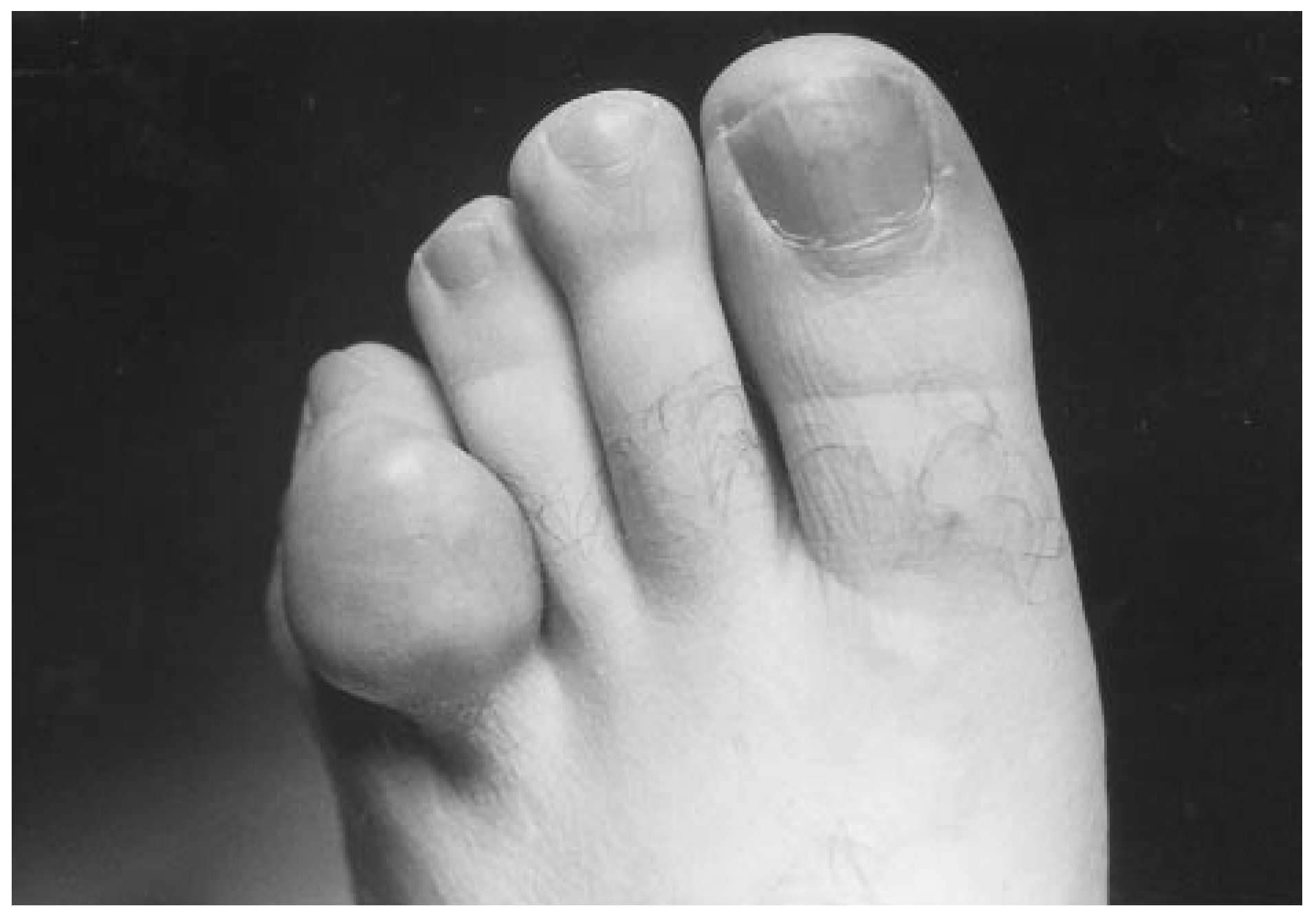
Physical examination revealed a well-developed and well-nourished man. Examination of his left foot revealed a soft-tissue mass on the dorsum of the fourth toe. The mass was directly overlying the extensor digitorum longus tendon and was centered over the proximal interphalangeal joint (
Fig. 1). The mass was oval-shaped and measured 3 × 4 × 1 cm; it was firm and movable, and did not allow transillumination. Hard nodular areas were palpable within the mass; no pain was elicited with either direct or indirect palpation of the mass. There was no opening in the skin. Laboratory test results were unremarkable.
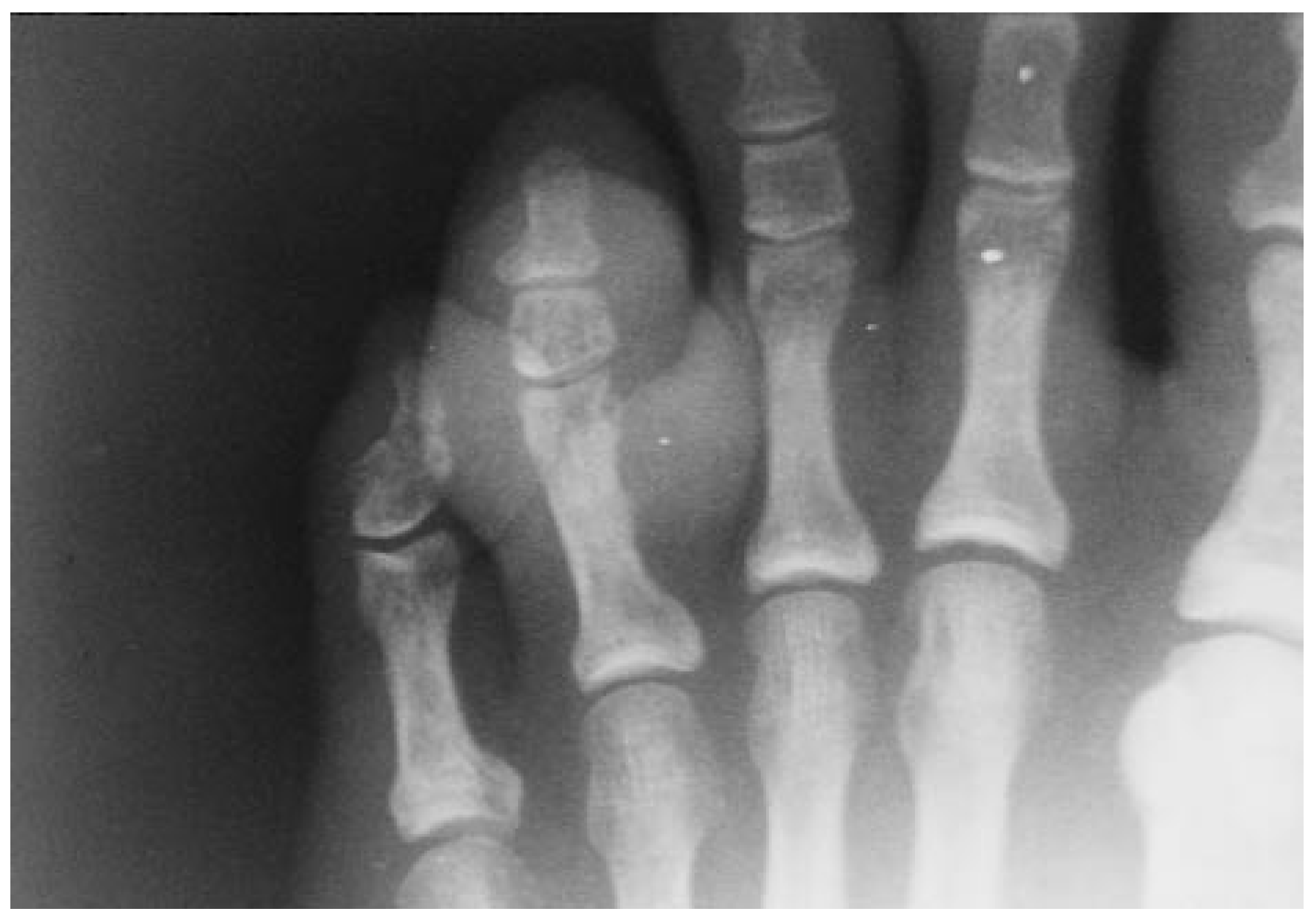
Radiographic examination revealed increased soft-tissue density and volume of the mass (
Fig. 2). A small area of radiolucency was noted at the base of the middle phalanx.
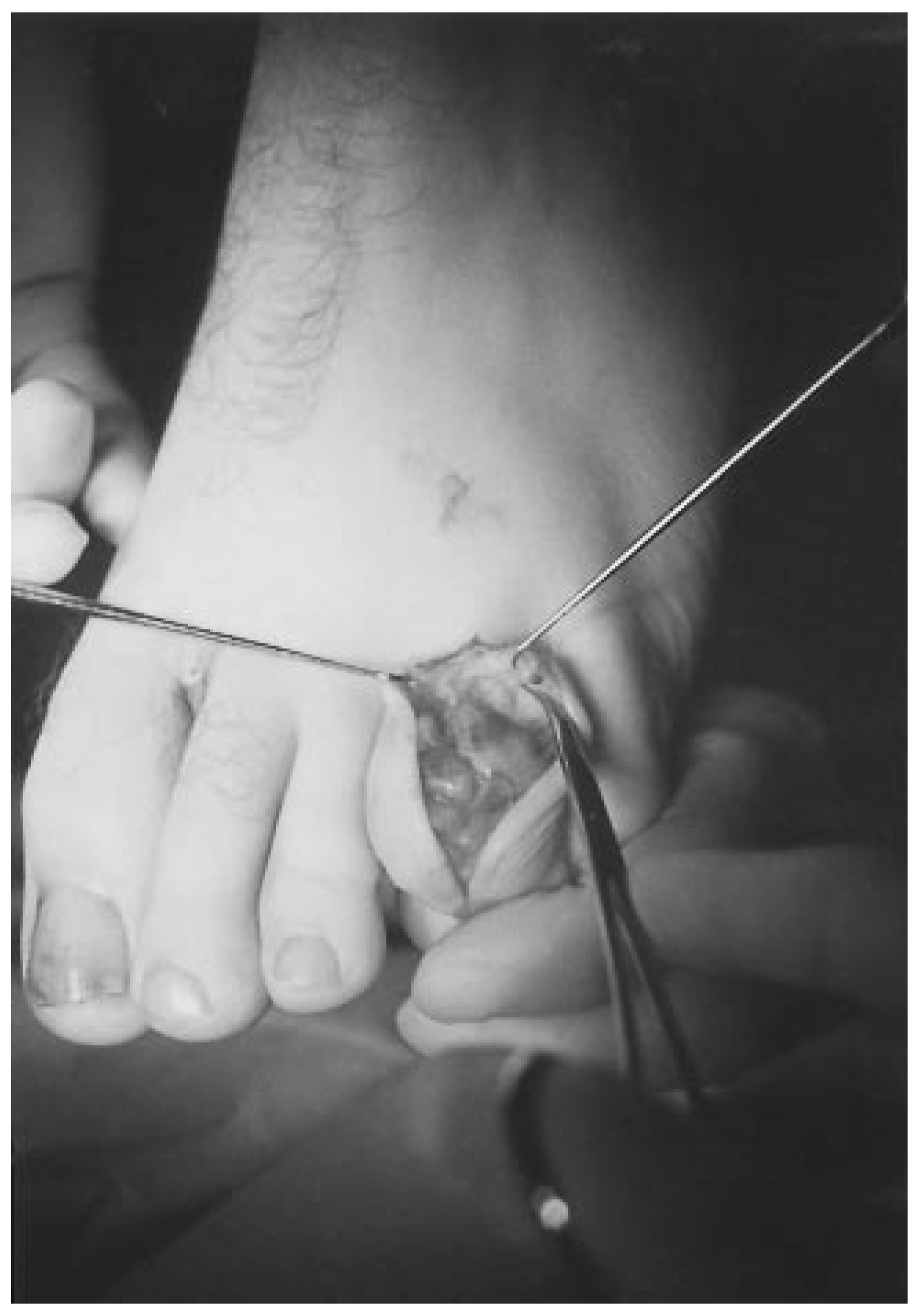
There was a high index of suspicion for giant cell tumor, and it was decided to perform surgery. A dorsolinear incision measuring approximately 4.5 cm was made over the soft-tissue mass. Dissection was carried down to the level of the tumor. Blunt dissection exposed the dorsal aspect of the mass. Neurovascular structures were seen throughout the body of the mass (
Fig. 3). Dissection was performed around the rest of the well-encapsulated mass. Care was taken to preserve the neurovascular structures to prevent an ischemic and anesthetic fourth toe. The proper dorsomedial digital nerve and the dorsomedial digital artery were sacrificed, as the structures were inextricably entwined with the mass. The tumor was attached to the tendon sheath of the extensor digitorum longus tendon. A projection of the tumor communicated with the proximal interphalangeal joint. The mass was removed
in toto, including the projection into the joint. The mass was easily separated from the surrounding soft tissue except for the area of the dorsomedial proximal interphalangeal joint. Mild erosion of the base of the intermediate phalanx was noticed and the eroded areas were resected along with any bone that showed signs of adhesion from the tumor. The mass was brown in color with mottled areas of yellow and white. Once the tumor was removed, the redundant skin flaps were reduced to produce adequate closure without significant excess tissue.
The pathology macroscopic report described a 3.5 × 2.8 × 0.8-cm mass that was somewhat nodular on the outer surface and varied in color from ivory to light tan. The sections, which were taken at 0.1- to 0.3-cm intervals, were a pale tan color with focal areas of yellowish tan coloration. The mass was firm.
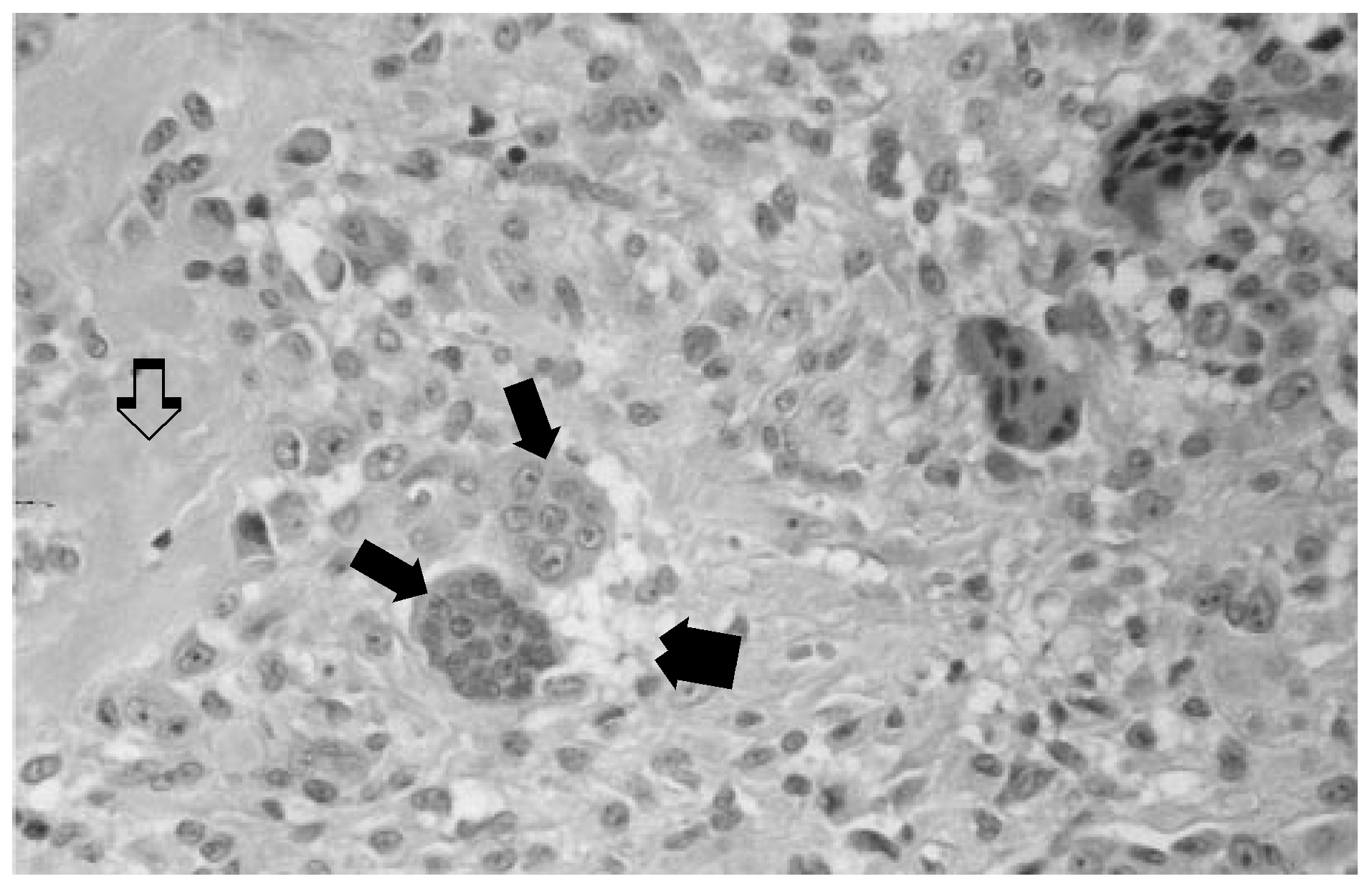
The microscopic report described tumor nodules containing numerous multinucleated giant cells, focal patchy deposits of hemosiderin-type pigment, and numerous plump fibrohistiocytic-type cells (
Fig. 4). The tumor nodules and stroma were generally surrounded by relatively dense sclerotic hypocellular fibrocollagenous stroma, with a relatively sharp and blunt interface between tumor nodules and stroma. Other nodules consisted of small-to-large, loosely cohesive cellular components that splayed the native collagen. Areas of synovial tissue were identified in the specimen. Much of the tumor had a fibrotic surface. The pathologist’s impression of the specimen was that it was a “benign giant cell tumor, probably of the tendon sheath.”
The pathology findings were explained to the patient, and the patient was instructed to observe the affected area for recurrence of the tumor. No recurrence was noted at the patient’s 6-month follow-up visit.
Discussion
Giant cell tumors account for approximately 1.6% of all soft-tissue tumors [
7]. Approximately 88.4% of all giant cell tumors of tendon sheath occur in the digits of the hands and feet, and approximately 13.7% of those are found in the toes [
5]. Thus the occurrence of this tumor in the toes is rare.
Although the clinical presentation of the mass in this case was typical for giant cell tumor, other softtissue masses could not be ruled out, making the diagnosis difficult. Histologic examination of the tumor was required to make the definitive diagnosis.
Surgical excision continues to be the treatment of choice for giant cell tumor. Complete excision of the mass and any associated infiltrated structures is important because of the high recurrence rate if the mass is not totally removed. The vasculature to the toes should be preserved to prevent sloughing of the skin or ischemic insult to the toes. The patient should be reevaluated every 6 months for 1 to 5 years for any sign of recurrence of the tumor.