Next Article in Journal
Computed Tomographic Imaging of the Foot and Ankle Developmental and Congenital Anomalies
Previous Article in Journal
Chondromyxoid Fibroma of the Fourth Metatarsal
 
 
Journal of the American Podiatric Medical Association is published by MDPI from Volume 116 Issue 1 (2026). Previous articles were published by another publisher in Open Access under a CC-BY (or CC-BY-NC-ND) licence, and they are hosted by MDPI on mdpi.com as a courtesy and upon agreement with American Podiatric Medical Association.
Article

Blunt Dissection Technique for the Removal of Kaposi’s Sarcoma

by
Harvey Lemont
and
Samia Riaz Chaudry
Laboratory of Podiatric Pathology, Temple University School of Podiatric Medicine, Philadelphia, PA 19107, USA
J. Am. Podiatr. Med. Assoc. 2000, 90(4), 217-218; https://doi.org/10.7547/87507315-90-4-217
Published: 1 April 2000
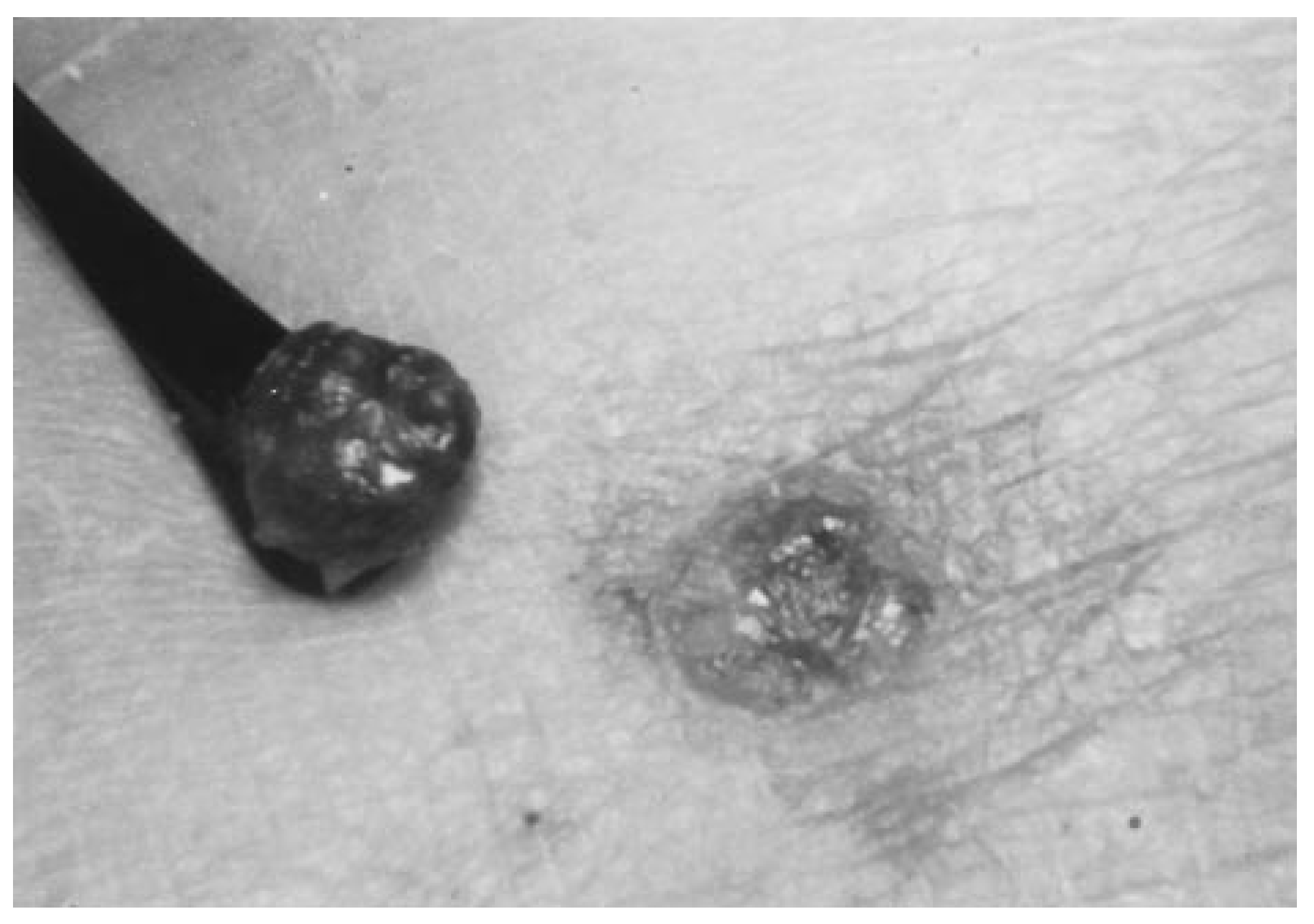
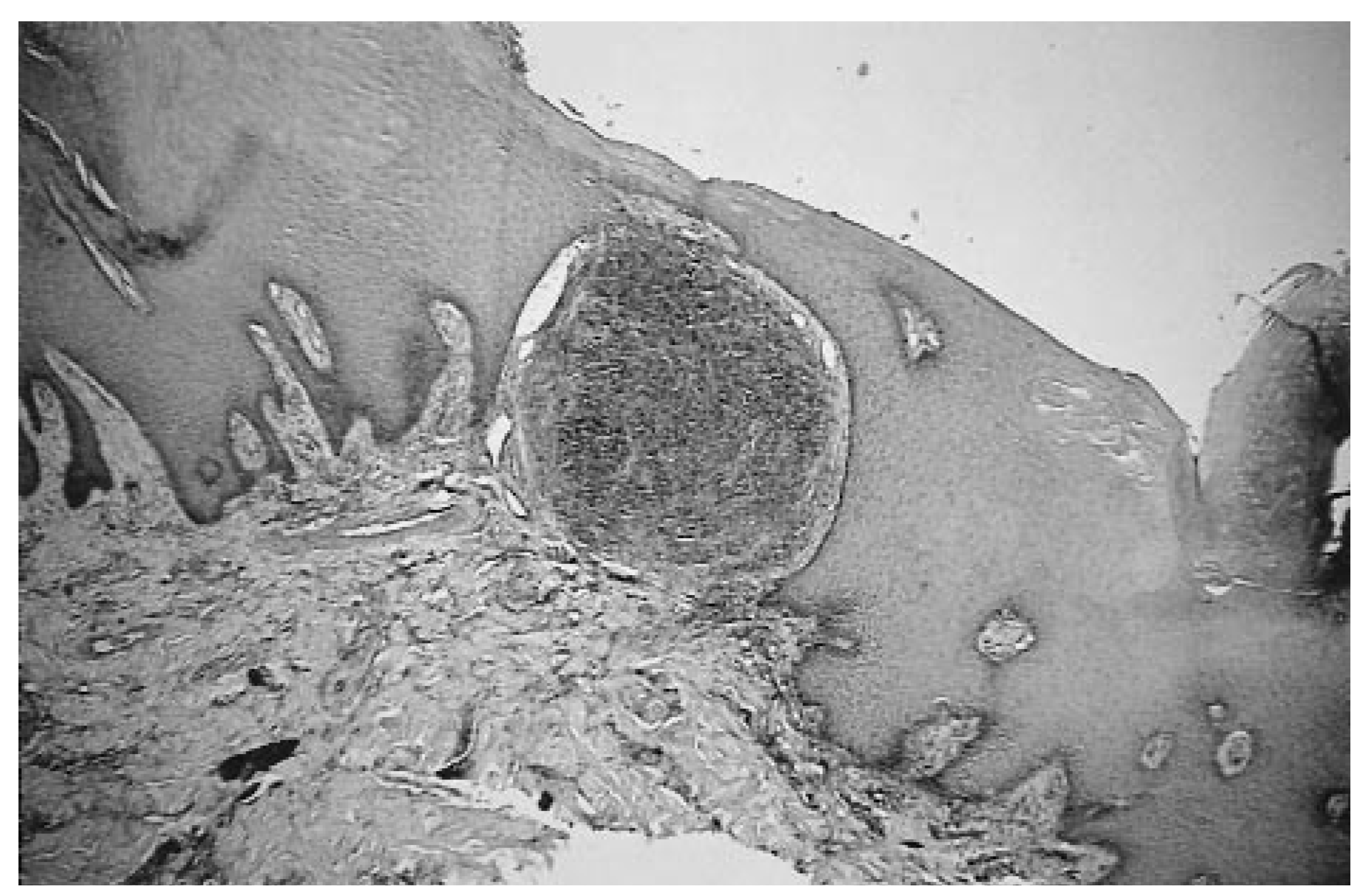
According to Gonzalez-Martinez et al, [1] surgery is the treatment of choice for the removal of nodular Kaposi’s sarcoma. While the literature documents surgical excision as a treatment option, the authors were unable to find any mention of blunt dissection as a surgical option in the treatment of nodular Kaposi’s sarcoma. The authors have found blunt dissection to be a useful technique for retrieving biopsy material and treating the cutaneous nodular form of Kaposi’s sarcoma (Fig. 1). The nodule seen in Kaposi’s sarcoma is amenable to blunt dissection because of the lesion’s histologic circumscription and demarcation from surrounding dermis (Fig. 2).
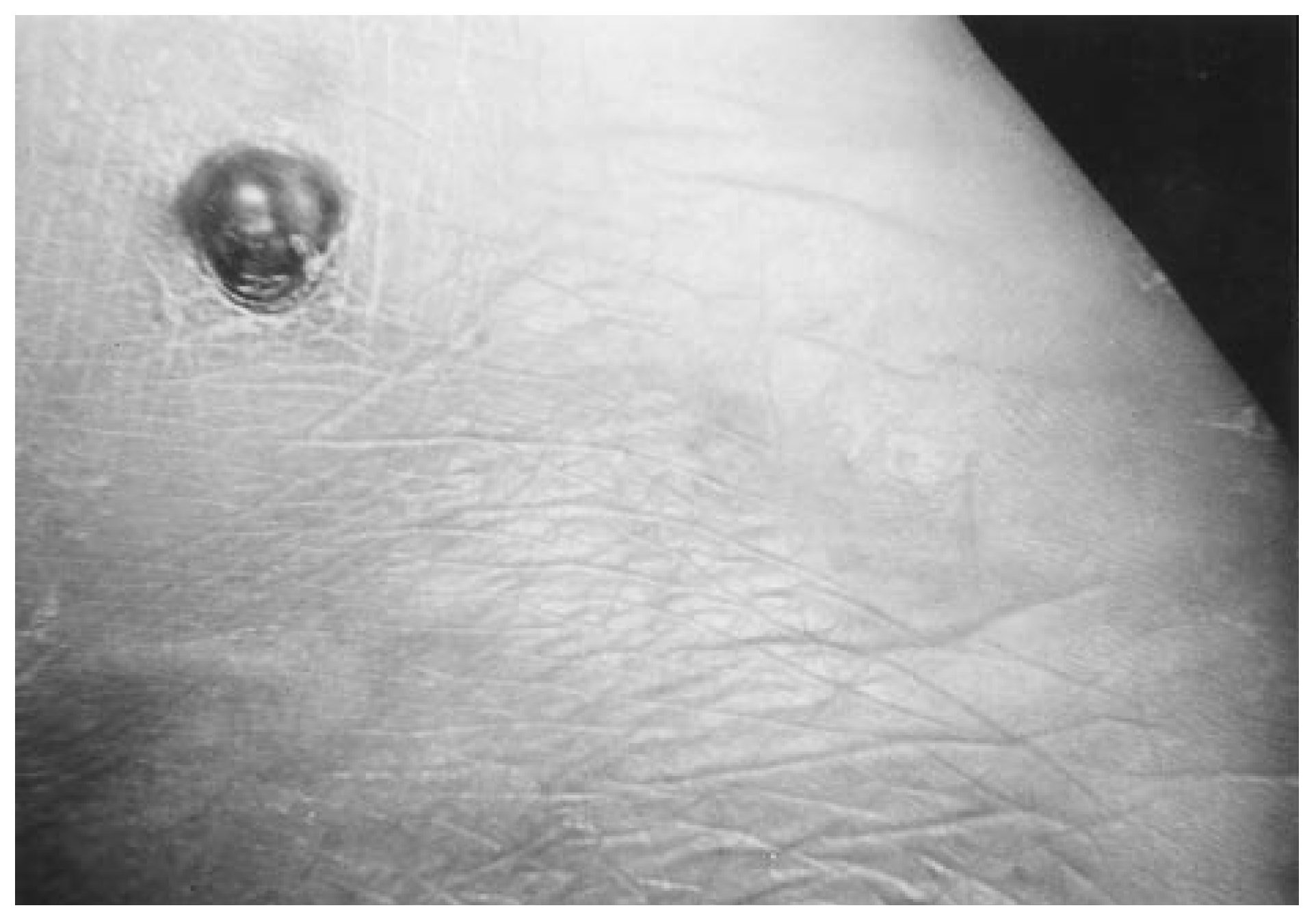
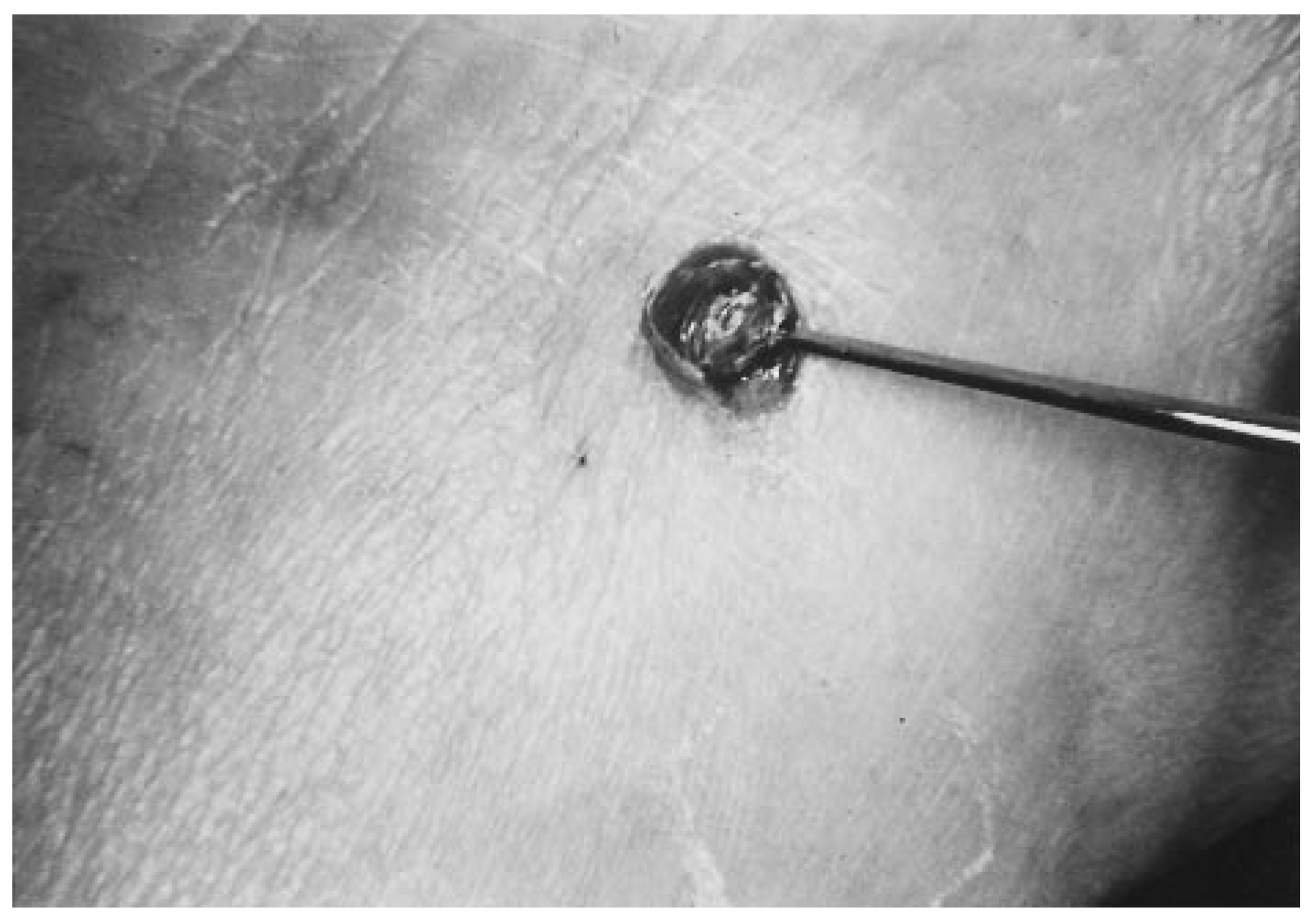
The authors prefer to use a Freer periosteal elevator for blunt dissection of Kaposi’s sarcoma. The elevator allows removal of the nodular lesion without the need for sharp surgical excision. This is especially important when lesions are removed from the sole, where the potential for scarring should be minimized. With the elevator, deep pressure or tension is exerted on the instrument. This allows the borders of the nodule to be easily freed (Fig. 3). Once the borders of the nodule are released, the entire lesion can be scooped out in one motion. The cutaneous lesion is bluntly excised down to the level of the superficial fascia to ensure complete removal of the nodule. The superficial fascia can be easily distinguished from surrounding tissues by its glossy, white appearance (Fig. 4). [2] Once the lesion is removed, the affected area can heal by secondary intention. The authors have found no recurrence of the lesion at the site from which it was removed.
The blunt dissection technique for the removal of nodular Kaposi’s sarcoma offers the advantages of complete extirpation and preservation of the lesion for pathologic examination with a minimum of scarring.

References

  1. GONZALEZ-MARTINEZ, R; MARIN-BERTOLIN, S; MARTINEZ-ESCRIBANO, J. ET AL: Nodular Kaposi’s sarcoma as a presenting feature of HIV infection. Int J Dermatol 1996, 35, 813. [Google Scholar] [CrossRef] [PubMed]
  2. LEMONT, H; PAREKH, V. Superficial fascia: an appropriate anatomic boundary for excising warts on the foot. J Dermatol Surg Oncol 1989, 15, 710. [Google Scholar] [CrossRef] [PubMed]
Figure 1. Nodular variety of Kaposi’s sarcoma.
Japma 90 00217 g001
Figure 2. Histologically, the nodule appears well circumscribed within the dermis with a collarette of epidermis surrounding its margins (H&E, ×10).
Japma 90 00217 g002
Figure 3. While the elevator is held under tension, the borders of the nodule can be easily lifted.
Japma 90 00217 g003
Figure 4. The nodule is easily “popped out” at the level of the superficial fascia, resulting in complete resection of the lesion.
Japma 90 00217 g004