Next Article in Journal
Biomechanics of the normal and abnormal foot
Previous Article in Journal
The effect of foot orthoses on transverse tibial rotation during walking
 
 
Journal of the American Podiatric Medical Association is published by MDPI from Volume 116 Issue 1 (2026). Previous articles were published by another publisher in Open Access under a CC-BY (or CC-BY-NC-ND) licence, and they are hosted by MDPI on mdpi.com as a courtesy and upon agreement with American Podiatric Medical Association.
Article

Dynamic foot orthoses. Principles and application

by
David J. Pratt
Southern Derbyshire Acute Hospitals NHS Trust, Derby, England
J. Am. Podiatr. Med. Assoc. 2000, 90(1), 24-29; https://doi.org/10.7547/87507315-90-1-24
Published: 1 January 2000

Abstract

Previous research has identified areas under the foot where stimulation evokes specific tonic reflexes. The term “tonic” is used because these reflex movements occur slowly, as if tonus or tension were accumulating, in contrast to the abrupt phasic response of a tendon jerk. The concept of tonic reactions has now been incorporated into the design of dynamic foot orthoses to help provide improved orthotic treatment with a better functional outcome. This article describes the background of this technique, briefly describes the manufacture of the dynamic orthosis, and outlines some of its uses.

For many years, the orthotic management of biomechanical foot imbalances, as well as pathologies of other parts of the body, has been based on biomechanical principles alone [1]. However, it has also been long recognized that the body is not a passive recipient of mechanical inputs but a reactive entity. Thus orthoses act within two environments, the purely mechanical one and the body’s own physiologic one. This has been found to yield unexpected benefits that could not have been predicted if the orthoses were thought of from a purely biomechanical perspective [2].
The orthotic treatment of lower-limb spasticity is difficult because foot dysfunction has a profound effect on the motion and function of the entire body. In less severely affected individuals, some type of plantar foot orthosis may be useful, but usually orthoses have to extend above the ankle if sufficient control of the foot and ankle complex is to be achieved. The presence of an orthosis may itself induce an adverse reaction that may lead to unwanted proximal reflexes—for example, trunk extension or increased tone in the foot and leg. This may lead to discomfort from the orthosis due to extra pressure on the plastic shell or straps. The merging of traditional mechanical orthotic principles and the apparently beneficial reflexes in the foot has resulted in the development of an area of orthotic management involving “dynamic orthoses.” This term is really a misnomer, because most orthoses could be considered dynamic; perhaps a better term would be tone-influencing orthoses.
The work of Duncan [3] identified four key areas of the foot where stimulation evoked certain tonic reflexes. It was found that orthoses could be developed to help reduce unwanted spastic tone and produce a more stable, functional, and energy-efficient gait pattern by the selective loading or unloading of the plantar surface of the foot [4]. This article will detail these so-called dynamic orthotic principles and show some of their results.

Reflexes and Dynamic Footplate Design

The four areas of the foot and their associated reflexes as identified by Duncan [3] are as follows:
1)
The toe-grasping reflex is flexion and adductionof the toes in response to the stimulation of the foot near the base of the second and third toes.
2)
The inversion reflex is a tonic inversion of thefoot in response to stimulation of the medial border of the foot near the head of the first metatarsal.
3)
The eversion reflex is an eversion of the foot inresponse to stimulation of the lateral border of the foot near the head of the fifth metatarsal.
4)
The dorsiflexion reflex is dorsiflexion of thefoot in response to stimulation of the central portion of the plantar surface of the heel.
These so-called primitive reflexes usually disappear gradually during the early years of childhood. This reduction in responses is thought to be due to suppression accomplished by the maturing cerebral cortex. However, persistence of the responses throughout childhood is seen in cases of central nervous system impairment such as cerebral palsy and in other conditions such as Down’s syndrome. In these cases, the suppressive ability of the cortex is evidently impaired. In addition to the foot reflexes, there seem to be more proximal effects of such stimulation in cases of brain injury: the entire limb can be induced into variable patterns of general tone reduction, greatly increasing the potential value of the phenomenon.
It was considered that if the Duncan reflexes could be taken into account in orthotic design, together with sound biomechanical principles, the body could be induced to perform beneficial actions that would aid in the overall orthotic management of pathologies. The essential features of the foot section of such an orthosis are incorporated into what is termed the dynamic footplate. The key features of the footplate are 1) unloading of the metatarsal heads and the center of the heel by means of depressions in the footplate; 2) pressure applied to the medial longitudinal arch; 3) pressure applied behind the second through fourth metatarsal heads that further off-loads the heads; 4) pressure applied under the sustentaculum tali as well as the medial calcaneus and its distal plantar surface that helps to further stabilize the foot and induce rearfoot stability; and 5) pressure applied to the sulcus of the second through fifth toes that tapers laterally.
These features of the footplate were identified through various studies at a number of centers using different approaches and methods [5,6,7]. Other features have also been identified as part of these programs and are often used in the manufacture of orthoses that extend above the ankle, such as ankle-foot orthoses [8,9,10,11].

Footplate Production

The footplates can be produced in two primary ways: from basic materials and from preformed partial footplates. This article describes in detail the production of the footplate from basic materials, as this technique is also applicable when preformed footplates are used. Production of a full footplate takes about 30 min, which can be difficult to manage in a busy clinic. The author’s practice is to identify patients who might benefit from the dynamic-orthoses approach and arrange a separate appointment for them that allows adequate time.
The footplate has a sandwich-type design, with a rigid base and a top layer of foam. The bottom layer is rigid to provide a base on which all of the shaped components can be placed and acts as a walking sole for temporary assessment. The second layer, usually composed of Pelite (Otto Bock UK Ltd, Parsonage Green, Surrey, England), is about 3 mm thick for small children and increases to 8 mm thick for adults. Pelite is commonly used because it is easily cut, does not compress during footboard construction, and is white, which makes it easy to mark for cutting. These layers are attached together with a temporary adhesive, which allows the removal of cutout sections at a later stage.
The foot is placed onto the sandwich and is held in a subtalar neutral position, or any other position that is deemed appropriate. It is important that this same foot position be used throughout footboard construction. The foot has to be moved onto and off of the board frequently, and failure to keep the foot correctly positioned at every stage will ultimately affect the function of the orthosis. The following marks are then made on the foam: 1) a line depicting the general outline of the foot, with added length at the toes; 2) marks at the proximal and distal borders of the first metatarsal head; 3) a mark at the distal border of the calcaneus medially; 4) a mark at the distal border of the calcaneus laterally; 5) a mark at the proximal border of the base of the fifth metatarsal; 6) marks at the proximal and distal borders of the fifth metatarsal head; and 7) marks at the interdigital spaces, as close to the metatarsal heads as possible.
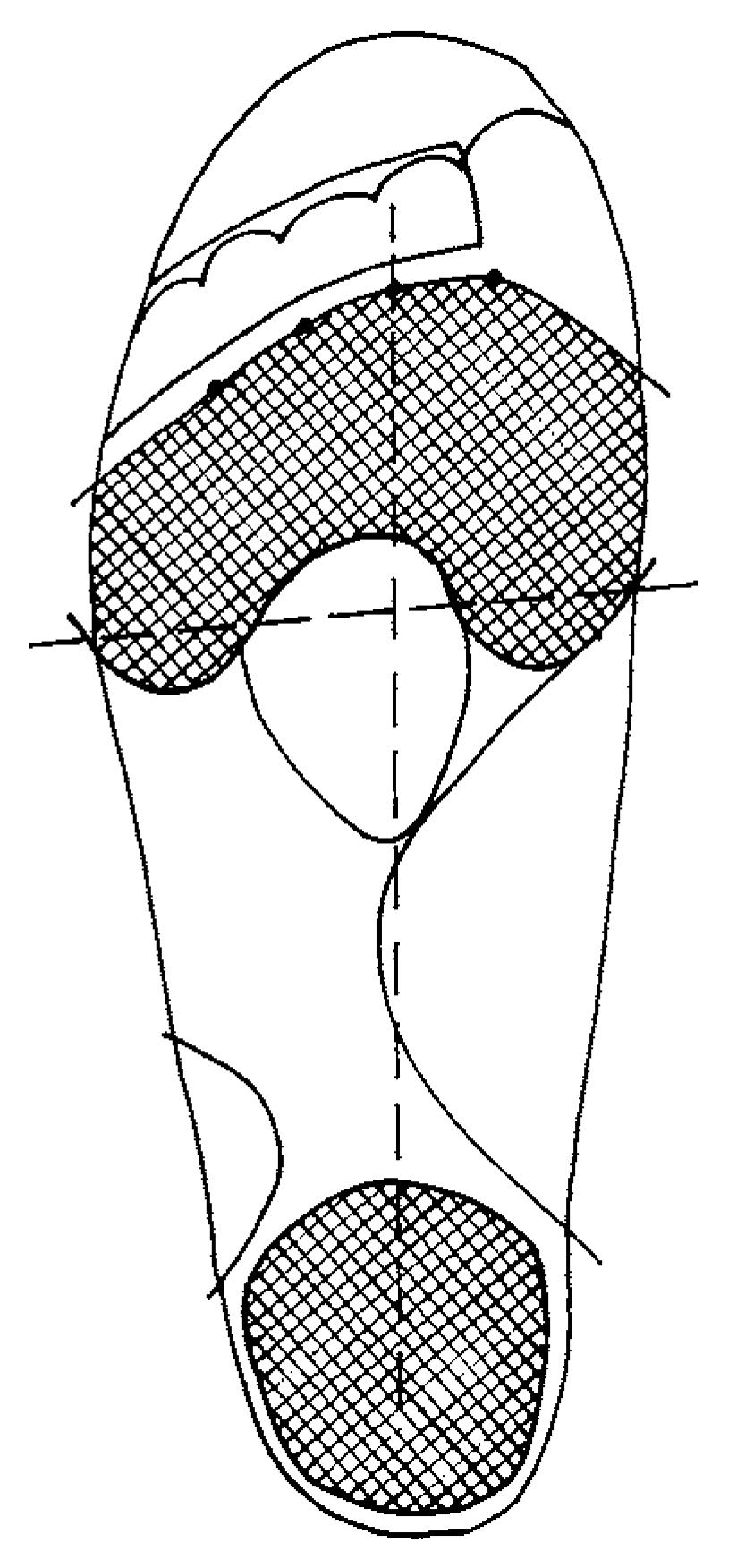
From these marks the outline of the footboard can be drawn (Fig. 1). First, the interdigital marks are joined to form the distal limit of the cutout for the metatarsal heads linking to the marks of the distal borders of the first and fifth metatarsal heads. Following this, the medial longitudinal arch is drawn in from the proximal metatarsal border medially to the distal border of the calcaneus, extending over halfway across the width of the foot at its peak. Next, the peroneal notch is marked from the distal border of the calcaneus laterally to the proximal border of the base of the fifth metatarsal. A circle is then drawn in the heel area such that it leaves a thin border around the foot outline and to the medial arch and peroneal notch.
Next, two straight lines are drawn, one from the second interdigital notch to the center of the heel, and another between the two marks for the proximal border of the metatarsal heads. The point at which these lines cross indicates the peak of the metatarsal dome behind the second through fourth metatarsal heads. This can be drawn in using a traditional teardrop outline and scaled to fit the foot size. Now the proximal border of the metatarsal region can be drawn in, forming a curve that extends proximally behind the first and fifth metatarsal heads and distally around the metatarsal dome. Finally, the toe platform is marked under the second through fifth toes.
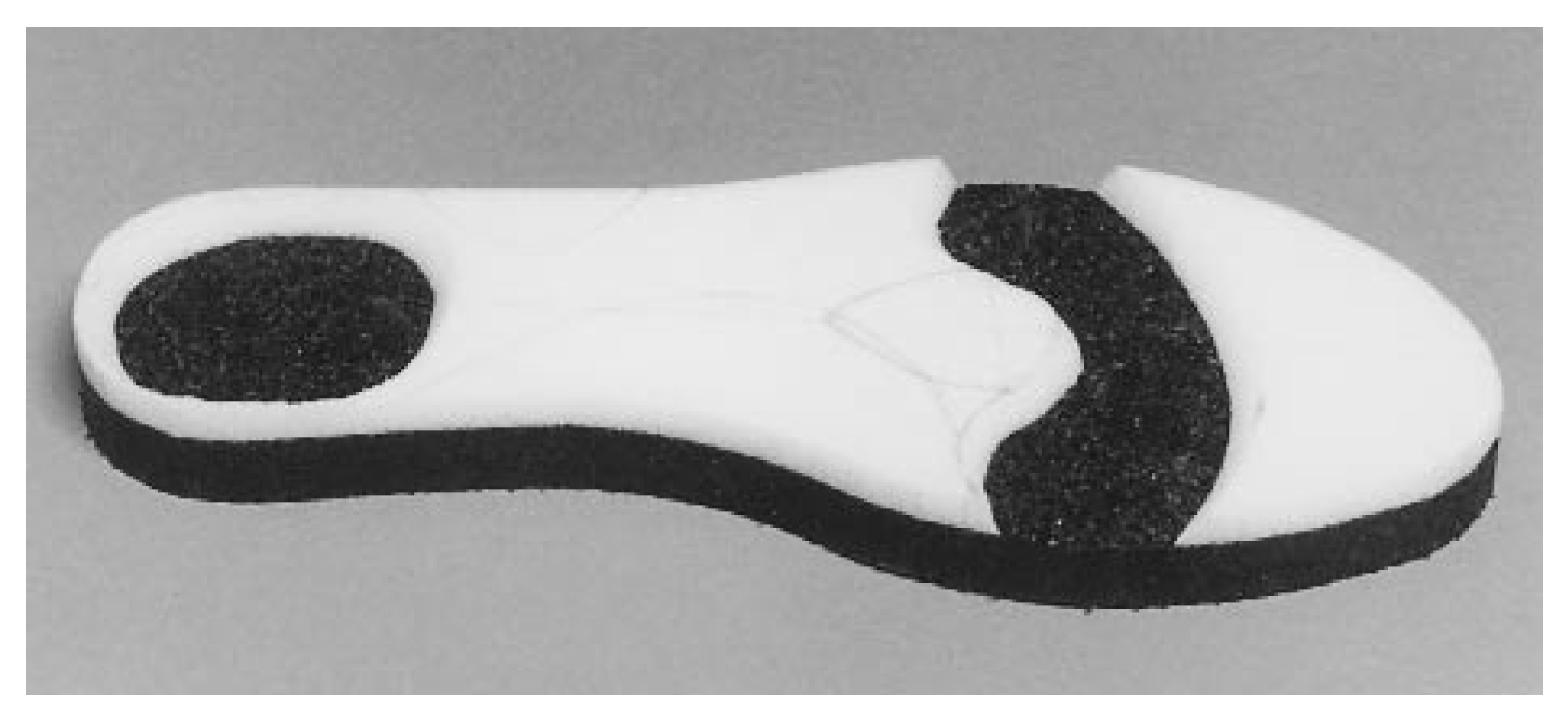
Following the completion of the markings, the areas marked with shading are cut out of the top foam layer using an angled knife blade to make a sloped edge, producing the result shown in Figure 2. The metatarsal cutout should extend beyond the foot outline medially and laterally, and the calcaneal cutout should be enclosed within a border. The foot can now be repositioned on the board and the cutout areas checked for accuracy. If an error is noted, the pieces that have been removed can be inserted and the cutout shape may be changed as required. This process can be repeated as often as necessary until the cutouts are correct. These adaptation steps show the advantage of using a temporary adhesive. The board is now covered with a thin layer of plaster bandage that is pressed well into the contours, which allows the additions to stick to the board properly.
The build-up sections are started next. The sequence used here is determined by the type of foot being treated. For a pronating foot, the first buildup would be the medial longitudinal arch; for a supinating foot the first buildup would be the peroneal notch. This order ensures that the rearfoot is stabilized in the most logical sequence before moving to the forefoot.
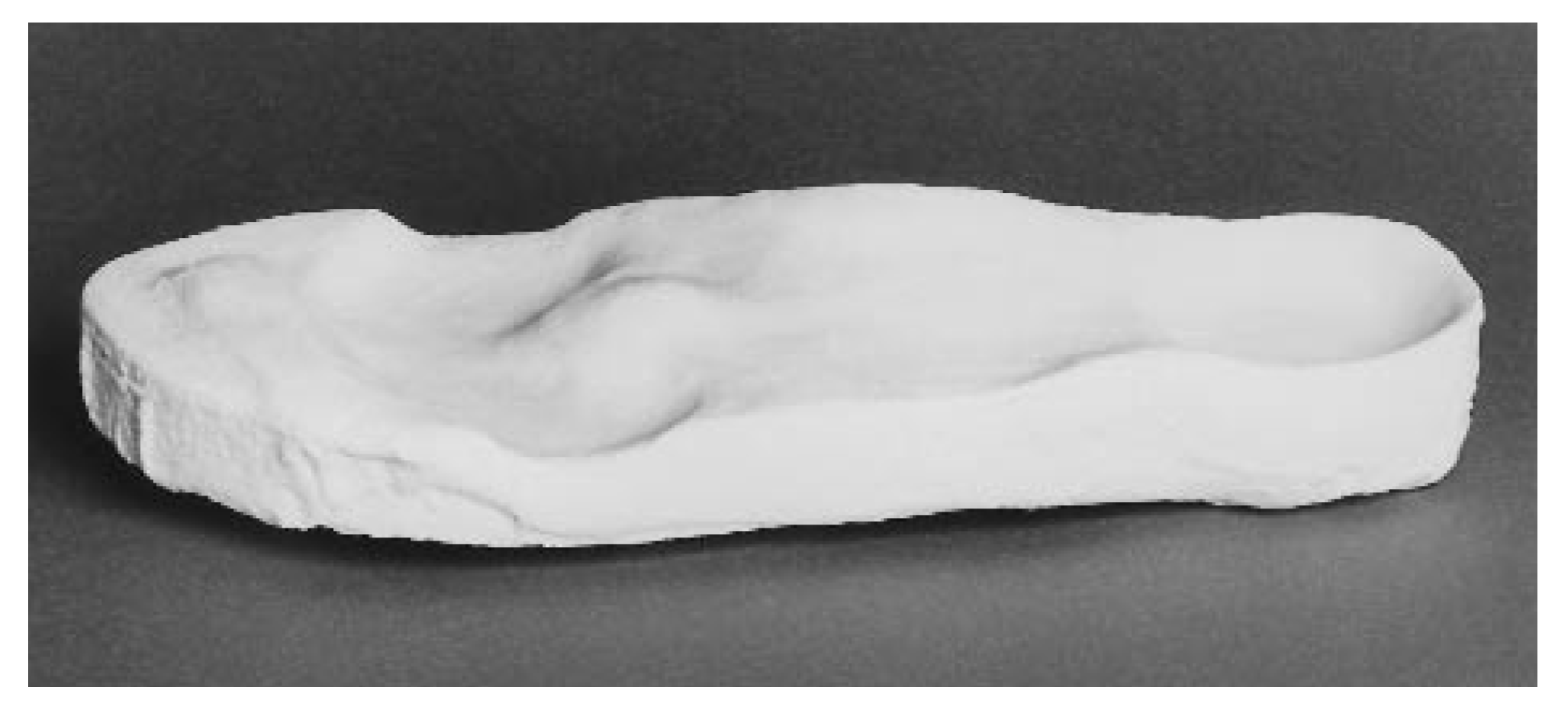
With the foot held in the desired position, small pieces of wet plaster bandage are carefully pushed into the medial arch and peroneal notch, in turn, until the space is filled, without distorting the plantar contours of the foot. This process involves repeated removal and re-application of the foot to the board as the buildups are checked and smoothed. The buildup process continues for the metatarsal dome and toe platform, with the latter having its greatest depth under the second and third toes, tapering to virtually nothing under the fifth toe. Once all of the buildups have been performed, the entire surface of the footboard is covered with a thin layer of plaster. It is important to work the plaster well into the contours (Fig. 3).
If preformed plastic footplates are used, such as those from Cascade Prosthetics and Orthotics (Ferndale, Washington), the time spent in the clinic to perform the procedure that has been described can be reduced to about 15 min. The preformed footplates are a series of different-sized plastic mold forms that are chosen to suit the patient and then easily adapted in the clinic by the addition of small amounts of plaster. Although the use of preformed footplates speeds up the entire production process, the finished footboard does not have the benefits of deep areas of offloading under the metatarsal heads and the calcaneus. Experience will allow the clinician to determine when to use the preformed footplates and when to develop the footboard as previously described.
Whichever procedure is used to produce the footplate, after it is finished it is applied to the patient with tape and the patient is instructed to stand and to do limited walking so that the immediate effects of the modifications may be noted. Significant tone changes are often observed even at this stage. At this point, fine tuning of the footplate can be performed and then rechecked before the final casting. Once the footplate has been approved, the next stage is to produce the cast for the actual orthosis.

Casting and Manufacture

For the relatively plantar foot orthosis, the footplate is simply held onto the foot with adhesive tape and plaster wrapped around the foot in a manner similar to that used for casting functional foot orthoses. Because the footplate already corrects the forefoot-torearfoot relationship of the foot, all that is required at this point is that the foot be held in its correct alignment with the leg. When the cast is removed, the shell incorporates the essential features needed to make the orthosis.
With foot orthoses that extend to ankle level or above, a circumferential casting technique is used in which a thin stocking is applied over the foot, leg, and footboard with a narrow plastic tube or flexible strip on the dorsal surface. The plaster is wrapped around the foot and up to the level required, and the foot is held in place until the plaster is set. The cast is then cut off with a sharp knife along the tube or strip, and the cast is pulled off of the foot. This negative shell is sent to the workshop for manufacture of the orthosis.
The negative cast is filled with plaster in the traditional way and the negative shell and footplate are removed to yield the positive cast. Areas of roughness are smoothed and the foot contours are checked and adjusted to obtain a smooth surface with no edges between the various elements. There is generally much less to do in the workshop when these types of casts are produced, as the full correction and adaptation have already been performed by the clinician in the clinic.
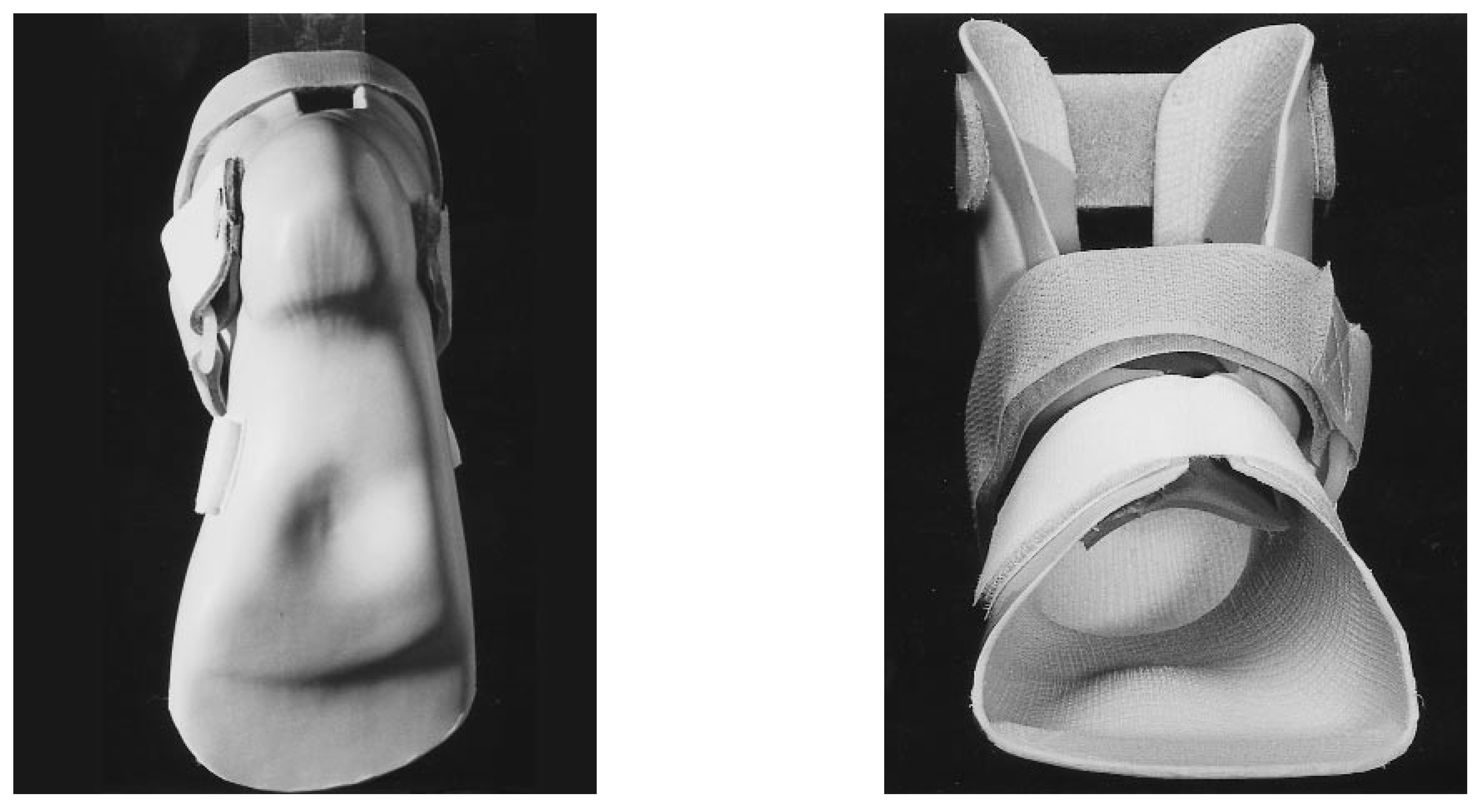
Vacuum molding is performed in the traditional manner to incorporate the footplate contours into the finished plastic shell. However, some clinicians prefer to have some features of the footplate included as foam sections, which would be applied after the molding process, using the footplate as a template. This procedure allows the adaptations to be adjusted at the clinic, if required, with the pads sometimes relocated to accommodate growth of the foot. Figure 4 shows one type of dynamic foot orthosis design and details of the footplate.

Clinical Value

The general principles of orthotic control are as follows:
1)
To reduce the number of degrees of freedom inthe foot and ankle complex, which eases the task of postural control.
2)
To realign the lower limb, which affects thebase of support, the position of the center of gravity within the base, and alignment of the proximal joints and muscle lines of action (and lengths). Each of these proper alignments contributes to correct posture by achieving the correct direction of the lines of weightbearing force.
3)
To provide sensory feedback promoting ideal, rather than poor, posture. Tactile feedback may also facilitate specific balance strategies.
It is perhaps not surprising that dynamic orthoses, which help to simplify postural control, are able to meet all three of these requirements by using a different strategy. The use of the principles that apply to dynamic orthoses has been shown to reduce muscle tone, improve stability and balance, provide more symmetry, reduce muscle imbalance, and improve function in the entire body. They have been used in many centers around the world for several years. They have been found to be beneficial in cases of ambulatory cerebral palsy (diplegia, hemiplegia, and quadriplegia), through increased stability and reduced tone; other hypertonic foot varus and valgus deformities; nonambulatory cerebral palsy, through improved supported-standing balance; hypotonic instabilities; spina bifida; arthrogryposis; muscular dystrophy; and closed head injury or cerebrovascular accident [7,12].
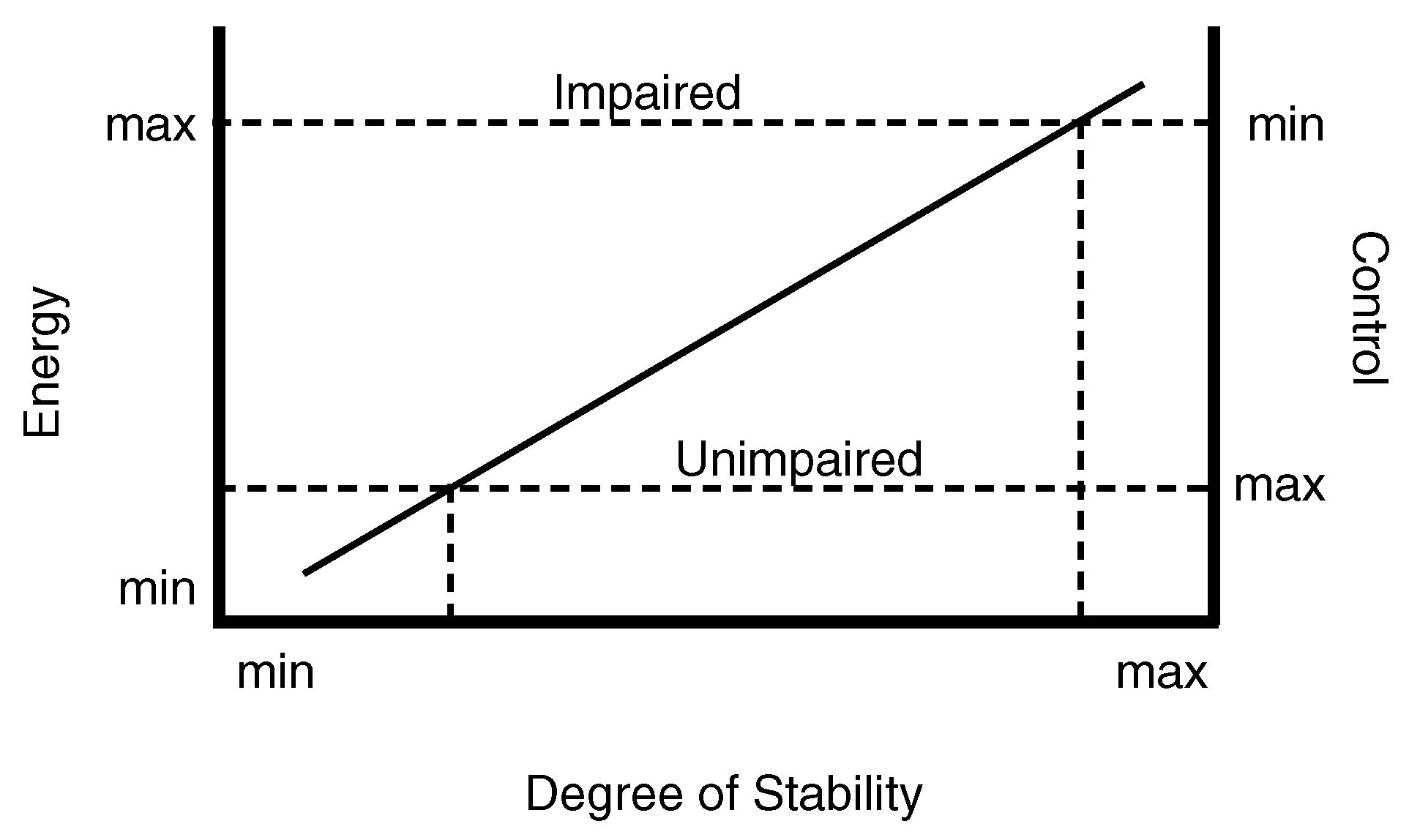
Figure 5 shows the interrelationship of energy requirements for movement, the level of means of balance control available, and stability required for impaired and unimpaired people. The figure shows that unimpaired people have highly developed balance control, requiring little inherent stability within their framework; thus very little energy is required to enable functional motion. In impaired people, the level of available means of control is greatly reduced, so the person requires more stabilization, which requires increased energy to enable functional motion. In addition, the effort required by the person to gain that stability by achievement of spastic or imbalanced muscle action is such that there is very little reserve for functional activity.
By providing extra stability through the use of orthoses, postural control is easier and the residual control strategies can be refocused on a functional action, such as walking. The use of these dynamic features has allowed orthoses to be more effective in providing this stabilization, thus further reducing the effort required for postural control. This improvement is further evidenced by the reduction in the required mechanical control that is often observed when such orthoses are used. For example, patients who previously had ankle-foot orthoses to control the foot can now get the same control and function from a dynamic foot orthosis (a plantar device similar to a functional foot orthosis) or a supramalleolar device (as illustrated in Fig. 4).
The actual mechanisms in operation with such dynamic orthoses are still uncertain. One of the reflexes proposed by Duncan [3] is dorsiflexion in response to heel stimulation. Why does the dynamic technique work better when the heel is unloaded? There seems to be no logical link between these two elements. To take Duncan’s results at face value also fails to note that when such stimuli are continued for more than a few seconds their effects decrease, eventually to zero, yet this pattern is not observed in dynamic orthoses. Clearly, much more research is needed before the approach is understood and then, hopefully, applied more effectively.
The technique of producing dynamic orthoses as described in this article is difficult to master, but the benefits that it imparts to orthotic treatment can be considerable. The author regularly applies the principles of dynamic orthoses in the fabrication of standard orthoses, as they can assist in the achievement of orthotic control and the reduction of strap pressures in difficult cases.


References

  1. BOWKER, P; CONDIE, DN; BADER, D; et al. (Eds.) Biomechanical Basis of Orthotic Management; ButterworthHeinemann: Oxford, England, 1993. [Google Scholar]
  2. BUTLER, PB; THOMPSON, N; MAJOR, RE. Improvement in walking performance of children with cerebral palsy: preliminary results. Dev Med Child Neurol 1992, 34, 567. [Google Scholar] [CrossRef] [PubMed]
  3. DUNCAN, WR. Tonic reflexes of the foot. J Bone Joint Surg Am 1960, 42, 859. [Google Scholar] [CrossRef] [PubMed]
  4. PRATT, DJ; SANNER, WH. Paediatric foot orthoses. Foot 1996, 6, 99. [Google Scholar] [CrossRef]
  5. CARLSON, JM. BERGLUND G: An effective orthotic design for controlling the unstable subtalar joint. Orthot Prosthet 1979, 33, 39. [Google Scholar]
  6. FORD, C; GROTZ, RC. SHAMP JK: The neurophysiological ankle-foot orthosis. Clin Prosthet Orthot 1986, 10, 15. [Google Scholar]
  7. HYLTON, NM. Postural and functional impact of dynamic AFOs and FOs in a paediatric population. J Prosthet Orthot 1989, 2, 40. [Google Scholar] [CrossRef]
  8. ZACHAZEWSKI, JE; EBERLE, ED. JEFFRIES M: Effect of tone inhibiting casts and orthoses on gait. Phys Ther 1982, 62, 453. [Google Scholar] [CrossRef] [PubMed]
  9. HINDERER, KA; HARRIS, SR; PURDY, AH; et al. Effects of “tone reducing” vs standard casts on gait improvement of children with cerebral palsy. Dev Med Child Neurol 1988, 30, 370. [Google Scholar] [CrossRef] [PubMed]
  10. MCPHERSON, JJ; BECKER, AH. Dynamic splints to reduce the passive components of hypertonicity. Arch Phys Med Rehabil 1985, 66, 249. [Google Scholar] [CrossRef]
  11. LOHMAN, M; GOLDSTEIN, H. Alternative strategies in tone reducing AFO design. J Prosthet Orthot 1993, 5, 21. [Google Scholar] [CrossRef]
  12. PRATT DJ: Tendencias actuales sobre ortesis de extremidad inferior. Revista Iberoamericana de Rehabilitacion Medica 1995, 16, 25.
Figure 1. A fully marked up footboard showing the marks made and the derived areas. The sections to be removed are shaded.
Japma 90 00024 g001
Figure 2. A footboard showing the cutout areas and the sloping nature of the cut edges.
Japma 90 00024 g002
Figure 3. A finished footboard showing the cutouts and added areas of buildup.
Japma 90 00024 g003
Figure 4. Plantar (A) and frontal (B) views of a supramalleolar orthosis with a dynamic footplate incorporated.
Japma 90 00024 g004
Figure 5. The interrelationship of energy requirements for motion, level of means of control, and degree of stability for both the impaired and unimpaired person.
Japma 90 00024 g005