Next Article in Journal
The Effect of Pregnancy on Footprint Parameters. A Prospective Investigation
Previous Article in Journal
Hydroxyapatite as a Bone Substitute
 
 
Journal of the American Podiatric Medical Association is published by MDPI from Volume 116 Issue 1 (2026). Previous articles were published by another publisher in Open Access under a CC-BY (or CC-BY-NC-ND) licence, and they are hosted by MDPI on mdpi.com as a courtesy and upon agreement with American Podiatric Medical Association.
Article

Clarifying Proximal Diaphyseal Fifth Metatarsal Fractures. The Acute Fracture versus the Stress Fracture

by
Karl B. Landorf
Faculty of Health, Division of Podiatry, University of Western Sydney-Macarthur, Australia
J. Am. Podiatr. Med. Assoc. 1999, 89(8), 398-404; https://doi.org/10.7547/87507315-89-8-398

Published: 1 August 1999

Abstract

This article discusses the classification and treatment of proximal diaphyseal fifth metatarsal fractures. There are two types of proximal diaphyseal fracture of the fifth metatarsal: the acute proximal diaphyseal fracture and the proximal diaphyseal stress fracture. Confusion between the two types of fractures is probably due to their similar location and the historical practice of referring to all fractures in this location as Jones fractures. Both fractures are prone to delayed union and require long periods of nonweightbearing immobilization or internal fixation for healing. However, because the mechanism of injury is different for each fracture, the treatment plan may need to be tailored to the particular type of fracture.

In the early part of this century, an English surgeon named Robert Jones sustained an injury to his foot while dancing around a tent pole at a military party. [1,2] The following day he requested a radiographic examination of his foot, which revealed a fractured fifth metatarsal. In 1902, Jones published a paper in Annals of Surgery describing this fracture, as well as other similar cases he had seen. [1] Jones reported that his fifth metatarsal fracture occurred “about three fourths of an inch from its base.” [1] (p697) This type of fracture eventually became known as the Jones fracture. While much folklore has filtered through the literature regarding Jones’s misfortune, there has been a great deal of confusion regarding proximal fifth metatarsal fractures.
Many authors have confused the avulsion fracture of the tuberosity with the true Jones fracture of the proximal diaphysis. [3,4,5,6,7,8,9,10,11] More recently, there has been confusion between the proximal diaphyseal fractures; however, two distinct fractures have been identified, the acute proximal diaphyseal fracture (initially reported by Jones) and the proximal diaphyseal stress fracture. [12,13,14] These two fractures have differing etiologies: the acute proximal diaphyseal fracture is generally caused by a single traumatic episode, whereas the proximal diaphyseal stress fracture is caused by repeated submaximal weightbearing stress. Interestingly, although Jones presented his cases as if they were acute fractures, Byrd [15] (p748) suggests that a review of Jones’s original radiographs indicates that they “meet the criteria for a stress fracture.”
In contrast to other fifth metatarsal fractures, such as the avulsion fracture of the tuberosity, proximal diaphyseal fractures are prone to delayed union and refracture, [3,7,12,16,17] and are renowned for their problematic nature. [18,19,20] Because of these concerns, proximal diaphyseal fractures require aggressive treatment. To ensure appropriate treatment, accurate diagnosis is required; therefore, clinicians need to be familiar with the anatomy of the fifth metatarsal.

Anatomy of the Fifth Metatarsal

The bony architecture of the fifth metatarsal is similar to that of other metatarsals, and contains a proximal metaphysis, a proximal diaphysis, a diaphysis (shaft), a neck, and a head. However, the fifth metatarsal is unique in that it has a proximal tuberosity at the site of insertion of the peroneus brevis tendon. In addition to the peroneus brevis, the tendon of peroneus tertius inserts into the dorsal proximal shaft. [21] A further soft-tissue structure, the lateral slip of the plantar fascia, inserts into the plantar aspect of the tuberosity. Interestingly, results from a cadaveric study by Richli and Rosenthal [22] suggest that this structure, rather than the peroneus brevis tendon, is the probable cause of the avulsion fracture of the fifth metatarsal tuberosity.
The fifth metatarsal has articulations with the cuboid proximally, the fourth metatarsal medially, and the proximal phalanx of the fifth digit distally. The base of the fifth metatarsal is strongly held in place by ligamentous attachments to the cuboid and fourth metatarsal. These attachments cause the range of motion within the proximal articulations to be relatively small, with movement occurring predominantly in the directions of pronation and supination. [23]
Generally, there are three muscles that originate from the fifth metatarsal, including the flexor digiti minimi brevis and the dorsal and plantar interossei muscles. The flexor digiti minimi brevis muscle originates from the plantar base of the metatarsal, while the interossei muscles originate from the medial aspect of the shaft. Occasionally, there are variations in the normal musculature, including the following: 1) a portion of the abductor digiti minimi muscle may originate from the plantar aspect of the fifth metatarsal base; 2) the abductor ossi metatarsi quinti muscle, if present, inserts into the styloid process; and 3) the opponens digiti minimi muscle, if present, inserts into the lateral border of the fifth metatarsal shaft. [24]
The vascular supply of the fifth metatarsal has been investigated in two recent studies that conclude that the fifth metatarsal has a relatively poor blood supply to the proximal diaphysis. [25,26] Further, Smith et al [26] suggest that the single nutrient artery supplying the proximal diaphysis would be disrupted after a fracture, leading to disruption of the vascular supply and delayed healing.

Classification of Fractures

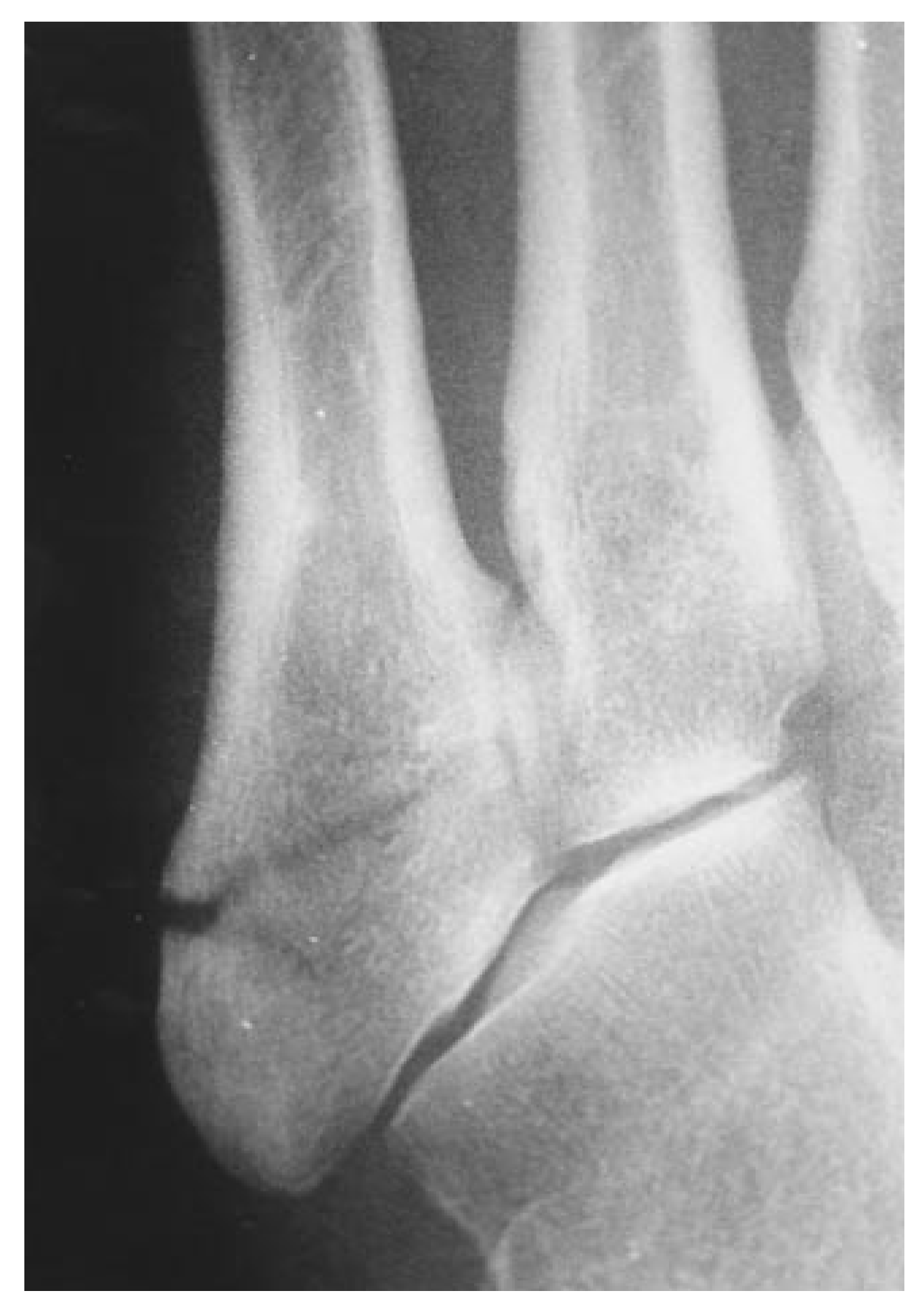
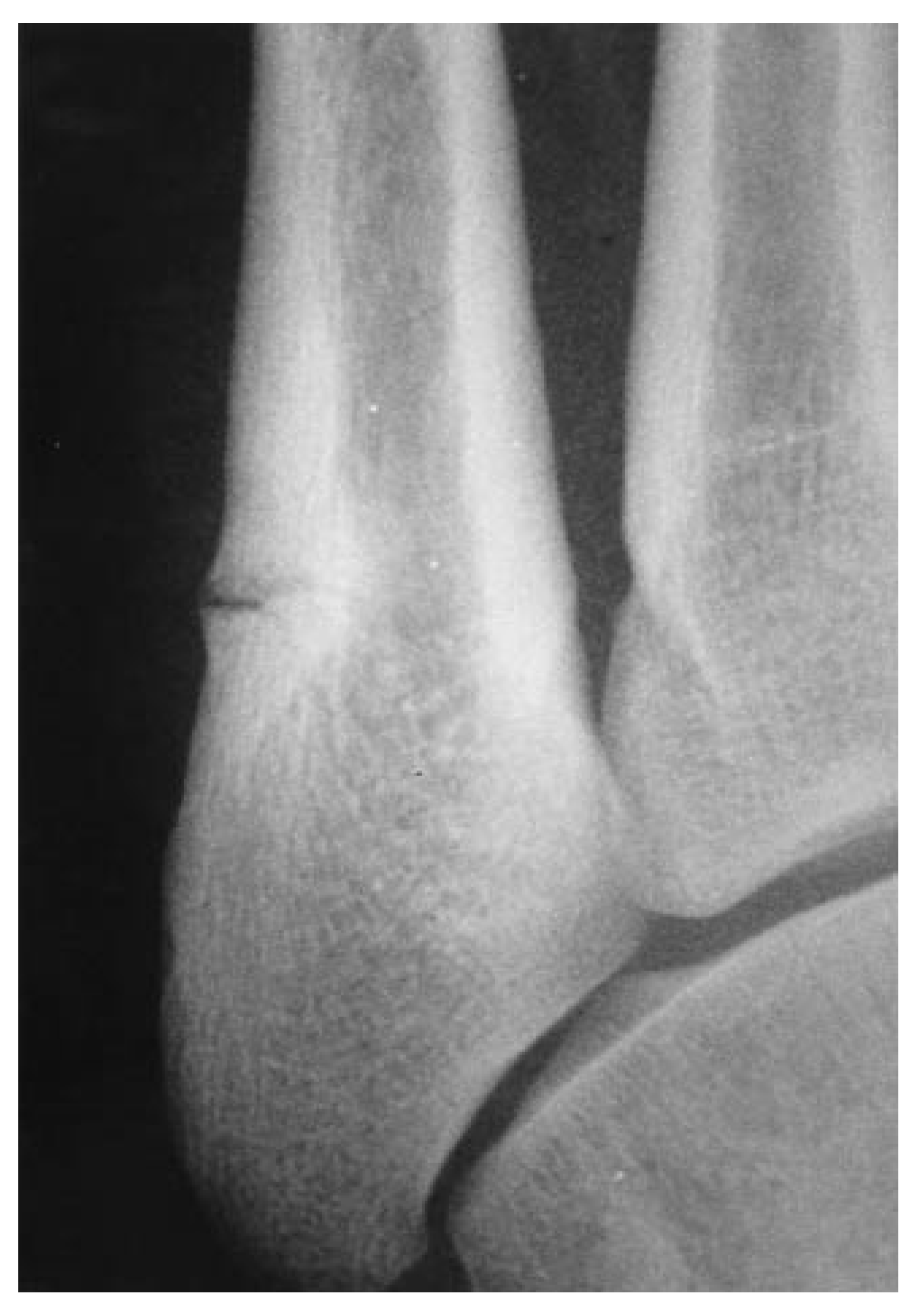
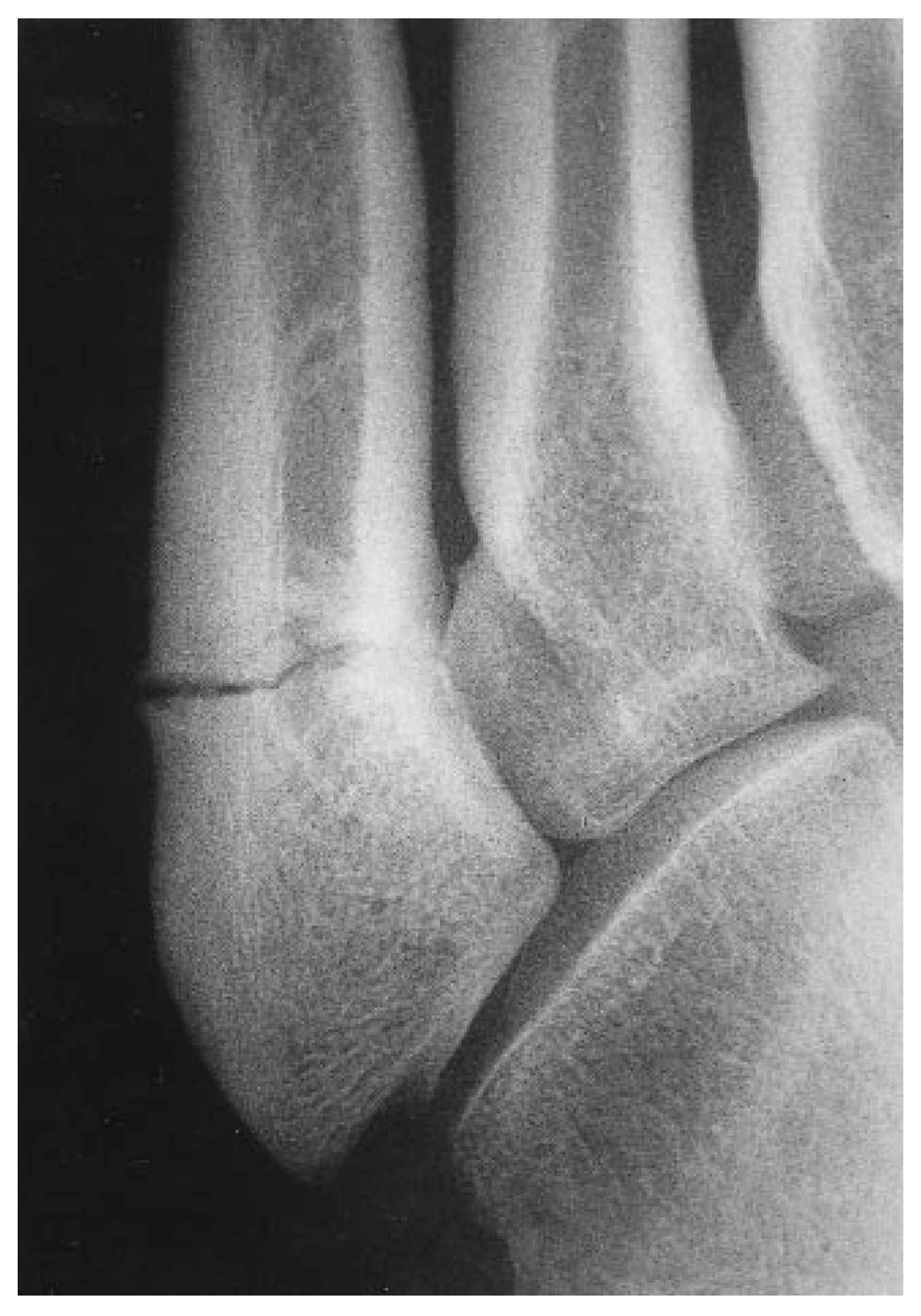
Acute proximal diaphyseal fractures occur approximately 1.5 to 3 cm distal to the base of the metatarsal and are sometimes referred to as junctional fractures because of their location, which is closer to the metaphyseal/diaphyseal junction (Fig. 1). [27,28] Proximal diaphyseal stress fractures occur in a similar area, usually slightly distal to that of the acute fracture (Fig. 2).
As stated previously, all fractures in the proximal portion of the fifth metatarsal have often been classified as Jones fractures. To remedy this confusing situation, Lehman et al [29] devised a classification system that includes three types of proximal diaphyseal fractures. They suggested that a standardized classification system was necessary because of the variable nature of proximal diaphyseal fractures. This classification system appears to have been well utilized by many authors; however, it requires a degree of familiarity with these fractures. The three types of fractures in this classification are as follows: type I, which represents an acute fracture with no history of previous pain or trauma and no radiographic evidence of delayed union (however, this may include an acute fracture at a site of previous stress reaction, and there may be some periosteal reaction and minimal cortical thickening); type II, which represents a fracture that has a history of previous injury or fracture, and has radiographic signs of delayed union; and type III, which represents a nonunion.
Figure 1. Acute proximal diaphyseal fracture. Note the signs of a secondary avulsion fracture of the tuberosity.
Japma 89 00398 g001
Figure 2. Proximal diaphyseal stress fracture. Note the reactive sclerosis, decreased medullary canal width, and the fracture line only through plantar lateral cortex.
Japma 89 00398 g002
A logical and easier method of classifying proximal diaphyseal fractures of the fifth metatarsal involves classifying the fractures according to their mechanism of injury. [30] Therefore, proximal diaphyseal fractures would be classified as either acute or stress related. This system allows those who are not experts on this topic to understand quickly the location and nature of the fracture. Once a fracture is classified as either an acute proximal diaphyseal fracture or a proximal diaphyseal stress fracture, the terms “delayed union” and “nonunion” can be used after assessing the fracture’s response to treatment. Unfortunately, the original term “Jones fracture,” while a noble gesture to Sir Robert Jones, has inadvertently led to confusion and therefore should not be used as the primary classification.

Incidence

Two recent studies have reported on the incidence of fifth metatarsal fractures. [31,32] Although the avulsion fracture is by far the most common type, the acute proximal diaphyseal fracture was evident in both studies. Arangio, [31] in a study of 49 subjects, reported that acute proximal diaphyseal fractures accounted for 4% of fifth metatarsal fractures. Clapper et al, [32] using different classification zones than Arangio, found that “true Jones fractures” (acute proximal diaphyseal fractures) accounted for 25% of fifth metatarsal fractures. The study by Clapper et al involved 100 subjects, most of whom were young military recruits. Their rigorous training schedule explains the higher percentage of proximal diaphyseal fractures compared with that of the study by Arangio. Interestingly, neither study reported any stress fractures, even though the participants in the study by Clapper et al would have been relatively active. Other authors have reported the occurrence of stress fractures, particularly in the athletic population. [13,17,33,34,35]
In addition, two large retrospective studies have found the frequency of proximal diaphyseal fractures (acute and stress) to be in the vicinity of 0.8% to 1.9% of all foot fractures. [36,37] Therefore, in assessment of the overall incidence of proximal diaphyseal fractures, it is evident that they occur frequently enough that clinicians need to be highly suspicious of any trauma to the fifth metatarsal.

Mechanism of Injury

The acute proximal diaphyseal fracture occurs when the ankle is plantarflexed and the forefoot is grounded.1 In this position, medial-to-lateral weight transfer will subject the forefoot to an adduction force. As the base of the fifth metatarsal is held tightly by ligamentous support, the distal aspect will adduct relative to the proximal diaphysis, which acts as a fulcrum. If the grounded foot is unable to compensate by inverting, a fracture will occur at the proximal diaphysis. [12] Acute proximal diaphyseal fractures are not limited to the athletic population, whereas proximal diaphyseal stress fractures are seen almost exclusively in athletes. The stress fracture, therefore, has a different mechanism of injury. [38]
Proximal diaphyseal stress fractures of the fifth metatarsal are caused by submaximal repeated stress. A recent biomechanical study found that the peak stress occurs approximately 3.38 to 4.05 cm distal to the tuberosity when the load is directed 30° to 60° from the horizontal plane relative to the long axis of the metatarsal. [39] It is becoming increasingly evident that the cause of this injury is faulty lower-limb biomechanics. [30] For example, an uncompensated varus deformity of the foot will increase the plantar pressure under the fifth metatarsal head, thereby increasing the bending stress at the proximal diaphysis. [39,40,41,42] Similarly, this mechanism has previously been implicated as an underlying cause of second metatarsal stress fractures. [43]
However, an alternative mechanism of injury has been suggested by Roca et al. [44] Using a photoelastic model, they suggest that the action of the peroneus brevis muscle creates tensile stress in the outer cortex of the fifth metatarsal diaphysis. From this research, they imply that the pull of the peroneus brevis muscle is associated with the development of fifth metatarsal stress fractures.

Diagnosis

Prior to x-ray evaluation, a thorough history and physical examination should be performed. The history should include questions relating to the type of injury (description of the injury), previous (prodromal) symptoms, and previous fracture of the fifth metatarsal. Signs of swelling and bruising, as well as pain on palpation and movement, are assessed during the physical examination. In addition, it is important to assess whether sural nerve function and vascular supply to the fifth digit are still patent. [45]
Radiographic examination should include anteroposterior (dorsoplantar), lateral-oblique, and lateral projections of both feet. Bilateral x-rays are recommended because of the chance of accessory bones (os peroneum and os vesalianum) or a secondary apophysis being present at the base of the metatarsal. These normal variants may confuse the diagnosis; however, they often occur bilaterally. Bone scans should not be required, but they may be useful to demonstrate an early stress reaction preceding a stress fracture. [30]
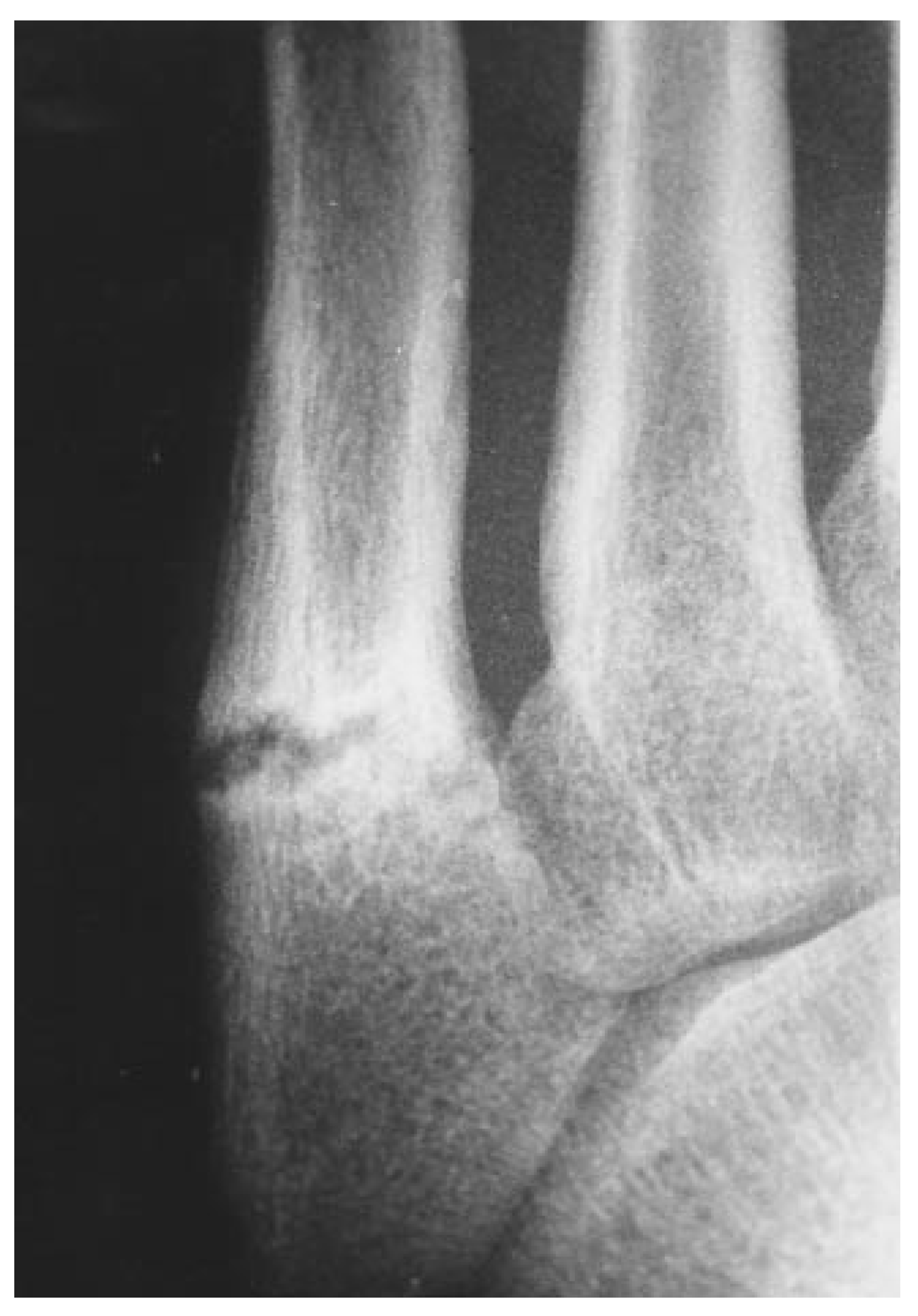
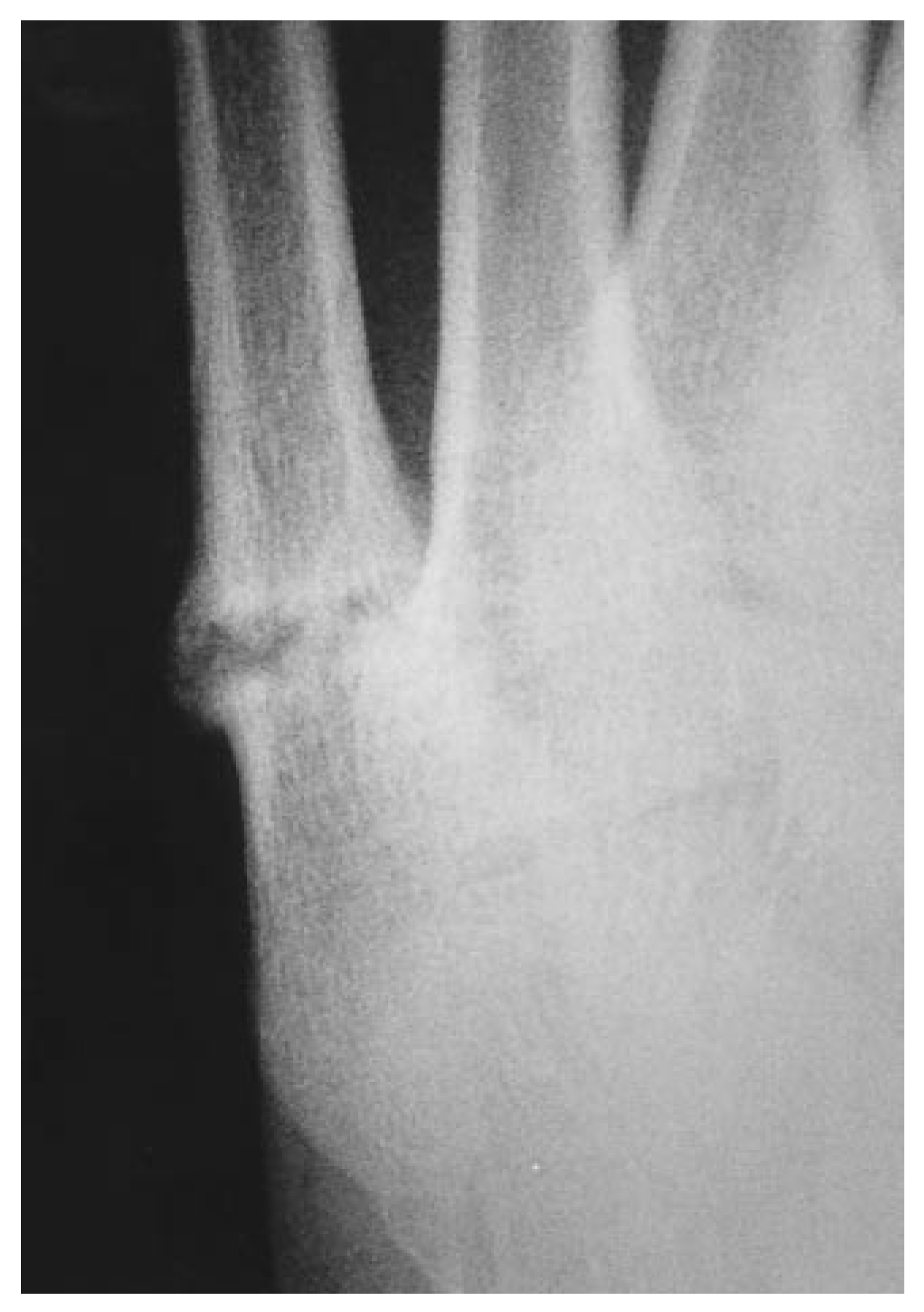
With regard to proximal diaphyseal stress fractures, patients will usually experience symptoms prior to seeking treatment or experiencing a complete fracture. Obviously, it is preferable to diagnose a stress reaction before it develops into a stress fracture; however, once they occur, proximal diaphyseal stress fractures are easily recognized on x-rays (Figs. 3 and 4). There are certain characteristic signs associated with fifth metatarsal stress fractures: a radiolucent fracture line, reactive sclerosis surrounding the fracture (Fig. 3), a reduced medullary canal width caused by the sclerosis, heaped-up bone callus on the outer margin of the fracture (Fig. 4), and a fracture line that is wider at its plantar and lateral aspect compared with its dorsal and medial aspect. [13,14,46] However, sometimes there will be an acute fracture with signs of an underlying stress reaction within the bone (Fig. 5). This occurs when the bone is being stressed in a fashion that would lead to a stress fracture; then, prior to the fatigue stage, there is a large enough single traumatic insult to cause an acute fracture of the bone.
Figure 3. Proximal diaphyseal stress fracture. Note the reactive sclerosis surrounding the fracture line, suggesting delayed union. This is a Lehman et al29 type II fracture.
Japma 89 00398 g003
Figure 4. Proximal diaphyseal stress fracture. Note the heaped-up bone callus, suggesting delayed union.
Japma 89 00398 g004
Figure 5. Acute proximal diaphyseal fracture with underlying stress reaction. Note the mild sclerosis and decreased medullary canal width around the fracture site. This is a Lehman et al [29] type I fracture.
Japma 89 00398 g005

Treatment

Treatment for proximal diaphyseal fractures must be aggressive, with options ranging from nonweightbearing cast immobilization to surgical fixation. However, certain studies suggest that nonweightbearing cast immobilization is just as effective as surgical intervention. [14,35,36,47] The minimum suggested time for cast immobilization is 6 to 8 weeks with a strict nonweightbearing protocol to prevent ongoing distraction of the fracture. [41,48,49,50] If the fracture has not united after a period of 6 to 12 weeks, surgery should be considered. [20,51] An initial period of immobilization does not appear to have deleterious effects on surgical intervention at a later date. [52]
Surgical options for treating proximal diaphyseal fractures include bone grafting [7,17,29,53,54] and crosspinning [48]; however, screw fixation is also a popular method. [12,13,37,55,56,57,58] In athletes, other active people, or cases of delayed union, screw fixation appears to be the method of choice. The procedure described by DeLee et al [13] has gained acceptance; it uses an axial intramedullary screw via a percutaneous approach. Further, Mindrebo et al [57] suggest that this procedure can be performed on an outpatient basis for athletes who want to return to activity as soon as possible. In their series of nine patients, the average time to return to competition was 8.5 weeks. However, surgical intervention is not without its dangers, including delayed union and refracture. [59] In addition, if the fracture is repaired with a screw, the screw placement is critical, as complications such as irritation over the screw head and screw fracture have been reported. [12,55]
As stated previously, some authors suggest that acute proximal diaphyseal fractures, [38,60] as well as proximal diaphyseal stress fractures in the athletic population, [61] can be successfully treated nonoperatively, with an early return to activity and no recurrence of symptoms. However, care is still needed with those patients who have sustained a stress fracture; they should return to activity on the basis of their symptoms, and, if pain develops, surgery is recommended. [61] Careful radiographic monitoring for evidence of delayed union will prevent unnecessary delay of surgical treatment.
Patients who experience a proximal diaphyseal stress fracture must be evaluated for biomechanical malalignment because many lower-limb stress fractures are linked to faulty biomechanics. [42] Biomechanical anomalies such as uncompensated forefoot or rearfoot varus will increase loading under the fifth metatarsal head. This, in turn, will increase bending moments within the metatarsal, distract the fracture, and delay healing. [39,40,41] Further, once the fracture has healed, it is plausible that the chance of refracture will also increase if these anomalies are not addressed. However, well-controlled studies are needed to support or refute this theory. One recent case report illustrated this link between biomechanical anomalies and fifth metatarsal stress fractures. The report concerned a child with talipes equinovarus who suffered delayed union and refracture of bilateral proximal diaphyseal stress fractures. [62] The fractures remained healed only after revision surgery to correct the varus alignment of the feet. Moreover, it is highly likely that early recognition of the prodromal symptoms associated with a stress reaction would lessen the chance of complete fracture. Prompt treatment with appropriate orthotic therapy would decrease the load that, if allowed to continue, would eventually lead to a stress fracture. Orthotic therapy includes strategies to reduce force such as accommodative plantar padding (eg, winged padding) in the form of an insole, or in addition to a functional foot orthosis.
Finally, a modality that demonstrates great potential in the treatment of proximal diaphyseal fractures is pulsed electromagnetic fields. Modern pulsed electromagnetic field units are conveniently packaged, noninvasive, and easy to use, offering an alternative to surgery. Small extremity units can be used directly over the fracture site. A control unit induces a small electrical current, which creates an optimal environment for bone growth. The current is similar to the natural current produced by the body during the initial stages of bone repair. The patient can remain ambulatory with the unit used externally for 3 to 10 hours per day, although closer to 10 hours per day appears to give the best results. [63]
Research using pulsed electromagnetic fields for proximal diaphyseal fractures of the fifth metatarsal has been limited, which is surprising given the recalcitrant nature of these fractures. Holmes [64] compared this treatment favorably with surgical treatments for delayed healing of proximal diaphyseal fractures, although there were only nine subjects in the study. Elsewhere in the body, pulsed electromagnetic fields have also been shown to be helpful in cases of delayed union. [65] Further research is clearly needed on this modality, as it may be a cost-effective and less interventionist form of treatment compared with surgery.
In summary, proximal diaphyseal fractures can initially be treated with 6 to 8 weeks of nonweightbearing cast immobilization. If there are signs of delayed union, or if the patient is particularly active, surgical fixation should be considered. In addition, any biomechanical anomalies, such as uncompensated forefoot or rearfoot varus, that predispose individuals to stress fracture need to be addressed. These can be addressed with orthotic therapy that redistributes force away from the fifth metatarsal.

Conclusions

This article has reviewed the literature and presented a guide to the identification and treatment of proximal diaphyseal fractures of the fifth metatarsal. There are two distinct types of proximal diaphyseal fracture commonly referred to as Jones fracture, the acute proximal diaphyseal fracture and the proximal diaphyseal stress fracture. The acute proximal diaphyseal fracture is caused by a single traumatic event, whereas the proximal diaphyseal stress fracture is caused by repeated submaximal weightbearing stress. Both fractures are prone to delayed healing, which appears to result from the poor blood supply to the proximal diaphysis and the mechanics of the metatarsal. Because of this potential for delayed union, both of these fractures require aggressive treatment, either nonweightbearing immobilization or internal fixation.
Particular attention needs to be paid to the biomechanics of a person experiencing a proximal diaphyseal stress fracture. Excessive weightbearing stress to the fifth metatarsal causes this injury and, if not decreased with appropriate orthotic therapy, may prevent it from healing in a reasonable time and may subject it to refracture. Appropriate orthotic therapy includes strategies that redistribute force away from the fifth metatarsal. Finally, it is plausible that these strategies, if applied early in the stress-reaction phase, may minimize the chance of a stress reaction developing into a stress fracture.

Acknowledgments

Michael Balding and Chris Simkin for assistance with photography; Hylton Menz for his comments.

References

  1. JONES R: Fracture of the base of the fifth metatarsal bone by indirect violence. Ann Surg 1902, 35, 697.
  2. PELTIER, LF. Eponymic fractures: Robert Jones and Jones’s fracture. Surgery 1972, 71, 522. [Google Scholar]
  3. CARP L: Fracture of the fifth metatarsal bone; with special reference to delayed union. Ann Surg 1927, 86, 308.
  4. PEARSON, JR. Combined fracture of the base of the fifth metatarsal and the lateral malleolus: a report of five cases. J Bone Joint Surg Am 1961, 43, 513. [Google Scholar] [CrossRef]
  5. LICHTBLAU S: Painful nonunion of a fracture of the fifth metatarsal. Clin Orthop 1968, 59, 171. [CrossRef]
  6. CHAND K: Painful non-union of a fracture of the fifth metatarsal. JAPA 1971, 61, 108.
  7. DAMERON, TB. Fractures and anatomical variations of the proximal portion of the fifth metatarsal. J Bone Joint Surg Am 1975, 57, 788. [Google Scholar] [CrossRef] [PubMed]
  8. 8. ANDERSON LD: Injuries of the forefoot. Clin Orthop 1977, 122, 18. [CrossRef]
  9. DORFMAN GR: Determination of treatment in fractures of the fifth metatarsal shaft. J Foot Surg 1978, 17, 16.
  10. PRITSCH, M; HEIM, M; TAUBER, H. ET AL: An unusual fracture of the base of the fifth metatarsal bone. J Trauma 1980, 20, 530. [Google Scholar] [CrossRef]
  11. MEURMAN KOA: Less common stress fractures in the foot. Br J Radiol 1981, 54, 1.
  12. KAVANAUGH, JH; BROWER, TD. MANN RV: The Jones fracture revisited. J Bone Joint Surg Am 1978, 60, 776. [Google Scholar] [CrossRef]
  13. DELEE, JC; EVANS, JP; JULIAN, J. Stress fractures of the fifth metatarsal. Am J Sports Med 1982, 11, 349. [Google Scholar] [CrossRef] [PubMed]
  14. TORG, JS; BAULDINI, FC; ZELKO, RR; et al. Fractures of the base of the fifth metatarsal distal to the tuberosity. J Bone Joint Surg Am 1984, 66, 209. [Google Scholar] [CrossRef]
  15. BYRD T: Jones fracture: relearning an old injury. South Med J 1992, 85, 748. [CrossRef]
  16. STEWART, IM. Jones fracture: fracture of the fifth metatarsal. Clin Orthop 1960, 16, 190. [Google Scholar] [PubMed]
  17. ZELKO, RR; TORG, JS; RACHUN, A. Proximal diaphyseal fractures of the fifth metatarsal: treatment of the fracture and their complications in athletes. Am J Sports Med 1979, 7, 95. [Google Scholar] [CrossRef]
  18. KEENE, JS; LANGE, RH. Diagnostic dilemmas in foot and ankle injuries. JAMA 1986, 256, 247. [Google Scholar] [CrossRef]
  19. DAVIS, AW; ALEXANDER, IJ. Problematic fractures and dis-locations in the foot and ankle of athletes. Clin Sports Med 1990, 9, 163. [Google Scholar] [CrossRef]
  20. SAMMARCO GJ: Be alert for Jones fractures. Physician Sportsmed 1992, 20, 101. [CrossRef]
  21. CLEMENTE CD: Anatomy: A Regional Atlas of the Human Body,, 2nd ed.; Urban & Schwarzenberg: Baltimore, 1981.
  22. RICHLI, WR; ROSENTHAL, DI. Avulsion fracture of the fifth metatarsal: experimental study of pathomechanics. Am J Radiol 1984, 143, 889. [Google Scholar] [CrossRef]
  23. ROOT, ML; ORIEN, WP. WEED JH: Normal and Abnormal Function of the Foot; Clinical Biomechanics Corp: Los Angeles, 1977. [Google Scholar]
  24. MCCARTHY, DJ. “Anatomy,” in Fundamentals of Foot Surgery; McGlamry, E.D., Ed.; Williams & Wilkins: Baltimore, 1987; p. 3. [Google Scholar]
  25. SHEREFF, MJ; YANG, QM; KUMMER, FJ. ET AL: Vascular anatomy of the fifth metatarsal. Foot Ankle 1991, 11, 350. [Google Scholar] [CrossRef]
  26. SMITH, JW; ARNOCZKY, SP. HERSH A: The intraosseous blood supply of the fifth metatarsal: implications for proximal fracture healing. Foot Ankle 1992, 13, 143. [Google Scholar] [CrossRef] [PubMed]
  27. VOGLER, HW; WESTLIN, N; MLODZIENSKI, AJ. ET AL: Fifth metatarsal fractures: biomechanics, classification and treatment. Clin Podiatr Med Surg 1995, 12, 725. [Google Scholar] [CrossRef] [PubMed]
  28. THORDARSON, DB. Detecting and treating common fractures of the foot and ankle. Physician Sportsmed 1996, 24, 58. [Google Scholar]
  29. LEHMAN, RC; TORG, JS; PAVLOV, H; et al. Fractures of the base of the fifth metatarsal distal to the tuberosity: a review. Foot Ankle 1987, 7, 245. [Google Scholar] [CrossRef]
  30. LANDORF, KB. Fifth metatarsal fractures are not all the same: proximal diaphyseal fractures are prone to delayed healing. Foot 1998, 8, 38. [Google Scholar] [CrossRef]
  31. ARANGIO, GA. The Jones fracture—transverse proximal diaphyseal fractures of the fifth metatarsal: frequency by radiology. Foot 1992, 4, 201. [Google Scholar] [CrossRef]
  32. CLAPPER, MF; O’BRIEN, TJ; LYONS, PM. Fractures of the fifth metatarsal: analysis of a fracture registry. Clin Orthop 1995, 315, 238. [Google Scholar] [CrossRef]
  33. YALE J: A statistical analysis of 3657 consecutive fatigue fractures of the distal lower extremities. JAPA 1976, 66, 739.
  34. HULKKO, A; ORAVA, S. Stress fractures in athletes. Int J Sports Med 1987, 8, 221. [Google Scholar] [CrossRef]
  35. ZOGBY, RG. BAKER BE: A review of nonoperative treatment of Jones’ fracture. Am J Sports Med 1987, 15, 304. [Google Scholar] [CrossRef]
  36. Josefsson, PO; Karlsson, M; Redlund-Johnell, I. ET AL: Jones fracture: surgical versus nonsurgical treatment. Clin Orthop 1994, 299, 252. [Google Scholar] [CrossRef]
  37. Josefsson, PO; Karlsson, M; Redlund-Johnell, I. ET AL: Closed treatment of Jones fracture: good results in 40 cases after 11-26 years. Acta Orthop Scand 1994, 65, 545. [Google Scholar] [CrossRef]
  38. SEITZ, WH; GRANTHAM, SA. The Jones’ fracture in the nonathlete. Foot Ankle 1985, 6, 97. [Google Scholar] [CrossRef]
  39. ARANGIO, GA; XIAO, D; SALATHE, EP. Biomechanical study of stress in the fifth metatarsal. Clin Biomech 1997, 12, 160. [Google Scholar] [CrossRef]
  40. REINHERZ, RP; SINK, CA; WESTERFIELD, M. Management of trauma to the fifth metatarsal bone. J Foot Surg 1989, 28, 301. [Google Scholar]
  41. LAWRENCE, SJ; BOTTE, MJ. Jones’ fractures and related fractures of the proximal fifth metatarsal. Foot Ankle 1993, 14, 358. [Google Scholar] [CrossRef] [PubMed]
  42. REEDER, MT; DICK, BH; ATKINS, JK. ET AL: Stress fractures: current concepts of diagnosis and treatment. Sports Med 1996, 22, 198. [Google Scholar] [CrossRef] [PubMed]
  43. GROSS, TS; BUNCH, RP. A mechanical model of metatarsal stress fracture during distance running. Am J Sports Med 1989, 17, 669. [Google Scholar] [CrossRef] [PubMed]
  44. ROCA, J; ROURE, F; FERNANDEZ FAIREN, M. ET AL: Stress fractures of the fifth metatarsal. Acta Orthop Belg 1980, 46, 630. [Google Scholar]
  45. KIRCHWEHM, WW. “Fractures of the Fifth Metatarsal,” in Foot and Ankle Trauma,, 2nd Ed; Scurran, BL, Ed.; Churchill Livingstone: New York, 1996; p. 419. [Google Scholar]
  46. QUILL GE: Fractures of the proximal fifth metatarsal. Orthop Clin North Am 1995, 26, 353. [CrossRef]
  47. ARANGIO, GA. Transverse proximal diaphysial fracture of the fifth metatarsal: a review of 12 cases. Foot Ankle 1992, 13, 547. [Google Scholar] [CrossRef]
  48. ARANGIO, GA. Proximal diaphyseal fractures of the fifth metatarsal (Jones’ fracture): two cases treated by cross-pinning with review of 106 cases. Foot Ankle 1983, 3, 293. [Google Scholar] [CrossRef]
  49. FIGURA MA: Metatarsal fractures: an overview. Clin Podiatry 1985, 2, 247. [CrossRef]
  50. HOLUBEC, KD; KARLIN, JM; SCURRAN, BL. Retrospective study of fifth metatarsal fractures. JAPMA 1993, 83, 215. [Google Scholar] [CrossRef] [PubMed]
  51. MYERSON, M. “Fractures of the Fifth Metatarsal,” in Disorders of the Foot and Ankle: Medical and Surgical Management,, 2nd Ed; Jahss, MH, Ed.; WB Saunders: Philadelphia, 1991; p. 2258. [Google Scholar]
  52. YUE, JJ; MARCUS, E. The role of internal fixation in the treatment of Jones fractures in diabetics. Foot Ankle Int 1996, 17, 559. [Google Scholar] [CrossRef] [PubMed]
  53. JOLLY, G; NOVICKI, DC. Treatment of delayed union of a fifth metatarsal by compression osteosynthesis. JAPA 1980, 70, 449. [Google Scholar] [CrossRef] [PubMed]
  54. HENS, J; MARTENS, M. Surgical treatment of Jones fractures. Arch Orthop Trauma Surg 1990, 109, 277. [Google Scholar] [CrossRef]
  55. TORG JS: Fractures of the base of the fifth metatarsal distal to the tuberosity. Orthopedics 1990, 13, 731. [CrossRef]
  56. RETTIG, AC; SHELBOURNE, KD; WILKENS, J. The surgical treatment of symptomatic nonunions of the proximal (metaphyseal) fifth metatarsal in athletes. Am J Sports Med 1992, 20, 50. [Google Scholar] [CrossRef] [PubMed]
  57. MINDREBO, N; SHELBOURNE, D; VAN METER, CD. ET AL: Outpatient percutaneous screw fixation of the acute Jones fracture. Am J Sports Med 1993, 21, 720. [Google Scholar] [CrossRef]
  58. WEINFELD, SB; HADDAD, SL; MYERSON, MS. Metatarsal stress fractures. Clin Sports Med 1997, 16, 319. [Google Scholar] [CrossRef]
  59. GLASGOW, MY; NARANJA, RJ, JR.; GLASGOW, SG; et al. Analysis of failed surgical management of fractures of the base of the fifth metatarsal distal to the tuberosity: the Jones fracture. Foot Ankle Int 1996, 17, 449. [Google Scholar] [CrossRef] [PubMed]
  60. INOKUCHI, S; USAMI, N. Jones’ fracture. Foot 1997, 7, 75. [Google Scholar] [CrossRef]
  61. ACKER, JH; DREZ, D. Nonoperative treatment of stress fractures of the proximal shaft of the fifth metatarsal (Jones’ fracture). Foot Ankle 1986, 7, 152. [Google Scholar] [CrossRef]
  62. CRAIGEN, MAC. CLARKE NMP: Bilateral ‘Jones’ fractures of the fifth metatarsal following relapse of talipes equinovarus. Injury 1996, 27, 599. [Google Scholar] [CrossRef]
  63. EBI BONE HEALING SYSTEMS: The noninvasive EBI bone healing system. Available online: http://www.ebimedical.com/index.htm (accessed on 12 December 1998).
  64. HOLMES, GB. Treatment of delayed unions and non-unions of the proximal fifth metatarsal with pulsed electromagnetic fields. Foot Ankle Int 1994, 15, 552. [Google Scholar] [CrossRef]
  65. SHARRARD, WJW; SUTCLIFF, ML; ROBSON, MJ. ET AL: The treatment of fibrous non-union of fractures by pulsing electromagnetic stimulation. J Bone Joint Surg Br 1982, 64, 189. [Google Scholar] [CrossRef]