This article presents a critical examination of biomechanics studies in the literature that could shed light on or contribute to the development of methods of managing intra-articular calcaneal fractures. An appreciation and understanding of such studies is predicated on a sound knowledge of a number of germane topics: the anatomy of the normal calcaneus, the pathomechanics of the calcaneus, fracture-classification schemes, and fracture-management methods. The first part of this review presents overviews of these topics. The biomechanics studies are then reviewed in detail. The article concludes with a description of research areas that might close the gaps identified in these studies.
Intra-articular fracture of the calcaneus is usually sustained after a traumatic event such as falling from a considerable height or being involved in a high-impact automobile accident. The main features of the calcaneus at the fracture site are loss of height, especially at the medial wall; increase in width, especially at the medial wall; decrease in length; disruption of the posterior facet of the subtalar joint; and a bulge of the lateral wall.
Intra-articular fractures of the calcaneus are widely regarded as the most fascinating of orthopedic maladies and, as such, have attracted research attention that is disproportionate to their incidence [
1]. These fractures actually account for only about 1% to 2% of all fractures [
1]. The inordinate amount of attention is mainly due to the persistent controversy regarding the optimal method of treatment. That controversy is arguably the result of three issues. First, there is a dearth of long-term, prospective, randomized clinical studies of the various categories of treatment. To date, only one such study has been reported in a detailed manner, and even this study is not a long-term one but a trial [
2]. Second, there is no universally accepted scheme of classifying intra-articular fractures [
3]. Third, when an operative method is indicated, the biomechanical basis has not been delineated.
Clearly, these three issues are interconnected. Knowledge of the normal anatomy of the calcaneus is crucial to a classification scheme, which, in turn, is inextricably linked to the selection of the appropriate treatment option. It is argued here that an appreciation of biomechanics studies in the literature or the performance of future studies would be seriously hindered by a lack of this requisite knowledge. Information on the aforementioned topics is therefore provided in the present review as a necessary backdrop, with the understanding that more detailed expositions of all of them may be found in the cited works. Thus the present review is organized along the following lines. The first part, “Background,” provides a succinct account of the following topics: normal anatomy of the calcaneus, pathomechanics of the calcaneus, main fracture-classification schemes, and fracture-treatment modalities used widely today. In the second section, “Biomechanics Studies,” the focus is on the biomechanics of models of the calcaneus and the biomechanical basis of specific surgical treatment modalities. The article concludes with a set of recommendations for future study.
Background
Normal Anatomy
The calcaneus, or os calcis, is the largest tarsal bone in the foot and serves a myriad of functions (
Figure 1). It provides 1) a strong lever arm to increase the power of the gastrocnemius soleus mechanism [
4]; 2) a firm but elastic foundation for body weight transmitted through the tibia, ankle, and subtalar joints; and 3) structural support for the maintenance of normal lateral column length, which affects abduction and adduction of the midfoot and forefoot as well as indirectly aiding supination of the foot to provide strong push-off during gait [
5,
6]. The os calcis also counteracts the compressive forces exerted by the superficial plantar muscles, the plantar fascia, and the plantar ligaments [
5].
The calcaneus is covered by a layer of soft tissue whose thickness and composition vary spatially. Laterally, it is thin and loose and becomes fixed to the skin of the sole of the foot; medially, the subcutaneous tissue is thicker and the skin is less loose [
7].
Seven key aspects of the anatomy of the os calcis will be briefly described. First, the calcaneus, with its very thin cortical shell enclosing a cancellous bone pattern, has the configuration of an irregular, solid rectangle and presents six surfaces with four articular facets, three for the talus and one for the cuboid [
8,
9].
Second, there are three articular facets on the superior aspect of the calcaneus, which correspond to the facets on the inferior surface of the talus [
10,
11,
12]. Although these facets—the anterior, middle, and posterior facets—all lie at different angles to one another, they act as a unit [
8]. However, the anterior and middle facets are smaller and more medial than the posterior one.
Third, the posterior surface of the calcaneus has the shape of an inferiorly based triangle. Fourth, the anterior surface of the calcaneus is completely articular, saddle-shaped, convex transversely, and concave vertically [
4], and forms the articulation between the calcaneus and the cuboid. Fifth, the inferior surface of the calcaneus is triangular in shape, with the base posterior and the apex anterior. The base comprises large medial and small lateral tuberosities that are in very close contact with the ground and transmit the body weight to the supporting structures [
8].
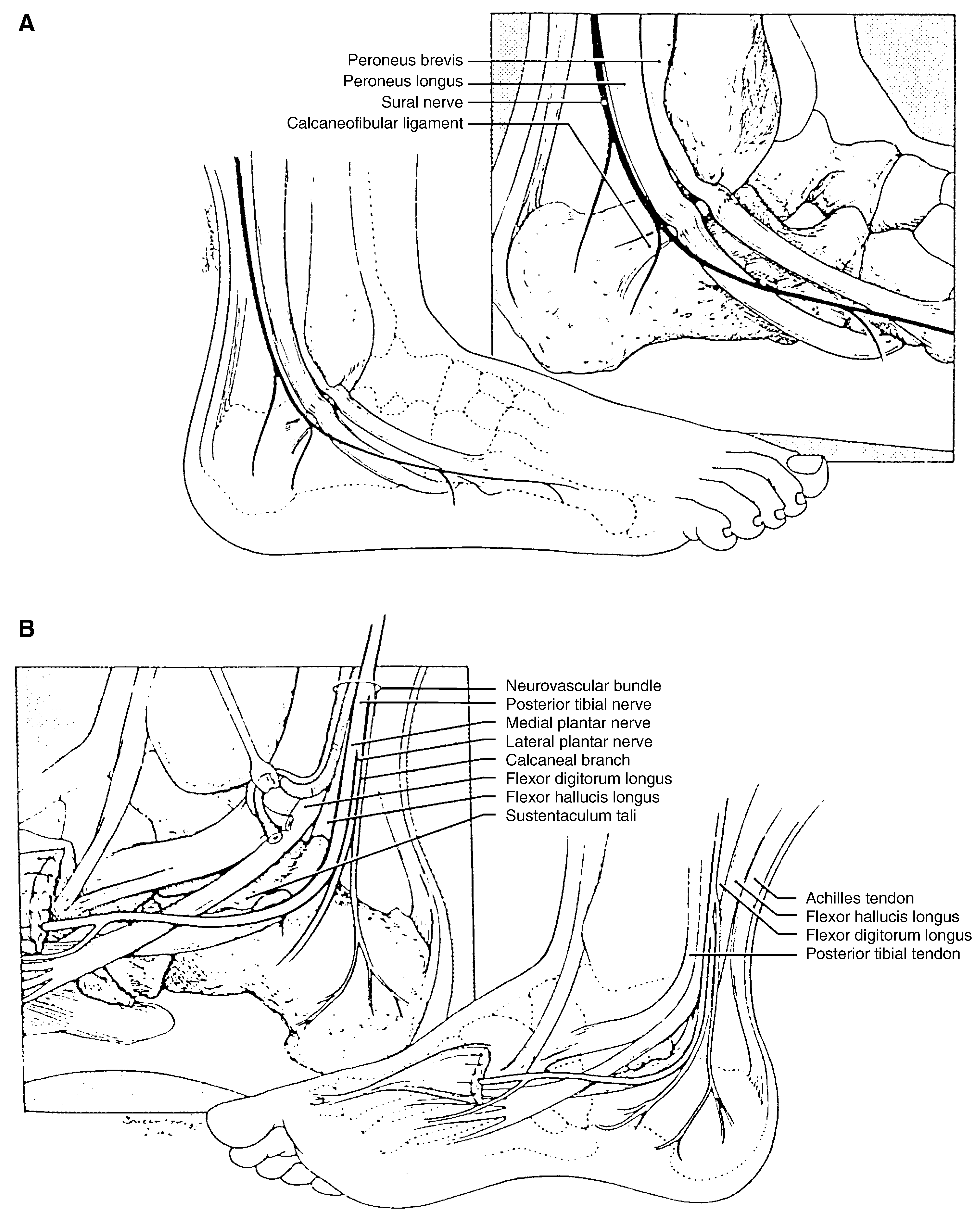
Sixth, the calcaneus is served by many soft tissues (
Figure 2). Laterally, the peroneal tendons are posterior and inferior to the fibula. The peroneus brevis tendon lies anterior and superior to the peroneus longus tendon, inserting into the fifth metatarsal. Both of these tendons lie over the calcaneofibular ligament within their own sheath. This ligament lies approximately superior to the tip of the fibula posteriorly, forming an angle of about 100° with the anterior talofibular ligament in the sagittal plane [
13]. The axial talocalcaneal ligament inserts into the subtalar calcaneus. Posterior to the peroneal tendons is the sural nerve, which typically is about 100 mm above the tip of the lateral malleolus just at the lateral border of the Achilles tendon and superficial to the deep fascia [
14]. Medially, the calcaneus is covered by a dense fibrofatty layer, the abductor hallucis muscle, and the medial head of the quadratus plantae muscle. Immediately posterior to the neurovascular bundle is the flexor hallucis longus, which is in a fibro-osseous pathway beneath the sustentaculum tali. Just anterior to the neurovascular bundle lies the flexor digitorum longus, which lies directly over the sustentaculum. Anterior to the flexor digitorum longus is the posterior tibial tendon, which winds over the deltoid ligament to its many insertion points on the medial and plantar surfaces of the foot.
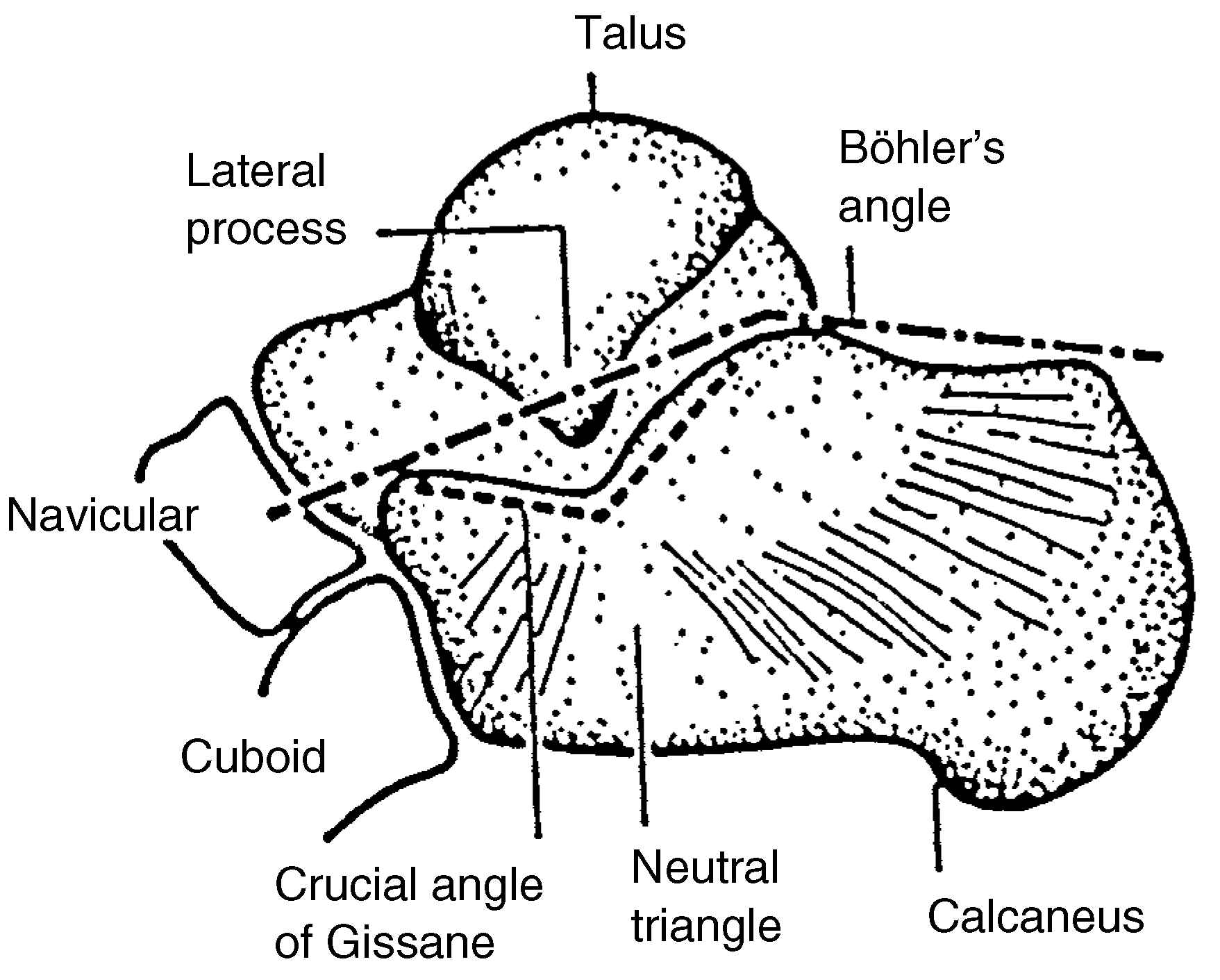
Seventh, two key angles are recognized. Two strong cortical struts course along the lateral aspect of the calcaneus to form the Gissane angle. This angle is formed by the posterior facet and the line from the sulcus calcaneus to the tip of the anterior process (
Figure 1) [
15]. Typically, the Gissane angle varies from 120° to 145°.16 Böhler’s angle [
17] is that angle formed by the intersection of two lines on a lateral radiograph: 1) a line from the highest point on the posterior articular surface to the most superior point of the calcaneal tuberosity, and 2) a line from the highest point on the anterior process of the calcaneus to the highest part of the posterior articular surface (
Figure 1).4 Typically, Böhler’s angle is between 25° and 40° [
4].
Pathomechanics
Two schools of thought currently exist regarding the mechanism of intra-articular calcaneal fractures, one proposed by Essex-Lopresti [
15] and the other by Burdeaux [
18].
Essex-Lopresti [
15] proposed that the biomechanics of the injury involves a vertical loading of the calcaneus by the talus at the Gissane angle. He believed that the “sharp taloid spur” transmits the fracture force to the calcaneus, thus causing a primary fracture line beginning slightly anterior to the posterior facet and extending vertically into the calcaneus. The primary fracture line extends from the proximal medial to distal lateral direction. The position of the foot and further depression of the fracture fragments cause the secondary fracture lines.
Burdeaux [
18] contended that intra-articular fractures occur as the result of eccentric loading of the talus on the calcaneus, with this producing a primary, shear fracture line parallel to the posterolateral edge of the talus and passing through the posterior calcaneal facet. The primary fracture line separates the calcaneus into two parts, body (posterolateral) and sustentaculum (anteromedial), with each part containing a portion of the posterior facet. The amount of such a portion depends on the position of the foot at the time of the impact (ie, inversion or eversion), with the more medial the split, the larger the articular component on the body fragment. As with Essex-Lopresti’s theory [
15], the position of the foot and continuation of the impact force cause secondary fracture lines to develop.
Fracture-Classification Schemes
A good classification scheme serves two main goals: It facilitates communication among orthopedic surgeons or podiatric physicians, and it provides the basis for the selection of treatment option(s) and discussion of prognosis with the patient.
Numerous classification schemes have been proposed, notably that of Essex-Lopresti [
15] and variants thereof (by Soeur and Remy [
9], Stephenson [
19], Rowe et al [
20], and Paley and Hall [
21]).
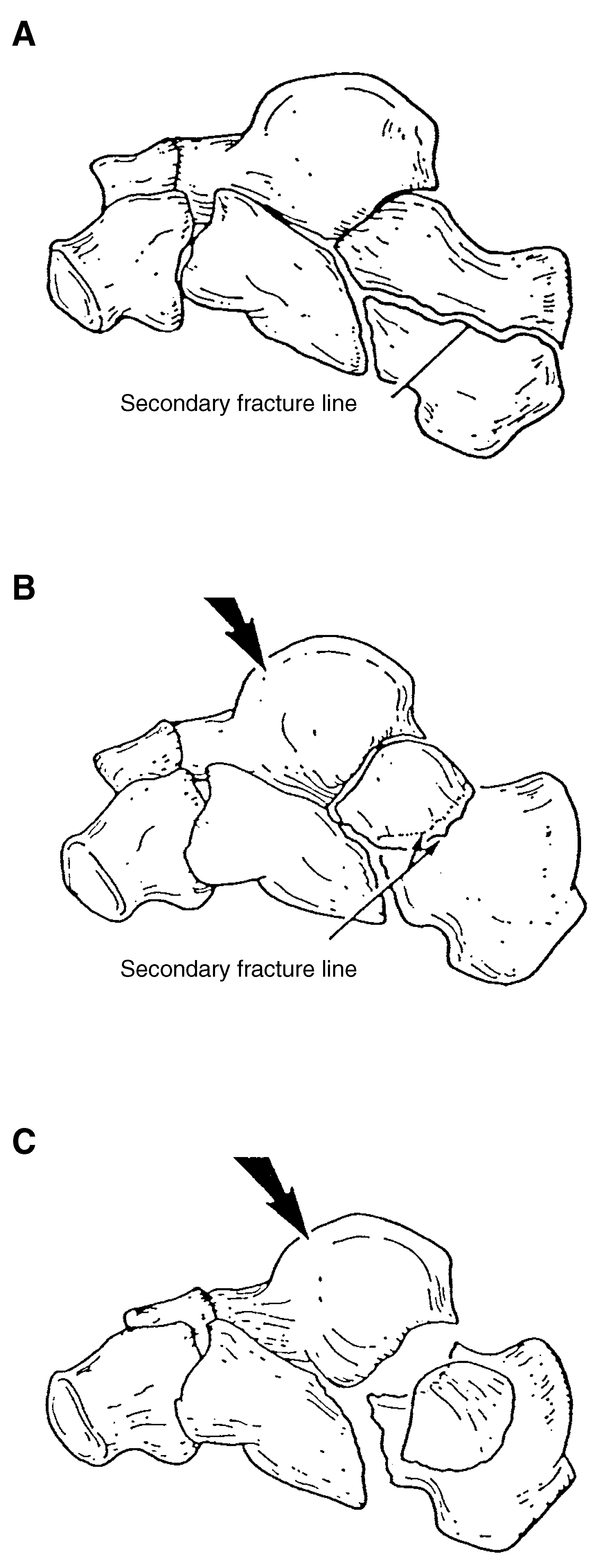
The presence of the secondary fracture line in the postulate of Essex-Lopresti facilitates differentiation between two types of fractures, tongue and joint-depression fractures. With continued vertical depression, a secondary fracture line develops from the Gissane angle to the posterior border of the calcaneus, permitting rotation of the superior fragment with displacement. As the superior (tongue) fragment is depressed, it crushes the underlying cancellous bone, resulting in a tongue intra-articular fracture (
Figure 3A).
If the force is slightly more horizontal, the fracture line will exit just behind the posterior articular facet, resulting in a joint-depression-type intra-articular fracture (
Figure 3B). With continued force, the facet crushes the cancellous bone, rotating in a posteroinferior direction, also causing a joint-depression-type intra-articular fracture (
Figure 3C). Essex-Lopresti [
15] contended that fractures are rarely so comminuted that they cannot be classified into tongue or joint-depression types.
The presence of the secondary fracture line, in the postulate of Burdeaux [
18], also allows the tongue and joint-depression fractures to be identified. Tongue and joint-depression fractures result when the protrusion from the skin is posterior and superior, respectively.
Stephenson [
19] presented a modification of the Essex-Lopresti scheme with a consideration of the number of fracture parts, subdividing the fractures into two- and three-part types. Soeur and Remy [
9] included a comminuted group in their classification, while both Rowe et al [
20] and Paley and Hall [
21] categorized tongue and central-depression types into types that are with or without comminution. In addition, Paley and Hall [
21] pointed out that when there is significant comminution such that the fracture pattern cannot be readily classified into a depression or tongue type, or when significant displacement of anterior or posterior secondary fracture lines exists, the fracture may be subclassified as comminuted. Thus, in essence, in the Paley and Hall scheme, displaced intra-articular calcaneal fractures may be subclassified into four groups: 1) shear (two-part fracture), 2) tongue (A, without comminution; B, with comminution), 3) central depression (A, without comminution; B, with comminution), and 4) comminuted.
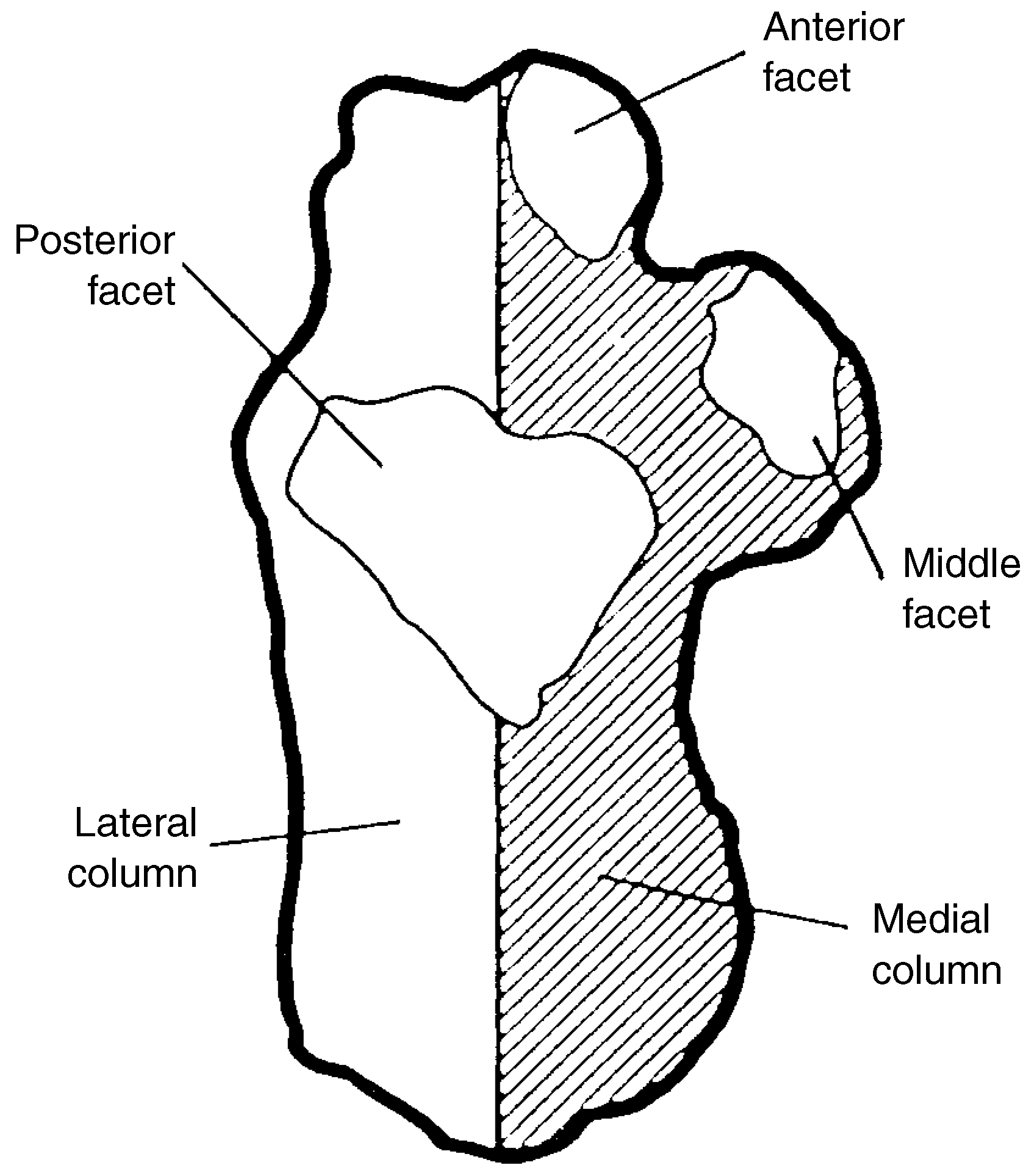
Carr et al [
22] proposed a classification scheme based on medial and lateral columns (
Figure 4). The medial column would contain the anterior and middle facets, medial calcaneal wall, and medial half of the tuberosity. The lateral column would include the calcaneocuboid joint, lateral wall, anterolateral fragment, posterior facet, and lateral half of the tuberosity. Carr et al noted that most displaced intra-articular calcaneal fractures will have both column displacements and that the classification scheme is essentially descriptive (ie, various types of fractures are not differentiated).
All of the foregoing schemes are based on visualization of the fracture using plain, lateral x-rays, an approach that has many drawbacks. Thus a number of classification schemes based on computed tomographic (CT) scans have been introduced recently, the two most popular ones being the Sanders [
23] and Hannover [
24] systems. Sanders [
23] used coronal scans to classify calcaneal fractures based on the number and location of articular fracture fragments. In this scheme, four types of fractures are recognized: the two-, three-, four-, and five-part types. The Hannover system is descriptive and is used to identify five parts and three points from coronal and axial CT scans [
24]. A score is obtained for each fracture, with one point awarded for each fragment and each joint. Additional points are awarded for soft-tissue damage (one to three points) as well as for comminution of a fragment and/or presence of another tarsal injury (one point). Thus the maximum number of points is 12.
Treatment Techniques
Treatment options for intra-articular fractures include no reduction, with or without early motion [
25]; closed reduction, with or without fixation [
25]; open reduction, with or without internal fixation [
19,
26,
27]; and primary arthrodesis [
28]. Although treatment of intra-articular fractures continues to be a contentious area in the field of orthopedics, some consensus appears to be emerging along the following lines. Minimally displaced or undisplaced fractures are best treated with early motion and weightbearing at 4 to 6 weeks following injury [
1,
25,
29]. Reconstructible, displaced fractures are probably best treated with open reduction and internal fixation, assuming that contraindications, such as poor skin condition or underlying foot disease, are absent [
2,
29,
30,
31,
32,
33,
34,
35,
36,
37]. Severely displaced fractures remain an enormous challenge, with selected cases requiring primary fusion [
29].
It is very difficult to compare the rates of success of these various treatment methods. In fact, such a comparison has been conducted in very few studies [
2,
36,
37]. Because open reduction followed by internal fixation seems to be the favored treatment for displaced fractures, a comparison is made between the three variants of this approach (lateral [
26], medial [
27], and combined [
19]) on the basis of their advantages and drawbacks (Table 1).
Table 1. Open Reduction Technique for Treatment of Intra-articular Fractures of the Calcaneus: Summary of Advantages and Drawbacks of Three Approaches.
It is probably best for a surgeon not to be overcommitted to any one technique; rather, the decision of which technique to use should be made on a caseby- case basis after very careful evaluation of both the patient (especially taking into consideration age and general state of health) and the fracture features (especially loss of Böhler’s angle, incongruity of the posterior articular facet at the talocalcaneal joint, and rearfoot deformities).
Biomechanics Studies
Numerical Biomechanics of the Normal Calcaneus
To the best of the author’s knowledge, to date only two papers have been published on the numerical biomechanics (biomechanical analysis using numerical, as opposed to experimental, techniques) of the normal calcaneus [
38,
39]. Yettram and Camilleri38 utilized a linear programming or optimization procedure presented by Mitra and Tamiz [
40] to solve equations involving the statically indeterminate set of forces acting on the calcaneus in a static standing posture. They reduced the problem to two dimensions, which entailed the writing of a set of three equations of equilibrium (translations in the x-axis and y-axis, and rotation about the z-axis) involving 12 variables (or forces, F), with the ground-reactive force, FRG, being known. The 12 forces were divided as follows: five muscle forces (ie, those associated with the abductor digiti minimi, flexor accessorius, flexor digitorum brevis, extensor digitorum brevis, and abductor hallucis muscles), two ligament forces (ie, that associated with the spring ligament and that associated with the plantar ligament, F
LP); one tendon force (ie, that in the Achilles tendon); and four reactions at the articulations with the adjacent bones (namely, the calcaneocuboid articulation force, F
RC, and the three components of the talocalcaneal articulation force: F
RTA1, F
RTA2, and F
RTB).
Yettram and Camilleri [
38] then applied the optimization procedure to the aforementioned equations of equilibrium, subject to a specified objective function, to determine the values of the forces. Two alternative objective functions were considered: one in which the sum of the muscle forces was taken to be a minimum (case A) and the other in which the sum of the muscle and ligament forces was taken to be a minimum (case B). The former case is considered more realistic in light of electromyographic evidence that, in a static, standing posture, there is very little muscle action present (and this is to counteract the tendency for the body to sway) [
41]. For case A, with F
RG = 171.5 N (for a person weighing 687 N), a sample of the results given by Yettram and Camilleri [
38] is as follows: F
RTB = 335.77 N, F
RC = 110.73 N, and F
LP = 181.57 N.
In the final section of their study, the forces obtained were applied to a finite-element model of the calcaneus with appropriate constraints [
38]. This model comprised 254 20-noded brick and 15-noded wedge elements with 1,446 nodes. The heterogeneity of the cancellous bone was taken into account by dividing it into three zones: dense, moderate, and sparse, with assigned modulus of elasticity values of 150, 100, and 50 MPa, respectively. Poisson’s ratio was taken to be 0.3 for all of the zones. The stress trajectories obtained using this model were compared with results given previously by Bacon et al [
42] and Thompson [
43] for the same problem. While the Yettram and Camilleri [
38] results were in good agreement with those of Bacon et al [
42], the agreement with the results of Thompson [
43] was not as good, especially in the anteroinferior region of the bone. Yettram and Camilleri [
38] attributed this difference to the fact that, in the anteroinferior region, the trabecular bone density is very low, making stress trajectories based on trabecular patterns, as obtained in the Thompson study, not easily definable.
The finite-element model of Yettram and Camilleri [
38] should be regarded as a first step in the field of numerical biomechanics studies of the calcaneus. Thus, in future work, refinements should be made to the model to, for example, account for 1) the elastic properties of the thin cortical shell of the calcaneus, 2) the anisotropic nature of the elastic properties of the cancellous and cortical bones, and 3) the viscoelastic properties of the soft tissues.
Using results from a sagittal CT scan, Giddings et al [
39] constructed a two-dimensional plane-strain finite- element model comprising the intact calcaneus, talus, cuboid, plantar fascia, Achilles tendon, and interface elements between the tendon and the bone in the region of the calcaneal bursa. Load conditions representing the forces applied to the foot during toe-off and heel strike were considered. This meant that in the former case, the load was applied to the proximal end of the Achilles tendon, while in the latter case, a distributed load was applied to the calcaneus. These load cases reportedly resulted in two very different stress distributions in the calcaneus: combined compressive and sagittal plane bending stress during toe-off, and predominantly compressive stress during heel strike. Further studies should explore the issue of the correlation between stress and bone density distributions in analyzing the results of the finite-element analysis of models of the calcaneus, supported, of course, by the appropriate muscle, ligament, and tendon forces.
Experimental Biomechanics Studies and Internal-Fixation Methods
Very few detailed studies have been reported in the literature on the issue of the experimental biomechanics of the various internal-fixation methods for intra-articular calcaneal fractures [
44,
45,
46,
47]. In the first reported study, Bailey et al [
44] focused on the comparative strength of fixation obtained using two unicortical cancellous screws
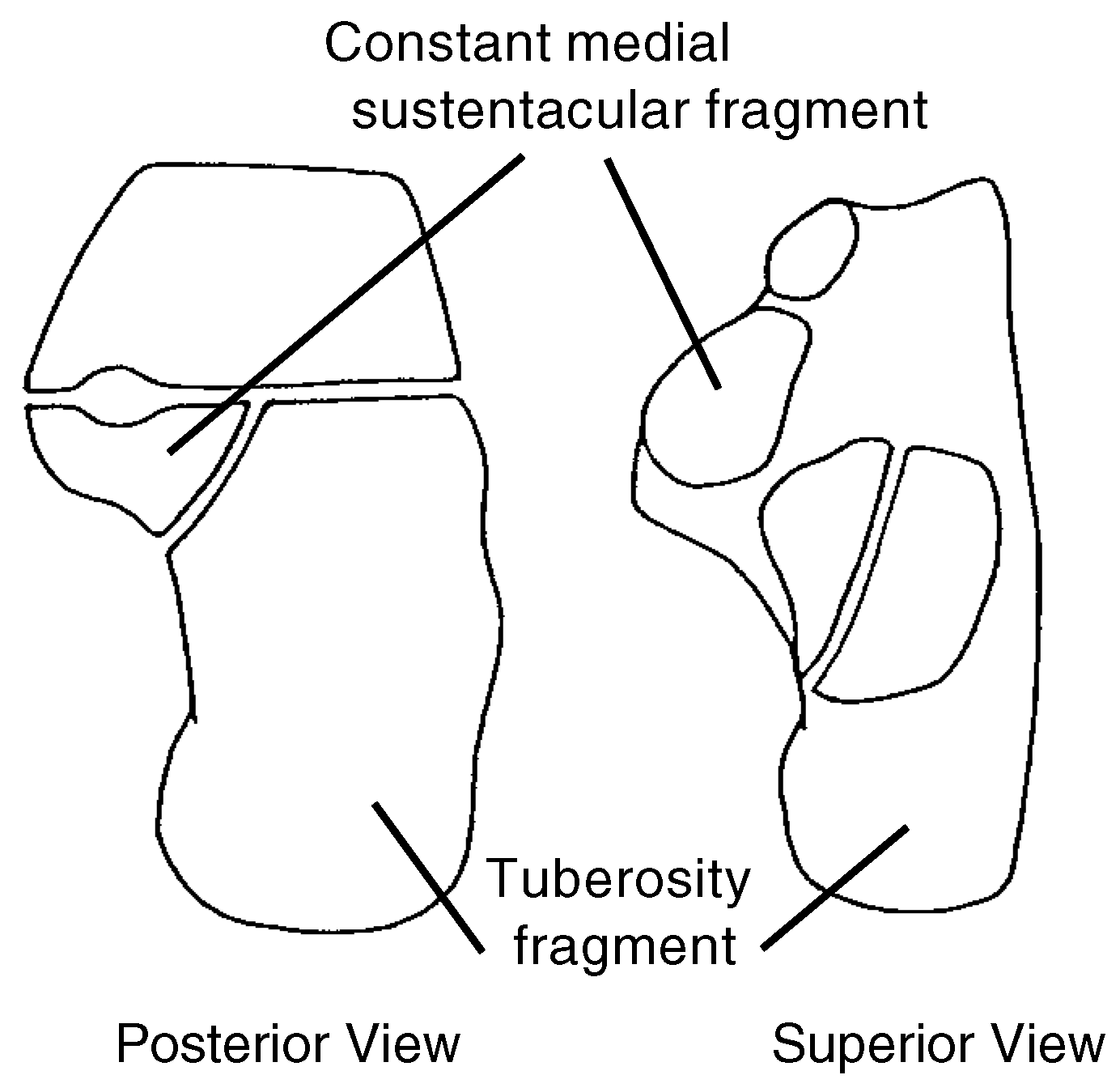
versus two bicortical cortical screws. They used eight paired fresh-frozen cadaveric feet (donor ages, 56 to 72 years), with the subtalar joint complex (ie, talus, interosseous ligaments, and calcaneus) being removed as a unit. An oblique osteotomy was created in the sagittal plane in a manner that attempted to reproduce the primary fracture line. Thus a calcaneus that was divided into two parts, the medial sustentacular and tuberosity fragments, was obtained (
Figure 5). The fractured calcaneus was then anatomically reduced and stabilized using one of the two pairs of screws: namely, two unicortical 4.0-mm cancellous screws (1.9-mm core diameter, 1.75-mm thread pitch) or two bicortical 3.5-mm cortical screws (2.4-mm core diameter, 1.25-mm thread pitch). The type of screw was assigned randomly to the calcaneus from the right foot in the pair, and the calcaneus from the left foot was then stabilized with the other type of screw.
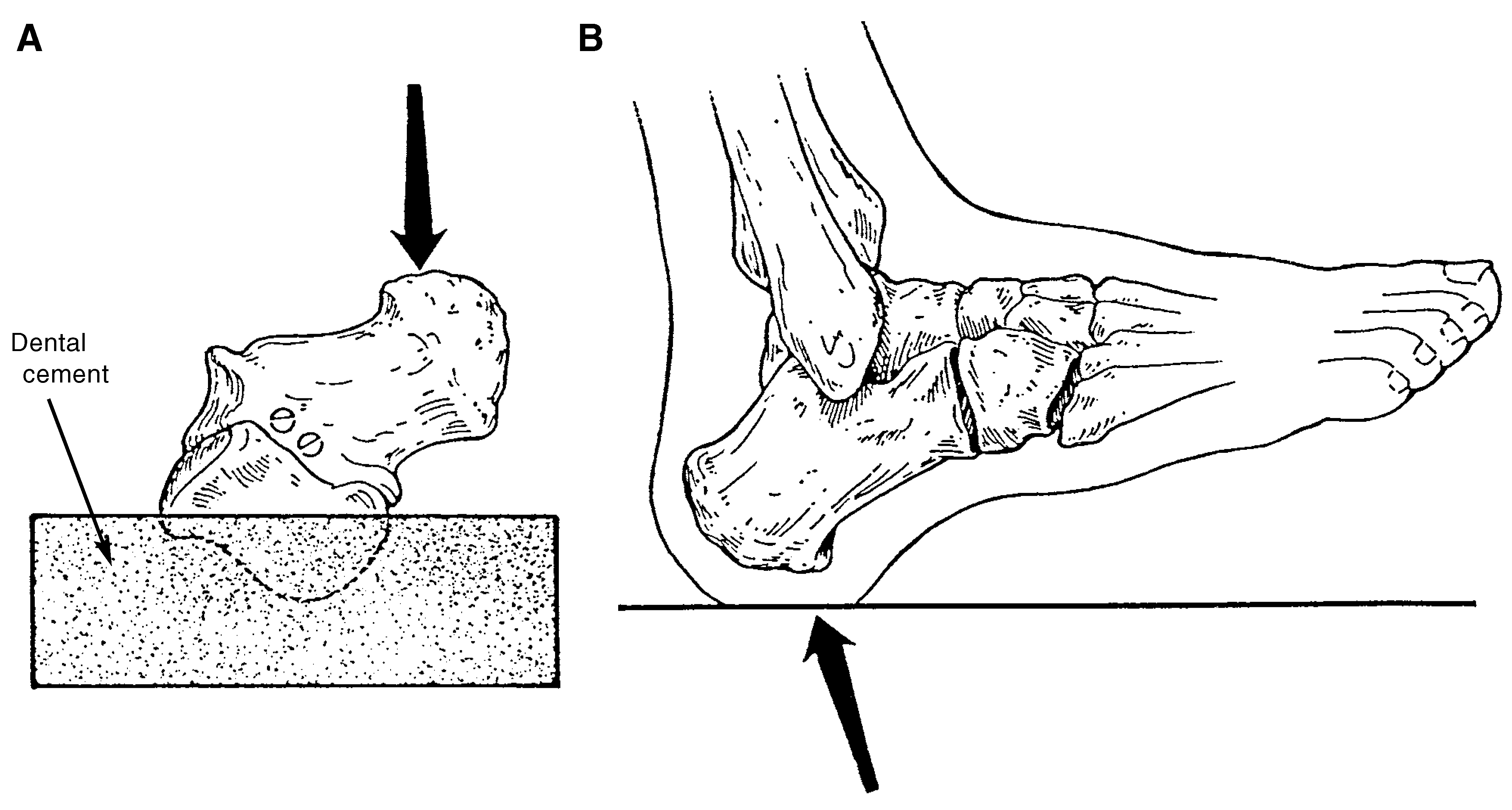
The talus was inverted and affixed in a plastic box containing dental cement, ensuring that 1) the calcaneal tuberosity projected upward to be in the proper position to receive a downward-acting direct axial compressive force that was subsequently applied, and 2) the varus-valgus alignment was neutral and there was 10° of dorsiflexion relative to the tibiotalar joint (this alignment simulates the position of the calcaneus in the heel-strike phase in the normal gait cycle) [
48] (
Figure 6). A compressive force was then applied to the medial calcaneal tuberosity at a displacement rate of 12.7 mm/min, until failure occurred (ie, the fracture became unstable).
The results showed that 1) in all specimens, the applied force created a disruption of the interosseous ligaments and rotation of the calcaneus; 2) in all specimens, there was no evidence of displacement at the osteotomy site; 3) in all specimens, none of the screws was bent, displaced, or broken; and 4) there was no statistically significant difference in the failure force between the two sets of specimens (1.35 ± 0.369 kN versus 1.406 ± 0.385 kN; Student’s paired t-test).
Bailey et al [
44] noted that, theoretically, bicortical screw fixation has a mechanical advantage over its unicortical counterpart because, in the former, two cortices are engaged. However, they pointed out that the cancellous bone in the calcaneus (which is the predominant type of bone) is very densely packed, a probable consequence of the calcaneus being subjected to repetitive loading during walking [
49]. Thus Bailey et al [
44] postulated that the cancellous screws, with their greater thread pitch and diameter, were lodged in a stable bone bed and should be expected to provide as good a resistance to displacement as the bicortical cortical screws. Their results were consistent with these expectations.
There are three main concerns with the Bailey et al [
44] study. First, the authors provided no information regarding the quality of the bone at the locations in the calcanei where the fixation screws were applied in the two groups studied. Second, many of the supporting soft tissues were removed from the complexes before the osteotomies and the application of the fixation method.
In vivo, these tissues provide stability and absorb forces at heel strike. It is not surprising, therefore, that the mode of failure seen in these cadaveric studies was disruption of the interosseous ligaments rather than of the bone. Third, an oscillating saw was used to create the osteotomies, which were, in essence, highly reproducible but linear fracture lines. These types of lines possess none of the surface irregularities seen at
in vivo fracture sites. One consequence of this difference is that, with
in vitro tests, the screws share a larger portion of the applied load than is the case
in vivo.
In the second experimental biomechanics study, Carr et al [
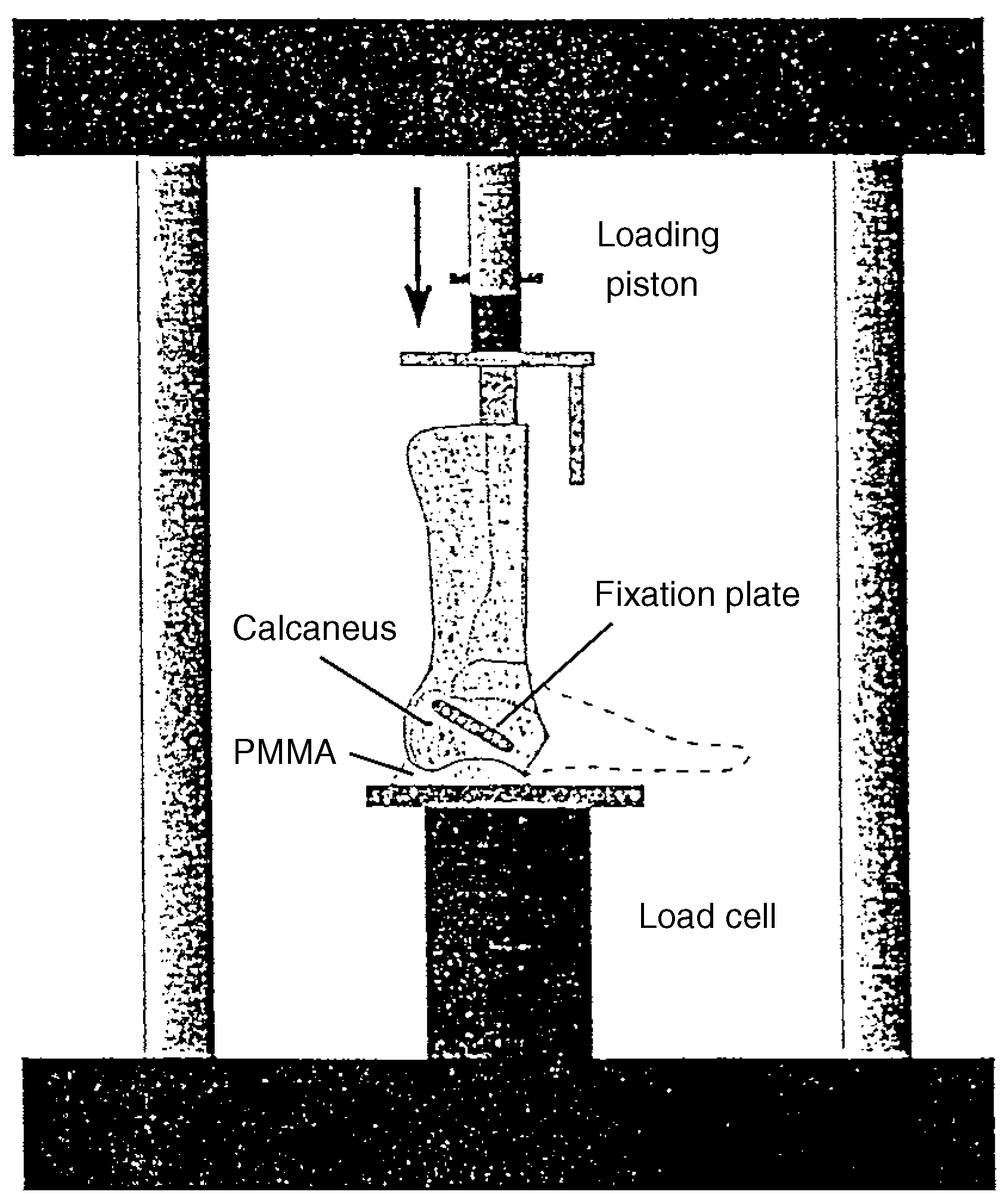
45] compared the fixation strength of two different types of small-fragment plates that are widely used in the internal fixation of calcaneal fractures. The plates were the thinner, flattened, one-third tubular, six-hole and the thicker five-hole 3.5-mm reconstruction types. In the study, displaced intraarticular calcaneal fractures were created, using a specially designed impact-loading device (which delivered a mean breaking energy of 156 N.m), in 13 unpaired fresh-frozen cadaveric lower limbs (donor ages, 49 to 97 years). These specimens were then assigned randomly to one of the two fixation groups. This fixation was done using an extensile-lateral approach in combination with a vertical-medial incision with the aid of 3.5-mm interfragmentary screws fixed to the posterior facet. Following this, either the tubular or the reconstruction plate was applied to the lateral cortex. Then anteroposterior, lateral, medial oblique, lateral oblique, and Harris radiographs were taken to confirm full anatomic reduction.
Prior to a biomechanical test, an amputation was performed, the heel pad was removed, and then the specimen was attached to a bed of polymethyl methacrylate so that it conformed to the anatomic position of the plantar foot during recovery from fixation (
Figure 7). Then, keeping the specimen well irrigated with physiologic saline solution, the specimen was cyclically loaded, at 6 cycles/min, between 0 and −98 N (ie, a compressive load of 98 N) for 500 cycles and then loaded at 10 mm/min until the fixation failed. (Carr et al [
45] pointed out that the cyclic compressive load and loading rate are of such magnitudes as are likely to be experienced during walking with a crutch.) The load (P
max) and displacement (Δ
max) at failure were then obtained. The P
max for specimens fixed using the tubular and reconstruction plates were 2.021 ± 1.050 kN and 1.923 ± 0.697 kN, respectively. The Δ
max for specimens fixed using the tubular and reconstruction plates were 6.10 ± 1.75 mm and 4.57 ± 1.32 mm, respectively. The differences in P
max (Student’s
t-test,
P < 0.08) and Δ
max (Student’s
t-test,
P < .09) between the specimens fixed with the two types of plate were not significant.
Carr et al [
45] concluded that their results provide justification for the use of the lower-profile tubular plate, which has many advantages over the reconstruction plate: It subjects the soft tissues to less tension (and hence produces a lower incidence of lateral wound necrosis) and causes minimal interference with peroneal tendon function.
There are four concerns with the study by Carr et al [
45]. First, the bone densities in two of the three locations on the calcaneus, where dual-photon absorptiometric measurements were taken, were either significantly or nearly significantly different (Student’s
t-test,
P = .059) between the two plate groups. Second, a preferred matched-pair experimental design should have involved fixations applied alternately to the right and left calcaneus in a given pair. Third, a displacement instrument that measured the vertical movement across the fixation site only should have been employed. Fourth, as in the Bailey et al [
44] study, some of the supporting soft tissues (the heel pad, in this case) were removed from the lower limbs prior to the mechanical testing. As stated earlier,
in vivo these tissues provide stability and absorb forces at heel strike.
In the third experimental biomechanics study, Wang et al [
46] created intra-articular calcaneal fractures in each of 20 fresh-frozen specimens of amputated lower legs by subjecting the upper end of the tibial shaft to a maximum impact energy of 304.1 N .m while the foot was in a neutral position. Those specimens that showed longitudinal and transverse fracture lines (a total of 12) were selected for open reduction followed by internal fixation, through an extensile-lateral approach, using one of two methods. In method A (lateral buttress plating), a flattened one-third tubular plate was used to buttress the lateral calcaneal wall and then multiple 3.5-mmdiameter cortical screws were drilled in the mediolateral direction. In method B (lateral buttress plating with longitudinal transfixing screw), the procedure was the same as for method A except for the addition of a longitudinal transfixing screw. In the mechanical testing, an axial tibial shank force was applied to a specimen, at a displacement rate of 60 mm/min, until the fixation failed, with the load at failure denoted by W
max. It was observed that 1) in all specimens, failure occurred through the transverse primary fracture line, and 2) W
max for specimens fixed using method B (2.905 ± 0.910 kN) was significantly higher than that for specimens fixed using method A (0.805 ± 0.356 kN) (Wilcoxon rank test,
P < .05). On the basis of these results, Wang et al [
46] concluded that the combination of lateral buttress plating and a longitudinal transfixing screw could significantly increase the fixation strength in the presence of a transverse primary fracture line.
A flaw of the Wang et al [
46] study is that the authors failed to provide clear information to show that the quality of the bone at the sites where the fractures were fixed in specimens using the two methods was essentially the same. Although it was stated in the report that the “average” bone density of the selected 12 calcanei prior to fracture was measured as 0.65 ± 0.13 g/cm
2, results of statistical analysis were not presented.
In the fourth experimental biomechanics study, Lin et al [
47] created four osteotomies in each of six pairs of legs obtained from embalmed cadavers by amputation at midtibia. Skin, muscles, tendons, heel pad, and adipose tissue were removed from each leg, while other structures (Achilles tendon, deep plantar fascia, and the deltoid ligament) were left intact. Following the osteotomies, which were made to simulate a joint-depression calcaneal fracture, one side of each pair of legs was assigned randomly to one of two groups of fixation methods, both of which involved the use of a newly designed and clinically untested stainless-steel plate. This plate buttressed the lateral cortex of the calcaneus; its key element was a cortical flange that supports the screws that transfix the central fragment of the fracture to the sustentacular fragment. In the first fixation method (group A, “screws out”), 3.5-mm-diameter cortical screws were used to fix the sustentacular fragment to the central articular fragment and then plate fixation was performed. The sustentacular screws did not penetrate the screw holes in the plate’s vertical flange. In the second fixation method (group B, “screws in”), the central fragment was reduced and tentatively fixed to the sustentaculum using two smooth Kirschner wires. The plate was then firmly held in place with screws in the anterior and posterior limbs, after which the sustentacular screws were inserted in the plate’s vertical flange. In preparation for the biomechanical tests, a limb was secured using a threaded steel rod that was placed into the intramedullary canal of the tibia. In these tests, the ankle and subtalar joints were held in neutral position, and an axial compressive load was applied to the rod at a crosshead displacement rate of 5 mm/min, until either the fixation failed (defined as the point at which the fracture lines became visibly widened) or a load of 2.5 kN was reached.
Following are two key features of the results reported by Lin et al [
47]. First, the stiffness of fractures fixed using the group B method (581 ± 180 N/mm) was significantly greater than that of fractures fixed using the group A method (131 ± 70 N/mm) (Student’s paired
t-test,
P = .009). Second, there were important differences in the modes of failure of the fracture fixation between the two groups. Group A specimens uniformly failed by vertical settling of the posterior facet into the section of the crushed bone until an impacted configuration was obtained. In group B specimens, there was less vertical settling; however, 67% of the specimens displayed some diastasis at the longitudinal osteotomy site under the load, which was a consequence of partial screw pullout from the sustentacular fragment.
There are five main concerns with the study by Lin et al [
47]. First, the donor ages of the cadavers were not stated. Second, the authors provided no information about the quality of the bone at the locations in the calcanei where the fixation was applied in the two groups studied. In fact, the authors conceded that this was an important flaw in their study when they remarked, “Individual variation in bone density and quality was thought to account for the variation in biomechanical performance between the different anatomic specimen pairs.” [
47] (p197) Third, as in the Bailey et al [
44] and Carr et al [
45] studies, some of the supporting soft tissues that provide stability and absorb heel-strike forces (the heel pad, in this case) were removed from the lower limbs prior to the osteotomies. Fourth, even though the authors stated that plain film radiographs and CT scans showed that the experimental fracture model had a radiographic appearance similar to that of actual joint-depression calcaneal fractures, important differences from fractures seen clinically persisted. For example, in their model, comminution was simulated only in the cancellous bone beneath the posterior facet, whereas comminution may occur in other areas. Fifth, the plate used is an experimental one; hence it is unknown at this time what its performance would be when used clinically.
There are three issues that are common to all experimental biomechanics studies, and these should be borne in mind when assessing the studies’ results and, hence, conclusions and clinical relevance. First, cadavers are used, and it is very difficult to correct the results for variability in cadavers, notably their size and bone quality. Second, all of the tests employ an experimental fracture model that, no matter how sophisticated, never faithfully simulates the impactforce vectors and fracture characteristics seen in the calcaneus clinically. Third, fundamental questions—such as whether increased rigidity of fixation translates into improved clinical outcome (as in the Lin et al [
47] study)—have, in many cases, not been posed; in cases where they have been posed, they have not been answered satisfactorily.
Suggested Research Areas
On the basis of the preceding review of the current literature, four areas are identified for future research.
First, the magnitudes of all of the relevant forces acting on the normal calcaneal complex need to be computed by a method different from that used by Yettram and Camilleri [
38]. It is suggested that the method of Kane and Levinson [
50] be used. This method formulates dynamic systems of equilibrium, as opposed to the traditional Newtonian formulation of the inversedynamic problem. Furthermore, the method of Kane and Levinson allows for resolution of a large number of variables through the use of generalized speeds that define motion in the system. The method is thus ideally suited to determining forces in biomechanical systems. Indeed, it has recently been used successfully in determining joint-reaction forces at the hip, knee, patella, and ankle joints [
51]. Two points must be noted, however, when use of the method of Kane and Levinson is contemplated. First, many measurements must be made, specifically 1) ground-reactive forces and relative joint motion (preferably from gait laboratory studies), 2) joint-contact positions (preferably using fluoroscopy), and 3) bone mass center, ligament insertion, and origin points, and muscle insertion and origin points. Second, the method is mathematically abstruse and computationally challenging.
A second area of research should be detailed threedimensional finite-element analysis of models of the normal calcaneus that include the forces determined from the application of the method of Kane and Levinson [
50] and take into account 1) the heterogeneity and the anisotropic nature of the elastic properties of both the cancellous and cortical bones, and 2) the viscoelastic nature of the ligaments, tendons, and muscles. Thus preliminary work should focus on obtaining the values of the relevant elastic constants of all of these materials in the calcaneal complex (eg, ultrasound could be used to determine the elastic properties of the bones at many different sites). Although this work is not formidable, clearly it is tedious.
A third area of research should be an investigation of the use of the results of the finite-element analysis studies in rational fracture-management schemes. In other words, it should be demonstrated that the finite- element analysis results have clinical importance.
A fourth area of focus should be experimental biomechanical evaluation and/or comparison of various internal-fixation techniques. There is a dearth of information on this important topic, with the only studies to date being those reviewed here. In conducting these studies, special attention should be paid to the points discussed previously: 1) All structures should be retained in the calcaneus and the osteotomy should be made to produce fractures as similar as possible to those seen in vivo. 2) It should be established that the quality of the bone in the locations at which the fixation device is applied is the same in the different groups studied. 3) Appropriate matched-pair design methods should be employed. 4) Proper instrumentation should be used so that the mechanical parameters (such as load or displacement at failure of the fixation) at the fracture site only are measured.
Conclusions
There are three main conclusions of the present review. First, in terms of background issues relevant to the applications of biomechanics as the basis for treating calcaneal fractures, the following points may be made: 1) The anatomy of the normal calcaneus is well known. 2) There is some disagreement about pathomechanical aspects of the calcaneus, although it appears that intra-articular fractures are the result of shear loading. 3) No universally accepted system of classifying intra-articular calcaneal fractures currently exists, although the trend is toward schemes that utilize CT scans rather than plain film radiographs. 4) A consequence of point 3 is that the treatment of these fractures, especially displaced ones, remains a highly contentious area in the field of orthopedics. There are indications, however, that open reduction coupled with internal fixation may be the optimal modality in most cases.
Second, there is a dearth of biomechanical studies on models of the normal calcaneus as well as on comparative performance of the various treatment techniques for surgically treating intra-articular fractures.
Third, following from the second conclusion, a number of areas should be given attention in future research. Among these is detailed finite-element analysis of three-dimensional models of the calcaneus and a demonstration of the clinical usefulness of the results obtained thereof with respect to surgical treatment of intra-articular calcaneal fractures.