Next Article in Journal
Biomechanics as a basis for management of intra-articular fractures of the calcaneus
Previous Article in Journal
A Proposed Managed-Care Curriculum for Podiatric Residencies
 
 
Journal of the American Podiatric Medical Association is published by MDPI from Volume 116 Issue 1 (2026). Previous articles were published by another publisher in Open Access under a CC-BY (or CC-BY-NC-ND) licence, and they are hosted by MDPI on mdpi.com as a courtesy and upon agreement with American Podiatric Medical Association.
Article

Orthoses in the treatment of rearfoot problems

by
Ellen Sobel
,
Steven J. Levitz
and
Mark A. Caselli
Division of Orthopedic Sciences, New York College of Podiatric Medicine, NY 10035, USA
J. Am. Podiatr. Med. Assoc. 1999, 89(5), 220-233; https://doi.org/10.7547/87507315-89-5-220
Published: 1 May 1999

Abstract

Orthotic management is helpful in the treatment of most orthopedic conditions involving the rearfoot, including plantar fasciitis, Achilles tendon disorders, posterior tibial tendon dysfunction, flatfoot, ankle sprains, and problems associated with diabetes, arthritis, and equinus disorders. A review of the effectiveness of orthoses in the treatment of these conditions is presented here. An in-depth analysis of the orthotic management of plantar fasciitis and a critical review of foot orthoses for the pronated foot are presented. Also discussed are the rationale and effectiveness of the tension night splint in the treatment of plantar fasciitis, orthotic devices for the different stages of posterior tibial tendon dysfunction, and the various categories of orthoses for off-loading the diabetic foot. The modern ankle brace, the effectiveness of prefabricated versus prescription foot orthoses, and recent developments in the ankle-foot orthosis are also reviewed.

The rearfoot-ankle complex is subject to numerous orthopedic disorders ranging from such extremely common entities as plantar fasciitis and posterior tibial tendon dysfunction to such severe orthopedic problems as Charcot’s arthropathy, rheumatoid arthritis, neuromuscular disease, and amputations. Orthotic therapy has been extensively employed in the treatment of all of these conditions.

Plantar Fasciitis

Plantar fasciitis, the most common cause of plantar heel pain, is an overuse injury characterized by heel pain that is especially severe when the patient first arises from bed [1,2,3,4,5,6,7,8,9]. Management involves treating the inflammation, removing the aggravating factors, and rehabilitating the patient to allow a return to normal activities [10]. A variety of orthotic devices are used to manage this condition. Some of the most common ones are presented here.

Heel Pads, Cushions, and Insoles

Soft heel cups both cushion and contain the plantar calcaneal fat pad [5]. In patients with heel pain caused by fat-pad atrophy, hard-plastic heel cups (M-F Heel Protectors, M-F Athletic Co, Cranston, Rhode Island) position the heel pad underneath the calcaneus, which restores the natural cushioning and compressibility of the heel [11,12]. The Viscoheel SofSpot (Bauerfeind USA, Inc, Kennesaw, Georgia) is a silicone heel cushion that has a built-in area of softer durometer that is designed to disperse weight around the plantar medial tubercle of the calcaneus, the site of inflammation in plantar fasciitis. Viscoelastic heel pads have been reported to reduce the impact of heel strike on the leg and low back by as much as 50% [13,14,15,16,17]. In one study, all patients who wore viscoelastic heel inserts for treatment of plantar and posterior heel pain improved rapidly [18]. In another report, reduction or absence of heel pain was experienced in 73% of 30 patients who wore the Viscoheel SofSpot for 1 month [19].
Although the sorbothane material used in viscoelastic heel pads is widely used and considered to be an excellent shock absorber, shoe inserts made of sponge rubber were found to be more shock-absorbent than sorbothane inserts in a carefully controlled study testing the shock absorption of shoe-insert materials [20]. Patients with sports-induced Achilles tendinitis that was treated with sponge-rubber heel pads and physical therapy were also observed to have more improvement in gait than those treated with viscoelastic-polymer sorbothane heel pads and physical therapy [21]. Poron (Rogers Corp, East Woodstock, Connecticut) insoles have been found to be effective in the treatment of heel pain, although there was no significant difference in relief of heel pain when magnetic foil was added to the Poron insole [22].

Custom-Made and Prefabricated Foot Orthoses

Ligament-cutting experiments in cadavers have shown that the plantar fascia is the primary ligamentous restraint to arch collapse, [23] and sectioning the plantar fascia causes arch sag in individuals operated on for intractable plantar fasciitis [24]. The plantar fascia is in tension when the foot is loaded in weightbearing. During weightbearing, the body weight is distributed between the two feet and converted into tensile force in the plantar fascia [25]. A decrease in strain should occur with an adequate foot orthosis [26]. In a study of arch stability, foot orthoses improved stability in 14 loaded cadaveric specimens as compared with loading in cadavers in the barefoot state [27]. Kogler and associates [26] found that the University of California Biomechanics Laboratory (UCBL) orthosis, a custom-made soft full-foot orthosis casted in a semiweightbearing position, and a custommade semirigid full-foot orthosis casted in a semiweightbearing position significantly decreased the strain in the plantar aponeurosis compared with the barefoot control and were considered effective arch supports. In contrast, the Root functional foot orthosis, a prefabricated foot orthosis, and a shoe alone did not significantly decrease strain in the plantar aponeurosis as compared with the same barefoot control.
The functional foot orthosis has been recommended as a treatment modality in cases of severe plantar fasciitis [28,29]. The most common indication for prescription foot orthoses in symptomatic runners was excessive pronation and plantar fasciitis [30]. A foot orthosis should support the arch, relieve pressure in the tender area, and provide cushioning [31]. Biomechanically, the foot orthosis should maintain the subtalar joint in its neutral position and the midtarsal joint in the stable pronated position, [32] which will theoretically improve abnormal lower-extremity function [33]. Foot orthoses for the management of plantar fasciitis in athletes are evaluated in terms of their ability to reduce heel and arch pain, reduce pronation, and return athletes to normal sports activities. In the treatment of 43 painful heels using customized rigid-plastic foot orthoses, 81% had complete relief after the orthosis was worn for 3 months [34]. Similarly, in a retrospective study of 222 runners, 74% of symptomatic runners with plantar fasciitis obtained great or complete relief with orthotic shoe inserts, while 8% had slight or no improvement and 6% said the orthoses made their condition worse; the remaining 12% developed a new foot problem [30]. Patients with plantar fasciitis who were treated with a functional foot orthosis using either a Root neutral negative-impression casting technique or a Blake 25° inverted casting technique reported an 80% reduction in pain [33].
Orthotic devices have been shown to be effective in returning injured athletes to full functioning. In one study, 78% of runners who sustained running injuries were able to return to their previous running programs with the use of foot orthotic devices [35]. The orthoses used in this study resulted in a significant reduction in maximum pronation compared with a barefoot control group of six runners [35]. Similarly, 70% of injured recreational athletes were able to return to previous levels of activity after receiving semirigid functional foot orthoses [36].
A comparative study found that custom-made foot orthoses reduced heel pain from plantar fasciitis significantly better than viscoelastic heel cups or antiinflammatory therapy [37]. In another study comparing insert materials, there was no significant difference in 40 patients treated for heel spur syndrome with either Rohadur (Teltscher Corp, Mt Kisco, New York) or TL-61 (Medical Material, Westlake Village, California) functional foot orthoses [38]. Eighty-five percent of patients in this study had improvement of their conditions.
In several studies, subjects running with semirigid orthoses in their shoes demonstrated significant decreases in maximal pronation as compared with subjects running in shoes without inserts [35,39,40,41]. Rigid orthoses and orthoses inverted 25° also reduced pronation in runners [42]. Maximal pronation during walking has also been reported to decrease in subjects wearing shoes with orthoses when compared with the same subjects wearing shoes alone [39,43,44]. In contrast, Rodgers and Leveau [45] found that pronation was not significantly reduced in runners wearing a functional polypropylene foot orthosis in the shoe. There was no significant difference in reduction in rearfoot pronation in patients wearing Spenco (Spenco Medical Corp, Waco, Texas) inserts versus custom-made foot orthoses [46] or between casted foot orthoses and low-density polyethylene thermoplastic (Vitralene, Stanley Smith & Co, London, England) over-the-counter arch supports [47]. Rearfoot orthotic devices were found to reduce vertical and anteroposterior ground-reactive forces during ambulation [48]. However, the authors thought that the rearfoot orthoses theoretically should have reduced medial and anteroposterior ground-reactive forces [48].
A rearfoot varus post has frequently been added to a functional foot orthosis in order to allow normal but not excessive subtalar joint pronation during the contact phase of gait [49]. Empirically, the effect of adding a rearfoot post to the functional foot orthosis is variable. In one study, a semirigid, total-contact foot orthosis reduced forefoot vertical forces; however, adding a 6° rearfoot varus post had no effect on the results [50]. The orthosis in this study was made of Aliplast XPE (AliMed, Inc, Dedham, Massachusetts) [50]. Rearfoot posts made of methyl methacrylate (rigid) and Birko cork (Birkenstock Footprint Sandals, Inc, Novato, California) (compressible) were found to decrease initial pronation velocity in runners, which is associated with lower-extremity injuries [51]. However, there were no differences in control of pronation between the two kinds of posting materials. In another study, both forefoot and rearfoot posts or rearfoot posts alone controlled abnormal pronation better than forefoot posts used in the shoes of subjects during ambulation [52]. Finally, Tollafield and Pratt [53] found that externally posting the rearfoot more than 4° actually increased pronation as the foot rotated on the device.

University of California Biomechanics Laboratory Orthosis

The orthosis made at the University of California Biomechanics Laboratory (UCBL) was originally designed to maintain a flexible paralytic valgus foot deformity in the corrected position [54]. However, its use has been extensively expanded to treat flexible flatfoot, plantar fasciitis, and calcaneal spurs [55,56,57,58]. The UCBL orthosis is casted in the semiweightbearing position [54]. The device elevates the arch by holding the foot in a position of forefoot adduction and rearfoot inversion. In one study, patients who wore a UCBL orthosis for 3 months had 60% to 100% relief of heel pain [55]. The UCBL orthosis was found to reduce the degree and duration of abnormal pronation during the stance phase of gait in eight patients with flatfoot [59]. The UCBL orthosis with medial posts has been successfully used to treat posterior tibial tendon dysfunction [60].

Posterior Splint

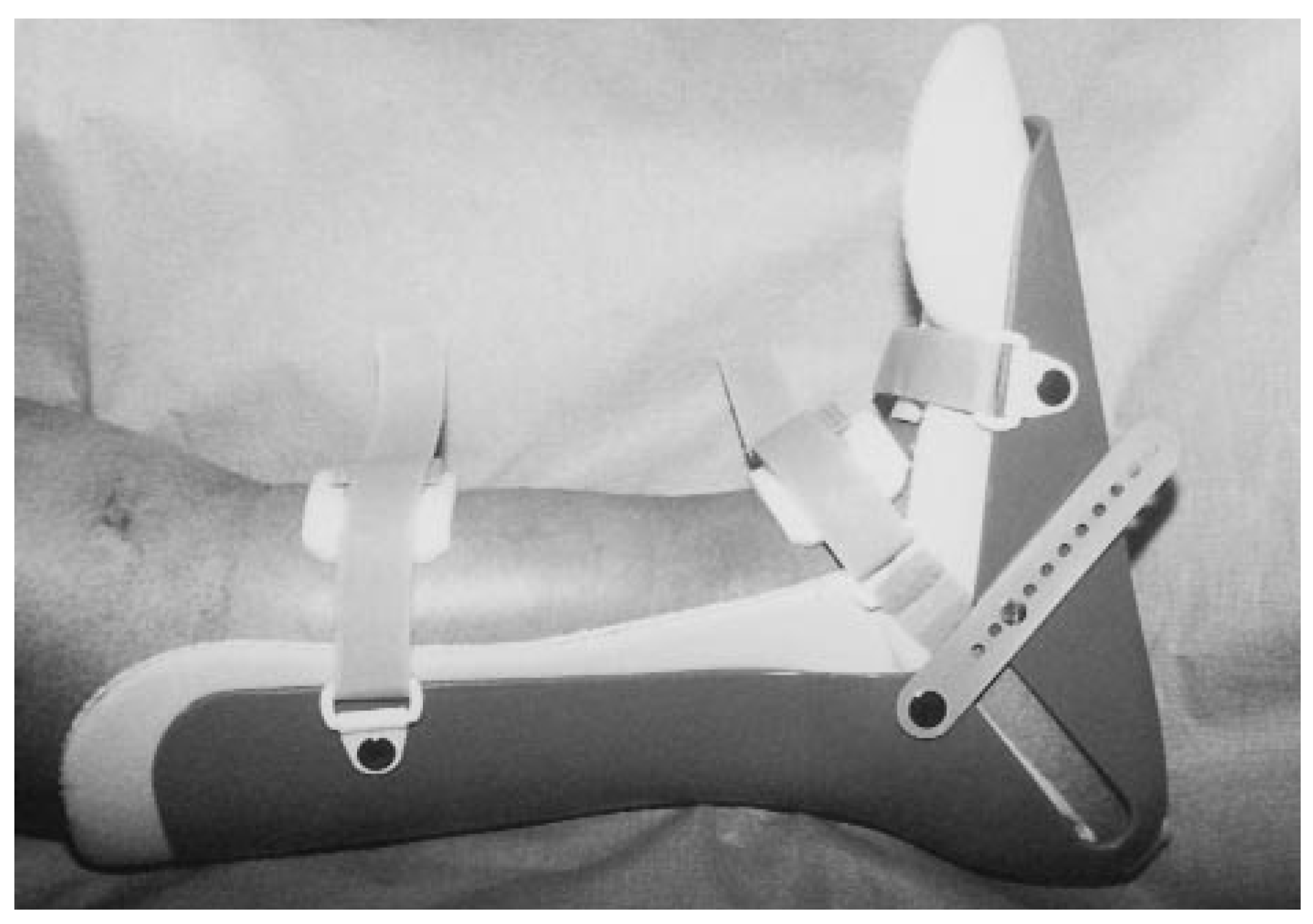
Recently, the tension posterior night splint has been used in the treatment of recalcitrant cases of plantar fasciitis (Fig. 1) [61,62,63,64,65,66,67]. During sleep, the unbraced foot and ankle assume a plantarflexed position because of the normal tone in the gastrocnemius and soleus muscles. This nonfunctional, plantarflexed position results in tightness of the posterior muscle group and the plantar fascia and is thought to account for the severe pain that patients with plantar fasciitis experience with their first step in the morning as the plantar fascia resumes its functional weightbearing length [61]. Stress relaxation is the decrease in stress with time once a material under loaded condition has deformed to a constant length [68]. This is due to the viscoelastic nature of all biological tissues. Similarly, when the plantar fascia is kept in a dorsiflexed, stretched position by the night splint, the biomechanical phenomenon of stress relaxation occurs and the plantar fascia relaxes in the new stretched position. The tension night splint maintains the foot in a dorsiflexed state while the patient is sleeping, thereby preventing tightness and contracture of the Achilles tendon and plantar fascia that occur as a result of the plantarflexed posture of the foot during sleep.
Figure 1. Tension posterior night splint (Early Fit Night Splint, AliMed, Inc, Dedham, Massachusetts).
Japma 89 00220 g001
The tension night splint is typically used in combination with other treatments for heel pain. A study by Batt et al [61] showed that the night splint in conjunction with stretching, viscoelastic heel pads, and nonsteroidal anti-inflammatory medications was more effective in the treatment of plantar fasciitis than the same treatments without the night splint. This study used an office-made plaster night splint constructed with the ankle in maximum dorsiflexion. The authors thought that their splint produced both ankle dorsiflexion and toe extension, which they considered critical to maintain tension in the plantar fascia.
Eleven of 14 patients (79%) with 1 year or more of heel pain had complete resolution of pain in less than 4 months with treatment using a polypropylene anklefoot orthosis set in 5° of dorsiflexion, stretching, Tuli heel cups (International Comfort Products Ltd, San Marcos, California), and nonsteroidal anti-inflammatory medication [67]. The 11 patients were all asymptomatic at the 9-month follow-up. Of the three patients who did not improve, excessive weight and noncompliance were considered factors in continuation of the problem.
Mizel and associates [63] treated 57 patients who had been symptomatic for at least 10 months with a combination of a molded ankle-foot orthosis and a rocker-bottom shoe. At an average follow-up time of 16 months, symptoms were completely resolved in 59% of patients and improved in 18%.
In a prospective, crossover study, Powell and colleagues [65] treated 37 patients with recalcitrant plantar fasciitis using a dorsiflexion night splint. In this study, the night splint was worn for 1 month and used alone, with no supporting treatment; thus the night splint was evaluated as a single treatment modality. This is in contrast to previous studies, which used shoe modification, [63] exercises, heel cups, and nonsteroidal antiinflammatory medication along with the splint [61,67]. The night splint in this study was a polypropylene ankle-foot orthosis with the ankle placed in 5° of dorsiflexion and wedging at the forefoot, which provided 30° of dorsiflexion at the metatarsophalangeal joints. Eighty-eight percent of patients reported improvement at the 6-month follow-up.

Short-Leg Walking Cast

Thirty-two patients with heel pain of more than 1 year’s duration were treated with a short-leg walking cast for an average of 6 weeks (range, 1 to 12 weeks) [69]. At an average follow-up time of 15 months, 25% of the patients had complete resolution of heel pain and 61% reported improvement. The authors concluded that casting should be tried prior to surgical intervention. In another study of the outcome of nonsurgical treatment for plantar fasciitis, a short-leg walking cast was the most effective of numerous conservative therapies including steroid injection, rest, ice, running shoe, crepe-soled shoe, and Tuli heel cup [70].

Posterior Tibial Tendon Dysfunction

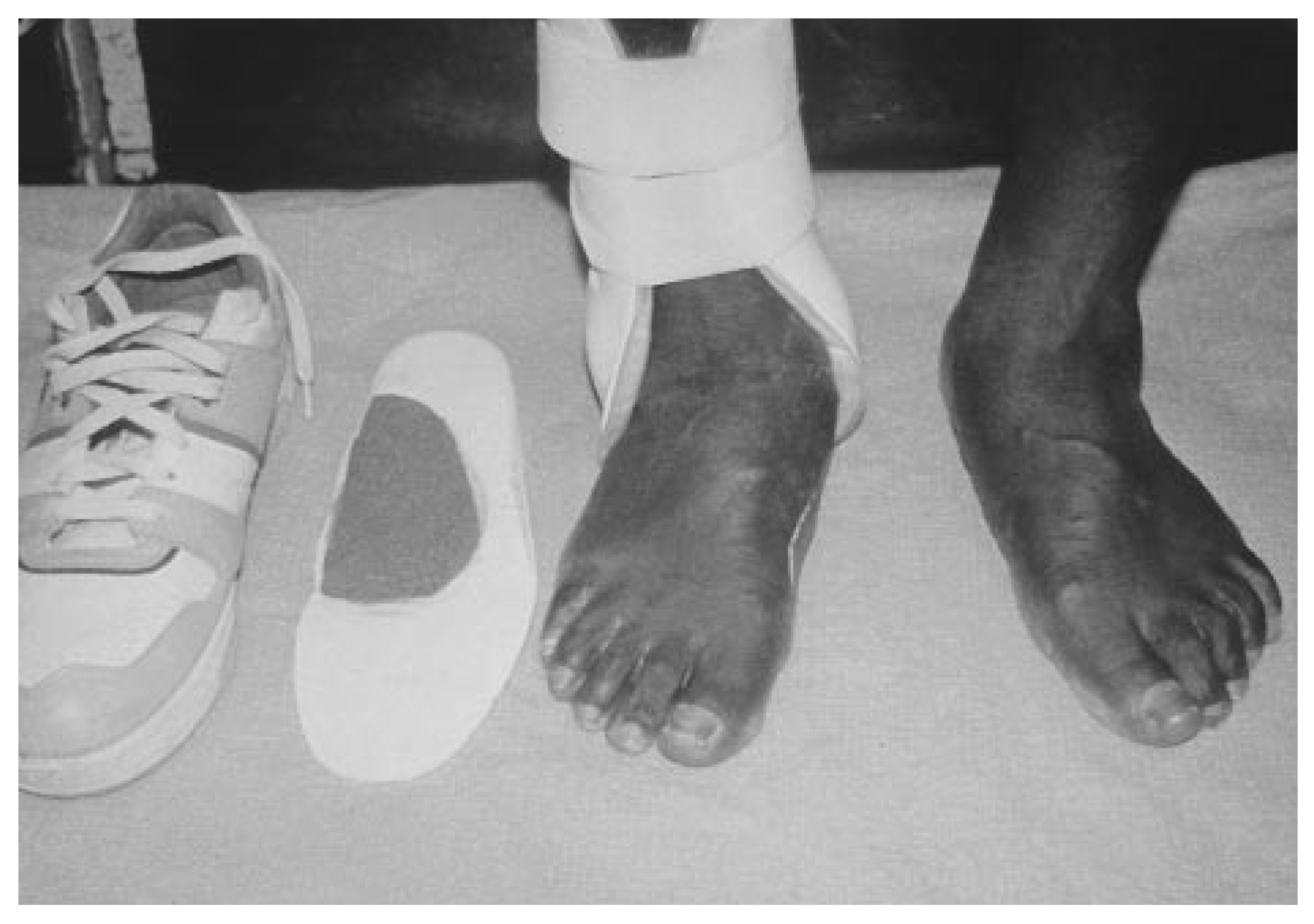
The symptoms of posterior tibial tendon dysfunction consist of pain, tenderness, and swelling in the medial aspect of the rearfoot that are aggravated by weightbearing [71,72,73,74,75,76]. Posterior tibial tendon dysfunction is divided into four stages; orthotic treatment is described for each of these stages [72]. Orthotic treatment for posterior tibial tendon dysfunction is based on the flexibility of the foot, which becomes increasingly rigid as the stages progress (Fig. 2). In the first and second stages of posterior tibial tendon dysfunction, there is flatfoot deformity with heel valgus and forefoot abduction; however, the rearfoot remains flexible. For patients with stage I and II dysfunction, a full-length, semirigid foot orthosis in a running shoe provides arch support and corrects the flexible deformity [71,74]. The orthosis may be constructed of leather or plastic. Medial posts may be placed along the rearfoot. The UCBL orthosis with a rearfoot varus post has been recommended as a treatment modality for stage II posterior tibial tendon dysfunction [60]. The orthosis and rearfoot varus wedge correct the flexible rearfoot valgus deformity and prevent the subfibular impingement that is seen in stage II posterior tibial tendon dysfunction [60]. However, this orthosis may be uncomfortable and may not be tolerated by the patient because of the pressure of the arch against the orthosis [77].
Figure 2. In a case of traumatic posterior tibial tendon rupture, treatment after surgical reattachment of the tendon consisted of an Aircast ankle brace (Aircast, Inc, Summit, New Jersey) and reinforcing the arch.
Japma 89 00220 g002
In stages III and IV posterior tibial tendon dysfunction, there is fixed flatfoot deformity with rigid heel valgus. Pain is more pronounced laterally at the tip of the fibula than medially on weightbearing because of the rigid valgus angulation of the calcaneus [76]. A solid ankle-foot orthosis made of 3/16-inch polypropylene has been recommended for treatment of a rigid stage III deformity [74]. However, the prominence of the head of the talus may cause the foot to press against the orthosis; although the orthosis may be comfortable at first, once collapse of the arch has occurred, patients may not be able to tolerate the orthosis [78]. If there is significant swelling or rearfoot pain in stage III or IV posterior tibial tendon dysfunction, a double-upright or patellar-tendon-bearing brace might be considered. The patellar-tendon-bearing orthosis has been recommended for use in elderly patients with extreme collapse of the longitudinal arch and painful rearfoot arthrosis [74].

Posterior Heel Disorders

Achilles peritendinitis is the most common injury in runners; it is caused by repetitive irritation during running, walking, and jumping [79,80,81,82,83,84,85,86]. A firm heel lift of approximately 1/4 to 3/8 inch or higher may be used to shorten the distance between the origin and insertion of the gastrocnemius-soleus complex, which relaxes the tension in the Achilles tendon [87,88] The primary function of the foot orthosis is to reduce pressure on the Achilles tendon. For patients with Achilles tendinitis who have excessively pronated feet, the Achilles tendon exhibits less “whipping and bowstring action” with the use of orthoses because the tendon remains medial to the subtalar joint axis, which reduces the pronatory influence of the Achilles tendon [89].

Orthoses for Ankle Instability

Individuals with cavus feet are more prone to lateral ankle inversion sprains. Theoretically, rigid forefoot valgus forces the rearfoot into inversion when the patient bears weight, which stresses the lateral ankle [90]. An orthosis will ease stress on the ankle by balancing the forefoot and stabilizing the rearfoot with 0° rearfoot posts and extrinsic forefoot valgus posts [91]. Individuals with cavus feet and frequent ankle sprains may also be prescribed orthoses with full-foot valgus posts. Custom-made orthotic devices have been shown to restrict undesirable motion at the foot and ankle and enhance joint mechanoreceptors to detect perturbations and provide structural support in patients with injured ankles [92].
The shoe for a patient with ankle instability might have an outflared lateral heel—that is, the heel should be broadened laterally to provide an “outrigger” effect, making it more difficult to turn over on the ankle. Lateral buttressing and a valgus wedge may also have this effect. High-top shoes provide maximum ankle stability.
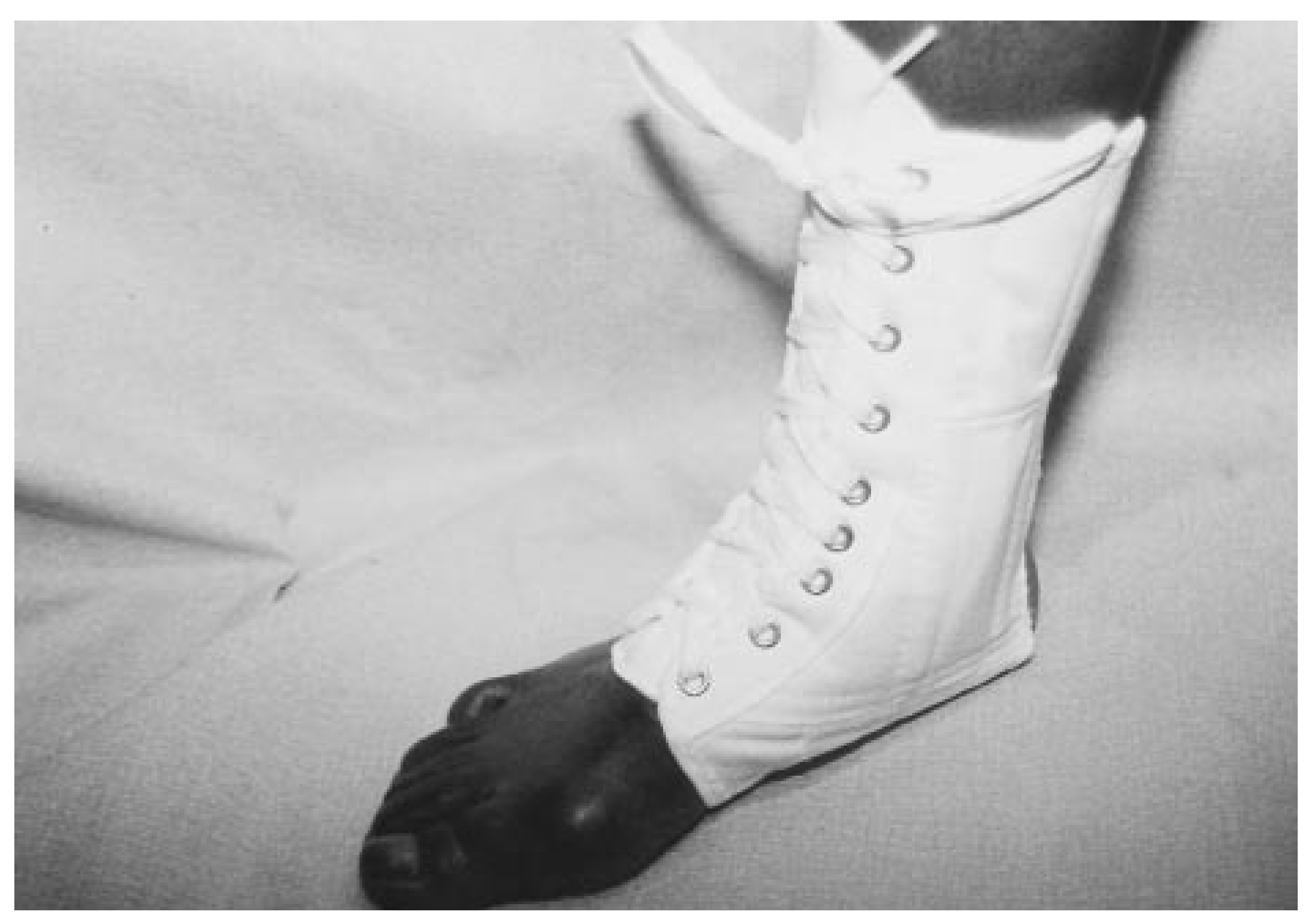
Ankle braces prevent active and passive inversion at the ankle, [93,94] improve proprioceptive capability, and have been shown to be more effective than taping (Fig. 3) [95]. Athletes also report that an Aircast brace is more comfortable than adhesive ankle taping [96]. More importantly, ankle braces have not been shown to inhibit athletic performance [96,97]
Ankle braces are effective in the treatment of lateral ankle instability and ankle fractures. Traditionally, the treatment for nondisplaced lateral ankle fractures was a below-the-knee walking cast that was worn for 5 to 6 weeks after the trauma [98]. In one study, 66 adult patients with supination external-rotation ankle fractures were successfully treated with either an Aircast ankle brace or a DonJoy R.O.M.-Walker brace (DonJoy Co, Vista, California) for 5 weeks, with an average time until return to work of 6 weeks [98]. At 4 weeks, 70% to 80% of patients were able to walk without pain. In a study of 20 patients with acute inversion ankle sprains, 10 patients were treated with an orthopedic ankle brace after a 10-day plaster cast immobilization and a control group of 10 patients was treated with a weightbearing short-leg plaster cast for 25 days. An earlier and more functional recovery occurred in the ankle-brace group [99]. Similarly, patients treated with an Aircast ankle brace were more mobile and used less sick-leave time than patients who were treated with a compression bandage [100].
Figure 3. Laced canvas ankle brace (Swede-O Ankle Lok, Swede-O, North Branch, Minnesota).
Japma 89 00220 g003

Ankle-Foot Orthoses for Rearfoot Equinus

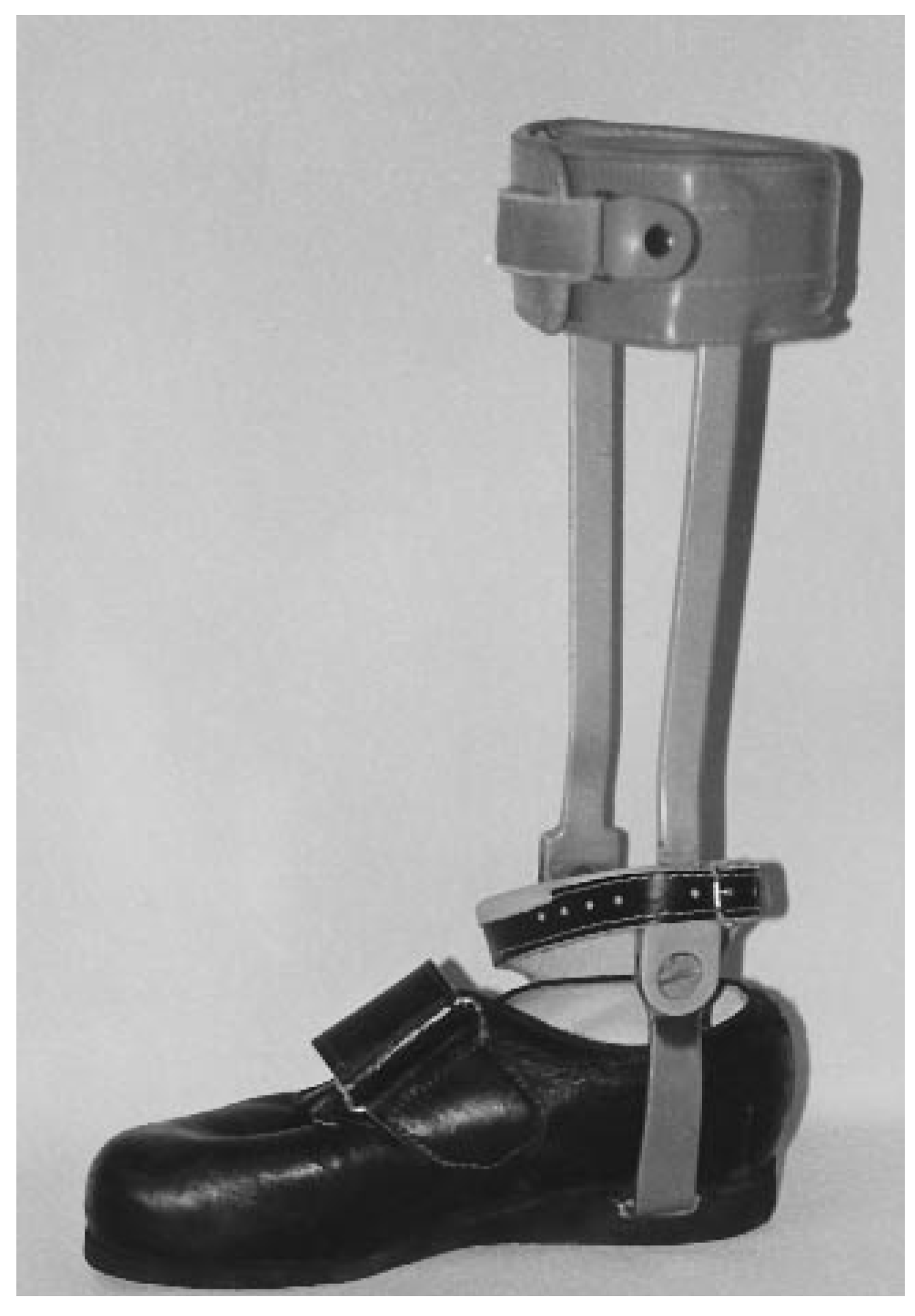
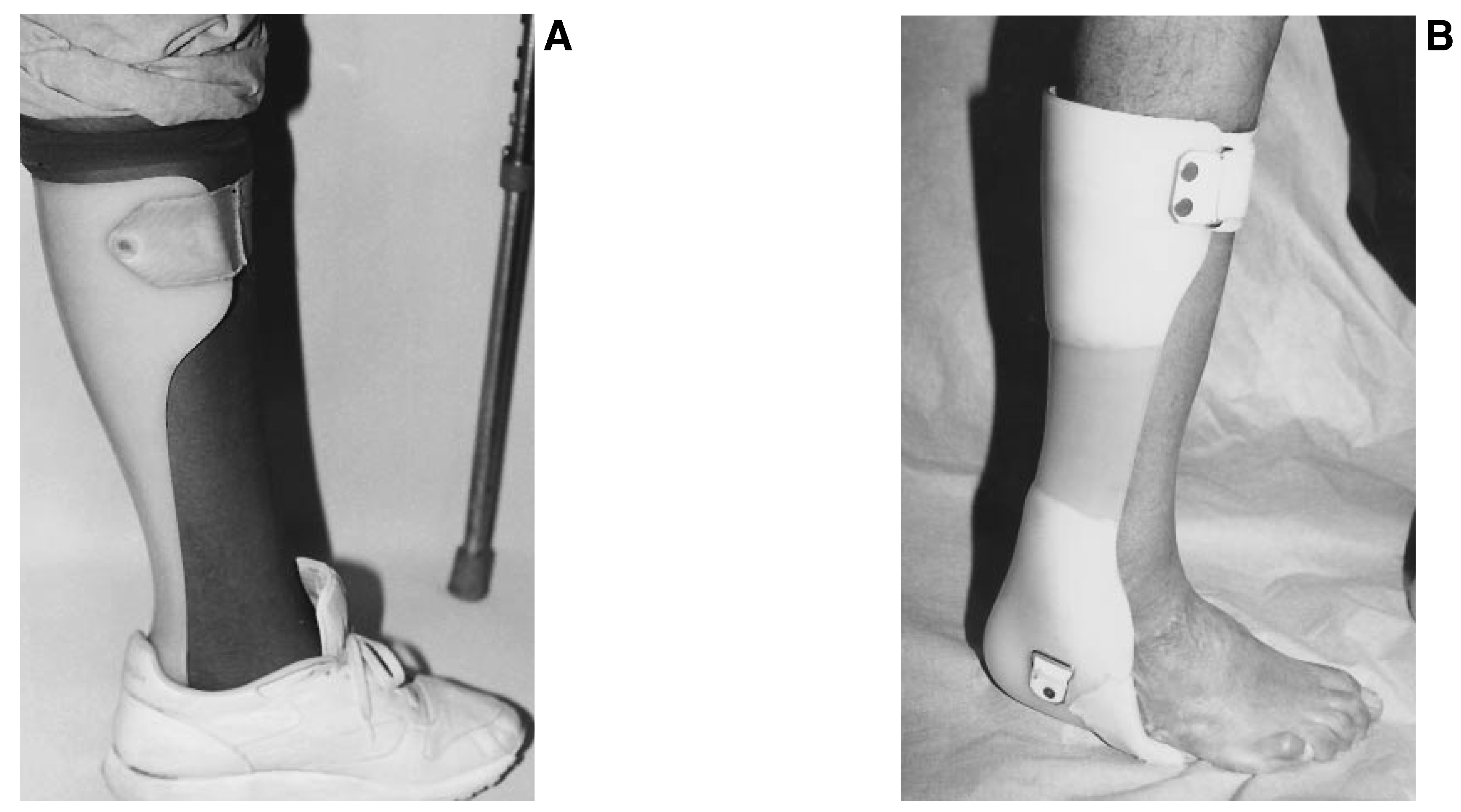
Ankle-foot orthoses are widely used for the treatment of different types of motor disorders [101,102,103,104,105,106,107]. Plastic ankle-foot orthoses have now largely replaced the metal ones, with the most common materials being polypropylene and laminated plastics [108,109,110]. However, patients requiring bracing who are also insensate should be fitted for an ankle-foot orthosis with a metal shoe attachment so that the brace is not in direct contact with sensitive skin (Fig. 4) [110]. The posterior leaf spring ankle-foot orthosis is indicated for patients with peripheral nerve injuries resulting in flaccid footdrop, where all that is needed is toe clearance during the swing phase of gait. This orthosis is fabricated by cutting the ankle trim lines behind the malleoli, resulting in a flexible brace that provides minimal mediolateral stability and may control mild spasticity (Fig. 5A). The posterior leaf spring orthosis was found to improve ankle function in the gait of 31 children with cerebral palsy; it reduced excessive equinus during the swing phase, but did not improve ankle function for push-off during the stance phase [106]. The rigid, solid ankle-foot orthosis restricts all motion at the ankle and is useful for treatment of traumatic arthritis of the ankle or other conditions in which complete immobilization of the ankle is required (Fig. 5B). It is also indicated for control of severe spasticity and is therefore useful in the treatment of stroke patients. The solid ankle-foot orthosis has the ankle trim lines cut anterior to the malleoli, which results in a rigid orthosis. Most patients have a semirigid ankle-foot orthosis with the trim lines intermediate between those of the solid and the posterior leaf spring orthoses, thereby providing enough control for significant spasticity and support for weak muscles, yet maintaining a degree of flexibility.
Figure 4. Double-upright ankle-foot orthosis.
Japma 89 00220 g004
Figure 5. A, Posterior leaf spring ankle-foot orthosis. Note that the trim line at the ankle joint is behind the malleoli. B, Solid ankle-foot orthosis with trim lines cut anterior to the malleoli.
Japma 89 00220 g005
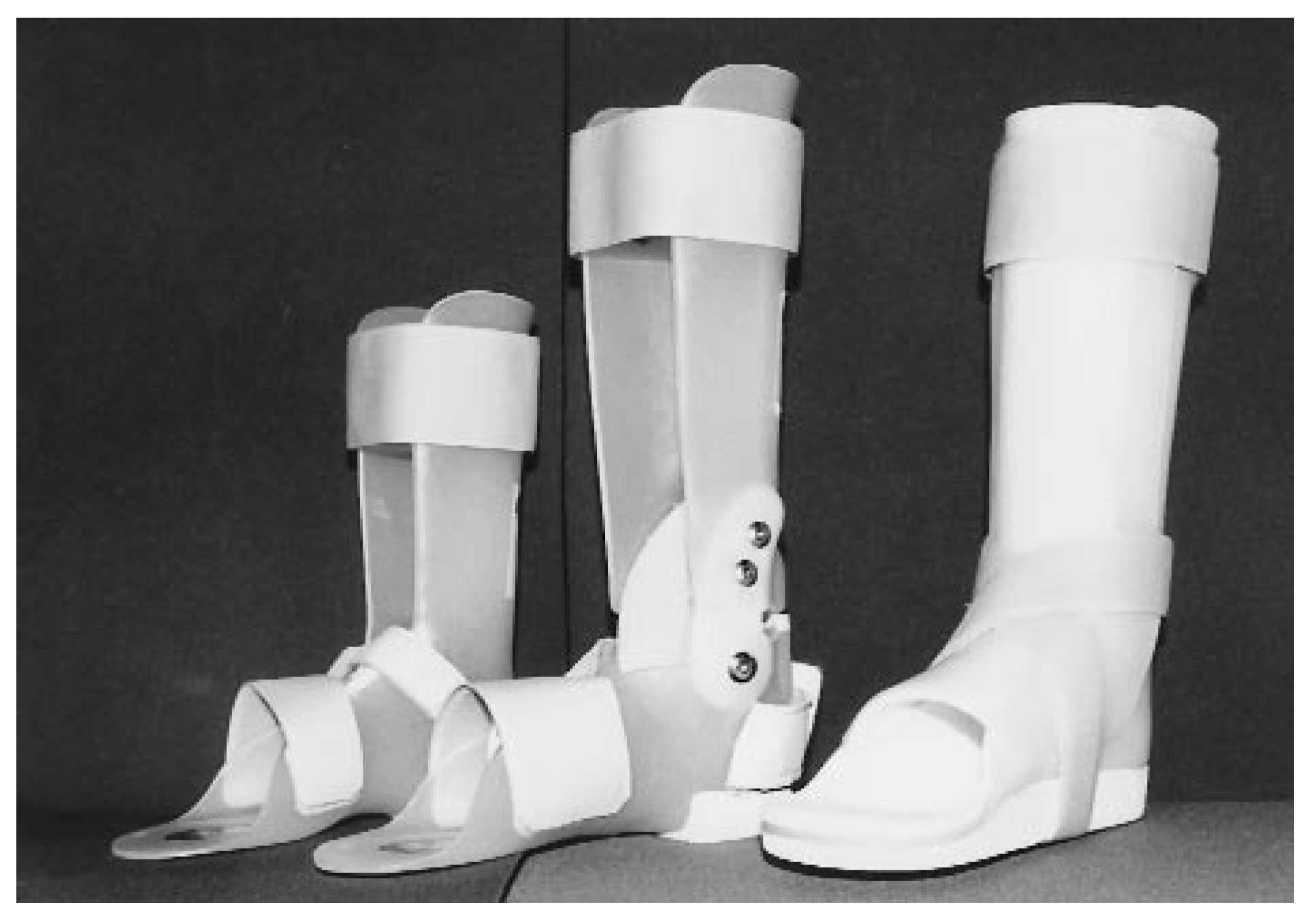
The articulated ankle-foot orthosis is a plastic brace with joints at the ankle (Fig. 6). Hinged orthoses with a dorsiflexion stop to prevent plantarflexion beyond a right angle of the foot to the leg are frequently employed for tone reduction to reduce spasticity in children with spastic ankle equinus [111,112]. Ankle-foot orthoses have been shown to increase velocity, stride length, and single-support percentage as compared with walking barefoot in children with spastic equinus and crouch gait [113]. However, the results of studies comparing the various ankle-foot orthoses for spastic equinus conditions in children and adults are conflicting. In a case study comparing solid and hinged ankle-foot orthoses in a child with cerebral palsy, the solid ankle-foot orthosis was found to block the needed foot and ankle mobility [114]. Articulated orthoses decreased the sit-to-stand time in preambulatory children with cerebral palsy [115]. In a study of 14 children with spastic hemiplegia, both a hinged ankle-foot orthosis with plantarflexion stop and a solid anklefoot orthosis improved cadence, velocity, and step length; however, the hinged orthosis produced a more dynamic and physiologic gait pattern [116]. Similarly, in another study, both orthoses with a plantarflexion stop and solid ankle-foot orthoses increased stride length and temporal-distance characteristics equally in children with spastic cerebral palsy [117].
Figure 6. Articulated ankle-foot orthosis (center). Note the ankle joint built into the plastic orthosis. The orthosis on the left is a solid ankle-foot orthosis. Note the high medial flanges built into the foot plate and the additional two straps on the ankle and distal foot, all of which are tone-reducing features. The orthosis on the right is a total-contact ankle-foot orthosis with a tone-reducing anterior shell.
Japma 89 00220 g006
A dorsiflexion-assist modification may be added to an ankle-foot orthosis to spring the foot into dorsiflexion automatically when the foot enters the swing phase of gait. However, in a study of five hemiplegic adults using dorsiflexion-assist orthoses versus orthoses without spring loading, no significant differences in 10-m walking time were found [118]. The cylinder of the assist device was heavy and noisy, and patients did not like it; they preferred their old orthoses. The authors concluded that the dorsiflexionassist ankle-foot orthosis was not superior to the orthosis with no assist device [118]. In a study of children with spastic equinus, the supramalleolar orthosis appeared to offer no improvement in gait over the solid ankle-foot orthosis [119]. In conclusion, although new developments in orthoses are often helpful, the new orthosis is not automatically more effective than the original orthosis simply because it is new [58,120]

Orthotic Devices for Treatment of Arthritis of the Subtalar Joint

It is estimated that the ankle and subtalar joint are involved in 10% to 56% of patients with rheumatoid arthritis [121,122,123]. Shoes are the most important conservative treatment for patients with rheumatoid arthritis [124,125]. The shoes should be lightweight and have extra depth, with a high toe box to accommodate the contracted digits. Metatarsal bars shift weightbearing away from tender or high-pressure areas. The insert and sole of the shoe may be excavated about bony prominences such as the deviated talar head, which occurs in the valgus foot. Shoe modifications that provide stability to the rearfoot include a strong counter, a longitudinal arch support, and a 1/4-inch medial heel and sole wedge [126]. Spenco may be used as an insert to decrease shear, and Plastazote (Apex Foot Products, South Hackensack, New Jersey) may be used to disperse weightbearing by providing more total contact. The purpose of the orthosis for the patient with severe arthritis is generally accommodative and supportive, and to provide cushioning. Heel cups and the UCBL orthosis have been recommended for patients with rheumatoid arthritis who have heel pain, [127] although the fragile skin of the foot in such patients may not tolerate a UCBL orthosis [128].
Studies have shown that prefabricated foot orthoses and off-the-shelf orthopedic shoes are as effective for individuals with rheumatoid arthritis as more expensive orthoses and shoes. In a well-controlled study conducted over a 3-year period, functional posted foot orthoses provided no significant benefit over placebo orthoses in limiting disability and pain [129]. Groups wearing both types of orthoses reported improvement. In this study, the functional orthosis consisted of a custom-made Rohadur material that had posts at the rearfoot and forefoot. The placebo orthosis was a thin polyvinylchloride shoe insert without posts. It should be noted that Rohadur has never been the material of choice for use in shoes of patients with rheumatoid arthritis, and a more accommodating, shock-absorbing, custom-made semirigid foot orthosis might have been more effective than placebo orthoses. In another study, patients with rheumatoid arthritis who wore off-the-shelf orthopedic footwear for a 2-month period had significantly less pain and better function than patients in a control group who did not receive any special shoe [130].
When arthritis affects the ankle, a solid ankle-foot orthosis made of either plastic or metal may be indicated. A solid orthosis may also be indicated for treatment of a totally collapsed arch with a painful bursa under the talar head or for severe instability of the subtalar and/or ankle joint (Figs. 4 and 5B) [131]

Orthotic Devices for Treatment of the Diabetic Rearfoot

Orthotic devices for treatment of the diabetic foot reduce pressure and redistribute it more evenly throughout the foot. Orthoses for the diabetic foot include insoles and foot orthoses, prefabricated walking braces, total-contact casts, ankle-foot orthoses, and prostheses for the amputated foot. Foot orthoses for patients with diabetes are most commonly soft and accommodative and have good cushioning. The orthosis and the shoe must work together to disperse callosities and protect the foot from hard walking surfaces.
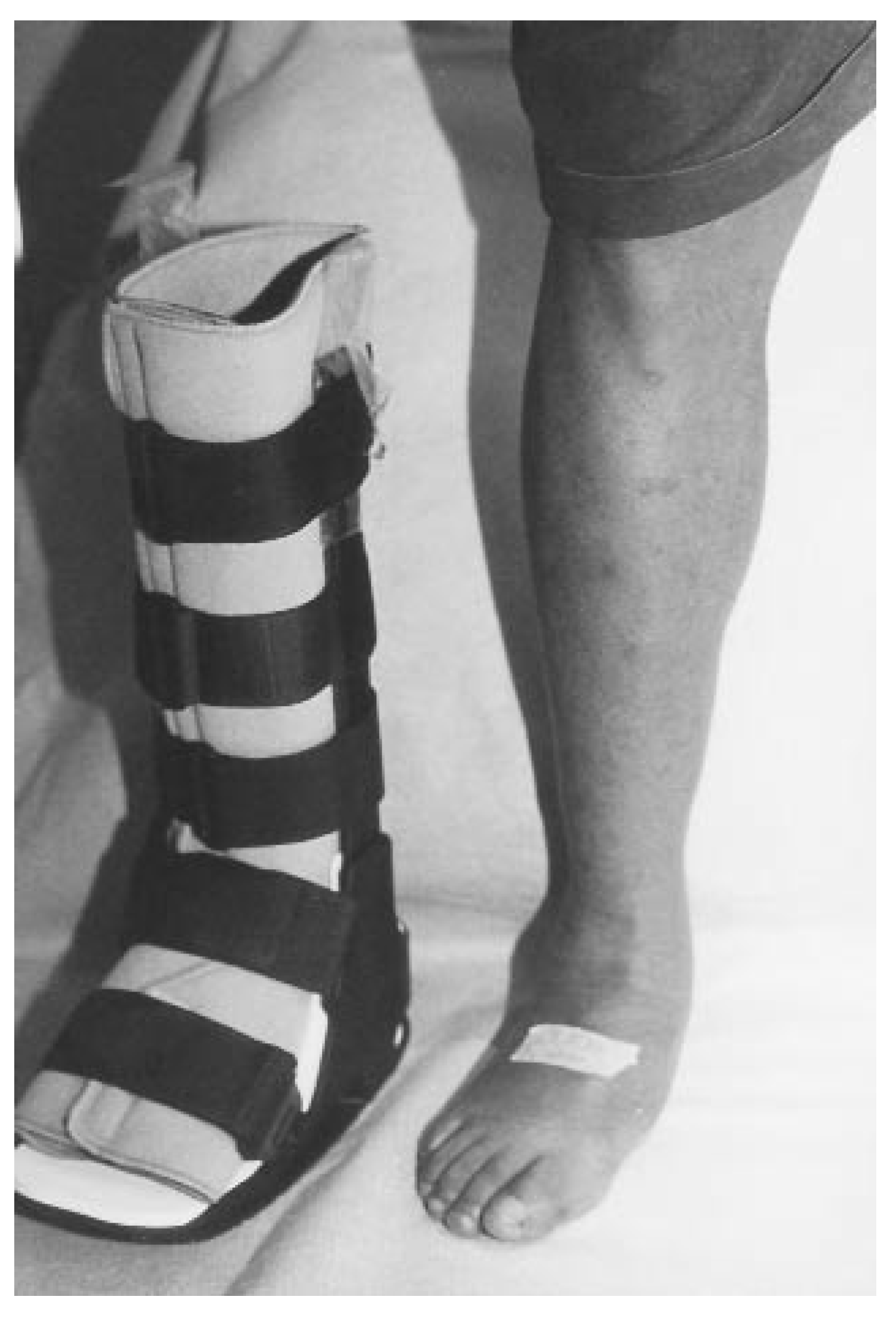
Total-contact casting is the treatment currently recommended for Wagner stage 1 and 2 neuropathic plantar ulcers. This casting provides equalization of plantar foot pressures and generalized off-loading of the foot [132]. However, no significant differences were found in plantar pressure measurements between conventional short-leg casts and total-contact casts in healthy volunteers, [133] or in patients with Charcot’s midfoot collapse and rocker-bottom deformity [134]. The prefabricated below-the-knee walking brace can sometimes be substituted for cast treatment for neuropathic ulcers and immobilization of Charcot’s foot in diabetic patients (Fig. 7) [135]. No significant differences in peak pressure were found in ten healthy male subjects wearing a prefabricated walking brace and a total-contact cast [132]. The authors concluded that the prefabricated walking brace was a convenient and useful treatment for neuropathic plantar ulcerations of the foot.
Figure 7. Prefabricated walking brace (Equalizer, Royce Medical Co, Camarillo, California) for patient with Charcot foot deformity.
Japma 89 00220 g007
The prefabricated walking brace (Fig. 7) and the ankle-foot orthosis (Figs. 4 and 5 A and B) are commonly used in the treatment of patients with diabetic foot problems. The ankle-foot orthosis has been recommended for closing ulcers in the diabetic foot and preventing their recurrence [136]. The walking brace provides the necessary stability while allowing easy donning and doffing for physical therapy sessions and during washing and sleeping. A rocker-bottom sole or ankle joints may be added to facilitate ambulation. The total-contact, bivalved, rocker-bottomsole ankle-foot orthosis was shown to be effective in controlling complications in 14 individuals with Charcot’s foot [137]. Recently, the Charcot Restraint Orthotic Walker orthosis (Orthotic Service, Brea, California) has been found useful in treating patients with neuroarthropathy. The Charcot Restraint Orthotic Walker is a rigid, custom-made, full-foot-enclosure ankle-foot orthosis (Fig. 8) [138]. It provides immobilization and protection during the prolonged healing of diabetic neuroarthropathy. In a study of the effects of the Charcot Restraint Orthotic Walker orthosis, 18 patients rated it good to excellent and none reported significant activity restrictions while wearing the orthosis; all patients believed that their quality of life was markedly improved by use of the orthosis [138]. In a more recent report, all patients wearing the Charcot Restraint Orthotic Walker orthosis noted varying measures of improvement in symptoms and function at an average 12-month follow-up [139].
Figure 8. Charcot Restraint Orthotic Walker orthosis for treatment of patients with a severely deformed foot.
Japma 89 00220 g008
The patellar-tendon-bearing orthosis is one of the original orthoses for off-loading the rearfoot and leg [140]. It has a pretibial component in which the patient rests the upper leg and knee during ambulation (Fig. 9). Patients are trained to walk by sinking their weight into the pretibial shell, and the weight is transferred down the uprights to the floor, bypassing the leg and rearfoot. When patients are trained to walk properly with the patellar-tendon-bearing orthosis, it has been found to reduce weightbearing on the leg and rearfoot up to 60% [141]. The patellar-tendon-bearing orthosis is indicated for patients with fractures of the leg and rearfoot, and to remove weight in a painful diabetic Charcot rearfoot. The orthosis is available in metal and plastic varieties, and it must have a solid ankle to work properly [142,143].
Figure 9. Patellar-tendon-bearing orthosis for treatment of Charcot’s foot with dislocated ankle joint.
Japma 89 00220 g009

Prostheses for the Rearfoot Stump
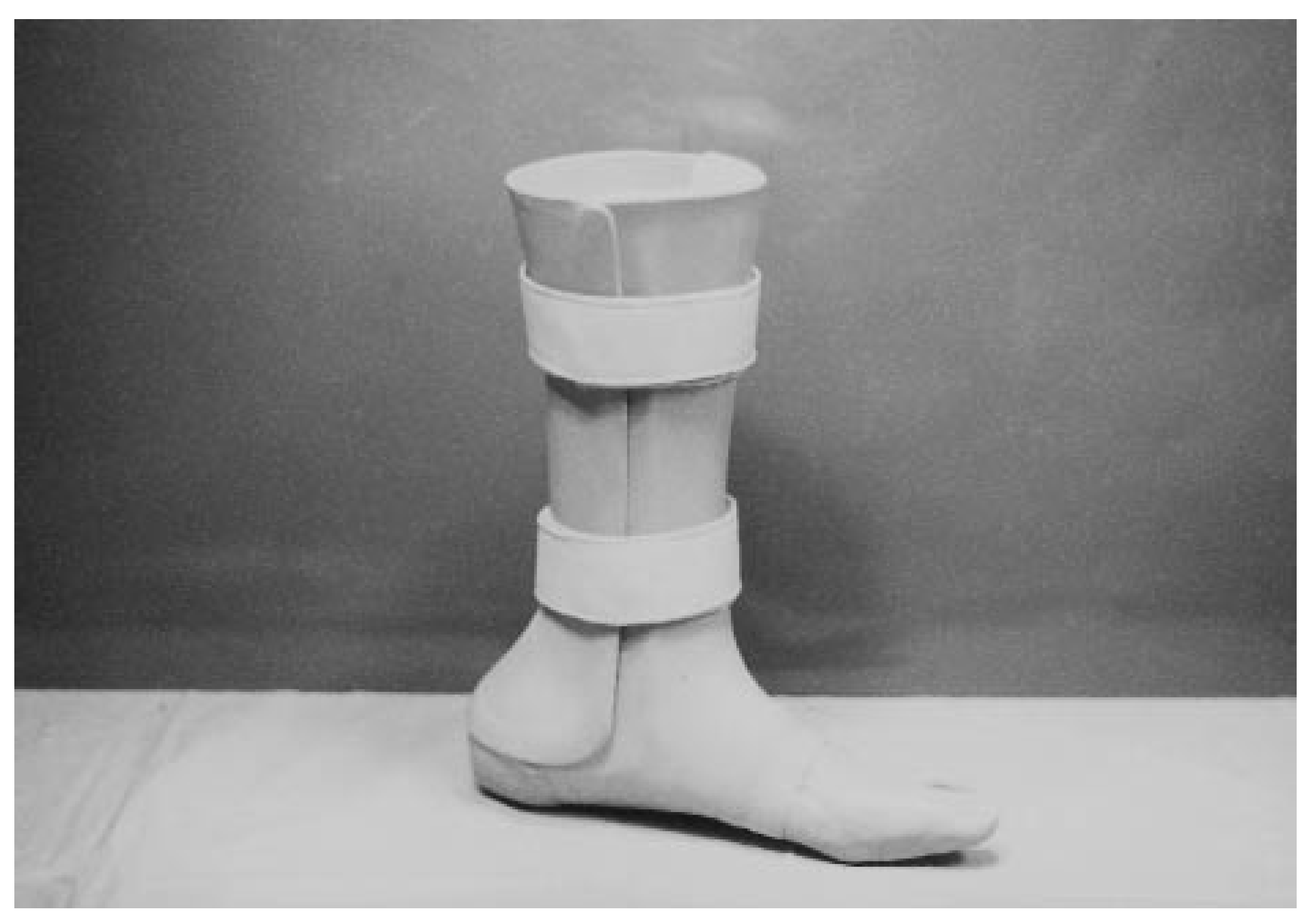
The goals for biomechanical management of partial foot amputations are to restore stability, maintain support, and protect function in the residual foot [144].
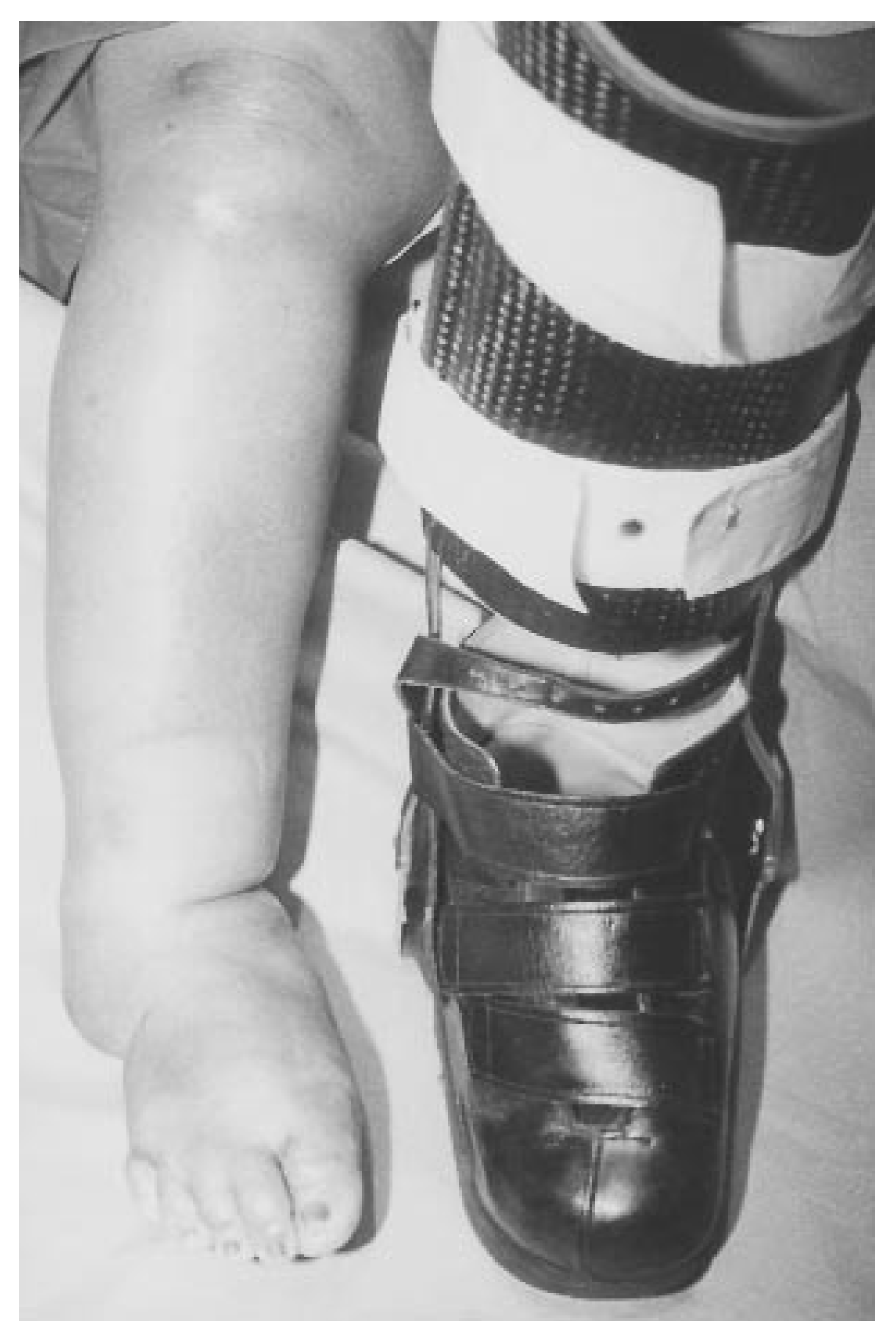
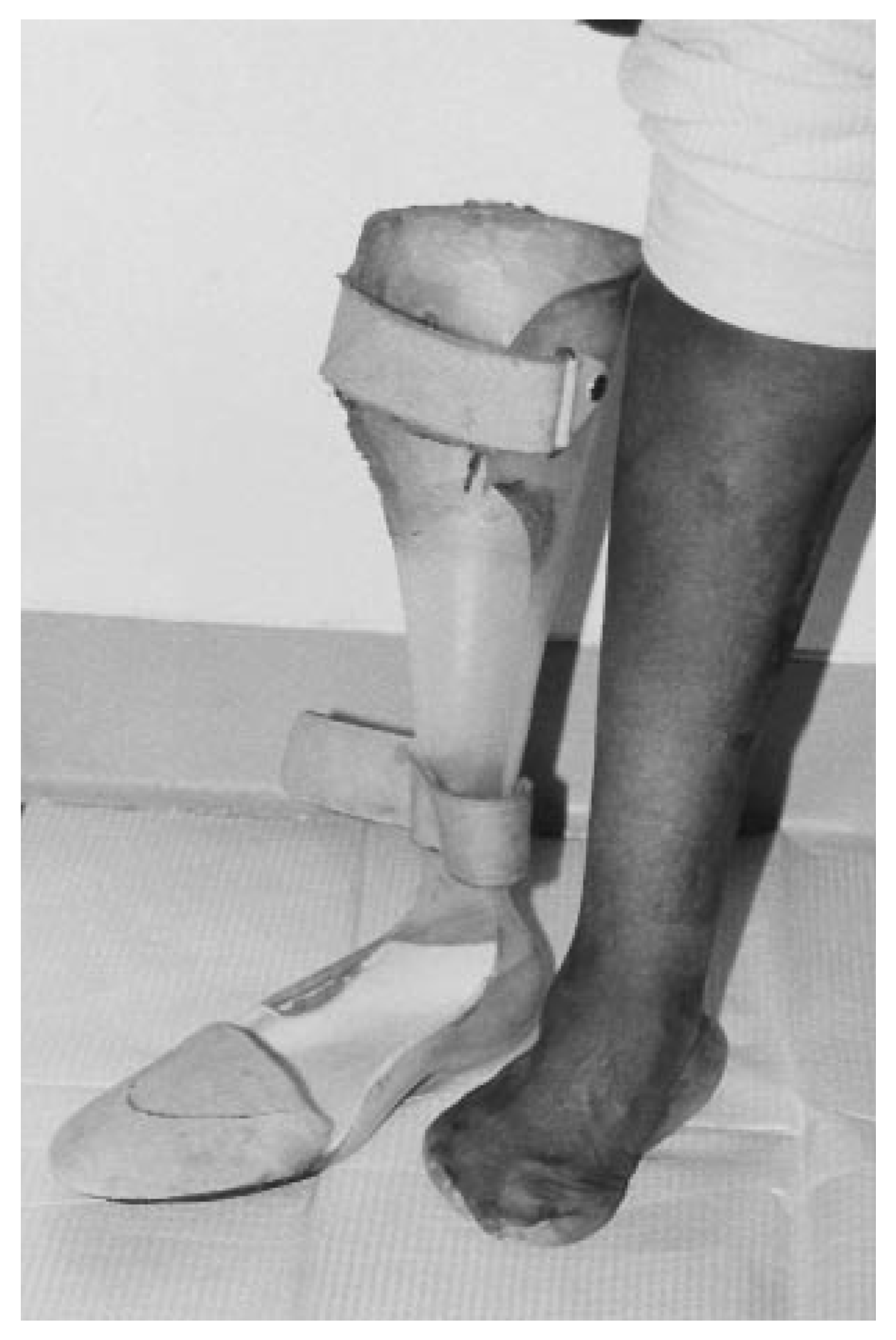
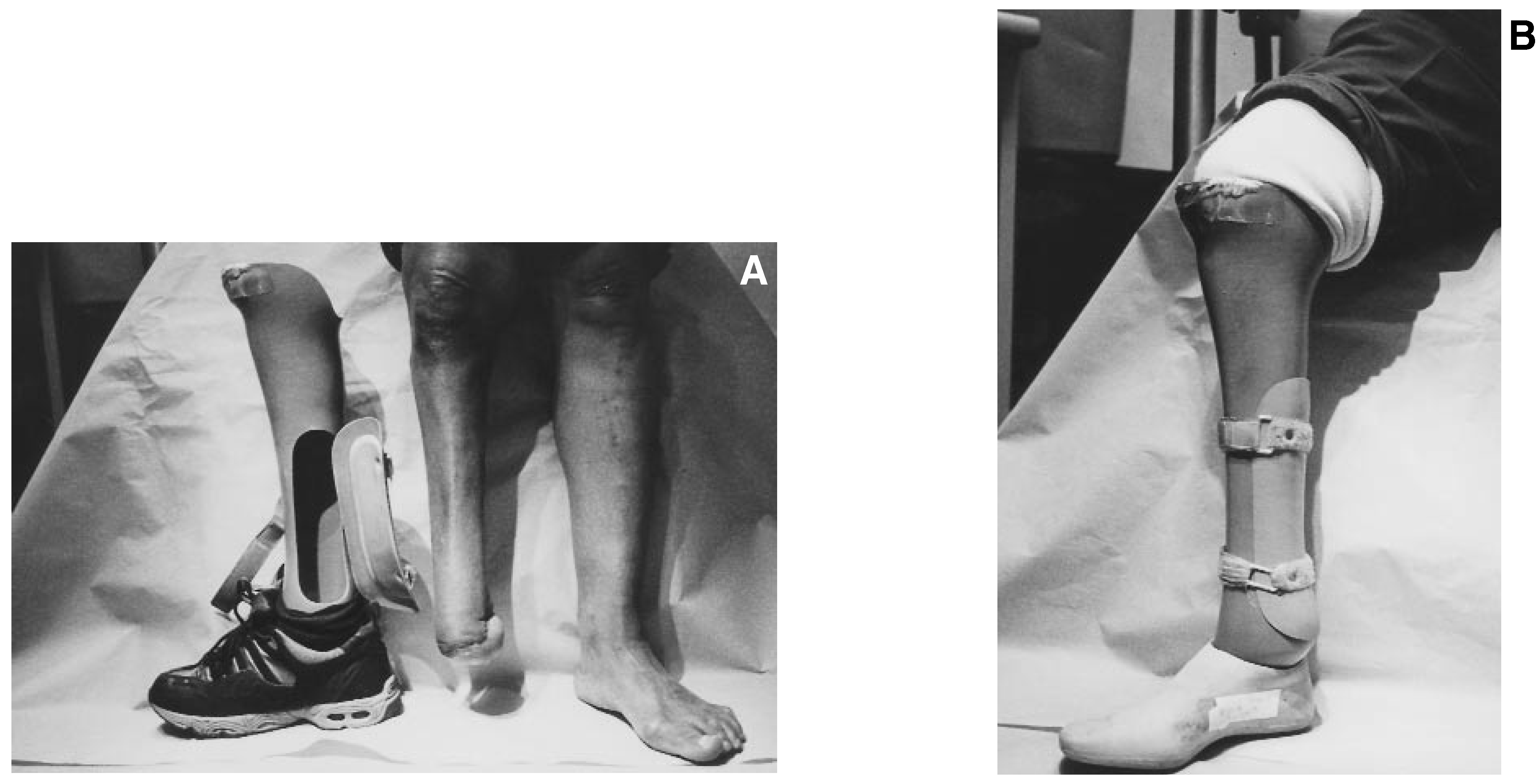
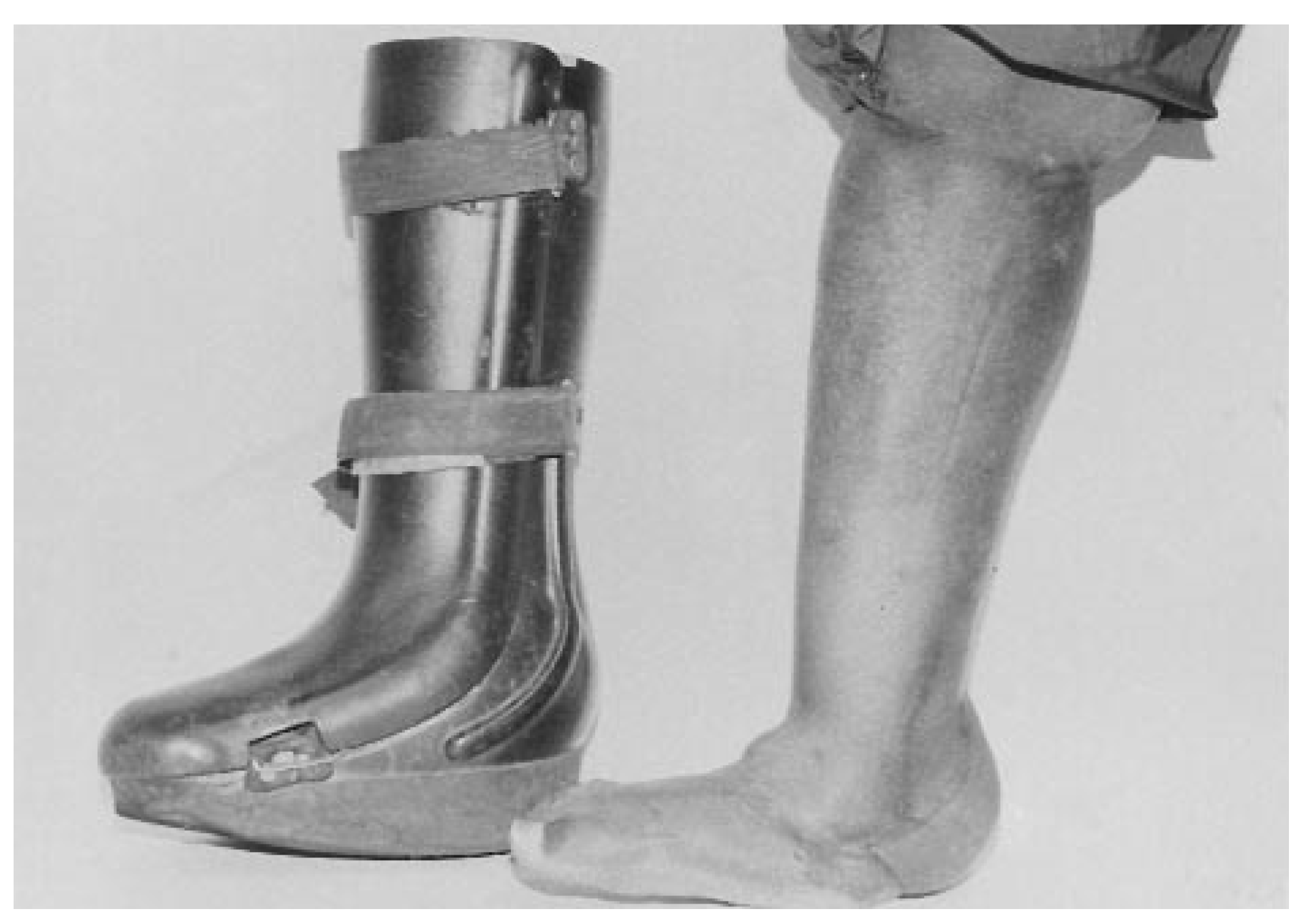
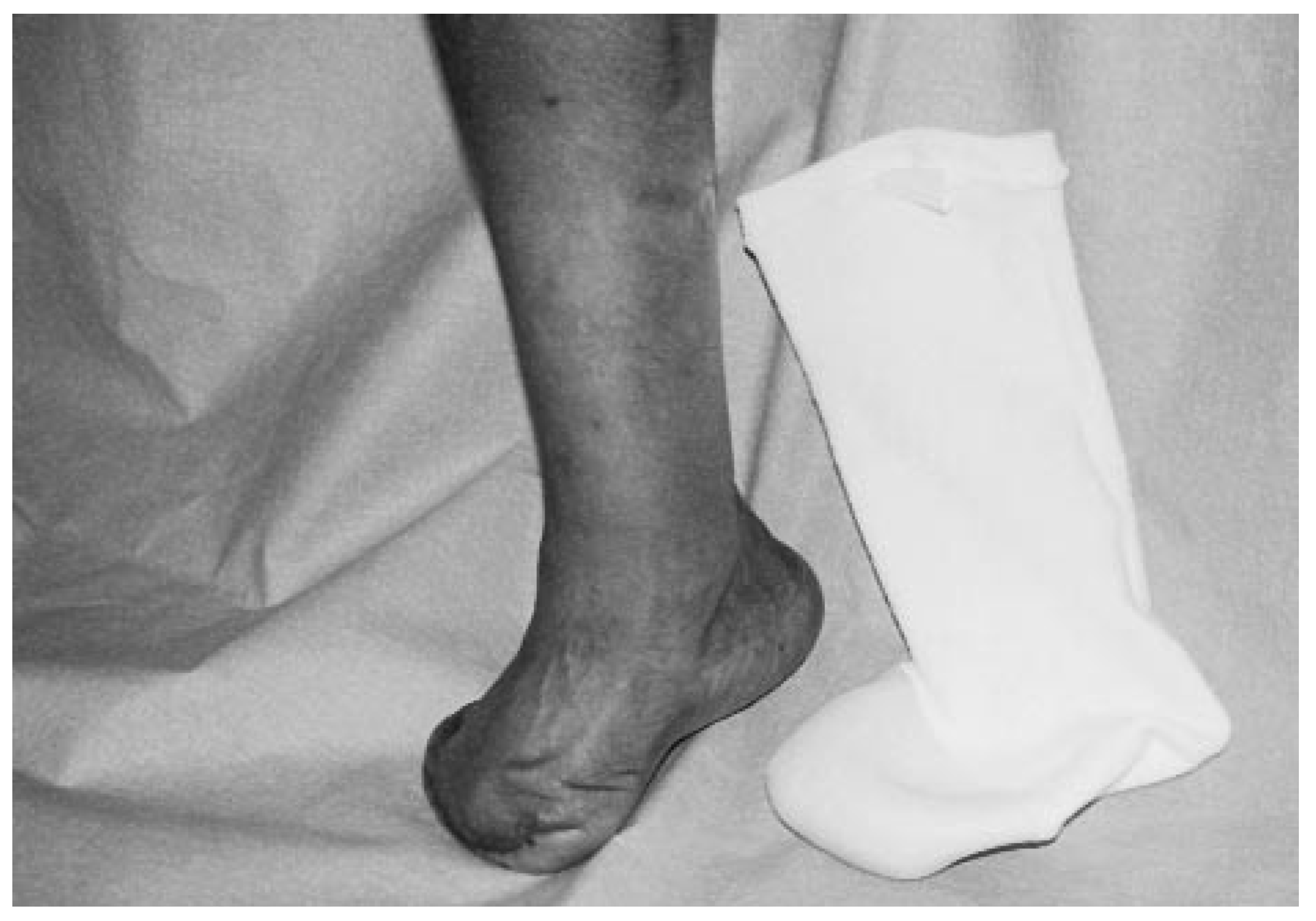
The shoe, stocking, and orthosis work together as a unit in protecting a patient with a partially amputated foot [145,146]. For example, silicone-insole socks have been shown to be more effective in reducing horizontal shear than cotton socks (Fig. 10) [145]. Amputations involving one or more digits or a lateral ray usually can be managed with just a good shoe and insert. When the amputation is through the metatarsal heads, it is managed with a foot orthosis with a filler. However, when the amputation is more proximal to the metatarsal heads, an above-the-ankle partial foot prosthesis is required [147,148]. This can be in the form of an ankle-foot orthosis with forefoot filler (Fig. 11). If the amputation is through the midtarsal joint with only the rearfoot remaining, equinus contractures are likely to occur, and a Chopart’s amputation prosthesis may be necessary (Fig. 12) [149] Ground-reactive forces have been shown to be reduced in patients with Chopart’s amputations who walk with a Chopart’s amputation prosthesis [150] Syme’s amputation involves removal of the entire foot and requires utilization of a Syme’s amputation prosthesis (Fig. 13 A and B) [151].
Figure 10. An elastic cotton stocking with silicone stump liner (ComfortZone Partial Foot Sock, Silipos Co, Buffalo, New York) is used for patients with midfoot amputation to protect the distal stump.
Japma 89 00220 g010
Figure 11. Proximal, transmetatarsal amputation requires treatment with an ankle-foot orthosis with forefoot filler.
Japma 89 00220 g011
Figure 12. A clamshell Chopart’s prosthesis is used for patients with Chopart’s amputation with equinus contractures.
Japma 89 00220 g012
Figure 13. A, Syme’s amputation prosthesis. Note the medial window that opens. Syme’s amputation traditionally left patients with a large, bulbous stump, and the medial window was necessary for patients to insert the foot into the narrow waist of the orthosis. B, Same patient shown in A wearing the Syme’s amputation prosthesis.
Japma 89 00220 g013

Summary

Foot orthoses have been shown to relieve pain, reduce rearfoot pronation, and improve function in patients with orthopedic conditions involving the rearfoot. However, several studies have found that prefabricated foot orthoses are often as effective as custommade foot orthoses in the treatment of plantar fasciitis and rheumatoid arthritis. Orthoses for the diabetic foot serve to accommodate and off-load high-pressure areas. The prefabricated walking brace has been shown to be as effective in equalizing plantar pressures as the total-contact cast in the diabetic foot. In cases of neuromuscular disease, the dorsiflexion-assist ankle-foot orthosis and the supramalleolar orthosis offered no advantage over the solid ankle-foot orthosis. In contrast, a hinged ankle-foot orthosis was more effective than a solid ankle-foot orthosis in improving gait in children with cerebral palsy.

Acknowledgments

Edwin Vazquez for the photography.

References

  1. DUDDY, RK; DUGGAN, RJ; VISSER, HJ. ET AL: Diagnosis, treatment, and rehabilitation of injuries to the lower leg and foot. Clin Sports Med 1989, 8, 861. [Google Scholar] [CrossRef]
  2. GRAHAM, CE. Painful heel syndrome: rationale of diagnosis and treatment. Foot Ankle 1983, 3, 261. [Google Scholar] [CrossRef]
  3. LEMELLE, DP; KISILEWICZ, P; JANIS, LR. Chronic plantar fascial inflammation and fibrosis. Clin Podiatr Med Surg 1990, 7, 385. [Google Scholar] [CrossRef] [PubMed]
  4. MITCHETTI, ML; JACOBS, SA. Calcaneal heel spurs: etiology, treatment and a new surgical approach. J Foot Surg 1983, 22, 234. [Google Scholar]
  5. KARR, SD. Subcalcaneal heel pain. Orthop Clin North Am 1994, 25, 161. [Google Scholar] [PubMed]
  6. KWONG, PK; KAY, D; VONER, RT; et al. Plantar fasciitis: mechanics and pathomechanics of treatment. Clin Sports Med 1988, 7, 119. [Google Scholar] [CrossRef]
  7. TANNER, SM. HARVEY JS: How to manage plantar fasciitis. Physician Sportsmed 1983, 11, 103. [Google Scholar]
  8. WARREN, BL. Plantar fasciitis in runners: treatment and prevention. Sports Med 1990, 10, 338. [Google Scholar] [CrossRef]
  9. LEACH, RE; DIIORIO, E. HARNEY RA: Pathologic hindfoot conditions in the athlete. Clin Orthop 1983, 177, 116. [Google Scholar] [CrossRef]
  10. BATT, ME. TANJI JL: Management options for plantar fasciitis. Physician Sportsmed 1995, 23, 77. [Google Scholar] [CrossRef]
  11. JORGENSEN, U; BOJSEN-MOLLER, F. Shock absorbency of factors in the shoe/heel interaction—with special focus on role of the heel pad. Foot Ankle 1989, 9, 294. [Google Scholar] [CrossRef]
  12. SNOOK, GA. CHRISMAN OD: The management of subcalcaneal pain. Clin Orthop 1972, 82, 163. [Google Scholar] [CrossRef]
  13. JOHNSON GR: The use of spectral analysis to assess the performance of shock absorbing footwear. Eng Med 1986, 15, 117. [CrossRef] [PubMed]
  14. LIGHT, LH; MACLELLAN, GE; KLENERMAN, L. Skeletal transients on heel strike in normal walking with different footwear. J Biomech 1980, 13, 477. [Google Scholar] [CrossRef] [PubMed]
  15. PRATT, DJ; REES, PH; RODGERS, C. Assessment of some shock absorbing insoles. Prosthet Orthot Int 1986, 10, 43. [Google Scholar] [CrossRef] [PubMed]
  16. VOLOSHIN, A; WOSK, J. Influence of artificial shock absorbers on human gait. Clin Orthop 1981, 160, 52. [Google Scholar] [CrossRef]
  17. WOSK, J; VOLOSHIN, AS. Low back pain: conservative treatment and artificial shock absorbers. Arch Phys Med Rehabil 1985, 66, 145. [Google Scholar]
  18. MACLELLAN, GE; VYVYAN, B. Management of pain beneath the heel and Achilles tendonitis with visco-elastic heel inserts. Br J Sports Med 1981, 15, 117. [Google Scholar] [CrossRef]
  19. LEVITZ, SJ; DYKYJ, D. Improvements in the design of viscoelastic heel orthoses: a clinical study. JAPMA 1990, 80, 653. [Google Scholar] [CrossRef]
  20. SHIBA, N; KITAOKA, HB; CAHALAN, TD; et al. Shock-absorbing effect of shoe insert materials commonly used in management of lower extremity disorders. Clin Orthop 1995, 310, 130. [Google Scholar] [CrossRef]
  21. LOWDON, A; BADER, DL; MOWAT, AG. The effect of heel pads on the treatment of Achilles tendinitis: a double blind trial. Am J Sports Med 1984, 12, 431. [Google Scholar] [CrossRef]
  22. CASELLI, MA; CLARK, N; LAZARUS, S. ET AL: Evaluation of magnetic foil and PPT Insoles® in the treatment of heel pain. JAPMA 1997, 87, 11. [Google Scholar] [CrossRef]
  23. HUANG, CK; KITAOKA, HB; AN, KN. ET AL: Biomechanical evaluation of longitudinal arch stability. Foot Ankle 1993, 14, 353. [Google Scholar] [CrossRef]
  24. DALY, PJ; KITAOKA, HB. CHAO EYS: Plantar fasciotomy for intractable plantar fasciitis: clinical results and biomechanical evaluation. Foot Ankle 1992, 13, 188. [Google Scholar] [CrossRef]
  25. WRIGHT DG, RENNELS DC: A study of the elastic properties of the plantar fascia. J Bone Joint Surg Am 1964, 46, 482. [CrossRef]
  26. KOGLER, GF; SOLOMONIDIS, SE; PAUL, JP. Biomechanics of longitudinal arch support mechanisms in foot orthoses and their effect on plantar aponeurosis strain. Clin Biomech 1996, 11, 243. [Google Scholar] [CrossRef] [PubMed]
  27. KITAOKA, HB; LUO, ZP. AN K: Analysis of longitudinal arch supports in stabilizing the arch of the foot. Clin Orthop 1997, 341, 250. [Google Scholar] [CrossRef]
  28. JANISSE DJ: Indications and prescriptions for orthoses in sports. Orthop Clin North Am 1994, 25, 95. [CrossRef]
  29. RIEGLER HF: Orthotic devices for the foot. Orthop Rev 1987, 16, 293.
  30. GROSS, ML; DAVLIN, LB; EVANSKI, PM. Effectiveness of orthotic shoe inserts in the long-distance runner. Am J Sports Med 1991, 19, 409. [Google Scholar] [CrossRef] [PubMed]
  31. BORDELON, RL. “Heel Pain,” in Surgery of the Foot and Ankle, 6th Ed; Mann, RA, Coughlin, MJ, Eds.; CV Mosby: St Louis, 1993; Vol 1, p. 837. [Google Scholar]
  32. ROOT, ML; ORIEN, WP; WEED, JH. ET AL: Normal and Abnormal Function of the Foot; Clinical Biomechanics Corp: Los Angeles, 1977. [Google Scholar]
  33. BLAKE, RL; DENTON, JA. Functional foot orthoses for athletic injuries: a retrospective study. JAPMA 1985, 75, 359. [Google Scholar] [CrossRef]
  34. Scherer, PR. Biomechanics Graduate Research Group FOR 1988: Heel spur syndrome: pathomechanics and nonsurgical treatment. JAPMA 1991, 81, 68. [Google Scholar] [CrossRef]
  35. BATES, BT; OSTERNIG, LR; MASON, B; et al. Foot orthotic devices to modify selected aspects of lower extremity mechanics. Am J Sports Med 1979, 7, 338. [Google Scholar] [CrossRef] [PubMed]
  36. DONATELLI, R; HURLBERT, C; CONAWAY, D. ET AL: Biomechanical foot orthotics: a retrospective study. J Orthop Sports Phys Ther 1988, 10, 205. [Google Scholar] [CrossRef] [PubMed]
  37. LYNCH, DM; GOFORTH, WP; MARTIN, JE. ET AL: Conservative treatment of plantar fasciitis: a prospective study. JAPMA 1998, 88, 375. [Google Scholar] [CrossRef] [PubMed]
  38. FERGUSON, H; RASKOWSKY, M; BLAKE, RL. ET AL: TL-61 versus Rohadur orthoses in heel spur syndrome. JAPMA 1991, 81, 439. [Google Scholar] [CrossRef]
  39. ENG, JJ; PIERRYNOWSKI, MR. Evaluation of soft foot orthotics in the treatment of patellofemoral pain syndrome. Phys Ther 1993, 73, 62. [Google Scholar] [CrossRef]
  40. SMITH, LS; CLARKE, TE; HAMILL, CL. ET AL: The effects of soft and semi-rigid orthoses upon rearfoot movement in running. JAPMA 1986, 76, 227. [Google Scholar] [CrossRef]
  41. TAUNTON, JE; CLEMENT, DB; SMART, JP. ET AL: A triplanar electrogoniometer investigation of running mechanics in runners with compensatory overpronation. Can J Appl Sport Sci 1985, 10, 104. [Google Scholar] [PubMed]
  42. BAITCH, SP; BLAKE, RL; FINEAGAN, PL. ET AL: Biomechanical analysis of running with 25° inverted orthotic devices. JAPMA 1991, 81, 647. [Google Scholar] [CrossRef]
  43. MCCULLOCH, MU; BRUNT, D; LINDEN, DV. The effect of foot orthotics and gait velocity on lower limb kinematics and temporal events of stance. J Orthop Sports Phys Ther 1993, 17, 2. [Google Scholar] [CrossRef]
  44. NOVICK, A; KELLEY, DL. Position and movement changes of the foot with orthotic intervention during the loading response of gait. J Orthop Sports Phys Ther 1990, 11, 301. [Google Scholar] [CrossRef][Green Version]
  45. RODGERS, MM; LEVEAU, BF. Effectiveness of foot orthotic devices used to modify pronation in runners. J Orthop Sports Phys Ther 1982, 4, 86. [Google Scholar] [CrossRef]
  46. BROWN, GP; DONATELLI, R; CATLIN, PA; et al. The effect of two types of foot orthoses on rearfoot mechanics. J Orthop Sports Phys Ther 1995, 21, 258. [Google Scholar] [CrossRef][Green Version]
  47. MCCOURT FJ: To cast or not to cast? The comparative effectiveness of casted and non-casted orthoses. Chiropodist 1990, 45, 239.
  48. MILLER, CD; LASKOWSKI, ER. SUMAN VJ: Effect of corrective rearfoot orthotic devices on ground reaction during ambulation. Mayo Clin Proc 1996, 71, 757. [Google Scholar] [CrossRef]
  49. EGGOLD JF: Orthotics in the prevention of runners’ overuse injuries. Physician Sportsmed 1981, 9, 125.
  50. CORNWALL, MW. MCPOIL TG: Effect of rearfoot posts in reducing forefoot forces: a single-subject design. JAPMA 1992, 82, 371. [Google Scholar] [CrossRef] [PubMed]
  51. BLAKE, RL. FERGUSON HJ: Effect of extrinsic rearfoot posts on rearfoot position. JAPMA 1993, 83, 447. [Google Scholar] [CrossRef] [PubMed]
  52. JOHANSON, MA; DONATELLI, R; WOODEN, MJ; et al. Effects of three different posting methods on controlling abnormal subtalar pronation. Phys Ther 1994, 74, 149. [Google Scholar] [CrossRef] [PubMed]
  53. TOLLAFIELD, DR; PRATT, DJ. The effects of variable rearposting of orthoses on a normal foot. Chiropodist 1990, 45, 154. [Google Scholar]
  54. HENDERSON, WH. CAMPBELL JW: UC-BL insert casting and fabrication. Bull Prosthet Res 1971, 10, 149. [Google Scholar]
  55. BOWMAN GD: New concepts in orthotic management of the adult: hyperpronated foot. preliminary findings. J Prosthet Orthop 1997, 9, 77.
  56. CAMPBELL, JW; INMAN, VT. Treatment of plantar fasciitis and calcaneal spurs with the UC-BL shoe insert. Orthot Prosthet 1977, 31, 23. [Google Scholar] [CrossRef][Green Version]
  57. SOBEL, E; LEVITZ, SJ. Reappraisal of the negative impression cast and the subtalar joint neutral position. JAPMA 1997, 87, 32. [Google Scholar] [CrossRef]
  58. SOBEL, E; LEVITZ, SJ. JONES LS: Orthotic variants. JAPMA 1997, 87, 23. [Google Scholar] [CrossRef]
  59. LEUNG, AKL; MAK, AFT; EVAN, JH. Biomechanical gait evaluation of the immediate effect of orthotic treatment for flexible flat foot. Prosthet Orthot Int 1998, 22, 25. [Google Scholar] [CrossRef] [PubMed]
  60. CHAO, W; WAPNER, KL; LEE, TH. ET AL: Nonoperative management of posterior tibial tendon dysfunction. Foot Ankle 1996, 17, 736. [Google Scholar] [CrossRef] [PubMed]
  61. BATT, BE; TANJI, JL. SKATTUM N: Plantar fasciitis: a prospective randomized clinical trial of the tension night splint. Clin J Sport Med 1996, 6, 158. [Google Scholar] [CrossRef] [PubMed]
  62. JIMENEZ, AL; GOECKER, RM. Night splints: conservative management of plantar fasciitis. Biomechanics 1997, 4, 29. [Google Scholar]
  63. MIZEL, MS; MARYMONT, JV. TREPMAN E: Treatment of plantar fasciitis with a night splint and shoe modification consisting of a steel shank and anterior rocker bottom. Foot Ankle Int 1996, 17, 732. [Google Scholar] [CrossRef] [PubMed]
  64. PEZZULLO DJ: Using night splints in the treatment of plantar fasciitis in the athlete. J Sport Rehab 1993, 2, 287.
  65. POWELL, M; POST, WR; KEENER, J; et al. Effective treatment of chronic plantar fasciitis with dorsiflexion night splints: a crossover prospective randomized outcome study. Foot Ankle Int 1998, 19, 10. [Google Scholar] [CrossRef]
  66. RYAN J: Use of posterior night splints in the treatment of plantar fasciitis. Am Fam Phys 1995, 52, 891.
  67. WAPNER, KL. SHARKEY PF: The use of night splints for treatment of recalcitrant plantar fasciitis. Foot Ankle 1991, 12, 135. [Google Scholar] [CrossRef]
  68. CARLSTEDT, CA; NORDIN, M. “Biomechanics of Tendons and Ligaments,” in Basic Biomechanics of the Musculoskeletal System, 2nd Ed; Nordin, M, Frankel, VH, Eds.; Lea & Febiger: Philadelphia, 1989; p. p 59. [Google Scholar]
  69. TISDEL, CL; HARPER, MC. Chronic plantar heel pain: treatment with a short leg walking cast. Foot Ankle 1996, 17, 41. [Google Scholar] [CrossRef]
  70. GILL, LH; KIEBZAK, GM. Outcome of nonsurgical treatment for plantar fasciitis. Foot Ankle Int 1996, 17, 527. [Google Scholar] [CrossRef]
  71. LIN, SS; LEE, TH; CHAO, W; ET, AL. Nonoperative treatment of patients with posterior tibial tendinitis. Foot Ankle Clin 1996, 1, 261. [Google Scholar] [CrossRef]
  72. JOHNSON KA, STROM DE: Tibialis posterior tendon dysfunction. Clin Orthop 1989, 239, 196. [CrossRef]
  73. MYERSON, M. Adult required flatfoot deformity: treatment of dysfunction of the posterior tibial tendon. J Bone Joint Surg Am 1996, 78, 780. [Google Scholar] [CrossRef]
  74. SFERRA, JJ; ROSENBERG, GA. Nonoperative treatment of posterior tibial tendon pathology. Foot Ankle Clin 1997, 2, 261. [Google Scholar] [CrossRef]
  75. CONTI S: Posterior tibial tendon problems in athletes. Orthop Clin North Am 1994, 25, 109. [CrossRef]
  76. CHURCHILL, RS; SFERRA, JJ. Posterior tibial tendon insufficiency: its diagnosis, management, and treatment. Am J Orthop 1998, 27, 339. [Google Scholar] [PubMed]
  77. MANN, RA. Acquired flatfoot in adults. Clin Orthop 1983, 181, 46. [Google Scholar] [CrossRef]
  78. MANN, RA. Rupture of the posterior tibial tendon causing flat foot. J Bone Joint Surg Am 1985, 67, 556. [Google Scholar] [CrossRef]
  79. NORK, SE; COUGHLIN, RR. How to examine a foot and what to do with a bunion. Prim Care 1996, 23, 281. [Google Scholar]
  80. GERKEN, AP; MCGARVEY, WC. BAXTER DE: Insertional Achilles tendinitis. Foot Ankle Clin 1996, 1, 237. [Google Scholar] [CrossRef]
  81. CLAIN, MR. BAXTER DE: Achilles tendinitis. Foot Ankle 1992, 13, 482. [Google Scholar] [CrossRef]
  82. LAGERGREN C, LINDHOLM A: Vascular distribution in the Achilles tendon: an angiographic and microangiographic study. Acta Chir Scand 1958, 116, 491.
  83. ROGERS, BS. LEACH RE: Achilles tendinitis. Foot Ankle Clin 1996, 1, 249. [Google Scholar] [CrossRef]
  84. GELLMAN, R; BURNS, S. Walking aches and running pains. Prim Care 1996, 23, 263. [Google Scholar] [CrossRef]
  85. HADDAD, SL; MYERSON, MS. Managing Achilles tendon disorders. Biomechanics 1996, 3, 23. [Google Scholar]
  86. SHIELDS, CL. Achilles tendon injuries and disabling conditions. Physician Sportsmed 1982, 10, 77. [Google Scholar] [CrossRef]
  87. DEMAIO, M; PAINE, R; DREZ, DJ. Achilles tendonitis. Orthopedics 1995, 18, 195. [Google Scholar] [CrossRef]
  88. SCIOLI, MW. Achilles tendinitis. Orthop Clin North Am 1994, 25, 177. [Google Scholar] [CrossRef] [PubMed]
  89. MOHR RN: Achilles tendonitis. Foot Ankle Clin 1997, 2, 439. [CrossRef]
  90. NESBITT L: A practical guide to prescribing orthoses. Physician Sportsmed 1992, 20, 76. [CrossRef]
  91. SUBOTNICK SI: Foot orthoses: an update. Physician Sportsmed 1983, 11, 103. [CrossRef]
  92. GUSKIEWICZ, KM; PERRIN, DH. Effect of orthotics on postural sway following inversion ankle sprain. J Orthop Sports Phys Ther 1996, 23, 326. [Google Scholar] [CrossRef][Green Version]
  93. GALLAGHER, SP. Which ankle brace is right for your patient? Biomechanics 1996, 3, 35. [Google Scholar]
  94. WILEY, JP. NIGG BM: The effect of an ankle orthosis on ankle range of motion and performance. J Orthop Sports Phys Ther 1996, 23, 362. [Google Scholar] [CrossRef] [PubMed]
  95. JEROSCH, J; THORWESTEN, L; BORK, H. ET AL: Is prophylactic bracing of the ankle cost effective? Orthopedics 1996, 19, 405. [Google Scholar] [CrossRef]
  96. VERBRUGGE, JD. The effects of semirigid air-stirrup bracing vs adhesive ankle taping on motor performance. J Orthop Sports Phys Ther 1996, 23, 320. [Google Scholar] [CrossRef][Green Version]
  97. PIENKOWSKI, D; MCMORROW, M; SHAPIRO, R. ET AL: The effect of ankle stabilizers on athletic performance. Am J Sports Med 1995, 23, 757. [Google Scholar] [CrossRef]
  98. BRINK, O; STAUNSTRUP, H; SOMMER, J. Stable lateral malleolar fractures treated with Aircast ankle brace and DonJoy R.O.M.-Walker brace: a prospective randomized study. Foot Ankle Int 1996, 17, 679. [Google Scholar] [CrossRef]
  99. REGIS, D; MONTANARI, M; MAGNAN, B. ET AL: Dynamic orthopaedic brace in the treatment of ankle sprains. Foot Ankle Int 1995, 16, 422. [Google Scholar] [CrossRef]
  100. LEANDERSON, J; WREDMARK, T. Treatment of acute ankle sprain: comparison of a semi-rigid ankle brace and compression bandage in 73 patients. Acta Orthop Scand 1995, 66, 529. [Google Scholar] [CrossRef]
  101. BURDETT, RG; BORELLO-FRANCE, D; BLATCHLY, C. ET AL: Gaitcomparison of subjects with hemiplegia walking unbraced, with ankle-foot orthosis, and with Air-Stirrup brace. Phys Ther 1988, 68, 1197. [Google Scholar] [PubMed]
  102. HULLIN, MG; ROBB, JE; LOUDON, IR. Ankle-foot orthosis function in low-level myelomeningocele. J Pediatr Orthop 1992, 12, 518. [Google Scholar] [CrossRef] [PubMed]
  103. LEHMANN, JF; KO, MJ; DE LATEUR, BJ. Double-stopped ankle-foot orthosis in flaccid peroneal and tibial paralysis: evaluation of function. Arch Phys Med Rehabil 1980, 61, 536. [Google Scholar]
  104. OHSAWA, S; IKEDA, S; TANAKA, S. ET AL: A new model of plastic ankle foot orthosis (FAFO) against spastic foot and genu recurvatum. Prosthet Orthot Int 1992, 16, 104. [Google Scholar] [CrossRef][Green Version]
  105. OUNPUU, S; BELL, KJ; DAVIS, RB. ET AL: An evaluation of the posterior leaf spring orthosis using gait analysis. Dev Med Child Neurol 1993, 35, 8. [Google Scholar]
  106. OUNPUU, S; BELL, KJ; DAVIS, RB, III. ET AL: An evaluation of the posterior leaf spring orthosis using joint kinematics and kinetics. J Pediatr Orthop 1996, 16, 378. [Google Scholar] [CrossRef] [PubMed]
  107. ROSENTHAL PK: The use of orthotics in foot and ankle problems in cerebral palsy. Foot Ankle 1984, 4, 195. [CrossRef] [PubMed]
  108. RUBIN, G; COHEN, E. Prostheses and orthoses for the foot and ankle. Clin Podiatr Med Surg 1988, 5, 695. [Google Scholar] [CrossRef]
  109. RUBIN, G; COHEN, E; RZONCA, EC. “Prostheses and Orthoses for the Foot and Ankle,” in The ffigh Risk Foot in Diabetes Mellitus; Frykberg, RG, Ed.; Churchill Livingstone: New York, 1991; p. 463. [Google Scholar]
  110. SOBEL E: The ankle foot orthosis and its uses in the podiatric practice. Podiatr Manage 1997, 16, 68.
  111. HYLTON, NM. Postural and functional impact of dynamic AFO’s and FO’s in a pediatric population. J Prosthet Orthot 1989, 2, 40. [Google Scholar] [CrossRef]
  112. SHAMP JK: Neurophysiologic orthotic designs in the treatment of central nervous system disorders. J Prosthet Orthot 1989, 2, 14. [CrossRef]
  113. ABEL, MF; JUHL, GA; VAUGHAN, CL; ET, AL. Gait assessment of fixed ankle-foot orthoses in children with spastic diplegia. Arch Phys Med Rehabil 1998, 79, 126. [Google Scholar] [CrossRef]
  114. CARMICK J: Managing equinus in a child with cerebral palsy: merits of hinged ankle-foot orthoses. Dev Med Child Neurol 1995, 37, 1006. [CrossRef]
  115. WILSON, H; HAIDERI, N; SONG, K. ET AL: Ankle-foot orthoses for preambulatory children with spastic diplegia. J Pediatr Orthop 1997, 17, 370. [Google Scholar] [CrossRef] [PubMed]
  116. BRUNNER, R; MEIER, G; RUEPP, T. Comparison of a stiff and a spring-type ankle-foot orthosis to improve gait in spastic hemiplegic children. J Pediatr Orthop 1998, 18, 719. [Google Scholar] [CrossRef] [PubMed]
  117. RADTKA, SA; SKINNER, SR; DIXON, DM. ET AL: A comparison of gait with solid, dynamic, and no ankle-foot orthoses in children with spastic cerebral palsy. Phys Ther 1998, 78, 222. [Google Scholar] [CrossRef][Green Version]
  118. HACHISUKA, K; OGATA, H; TAJIMA, F; et al. Clinical evaluations of dorsiflexion assist controlled by spring anklefoot orthosis for hemiplegic patients. Sangyo Ika Daigaku Zasshi 1998, 20, 1. [Google Scholar] [PubMed]
  119. CARLSON, WE; VAUGHAN, CL; DAMIANO, DL. ET AL: Orthotic management of gait in spastic diplegia. Am J Phys Med Rehabil 1997, 76, 219. [Google Scholar] [CrossRef]
  120. RUBIN, G; COHEN-SOBEL, E; RUBIN, E. The Peter principle in orthopedics. Am J Orthop 1995, 24, 30. [Google Scholar]
  121. GSCHWEND, N; STEIGER, U. Stable fixation in hindfoot arthrodesis: a valuable procedure in the complex RA foot. Rheumatology 1987, 11, 113. [Google Scholar]
  122. JACOBS SR: Rehabilitation of the person with arthritis of the ankle and foot. Clin Podiatry 1984, 1, 373. [CrossRef]
  123. MICHELSON, J; EASLEY, M; WIGLEY, FM. ET AL: Foot and ankle problems in rheumatoid arthritis. Foot Ankle Int 1994, 15, 608. [Google Scholar] [CrossRef]
  124. CRACCHIOLO A: Office practice: footwear and arthritic therapy. Foot Ankle 1982, 2, 242. [CrossRef]
  125. GRIFKA JK: Shoes and insoles for patients with rheumatoid foot disease. Clin Orthop 1997, 340, 18. [CrossRef]
  126. CRACCHIOLO A: Rheumatoid arthritis hindfoot disease. Clin Orthop 1997, 340, 58. [CrossRef]
  127. MCGUIRE T, KUMAR VN: Rehabilitation management of the rheumatoid foot. Orthop Rev 1987, 16, 671.
  128. KITAOKA, HB. Rheumatoid hindfoot. Orthop Clin North Am 1989, 20, 593. [Google Scholar] [PubMed]
  129. CONRAD, KJ; BUDIMAN-MAK, E; ROACH, KE; et al. Impacts of foot orthoses on pain and disability in rheumatoid arthritics. J Clin Epidemiol 1996, 49, 1. [Google Scholar] [CrossRef] [PubMed]
  130. FRANSEN M, EDMONDS J: Off-the-shelf orthopedic footwear for people with rheumatoid arthritis. Arthritis Care Res 1997, 10, 250. [CrossRef] [PubMed]
  131. RUBIN, G; DIXON, M. The use of the AFO and PTB orthoses for severe pes planus. Clin Prosthet Orthop 1986, 10, 24. [Google Scholar]
  132. BAUMHAUER, JF; WERVEY, R; MCWILLIAMS, J. ET AL: A comparison study of plantar foot pressure in a standardized shoe, total contact cast, and prefabricated pneumatic walking brace. Foot Ankle Int 1997, 18, 26. [Google Scholar] [CrossRef]
  133. CONTI, SF; MARTIN, RL; CHAYTOR, ER; et al. Plantar pressure measurements during ambulation in weight bearing conventional short leg casts and total contact casts. Foot Ankle Int 1996, 17, 464. [Google Scholar] [CrossRef]
  134. MARTIN, RL; CONTI, SF. Plantar pressure analysis of diabetic rockerbottom deformity in total contact casts. Foot Ankle Int 1996, 17, 470. [Google Scholar] [CrossRef]
  135. BRODSKY JW: Outpatient diagnosis and care of the diabetic foot. Instr Course Lect 1993, 42, 121.
  136. LANDSMAN AS, SAGE R: Off-loading neuropathic wounds associated with diabetes using an ankle-foot orthosis. JAPMA 1997, 87, 349. [CrossRef] [PubMed]
  137. BONINGER, ML; LEONARD, JA. Use of bivalved ankle-foot orthosis in neuropathic foot and ankle lesions. J Rehabil Res Dev 1996, 33, 16. [Google Scholar] [PubMed]
  138. MORGAN, JM; BIEHL, WC; WAGNER, FW. : Management of neuropathic arthropathy with the Charcot Restraint Orthotic Walker. Clin Orthop 1993, 296, 58. [Google Scholar] [CrossRef]
  139. MEHTA, JA; BROWN, C; SARGEANT, N. Charcot Restraint Orthotic Walker. Foot Ankle Int 1998, 19, 619. [Google Scholar] [CrossRef] [PubMed]
  140. RUBIN G: The patellar-tendon-bearing (PTB) orthosis. Bull Hosp Jt Dis 1972, 33, 155.
  141. LEHMANN, JF; WARREN, CG. Ischial and patellar-tendon weight-bearing braces: function, design, adjustment, and training. Bull Prosthet Res 1973, 10, 6. [Google Scholar]
  142. SALTZMAN, CL; JOHN, KA; GOLDSTEIN, RH; et al. The patellar-tendon bearing brace as treatment for neurotrophic arthropathy: a dynamic force monitoring study. Foot Ankle Int 1992, 13, 14. [Google Scholar] [CrossRef]
  143. RUBIN, G; STAROS, A. COHEN-SOBEL E: Letter to the editor. Foot Ankle 1994, 15, 46. [Google Scholar] [CrossRef]
  144. MOORE JW: Prostheses, orthoses, and shoes for partial foot amputees. Clin Podiatr Med Surg 1997, 14, 775. [CrossRef]
  145. WONG, PY; CHEN, MD; HONG, WH. ET AL: Effects of silicone-insole socks on pressure distribution and shear force of the foot. Chang Gung Med J 1998, 21, 20. [Google Scholar]
  146. FLOT, S; HILL, V; YAMADA, W; ET, AL. The effect of padded hosiery in reducing forefoot plantar pressures. Lower Extremity 1995, 2, 201. [Google Scholar]
  147. COHEN-SOBEL, E. Advances in Foot Prosthetics. In Advances in Podiatric Medicine and Surgery; Kominsky, SJ, Ed.; Mosby–Year Book: St Louis, 1995; Vol 1, p. 213. [Google Scholar]
  148. RUBIN G: Indications for variants of the partial foot prosthesis. Orthop Rev 1985, 14, 49.
  149. COHEN-SOBEL, E; CASELLI, MA; RIZZUTO, J. Prosthetic management of a Chopart amputation variant. JAPMA 1994, 84, 505. [Google Scholar] [CrossRef]
  150. HIRSCH, G; MCBRIDE, ME; MURRAY, DD. ET AL: Chopart prosthesis and semirigid foot orthosis in traumatic forefoot amputation: comparative gait analysis. Am J Phys Med Rehabil 1996, 75, 283. [Google Scholar] [CrossRef]
  151. STUCK, RM. Syme’s ankle disarticulation: the transmalleolar amputation. Clin Podiatr Med Surg 1997, 14, 763. [Google Scholar] [CrossRef] [PubMed]