The discovery and popularization of roentgenography at the beginning of the century enabled the visualization of heel spurs [
1]. Wachter and Sonnenschein [
2] in 1915 correlated four cases of painful heels with calcaneal spurs; after all four patients returned for surgery following conservative care, the authors concluded that surgical intervention was the best treatment. Heel spur syndrome or plantar fasciitis—a condition in which there are no calcaneal spurs but there is heel pain—is another foot problem for which a patient will seek treatment. Fifteen percent of all patients who are treated in a podiatric physician’s office have heel pain, and 11% of those patients have heel spur formation [
3,
4]. Surgery is considered when a patient presents with chronic or acute heel pain that has proved resistant to conservative therapy. Some surgical procedures involve open excision. This study compares open
versus endoscopic plantar fasciotomy heel procedures. Factors that may influence the outcome of surgery are also discussed.
Materials and Methods
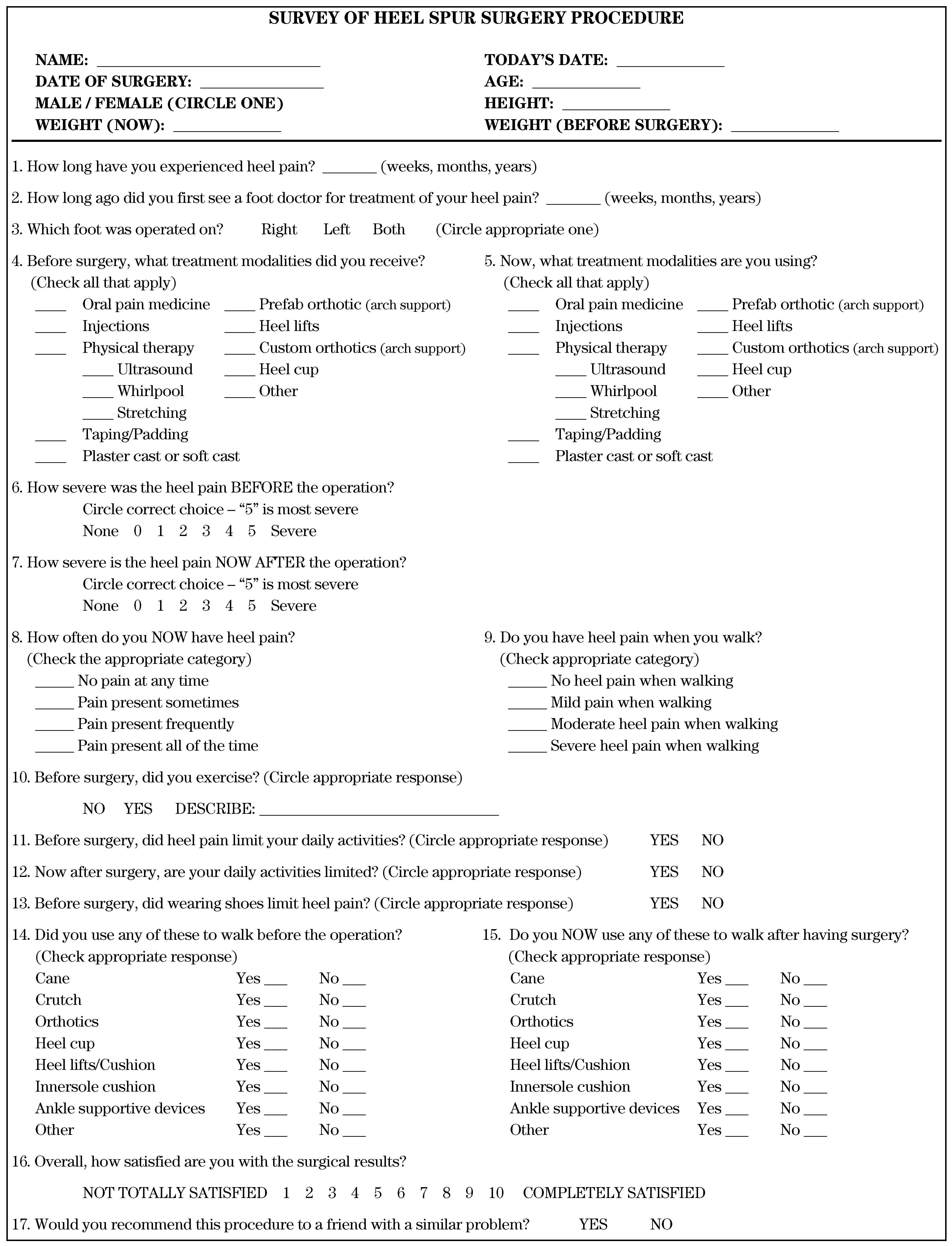
A retrospective study was conducted that initially involved 120 patients who had heel spur surgery between January 1990 and April 1998. Patients were asked to complete a mailed questionnaire (
Figure 1) and return it in a postage-paid envelope. After 4 weeks, those who had not replied were sent another copy of the questionnaire or contacted by telephone.
Figure 1.
The questionnaire that was mailed to study participants.
Figure 1.
The questionnaire that was mailed to study participants.
The questionnaire elicited demographic characteristics such as age, sex, height, weight, date of surgery, and comorbid conditions. Patients were asked about
their previous conservative therapy and to rate their preoperative and postoperative pain levels. Pain was measured using a pain-intensity scale that ranged from
0 to 5, with 0 representing no pain and 5 representing severe pain [
5]. Patients were asked to rate their level of satisfaction on a 10-point scale, with 10 indicating complete satisfaction. They were also asked whether they would recommend the procedure to others.
Heel spur surgery was performed at nine medical/surgical centers in the New York City area and Chicago. The centers were Day Surgicenter, Chicago; Brooklyn Veterans Affairs Medical Center, Brooklyn; New York Veterans Affairs Medical Center, New York; North General Hospital, New York; Massapequa General Hospital, Massapequa, NY; Brunswick Hospital Center, Amityville, NY; Good Samaritan Hospital, West Islip, NY; Long Island Surgicenter, Melville, NY; and Southside Hospital, Bayshore, NY. Five surgeons performed the surgeries. Of the five surgeons, three performed the endoscopic plantar fasciotomies and four performed the open heel spur surgeries, with two performing both types of surgery.
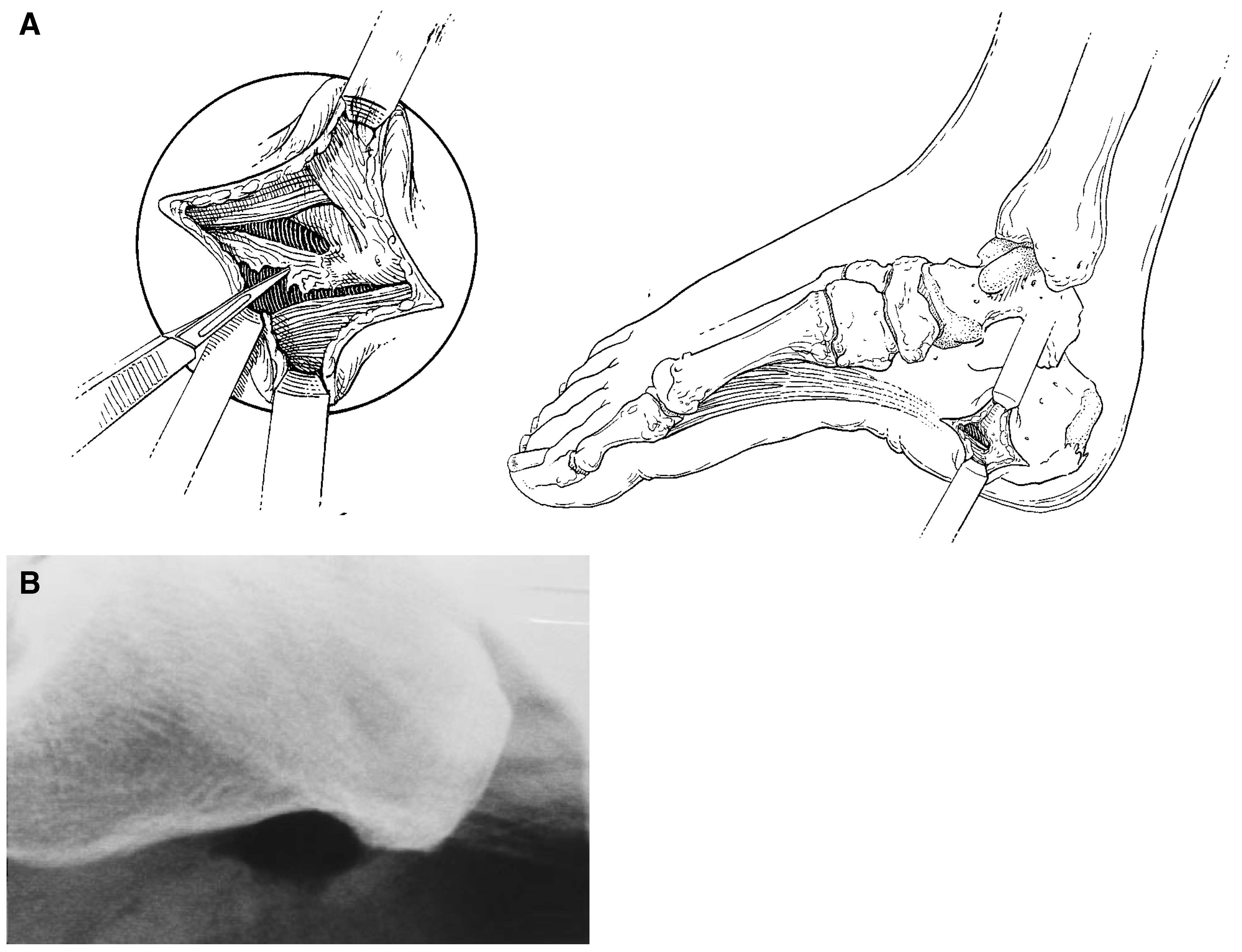
In the present study, procedures classified as traditional open techniques involved a 3- to 6-cm plantar medial incision with release of the fascia using a scalpel blade and/or scissors. The calcaneal spur was removed with a rasp, power bur, curette, or power saw (
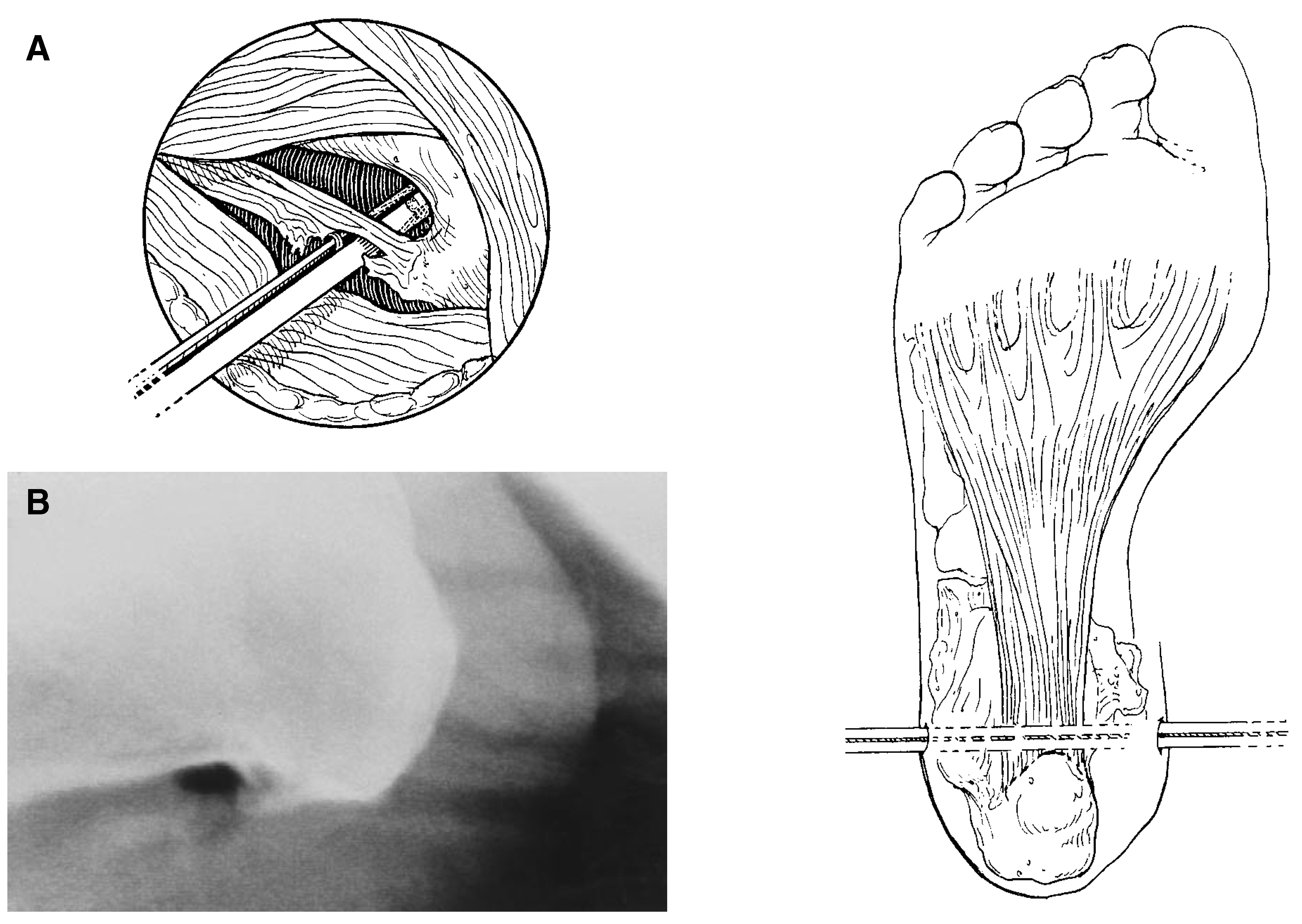
Figure 2). Endoscopic plantar fasciotomy is the release of the plantar fascia using the Endotrac
® (Instratek, Inc, Houston, TX.) System, with the cannula inserted across the plantar aspect of the plantar fascia band (
Figure 3). Resection of the calcaneal spur was not performed with this technique.
Figure 2.
Open heel spur surgery technique. A, Illustrations show the location and relative size of the surgical incision and the cutting of the plantar fascia. B, Radiograph shows the absence of the spur after the procedure.
Figure 2.
Open heel spur surgery technique. A, Illustrations show the location and relative size of the surgical incision and the cutting of the plantar fascia. B, Radiograph shows the absence of the spur after the procedure.
Figure 3.
Endoscopic plantar fascial release technique. A, Illustrations show the location and relative size of the surgical incisions and the placement of the cannula at the surgical site. B, Postoperative radiograph shows a soft-tissue deficit of the plantar fascia distal to the remaining heel spur.
Figure 3.
Endoscopic plantar fascial release technique. A, Illustrations show the location and relative size of the surgical incisions and the placement of the cannula at the surgical site. B, Postoperative radiograph shows a soft-tissue deficit of the plantar fascia distal to the remaining heel spur.
To determine the effect of obesity on postoperative outcome, the body mass index for each patient was calculated twice: it was obtained first from the operative record and again at the time the survey was conducted [
6]. The body mass index is the weight in kilograms divided by the square of the height in meters. The measurement of obesity by means of body mass index was discussed in the Framingham Study [
6], the Nurses’ Health Study [
7], and the
Healthy People 2000 Report [
8] (
Table 1). In the present study, patients with a body mass index of 28 or greater were considered obese.
Table 1.
Obesity as Measured by Body Mass Index.
Table 1.
Obesity as Measured by Body Mass Index.
Results
Fifty-nine patients who had undergone 68 procedures completed the study. None of these patients had a previous history of heel surgery. Forty-eight procedures were performed as traditional open heel spur surgery and 20 procedures consisted of endoscopic plantar fasciotomy. Patients were surveyed, on average, 31 months from the date of surgery (range, 3 to 100 months).
Table 2 gives the characteristics of the study population. There was no significant change in the body mass index of the patients at the time of follow-up (
P < .01). Most patients (61%) had other disease processes, including diabetes mellitus (17%) and arthritis (19%).
Heel pain was rated on a numeric scale of 0 to 5, with 5 representing the worst possible pain [
5]. The average heel pain rating was 4.5 prior to surgery and 1.77 at the time of follow-up. For the 42 patients having open heel spur surgery, heel pain was rated 4.6 preoperatively and decreased to 1.6 at follow-up time. The group of 17 patients undergoing endoscopic plantar fasciotomy had heel pain that rated 4.76 preoperatively and decreased to 1.88 at the time of follow-up.
Table 2.
Characteristics of the Study Population.
Table 2.
Characteristics of the Study Population.
Thirty-one percent of patients (18) had minimal conservative therapy—two or fewer forms of therapy performed fewer than two times—prior to surgery. Twenty-five percent of patients (15) had moderate conservative therapy—three forms of therapy performed between two and ten times—before having surgery. Forty-four percent of patients (26) had extensive conservative therapy—three or more forms of physical therapy performed more than ten times— prior to surgery. There was a significant difference in postoperative pain values at follow-up that correlated with the amount of conservative therapy patients received prior to surgery. Overall, patients who had extensive preoperative conservative care had the greatest pain reduction compared with those who received minimal or moderate conservative care (
P < .01). Those patients who had moderate or extensive preoperative conservative care and underwent the open procedure had greater overall pain reduction compared with the patients who underwent endoscopic plantar fasciotomy (
Table 3). Furthermore, obese patients who had moderate or extensive conservative care had greater pain relief than their nonobese counterparts (
P < .01) (
Table 3).
Table 3.
Preoperative and Postoperative Pain by Patient Category and Extent of Conservative Care.
Table 3.
Preoperative and Postoperative Pain by Patient Category and Extent of Conservative Care.
Patients were considered to be satisfied with the results of their surgery if they rated their satisfaction level as 7 or higher on the 10-point scale described above. Eighty-five percent of all heel spur surgery procedures (58 of 68) were associated with patient satisfaction with the surgical results in relieving heel pain (
Table 4). Eighty-eight percent of open surgical procedures (42 of 48) were associated with patient satisfaction,
versus 80% (16 of 20) of endoscopic plantar fasciotomy procedures (
Table 4). The surgical procedure was recommended by patients in 96% of cases of open surgery (46 of 48) and in 90% of cases of endoscopic plantar fasciotomy (18 of 20). Similarly, 88% (22 of 25) of procedures in nonobese patients were associated with patient satisfaction with the results, as compared with 84% (36 of 43) of procedures in obese patients (
Table 5).
Table 4.
Results of Heel Spur Surgery.
Table 4.
Results of Heel Spur Surgery.
Table 5.
Postoperative Heel Spur Surgery Findings: Nonobese versus Obese Patients.
Table 5.
Postoperative Heel Spur Surgery Findings: Nonobese versus Obese Patients.
Discussion
In the present study, 85% of heel spur surgeries (58 of 68) were associated with patient satisfaction with relief of heel pain. The results of other studies are variable, ranging from 100% success to 90% unsatisfactory results (
Table 6) [
9,
10,
11,
12,
13,
14,
15,
16,
17,
18]. In 1957, DuVries [
14] reported 100% success in the alleviation of heel pain in 37 patients; however, the length of follow-up was not reported. Ali [
15] reviewed 90 cases of heel surgery with up to 3 years of follow-up. He found that fascial release alone gave complete relief in 28 of 38 cases (74%), while a combination of fascial release and spur resection resulted in complete pain relief in 45 of 52 patients (87%). Contompasis [
16] reported on a 3-year retrospective study of 126 surgeries for heel spur syndrome [
16]. Plantar fascial release alone provided satisfactory or complete relief in 4 of 11 cases (36%). A combination of fascial release and spur resection in 115 cases yielded the following results: 44.3% had complete resolution of heel pain, 45.2% had some improvement of pain, and the remaining 10.5% had no improvement, based on a self-assessment questionnaire. Lutter [
13] reported very good relief of pain in two of four surgeries (50%) he performed in athletes. He performed nerve exploration along with plantar fascial release. This is similar to the success rate of 50% to 60% that Mann [
19] obtained in patients with heel pain using calcaneal spur excision only. Savastano [
20] performed neurectomy of the medial calcaneal nerve branch in 19 patients. There was complete relief of heel pain in 84% of patients (16), and some improvement in 16% (3).
Table 6.
Surgical Treatment of Heel Spur.
Table 6.
Surgical Treatment of Heel Spur.
In the present study, there were no postoperative complications. However, some complications have been reported by other authors. Lester and Buchanan [
21] noted that 5 of 12 patients (42%) had hypoesthesia of the heel postoperatively. Their procedure consisted of spur resection, release of all first-layer plantar musculature, and fascial release. Such extensive dissection may have resulted in transection of the abductor digiti quinti muscle and the calcaneal nerve branches.
Several authors have reported that nerve impingement causes heel pain during weightbearing. Baxter and Thigpen [
22] found entrapment of the nerve to the abductor digiti quinti muscle in 34 cases; neurolysis provided complete relief in 82% (28) of these cases. Beito et al [
23] identified fibrosis of the medial calcaneal nerve branch in 16 patients with heel pain. Neurectomy and excision of the fibrotic tissue resulted in complete relief of pain in 56% (9) of their cases. The remaining patients reported partial relief of pain but continued to experience dull aches and morning heel pain. Lastly, with regard to athletes, Leach et al [
24] and Snider et al [
25] reported complete relief of heel pain in 93% (14 of 15) and 89% (8 of 9) of patients, respectively. Snider et al performed fascial release and/or resection of fascia for chronic plantar fascial pain in runners, whereas Leach et al performed fascial release and os calcis ostectomies. The athletes returned to running an average of 2.1 and 2.5 months postoperatively in the studies by Leach et al and Snider et al, respectively. The patients in both studies continued to improve up to 6 months postoperatively.